

 NP
NP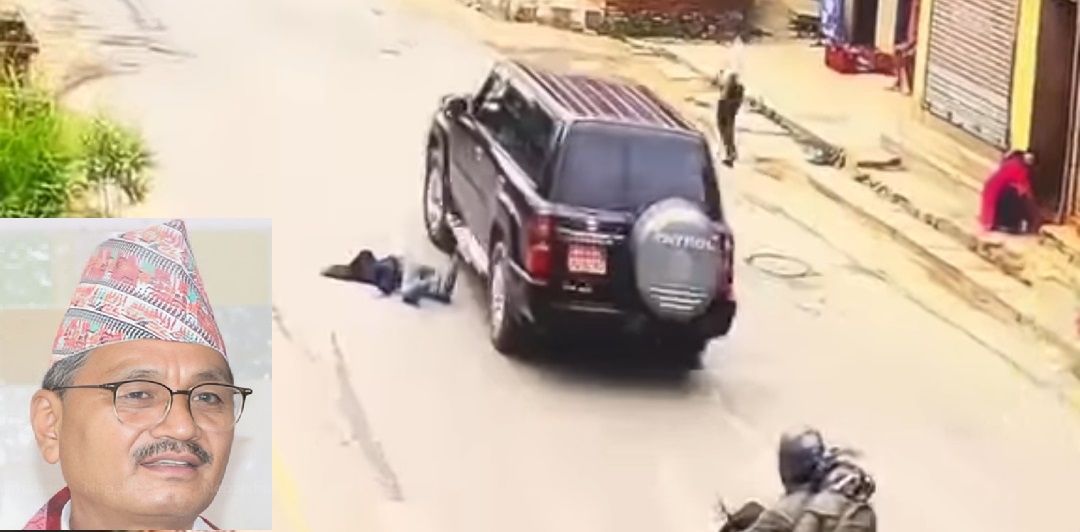
On Saturday morning, a vehicle carrying Koshi Province Finance and Planning Minister Ram Bahadur Magar struck a young girl on the road in Harisiddhi, Lalitpur. The minister was on his way to the UML General Convention in Godawari. The child was rushed to B & B Hospital, where she was treated for two hours before being discharged. She survived, but the conduct of those in power has left deep scars on public conscience.
Instead of stopping to help, Magar’s car fled the scene. This single act reveals a truth many Nepalese already know, when it comes to accountability, the political elite believe they live under a different set of rules. Even more alarming was the response from UML chair and Prime Minister KP Sharma Oli, who described the accident as a “minor incident” and said the party would cover medical costs. Such words are not just dismissive, they strip the incident of its seriousness, reducing a child’s suffering to a footnote in a political gathering.
Accidents do happen. Sometimes pedestrians are at fault. But this was not simply an accident.It was the failure of a minister, entrusted with public duty, to show even the most basic humanity. To walk away from a citizen injured by his own vehicle is not just irresponsible, it is disgraceful. In any democracy worthy of the name, such behavior would demand resignation and a criminal investigation. In Nepal, however, leaders too often shield themselves behind party loyalty and power, while the law looks the other way.
This is the deeper tragedy. When ordinary citizens are involved in road accidents, the law is swift and often unforgiving. When the powerful are involved, excuses flow, cases stall, and silence prevails. The very institutions meant to protect the weak bend to the comfort of the strong. By calling the matter “minor,” the Prime Minister sent a chilling message, that the suffering of an ordinary child weighs less than the political schedules of those in office.
What should have been a moment of compassion turned into an exhibition of arrogance. A minister should have been seen rushing to the hospital, standing with the family, apologizing to the nation, and placing himself under the judgment of law. Instead, he disappeared behind tinted windows, as if his duty to the people could be brushed aside like an inconvenience.
This is not an isolated case. It reflects a wider culture of impunity, where ministers, lawmakers, and senior officials routinely escape consequences for actions that would land any ordinary citizen behind bars. Until Nepal enforces one law for all, the divide between rulers and the ruled will only grow deeper.
Minister Magar must resign immediately. The government must allow an impartial investigation, free from political interference, and if found guilty, he must face punishment to the full extent of the law. Anything less will confirm what many Nepalese already fear, that in their country, justice depends not on right or wrong, but on who you are.
Nepal cannot afford leaders who treat citizens as expendable. Nor can it afford laws that bend to privilege. The child in Harisiddhi deserved better. The people of Nepal deserve better. And if those in power cannot live up to the standards of humanity and accountability, they do not deserve to govern.