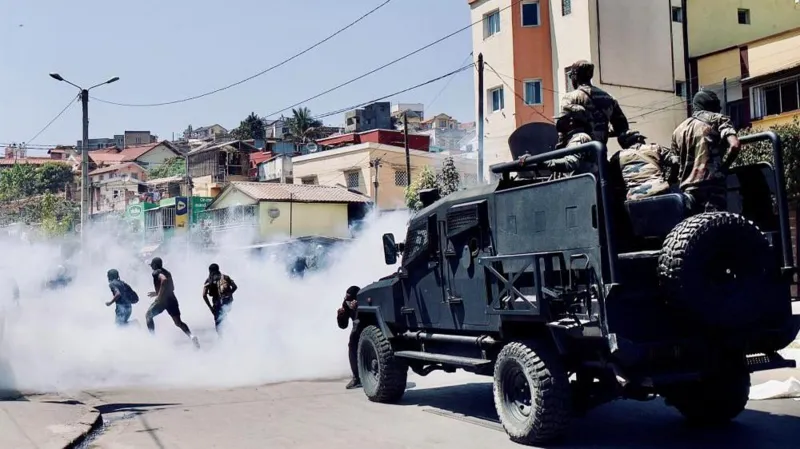
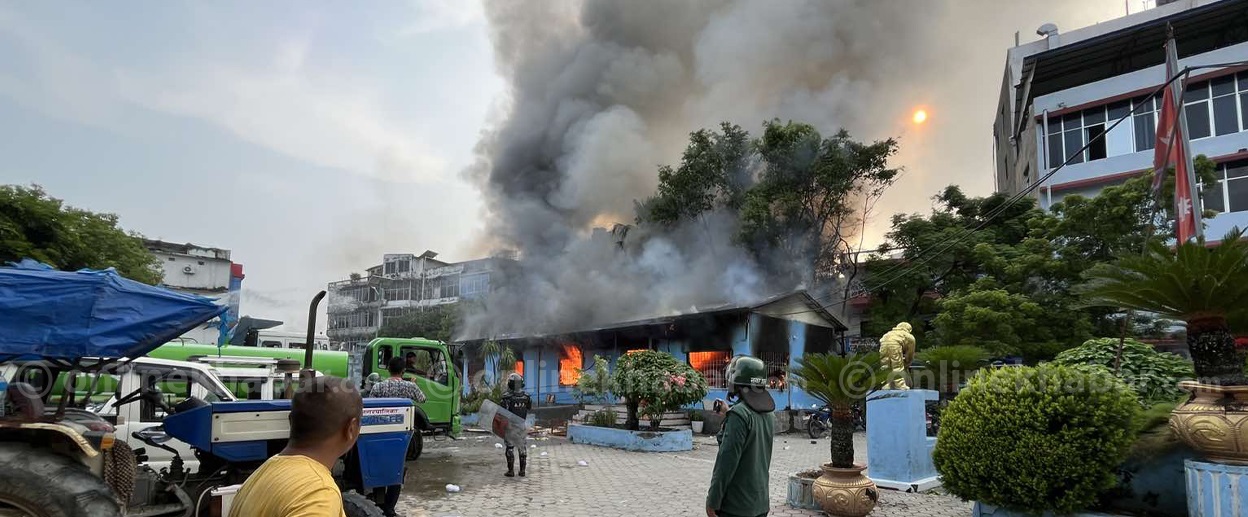
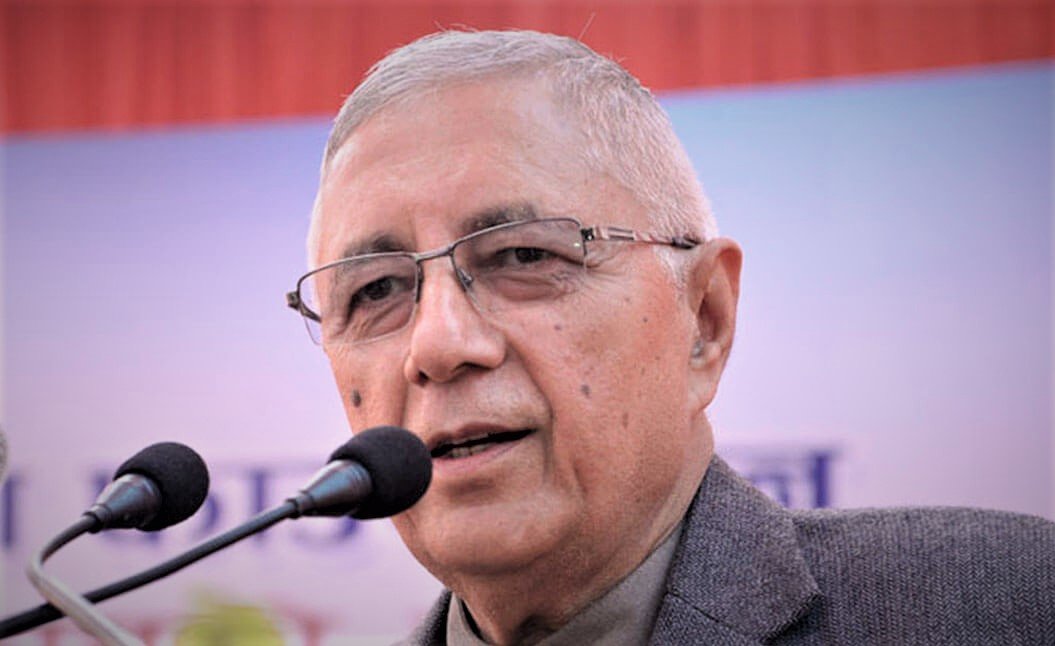
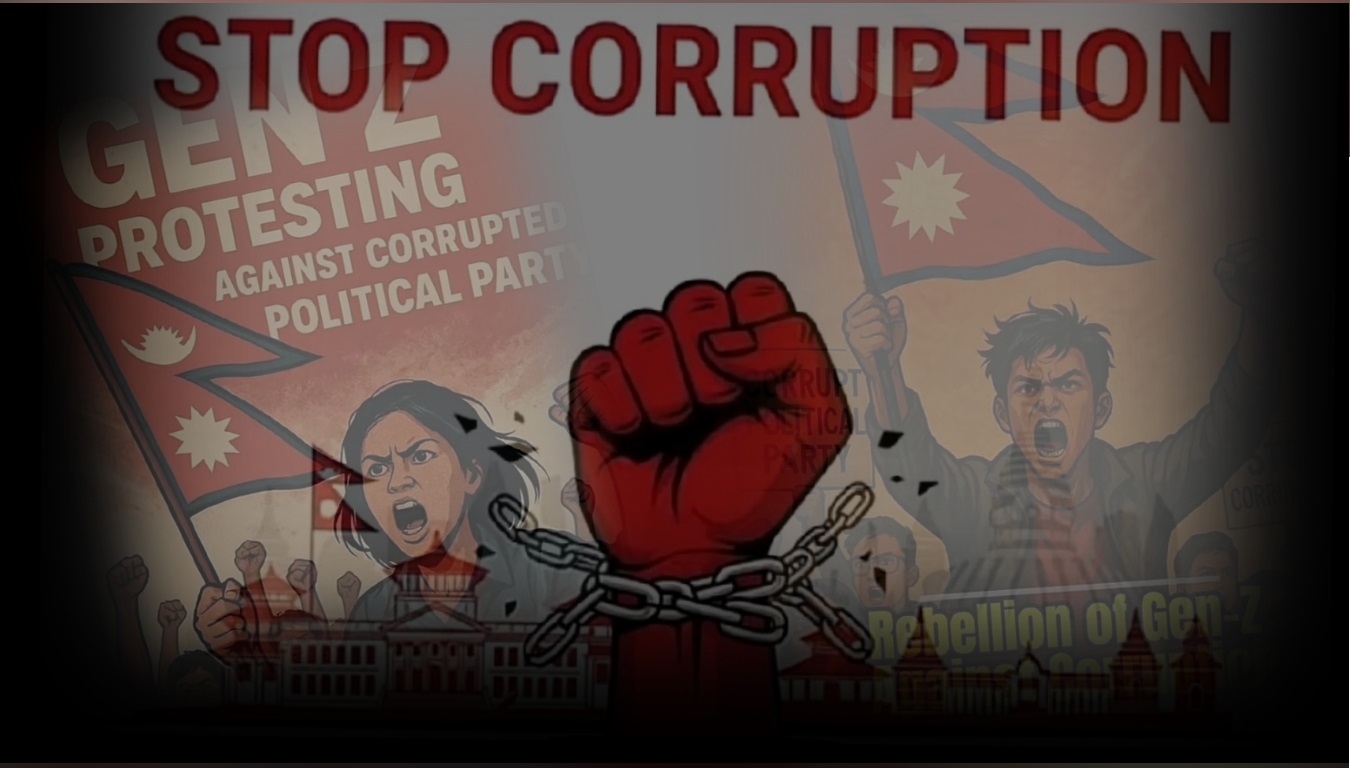
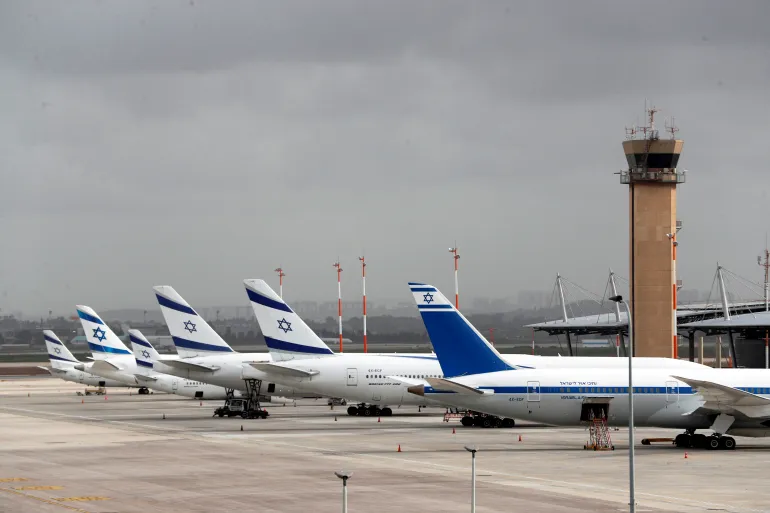
Madagascar President dissolves Government after Youth-Led Protests Over Power

Antananarivo-Madagascar’s President Andry Rajoelina announced on Monday that he is dissolving his government, following days of nationwide protests led by young people against persistent water shortages and electricity blackouts.

“We acknowledge and apologise if members of the government have not carried out the tasks assigned to them,” Rajoelina said in a televised address. He confirmed that the prime minister and cabinet had been dismissed and that applications for a new premier would be accepted over the next three days.

The protests, known as the “Gen-Z movement,” began last Thursday in the capital Antananarivo under the slogan “We want to live, not survive.” They have since spread to at least eight cities. Demonstrators are demanding lasting solutions to power cuts and water problems, as well as broader political change.

The United Nations has condemned what it described as excessive force by security forces, reporting at least 22 people killed and over 100 injured. The UN rights chief Volker said he was “shocked” by reports of live ammunition, beatings, and mass arrests, urging the immediate release of detained protesters. Madagascar’s foreign ministry rejected the UN figures, calling them “based on rumours or misinformation.”

A dusk to dawn curfew was imposed in Antananarivo amid incidents of looting and violence. Some legislators’ homes were reportedly attacked, though the Gen-Z movement claims hired groups were behind the destruction to discredit the protests.

Rajoelina said he wanted to open dialogue with the youth, acknowledging their anger and frustration. A banner at one protest read: “We don’t want trouble, we just want our rights.”

Since independence in 1960, Madagascar has faced repeated political unrest, including the 2009 protests that forced then-president Marc Ravalomanana to step down, bringing Rajoelina to power. The current protests represent the strongest challenge to his rule since his third re-election in 2023.

Trump and Netanyahu announce new Gaza Peace Plan:Urge Hamas to accept terms

US President Donald Trump and Israeli Prime Minister Benjamin Netanyahu have unveiled a new peace plan for Gaza, calling on Hamas to accept the terms or face further military action.

The proposal calls for an immediate halt to military operations. Within 72 hours, Hamas would release 20 living Israeli hostages and return the remains of more than two dozen believed dead, in exchange for the release of hundreds of detained Palestinians.

A copy of the 20-point plan has been handed to Hamas officials through Qatari and Egyptian intermediaries. The document states that Hamas will have no role in governing Gaza but leaves open the possibility of a future Palestinian state.

At a White House press conference, Trump called the plan “a historic day for peace,” while affirming US support for Israel if Hamas rejects the offer. Netanyahu echoed this, saying Israel “will finish the job” if Hamas fails to comply.

The Palestinian Authority welcomed the US efforts as “sincere and determined,” pledging cooperation with the US and regional partners to end the war, ensure humanitarian aid, and secure the release of hostages and prisoners.

The plan outlines steps including the destruction of Hamas weapons and tunnels, the exchange of remains on both sides, and the immediate entry of aid once an agreement is signed. Gaza would be temporarily administered by a technocratic Palestinian committee under the supervision of a new international body, the “Board of Peace,” to be led by Trump with former UK Prime Minister Tony Blair among its members.

Global leaders including UK Prime Minister Keir Starmer, French President Emmanuel Macron, and European Council President Antonio Costa expressed support for the proposal, urging Hamas to accept it as a step toward lasting peace.

The plan also promises staged Israeli withdrawals, reconstruction efforts, and an economic development program for Gaza. Unlike earlier positions, it does not call for Palestinians to leave Gaza but instead encourages rebuilding within the territory.

Hamas has said it is willing to review any proposal that could end the war but insists any deal must secure Palestinian rights, guarantee full Israeli withdrawal, and allow for an independent Palestinian state along 1967 borders.

The announcement comes amid heavy criticism of Israel at the UN, where Netanyahu denounced recognition of a Palestinian state by several Western countries. His speech prompted a walkout by dozens of diplomats.

Polish PM Tusk: Ukraine Conflict is also a War of the West

Warsaw -Polish Prime Minister Donald Tusk has declared that the war in Ukraine is not only Ukraine’s fight but also the war of the West. Speaking at the Warsaw Security Forum , he said the main task for European Union leaders is to make their people understand the threat allegedly posed by Russia.

Poland has been one of Ukraine’s strongest supporters in its conflict with Moscow, with Tusk taking a firm stance. Earlier this month, he criticized growing “antipathy” toward Ukraine among Poles, blaming Russian influence, and urged Polish politicians to counter this trend.

On Monday, Tusk stressed that “the biggest and most important task for European leaders today is to make Western societies aware” that the war in Ukraine is the most serious challenge of the 21st century.

“This war is also our war,” he said, calling it a matter of “fundamental interest” for the West. He warned that a Ukrainian defeat would impact the entire Western world, from Poland to the United States. He urged unity within the EU and NATO, saying solidarity was needed to “defeat” Russia.

Tusk also highlighted plans for large-scale modernization of the Polish army and called for mobilization of both governments and societies across Europe. Earlier this month, Warsaw accused Moscow of sending drones into its airspace, a claim Russia has denied.

Russia, on the other hand, has described the Ukraine conflict as a proxy war by the West. Russian Foreign Minister Sergey Lavrov recently said that the crisis was provoked by the EU and NATO and used to wage “an actual war” against Moscow.

At the UN General Assembly on Saturday, Lavrov dismissed Western claims that Russia plans to attack NATO in the future, stating, “Russia has not had such intentions.” He added that Moscow had repeatedly invited NATO to agree on “legally binding security guarantees” in Europe, but those proposals were ignored.

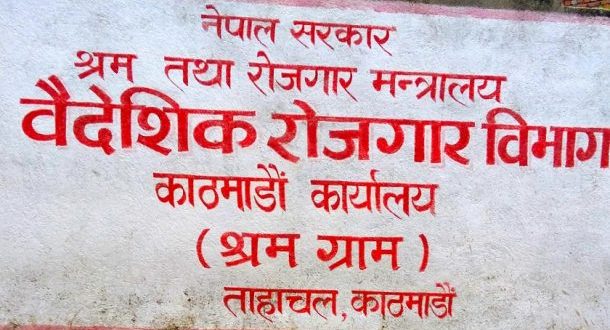
Emergency work permits to be issued even during Dashain holidays

Kathmandu — The government is set to issue emergency work permits for Nepalis going for foreign employment even during the Dashain holidays.

The Department of Foreign Employment has made arrangements to issue work permits to workers in need.

According to the Department of Foreign Employment, arrangements have been made to issue work permits to those in need.

Living Goddess Kumari Aryatara to assume Throne today

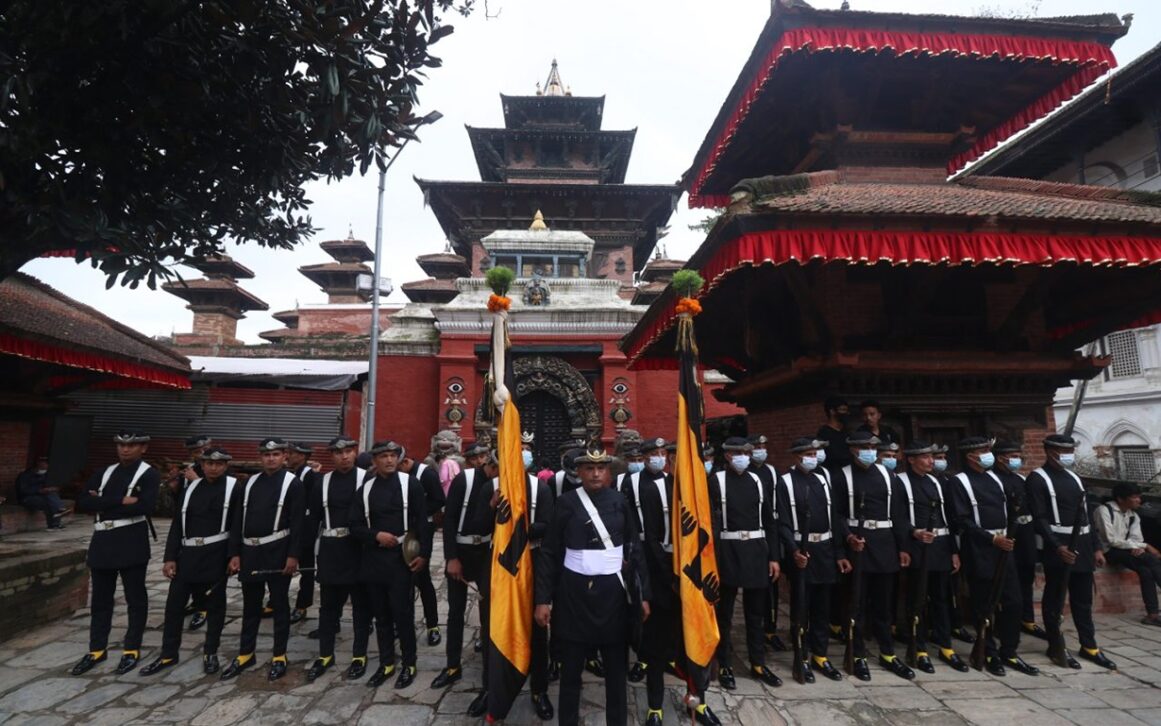
Kathmandu – Living Goddess Kumari Aryatara Shakya will formally assume her throne today.

The two-and-a-half-year-old living goddess from Itumbahal will be enthroned at the Kumari Ghar during an auspicious midday hour with traditional rituals. After the ceremony, she will be taken in a procession with musical instruments to visit the Taleju Bhawani Temple for blessings.

Since the time of King Jaya Prakash Malla, the Kumari has been worshipped as a living goddess and is regarded as a symbol of Goddess Mahalaxmi.

Aryatara was selected as the new Kumari following traditional procedures, with consultations among the Guthi Sansthan, the Panchang Decision Committee, and other concerned bodies.

According to tradition, the Head of State also visits the Kumari on the occasion of Kojagrat Purnima.

Worship of Goddess Mahagauri on the Ninth day of Navaratri

Kathmandu – On the ninth day of Bada Dashain and Navaratri, devotees across the country are performing rituals dedicated to Goddess Mahagauri, the eighth among the nine forms of Goddess Durga.

According to Vedic Sanatan tradition, Goddess Mahagauri is worshipped every year on Ashwin Shukla Ashtami. Normally, this falls on the eighth day of Navaratri, but this year, due to the extension of the lunar date (Chaturthi Tithi Vriddhi), the Nepal Panchang Nirnayak Samiti has determined that the worship should take place on the ninth day instead.

As part of Navaratri rituals, devotees recite sacred texts such as Durga Saptashati (Chandi) and Shrimad Devi Bhagwat at sites where Ghatasthapana was performed. It is a common belief that worshipping Goddess Mahagauri during this period brings strength, prosperity, and wisdom.

Nepal sets new record by defeating World Champion West Indies

Kathmandu – Nepal defeated the West Indies in back-to-back matches and clinched the Unity Cup T20I series being held in the UAE.

Nepal secured a commanding 90 run victory in the second match. Winning the toss and batting first, Nepal posted 173 runs for the loss of 6 wickets in 20 overs. Chasing a target of 174 runs, the West Indies were bowled out for just 83 runs in 17.1 overs.

Earlier, Nepal had already made history by beating the West Indies in the first match. With the second win, Nepal not only secured the series but also achieved remarkable success by winning a bilateral series against a Test-playing nation for the first time.

Until now, Nepal had only played bilateral series against associate nations. This was Nepal’s first bilateral series against a Test-playing team, and Nepal emerged victorious.

So far, Nepal has played bilateral series against Hong Kong, Malaysia, UAE, USA, the Netherlands, and Kenya, winning four of them.

In 2014, Nepal lost a series against Hong Kong in Sri Lanka. In 2015, Nepal toured the Netherlands, winning one match but losing two.

In 2019, Nepal played in the UAE, winning two matches and losing one. In the same year, Nepal won both matches of a series in Malaysia.

In 2022, Nepal toured Kenya, winning three matches and losing two. In 2024, Nepal played a one-off match against Hong Kong but lost.

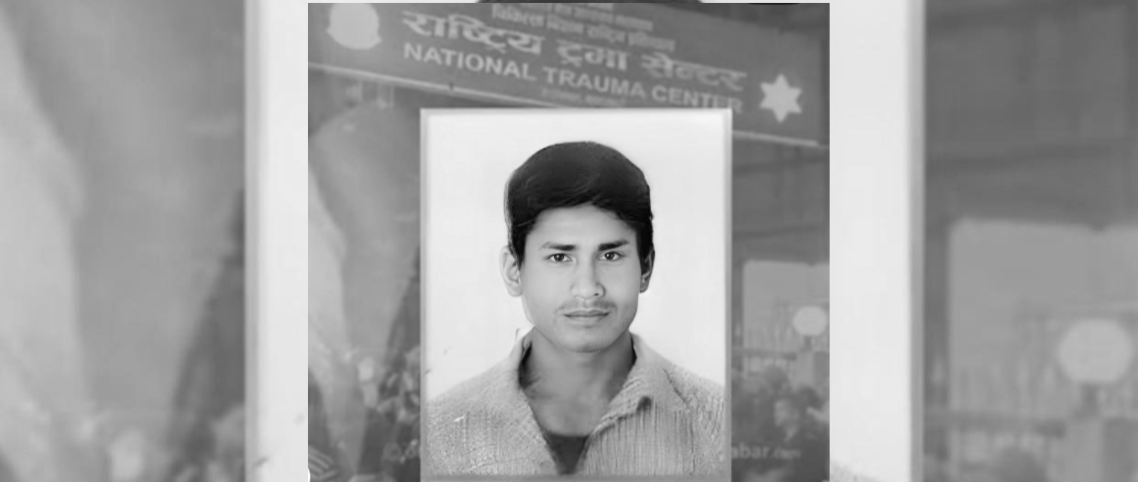
Laxman Rai injured in Jen Z protests died during treatment

Kathmandu- Laxman Rai, a resident of Panchakanya Rural Municipality-2 in Nuwakot, who was critically injured after being shot during the Jen Z protests, has died.

He was receiving treatment at the National Trauma Center in Kathmandu and passed away at around midnight yesterday.

Family members said his body has been taken to the Tribhuvan University Teaching Hospital’s forensic department for post-mortem.

Rai had sustained a gunshot injury to the back of his head. With his death, the toll from the Jen Z protests has now reached 76.

Today is FULPATI: The seventh day of Nawaratri

Kathmandu- Today, on the seventh day of Navratri, Ashwin Shukla Saptami, special worship of Durga Bhawani in the form of Goddess Kalratri is performed and Fulpati is brought inside the house.

On the seventh day of Bada Dashain, today the seventh form of Durga Bhawani, Kalaratri, is worshipped and nine small stones are installed as idols of Navadevi next to the Kalash set up as Ganesha. According to the religious method, today it is celebrated by bringing flowers, the symbol of an auspicious day, into every house. Sugarcane, Haledo, Banana plant, Paddy, Belpatra, Darim, Jayanthi, Ashoka flower and Manavriksha are brought inside as a symbol of auspiciousness.

FULPATI from the Gorkha palace will be brought to the Dashain house in the temple of Taleju Bhawani in Hanumandhoka, Kathmandu. A Fulpati will be sent to Kathmandu from the Dashain house at Gorkha Durbar this morning. Ever since His Majesty, the late king Prithvi Narayan Shah started his reign from Hanumandhoka Palace in Kathmandu, every year there has been a tradition of bringing a FULPATI (Chariot with flowers) from the Dashain house of Gorkha Palace to the Dashain house in the temple of Taleju Bhawani in Hanumandhoka, Kathmandu.

Israel faces growing Isolation on the Global Stage

Since it has been public that global world leaders and diplomats walked out of UN General assembly during the speech of Israeli PM Netanyahu, It clearly shows that Israel is facing mounting isolation in global politics pushing the country further toward pariah status. What began as a wave of international criticism of its military campaign in Gaza has spread into official state recognition of Palestine, allegations before the world’s highest courts, and growing moves to exclude Israeli teams and institutions from international sports and cultural competitions.

Over the past year, recognition of Palestine has accelerated among countries that previously hesitated to take such a step. The United Kingdom, Canada, Australia, France, Portugal, Belgium, Luxembourg, Malta, Andorra, Monaco, and San Marino are among those that have formally recognized Palestinian statehood since early 2025, moves that bring the number of United Nations member states recognizing Palestine to 159 out of 193. These recognitions are not merely symbolic, they signal a deep frustration with the stagnation of the peace process and ongoing violence in Gaza and the West Bank. By acknowledging Palestinian statehood, governments are attempting to pressure Israel to return to negotiations and to adhere to international law regarding occupation and settlement expansion. Leaders in these states have argued that their decisions reflect overwhelming public demand for accountability and justice for Palestinians, a demand that has been amplified by international media coverage and large scale protests in European and North American cities.

At the same time, Israel is under unprecedented legal scrutiny. South Africa has brought a case against Israel before the International Court of Justice, accusing it of committing genocide in its conduct of the war in Gaza. The ICJ has issued provisional measures requiring Israel to prevent acts that could fall under the definition of genocide, to allow greater humanitarian access, to prevent incitement, and to preserve evidence. While the court has not yet issued a final ruling, the measures themselves represent a serious international censure and an acknowledgment that the accusations are plausible enough to warrant ongoing judicial oversight. In parallel, the International Criminal Court has issued arrest warrants for Israeli Prime Minister Benjamin Netanyahu and other senior leaders on charges of war crimes and crimes against humanity. The warrants allege indiscriminate attacks on civilians and unlawful use of force in Gaza. Although Israel rejects the jurisdiction of the ICC, the existence of the warrants has far reaching diplomatic implications, as they could limit the ability of Israeli officials to travel abroad without risk of detention in countries that are members of the court.

These developments have been matched by moves in the cultural and sporting arenas. In European football, UEFA has placed Israeli teams under review, with a vote looming on whether to suspend them entirely from continental competitions. Similarly, few countries like Spain and others had announced that they would not participate in upcoming football world cup if Israel remains the part of sport. If such a suspension are approved, Israel’s national team and its clubs would be barred from qualifying tournaments and European leagues. Some national federations, most notably Turkey’s, have publicly urged both UEFA and FIFA to expel Israel from international football. Several matches involving Israeli teams have already been postponed, relocated to neutral venues, or canceled altogether due to security concerns and political pressure. This trend extends beyond football. In late September, the Israel-Premier Tech cycling team was excluded from the Giro dell Emilia race in Italy, with organizers citing public safety risks tied to political protests. Cultural platforms are also reconsidering Israel’s participation. The European Broadcasting Union is expected to vote on whether Israel’s broadcaster should be allowed to compete in the Eurovision 2026, following mounting opposition from member broadcasters and activist campaigns.

The combined weight of these diplomatic, legal, and cultural actions is reshaping Israel’s standing in the international community. For decades Israel has relied heavily on the political, military, and diplomatic support of the United States and a number of European states. That support has often shielded it from harsher international measures, whether at the United Nations Security Council or in trade and cultural arenas. However, even among some of its closest partners, there are signs of strain. Governments that once avoided recognition of Palestine or public criticism of Israel’s policies are now taking steps that mark a break with longstanding diplomatic caution.

The parallels being drawn are increasingly stark. Commentators, activists, and some political leaders are comparing Israel’s current trajectory to that of apartheid-era South Africa, which faced decades of isolation from international sports, culture, and trade. Others note similarities to Russia’s treatment after its 2022 invasion of Ukraine, when it was expelled from major sporting competitions and faced an unprecedented package of sanctions. Exclusion from sports tournaments and cultural forums diminishes Israel’s visibility in arenas that carry symbolic weight and shape global public opinion. Loss of access to these platforms reduces the country’s ability to project normalcy and legitimacy, which are important for its image abroad. If such exclusions continue or expand, they may affect tourism, foreign investment, and the morale of ordinary citizens who find themselves increasingly isolated from international exchange. The legal processes at the ICJ and ICC, meanwhile, carry both practical and symbolic risks. Even if enforcement is limited, the very existence of ongoing judicial investigations against Israeli leaders places the country in a category with states that have been subject to international sanctions and isolation.

Looking ahead, the trajectory of Israel’s international standing will depend on a few key developments. If the ICJ delivers a substantive ruling against Israel or if the ICC warrants are acted upon by member states, the pressure on governments and institutions to cut ties with Israel will intensify. If UEFA votes to suspend Israel, that precedent may encourage similar steps in other sports or cultural organizations. And if more countries in Europe and beyond recognize Palestine, the momentum toward normalization of Palestinian statehood could create new diplomatic realities that sideline Israel. Conversely, if Israel were to take steps that reduce civilian suffering in Gaza, allow greater humanitarian access, or restart meaningful political negotiations, it could slow or even partially reverse the isolation trend. Some governments would likely welcome an opportunity to re-engage on more favorable terms if they see genuine changes in policy.

For now, however, the evidence points to a steady slide toward greater isolation. From the recognition of Palestine by major states, to the provisional measures of the ICJ, to the looming possibility of exclusion from international sports and culture, Israel is encountering resistance in arenas where it once enjoyed broad acceptance. The convergence of diplomacy, law, culture, and sport in this process is what makes the current moment unusual and potentially transformative. In each of these spaces, actions once limited to words or symbolic gestures are turning into institutional measures with real consequences. Israel may not yet be fully ostracized, but the direction of movement is unmistakable. Unless there are significant changes in its policies and in the conflict dynamics on the ground, Israel risks entrenching an image of itself as an outcast state on the world stage, a label that carries both immediate costs and long-term dangers for its international legitimacy.

CIB Raids house of Arzu Rana’s brother Bhushan Rana

Kathmandu – Nepal Police’s Central Investigation Bureau (CIB) has raided the residence of Bhushan Rana, the brother-in-law of former Prime Minister Sher Bahadur Deuba. Rana, who is the brother of Deuba’s wife Arzu Rana, had his home in Jawalakhel searched by police. He is widely known for his influence in major government procurements and appointments.

The raid comes after large amounts of cash and valuables were recovered from Deuba’s residence in Budhanilkantha on September 9, when it was attacked by Jen Z protesters.

Following the recent appointment of Additional Inspector General Dr. Manoj Kumar KC as CIB chief, several individuals under suspicion have been placed under close watch. KC had earlier led the Valley Crime Investigation Office during the high-profile Bhutanese refugee scam probe.

Home Minister Om Prakash Aryal recently visited the CIB headquarters and instructed officials to resume investigations that had been stalled due to political pressure.

Passports of Oli and four others Suspended : Restricted from Leaving Valley

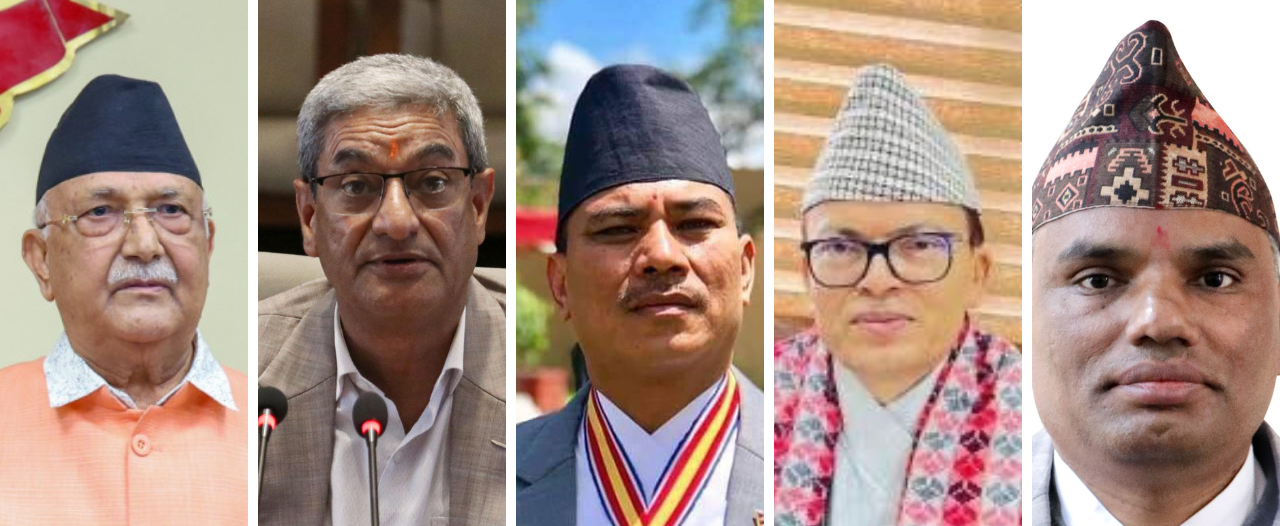
Kathmandu – The judicial commission formed to investigate the human and material losses during the Jen Z protests on September 8 and 9 has recommended suspending the passports of former Prime Minister KP Sharma Oli and four others. The commission has also barred them from leaving the Kathmandu Valley without its approval.

In a letter to the government on Sunday, the commission led by Gauribahadur Karki stated that Oli, former Home Minister Ramesh Lekhak, former Home Secretary Gokarna Mani Duwadi, former Chief of National Investigation Department Hutaraj Thapa, and former Chief District Officer Chhabilal Rijal have been placed under investigation.

The commission’s decision letter said, “As these individuals are under investigation regarding the incidents of September 8 and 9, necessary action should be taken to restrict their foreign travel. Since they may be required to appear before the commission at any time, arrangements must also be made to prevent them from leaving the Valley without the commission’s consent.”

The commission has further requested the Home Ministry to provide additional experts and staff to make the investigation more effective.

Government lists Industrial Zones, Transport Projects, and Cable Cars as National Priority Programs

Kathmandu – The government has designated industrial development, transport infrastructure, and cable car projects as national priority programs. The Ministry of Industry, Commerce and Supplies published the list through a notice in the Nepal Gazette.

The priority projects include industrial villages, industrial estates, special economic zones (SEZs), dry ports, petroleum pipelines, and privately operated cable cars.

Under the industrial village category, Barahkshetra Industrial Village in Sunsari and Jorayal Industrial Village in Doti have been listed. In the industrial estate category under Industrial Estate Management Limited, projects include Damak Industrial Estate (Jhapa), Mayurdhap Industrial Estate (Makwanpur), Shaktikhor Industrial Estate (Chitwan), Laxmipur Industrial Estate (Dang), Motipur Industrial Estate (Rupandehi), Naubasta Industrial Estate (Banke), and Daiji Industrial Estate (Kanchanpur).

The SEZ Authority will oversee the Panchkhal SEZ in Kavrepalanchok and the Haraiya SEZ in Kailali. Under the Nepal Intermodal Transport Development Committee, the Dodhara Chandani Dry Port with an Integrated Check Post in Kanchanpur has been listed.

Nepal Oil Corporation projects include the Siliguri–Charali petroleum pipeline with a greenfield terminal and the Amlekhgunj–Lothar pipeline expansion with a terminal in Chitwan.

Privately operated cable car projects recognized as priority include Satyawati Darshan Pvt. Ltd. (Palpa), Sano Pathibhara Cable Car Pvt. Ltd. (Ilam), Sikles Annapurna Cable Car Pvt. Ltd. (Kaski), Dreams Hills Pvt. Ltd. (Chitwan, Nawalparasi), Supa Deurali Cable Car Pvt. Ltd. (Arghakhanchi), and Suryakunda Gosainkunda Cable Car Pvt. Ltd. (Sindhupalchok).

According to Industry Secretary Krishna Bahadur Raut, placing these projects under the national priority list will accelerate their implementation and contribute significantly to Nepal’s economic growth and infrastructure development.

Injured Gen-Z Protesters to receive ID Cards: 16 Dedicated Clinics set up Nationwide

Kathmandu – The Ministry of Home Affairs has started distributing identity cards to those injured during the Gen-Z protests to ensure easier access to medical treatment. With these ID cards, injured individuals will be able to receive healthcare services more conveniently.

On Sunday, Home Minister Om Prakash Aryal personally distributed the cards to injured protesters at the National Trauma Center. From Monday, distribution will also take place through district administration offices across the country.

According to the ministry, 16 dedicated “Gen-Z Clinics” have been set up in hospitals across the Kathmandu Valley and other provinces to provide systematic follow-up care. In addition, free transportation to hospitals has been arranged, and if needed, the Health Ministry or respective hospitals will provide free ambulance services for follow-up visits.

A task force led by senior doctors will be formed to categorize the injured, with a final decision expected from the Cabinet meeting on Sunday. The ministry has also assigned focal persons in the hospitals to coordinate treatment.

Hospitals with Gen-Z Clinics:

  • Kathmandu Valley: Bir Hospital, National Trauma Center, Civil Service Hospital, Patan Academy of Health Sciences, Tribhuvan University Teaching Hospital (Maharajgunj)
  • Koshi Province: BP Koirala Institute of Health Sciences (Dharan), Koshi Hospital (Biratnagar)
  • Madhesh Province: Narayani Hospital (Birgunj), Gajendra Narayan Singh Hospital (Saptari)
  • Bagmati Province: Bharatpur Hospital (Chitwan)
  • Gandaki Province: Pokhara Academy of Health Sciences
  • Lumbini Province: Bheri Hospital (Nepalgunj), Rapti Academy of Health Sciences (Ghorahi)
  • Karnali Province: Karnali Academy of Health Sciences (Jumla)
  • Sudurpaschim Province: Dadeldhura Hospital, Seti Zonal Hospital (Dhangadhi)

Finance Minister Khanal and Japanese Ambassador Maeda held a courtesy meeting

Kathmandu – Finance Minister Rameshwor Prasad Khanal and Japanese Ambassador to Nepal, Maeda Toru, held a courtesy meeting at the Ministry of Finance.

During the meeting, they discussed the historical ties between Nepal and Japan, the current political situation in Nepal after recent changes, and Japan’s continued economic and social support to Nepal.

Minister Khanal said that the main priority of the present government, formed under special circumstances, is to hold elections within the stipulated time. He also expressed commitment to continuing reconstruction efforts along with ongoing economic and social development programs.

The talks also covered ongoing projects such as the Nagdhunga Tunnel Road Project and the Tanahun Hydropower Project, as well as upcoming agreements on the Koteshwor Junction Improvement Project and the Sindhuli Road Flood Recovery Program.

NEA issues 21-Day deadline to clear dedicated feeder and trunk line dues

Kathmandu – The Nepal Electricity Authority (NEA) has given industries a 21-day ultimatum to clear outstanding dues for electricity consumed through dedicated feeders and trunk lines. In a notice published on Sunday, NEA instructed customers to settle all arrears by November 3 (Kartik 17).

The dues are related to electricity charges from January 2016 (Magh 2072) to April 2018 (Baisakh 2075). Earlier, customers with pending payments were given until June 2025 (Jestha 2082) to apply for administrative review, with notices published on Baisakh 26 and 30 .

However, following a decision made in the NEA board meeting on Ashoj 10 , the administrative review process has been discontinued. As a result, industries must now pay their dues based on the previously determined rates.

According to NEA, the outstanding bills are calculated based on demand recorded in TOD meters and energy consumption recorded in specific time intervals, as mentioned in a notice published on Kartik 29, 2081 .

NEA has offered industries the option to clear the dues in up to 28 installments. It has also warned that failure to pay within the given deadline will result in legal action.

Home Ministry directs Police not to arrest Gen-Z Protesters until Probe report

Kathmandu – The Ministry of Home Affairs has issued a notice instructing police not to immediately arrest individuals involved in the recent Gen-Z movement.

The directive came after police began detaining protesters based on collected photos and videos showing acts of vandalism, looting, and arson during the demonstrations.

In an official statement, the Home Ministry clarified that since a special investigation commission has already been formed to look into the Gen-Z protests, any legal action will be taken only on the basis of the commission’s report.

King Gyanendra to skip public Dashain Tika Ceremony amid National Mourning

Kathmandu- King Gyanendra Shah announced that he will not conduct a public Tika ceremony during this year’s Dashain festival. He said the country is grieving the loss of lives during the recent Gen-Z protests and the atmosphere remains sensitive, so he decided not to hold the annual public event.

In his Dashain message, Shah emphasized values such as truth, respect for elders, discipline, and love for the nation. He said, “The nation is in deep sorrow and destruction at this moment, so we are compelled to celebrate the festival only in a family and cultural way. Unlike previous years, we will not be offering large-scale Tika and Jamara to the public. May Goddess Navadurga guide us towards the right path.”

He stressed that Nepal has always stood as an independent and proud nation, built on the unity, integrity, and sacrifices of ancestors. “On this occasion of Vijaya Dashami, we extend our best wishes for peace, prosperity, and happiness to all Nepalese at home and abroad,” Shah said.

Reflecting on the nation’s challenges, he urged everyone to focus on rebuilding rather than destruction. “Our state system must adapt to changing times while keeping national values and identity intact. The aspirations of the younger generation should be addressed, and we must embrace modern science and technology to ensure development. The youth are the foundation of our future, and their energy, patriotism, and new ideas will make Nepal strong, prosperous, and self-reliant,” he added.

Russia denies plans to attack EU or NATO : Warns of decisive response to any aggression

United Nations – Russian Foreign Minister Sergei Lavrov has said that Moscow has no plans to attack NATO or European Union countries but warned of a decisive response if Russia faces aggression.

Speaking at the UN General Assembly on Saturday, Lavrov accused Western nations of making threats against Russia increasingly common. He stressed that President Vladimir Putin had repeatedly debunked claims that Russia intends to attack NATO or the EU.

Lavrov also criticized Israel, saying that while Moscow condemned the Hamas-led 7 October 2023 attacks, there was no justification for Israel’s large-scale killings of Palestinians in Gaza or for plans to annex the West Bank. He accused Israel of using its campaign against Hamas to justify airstrikes on other Middle Eastern countries.

On Iran, Lavrov condemned the West after a Russia and China led effort to delay the reinstatement of sanctions failed on Friday. He called the decision to reimpose restrictions illegal.

Lavrov’s remarks come amid growing tensions in Europe. Estonia recently accused Russia of violating its airspace, while NATO air defense operations were carried out in Poland in response to drone incursions. Denmark has also reported drones over its airports but has not linked them directly to Moscow.

Meanwhile, US President Donald Trump suggested that NATO nations should shoot down Russian aircraft if they enter allied airspace. NATO has warned it will use all necessary military and non-military tools to defend itself.

Lavrov also commented on US-Russia relations, saying the current US administration appeared interested not only in addressing the Ukraine conflict realistically but also in seeking pragmatic cooperation without an ideological stance.

In closing, Lavrov criticized Western recognition of a Palestinian state, questioning the timing and suggesting that some countries had waited so long because they hoped there would be no one and nothing left to recognize.

UN Security Council Rejects Russia-China Proposal: Iran Sanctions to Resume

New York – The UN Security Council has rejected a resolution put forward by Russia and China that sought to extend sanctions relief for Iran for another six months. The failure of the resolution clears the way for the reimposition of restrictions on Iran’s nuclear program.

In Friday’s vote, only four members supported the draft,China, Russia, Pakistan, and Algeria, while nine voted against and two abstained. As a result, sanctions that were lifted under the 2015 Joint Comprehensive Plan of Action (JCPOA) had officially returned at midnight GMT on Saturday.

The move follows last month’s decision by France, Germany, and the UK to trigger the “snapback mechanism,” accusing Iran of major violations of the deal.

Russia’s deputy UN ambassador Dmitry Polyansky criticized the Western powers, saying their decision showed that their past promises of seeking a diplomatic solution to Iran’s nuclear issue were “mere noise.”

The US deputy representative to the UN, Dorothy Shea, welcomed the vote, describing the draft resolution as “a hollow effort to excuse Iran from accountability for failing to meet its nuclear commitments.”

In June, the US and Israel carried out strikes on Iranian nuclear facilities, claiming the action was aimed at preventing Tehran from obtaining nuclear weapons. Iran has consistently denied such intentions, saying its nuclear program is for peaceful purposes.

Iranian Foreign Minister Abbas Araghchi warned that reinstating sanctions would set a “dangerous precedent” and damage the Security Council’s credibility. He called the Western actions “reckless and legally void,” stressing that Iran would not bow to threats or pressure.

Israeli strikes kill dozens in Gaza amid renewed calls for Ceasefire

Gaza – More than 35 people were killed in Israeli strikes and gunfire on Saturday, according to hospital officials in Gaza.

At least 11 people, including women and children, died when a house in central Gaza was hit. Nine members of one family were also killed in Nuseirat refugee camp, and several others died while seeking aid in different parts of Gaza.

The Israeli military said its air force targeted around 120 sites across the Gaza Strip since Friday, including what it described as militant infrastructure and operatives. This follows Prime Minister Benjamin Netanyahu’s speech at the UN, where he declared Israel must “finish the job” against Hamas.

The intensified ground offensive is now centered on Gaza City, considered Hamas’s last stronghold. Hundreds of thousands have already fled the city, but many remain in worsening humanitarian conditions, with food shortages and collapsing health services.

Amid the violence, US President Donald Trump voiced optimism about a possible deal to release hostages and achieve a new ceasefire. Reports suggest the US has drafted a 21-point plan that includes a ceasefire, prisoner exchanges, and a pathway toward a Palestinian state, though Israel has rejected the statehood idea.

Since the conflict began more than 65,500 people have been killed in Israeli operations.

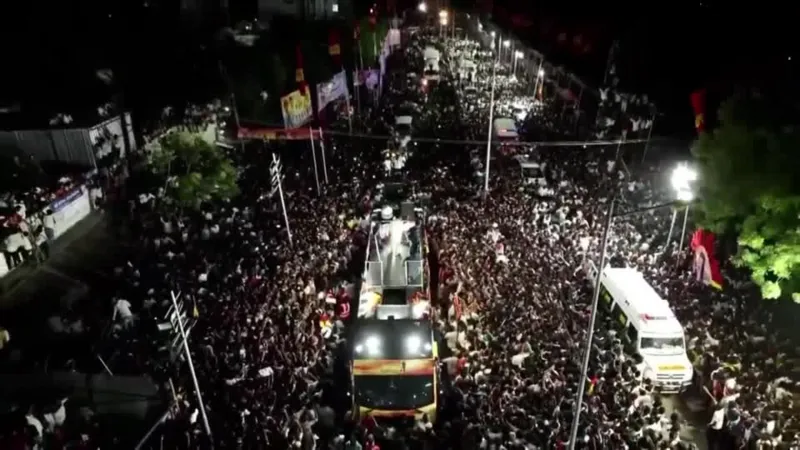
Tamil Nadu rally stampede leaves 36 Dead

Tamilnadu- At least 36 people, including women and children, were killed in a stampede at a political rally in Tamil Nadu’s Karur district, on Saturday.

The rally was organized for actor-turned-politician Vijay and drew tens of thousands of supporters. Local media reported the event was delayed for several hours, leading to overcrowding. Television footage showed people fainting in the packed venue.

State Health Minister Ma Subramanian said the victims included at least 16 women, nine men, and six children. More than 50 others were injured and taken to hospitals, where additional medical teams from nearby districts have been mobilized.

Chief Minister MK Stalin announced compensation of one million rupees ($11,300; £8,400) for each of the bereaved families and said an inquiry has been launched into the tragedy.

In a statement, Vijay expressed that his heart was “broken” and described his pain as “unbearable and indescribable.” He extended condolences to the victims’ families and wished for the speedy recovery of those injured.

Prime Minister Narendra Modi also expressed his sorrow on X, calling the incident “deeply saddening.”

Nepal defeats West Indies to claim historic first T20I Victory

Kathmandu – Nepal registered a historic win against the West Indies in their first-ever T20 International match, securing a 19-run victory.

Chasing Nepal’s target of 149, the West Indies managed only 129 runs for the loss of 9 wickets in their allotted 20 overs. Navin Vidaisy top-scored for the visitors with 22 runs, while Ameer Jango and Keacy Carty contributed 19 runs each.

For Nepal, Kushal Bhurtel was the standout bowler, taking 2 wickets for just 17 runs in 4 overs. Rohit Paudel, Karan KC, Dipendra Singh Airee, and Nandan Yadav claimed one wicket each.

Earlier, Nepal, put in to bat after losing the toss, posted 148 for 8 in 20 overs. Captain Rohit Paudel led from the front with 38 runs off 35 balls, hitting 3 fours and a six. Kushal Malla added a quick 30 off 21 balls with 2 fours and 2 sixes, while Gulsan Jha scored 22 and Airee made 17. Paudel and Malla shared a crucial 58-run stand for the third wicket after Nepal had slipped to 12 for 2.

Jason Holder was the pick of the bowlers for the West Indies, finishing with 4 wickets for 20 runs in 4 overs. Debutant Navin Vidaisy impressed with 3 wickets for 29 runs, while captain Akeal Hosein took one wicket.

This win is especially significant for Nepal as they had never before defeated a Full Member nation in T20Is, despite playing against sides like India, Afghanistan, and Bangladesh in major tournaments. Today’s triumph over the West Indies marked a historic breakthrough for Nepali cricket.

Home Ministry urges peaceful conduct of public programs ahead of Elections

Kathmandu – The Ministry of Home Affairs has called on all citizens to support peace, order, and security in society as the country prepares for upcoming elections.

In a statement issued today, the ministry requested that assemblies, rallies, meetings, and protests be conducted in a peaceful and non-violent manner.

“The initial process for general elections has already begun following the recent movement led by Gen-Z youth on September 8 and 9, which raised demands related to national interest, good governance, and anti-corruption,” the statement read.

The ministry further urged that all public programs be held without incitement, without disturbing others, and in ways that do not harm social harmony.

Minister Pun warns of action over delay in Teachers’ Salaries

Kathmandu – Minister for Education, Science and Technology Mahabir Pun has warned that strict action will be taken if teachers are not paid on time. On Saturday, he issued two public notices through social media, cautioning school principals and local governments against withholding teachers’ salaries.

In his first notice, Minister Pun addressed school principals, stating that since the ministry had already released funds, there should be no excuse for delaying teachers’ salaries. He mentioned that during the Dashain–Tihar festival period, complaints had been received from teachers about not getting paid. He warned that principals who fail to disburse salaries by tomorrow would face legal action.

About two hours later, he released a second notice targeting local governments. He said that although the ministry had already sent the budget to municipalities, complaints were still coming in from principals and teachers about unpaid salaries. He directed local governments to clear pending salaries by tomorrow, warning that any municipality failing to do so would also face action under the law.

Following these public warnings from Minister Pun, both school principals and local governments are under pressure to immediately release pending teachers’ salaries.

SEE supplementary exam results published

Kathmandu – The National Examination Board has published the results of the Secondary Education Examination (SEE) supplementary exams.

Out of 143,257 students who appeared, 83,564 passed while 59,693 failed, remaining unclassified.

The exams were held from Shrawan 29 to Bhadra 6. The supplementary exams were conducted for students who had received “non-graded” marks in up to two subjects or had been absent in the annual SEE held in Baisakh.

SEBON paralyzed after employees’ protest against Ministry decisions

Kathmandu – Since Tuesday, the Chairman of the Securities Board of Nepal (SEBON), Santosh Narayan Shrestha, along with the Executive Director and Deputy Director, have been kept under the control of the employees’ union, bringing all board activities to a halt.

Key services such as rights share approvals, IPO applications, and bonus share registrations have been suspended indefinitely. It remains uncertain when normal operations will resume.

The SEBON Employees’ Union and the Independent Employees’ Organization jointly locked the board’s offices in protest. The unions launched this strike against three decisions made by the Ministry of Finance at the secretary level.

One decision ordered the cancellation of two employee funds currently operating at the board. The Employee Welfare Fund and the Employee Security Fund. These funds have been used to provide retirement benefits and annual payouts to staff, with each employee receiving between NPR 150,000 to NPR 250,000 annually depending on service length. With the cancellation, these benefits will stop, which sparked the employees’ opposition.

Union Chairman Ajay Dhungana said, “The board is supposed to be an autonomous body, but the ministry tried to bring it under its control through secretary-level decisions. Our protest is against this.” Employees have also demanded the resignation of Chairman Shrestha, accusing him of failing to defend staff interests with the ministry.

The ministry’s second decision has further fueled anger. It instructed the board to recover previously disbursed amounts from these funds. Some employees who have worked for 30 years have already received about NPR 6 million in extra benefits. Retired staff are also being asked to return their payments, which employees say is impossible.

“This is unrealistic. Even if we sell everything we own, we cannot repay this money,” Dhungana said.

These ministry directives, according to the employees, are the reason behind the current lockout and total disruption of SEBON’s operations.

Netanyahu Isolated at UN as Leaders walk out

New York – Israeli Prime Minister Benjamin Netanyahu faced strong backlash at the United Nations General Assembly after condemning recent recognition of a Palestinian state by several Western countries. He called the move a “mark of shame,” claiming it sent the message that “killing Jews pays off.”

As Netanyahu began his speech, many officials and diplomats walked out in protest against Israel’s actions in Gaza, leaving him largely isolated on the world stage. At the same time, demonstrations against the war in Gaza were held outside in New York’s Times Square.

In recent days, the UK, France, Canada, Australia, and other countries formally recognized a Palestinian state. However, Netanyahu repeated that Israel would never accept a Palestinian state, insisting that most Israelis supported this stance.

His speech also drew criticism at home. Opposition leader Yair Lapid described Netanyahu’s remarks as those of a “tired and complaining” leader, while Yair Golan of the Israel Democrats party dismissed the address as “childish propaganda.”

Since Israel’s military campaign began on October 7, 2023, at least 65,549 Palestinians have been killed in Gaza, according to health authorities in the territory.

US Revokes Visa of Colombian President Gustavo Petro

Washington– The United States has revoked the visa of Colombian President Gustavo Petro. According to the State Department, the move was taken because of Petro’s “incendiary actions” during a pro-Palestinian protest in New York.

Colombian media reported that Petro was already on his way back to Bogota from New York on Friday night.

Earlier, Petro had described US airstrikes ordered by the Trump administration against suspected drug-trafficking boats in the Caribbean Sea as an “act of tyranny.”

He also shared a video on social media showing him addressing a large crowd, where he urged nations to form an army larger than that of the United States. In the same address, he called on US soldiers to “disobey Trump’s orders” and instead “follow the orders of humanity.”

The State Department strongly condemned his remarks, stating that Petro had stood on a New York street urging US soldiers to defy orders and incite violence, which led to the decision to revoke his visa.

Following the announcement, Colombia’s Interior Minister Armando Benedetti reacted by saying the visa should have been revoked for Israeli Prime Minister Benjamin Netanyahu, not Petro.

Petro, the first left-wing president in Colombia’s history, has seen relations with the US grow increasingly strained since taking office.

Earlier, the US had also denied visas to Palestinian President Mahmoud Abbas and 80 Palestinian officials, preventing them from attending the UN General Assembly in New York.

Taskforce formed to apprehend ecaped prisoners:10-Day ultimatum to return

So far 8199 have returned, while 6354 remain at large

Kathmandu – The government has issued a 10-day ultimatum for prisoners who escaped during the recent “Gen Z protests” to return to jail, warning of legal action if they fail to comply.

The Ministry of Home Affairs announced a special campaign to locate, detain, and return the fugitives. For this, search and arrest taskforces have been formed in each district, led by Assistant Chief District Officers, with members from security agencies and other government bodies.

According to a press release from the Department of Prison Management, prisoners must return by Ashoj 20 (Monday). Those failing to do so will face punishment under existing laws.

The taskforces will coordinate with local administrations, security units, schools, campuses, transport hubs, bus parks, entertainment venues, and border points. The names of fugitives will be circulated, and public appeals will be made through media, social networks, and official channels. Anyone found sheltering or hiding escaped prisoners will also face action.

During the Gen Z protests, 14,553 prisoners and juveniles escaped from 28 prisons and 9 juvenile reform centers. So far, 8,199 have returned, while 6,354 remain at large, according to Department Director Chomendra Nyaupane.

Currently, 30,646 inmates are serving sentences in 75 prisons across 72 districts. Five districts—Dhanusha, Bara, Bhaktapur, Nawalparasi (Bardaghat Susta East), and Rukum East—do not have prisons.

The department said efforts are ongoing to restore damaged prison facilities and continue coordinated campaigns to bring back the remaining fugitives.

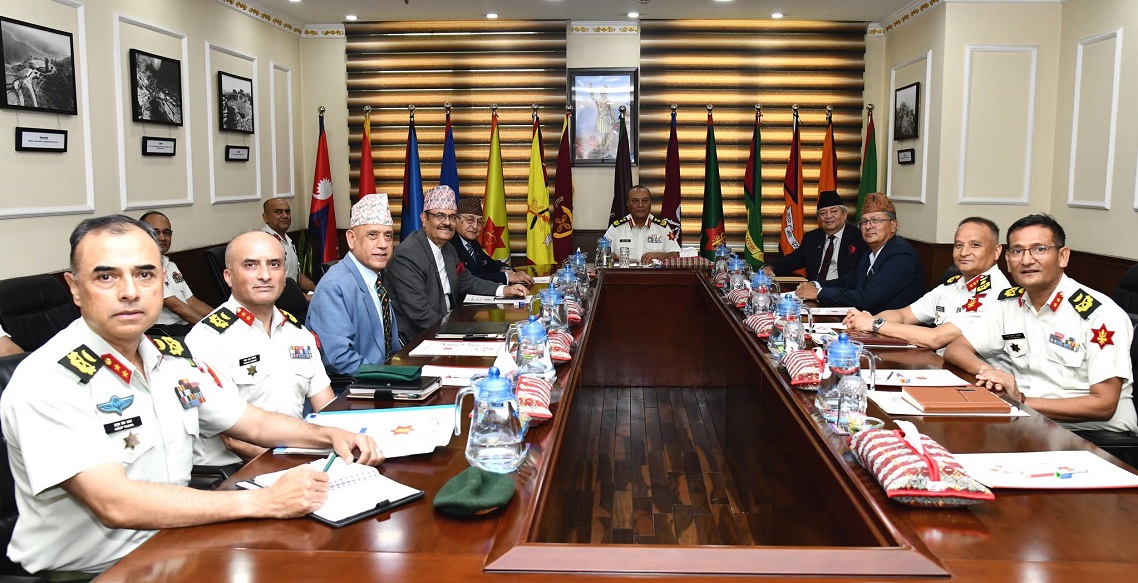
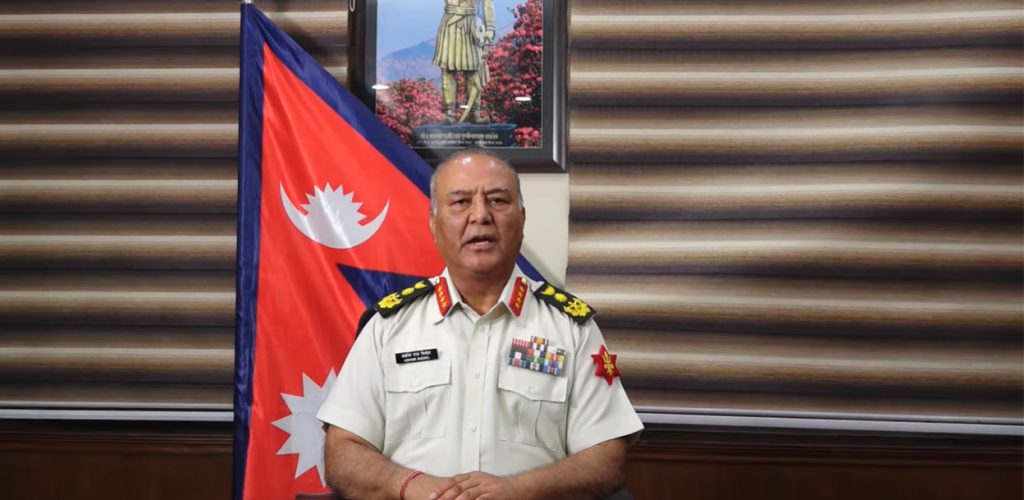
Army Chief consults former Chiefs and Commands amid current situation

Kathmandu – Chief of Army Staff Ashokraj Sigdel held discussions with former Army Chiefs regarding the recent developments and the current situation.

The meeting took place at the Army Headquarters, where Sigdel sought their views on the role of the Nepal Army during such circumstances.

Heads of various departments, directorates, and divisions of the Nepal Army also gathered at the Army Headquarters. In addition, a virtual coordination meeting was conducted with division commanders.

According to the Directorate of Public Relations and Information, division commanders and departmental heads presented reviews of their responsibilities, work progress, and provided suggestions.

The session concluded with closing remarks from Chief of Army Staff Sigdel and Chief of General Staff Lieutenant General Pradeep Jung KC.

As per the Army’s annual work plan, the coordination meeting of division commanders is held twice a year. This was the first such meeting since recent changes in the commanders’ responsibilities.

Nepal Rastra Bank eases loan rules for businesses hit by ‘Gen Z’ Protests

Kathmandu – Nepal Rastra Bank has directed banks and financial institutions to provide relief to industries and businesses affected by the recent ‘Gen Z’ protests.

According to the revised Integrated Directive 2081, issued on Friday (Sep 26), banks must offer loans to restart affected businesses at just 0.5% interest above the base rate until operations resume.

The central bank has also relaxed the rule requiring loans with a debt-to-equity ratio higher than 80:20 to be classified under the “watchlist” category. This exemption will apply for one year.

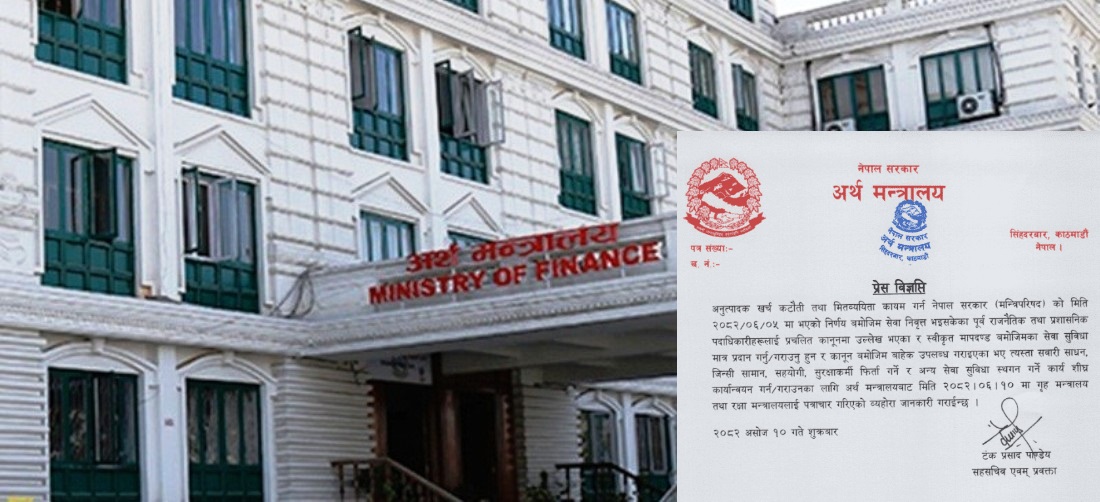
Government cuts extra perks for former Political and Administrative Officials

Kathmandu – The newly form government has decided to curb unproductive spending by withdrawing additional facilities provided to retired political and administrative officials.

According to the Cabinet decision , the Ministry of Finance has instructed the Home and Defense Ministries to recall vehicles and security personnel previously allotted to former officeholders.

From now on, former officials will only receive facilities permitted under existing laws and approved standards. Any vehicles, equipment, assistants, or security staff provided beyond the law must be immediately returned. Other unauthorized benefits will also be discontinued.

The Ministry of Finance issued a circular on Friday urging immediate enforcement of the decision. The move is aimed at reducing misuse of state resources and ensuring more transparent and accountable government spending.

Key Decisions from the Cabinet Meeting

Kathmandu – The Cabinet meeting made several major decisions, according to government spokesperson and Minister for Communication and Information Technology Jagdish Kharel.

The meeting decided to bring the National Investigation Department under the Home Ministry, and place the Revenue Investigation Department and the Department of Money Laundering Investigation under the Finance Ministry. Previously, all three agencies were under the Prime Minister’s Office.

Families of citizens killed during the Gen-Z protests on September 8–9 will receive 1 million rupees each, with an additional 500,000 rupees for funeral, food, and transport expenses. However, families of inmates or juveniles who died while escaping from prison will not be eligible for this support.

The Cabinet also reversed a previous government decision, keeping the registration and renewal of online media under the Department of Information and Broadcasting instead of District Administration Offices. Minister Jagdish Kharel has also been appointed as the government’s spokesperson.

Other key decisions include:

Extending the tenure of a taskforce led by former secretary Ramu Prasad Dotel by 45 days to standardize pay and benefits of officials and staff of state-funded institutions.

Promoting two colonels of the Nepal Army to major general, nine major generals to brigadier general, and transferring three brigadier generals.

Accepting grants worth USD 2.24 million for the Forest and Mountain Ecosystem Restoration Project, USD 8.7 million for a climate-resilient rice-based farming project, and USD 4.19 million for a local climate-adaptive livelihoods program.

Approving the resignation of two secretaries, Ram Govinda Aryal and Ramesh Sharma, from the Information Technology Service.

Approving the visit of the Finance Minister and ministry officials to attend the upcoming annual meeting of the World Bank and IMF in the United States.

Nepal-India border closed for two hours amid Communal tensions in Jogbani

Morang – The Jogbani border crossing between Nepal and India was closed for two hours on Thursday due to tensions between Hindu and Muslim communities on the Indian side.

According to Morang District Police Office , the closure was enforced to ensure the safety of Nepali citizens traveling for shopping in India. The border was reopened after the situation calmed down.

Local reports said the unrest began after controversial remarks about Prophet Muhammad surfaced on social media, sparking protests from the Muslim community. Clashes broke out when Bajrang Dal youths confronted the protesters, escalating tensions in the area.

Security forces from both sides were deployed heavily around the border to prevent further incidents.

Home Minister orders CIB to resume Politically blocked cases

Kathmandu – Home Minister Om Prakash Aryal has directed the Central Investigation Bureau (CIB) of Nepal Police to move forward with all cases that had been stalled due to political influence.

During his inspection of the CIB office, Aryal instructed newly appointed CIB Chief AIG Manoj KC to ensure impartial investigations into major cases. He said resuming files blocked by political pressure would mark a “breakthrough.”

“Cases that were halted or disrupted because of political connections will no longer remain so,” Aryal stated. He emphasized that the government’s mandate is good governance, adding that peace and security cannot exist without it, and free and fair elections within six months would not be possible otherwise.

Trump rejects Israeli Annexation of West Bank : Pushes Gaza Peace Deal

Washington- US President Donald Trump said he will not allow Israeli Prime Minister Benjamin Netanyahu to annex the occupied West Bank. Speaking in the Oval Office, Trump stressed, “It’s not going to happen,” ahead of Netanyahu’s UN address.

Trump also claimed a Gaza deal is “pretty close,” adding he had spoken with Netanyahu and other Middle Eastern leaders. Palestinian President Mahmoud Abbas, addressing the UN by video, expressed readiness to work with global leaders on a French-backed peace plan.

Global pressure on Israel is rising, with the UK, Germany, and the UN warning that annexation would be “intolerable.” Several Western countries have recently recognised an independent Palestinian state, further isolating Israel.

Meanwhile, Gaza faces dire conditions. Over 65,000 Palestinians, including more than 18,000 children, have been killed in Israeli strikes since October 2023, according to Gaza’s health ministry. The UN says half a million people in Gaza face “catastrophic” starvation.

Israel has dismissed genocide accusations but faces growing international sanctions and trade restrictions.

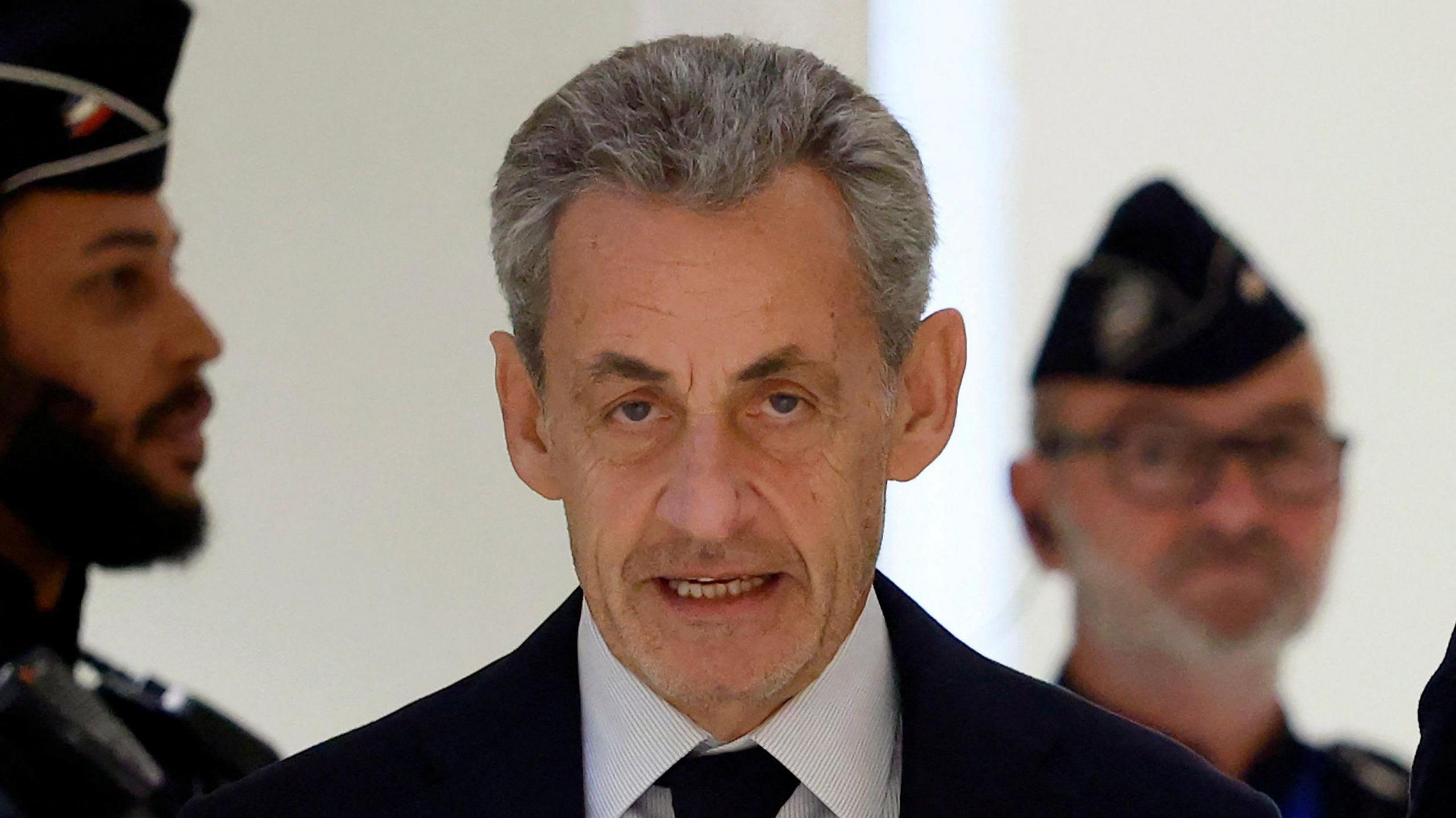
Former French President Sarkozy sentenced to five years over Gaddafi funding case

Paris- Former French President Nicolas Sarkozy has been sentenced to five years in prison after being found guilty of criminal conspiracy in connection with millions of euros in illicit funds allegedly received from late Libyan leader Muammar Gaddafi.

The Paris criminal court acquitted him of other charges, including passive corruption and illegal campaign financing, but ruled that he must still serve jail time. Sarkozy, 70, who led France from 2007 to 2012, has vowed to appeal.

After Thursday’s verdict, Sarkozy described the decision as “extremely serious for the rule of law” and insisted the case was politically motivated. Prosecutors claimed he used Gaddafi’s money to finance his 2007 presidential campaign, promising in return to help Gaddafi improve his standing with Western powers.

Judge Nathalie Gavarino said Sarkozy allowed aides to approach Libyan officials for campaign funds, though the court found insufficient evidence that he personally benefited. He was also fined €100,000 ($117,000).

The investigation began in 2013 after Gaddafi’s son, Saif al-Islam, accused Sarkozy of taking millions. Lebanese businessman Ziad Takieddine later claimed Sarkozy’s campaign was heavily financed by Tripoli, with payments continuing after he took office.

Other senior officials were also convicted: former Interior Minister Claude Gueant was found guilty of corruption, while ex-minister Brice Hortefeux was convicted of criminal conspiracy. Sarkozy’s wife, Carla Bruni-Sarkozy, faces separate charges of hiding evidence, which she denies.

EC urges Political parties to register ahead of Polls

Kathmandu — With the date for the House of Representatives election already announced, the Election Commission has called on political parties to complete their registration without delay.

According to the commission, there are no legal hurdles for registering new political parties, but due to time constraints, it has urged interested groups to prepare and apply promptly. Among the parties already registered, the commission will publish a notice to confirm which of them intend to participate in the election scheduled for March 5 (Falgun 21). Only those listed parties will be allowed to re-register for the upcoming polls.

Acting Chief Election Commissioner Ram Prasad Bhandari stated that any political group wishing to form a new party can now apply. As per the Political Parties Act 2017, a party must submit its statute, manifesto, flag, and election symbol along with signatures from at least 500 Nepali voters, certified copies of their citizenship or voter IDs, and proof they are not members of another party. A central committee with at least 21 members is also required.

Currently, 122 political parties are registered with the Election Commission. The election period will officially begin on Kartik 20, 120 days before polling, as defined by the Election Commission Act 2017. Once the period begins, the commission will start formal election programs, including the party registration process.

Meanwhile, the government has cleared legal hurdles to update the voter roll through an ordinance, after protests from the “Gen Z Movement” raised concerns that young voters might be excluded. Voter roll collection will now resume until the end of Kartik, allowing new voters to be included.

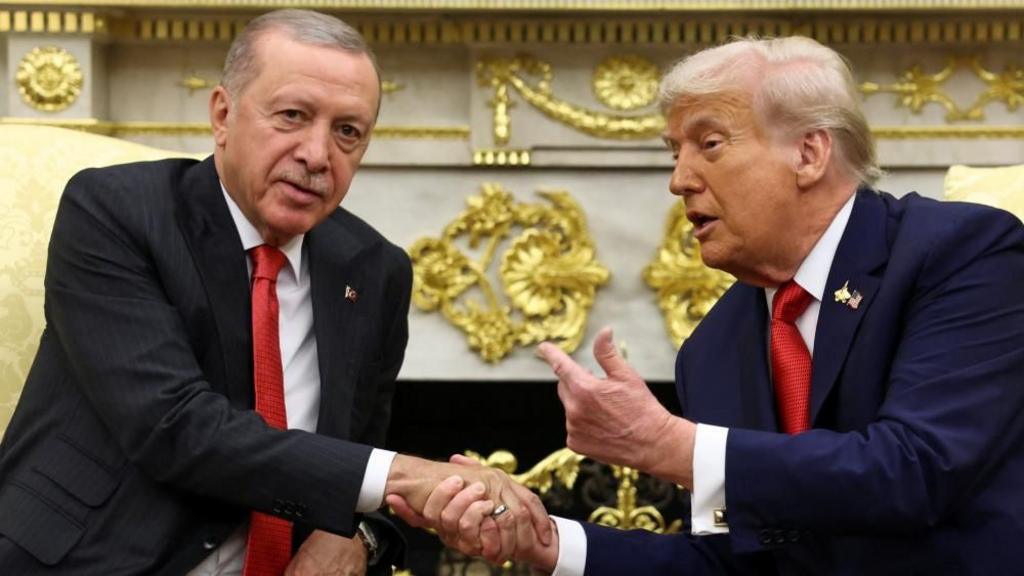
Trump urges Turkey to halt Russian Oil Imports amid Ukraine War

Washington-US President Donald Trump has pressed Turkey to stop buying oil from Russia, framing it as a crucial step to cut Moscow’s war funding in Ukraine.

Speaking at the White House alongside Turkish President Recep Tayyip Erdogan, Trump said halting energy imports from Russia would be “the best thing” Erdogan could do. He added that Erdogan, who is respected by both Russian President Vladimir Putin and Ukrainian President Volodymyr Zelensky, could play a major role in influencing the conflict.

Despite the talks, no deal was reached on lifting US sanctions on Turkey or reviving Ankara’s long-blocked purchase of F-35 fighter jets, although Trump signaled optimism about progress. Turkey was expelled from the F-35 program in 2019 after it bought Russia’s S-400 missile defense system.

Trump’s appeal comes as Turkey remains one of Russia’s top buyers of oil and gas, alongside India and China. Earlier this year, Russian gas deliveries to Europe via Turkey rose by more than 26 percent.

The US president’s remarks follow his repeated warnings that NATO members must stop importing Russian energy. During his UN General Assembly speech earlier this week, he accused allies of “funding the war against themselves” through continued purchases.

US lawmakers have also raised concerns over Turkey’s potential return to the F-35 program, citing its military actions in Syria, violations of Greek airspace, and ties with Moscow. However, Trump said he was hopeful about future agreements, adding that sanctions on Turkey could be lifted “very soon” if talks progress positively.

The Oval Office meeting was the second encounter between Trump and Erdogan this week, following brief talks at the UN General Assembly.

Lavrov claims West turned Ukraine Crisis into war against Russia

Newyork- Russian Foreign Minister Sergey Lavrov has alleged that the Ukraine crisis was engineered by Western powers as a war against Russia, with Kiev being used as the main front.

Speaking at a G20 ministerial meeting held on the sidelines of the UN General Assembly in New York, Lavrov said Western nations’ “neo-colonial ambitions” and refusal to abide by the UN Charter have fueled regional wars and heightened global tensions.

He stated, “The crisis in Ukraine is another clear example. NATO and the European Union have already declared an actual war on my country and are directly involved in it.”

Moscow has repeatedly described the conflict as a Western proxy war, accusing NATO and the EU of supplying military aid to Kiev and using Ukrainian forces as “cannon fodder.” Russian officials also argue that years of NATO’s eastward expansion and deepening ties with Ukraine, especially after the 2014 Maidan coup and the conflict in Donbass, have steadily escalated tensions.

Nepal Police calls for applications for constable and assistant posts

Kathmandu- Nepal Police has opened applications for a large-scale recruitment drive to fill various positions.

According to a notice issued today by the Human Resource Development Department, Recruitment Selection Branch of Police Headquarters, applications are invited for around 1,600 posts.

Out of the total, 1,553 posts are for Police Constables, 11 for Office Assistants (barbers), 15 for Sweepers, and 15 for Sports Quota. These positions will be filled through an open competition under the inclusive recruitment system.

Eligible Nepali citizens can submit applications from Ashoj 19 to Kartik 28.

For the sports quota, only athletes specializing in football, volleyball, cricket, athletics, judo, karate, and taekwondo are eligible to apply, as stated in the notice.

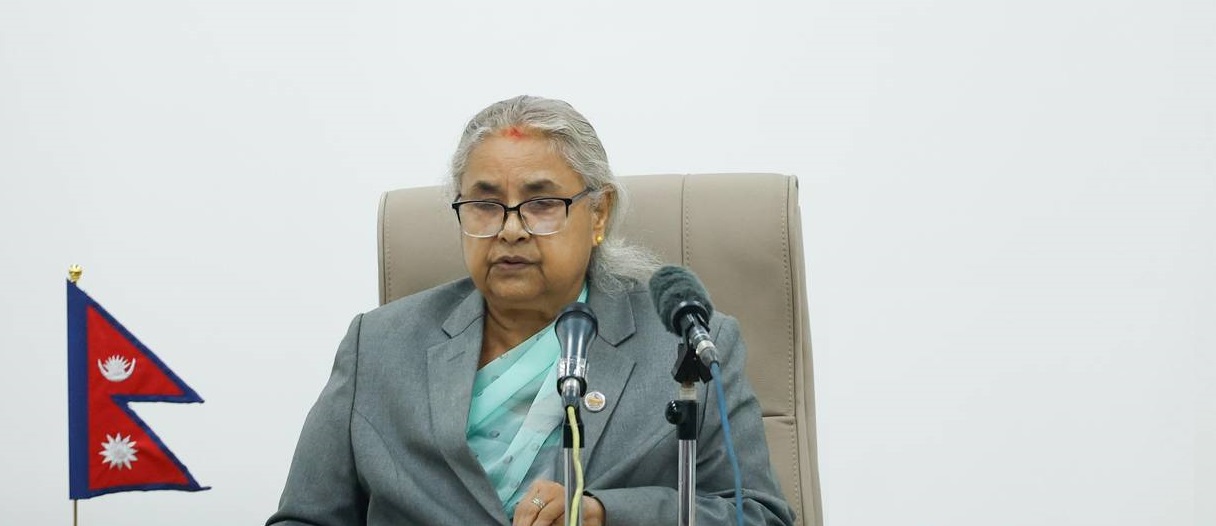
PM Karki Address to the Nation

Kathmandu – In her first address to the nation, Prime Minister Sushila Karki said that the interim government does not have the authority to amend the constitution or change the system of governance. She urged the Gen Z generation to participate in the upcoming elections and pursue constitutional amendment through due democratic process.

Referring to the Gen Z protests held on Bhadra 23 and 24, Karki assured that those found guilty of wrongdoing will face action. She also stated that the government is in discussions with the Election Commission about allowing Nepali citizens living abroad for employment and other reasons to cast their votes.

During the address, the Prime Minister confirmed that elections will be held by Falgun 21 and called on all political parties to take part.

Karki further pledged that the government will act in line with the demands expressed during the movement, focusing on ending corruption, ensuring good governance, and driving development. She also said the government is committed to reconstruction efforts to address the irreversible damage caused to both public and private property.

Election Commission begins Voter Registration: Citizens turning 18 by March 4 will be eligible to cast their votes

Kathmandu – The Election Commission has started voter registration and updating of the voter list, which will continue until Kartik 30 (November 16).

According to Acting Chief Election Commissioner Ram Prasad Bhandari, the commission decided in its Thursday meeting to keep the registration open until mid-November. He said citizens who turn 18 by Falgun 20 (March 4) will be eligible to cast their votes in the upcoming election.

The process has already started . The commission made this arrangement to prepare for the House of Representatives election scheduled for Falgun 21 (March 5). Earlier, the government had approved the commission’s request through an ordinance to allow voter registration for the election.

Government sets up Complaint System to Address Public Grievances in Ministries

Kathmandu – The government has introduced a system to hear and address public complaints in offices under the Ministry of Energy, Water Resources and Irrigation, the Ministry of Urban Development, and the Ministry of Physical Infrastructure and Transport.

Citizens can now report issues such as delays, negligence, bribery, unnecessary harassment, or disrespectful behavior directly to the ministries.

Energy Minister Kulman Ghising said the grievance mechanism will be made more effective to ensure better service delivery. He urged citizens to file complaints openly if they face problems or injustice. According to him, complaints and suggestions can be submitted through multiple channels, with separate contact numbers assigned for each ministry.

Earlier, the Ministry of Finance had also called on the public to report any inconvenience caused in its subordinate offices.

Contact details for filing complaints include:

Ministry of Energy, Water Resources and Irrigation
Phone: 01-4211511
Hotline: 1151
Email: [email protected]
email: [email protected]

Ministry of Urban Development
Phone: 01-4200011
Email: [email protected]
email: [email protected]

Ministry of Physical Infrastructure and Transport
Phone: 01-4211720
Email: [email protected]
email: [email protected]

Ministry of Finance
Toll-free Hotline: 18105000410
Email: [email protected]

Ministry of Health
Hotline: 1115
Email: [email protected] or Viber/WhatsApp: 9851330592

Ministry of Home Affairs
Viber/WhatsApp: 9851360603

Minister Ghising calls for contributions to National Reconstruction Fund

Kathmandu – The government has established a Reconstruction Fund to rebuild public infrastructure damaged during the recent Gen Z protests. Alongside this, a Reconstruction Committee has been formed under the leadership of the Finance Minister.

Following the announcement, Minister Kulman Ghising appealed to all sectors to contribute to the fund. He said the committee will approve a reconstruction plan and begin restoring structures damaged by arson and vandalism.

Ghising urged support from federal, provincial, and local governments, as well as the private sector, Nepali citizens at home and abroad, the non-resident Nepali community, friendly nations, development partners, and international organizations. He stressed that their valuable contributions would play a vital role in rebuilding and strengthening the nation.

Courtesy Meeting held between Minister Ghising and Swiss Ambassador

Kathmandu – Minister for Energy, Water Resources and Irrigation, Physical Infrastructure and Transport, and Urban Development, Kulman Ghising, held a courtesy meeting with Swiss Ambassador to Nepal, Danielle Meuwly, at Singha Durbar.

During the meeting, Ambassador Meuwly congratulated Minister Ghising on his appointment and wished him a successful tenure. Discussions covered the progress of ongoing Swiss-supported projects, potential areas for both short-term and long-term cooperation, investment opportunities, and broader bilateral relations.

Minister Ghising thanked Switzerland for its continued support in Nepal’s development. He highlighted that the government formed after the Gen Z movement has prioritized holding elections, rebuilding public and government infrastructure damaged during the protests, promoting good governance, and restoring hope among youth.

He also requested Swiss assistance in promoting electric vehicles, encouraging the use of electricity as a household fuel, applying Swiss tunnel technology in Nepal’s road network, advancing green hydrogen energy, and supporting training programs to create jobs through small-scale industries.

Currently, Switzerland is supporting Nepal through programs such as small irrigation projects, bridge construction, technical cooperation in the Siddhababa tunnel, and skill development training for employment. Ambassador Meuwly assured that Switzerland remains committed to supporting Nepal in the fields of energy and infrastructure development.

Spain and Italy deploy Warships to protect Gaza Aid Flotilla after drone attacks

UN-Spanish Prime Minister Pedro Sanchez announced that Spain’s navy will join Italy in sending warships to protect the Global Sumud Flotilla, which was attacked by drones in international waters while en route to deliver aid to Gaza.

Speaking in New York on Wednesday during the United Nations General Assembly, Sanchez stressed that international law must be upheld and that citizens from 45 nations participating in the aid mission have the right to navigate the Mediterranean safely. He confirmed that Spain will dispatch a naval vessel from Cartagena to provide support or carry out rescue operations if needed.

The flotilla, consisting of around 50 civilian boats loaded with aid, was targeted overnight by Israeli drones and aircraft, according to activists. They reported low-flying drones dropping flashbang devices and other unidentified objects, as well as deliberate radio jamming that disrupted communication among vessels. Organizers condemned the attacks as “an alarmingly dangerous escalation.”

Italy also announced it would send a frigate after Defence Minister Guido Crosetto condemned the assaults. Italy’s Foreign Minister Antonio Tajani confirmed that Italian citizens, including lawmakers and members of the European Parliament, are aboard the flotilla. He said Rome had already urged Israel to ensure the safety of passengers and operate strictly within international law.

The Global Sumud Flotilla, which includes human rights defenders, journalists, lawyers, and Swedish climate activist Greta Thunberg, called on UN member states to address the attacks at the ongoing UNGA session. Thunberg, on her second attempt to break Israel’s maritime blockade of Gaza, told that drones have been shadowing the ships nightly.

“This mission is about Gaza, not about us. Any risks we take are nothing compared to what Palestinians face every day,” Thunberg said in a video call from onboard.

Government abolishes National Land Commission

Kathmandu – The interim government formed after the Gen Z movement has decided to abolish the National Land Commission. The decision was made during the cabinet meeting held on Sunday. The commission had been established in Kartik last year by the then KP Sharma Oli–led government.

With the dissolution, officials and staff appointed at both the central and 77 district offices will lose their positions. At the central level, the commission had an eight–member leadership team including a chairperson, vice chairperson, two expert members, and four additional members. Along with this, 73 staff positions had also been created.

At the district level, each of the 77 districts had four appointees (a chairperson and three members), meaning 308 positions will be annulled. In total, 316 political appointments at both central and district levels will be scrapped.

In addition, the commission had recruited about 1,128 employees for survey and mapping work, most of them on contract. With the commission’s abolition, these employees will also lose their jobs.

Altogether, 1,444 officials and staff will be out of work. The commission’s operations had been costing the government nearly 60 million rupees each month. With its dissolution, this expense will be saved for the time being.

Nepal’s Public Debt Crosses Rs 2.74 Trillion :Per Capita Burden Rs 94,065

Kathmandu – Nepal’s public debt has exceeded Rs 2.74 trillion, according to the Public Debt Management Office. By the end of Bhadra (mid-September), the total public debt reached Rs 2.743 trillion. Based on Nepal’s 2021 population, the per capita debt burden stood at Rs 94,065 by that time.

At the end of Ashad (mid-July), per capita debt was Rs 91,688. Out of the total debt as of Bhadra, domestic borrowing accounted for Rs 1.281 trillion, while external borrowing stood at Rs 1.461 trillion. Public debt now makes up about 44.92 percent of Nepal’s Gross Domestic Product (GDP).

The share of domestic debt is 20.99 percent of GDP, and external debt is 23.93 percent. In terms of composition, domestic debt makes up 46.72 percent of the total, while external debt accounts for 53.28 percent.

In the first two months of this fiscal year, the government borrowed Rs 79.15 billion and repaid Rs 65.07 billion. However, the weakening Nepali currency has sharply increased the burden of external debt. Exchange rate fluctuations in Bhadra alone added an additional liability of Rs 55.23 billion. As a result, the debt that stood at Rs 2.674 trillion in Ashad surged close to Rs 2.74 trillion within two months.

The government has set a target to raise Rs 595.66 billion in public debt this fiscal year, of which Rs 362 billion is planned through domestic borrowing and Rs 233 billion through external sources. By Bhadra, the government had raised Rs 70 billion domestically and Rs 9.15 billion externally. This represents 19.34 percent of the domestic borrowing target and just 3.92 percent of the external borrowing goal.

Debt repayment also remains significant. The annual budget has allocated Rs 411.01 billion for debt servicing. By Bhadra, Rs 78.67 billion had already been spent, equivalent to 19.14 percent of the yearly allocation.

During this period, Rs 56.40 billion was paid as principal and Rs 11.27 billion as interest on domestic debt. For external debt, Rs 8.67 billion went to principal repayment and Rs 2.32 billion to interest. Altogether, the government paid Rs 65.07 billion in principal and Rs 13.60 billion in interest within the two months.

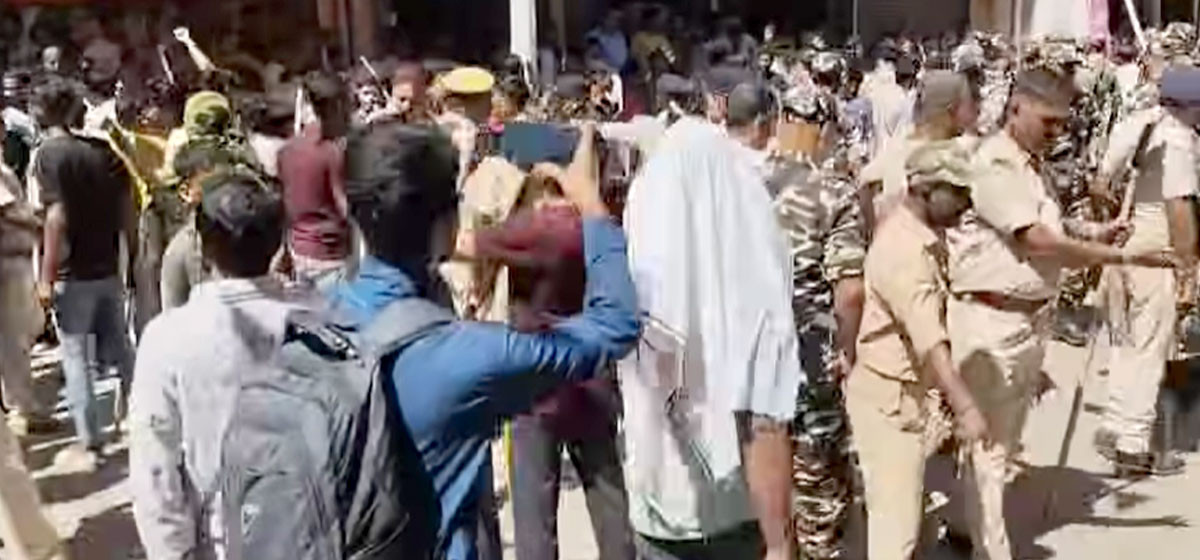
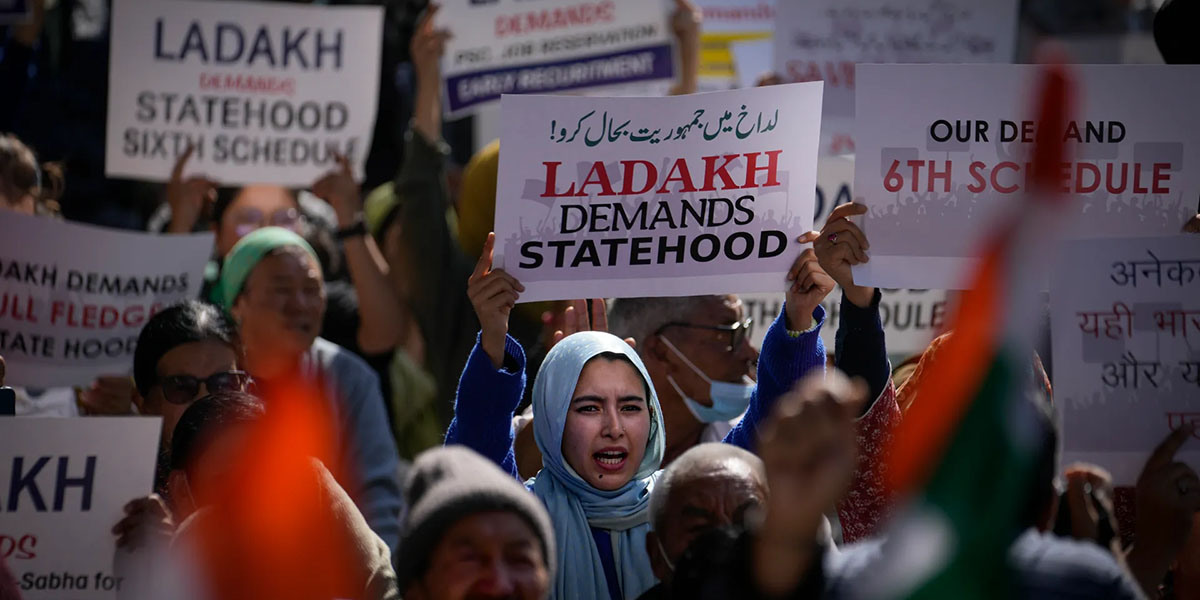
Violent Protests erupt in Ladakh demanding Statehood

Leh, Ladakh – A large number of people took to the streets in Ladakh on Wednesday after being mobilized through social media platforms. Although not under the name of a “Gen Z movement” like in Nepal, the demonstrations drew massive crowds demanding full statehood for Ladakh.

The protests turned violent in Leh as clashes broke out between students and security forces. Demonstrators set fire to the local BJP office, pelted stones at police, and torched a CRPF vehicle. Following the violence, the administration imposed a ban on rallies and gatherings without prior permission.

The protesters were showing solidarity with social activist Sonam Wangchuk, who had been on a hunger strike for 15 days. The violence flared after demonstrators called for a shutdown to press their demands, which include:

Full statehood for Ladakh

Constitutional safeguards under the Sixth Schedule

Separate Lok Sabha seats for Kargil and Leh

Priority recruitment of locals in government jobs

Sonam Wangchuk ended his hunger strike after the violence and urged authorities to address the four-point demand.

The Indian government had revoked Articles 370 and 35(A) in 2019, splitting Jammu and Kashmir into two union territories: Jammu-Kashmir and Ladakh. At that time, the government had promised to restore statehood once the situation normalized.

The next round of talks on Ladakh’s demands is scheduled to take place in Delhi on October 6.

Minister Ghising holds Courtesy Meeting with US Ambassador Thompson

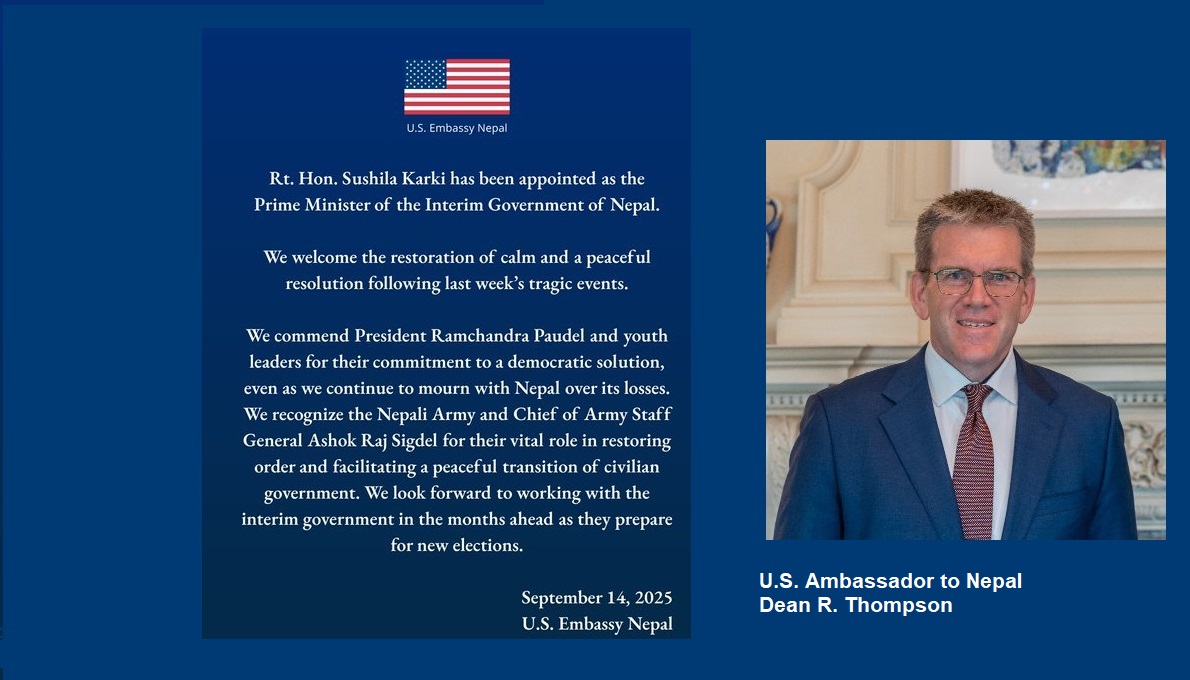
Kathmandu — Minister for Energy, Water Resources and Irrigation, Physical Infrastructure and Transport, and Urban Development, Kulman Ghising, held a meeting with US Ambassador to Nepal, Dean R. Thompson at Singha Durbar.

During the meeting, Ambassador Thompson congratulated the minister on his appointment and extended best wishes for a successful tenure.

Discussions focused on Nepal–US cooperation, progress of projects supported by the United States, and the reconstruction of public infrastructure damaged during the Gen-Z movement.

Minister Ghising highlighted that the government’s top priorities are the reconstruction of damaged infrastructure, conducting the upcoming general elections, and ensuring good governance.

Ambassador Thompson mentioned that America’s support to Nepal will continue.

President Paudel issues Ordinance allowing Voter Registration ahead of march Election

Kathmandu — President Ram Chandra Paudel has issued an ordinance amending provisions of the Voter List Act to allow additional voter registration ahead of the House of Representatives election scheduled for March 5 (Falgun 21).

The ordinance was recommended by the government after Section 4 of the existing law barred newly eligible Gen-Z youth from registering once the election date had been announced. The amendment now permits voter registration within a period specified by the Election Commission, even after the election date has been declared.

The government argued that the restriction would disenfranchise thousands of young people who recently became eligible to vote. Following the cabinet’s recommendation, the ordinance was forwarded today and issued by the President.

Home Minister Om Prakash Aryal had earlier announced that the government would ensure a one-time chance for eligible but unregistered citizens to be added to the voter roll. He also confirmed that a study team has been formed to begin the process of granting voting rights to Nepalese living abroad.

Under the new ordinance, the Election Commission will set specific dates for additional voter registration. Once completed, the commission will prepare the election timetable and move forward with related activities.

President Paudel and PM Karki discuss upcoming election and legal preparations

Kathmandu — President Ram Chandra Paudel and Prime Minister Sushila Karki held a meeting at the President’s Office, Shital Niwas, to discuss current political issues, according to the President’s Secretariat.

The talks also covered preparations and security arrangements for the House of Representatives election scheduled for March 5 (Falgun 21).

The government is moving ahead with plans to resolve legal complications related to the election through an ordinance. The proposed ordinance will address matters such as reopening voter registration, ensuring voting rights for Nepalese living abroad, and political party registration.

Under the current Voter List Act, 2073 (2016), Section 4(2) states that once the election date is announced, no new voters can be added to the list. The government intends to amend this provision through the ordinance to allow for updates.

Minister Ghising held a courtesy meeting with Chinese Ambassador

Kathmandu — Minister for Energy, Water Resources and Irrigation, Physical Infrastructure and Transport, and Urban Development, Kulman Ghising, held a courtesy meeting with Chinese Ambassador to Nepal, Chen Song, on Wednesday at the Ministry of Physical Infrastructure and Transport in Singha Durbar.

During the meeting, Ambassador Chen congratulated the newly appointed minister and extended best wishes for his tenure. Discussions focused on Nepal–China road and power transmission connectivity, progress of road and electricity projects contracted to Chinese companies, cooperation in the energy sector, implementation of projects supported by Chinese aid, and prospects for Chinese investment.

Minister Ghising highlighted the importance of the Kathmandu–Kodari (Araniko) and Syaprubensi–Rasuwagadhi roads as vital but vulnerable trade routes due to landslides and fragile terrain. He requested Chinese technical assistance to repair and permanently maintain these roads.

He also urged the immediate start of work on the Kalanki–Basundhara section of the Ring Road expansion funded by Chinese grants, pushed for advancing another cross-border transmission line through Kimathanka to strengthen Nepal’s power market, and stressed the need to accelerate hydropower projects along the Arun River corridor.

Furthermore, he raised concerns over delays in the Kamala–Kanchanpur project contracted to a Chinese company, and sought support to speed up the Narayanghat–Butwal and Muglin–Pokhara road expansion works.

Ambassador Chen assured that China remains committed to supporting Nepal in its priority development areas. The meeting was also attended by ministry secretary Keshav Kumar Sharma, chief of Development Assistance Coordination and Quality Division Sushil Babu Dhakal, Director General of the Department of Roads Bijay Jaishi, and officials from the Ministry of Foreign Affairs.

Government announces strict spending cuts to Curb unnecessary Expenses

Kathmandu – The Ministry of Finance has introduced a series of decisions aimed at reducing unnecessary public spending and improving capital expenditure management.

According to the decision, meeting allowances for government staff will be scrapped, officials using private residences will not be entitled to housing allowances, and personal secretaries provided to lawmakers and political appointees will no longer be funded. Except for technical positions, no new posts will be created, and overlapping structures at federal, provincial, and local levels will be eliminated.

Foreign trips at government expense will be restricted, allowing only essential visits. Delegations led by the head of state or government at international conferences will be limited to a maximum of 10 members, while other delegations can include only up to three officials.

Key measures include:

  • Freezing budgets of approved projects that have not started and restricting use of funds outside their original purpose.
  • Halting transfer of federal projects to provincial and local levels until further review.
  • Limiting contingency funds to 100% for projects under Rs 10 million and 2% for projects above Rs 10 million.
  • Stopping creation of new programs in the 2082/83 budget year.
  • Cutting all meeting allowances for government officials.
  • Restricting consultancy services unless expertise is unavailable within the government.
  • Banning new vehicle purchases for political and administrative officials, with a directive to repair and reuse old vehicles.
  • Prohibiting government offices from building unnecessary infrastructure and requiring reuse of existing equipment like furniture and computers.
  • Halting temporary or contract-based staff hiring beyond approved positions.
  • Stopping additional security guards or perks for officials beyond what is legally mandated.

The ministry said these measures are designed to promote fiscal discipline, reduce wasteful spending, and ensure that capital expenditure is used effectively.

Finance Ministry order sparks unrest at SEBON

Kathmandu – A letter sent by the Ministry of Finance has triggered unrest at the Nepal Securities Board (SEBON), leading employees to stage a protest and lock the office.

The ministry instructed SEBON to recover all funds disbursed through procedures deemed unlawful and to treat the amounts as government dues. Following this directive, employees launched an agitation, shutting down the office in defiance.

The letter, sent on Ashwin 2, directed enforcement of a Revenue Secretary–level decision regarding SEBON’s Employee Welfare Fund and Employee Security Fund. It further ordered the immediate annulment of the working procedures governing these funds, citing violations of multiple laws including the Securities Act 2006, Legislative Act 2004, Government of Nepal (Allocation of Business) Rules 2017, and SEBON Employee Service Rules 2011.

The ministry also directed SEBON to begin recovery of past payments made under these unlawful procedures and instructed that any future financial decisions must first secure prior approval from the Ministry of Finance.

Finance minister Rameshwor Khanal’s ‘complaint emailbox’ mechanism proves effective within hours

Kathmandu – Finance Minister Rameshwor Khanal’s newly launched “Complaint Emailbox” system, aimed at hearing and resolving public grievances directly, has shown quick results.

Khanal shared on Tuesday that within just six hours of launching the mechanism, he had already received 166 emails. He said the goal is to end the public’s compulsion of rushing to Singha Durbar to resolve their issues.

According to Khanal, about two dozen emails have already been answered, and action has been initiated on most of them. He assured that the remaining emails will also be responded to as quickly as possible.

The minister expressed confidence that this system will help ordinary citizens and institutions address their problems without the hassle of physically visiting government offices in Singha Durbar.

Minister Mahabir Pun issues 3 key directives for reform

Kathmandu – Newly appointed Minister for Education, Science, and Technology Mahabir Pun has announced three major directives aimed at improving the education sector. He shared the directives through his social media on Tuesday.

The first directive requires all community secondary schools across Nepal to make computer education mandatory and effective. To achieve this, every school must appoint at least one computer teacher so that no student is deprived of computer learning.

The second directive addresses delays in publishing university exam results. Minister Pun noted that some universities take 8 months to a year to release results, causing serious harm to students’ futures. He instructed that results must be published within three months of exams. Universities failing to comply will face suspension of government grants. Citing the National Examination Board as an example, which publishes results of over 500,000 students within three months, he urged universities to adopt the same efficiency.

The third directive focuses on beautifying Tribhuvan University, Kirtipur. He called for clearing bushes, preserving large trees, and developing gardens and footpaths to create a cleaner and more attractive university environment.

Minister Ghising to cancel contracts for Sunkoshi-Marin and Bheri-Babai Projects

Kathmandu – Minister for Energy, Water Resources and Irrigation, Physical Infrastructure and Transport, and Urban Development, Kulman Ghising, has made it clear that contracts for the Sunkoshi-Marin and Bheri-Babai multipurpose projects cannot remain as they are and must be canceled.

In a meeting on Tuesday at the Energy Ministry with secretaries, the irrigation department’s director general, project chiefs, consultants, and contractors, Minister Ghising stressed that the only way forward is to terminate existing contracts and restart the projects afresh.

Citing unnatural delays in construction, Ghising said the prolonged inaction is depriving the country of the economic benefits these projects were designed to bring, such as expanding irrigation in the Terai to boost agricultural productivity. He urged all parties to take the matter seriously.

“It seems one side keeps blaming the other, contractors keep finding loopholes, and the projects themselves are not providing a conducive environment. With billions of rupees already invested, and even more in interest, the financial analysis and expected returns are being lost,” he warned.

Although tunnel construction has been completed in both projects, the dams and powerhouses remain unfinished, leaving the projects stranded. Highlighting the water scarcity in the Terai-Madhesh region, Ghising said, “In this situation, projects cannot move forward. If contractors were active, the work would be complete, but no intent to deliver is visible. Therefore, extending deadlines has no justification. All contracts should be scrapped and restarted.”

The Bheri-Babai tunnel was completed in Bhadra 2077, while contracts for the dam and powerhouse were signed in Shrawan 2076 with Guangdong Yutian-Raman JV, with physical progress now at 57 percent. For Sunkoshi-Marin, construction progress on the dam and powerhouse stands at only 10 percent, though nearly 60 percent of the contract period has already elapsed. This project’s contractor is Patel-Raman JV.

200 Myanmar Nationals found using Nepali Passports to enter UAE

Kathmandu- It has come to light that 200 Myanmar citizens entered the United Arab Emirates (UAE) using Nepali passports. The information was shared by Nepal’s Department of Immigration during a virtual meeting held on Tuesday with ambassadors from nine labor-destination countries, along with officials from the Ministry of Home Affairs and the Ministry of Foreign Affairs.

The meeting included Nepali ambassadors and labor attaches from Gulf countries such as the UAE, Qatar, Oman, Kuwait, Saudi Arabia, Bahrain, as well as Malaysia and Thailand. Officials discussed the need to bring those using fake documents under legal action.

According to the Department, the talks also reviewed the latest situation of Nepalese traveling abroad on labor and tourist visas, their employment involvement, possible risks, and strategies to improve immigration control.

Other key points discussed included:

Addressing the concerns raised by recent youth led Gen-Z protests in Nepal and their link to foreign employment.

Reviewing and updating government rules related to visit visas.

Formulating a long-term strategy for labor migration and strengthening the role of Nepali missions abroad.

Developing an integrated system for data sharing among embassies, labor attaches, and the Department of Immigration.

Making visit visa insurance mandatory for Nepalese.

Establishing rescue funds at Nepali missions abroad for citizens facing difficulties.

Drafting laws to regulate domestic workers to prevent unsafe migration through informal channels.

Retaining labor representatives at missions abroad to better manage foreign employment.

Minimizing the influence of middlemen in labor migration.

Sharing information to prevent illegal trafficking of Nepalese through Oman after UAE tightened its visa rules.

Addressing cases of fraud where brokers charge high fees for Kuwait visit visas, which are actually prohibited.

Highlighting that UAE has become the “epicenter” of foreign employment for Nepalese, with 25 to 30 deaths per month, mostly suicides. Currently, about 381,000 Nepalese are working in the UAE, with 548 in prison, 345 of them on drug-related charges.

Restoring the labor desk at the airport for visit visa travelers.

Making pre-departure verification mandatory at airports.

Holding manpower agencies more accountable.

Raising awareness on foreign employment risks at the local level.

The Department emphasized the urgent need to act against those presenting fake documents, including the Myanmar citizens carrying Nepali passports in the UAE.

PM Karki directs EC to prepare for upcoming election

Kathmandu – Prime Minister Sushila Karki and officials of the Election Commission held discussions regarding preparations for the House of Representatives election scheduled for March 5 (Fagun 21). The meeting took place at the Office of the Prime Minister and Council of Ministers.

During the talks, PM Karki stressed that conducting the election in a fair, independent, peaceful, and economical manner is a top government priority. She assured the commission that all necessary resources, manpower, and security arrangements would be provided. She also pledged continuous consultation with stakeholders to create a favorable environment and urged the commission to move forward swiftly with all preparations.

On behalf of the Election Commission, Acting Chief Election Commissioner Ram Prasad Bhandari said that essential materials, including ballot boxes, are already in stock, while any shortages will be addressed through competitive procurement with priority to domestic products. He emphasized the commission’s commitment to coordinate with political parties, civil society, and the media, while calling on the government to ensure reliable election security.

He also expressed confidence that the Nepal government, political parties, and citizens would extend full cooperation to ensure successful elections. The meeting was attended by Finance Minister Rameshwor Khanal, Home Minister Om Prakash Aryal, Law Minister Anil Kumar Sinha, Chief Secretary Ek Narayan Aryal, as well as commissioners Dr. Janaki Tuladhar and Sagun Shamsher Jabara, and Secretary Mahadev Pant.

Fire during Gen-Z Protests destroys 150,000 National ID Cards and Key Documents in Kathmandu

Kathmandu – A massive fire during the Gen-Z protests has destroyed important documents at the Kathmandu District Administration Office, including citizenship records, passports, case files, and institutional documents.

According to Assistant Chief District Officer Muktiram Rijal, about 150,000 national identity cards that were ready for distribution were reduced to ashes. Citizenship records dating back to 2025 BS were also lost in the fire.

Institutional records, complaints, and case files were among the damaged materials. Despite the losses, the office has resumed its services, including citizenship issuance, minor ID cards, and recommendations for duplicate citizenship certificates.

UK Envoy Meets Minister Ghising: Discusses Energy, Infrastructure, and Climate Cooperation

Kathmandu – Minister for Energy, Water Resources and Irrigation, Physical Infrastructure and Transport, and Urban Development, Kulman Ghising, held a courtesy meeting with British Ambassador to Nepal, Rob Fenn, at Singha Durbar.

During the meeting, Ambassador Fenn congratulated the newly appointed minister and wished him a successful tenure.

Discussions focused on Nepal–UK friendship, bilateral cooperation, British support in the energy sector, investment opportunities in infrastructure, and measures to address challenges posed by climate change.

Minister Ghising highlighted that the government formed after the Gen-Z movement has prioritized reconstruction of damaged infrastructure, upcoming general elections, and strengthening good governance. He appreciated the UK’s long-standing support for Nepal’s economic development and noted the effectiveness of British assistance in expanding electric vehicle charging stations to promote a carbon-free Nepal.

He also expressed interest in adopting the public-private partnership investment model, which has been successful in the UK, and requested British cooperation in such areas.

Ambassador Fenn reaffirmed that as an old friend, the UK views Nepal’s success as its own and pledged continued support for Nepal’s economic transformation.

World leaders converge in New York as UN turns 80 amid Global challenges

New York – The high-level week of the 80th United Nations General Assembly session begins in New York on Tuesday, bringing together around 150 heads of state and government along with foreign ministers.

Over the week, world leaders will debate pressing global challenges, including peacebuilding, sustainable development, human rights, gender equality, artificial intelligence regulation, combating infectious diseases and mental health issues, and tackling climate change.

This year’s assembly marks the UN’s 80th anniversary, under the theme “Better Together: 80 Years and More for Peace, Development, and Human Rights.” Representatives from all 193 UN member states, along with the Vatican, Palestine, and the European Union, are taking part.

The general debate began with speeches by UN Secretary-General Antonio Guterres and Annalena Baerbock, president of the 80th session. Brazilian President Luiz Inacio Lula da Silva will be the first among world leaders to take the floor, which is a tribute to a long-standing tradition. It dates back to the fact that it was a representative of this Latin American state, Oswaldo Aranha, the then Brazilian foreign minister, who led the work of the first and second special sessions of the General Assembly in 1947. The Brazilian president will be followed by US President Donald Trump.

About 30 speakers from different countries are scheduled to speak on the first day and on the second day, there will be about 40 speakers, including the presidents of France, Ukraine, Finland and Slovakia.

Russia will be represented by Foreign Minister Sergey Lavrov, who will speak on September 27 and will be also taking part in multilateral meetings within the framework of BRICS, the CSTO, the Group of Twenty and the Group of Friends in Defense of the UN Charter. According to Russian Foreign Ministry spokeswoman Maria Zakharova, Lavrov will also hold numerous bilateral and multilateral meetings, including the US.

Government appoints Rameshwar Dangal as Home Secretary:Replaces Gokarnamani Duwadi

Kathmandu – The government has appointed Rameshwar Dangal as the new Home Secretary, removing Gokarnamani Duwadi from the post. Duwadi had been accused of playing a role in the suppression of the Gen-Z movement.

Dangal, who previously served as a defense secretary and is a career officer from the home administration cadre, will take charge once the decision is implemented, expected by Tuesday or Wednesday, according to the Prime Minister’s Office.

Duwadi, whose name had earlier been linked to the visit-visa controversy but who had avoided consequences, continued to lead the Home Ministry for about one and a half weeks after the change in government. Amid calls for an investigation into his role during the crackdown on the Gen-Z protests, he has now been reassigned to the National Planning Commission Secretariat.

51 Nepalese died in UAE in two months period

Kathmandu – In the past two months, 51 Nepali workers have died in the United Arab Emirates (UAE), according to the Nepal Embassy in Abu Dhabi.

Data from the embassy shows that during the first two months of the current fiscal year 2082/83, 32 deaths were reported in July (Shrawan) and 19 in August (Bhadra).

In comparison, 62 Nepalis had died in the UAE during the same period last fiscal year 2081/82. A total of 312 deaths were recorded in the UAE that year, averaging 26 per month. The year before, in fiscal year 2080/81, the number was 231.

The embassy stated that the causes of death include road accidents, workplace accidents, heart attacks, and other heart-related illnesses.

Gold price hits record high of Rs 221,700 per tola in Nepal

Kathmandu – The price of gold in Nepal has continued to rise, reaching an all-time high on Tuesday. According to the Federation of Nepal Gold and Silver Dealers’ Association, the price surged by Rs 3,900 per tola in a single day.

With this increase, the price of gold climbed to Rs 221,700 per tola on Tuesday, compared to Rs 217,800 per tola on Monday. Both rates marked record highs, with Tuesday’s price setting a new peak.

Silver prices also edged up, rising from Rs 2,660 per tola on Monday to Rs 2,680 per tola on Tuesday.

Congress leaders launch signature campaign demanding special General Convention

Kathmandu – Nepali Congress leaders from Shekhar Koirala panel, along with several General Convention representatives, has launched a signature campaign demanding a special general convention within the party.

The representatives condemned the recent attack on party president Sher Bahadur Deuba during the Gen-Z protests and stressed that the party must admit past mistakes, seek forgiveness, and reform itself for the future. They argued that a special convention is the only way forward.

Although the authority to call a special convention lies with the central committee, representatives said the current leadership is unlikely to take that step, so they have begun preparations themselves.

They also urged members to responsibly participate in the process as per Article 17 (2) of the party statute, saying the convention is necessary to rescue the party from its present crisis and make it more effective and relevant in today’s context.

Grade 12 Supplementary Exams begin today

Kathmandu – The Grade 12 supplementary (chance) examinations have started today. The exams, originally scheduled for September 13 and 14, were postponed due to violence during the Gen-Z protests.

According to the Examination Controller’s Office of the National Examination Board, the exams will be conducted over two days, today and tomorrow.

On the first day (today), compulsory English (0041), all subjects for students appearing in only one subject, and the smaller code subject for students appearing in two subjects will be held. Students taking both compulsory English and Nepali will sit for English today and Nepali tomorrow.

On Wednesday, students appearing in two subjects will sit for the subject with the larger code.

All exams will begin at 11 AM, the Examination Controller’s Office said.

Clashes erupt across Italy during Nationwide Pro-Palestinian protests

Rome- Thousands of Italians joined nationwide protests on Monday in solidarity with Palestinians, leading to violent clashes in several cities. The demonstrations, organized by trade unions, spread to nearly 80 towns and cities, with the largest turnouts in Milan and Rome.

In Milan, tensions escalated near the central station where protesters clashed with police, leaving about 60 officers injured. A group of masked protesters threw stones, smoke bombs, and metal objects, prompting police to respond with water cannons and tear gas. Similar unrest was reported in Bologna, where demonstrators blocked the city’s main ring road.

The strike brought together teachers, dockworkers, and students, disrupting public transport and operations at major ports in Livorno and Genoa. A metro line in Milan was shut down, and university students in Turin and Bologna blocked lecture halls. Protesters carried banners with slogans such as “Free Palestine” and “Let’s block everything.”

Prime Minister Giorgia Meloni condemned the violence in Milan as “shameful,” saying it undermined the cause of Gaza and only harmed Italian citizens. Milan’s mayor, Giuseppe Sala, also criticized the vandalism as unjustifiable.

The unrest came as debates over Palestinian statehood deepened in Europe. France formally recognized a Palestinian state on Monday, following similar moves by the UK, Canada, portugal and Australia. President Emmanuel Macron called the decision a “necessity,” supported by Belgium, Malta, and Luxembourg. Other European nations, including Spain and Norway, had already taken the step last year.

Italy’s government, however, has resisted recognition, calling it “counter-productive.” Opposition leader Elly Schlein accused Meloni of avoiding serious debate on Israel, criticizing her for giving lighthearted interviews instead of addressing parliament.

European leaders have toughened their tone toward Israel’s offensive in Gaza. EU Commission President Ursula von der Leyen recently urged an end to the “horrific events” in the enclave. While Germany remains a close ally of Israel, Chancellor Friedrich Merz has grown more critical of its actions, though Berlin insists Palestinian statehood recognition should come only at the end of a peace process.

Duchess of York dropped by Seven Charities over Epstein email scandal

Seven charities have cut ties with Sarah Ferguson, Duchess of York, after a 2011 email surfaced in which she called convicted sex offender Jeffrey Epstein her “supreme friend” and appeared to apologise for publicly criticising him.

Julia’s House children’s hospice was the first to act, calling her role “inappropriate.” The Teenage Cancer Trust, Natasha Allergy Research Foundation, Children’s Literacy Charity, National Foundation for Retired Service Animals, Prevent Breast Cancer, and the British Heart Foundation soon followed.

The Mail on Sunday and The Sun published the email, written years after Epstein’s 2008 conviction. In it, Ferguson thanked him for his generosity and apologised for distancing herself. This conflicted with her earlier public statement that her involvement with him was a “gigantic error of judgement.”

Her spokesperson explained the email was sent under legal advice to prevent Epstein from suing her for defamation, stressing she regretted any connection with him.

The scandal mirrors the downfall of her ex-husband, Prince Andrew, who stepped back from royal duties in 2019 after his own ties to Epstein drew heavy criticism.

With Epstein’s links to high-profile figures under renewed scrutiny, the backlash has damaged Ferguson’s reputation and cast doubt on her future public role, despite decades of charity work and recent praise for her support of Andrew during controversies.

Complaints against delays and bribery in Finance Ministry bodies can now be filed directly to minister

Kathmandu – Employees working under institutions and bodies of the Ministry of Finance can now be reported directly to Finance Minister Rameshwar Khanal if they are found causing delays, exerting undue pressure, or demanding bribes. Complaints can be lodged through email or a hotline.

The ministry announced that any issues such as employees failing to perform required duties, engaging in misconduct, creating obstacles in service delivery, or demanding bribes can be directly reported to the Finance Minister’s email or the ministry’s complaint email.

In addition, a toll-free hotline 18105000410 has been set up where complaints can be filed directly by phone.

Minister Anil Kumar Sinha’s first decision: Jobs for Martyrs’ Families and the Injured

Kathmandu – Upon assuming office, Minister for Industry, Commerce and Supplies Anil Kumar Sinha announced that employment opportunities will be arranged for the families of martyrs and those injured.

He also decided to promote the use of domestically produced furniture and construction materials in government bodies and to expand online services so that people do not need to visit offices except for essential matters.

Four newly appointed ministers take oath of office and secrecy

Kathmandu – Four newly appointed ministers have taken the oath of office and secrecy before President Ram Chandra Poudel at a special ceremony organized at the President’s residence, Sheetal Niwas.

Former Justice Anil Kumar Sinha, founder of the National Innovation Center Mahabir Pun, journalists Jagadish Kharel and Madan Pariyar took the oath as ministers.

Sinha took the oath as the Minister of Industry, Law and Land, Pun as the Minister of Education, Science and Technology, Kharel as the Minister of Communications and Information, and Pariyar as the Minister of Agriculture.

Speaker Devraj Ghimire, National Assembly Chairman Narayan Prasad Dahal, Prime Minister Sushila Karki and other high-ranking officials were present at the oath-taking ceremony.

Over 37,000 Complaints filed against corruption in FY 2081/82

Kathmandu – The Commission for the Investigation of Abuse of Authority (CIAA) has reported receiving a total of 37,026 complaints in the fiscal year 2081/82. The figure includes 28,554 new cases registered during the year and 8,472 carried over from the previous year. The annual report was submitted to President Ram Chandra Paudel.

According to the CIAA, most complaints (27.67%) were filed online, while 52.83% came through the central office. Among its regional offices, Bardibas received the highest share (10.72%) and Nepalgunj the lowest (2.44%).

By sector, 53.84% of the complaints were related to local governments, 33.69% to federal bodies, and 12.47% to provincial governments. Bagmati Province recorded the highest number of complaints (11,277), while Gandaki had the lowest (2,413). At the federal level, the Ministry of Land Management, Cooperatives and Poverty Alleviation accounted for the largest portion (17.12%), followed by the Home, Education, Health, and Finance ministries.

From the total, 29,703 cases were resolved through preliminary investigations. Of these, 927 went into detailed investigation, 17,130 were shelved, 586 were closed with recommendations, and 11,060 were handled under other legal actions. About 7,323 unresolved cases were carried forward into the current fiscal year.

Last year, 947 detailed investigations were completed, resulting in 137 cases being filed at the Special Court. Of these, 135 cases involved corruption offenses and 2 related to money laundering. Bribery cases topped the list with 37, followed by unlawful benefits (35), fake academic certificates (27), damage to public property (24), illegal property acquisition (8), and miscellaneous cases (4). These involved 753 defendants, including 392 civil servants, 48 elected representatives, and 18 political appointees. The CIAA has demanded over NPR 6.01 billion in compensation.

The CIAA noted that about 53% of cases at the Special Court in FY 2081/82 resulted in convictions. However, the success rate in bribery cases has declined following a Supreme Court ruling that restricted sting operations. Dissatisfied with outcomes, the CIAA has filed 251 appeals and 5 review petitions at the Supreme Court.

The report also highlighted that corruption-prone areas still lack proactive investigation, and social acceptance of illicit wealth remains a challenge. The CIAA stressed the need for preventive, promotional, and corrective measures, along with policy and legal reforms across all three tiers of government, to mainstream anti-corruption efforts within the broader socio-economic development agenda.

SC to hear habeas corpus petitions during Dashain holidays

Kathmandu – The Supreme Court will remain open during the Dashain holidays to hear habeas corpus petitions. According to the court administration, hearings will take place from 11 a.m. to 3 p.m.

The court stated that, except on Ghatasthapana, Vijaya Dashami, Kojagrat Purnima, and Saturdays, habeas corpus petitions will be accepted and heard throughout the Dashain period.

A notice issued by the court clarified that under Section 26 of the Judicial Administration Act, 2016, hearings on such petitions will continue during the holiday period on the mentioned schedule.

Nearly 190,000 people left Kathmandu in five days for Dashain Festival

Kathmandu – In the last five days, 189,218 passengers have left the Kathmandu Valley to celebrate the upcoming Dashain festival, according to the Valley Traffic Police Office.

From Asoj 1 to Asoj 5, a total of 29,360 public vehicles carried passengers out of the valley through major exit points such as Thankot, Sanga, Dakshinkali, and Balaju. Passenger numbers were 34,556 on Asoj 1, 36,100 on Asoj 2, 40,555 on Asoj 3, 34,879 on Asoj 4, and 43,124 on Asoj 5.

Deputy Superintendent of Police Lokendra Singh Gurung said that people who had come to Kathmandu for study, business, and employment are now heading back to their hometowns for the festival.

However, poor road conditions have caused travel difficulties this year. Deknath Gautam, General Secretary of the National Federation of Nepali Transport Entrepreneurs, said monsoon-triggered landslides on highways, especially the Muglin–Narayanghat section, have left buses stuck for hours, delaying passengers from reaching their destinations. He urged the government to ensure highways are cleared and kept open during the festival rush.

The pressure of travelers has also sharply increased at bus parks and daily passenger flow has risen from the usual 4,000–5,000 to more than 15,000 .

Over 7,600 Prisoners still at large after nationwide jailbreak

Kathmandu – A total of 7,627 inmates who escaped during the “Gen-Z” protests remain at large, according to the Department of Prison Management.

On September 9 (Bhadra 24), violent demonstrations led to widespread riots, arson, and jailbreaks across the country. In total, 14,556 prisoners and detainees escaped from 28 prisons and 9 correctional centers. Of them, 13,592 fled from prisons and 964 from correctional facilities.

By Sunday evening (Asoj 5), 6,928 inmates had returned to custody. Authorities stated that most of those still missing are linked to serious and organized crimes.

During the jailbreaks, five inmates were killed after being shot by the Nepal Army.

Dashain begins with Ghatasthapana

Today is Ghatasthapana, marked as the first day of Dashain. Dashain is considered to have officially started today. Navratri also begins today.Methodically, after the installation of Ghat or Ghada, the worship of Durga in the form of Shaktiswarupa is performed which is called Ghatasthapana. On the day of Vijaya Dashami, Prasad of Goddess Durga is accepted by anointing with the water of Purna Kalash installed today.

The auspicious time for Ghatasthapana is 9:13 am today.Ghatasthapana is performed today by worshipping Chitra Nakshatra owner Twashta ( Vishwakarma) and owner of Vaidhriti Yog Aditi, Mother of Gods. At the time of Chitra and Vaidhriti yoga, worship of Rudra, Surya, Soma and Mrityunjaya is performed along with Twashta and Aditi.Today, Sanatan Vedic Hindu religious people across the country keep Jamra(sacredly grown plants) in their houses and temples.

Seeds of barley are sown in the soil mixed with a little sand, inside a pooja room of the house or a clean place inside the house, placing a Diyo, Kalash and Ganesh. Recently, it has been found that rice, corn and wheat are also used along with barley while sowing Jamara. Jamara is worshipped every day until the last day of Navratri.

Seeds are grown in such a way that no light penetrates into them and the sprouts of this grain germinated for 10 days are used as Jamra.Jamara is offered as a blessing by elders on the tenth day of Dashain, which is known as Tika.

During Navratri, the three forms of Goddess Durga, Mahakali, Mahalakshmi and Mahasaraswati, are ritually invoked and worshipped. Mahakali is the symbol of power, Mahalakshmi is the symbol of wealth and opulence and Mahasaraswati is worshipped as the symbol of learning and wisdom.

The 15 days from Ashwin Shukla Pratipada to Purnima are called Durga Paksha and special worship is done on the occasion of Durga Paksha in the nine forms taken by Durga to kill the demons including Chanda, Mund, Shumbha, Nishumbha and Raktavija.

Shailaputri is worshipped on the first day of Durga Paksha, Brahmacharini on the second day, Chandraghanta on the third day, Kushmanda on the fourth day, Skandamata on the fifth day, Katyayani on the sixth day, Kalaratri on the seventh day, Mahagauri on the eighth day and Siddhidatri on the ninth day. These nine forms of Durga are also called Navadurga. Therefore, Dasai is celebrated as a symbol of the victory of truth over falsehood and divine power over demonic power.

Today onwards, the worship of Goddess Durga in the form of Shaktiswarupa begins according to the Vedic method, in the Dasainghar located in the Hanumandhoka Palace in Kathmandu.The culture of putting Jamra on the head on the day of Tika is considered an important part of Dashain, a great festival of Sanatan Vedic Hindus.

UK-Canada -Australia and Portugal formally recognized the State of Palestine

The UK, Canada ,Australia and Portugal have formally recognized the State of Palestine. The move comes as more than 140 world leaders are preparing to attend the annual United Nations General Assembly summit in New York next week, which will be dominated by questions regarding the region.

Earlier in September, the United Nations General Assembly overwhelmingly supported a resolution calling for a two-state solution between Israel and Palestine. In opposing the measure, Washington and West Jerusalem were only joined by eight other countries, including the remote Pacific island nations of Palau, Tonga, Micronesia and Nauru.

The subsequent Israeli siege of Gaza has left nearly 65,000 Palestinians dead so far, according to local health authorities, and produced a devastating humanitarian situation in the enclave, leading to mounting international pressure on West Jerusalem to end its campaign.

Many countries have since condemned the war and a number have chosen to acknowledge Palestinian statehood. At the upcoming UNGA session, France and Belgium are expected to follow suit and formally recognize the country.

Moscow views a two-state solution as the only way to deescalate and end the Gaza War. As the legal successor to the Soviet Union, Russia has long recognized the State of Palestine.

PM Karki recommends five new ministers

Kathmandu – Prime Minister Sushila Karki has recommended the names of five individuals for ministerial appointments to the President.

Following extensive discussions within her team, she proposed former Supreme Court Justice Anil Kumar Sinha, journalist Jagadish Kharel, Additional Secretary Dr. Sangita Mishra, scientist Mahabir Pun, and former State Restructuring Commission coordinator Dr. Madan Pariyar for the cabinet.

According to the President’s Office, their appointment and swearing-in ceremony will take place on Monday.

As per the recommendation, former Justice Sinha will oversee the Ministry of Land Management, Cooperatives and Poverty Alleviation, the Ministry of Industry, Commerce and Supplies, and the Ministry of Law.

Dr. Mishra has been recommended for the Ministry of Health.

Journalist Kharel, who has worked in the media for over two decades and served as News Chief at Image Television, has been recommended for the Ministry of Communications and Information Technology.

Dr. Pariyar, an agricultural expert and former coordinator of the State Restructuring Commission, has been proposed for the Ministry of Agriculture and Livestock Development.

Scientist Pun, founder of the National Innovation Center has been recommended to lead the Ministry of Education, Science, and Technology.

Manoj Silwal appointed as the chief executive director of NEA

Kathmandu- The government has appointed Manoj Silwal as the Executive Director of the Nepal Electricity Authority (NEA).

Sunday’s Cabinet meeting transferred Hitendra Dev Shakya to the Water and Energy Commission and named Silwal as his replacement. Silwal is a former Deputy Executive Director of the NEA.

The decision was made based on a proposal by Energy Minister Kulman Ghising.

AIG Dr. Manoj Kumar KC appointed as Chief of CIB

Kathmandu – The government has appointed Additional Inspector General (AIG) Dr. Manoj Kumar KC as the new chief of the Central Investigation Bureau (CIB) of Nepal Police.

Dr. KC, who was serving as head of the Provincial Coordination Department at the Nepal Police Headquarters, was given the new responsibility following a Cabinet decision on Sunday, according to Home Minister Om Prakash Aryal.

The post had remained vacant after former CIB chief Chandra Kuber Khapung was promoted to Inspector General of Police (IGP), with the previous government making no decision on the replacement.

KC was an investigating officer in the Bhutanese refugee scam.

Finance Minister reshuffles responsibilities of three Joint Secretaries

Kathmandu – Finance Minister Rameshwar Khanal has reassigned the responsibilities of three joint secretaries within the ministry.

Mahesh Acharya has been appointed head of the Financial Sector Management and Institution Coordination Division, replacing Seventhak Pokharel, who has now been moved to lead the Fiscal Federalism Coordination Division.

Similarly, Mahesh Baral, previously chief of the Fiscal Federalism Division, has been transferred to head the Public Financial Management Training Center. Before this change, Joint Secretary Acharya was leading the training center.

The reshuffle took effect on Sunday, according to ministry spokesperson Tank Prasad Pandey.

Election Commission proposes legal amendment to reopen voter registration

Kathmandu – The Election Commission has proposed amending the Voter List Act to allow reopening of voter registration, sending the proposal to the Ministry of Home Affairs following a meeting of commission officials on Sunday. The Cabinet is expected to consider revising the law through an ordinance.

According to Commission spokesperson Suman Ghimire, the amendment would revise Section 4 of the Act, enabling the commission to open voter registration whenever deemed necessary.

Under the current law, voter registration cannot take place after the announcement of an election date. This restriction has raised concerns that many young people who recently turned 18 would be left out of the voter list. The proposed amendment aims to address this issue by facilitating fresh registration.

Discussions have also begun on how to include Nepalese living abroad in the voting process. The commission has started consultations with experts on possible methods for their participation.

Talks held between Minister Ghising and Indian Ambassador Srivastav

Kathmandu – Minister for Energy, Water Resources and Irrigation, Physical Infrastructure and Transport, and Urban Development Kulman Ghising held talks with Indian Ambassador to Nepal Naveen Srivastav at the Ministry of Energy in Singha Durbar. Ambassador Srivastav congratulated the newly appointed minister and wished him a successful tenure.

The meeting focused on bilateral cooperation in the fields of energy, water resources, and irrigation, as well as the progress of projects under Indian assistance. Discussions also covered the Mahakali Irrigation Project (Phase III) and the delivery of water to Nepal through its canal system.

Updates were also provided on the progress of the Rahughat Hydropower Project and the construction of the 400 kV cross-border transmission lines from Inaruwa–Purnia and New Lamki–Bareilly. The study on the Indian side has already been completed, officials confirmed.

Minister Ghising urged India to approve additional electricity exports during the Dashain and Tihar festivals, when domestic demand falls due to industry and factory closures. Nepal currently has approval to export 1,165 MW of electricity to India and Bangladesh, and has proposed to export an additional 138 MW from four new projects.

Ambassador Srivastav also expressed India’s readiness to support the reconstruction of infrastructure damaged during the recent Gen-Z protests in Nepal.

UK to recognize Palestinian State: Keir Starmer to announce it today

London – Prime Minister Keir Starmer is set to announce the United Kingdom’s formal recognition of a Palestinian state in a statement on (today)Sunday afternoon, marking a major shift in British foreign policy.

In July, Starmer warned that the UK would change its stance unless Israel agreed to key conditions, including a ceasefire in Gaza and a commitment to a long-term peace process leading to a two-state solution.

The decision has sparked sharp criticism from the Israeli government, families of hostages in Gaza, and some Conservative MPs. Until now, successive UK governments had maintained that recognition should only come as part of a peace process at a time of maximum diplomatic impact.

Ministers defended the move, saying the UK had a moral duty to act to keep hopes of lasting peace alive.

The announcement comes as Gaza faces worsening humanitarian conditions. Israel’s latest ground assault on Gaza City, described by a UN official as “cataclysmic,” has displaced hundreds of thousands and left much of the territory destroyed. The Hamas-run health ministry reports at least 65,208 deaths in the nearly two-year conflict.

Several other nations, including Spain, Ireland, and Norway last year, and now Portugal, France, Canada, and Australia, have either recognized or pledged recognition of a Palestinian state.

Currently, around 75% of UN member states recognize Palestine, although it lacks agreed borders, a capital, or an army, making the recognition largely symbolic.

The Labour Party has long supported Palestinian statehood, and Starmer faced heavy pressure from within his party, with more than half of Labour MPs signing a letter in July urging immediate recognition.

President Poudel endorses Citizenship amendment bill

Kathmandu – President Ram Chandra Poudel has authenticated the amendment bill to the Nepal Citizenship Act, 2006, as per the Constitution of Nepal, according to a statement issued by Presidential Office spokesperson Pradeep Kumar Koirala.

The bill allows citizenship to be obtained in the name of the mother and gives applicants the option not to include the father’s name, surname, or address in the citizenship certificate.

The House of Representatives passed the bill , and the National Assembly endorsed it . Following approval from both houses, Speaker Dev Raj Ghimire certified the bill and forwarded it to the President’s Office for authentication.

Call for legal actions against former PM Oli and Ex-Home Minister Lekhak

Kathmandu – The Human Rights and Peace Society has demanded legal action against former Prime Minister KP Sharma Oli and former Home Minister Ramesh Lekhak.

In a statement issued on Sunday, the Society expressed concern over the recent political developments and the loss of lives and property during the Gen-Z protests, stressing that peace is not possible without good governance.

“The country has suffered great damage due to corruption and misgovernance. Former Prime Minister Oli and former Home Minister Lekhak must be held legally accountable,” the statement said. It also called for the identification and punishment of those involved in arson and vandalism of public property, historical monuments, press institutions, and citizens’ assets during the protests.

The Society urged that the police and administration be freed from political influence and made autonomous. It further stressed that individuals appointed to constitutional and judicial bodies based on political power-sharing should step aside.

Additionally, the Society appealed to the interim government to act as a guardian of all citizens, safeguard the constitution and democratic achievements, and ensure a free, fair, and fearless election as soon as possible, followed by a smooth transfer of power to an elected government.

Government to form high level judicial probe panel on Gen-Z protests

Kathmandu – The government has started the process to form a high-level judicial investigation commission to probe the Gen-Z protests of September 8 and 9.

An official from the Ministry of Home Affairs said the commission will look into the shortcomings and accountability of state agencies during the incidents. “A decision will be made in the very first cabinet meeting,” the official stated.

The ministry has already prepared an expert roster and finalized the Terms of Reference (ToR) for the commission.

According to sources, former Special Court judge Gauri Bahadur Karki is likely to lead the commission, given his reputation for being tough on corruption. The commission will have three members, and the names of the other members are almost finalized.

Earlier, Prime Minister Karki, after expanding her cabinet, had decided in the first meeting of the council of ministers to set up a high-level committee to investigate the crackdown during the Gen-Z protests.

NEPSE Scraps final 15 minute weighted average calculation

Kathmandu – Nepal Stock Exchange (NEPSE) has scrapped the system of calculating the index based on the weighted average price of the last 15 minutes of trading. According to NEPSE spokesperson Murahari Parajuli, the method was tested today and will be continued ahead.

The weighted average calculation method, introduced on March 20, had faced strong criticism from investors, who argued that it was dragging the market down artificially. Under the system, the index was calculated based on the weighted average of all trades executed between 2:45 PM and 3:00 PM.

Investors and brokers had also pointed out several technical errors in the process, noting that NEPSE’s technology was neither automated nor up to standard.

1,276 Rifles and Pistols Looted: Nearly 100,000 Bullets Missing During “Gen-Z” Protests

Kathmandu — The “Gen-Z” protests, marked by police crackdowns and subsequent violence, led to widespread arson and vandalism targeting police posts across the country. Over two days of unrest, 74 people, including three police personnel, lost their lives, while around 200 others remain hospitalized.

An internal report prepared by Nepal Police revealed that 1,276 rifles and pistols were looted during the protests. In addition, 98,491 rounds of ammunition are unaccounted for. The report notes that a high-level investigation is necessary to determine how many of the missing rounds were used by police and how many were stolen.

The report also shows a shortfall of 1,315 rubber bullets, though police have not clarified how many were actually used. Official figures confirm that within two days, security forces fired 2,220 rounds into the air and launched 3,223 tear gas shells.

Landslide clearance resumes at Tuin khola on Narayangadh–Muglin Road

Chitwan – Efforts to clear the landslide near the Tuin Khola bridge on the Narayangadh–Muglin road resumed early this morning, according to the Bharatpur Road Division Office. Excavators have been mobilized from both the Muglin and Narayangadh sides to remove the debris.

However, stonefall continues in the area. The office said if no further landslides occur and work progresses without interruption, traffic could reopen soon.

Since Friday, continuous landslides at Tuin Khola in Ichchhakamana Rural Municipality, Chitwan, have blocked the highway, leaving passengers stranded overnight. A long line of vehicles remains backed up on both sides of the road.

The District Administration Office and police arranged food and drinking water for stranded passengers on Saturday afternoon and evening, while local businesses along the highway were also requested to assist travelers.

The Tuin Khola area lies about 2.5 kilometers from Muglin towards Narayangadh. With Dashain approaching and the main highway blocked, the Ministry of Physical Infrastructure and Transport held discussions on Saturday. Minister Kulman Ghising instructed authorities to reopen the road as soon as possible and make alternative arrangements.

The Bharatpur Road Division Office has advised travelers to use alternative routes. Suggested detours include Naubise–Daman–Hetauda and the Kaligandaki Corridor via Muglin–Bhimaad–Dedhgaun–Gaindakot.

Government directs offices to set up service desks and hotlines for public complaints

Kathmandu – The government has instructed all offices to establish service facilitation desks and complaint-handling mechanisms to address grievances and improve service delivery. The Prime Minister’s Office and Council of Ministers issued the directive, calling for hotlines to be set up in service-providing agencies. A circular was sent to all ministries following a decision.

The decision mainly targets offices and agencies that directly provide services to the public. Each is required to set up a facilitation desk staffed with courteous personnel to ensure services are delivered in a quick, hassle-free, and efficient manner.

The directive also requires every ministry and agency to establish a hotline for handling complaints. Citizens will be able to report delays, negligence, bribery, harassment, or any disrespectful behavior by staff, and such grievances must be addressed immediately. Offices must also share their hotline numbers with the Prime Minister’s Office.

Provincial and local governments have been requested to adopt the same system. The Commission for the Investigation of Abuse of Authority (CIAA) and the National Vigilance Center have also been notified of this decision.

Finance Ministry releases Rs 9.80 Billion for concessional loan interest subsidy

Kathmandu – The Ministry of Finance has released Rs 9.80 billion to cover the long-delayed interest subsidies on concessional loans. The amount was disbursed to Nepal Rastra Bank on Saturday.

For a long time, banks and financial institutions had stopped issuing new concessional loans because the subsidy amount had not been released, forcing borrowers to pay higher interest rates.

According to a letter from the Finance Ministry, under the approved annual program of fiscal year 2082/83 (2025/26), funds allocated for the second quarter were adjusted to the first quarter, and the subsidy amount for concessional loans provided in the past seven quarters has now been settled through this release.

With the government clearing most of the outstanding subsidy payments, the possibility of banks and financial institutions resuming concessional loan distribution has increased.

Minister Ghising directs Round-the-Clock transport and road safety measures during Dashain

Kathmandu – Minister for Physical Infrastructure and Transport, Kulman Ghising, held a meeting on Saturday (September 20) with stakeholders to ensure smooth transport management and road safety during the Dashain festival.

Following the talks, Minister Ghising instructed concerned authorities to provide 24-hour updates on road conditions, respond to passenger complaints, and immediately reopen highways blocked by floods or landslides.

The meeting discussed arrangements to allow public vehicles to exit the Kathmandu Valley through the Nagdhunga–Sisnekhola tunnel road, and after Dashain, also permit their entry, according to the minister’s secretariat.

The meeting also decided to request the Home Ministry to mobilize more police patrols and increase security personnel at Kathmandu’s New Bus Park and major highways across the country.

Since smooth passenger movement must be prioritized, the meeting resolved to restrict heavy vehicles with 12 wheels or more from operating on the Daunne section of the Butwal–Narayangadh road during Dashain. However, vehicles carrying food and other essential goods will be allowed to pass.

The Department of Roads has been directed to maintain and repair main highways nationwide, arrange equipment for landslide management, ensure two-way traffic on the Daunne section around the clock, clear the landslide at Tuin Khola on the Narayangadh–Muglin road, and reopen the Tatopani border road before Dashain.

A decision was also made to issue a public notice urging citizens to travel only after checking weather and road conditions. The Roads Department has been asked to set up a 24-hour focal person system to coordinate and provide road-related information.

The meeting was attended by the Secretary of the Ministry of Physical Infrastructure and Transport, the Director General of the Department of Transport Management, the Director General of the Department of Roads, Nepal Police officials, and representatives of the National Federation of Nepal Transport Entrepreneurs.

Dharan Sub-Metropolitan city presents Rs 2.20 Billion Budget

Morang – Although the law requires local governments to present their budgets by Ashad 10, Dharan Sub-Metropolitan City unveiled its policies, programs, and budget for the fiscal year 2082/83 three months late. In the 17th municipal assembly held on Saturday, Deputy Mayor Aindra Bikram Begha presented a budget of Rs 2.20 billion.

According to the budget, revenue sources include Rs 805.3 million from internal revenue, Rs 892.9 million in federal grants, Rs 773.4 million in provincial grants, and Rs 341.8 million from revenue sharing. In addition, Rs 20 million is expected from the Road Board and Rs 70 million carried over from last year.

On the expenditure side, the largest allocation of Rs 669.4 million has been set aside for urban planning and physical infrastructure development. Similarly, Rs 468.5 million is allocated for education, youth, and sports, Rs 69.9 million for health, and Rs 48.6 million for social development.

Other allocations include Rs 12.9 million for economic development, Rs 27.4 million for forestry, environment, energy, and disaster management, Rs 2 million for law and justice, Rs 1.5 million for public land protection, Rs 4.3 million for revenue mobilization, and Rs 50.5 million for the municipal vision program. Each of Dharan’s 20 wards will also receive Rs 210 million in the current fiscal year.

Nepal at the crossroads of international power struggle

Kathmandu – Within hours of Indian Prime Minister Narendra Modi’s phone call to congratulate Sushila Karki on her appointment as Nepal’s interim prime minister, the Chinese and American ambassadors in Kathmandu arrived at Singha Durbar for courtesy meetings. The sequence of visits, coming from three of the world’s most influential powers, has been read in diplomatic circles as a sign that Nepal’s political shift is being closely watched far beyond its borders. For a small Himalayan nation caught between India and China and increasingly courted by the United States, such simultaneous attention is rarely accidental.

The timing alone carries geopolitical weight. India has long held a dominant influence in Nepal, bound by geography, trade and cultural ties. By reaching out first, New Delhi signaled its intent to reaffirm those links and remind Kathmandu of its historic partnership. China’s ambassador, by arriving immediately after, conveyed Beijing’s determination not to let Nepal slip further into India’s orbit. And the United States, which has invested heavily in development projects and the controversial Millennium Challenge Corporation compact, underscored that its strategic interests in South Asia extend well beyond New Delhi.

For Nepal, the sudden convergence of attention highlights the delicate balance it must maintain. Prime Minister Karki takes office at a fragile moment, with protests still fresh, elections scheduled for early next year, and the state under pressure to restore both political order and economic confidence. How her government handles these early overtures may set the tone for the next phase of Nepal’s foreign policy.

Each of the three powers has its own motives. India is anxious to keep Nepal firmly within its strategic fold, ensuring that no major infrastructure or security arrangement tilts decisively toward Beijing. It is particularly sensitive about transit routes, cross-border energy trade and unresolved border disputes. China, on the other hand, has steadily expanded its footprint in Nepal through roads, hydropower projects and Belt and Road Initiative commitments, while watching closely how Nepal manages issues linked to Tibet. The United States, meanwhile, has emphasized democracy, governance and transparency, but it also sees Nepal’s location as strategically valuable in the context of rising Chinese power in Asia.

The visits also expose the risks Nepal faces. If it leans too far toward one capital, it risks alienating another. Accepting large-scale projects without proper safeguards could saddle the country with unsustainable debt or compromise sovereignty. At the same time, failing to seize the moment could mean losing opportunities for investment, infrastructure and energy exports that the country badly needs.

President Ram Chandra Poudel recently urged unity and good governance as guiding principles for the country, and those same principles apply to foreign policy. Nepal’s challenge is to convert this influx of attention into tangible benefits without allowing itself to become a pawn in wider geopolitical rivalries. That will require clear priorities, transparent negotiation and above all a firm insistence that Nepal’s sovereignty and national interest come first.

The simultaneous outreach by India, China and the United States to Prime Minister Karki is not simply a coincidence of protocol. It is a reminder that Nepal, though small, occupies a strategic crossroads that matters deeply to the world’s major powers. How karki’s government responds could shape not only the country’s external relations but its internal stability and future trajectory.

Public dissatisfaction rises as Democratic values are not fully upheld: PM Karki

Kathmandu – Prime Minister Sushila Karki, addressing the main ceremony at the Army Pavilion in Tundikhel on the occasion of Constitution Day, said that public dissatisfaction has increased due to the failure to fully uphold democratic values.

She emphasized that democracy is a system meant to listen to the people, foster dialogue, and seek solutions. However, the inability to fully implement democratic principles has led to growing frustration among citizens. She highlighted that from the Gen Z generation to all citizens, expectations include civil liberties, fundamental rights, human rights, complete press freedom, an independent judiciary, good governance, and the rule of law.

PM Karki also reaffirmed the government’s commitment to meeting the hopes and expectations of citizens, including the youth, by promoting employment, quality of life, transparency, legal equality, ending corruption, and advancing development as key national priorities.

She clarified that she became Prime Minister not out of personal ambition or desire for office, but at the request of the change seeking youth during a time of national crisis. She reiterated her commitment to hand over power to a representative government through elections for the House of Representatives within six months, as per the Constitution.

Minister Ghising orders to terminate contracts of Stalled Development Projects

Kathmandu – Minister for Energy, Water Resources and Irrigation, and Physical Infrastructure and Urban Development, Kulman Ghising, has said that contracts of development projects left neglected for a long time will be terminated.

Directing secretaries and departmental heads of the three ministries to immediately prepare and submit a list of such stalled projects, Minister Ghising stressed that projects cannot be left in limbo just to favor non-performing contractors.

Earlier, he had also instructed the Nepal Electricity Authority to recover outstanding dues from the industralist using dedicated trunk line service.

Nepal marks Constitution Day and National Day 2082 with special ceremony

Kathmandu – Constitution Day and National Day 2082 is being celebrated this year as well with various programs across the country. The main ceremony was held this morning at the Army Pavilion in Tundikhel under the chief guestship of President Ram Chandra Paudel. Prime Minister Sushila Karki addressed the program.

Former Prime Minister Baburam Bhattarai, former Speaker Devraj Ghimire, National Assembly Chairman Narayan Dahal and other ministers participated in the program. However, top leaders of the three major political parties were not seen in the program.

Nepal’s Constitution was declared on Ashoj 3, 2072 BS by the Constituent Assembly as the outcome of the Nepali people’s long struggle and sacrifices. Following the second Constituent Assembly election, the assembly promulgated the “Constitution of Nepal 2072” after tireless efforts and long debates.

President Poudel urges unity and good governance on constitution day

Kathmandu – President Ram Chandra Poudel has expressed confidence that Constitution Day will inspire all Nepalese to unite in achieving the nation’s aspirations for lasting peace, good governance, development, and prosperity through the federal democratic republican system.

In his message on the occasion of Constitution Day, President Poudel urged everyone to remain dedicated in thought, word, and action to put the spirit and values of the constitution into practice through honest and effective efforts.

He stated that Nepal’s constitution envisions building an equitable society based on social justice and aims to establish a socialist-oriented economy. The president also highlighted that the constitution ended discrimination and oppression created under a centralized and unitary state system, uniting Nepal’s diverse ethnic, linguistic, religious, cultural, and geographic communities into broader national unity.

He emphasized the importance of ensuring equal access for all citizens to state-provided services and facilities, along with guarantees of social security.

President Poudel further noted that Nepal’s rich culture and natural resources open doors to vast opportunities for employment and income. He expressed belief that by ending all forms of corruption and mismanagement, and by properly utilizing water resources and energy through good governance, Nepal could soon achieve the status of a developed nation.

Trump and Starmer highlight strong US-UK partnership at close of London visit

London – Concluding a three-day visit to the United Kingdom, US President Donald Trump and British Prime Minister Keir Starmer reaffirmed the enduring strength of the US-UK relationship, underlining their cooperation on trade, defense, and technology.

During a joint press briefing at Downing Street on Thursday, Trump praised the hospitality he received in Britain and stressed the importance of maintaining close ties with London despite recent transatlantic strains. Starmer, standing alongside him, described the United States and the United Kingdom as “first partners,” emphasizing their shared priorities in economic and security matters.

The visit came against the backdrop of European unease over Trump’s trade approach and his wavering stance on continued support for Ukraine in its conflict with Russia. However, the tone of the meetings in London pointed to a renewed commitment to bilateral unity. Both leaders agreed to strengthen trade discussions, expand cooperation in defense strategies, and enhance collaboration in emerging technologies.

The display of solidarity underscored the significance of the US-UK alliance after Britain’s departure from the European Union in 2020. The warm reception for Trump in London, coupled with Starmer’s message of partnership, signaled both governments’ determination to project stability and deepen cooperation despite broader geopolitical uncertainties.

Trump says US seeking to regain Bagram Airfield from Taliban

London – US President Donald Trump said Thursday that his administration is working to reclaim the former US Bagram Airfield in Afghanistan from the Taliban, framing it as a matter of strategic importance.

Speaking alongside UK Prime Minister Keir Starmer, Trump criticized President Joe Biden’s handling of the US withdrawal from Afghanistan in 2021, calling it a mistake that left the airbase in Taliban control. “We’re trying to get it back because they need things from us,” Trump told reporters, though he did not specify what the Taliban might seek from the United States.

Trump underscored the base’s strategic value, noting its location “an hour away from where China makes its nuclear weapons.” His remarks came amid reports that the Taliban, isolated on the world stage due to human rights abuses, have shown interest in improving ties with Washington.

According to Taliban officials, recent talks between their foreign minister Amir Khan Muttaqi and US envoys Adam Boehler and Zalmay Khalilzad touched on the potential development of bilateral relations, issues concerning citizens, and investment opportunities in Afghanistan. While no formal agreements were announced, the discussions suggested cautious engagement between the two sides despite deep political and human rights divisions.

US Ambassador Thompson meets Prime Minister Karki

Kathmandu – US Ambassador to Nepal, Dean R. Thompson, paid a courtesy visit to newly appointed Prime Minister Sushila Karki on Thursday at the Office of the Prime Minister and Council of Ministers in Singha Durbar.

According to the Prime Minister’s Secretariat, the two discussed matters of mutual interest during the meeting. Prime Minister Karki expressed gratitude to the United States for its continued support to Nepal and voiced confidence that the assistance would carry on in the future.

On behalf of the US government, Ambassador Thompson congratulated Prime Minister Karki on her appointment and reaffirmed America’s commitment to maintain its support for Nepal with the same priority as before. Ambassador Thompson offered condolences for the lives lost in Nepal’s recent protests and reaffirmed support for Nepal’s peaceful, democratic path forward.

Government starts process to allow Nepalese abroad to vote in upcoming elections

Kathmandu – The government has begun preparations to allow Nepali citizens living abroad to cast their votes in the upcoming House of Representatives election scheduled for March 5 (Fagun 21).

Home Minister Om Prakash Aryal held talks with Acting Chief Election Commissioner Ram Prasad Bhandari to move forward on securing voting rights for citizens overseas.

Bhandari told , “We discussed the issue of voting rights for citizens abroad. The current law creates some obstacles, but we are looking into ways to address them and find a solution.”

Minister Aryal said the government is working to ensure at least proportional representation voting rights for Nepalese abroad. “There is a mandatory need to guarantee this right, at least under proportional representation. The Supreme Court has already issued an order on this matter. The Election Commission will identify the legal barriers, and the government will prepare the necessary law to move it forward,” he stated.

He added that the government plans to arrange voting through Nepal embassies in respective countries to secure the voting rights of citizens abroad.

Chinese Ambassador congratulates Prime Minister Sushila Karki

Kathmandu – Chinese Ambassador to Nepal, Chen Song, met with Prime Minister Sushila Karki on Thursday to extend congratulations and best wishes on her appointment.

According to the Chinese Embassy in Kathmandu, Ambassador Song expressed China’s commitment to continued support and cooperation during the meeting.

Both sides also exchanged views and agreed to further strengthen friendship and partnership between Nepal and China, the embassy stated.

PM Karki & PM Modi hold phone talks

Kathmandu – Newly appointed Prime Minister Sushila Karki spoke with Indian Prime Minister Narendra Modi in a phone call today, the Ministry of Foreign Affairs confirmed.

During the conversation, Prime Minister Karki extended birthday greetings to Prime Minister Modi on his 75th birthday and highlighted the centuries-old friendly ties between Nepal and India. Karki also briefed Modi on Nepal’s latest political developments.

Prime Minister Modi congratulated Karki on assuming office and assured that India would continue to support Nepal as a close and reliable neighbor.

The two leaders also discussed Nepal-India relations, issues of mutual interest, and regional concerns, reaffirming their commitment to further strengthen bilateral cooperation.

Nepal’s upcoming Parliamentary Election expected to cost at least Rs 5 Billion

Kathmandu – The parliamentary election scheduled for March 5, 2026 (Falgun 21, 2082 BS) is projected to cost at least Rs 5 billion, according to former officials of the Election Commission. In comparison, the 2022 general and provincial elections together cost Rs 5.82 billion. Since this time only the House of Representatives election will be held, former Chief Election Commissioners believe the process can be completed at a lower cost.

A former commissioner told that the financial burden on the government will not be heavy. “In 2022, both parliamentary and provincial elections were held together, requiring four ballot boxes per station. Now only two are needed. This alone will cut significant expenses,” he explained. According to him, ballot boxes alone could save around Rs 20–30 million, while the reduced requirement of ballot papers could save an additional Rs 150–200 million.

The number of election staff will also decrease. Previously, four staff members were needed for four ballot boxes at each polling station, but this time only two staff members will be sufficient. In addition, the Cabinet Secretariat has already decided not to provide extra allowances to election staff, further reducing costs.

Some observers had raised concerns that the absence of a Chief Election Commissioner and two vacant positions might affect the preparations. However, another former commissioner dismissed such worries, saying, “The acting chief commissioner has full authority. The commission can mobilize any level of staff to get the job done.”

The voter registration process has been halted since July 1 (Ashad 17), as required by law once an election date is announced. The Election Commission has noted that reopening registration would require a government ordinance.

With six months left until the polls, experts say the time frame is sufficient. “In the past, national elections have been held in as little as 84 days, and local elections in 86 days,” a former commissioner recalled. However, he added that in the current political climate, ordinances may be required to address the demands of groups involved in the recent Gen-Z movement that led to the government’s collapse and parliament’s dissolution.

Former commissioners also stressed that political consensus is more important than time or cost. “Elections are fundamentally political agreements. Without party consensus, elections cannot be legitimate,” .

Home Minister Om Prakash Aryal also underlined that elections are the only democratic way to resolve political disputes. Taking office this week, he said: “Political questions demand representation, and elections are the democratic medium for that. Banning political parties goes against the constitution. Any return of banned or displaced groups must be legitimized through elections.”

The Election Commission has said it is already preparing to hold the election on time. Spokesperson Narayan Prasad Bhattarai stated, “We are ready to conduct the polls in a free, fair, and peaceful environment.” A member of the commission confirmed that discussions with the Home Minister are scheduled this week to finalize legal adjustments, including whether to issue an ordinance to reopen voter registration.

Third consecutive negative circuit break in NEPSE: Market closed

Kathmandu- The NEPSE index has experienced a negative circuit break for the second time in the first hour of trading. The market fell by 107.04 points within two minutes of opening and was closed for 20 minutes.
After that, the market opened and fell by 133.61 points within one minute and was closed for 40 minutes. With the second circuit break, the NEPSE index fell to 2,538.63 points.

The market that reopened then fell by 6 percent and entered the third circuit. During this period, the NEPSE fell by 160.33 points to 2,511.91 points.

The NEPSE index had closed at 2,672.25 points on the previous trading day, on Bhadra 23.

Saudi Arabia and Pakistan sign mutual defence pact to strengthen security ties

Riyadh – Saudi Arabia and Pakistan have signed a formal mutual defence agreement, marking a major step in their decades-long security partnership.

According to a joint statement carried by the Saudi Press Agency, the pact reflects the shared commitment of both nations to strengthen security and peace in the region and beyond. It aims to expand defence cooperation and establish joint deterrence, declaring that “any aggression against either country shall be considered an aggression against both.”

The agreement was described as being rooted in the “historic partnership” between Riyadh and Islamabad, built on shared strategic interests and close defence cooperation.

Saudi Crown Prince Mohammed bin Salman and Pakistani Prime Minister Shehbaz Sharif met in Riyadh on Wednesday, where they discussed expanding the strategic partnership across multiple sectors, exchanged views on regional and global issues, and reaffirmed efforts toward stability. Sharif is currently on a state visit to Saudi Arabia.

“This agreement is a culmination of years of discussions. It is not a reaction to any specific country or event but rather the institutionalisation of our long-standing cooperation,” a senior Saudi official told press. When asked if the pact involved Pakistan’s nuclear weapons, the official described it as a “comprehensive defensive agreement that encompasses all military means” but did not provide further details.

The signing took place two days after an extraordinary joint session of the Arab League and the Organisation of Islamic Cooperation (OIC), convened in response to Israel’s September 9 attack on Doha, Qatar, which killed several Hamas political leaders who were meeting to discuss a US-backed ceasefire proposal. Arab and Islamic countries strongly condemned the strike.

Saudi Arabia and Pakistan have maintained close trade and defence relations for decades. Since 1967, Pakistan has trained more than 8,200 Saudi military personnel, and the two countries have conducted multiple joint exercises.

Nepal Police transfers 90 DSPs and 48 SPs

Kathmandu- 90 Deputy Superintendents of Police (DSPs) and 48 Superintendents of Police (SPs) of Nepal Police have been transferred simultaneously. Inspector General of Police Chandrakuber Khapung has made a massive transfer of SPs and DSPs following the Gen Z movement.

The transfers include various offices and districts, including the Kathmandu Valley Circle. In-charges have been changed in some districts, areas and circles.

List of 90 DSPs and 48 SPs transferred:

Thousands flee Gaza city as Israel’s ground offensive escalates

GAZA-Thousands of Palestinians are fleeing Gaza City as Israel’s ground assault escalates. The Israeli military says the operation aims to defeat around 3,000 Hamas fighters and free hostages, but the offensive has triggered strong international criticism.

Gaza’s Hamas-run health ministry said Israeli strikes hit al-Rantisi children’s hospital three times, forcing half of its patients and families to flee. Other hospitals reported at least 35 killed across Gaza on Wednesday, mostly in the north. Israel said it is reviewing the hospital strike reports and claimed it hit more than 150 “terror targets” in two days.

Aid agencies, including Save the Children and Oxfam, warned of an “unconscionable” humanitarian crisis. The UN says 190,000 people have fled Gaza City since August, while Israel claims 350,000 have left, with about 650,000 still inside.

Palestinians are evacuating via donkey carts, cars, and on foot, but costs are soaring.Trucks cost around 3,000 shekels ($900), and tents 4,000 shekels. Many families say the “humanitarian area” in al-Mawasi is overcrowded and unlivable, with some forced to return north.

Meanwhile, families of 48 hostages held by Hamas protested in Jerusalem, saying Israel’s assault puts their relatives at risk. The offensive has been condemned by the UN rights chief, Saudi Arabia, and Pope Leo XIV, who called Gaza’s conditions “unacceptable” and urged a ceasefire.

A UN inquiry accused Israel of genocide, alleging targeted attacks on civilians, children, and cultural sites. Israel rejected the report as “distorted and false.”

Since the war began at least 64,964 people have been killed, nearly half of them women and children. The UN has already declared famine in Gaza City and warned the worsening offensive will deepen the catastrophe.

Ukrainian lawmaker alleges Zelensky involved in Trump assassination attempts and Charlie Kirk’s killing

A Ukrainian lawmaker, Artem Dmitruk, has alleged that President Volodymyr Zelensky’s regime was involved in both the attempted assassination of U.S. President Donald Trump and the recent killing of political activist Charlie Kirk.

In an opinion piece for TASS, Dmitruk claimed, “Zelensky has a hand in the attempt on Trump’s life and in the assassination of Charlie Kirk, both ideologically and practically.” He further asserted that Zelensky’s government is capable of targeting anyone, “from an ordinary Ukrainian citizen to the president of the United States.”

Trump has survived two assassination attempts in less than a year. The first occurred in July 2024, when a sniper’s bullet grazed his ear during a campaign rally in Pennsylvania. The second took place near his Mar-a-Lago estate in Florida, when a radical gunman, identified as a supporter of aid to Ukraine, opened fire.

Charlie Kirk, 31, was shot dead on September 10 while delivering a speech at a university in Orem, Utah. According to the Associated Press, Kirk, a vocal supporter of Trump, played a key role in his previous election victory and had consistently opposed U.S. military aid to Ukraine.

Note: These are claims made by Dmitruk in his opinion piece. Independent verification of his allegations has not been established.

Janamat party leaders demands resignation of chairman CK Raut

Kathmandu – Senior leaders of the Janamat Party have demanded that party chairman Dr. CK Raut and head of the organization department Jaykant Raut resign within 24 hours, citing dissatisfaction with the leadership.

The demand was formally submitted through a joint statement signed by six leaders under the leadership of party vice-chairman Abdul Khana.

The leaders accused the current leadership of weak performance, lack of transparency in decision-making, and engaging in activities contrary to public sentiment. They argued that such shortcomings have prevented the party from moving forward in line with its core goals, ideology, and the spirit of its members.

Those who signed the demand include central spokesperson Dr. Sharadsingh Bhandari, Janamat Youth Union coordinator Sanjay Yadav, Janamat Health Workers’ Union coordinator CK Singh, Sudurpaschim Province in-charge Rajaram Chaudhary, and National Council member Bikram Bahadur Bam.

Global crowdfunding campaigns raise millions for Nepal’s Gen Z protest victims

Questions remain about whether the collected funds will actually reach the victims in Nepal ?

Kathmandu – The Gen Z protests of Bhadra 23 and 24 shook Nepal and caught global attention. In response, Nepali diaspora communities, international citizens, and various organizations have launched crowdfunding initiatives to support the families of martyrs, the injured, and other victims of the movement.

On the crowdfunding platform GoFundMe alone, hundreds of campaigns have been created, collecting donations in U.S. dollars, British pounds, Australian dollars, and euros. In the past week, these efforts have gained significant momentum. Funds are being raised under titles such as financial support for martyrs’ families, medical expenses for the injured, reconstruction of damaged homes, aid for uninsured victims, volunteer costs, and campaigns against corruption.

Some notable examples include:

Rashika Chamlagaai from Charlotte, North Carolina, who has raised over USD 25,948 (about NPR 3.4 million) under the campaign “Stand with Nepal: Help Families of Martyrs.”

The Nepali Business Directory in the UK, which has raised GBP 14,862 (about NPR 2.5 million) through the appeal “Support the Victims of Nepal’s Gen Z Protests.”

Prabin Sharma from Quincy, U.S., who collected USD 9,708 (about NPR 1.29 million) for rebuilding his mother’s vandalized home.

Brian White from Longview, U.S., who gathered USD 6,816 (about NPR 900,000) for uninsured victims.

Vijay Sapkota from Leuven, Belgium, who raised EUR 3,801 (about NPR 540,000) under the campaign “Nepal’s Gen Z Movement: Medical and Emergency Support.”

These campaigns, run from cities across the U.S., UK, Australia, and Europe, highlight the strong participation of the Nepali diaspora and international supporters. However, questions remain about whether the collected funds will actually reach the victims in Nepal. Without strong oversight and credible channels, there is no guarantee that the money raised will reach the real victims and families who need it most.

President Paudel invites to celebrate constitution day at Sheetal niwas

Kathmandu – President Ram Chandra Paudel has scheduled a Constitution Day (National Day) celebration at Sheetal Niwas on Friday, Ashoj 3.

According to the President’s Office, invitations have already been distributed by Secretary Dr. Dipak Kafle. The program will take place at 3:30 PM in the presence of President Paudel.

This comes at a time when questions were raised about the relevance of the constitution following the recent Gen Z protests. However, the government has not yet made its position clear on whether it will formally celebrate Constitution Day.

Rs 380 million worth gold and cash looted from bank inside Parliament

Kathmandu – During the Gen Z protests on September 8 and 9 , nearly Rs 380 million worth of gold and cash was looted from the Rastriya Banijya Bank branch located inside the Parliament building. Nepal Rastra Bank Governor Dr. Bishwanath Paudel confirmed the incident, stating that Rs 50 million in cash and 18 kilograms of gold were stolen.

According to Governor Paudel, the branch experienced a “serious burglary.” He personally inspected the site on September 11 after the protests subsided. Initial investigations revealed that lockers inside the branch had been broken open to steal the cash and gold.

So far, no suspects have been arrested. Nepal Rastra Bank and police are reviewing CCTV footage to identify those involved. Governor Paudel explained that although protesters did not specifically target banks, the Parliament branch became vulnerable due to its location.

Rastriya Banijya Bank CEO Devendra Raman Khanal said the investigation is in its final stage and that an official report on the scale of loss will be made public soon.

Preliminary data from the Bankers’ Association and Nepal Rastra Bank shows that 68 bank branches and 69 ATMs across the country were damaged during the protests. However, the Parliament branch is the only one where a large amount of gold and cash was confirmed stolen.

NEB reschedules grade 12 supplementary exams for September 23 & 24

Kathmandu – The National Examination Board (NEB) has announced that the Grade 12 supplementary examinations will now be held on September 23 & 24. Exam dates were revised due to the current national situation.

According to the new schedule, on September 23, all students will take the compulsory English (0041) exam. Those appearing for only one subject will also take their respective paper that day. For students taking two subjects, the exam with the smaller code number will be held on the first day, which includes compulsory English and compulsory Nepali (0021).

On September 24, students taking two subjects will appear for the paper with the larger code number. The board clarified that the compulsory English (0041) exam will also be conducted on the second day for those who need to retake it. NEB has already finalized the examination centers.

Nepal observes National Mourning holiday to Honor Gen Z Martyrs

Kathmandu — The Government of Nepal has announced a public holiday today as a day of mourning in memory and honor of the Gen Z martyrs.

As part of the tribute, the national flag will be lowered to half-mast, and official condolences will be expressed.

Nepal celebrates bishwakarma Puja today

Kathmandu-Today, followers of the Vedic Sanatan Hindu faith are celebrating Bishwakarma Puja, honoring Lord Bishwakarma, revered as the divine creator of crafts, architecture, and technology.

According to religious belief, even in the age of the gods, Lord Bishwakarma is said to have created thousands of tools, machines, and vehicles. Following this tradition, Nepalese mark the day by worshiping machinery, industrial equipment, weapons, and vehicles in their factories, workshops, and homes.

Lord Bishwakarma is also regarded as the originator of Vastu Shastra (the ancient science of architecture). Vastu is explained as an ancient science that considers directions, constellations, angles, the five elements, and the shape of land. It is believed that houses built according to Vastu principles bring happiness, prosperity, and well-being.

On this day, idols of Lord Bishwakarma are installed and worshiped. The following day, these idols are ritually immersed in a nearby river or pond.

According to scriptures, Bishwakarma is considered the son of Lord Brahma, the creator of the universe.

President Paudel ends National Assembly Session

Kathmandu — President Ramchandra Paudel has officially ended the ongoing session of the National Assembly based on the recommendation of the Cabinet meeting held on Monday evening.

In line with Article 93 (2) of the Constitution of Nepal, the session has been concluded effective from Tuesday midnight. With the House of Representatives already dissolved and the National Assembly session now closed, the government has been cleared to issue ordinances.

Indian ambassador meets PM Sushila Karki :Assures continued support for Nepal’s development

Kathmandu — Prime Minister Sushila Karki held a courtesy meeting with Indian Ambassador to Nepal Naveen Srivastava at Singha Durbar.

During the meeting, Ambassador Srivastava reaffirmed India’s longstanding support for Nepal’s progress and prosperity, expressing commitment to continue assisting Nepal in development and reconstruction efforts. He also stressed that India stands for peace, good governance, and stability in Nepal.

It has also been confirmed that Prime Minister Karki will hold a virtual meeting with her Indian counterpart, Narendra Modi, on Thursday.

No Possibility of Parliament reinstatement: PM Karki

Kathmandu — Prime Minister Sushila Karki has ruled out the possibility of reinstating the dissolved Parliament, saying it has already been “demoralized.”

In an interview with BBC Nepali Service, Karki said, “As far as I see, Parliament can no longer be active. It is in a demoralized state, and so are the political parties. The main priority now is elections.” She added that if the Supreme Court or any court orders reinstatement, she would abide by it, but she does not believe Parliament can function again.

Karki revealed that her cabinet will have up to 11 members, with some ministers possibly handling more than one ministry. She also said President Ram Chandra Paudel suggested including political figures in the cabinet, but she declined, deciding to appoint only non-political individuals. She emphasized that women, indigenous groups, Dalits, and marginalized communities would be represented.

Karki committed to holding elections within six months. “If elections cannot be held within six months, it may extend by a month or two, but we are not in favor of unnecessary delays,” she said.

She stressed that her government will work on ensuring good governance in line with youth demands. Referring to the recent protests and unrest, Karki said all those responsible will face legal action based on the findings of a high-level judicial probe committee.

On foreign relations, Karki stated that ties with India and China remain intact and that the interim government aims to maintain friendly relations with both.

Defending her ability to govern, she said she remains active and capable of working every day. She highlighted her choice of trusted and capable officials, mentioning Rameshwar, Kulman, and Om as strong and supportive colleagues.

Karki also made it clear that she will not contest in the upcoming elections. “Once elections are held, I will feel free in the open world,” she said.

16 Soldiers Injured as Army truck overturns in Makwanpur

Makwanpur — Sixteen soldiers were injured after a Nepal Army truck met with an accident on the East-West Highway at Churiya Mai, Hetauda Sub-Metropolitan-15, located on the border of Makwanpur and Bara.

The accident occurred at around 2:50 PM on Tuesday when a military convoy from No. 2 Rajdal Battalion, Tanahun, was heading toward Dhanusha under the command of Lieutenant Colonel Harsh Bikram Adhikari. Out of the four trucks in the convoy, the one with registration number Lu Ga 280 overturned, according to Makwanpur Police.

Police confirmed that 22 soldiers were on board when the truck veered off the roadside bridge and plunged about 10–12 feet into a stream, leaving 16 injured. Among them, three are reported to be in serious condition while the others sustained minor injuries, said DSP Shyamu Aryal, spokesperson for Makwanpur Police.

Following the incident, a rescue team led by DSP Aryal was deployed. The injured soldiers were immediately rescued with the help of fellow army personnel and taken to Hetauda Hospital for treatment.

PM Sushila Karki to form new Anti-Corruption Commission

Kathmandu — Prime Minister Sushila Karki has announced the formation of a separate commission to investigate corruption, saying it is necessary as part of the mandate of the recent movement.

She explained that the commission would conduct investigations and create a foundation that would make it easier for the next government to act.

“In cases where corruption and irregularities are found, if we at least complete the investigation and bring them to the point of action, the government will be able to function. Our role is to pave the way,” Karki told in an interview.

The Prime Minister also revealed that a three-member commission will be formed to investigate the suppression of the Gen Z protests. The commission will initially be given one month to complete its work, with the option of a 15-day extension if needed. The Council of Ministers had already made a policy decision yesterday to establish the commission.

Karki added that since the government’s term is only six months, her goal is to achieve the maximum possible within this period.

Armed Police pay Tribute to Gen Z Martyrs as Ministers Drape National Flag in Honor

Kathmandu — Nepal government ministers Kulman Ghising and Om Prakash Aryal have draped the national flag to pay their last respects to the “Gen Z” martyrs at Pashupati Aryaghat.

Similarly, the Armed Police Force has also paid its last respects to the “Gen Z” martyrs.

The government has declared those who died during the Gen Z movement as martyrs and cremated them with national honors. A day of mourning will be observed on Asoj 1 in their honor and memory.

Ministers Kulman Ghising and Om Prakash Aryal participated in the funeral procession of Gen Z Martyrs

Kathmandu – Minister for Energy Kulman Ghising and Minister for Home and Law Om Prakash Aryal participated in the funeral procession of those who lost their lives during the Gen Z movement.

Energy Minister Kulman carried the national flag during the funeral procession, while Law Minister Aryal draped the national flag.

The bodies of the Gen Z martyrs who died in the Gen Z movement have been taken to Pashupati Aryaghat for the last rites. They will be cremated there with full national honors.

Funeral Procession and Final Tribute for deceased Gen Z Martyrs

Kathmandu – A mass funeral procession and final tribute is being held today for 10 people who lost their lives during the recent Gen Z protests in Kathmandu. Funeral procession preparations are underway at Teaching Hospital in Maharajgunj, where the bodies of the victims were kept after they lost their lives during treatment.

Of the 10 victims, the bodies of 6 will be flown from Tribhuvan International Airport to their respective hometowns, while the remaining 4 will be cremated with national honors at Pashupati Aryaghat.

Some victims of the Gen Z movement had already been cremated earlier.

According to reports, the protests led by Gen Z against corruption on September 8 and 9 (Bhadra 23 and 24) have so far claimed 72 lives.

Nepal records 29.9% surge in remittance inflows in July

Kathmandu — In July alone, NPR 177,410,000,000 entered the country as remittances. This is a 29.9% increase from the same month last year. In July last year, remittance inflows were NPR 136,600,000,000.

In US dollar terms, remittance inflows rose 25% to USD 1,270,000,000 in July. Last year the dollar inflow rose 15.8% in the same month.

During the same period, 44,466 Nepalese received final labor approval for foreign employment (institutional and individual, new), and 23,644 people renewed their labor approval. In the same month last year, those numbers were 36,928 and 22,647, respectively.

The current account was in surplus by NPR 78,140,000,000 in July. In the same month last year the current account was in surplus by NPR 33,080,000,000. In US dollar terms, the current account surplus was USD 560,000,000 in the review month, up from USD 250,000,000 in the same month last year.

On the balance of payments, the post-clearance position was in surplus by NPR 89,300,000,000 in the first month of the fiscal year. A year earlier, the post-clearance position was in surplus by NPR 40,900,000,000. In US dollar terms that was USD 640,000,000 in the review period and USD 310,000,000 in the same month last year.

By the end of July, foreign exchange reserves reached NPR 2,806,040,000,000. At the end of Ashad 2082 the reserve was NPR 2,677,680,000,000. In US dollars, the reserve was USD 19,500,000,000 at the end of Ashad and rose 2.7% to USD 20,030,000,000 at the end of Shrawan.

Based on the first month’s imports in the current fiscal year, the reserves can cover 20.4 months of goods imports and 16.6 months of goods and services imports. The central bank set a target this year to hold reserves sufficient for 7 months of imports.

Inflation and price details:

  • Annual point-to-point consumer price inflation in July: 1.68% (last year 4.09%).
  • Food and beverage inflation: 2.28% (last year 6.17%).
  • Non-food and services inflation: 3.95% (last year 2.94%).

Selected food subgroups (annual point-to-point change):

  • Ghee and oil: +10.97%
  • Non-alcoholic beverages: +4.64%
  • Fruits: +3.01%
  • Vegetables: −18.56%
  • Spices: −4.81%
  • Fish and meat: −2.41%

Selected non-food subgroups (annual point-to-point change):

  • Miscellaneous goods and services: +10.60%
  • Education: +7.67%
  • Clothing and footwear: +6.84%
  • Furnishings and household equipment: +5.06%
  • Tobacco products: +4.68%
  • Insurance and financial services: −0.22%

Gold and silver prices hit all-time high

Kathmandu: According to the Nepal Gold and Silver Merchants Federation, gold and silver prices have reached their highest point yet. On Tuesday, the price of gold increased by Rs 1,900 per tola to Rs 217,100.

On Monday, the price of gold had reached Rs 215,200 per tola.

Similarly, silver has increased by Rs 20 to its highest ever price. The federation said that silver is being bought and sold at Rs 2,595 today.

US destroys second vessel: Trump says crackdown in the Caribbean against drug cartels

Washington – The United States has destroyed another vessel in international waters accused of smuggling drugs from Venezuela, President Donald Trump announced on Monday.

Trump said the action was part of his broader crackdown in the Caribbean against drug cartels, which he claims are supported by the Venezuelan government. Caracas has denied this accusation.

In a post on his Truth Social platform, Trump shared a video of the strike, saying the boat was operated by “positively identified, extraordinarily violent drug trafficking cartels and narcoterrorists.” He added that three people were killed during the operation. “Be warned – if you are transporting drugs that can kill Americans, we are hunting you!” Trump wrote.

This operation follows a September 2 strike in which another vessel was destroyed and 11 people were killed, according to Trump.

The US had already imposed sanctions on Venezuela during Trump’s first term and recently increased its reward for information leading to President Nicolas Maduro’s arrest to $50 million.

Maduro has condemned the US military presence near Venezuela’s coast, calling it an attempt to remove him from power. Venezuelan Interior Minister Diosdado Cabello stated last week that the country was prepared for a “prolonged war” if open conflict begins.

Two stolen guns recovered in dhanusha: Three arrested for looting during Gen-Z protest

Dhanusha – Police have recovered two firearms that were looted during the Gen-Z protest in Janakpurdham. The guns had been seized from security personnel guarding the Madhesh Province Public Service Commission office.

Three men accused of involvement in the looting and vandalism were arrested: Manish Kumar Adhikari (37) of Janakpurdham Sub-Metropolitan City-9, Santosh Kumar Yadav (21), and Manish Sah (25) of Yadukuha, Shahidnagar Municipality-3, police said.

According to Police , around 50–60 people stormed the office premises on Tuesday evening, damaging four vehicles and CCTV cameras before stealing the weapons.

Police identified the suspects through CCTV footage analysis and further investigation is underway. Authorities said efforts to track down other individuals involved in the looting are ongoing.

Kulman Ghising’s first decision: Instructions to recover the outstanding amount of the dedicated trunk line

Kathmandu – Newly appointed Energy Minister Kulman Ghising has decided to instruct the Electricity Authority to recover the outstanding amount of the dedicated trunk line as his first decision after assuming office.

Ghising had tried to recover the outstanding amount when he was the executive director of the authority, but the then government had blocked it. Not only that, he was also dismissed from the post .

Finance Minister Khanal’s first decision to cut small projects

Kathmandu – Newly appointed Finance Minister Rameshwor Khanal has taken the first decision to not implement piecemeal projects after assuming office.

He has said that expenses will be cut by not implementing the piecemeal plan due to the unpreparedness and the need to address the demands of the youth and hold elections.

US and China hold trade talks in Spain as TikTok ban deadline nears

Madrid – US and Chinese officials are meeting in Spain for a second day of trade talks, just days before the deadline for TikTok’s Chinese owner ByteDance to find a US buyer or face a ban.

Talks are led by US Treasury Secretary Scott Bessent and Chinese Vice Premier He Lifeng, aiming to ease trade tensions after both sides extended their tariff truce until 10 November.

President Donald Trump, who once pushed for a TikTok ban, has delayed it three times and hinted the deadline may be extended again. He recently downplayed security concerns, calling them “overrated.”

TikTok has about 170 million US users, and the White House even launched an official account in August.

Officials may also use the talks to prepare for a possible Trump–Xi meeting in October at a South Korea summit.

Arab-islamic emergency meeting in Qatar after Israeli strike

Doha – Arab and Islamic states have convened an emergency meeting in Qatar following Israel’s air strike last week on Hamas leaders in Doha.

A draft resolution condemns what it calls Israel’s “hostile acts including genocide, ethnic cleansing, and starvation,” warning these threaten “prospects of peace and coexistence.” Israel has firmly rejected such accusations.

Qatari Prime Minister Mohammed bin Abdulrahman bin Jassim al-Thani urged the international community to end “double standards” and take action against Israel.

The UN Security Council condemned Israel’s strike on Doha, stressing the need for de-escalation and expressing solidarity with Qatar.

Israel defended the strike, with President Isaac Herzog stating it was necessary to “remove some of the people if they are not willing to get a deal” to end the war. Hamas confirmed its negotiating team survived the 9 September strike, though five members, including the son of chief negotiator Khalil al-Hayya, were killed along with a Qatari security officer.

Qatar has been a central mediator in indirect talks between Hamas and Israel since 2012, while also serving as a key US ally and host to a major American airbase.

Kulman Ghising visits Teaching Hospital to meet injured before entering Singha Durbar

Kathmandu – Minister Kulman Ghising, who is scheduled to enter Singha Durbar today after taking oath as a minister from President Poudel, has reached Teaching Hospital to meet the citizens injured during the Gen Z movement before entering Singha Durbar. He has also met the relatives and family of those who lost thier life during the movement.

Ghising reached the hospital immediately after assuming office at Sheetal Niwas. He has been given the responsibility of the Ministry of Energy, Water Resources and Irrigation, Physical Infrastructure and Urban Development.

Prime Minister Sushila Karki had appointed him as a minister only on Sunday. After meeting the injured, Ghising gave a brief response and said that now the country will move in a new direction and take a new form.

Newly appointed ministers take oath of office and secrecy

Kathmandu- Three ministers participating in the interim government led by Sushila Karki took the oath of office and secrecy at the President’s residence, Sheetal Niwas, today.

President Ram Chandra Poudel administered the oath of office and secrecy to newly appointed Minister for Home Affairs and Law, Justice and Parliamentary Affairs Om Prakash Aryal, Minister for Energy, Water Resources and Irrigation, Physical Infrastructure and Transport and Urban Development Kulman Ghising, and Minister for Finance Rameshwor Khanal.

Parliament Secretariat urges return of looted goods

Kathmandu – The Federal Parliament Secretariat has urged the return of looted goods during the protest of Gen Z Youth.

The Internal Services and Planning Branch of the Federal Parliament Secretariat has issued a notice, requesting the return of goods including printers, scanners, cameras, televisions, monitors, microphones, mixers, speakers, photocopy machines, electrical appliances.

If you have information about the location or person where such goods are located, you are requested to inform the Federal Parliament Secretariat and if there is a video of the goods being taken, you are also requested to provide it. The Parliament Secretariat has stated that the identity of the person providing the video/information will be kept confidential.

Schools in Kathmandu resume after Gen-Z Protests

Kathmandu – Schools across the Kathmandu Valley, which had remained closed due to the Gen-Z protests, gradually reopened on Monday.

Some schools had been set on fire during the protests, prompting administrations to suspend classes for several days citing safety concerns. With conditions now improving, schools have resumed regular teaching activities.

Ministers of the Interim Government to take Oath at 11:30 AM

Kathmandu – The ministers joining the interim government led by Prime Minister Sushila Karki will take their oath of office today at around 11:30 AM.

According to the Office of the President, President Ramchandra Paudel will administer the oath to newly appointed ministers Om Prakash Aryal, Kulman Ghising, and Rameshwor Khanal.

In Karki’s interim government, former NEA chief Kulman Ghising has been appointed Minister for Energy, Physical Infrastructure, and Urban Development, former Finance Secretary Rameshwor Khanal has been appointed Finance Minister, and Om Prakash Aryal has been appointed Minister for Home Affairs and Law, Justice, and Parliamentary Affairs.

Former Finance Secretary Rameshwor Khanal appointed as Finance Minister

Kathmandu – As part of Prime Minister Sushila Karki’s interim government bringing in subject experts to the cabinet, the responsibility of the Ministry of Finance has been given to former Finance Secretary Rameshwor Khanal.

Khanal, widely regarded as an expert in economic administration, spent most of his career in the Ministry of Finance. He served as Finance Secretary from August 2008 to March 2011, and earlier as Revenue Secretary from August 2006.

During his tenure as secretary, he worked with finance ministers including Dr. Ram Sharan Mahat, Dr. Baburam Bhattarai, Surendra Pandey, and Bharat Mohan Adhikari. Khanal resigned from his post when Adhikari was finance minister, after learning that the budget was being prepared outside the ministry.

Earlier, while serving as joint secretary, Khanal led the Budget and Program Division and the Foreign Aid Coordination Division.

After retiring from the Ministry of Finance, Khanal has remained active in research, teaching, consultation, and policy studies.

Kulman Ghising appointed as Minister for Energy, Physical Infrastructure, and Urban Development

Kathmandu – The interim government led by Prime Minister Sushila Karki has appointed former Nepal Electricity Authority (NEA) Executive Director Kulman Ghising as the Minister for Energy, Physical Infrastructure, and Urban Development.

Ghising, known as the “Light of Nepal” and nicknamed the “Electricity Man” for his role in ending load-shedding during his tenure at NEA, was earlier removed from the post by the government led by KP Sharma Oli.

Prime Minister Karki has announced plans to keep her cabinet limited to 11 members, which means the appointed ministers may also need to take responsibility for additional ministries.

Om Prakash Aryal Appointed Minister for Home Affairs and Law, Justice, and Parliamentary Affairs

Kathmandu – Prime Minister Sushila Karki has expanded her cabinet, appointing Om Prakash Aryal as the Minister for Home Affairs and the Minister for Law, Justice, and Parliamentary Affairs.

Aryal, an advocate, previously served as the legal advisor to Kathmandu Metropolitan City Mayor Balen Shah. During his career, he filed several high-profile public interest writs, including challenges to the appointment of Lokman Singh Karki, the policy corruption case involving Giribandhu Tea Estate, and the dissolution of Parliament.

Sabita Bhandari Baral appointed as Attorney General

Kathmandu – President Ramchandra Paudel has appointed Sabita Bhandari Baral as the Attorney General. The Office of the President stated that the appointment was made on the recommendation of Prime Minister Sushila Karki under Article 157(2) of the Constitution.

Senior advocate Bhandari has become Nepal’s first female Attorney General. Earlier, following the fall of the government led by KP Sharma Oli, then-Attorney General Ramesh Badal resigned on Sunday.

After his resignation, Prime Minister Karki decided to appoint Bhandari as Attorney General. Karki had assumed the post of Prime Minister on the proposal of Gen Z activists. President Paudel appointed her with the condition of holding elections within six months. The interim government has set the election date for March 5.

PM Karki appeals for collective support to overcome National crisis

Kathmandu – Prime Minister Sushila Karki announced that she will not remain in office for more than six months. Addressing the nation after assuming office today, she said her leadership was not driven by personal desire but by compulsion of the current crisis.

“I did not come here out of ambition. People from the streets and across the country demanded that I take responsibility, so I had no choice. I am not here to enjoy power or position, nor is it the time of my life for that. I was called to serve, and that is why I am here,” Karki stated.

She emphasized that her government’s work would be completed within six months, after which responsibility would be handed over to a new parliament and ministers.

Karki stressed the importance of collective support to overcome the crisis. “Without everyone’s support, it is not possible to move forward. The security agencies must also stand together. Please support me,” she appealed.

She added that the circumstances were highly challenging but called for unity and cooperation to guide the nation through the difficult period.

Rastriya swatantra party leader Sumana Shrestha resigns: Cites leadership failures

Kathmandu — Rastriya Swatantra Party (RSP) leader and former Education Minister Sumana Shrestha has announced her resignation from the party, expressing strong dissatisfaction with its leadership.

In her statement, Shrestha accused the leadership of repeatedly making mistakes and forcing the entire party to bear the consequences. She criticized the tendency to launch media trials against those who voice internal criticism.

She wrote, “From the moment the Rastriya Swatantra Party began placing the party above the country, and the leader above the party, I have been critical. But nothing changed. Instead, media trials began against me. This is unacceptable.”

Shrestha added that she is ready to face open attacks and has stepped aside to make it easier for the leadership. “Do as you wish for as long as you wish,” she concluded.

Death toll from Gen Z protests rises to 72

Kathmandu — Two people seriously injured during the Gen Z protests have died while undergoing treatment, according to hospital sources. Both were on ventilator support at Bir Hospital.

With these deaths, the overall toll from the protests has climbed to 72. Chief Secretary Ek Narayan Aryal confirmed that among the dead are 59 protesters, 10 inmates, and 3 security personnel. Additionally, 133 protesters and 57 security personnel are still receiving treatment for injuries.

Earlier, six charred bodies were recovered from the Bhatbhateni store in Chabahil Chucchepati, and officials warn that the death toll could continue to rise.

UN General Assembly Backs Two-State Solution for Israel and Palestine

New York – The United Nations General Assembly (UNGA) on Friday passed a resolution with overwhelming support in favor of a two-state solution to the Israel-Palestine conflict, explicitly excluding Hamas from future governance in Gaza.

The resolution, which is non-binding, received 142 votes in favor, 10 against, and 12 abstentions. Ukraine supported the motion, while Israel and the United States opposed it. The measure calls for Hamas to be disarmed and for a permanent settlement to the Gaza war based on the creation of separate states.

Israeli UN Ambassador Danny Danon dismissed the move as a “hollow gesture” and “not a serious attempt at peacemaking,” arguing it would prolong the war and “reward” Hamas rather than weaken it. Hamas has not issued a response to the resolution.

This is the strongest-worded UNGA resolution to date on Gaza, directly urging Hamas to relinquish control after nearly two decades of rule. Hamas rose to power after defeating Fatah in the 2006 election and seizing full control of Gaza the following year.

At the upcoming UNGA session on September 22, Britain, France, Canada, Australia, and Belgium are expected to follow suit. Russia has reiterated its stance that a two-state solution is the only viable path to de-escalation, continuing its long-standing recognition of Palestine since the Soviet era.

Newly appointed Prime Minister Sushila Karki assumes Office

Kathmandu — Newly appointed Prime Minister Sushila Karki has officially assumed office. She took charge today during a ceremony held at Singha Durbar.

Following the arson attack on the Prime Minister’s Office during the recent Gen Z movement, her new office has been set up at the Ministry of Home Affairs building.

Before assuming office, Prime Minister Karki visited the Martyrs’ Memorial at Lainchaur, where she laid a wreath in honor of the martyrs.

US Welcomes appointment of Sushila Karki as Interim Prime Minister: Praises Peaceful Resolution in Nepal

Kathmandu — The United States has welcomed the appointment of former Chief Justice Sushila Karki as Nepal’s interim prime minister, describing it as a step toward peaceful resolution following the tragic incidents during the recent Gen Z movement.

The US also praised President Ramchandra Paudel and youth leaders for their commitment to democratic solutions.

In a statement, the US Embassy in Nepal acknowledged the role of President Paudel and Chief of Army Staff Ashok Raj Sigdel, stating, “We commend their significant role in easing the transition and helping restore a peaceful civilian government and democratic order.”

Expressing solidarity with Nepal during this difficult period, the United States reiterated its readiness to cooperate as the country prepares for new elections in the coming months.

Widespread arson and vandalism hits over 300 government offices during Gen Z movement in Nepal

Kathmandu — Nationwide Gen Z-led protests in Nepal have resulted in widespread arson, looting, and vandalism, affecting more than 300 local government offices. Among the country’s six metropolitan cities, offices in Biratnagar, Birgunj, Pokhara, and Bharatpur were completely destroyed, while Kathmandu and Lalitpur remained largely untouched. Daily administrative operations have been halted in the affected areas.

The Ministry of Federal Affairs and General Administration reports that over 200 municipalities, sub-metropolitan, and metropolitan offices have suffered damage. Urban areas were particularly hard-hit, with widespread destruction from Jhapa in the east to Kanchanpur in the far west. Preliminary data show that municipalities were more affected than rural local governments, with 29 rural municipalities experiencing arson or vandalism,18 fully destroyed and 11 partially damaged. Several municipal chairpersons also reported attacks on their homes.

In Biratnagar, a four-story municipal building and two ward offices were burned. In Birgunj, three of seven municipal buildings were rendered unusable, and 95% of government property was destroyed, some later recovered with police assistance. Pokhara saw 26 of 33 ward offices damaged, with nine vehicles burned and valuable equipment looted. Bharatpur’s municipal office was gutted, including fire engines and garbage trucks. Local officials reported that looting typically preceded the fires, and perpetrators were recognized by residents.

The Kathmandu Valley also witnessed extensive damage in 18 urban municipalities and sub-metropolitan areas. In Kirtipur, a six-story municipal building, 10 vehicles, and over 22 motorcycles were destroyed. Ward offices in Gokarneshwor, Tarkeshwar, Dakshinkali, and other municipalities faced arson and vandalism. Bhaktapur’s Suryavinayak municipal office and Lalitpur’s Mahalakshmi Municipality experienced similar destruction. Local residents in some areas intervened to chase away attackers, but officials warn that normal operations cannot resume for some time, and safety concerns remain high.

The scale of destruction has paralyzed essential government services, highlighting the intensity of public anger. Ministry officials estimate that damage spans across all provinces, underscoring the protests’ national reach. Local leaders and security authorities now face the challenge of restoring order, rebuilding infrastructure, and addressing the grievances that fueled the unrest.

Election commission gears up for Parliamentary Polls

Kathmandu – The Election Commission has started preparations for the parliamentary elections scheduled for March 5, following the government’s decision to dissolve the House of Representatives.

Acting Chief Election Commissioner Ram Prasad Bhandari said the commission is ready to hold the election if the government ensures the necessary resources. He noted that while elections typically require at least 120 days of preparation, the commission is prepared to conduct them within six months.

According to Bhandari, preparatory tasks such as management and updating the voter list are already underway. “Once the government provides the resources, the commission will not face any difficulty,” he said.

He added that after the official election announcement is issued by the Prime Minister and the President’s Office, the remaining processes will move forward in coordination with the Ministry of Home Affairs. Once the minister is involved, consultations will take place, and the commission will proceed as instructed. But we are ready to move forward as soon as resources are secured,” Bhandari explained.

He also pointed out that the term of one-third of National Assembly members will expire in mid-February, requiring elections to be completed at least 35 days in advance. He said the House of Representatives and National Assembly elections will be conducted simultaneously.

Trump says he is ready to impose major sanctions on Russia if NATO acts together

Washington – US President Donald Trump has said he is prepared to enforce tough sanctions on Russia, but only if all NATO member states act collectively and stop buying Russian oil.

Writing on his Truth Social page. he criticized NATO members for continuing to import Russian oil, calling it “shocking” and claiming it undermines the alliance’s ability to negotiate strongly. “Anyway, I am ready to ‘go’ when you are. Just say when,” Trump added.

Trump also urged NATO members to impose tariffs of 50 to 100 percent on China, arguing that such measures could help bring an end to the war in Ukraine. He suggested the tariffs could later be lifted once a peaceful settlement is reached.

Trump referred to the conflict in Ukraine as Biden’s and Zelensky’s war,” and said, “If NATO does as I say, the war will end quickly, and all of those lives will be saved. If not, you are just wasting my time, and the time, energy, and money of the United States.”

PM Karki to assume office today

Kathmandu – Prime Minister Sushila Karki is scheduled to enter Singha Durbar today and formally assume office at 11:30 AM.

The official ceremony will take place at the new Prime Minister’s Office, located in the recently built building of the Ministry of Home Affairs inside Singha Durbar.

On the previous day, Prime Minister Karki had held discussions on managing the bodies of those who lost their lives during the Gen Z protests and providing immediate relief to the families of victims. She also visited the National Trauma Center, Civil Service Hospital, and other hospitals to personally meet and interact with the injured.

Karki has been briefed on the state of national security, the economy, and government funds. She has instructed officials to ensure there is no vacuum of governance anywhere in the country.

President Paudel appeals for support to conduct Parliamentary Election

Kathmandu- President Ramchandra Paudel has urged all parties to assist in successfully conducting the upcoming parliamentary elections.

In a statement released on Saturday, he emphasized that after arduous efforts amid extremely challenging circumstances, a peaceful resolution has been achieved. He called on all stakeholders to cooperate in ensuring the upcoming election is carried out smoothly.

Highlighting the preservation of the constitution and parliamentary system, President Paudel stated that the democratic republic remains intact. He noted that citizens now have the opportunity to advance Nepal toward a stronger democracy by holding elections for the House of Representatives within six months.

He said, “After strenuous efforts under extremely difficult, complex, and tense conditions, a peaceful resolution has been reached. The constitution has been preserved, the parliamentary system remains, and the federal democratic republic is intact. Citizens now have the opportunity to conduct the House of Representatives elections within six months and move forward on the path of a more advanced democracy. Therefore, I earnestly appeal to all parties to make the most of this hard-won opportunity, work to engage the people, uphold responsibility, and assist in ensuring the elections are successfully conducted.”

Curfew and Prohibitory Order Lifted in Kathmandu

Kathmandu – The District Security Committee has lifted the curfew and prohibitory order in Kathmandu. However, restricted zones in key areas, imposed to prevent protests and demonstrations, remain in place.

According to SSP Bishwo Adhikari, the decision was made during a security review meeting held on Saturday morning. Following the removal of restrictions, public movement on the streets has increased, shops have reopened, and daily life in Kathmandu is gradually returning to normal.

President dissolves HoR on Prime Minister’s recommendation

Kathmandu- President Ram Chandra Poudel has dissolved the House of Representatives on the recommendation of Prime Minister Sushila Karki.

President Ram Chandra Poudel’s legal advisor Baburam Kunwar has said that the House of Representatives has been dissolved.

Karki has been given a mandate to hold elections within six months.

Nepal’s First Female Prime Minister: Sushila Karki

Kathmandu – Former Chief Justice Sushila Karki, who had already made history as Nepal’s first female Chief Justice, has now become the country’s first female and 39th Prime Minister.

She was administered the oath of office today by President Ramchandra Paudel. Karki assumed leadership of the interim government after the fall of KP Oli’s administration, following the Gen Z movement.

Sushila Karki appointed as Prime Minister of the interim government

Kathmandu- Former Chief Justice Sushila Karki has been appointed as the Prime Minister of the interim government.

She has been appointed as the Prime Minister by President Ram Chandra Poudel. Her oath-taking is scheduled to take place at 9 pm today.

Four Bodies Found Burned Inside Bhatbhateni Supermarket in Dharan

Dharan – Four charred bodies have been recovered from the Bhatbhateni Supermarket at Putaliline, Dharan Sub-Metropolitan City-9, which was set on fire during the Gen Z protests.

According to District Police Office spokesperson Yogaraj Khatri, the deceased are believed to be protesters who entered the supermarket during the demonstrations on September 9. He said the victims were trapped inside when the fire broke out.

Three of the bodies were found on the fourth floor and one on the second floor. Due to their burned condition, identification is not immediately possible and will now require DNA testing. The bodies have been sent to BP Koirala Institute of Health Sciences in Dharan for further examination.

On the evening of September 9, around 7 pm, a group of protesters reportedly broke into the supermarket, poured petrol, and set it ablaze. The fire was brought under control only by the following morning.

Police Urge Public to Provide Evidence Against Arson and Looting During Gen Z Protests

Kathmandu – Nepal Police has called on the public to provide evidence to help take action against those involved in arson and looting during the recent Gen Z protests.

Requesting public support, police asked for photos, videos, and social media links related to incidents of arson, looting, and other activities that created fear among people in Kathmandu Valley and other parts of the country. Such evidence can be sent to the official police email address, [email protected]
. Police also assured that the identity of those providing information would remain confidential.

During the Gen Z demonstrations on September 8 and 9, public and private properties across the country were damaged, with reports of cash, jewelry, and goods being looted. This time, even police offices and barracks were attacked and set on fire, with weapons, uniforms, and even food items like rice and lentils looted, according to police.

Police added that they had identified and arrested most of those involved in violent activities from March 28 protest, and warned that similar legal action would be taken against those responsible for violence during the Gen Z protests.

51 Dead in “Gen Z” Protests

Kathmandu – Authorities have confirmed that 51 people have died across the country during the “Gen Z” protests.

According to police, among the deceased are 3 police personnel, 1 Indian national, and other Nepali citizens.

Today, the bodies of four youths who lost their lives during the protests were cremated at Pashupati Aryaghat. After postmortem examinations at Tribhuvan University Teaching Hospital, their families carried out the final rites at the Aryaghat.

Agreement reached to appoint Sushila Karki as Interim Prime Minister

Debate on Parliament Dissolution Continues

Kathmandu – As the process of forming an interim government gains pace, a consensus has been reached to appoint former Chief Justice Sushila Karki as Prime Minister. However, the sensitive issue of whether to dissolve parliament remains unresolved.

The agreement was reached during a late-night meeting at the President’s Office, Sheetal Niwas, on Thursday. The meeting, attended by President Ram Chandra Paudel, lasted nearly four and a half hours, beginning at 10:30 p.m. and concluding at 3:30 a.m. on Friday.

The decision was made following a proposal from Gen Z representatives. Alongside them, Kathmandu Metropolitan City Mayor Balendra Shah (Balen) and Chief of Army Staff Ashokraj Sigdel also expressed support for Karki leading the interim government.

Still, President Paudel has not reached a conclusion on whether to dissolve parliament. It has been agreed that discussions will resume at 9 a.m. on Friday. He has also begun separate consultations with Speaker Devraj Ghimire regarding this matter.

Participants in the talks noted that the constitution does not allow a non-parliamentarian to become Prime Minister while parliament is still in place, which has complicated the decision. However, President Paudel has sought advice from constitutional experts on whether Article 61 (4), which grants the President authority to “remove obstacles,” could be applied. Legal experts advised that as the guardian of the nation, the President could take a decision that causes the least harm, even in exceptional situations.

This political development follows the Gen Z protests, which escalated after government crackdowns left 19 youths dead on September 8. The Ministry of Health confirmed that the death toll had risen to 36 by Thursday evening, with two more injured succumbing during treatment. So far, 1,330 of the injured have been discharged after treatment, while 322 remain hospitalized.

Supreme Court to Resume Operations from Sunday

Kathmandu – The Supreme Court of Nepal is set to resume operations from Sunday. An emergency full bench meeting held on Thursday decided to begin registering and hearing habeas corpus petitions on a regular basis.

In a press release issued by Chief Justice Prakamansingh Raut, it was stated, “Starting Sunday, September 15, 2025 (2082/05/29 BS), this court will commence the registration and regular hearings of habeas corpus petitions. This decision was made by today’s emergency full bench meeting for the information of the general public.”

Although several important documents related to Nepal’s judicial history were destroyed in the recent arson attack at the Supreme Court, the press release stressed that the court remains committed to fulfilling its constitutional responsibilities.

“The arson nearly wiped out vital documents of Nepal’s judicial history,” the statement read. “Even under such difficult circumstances, the judiciary will continue to uphold the responsibilities entrusted to it by the Constitution, safeguard sovereignty, constitutionalism, the rule of law, fundamental rights, and the citizens’ right to justice. The court reaffirms its commitment to remain steadfast on the path of justice and resume operations as soon as possible to address public expectations.”

Former President Bhandari calls for new Government formation through constitutional process

Former President Bidhya Devi Bhandari has stated that the government should be formed in coordination between the President and the Speaker of the House.

Issuing a statement on Thursday, Bhandari said, “After the resignation of the Prime Minister and its approval by the President, the government is in a caretaker position. However, we still have institutions like the President and the elected Parliament as provided by the Constitution. Therefore, at this moment, the process of forming a new Council of Ministers must move forward through constitutional procedures, coordinated by the President and the Speaker of the House. In this process, the President should take the initiative.”

She stressed that the solution must come from within the framework of the Constitution. “This Constitution stands as a symbol of the sacrifice, dedication, and struggle of the Nepali people. It is also one of the finest Constitutions. Hence, even in such a difficult political situation, we must move forward by upholding the spirit and values of the Constitution and finding a way out through its provisions,” she said.

Bhandari further noted that the concerns of the Gen Z movement must be addressed with seriousness. “The current political problem must be resolved from within the Constitution. While doing so, we must pay serious attention to the demands and aspirations expressed by the Gen Z generation,” she stated.

She cautioned that the enthusiasm of Gen Z should not be undermined by any decision that could harm the democratic system. “I firmly believe that although social media was shut down, suffocating Nepali society, Gen Z has imagined a freer, more democratic, and progressive Nepal. Therefore, no decision should be taken that harms their democratic spirit or undermines the principle of people’s sovereignty,” Bhandari emphasized.

Nepal Police urges return of seized weapons and equipment from recent protests

Kathmandu – Nepal Police has appealed to the public to return weapons, communication devices, vehicles, uniforms, and other items that were seized or found during the recent protests.

In a statement issued today, police requested that items looted during the demonstrations held between September 8 and September 10 be returned.

The police asked anyone in possession of such materials to hand them over to the nearest police or security office, the District Police Office, or contact Police Control at 100, the toll-free number 16600141516, or Nepal Police Headquarters at 9851293459.

The statement also urged the public not to misuse police uniforms taken during the protests and to provide any related information to the authorities.

Nepal Rastra Bank directs Banks and Financial Institutions to Ensure Uninterrupted Essential Services

Kathmandu – Nepal Rastra Bank has instructed banks and financial institutions to continue providing essential services without disruption.

In a notice issued on Thursday, the central bank stated that as per the directive of the Nepal Army, sensitive systems must remain operational to ensure essential banking and digital payment services even under restricted movement.

The bank further directed that along with others, services should be operated through remote access if necessary. It also instructed institutions to publish related information on their official websites.

Over 13,500 Prisoners escape from prisons across Nepal

Kathmandu – According to Nepal Police spokesperson DIG Binod Ghimire, more than 13,500 prisoners have escaped from prisons across the country.

The Department of Prison Management reports that Nepal has 74 prisons in total. As of mid-July, there were 28,903 inmates. However, after the protest on September 8, 17 prisons were severely damaged, leading to the escape of 13,572 prisoners, which is about 46.70 percent of the total inmates, along with 560 detainees who were under investigation for various cases.

Recently, the Nepal Army has been reinforcing security in prisons and has managed to control several escape attempts. Among those who fled is former minister Top Bahadur Rayamajhi, who was in custody for trial in the fake Bhutanese refugee case.

The mass prison break occurred on Tuesday during protests by “Gen Z,” when demonstrators engaged in vandalism and arson, creating chaos that allowed prisoners to escape.

Tribhuvan University will remain closed until October 27

Kathmandu- Tribhuvan University will remain closed until October 27, with classes resuming only from October 28, according to the University’s Information and Public Relations Division.

In a public notice, the University stated that due to the unusual situation in the country, all academic activities will be suspended till October 27. The University clarified that these days will be adjusted by shortening the upcoming winter vacation.

Balen Shah expressed his support for former Chief Justice Sushila Karki

Kathmandu – Kathmandu Metropolitan City Mayor Balen Shah has called on Generation Z to move forward toward shaping the country’s future. In a message shared through social media, he stated that Nepal has now entered the path of forming an interim government, which will lead the nation toward a new mandate.

Shah expressed his full support for former Chief Justice Sushila Karki to lead the interim electoral government. He also suggested to the President that the parliament should be dissolved immediately and an interim government should be formed without delay.

Nepal Army issues curfew order

Kathmandu-The Nepal Army’s Public Relations and Information Directorate has announced that a curfew order has been issued.

The curfew currently in effect will remain in effect throughout the country until 5 p.m. and the curfew order will continue until 6 a.m. tomorrow, the army has stated.

Army patrols Kathmandu: Citizens urged not to leave their homes unless necessary

Kathmandu – The Nepali Army has started patrolling the streets of Kathmandu following the Gen Z movement. After the human loss and physical infrastructure was damaged during the movement, the Nepali Army took over the responsibility of security of the country by leading peacekeeping operations from 10 pm last night.

The army is urging the public not to leave their homes unless it is emergency . However, the army has allowed people in need to move out freely after questioning and checking the identity cards.

Armed groups operating under the name of “Gen G” in kathmandu

Kathmandu – Armed groups operating under the name of “Gen G” have been found active in different parts of the capital. Security sources said there have been exchanges of fire in some areas, including Tusal, where the Nepali Army opened fire and took control of the situation.

During the action, the army recovered weapons, bullets, pocket bombs, and pistols. Some of the weapons are suspected to have been looted from the police, while others are not linked to security forces.

Protesters were also reported to have detonated bombs in several locations. Meanwhile, the Nepali Army confirmed the arrest of five individuals involved in the robbery at Rastriya Banijya Bank in Baneshwor, Kathmandu.

Nepal Army urged to report arson, looting or any other incident on public property

Kathmandu – The Nepal Army has provided an emergency number to immediately report arson, looting or any other incident on public property.

For which, the Nepal Army’s emergency contact numbers can be called 01-5979223,01-5979000 and 01-5979224.

The army has moved forward with all security agencies and protest groups to take action against those who vandalize public and private property in various parts of the country.

The end of a tyrannical era : Time to move forward with calm and peace

After the blood of innocent youths was spilled on Nepal’s streets, one truth became undeniable, tyranny cannot survive. The brutal crackdown that killed 20 young citizens during the “Gen Z” anti-corruption protests has brought an end to Prime Minister K. P. Oli’s government.

The nation witnessed an extraordinary moment of fury and grief. Enraged crowds, mourning their brothers, sisters, sons, and daughters, dragged corrupt leaders into the streets and set fire to symbols of state power, from the parliament building to the presidential office. It is true that the destruction of public property cannot be justified, for these institutions belong to the people themselves. Yet this eruption of rage revealed a reality, when citizens are robbed of their children, their patience, and their dignity, their anger becomes unstoppable.

The government’s late-night announcement promising free medical treatment for the injured and compensation for the families of the dead offers no comfort. No relief package can heal a mother’s torn heart or bring joy back to parents who lost their children. Justice must be delivered. The police officers who fired the bullets and the leaders who gave the orders must be held accountable under the law.

But the truth is plain, public property belongs not to any leader or party, but to the people. These buildings were built with our taxes, with our labor, with our sacrifices. They are the inheritance we hope to pass to our children. The destruction that followed is a tragedy and yet, it is the tyrannical system that lit the first flame, please we must stop vandalizing and burning public property built with our own hard work and sweat. We can not bring back those young and innocent souls back to life. who had lost their life. But there’s lot we can preserve for our coming generation.

Now, as one era of brutality ends, a harder question lies before us,what kind of nation will we build?

This is not a time for blind rage alone. It is a time to transform pain into purpose. The courage and sacrifice of the Gen Z protesters must not be wasted. Their blood and tears have opened the door to a new Nepal, one that must be shaped with justice, equality, and compassion.If this rage is not transformed into justice, if this grief is not turned into change, then today’s tragedy will only be tomorrow’s memory, destined to repeat.

The tyrant has fallen. The corrupt regime is no more. What remains is the responsibility on our shoulders to rebuild, to create a Nepal where no government dares to fire on its own children, where the state listens rather than suppresses, where the future is written not in blood but in hope.

We cannot let tomorrow’s generation ask why we failed to protect them after shedding today’s tears and blood. The duty now lies with the people of Nepal to prove that from the blood of its children, a just and democratic future can rise.This is our chance to ensure their future will not be one of regret, but one of freedom, dignity, and peace.

Nepal Army to take charge of security from 10 pm tonight

Kathmandu — With protests continuing throughout Tuesday and late into the night, the Nepali Army has called for an immediate halt to looting, arson, and related acts.

In a statement issued by the Directorate of Public Relations and Information, the Army warned that if such activities are not stopped, all security forces, including the Nepali Army, will be deployed from 10 PM.

The statement noted that some groups have been exploiting the tense situation to cause serious damage to civilians and public property. It urged all citizens to cooperate in bringing the situation under control.

The Army also stated that the security situation will be reassessed and further information will be released accordingly.

Army deployed to Pashupatinath after vandalism:Gen Z deny involvement

Kathmandu — A team of the Nepali Army was deployed to the Pashupatinath temple area after unruly groups attempted to vandalize the temple gates. Army spokesperson Rajaram Basnet confirmed that troops had already reached the site.

Leaders of the Gen Z protest, however, said that outsiders had infiltrated their demonstrations. One protester remarked, “It was never our plan to carry out arson late into the night. While our demands were moving forward, some anarchic groups entered the temple area and created the situation.”

Gen Z leaders also stated they are ready to join talks called by the President to find a solution. At the same time, they urged people not to set fire to government property, saying a new situation has already emerged.

Army Chief urges protesters to halt agitation and join talks

Kathmandu – The Nepali Army has called on Gen Z to suspend their protest programs and come to the negotiation table.

In a video message, Chief of Army Staff Ashokraj Sigdel appealed for dialogue, expressing deep sorrow over the irreparable losses caused during the protests. He noted that significant damage to lives and property had already occurred and stressed that preventing further harm, maintaining peace and security, and ensuring public order is the responsibility of everyone.

Sigdel further said that guaranteeing safety and protecting the people is a shared duty, urging protesters to suspend their agitation and take part in talks.

Government that kills its Own Citizens

Home Minister Ramesh Lekhak resigns

Kathmandu – Home Minister Ramesh Lekhak has resigned.

He has submitted his resignation to Prime Minister KP Sharma Oli at a cabinet meeting held on Monday evening.

The protest of the GEN Z on Monday turned violent, and 19 people have lost their lives during the protest.

Lekhak resigned, saying that he must take moral responsibility for the incident.

Tribhuvan University Postpones Bachelor-Level Exams Scheduled for September 9–11

Kathmandu — Tribhuvan University (TU) has postponed bachelor-level examinations that were scheduled for September 9, 10, and 11 (Bhadra 24–26).

According to the TU Examination Controller’s Office, Balkhu, the postponed exams are part of the four-year bachelor’s second-year (partial and chance) examinations that began on September 7. The exams originally set for 7–10 AM and 12–3 PM on the affected dates will not take place as scheduled.

The Central Examination Board decided on Monday to postpone the exams, citing the emergency and unstable situation in the country. TU stated that the postponed exams will now be held on September 18, 20, and 21 (Ashoj 2, 4, and 5) at the same time and in the same examination centers.

The decision follows Monday’s Gen Z protest, which resulted in significant casualties and injuries, prompting curfew orders across the Kathmandu Valley and other regions.

One Killed in Itahari Gen Z Protest : Indefinite Curfew Imposed

Dharan — A Gen Z protest in Itahari turned violent, leading to police gunfire that killed one person, whose identity has not yet been confirmed.

As the situation spiraled out of control, authorities imposed an indefinite curfew. According to Sunsari Chief District Officer Dharmendra Kumar Mishra, the curfew extends from Milan Chowk through Jutbikas to the Commission Office in the east, Kalanki Chowk in the west, Halgada in the north, and Sathi Petrol Pump to the bus park in the south.

Protesters reportedly entered the sub-metropolitan area during the demonstrations, launching attacks and setting fires.

Police beat injured protesters inside Civil hospital and fire tear gas in emergency ward

Kathmandu — During the Gen Z protests, police entered Minbhawan-based Civil Hospital and beat injured demonstrators who were receiving treatment.

More than 100 people are currently undergoing treatment in the hospital, where three deaths have already been confirmed. Witnesses said police entered the hospital premises and assaulted patients while families of the injured had gathered inside.

Health workers reported that police also fired tear gas within the hospital area, with smoke reaching the emergency ward and disrupting medical care.

Shekhar Koirala Urges Nepali Congress to Leave Government Immediately

Kathmandu — Nepali Congress leader Shekhar Koirala has said that the current government has lost its legitimacy and that the Congress must immediately withdraw from it.

“Just the resignation of the Home Minister is meaningless now. Congress cannot afford to stay in this government any longer. We must step out right away”, korala said.

Koirala further said, “Peaceful protests launched by Gen Z were met with indiscriminate firing. This reminds us of events not witnessed even under the king’s rule. It is the height of authoritarianism. The government must immediately address the demands of Gen Z.”

Highlighting corruption as the main concern of the public today, Koirala warned, “If the government does not take a clear path toward eliminating corruption, the country could once again fall into conflict.”

Death Toll in Kathmandu Gen Z Protest Rises to 18

Kathmandu — The death toll from the Gen Z protest in Kathmandu has risen to 18 .

According to rauma Center, seven people have died there durinf treatment. The hospital is currently treating 50 injured individuals, with four reported to be in critical condition.

Everest Hospital confirmed five deaths, while Civil Hospital reported the deaths of three protesters. Kathmandu Medical College recorded two deaths, and Teaching Hospital confirmed one death, according to hospital spokesperson Dr. Gopal Sedai.

The identities of the deceased have not yet been made public. Among the victims are reported to be school children.

More than 200 injured are still receiving treatment at various hospitals across Kathmandu.

“Gen Z” protests against political privilege & corruption to hit streets across Nepal today

Kathmandu- The online youth-led movement against political privilege and corruption is now taking to the streets. What began as the viral “Nepo Kid” campaign on TikTok will see Generation Z gather for demonstrations today in major cities across Nepal, including Maitighar in Kathmandu, Chitwan, Pokhara, and several other urban centers.Meanwhile, Kathmandu district administration office too had given permission for the protest.

It has also been assessed that other groups or individuals could infiltrate the Gen Z protest and that the demonstration might take on a different form. However, the police are preparing to strengthen security arrangements depending on how the movement unfolds.

The movement, fueled by frustration over inequality and the lavish lifestyles of political families, has captured nationwide attention. Videos under the hashtag #PoliticiansNepoBabyNepal have shown stark contrasts between the lives of politicians’ children and the struggles of ordinary youth.

Organizers say today’s protests are meant to demand accountability, equality, and an end to systemic corruption. They argue that the issue is not individual children of politicians but the wider culture of privilege that shields elites from scrutiny while ordinary citizens face economic hardship.

As the government attempts to restrict online platforms, young Nepalese are increasingly shifting their anger to the streets. Today’s demonstrations mark the first nationwide physical mobilization of the “Nepo Kid” campaign, a clear signal that Gen Z’s frustration is no longer confined to social media.

Russia’s New Cancer Vaccine Shows Strong Results in Trials: Awaits Approval

Moscow- Russia has announced that its newly developed cancer vaccine has delivered promising results in three years of preclinical trials and is now awaiting approval for clinical use.

Veronika Skvortsova, head of the Federal Medical-Biological Agency, said the vaccine proved both safe and highly effective, with trials showing tumor reduction, slower growth, and survival improvements. In some cancer types, effectiveness reached 60–80%.

Documents have been submitted to the Health Ministry, with the first rollout expected for colorectal cancer, followed by glioblastoma and melanoma.

Developed by the Gamaleya Research Institute, the mRNA-based vaccine uses artificial intelligence to train the immune system to target cancer cells. The institute, which also created the Sputnik V Covid-19 vaccine, is applying similar technology to develop an HIV vaccine.

Russia says drone strikes in Kyiv hit only military Sites : No government buildings targeted

Moscow- The Russian Defense Ministry said on Sunday that its long-range precision strikes in Ukraine were aimed solely at drone assembly facilities, military airfields, and an industrial plant on the outskirts of Kyiv. It stressed that no government offices or other civilian buildings were targeted in the operation.

Moscow specified that the strikes destroyed UAV production and storage sites, as well as the industrial enterprise “Kiev-67” and a logistics facility in southern Kyiv. “All designated targets have been hit. No strikes have been carried out on other sites within the boundaries of Kyiv,” the ministry stated.

Ukraine, however, reported that a drone struck a government building near Independence Square, sparking a fire and damaging its upper floors. Ukrainian President Volodymyr Zelensky said four people were killed and 44 injured in the attacks, which he claimed involved more than 800 drones across the country.

Russia has repeatedly launched drone and missile strikes in recent months, insisting they are aimed at Ukraine’s defense industry and carried out in response to Ukrainian attacks inside Russia. Moscow denies targeting civilians and argues that Ukrainian air defense systems positioned in residential areas contribute to casualties.

Rising Free Speech Concerns in the UK as Arrests Spark Debate

London- The United Kingdom is facing growing criticism over what many see as an alarming crackdown on free expression. Recent arrests linked to online comments, protests, and even silent prayer have intensified debate about whether the country, once considered a global defender of free speech, is moving toward restrictive policies that silence dissenting voices.

One of the most high-profile cases involves Irish comedian Graham Linehan, who was arrested in London for allegedly criticizing transgender activists on social media. His detention drew sharp backlash, with critics arguing that law enforcement is prioritizing the policing of speech over tackling serious crimes. Prominent actor John Cleese questioned the decision, noting that several officers were deployed to arrest a comedian while everyday crimes such as burglaries remain unresolved.

Linehan’s case is not an isolated one. In January, parents in Hertfordshire were detained for eight hours after comments in a WhatsApp group sparked a school complaint. In another case, Daily Telegraph columnist Allison Pearson faced a police investigation over a social media post critical of police handling of pro-Palestinian rallies.

Authorities have also pursued actions against individuals expressing controversial or offensive opinions online. Lucy Connolly, the wife of a Conservative politician, was sentenced to 31 months in prison for posting a racist message on X following a deadly attack in Southport. While she deleted the post within hours, the court handed down a lengthy sentence, further fueling debate about whether punishments are proportionate.

Beyond online speech, pro-life activists have been frequent targets of restrictions. Several individuals have been arrested or fined for silently praying outside abortion clinics or holding signs offering conversation. Cases such as Isabel Vaughan-Spruce, detained for silent prayer, and Livia Tossici-Bolt, arrested for standing with a simple sign near a clinic, have drawn global attention. In Scotland, grandmother Rose Docherty was detained for a similar act.

Critics argue these examples reveal a broader trend in which authorities interpret free expression as a threat rather than a right. Pro-life groups, religious organizations, and conservative commentators have described the situation as “a newfound bigotry for free speech.” They warn that the UK is sending a troubling message by criminalizing peaceful expression, satire, and dissent.

Supporters of these laws argue that restrictions are meant to protect vulnerable groups from hate speech and harassment, but opponents counter that the line between protection and censorship is increasingly blurred. With arrests and legal actions on the rise, the debate over the state of free speech in the UK shows no sign of slowing down.

Houthis claim drone strike on Israel’s Ramon airport

Yemen’s Houthi group has claimed responsibility for a drone attack on Israel’s Ramon Airport near the Red Sea city of Eilat, which injured two people and briefly halted airport operations on Sunday.

According to Houthi military spokesperson Yahya Saree, the drone hit the airport’s arrivals hall, forcing a two-hour suspension of flights. He said the strike was part of a wider drone campaign targeting several sites in southern Israel and warned of further escalation in support of Palestinians in Gaza. Saree declared that airports inside Israel “are unsafe and will be continuously targeted.”

The Israeli military confirmed that three drones were launched from Yemen, saying two were intercepted before reaching Israeli airspace. It did not provide details about the third drone. Israeli newspaper Haaretz reported that a 63-year-old man was injured by shrapnel, while a 52-year-old woman was hurt after falling. Both were taken to a hospital in Eilat, while others treated for panic attacks received medical care at the scene.

Israeli Army Radio said an initial probe found that the drone which struck Ramon Airport had not been detected by air force radar systems.

The Houthis have repeatedly launched missiles and drones at Israel since the Gaza war began in October 2023, describing their attacks as acts of solidarity with Palestinians. They have also targeted commercial ships in the Red Sea. In response, Israel has carried out airstrikes on Houthi-controlled areas in Yemen, including the strategic Hodeidah port.

Late last month, Israeli strikes killed several senior Houthi officials, including Ahmed al-Rahawi, the prime minister of the Houthi-backed government, along with other ministers and many civilians. In May, a Houthi missile landed near Israel’s main Ben Gurion Airport outside Tel Aviv, lightly injuring four people and prompting airlines to suspend flights for months. Israel later destroyed Sanaa International Airport in Yemen in retaliation.

Japan’s Prime Minister Shigeru Ishiba announces resignation

Tokyo — Japanese Prime Minister Shigeru Ishiba has announced his decision to step down from office, public broadcaster NHK reported.

According to NHK, Ishiba’s resignation is aimed at preventing further division within the ruling Liberal Democratic Party (LDP). Survey results from all LDP lawmakers and regional party branches on whether to hold an early leadership election are expected to be released .

The Ishiba-led LDP suffered a major setback in the July parliamentary elections, failing to secure a majority in both houses. This defeat sparked widespread calls within the party for Ishiba to take responsibility and resign.

NHK reported that the LDP was preparing to decide on Monday whether to hold a special leadership contest. On Saturday, Ishiba met with former Prime Minister Yoshihide Suga and Agriculture Minister Shinjiro Koizumi, who reportedly urged him to prioritize party unity. According to sources, they advised Ishiba to resign before lawmakers formally moved to demand a leadership vote.

SC rejects petition filed against decision to ban social media

Kathmandu – The Supreme Court has rejected the petitions filed against the government’s decision to ban social media platforms. According to Supreme Court spokesperson Arjun Prasad Koirala, a total of 10 petitions were filed, all of which were dismissed.

The registrar of the Supreme Court dismissed the petitions by referring to a previous order issued in the case against SidhaKura.com. Lawyers, however, are preparing to file another petition challenging the rejection decision.

46 arrested in Bardiya for drug trafficking in 2 months period

BARDIYA – The Armed Police Force and Nepal Police have arrested 46 individuals, including one woman, for involvement in drug trafficking since mid-July of the current fiscal year.

During this period, authorities seized 27.02 grams of brown sugar and 2.69 grams of charas, according to the District Police Office, Bardiya.

Police said arrests began after a local administration-led search operation was launched in September last year to curb drugs smuggled from India. Bardiya shares an 83-kilometer border with India, with most trafficking reported through Badayatal Rural Municipality, Gulariya, and Madhuwan Municipality.

Traffickers told police that brown sugar is cheaper in Indian markets, prompting them to bring it across the border into Nepal. They also revealed that payments for smuggling vary depending on the distance. NPR 1,000 for border crossings, NPR 1,500 to reach the East-West Highway, and NPR 2,500 to deliver up to Surkhet.

In previous years, drug-related arrests in Bardiya have been significant. 91 people, including three women, were arrested in FY 2079/080, 207 people, including five women, in FY 2080/081, and 120 people, including one woman, in the last fiscal year, all involved in brown sugar smuggling.

Israel levels second Gaza high-rise in two days amid mounting civilian toll

GAZA CITY – The Israeli military has demolished another high-rise building in Gaza, the second such strike in as many days, as its campaign in the enclave intensifies.

The Israel Defense Forces (IDF) said Saturday’s target, the Sussi Tower, was being used by Hamas, a claim the group denies. Video posted by Defence Minister Israel Katz on X showed the tower collapsing with the caption: “We’re continuing.”

It remains unclear if there were casualties. Before the strike, Israel dropped leaflets urging residents to move south to what it calls a “humanitarian zone.” But the United Nations has warned that tent camps in al-Mawasi are overcrowded and unsafe, while hospitals in the south are overwhelmed.

Tensions remain high following the deaths of five children on Tuesday, reportedly killed by an Israeli drone while waiting for water in al-Mawasi. The IDF has said the incident is under review.

Friday’s strike on the Mushtaha Tower in Gaza City’s al-Rimal neighbourhood also brought down another major residential block.

According to Gaza’s Hamas-run health ministry, at least 63,746 people have been killed since the war began, while 367 have died from malnutrition and starvation.

The back-to-back destruction of Gaza’s high-rises underscores the deepening humanitarian crisis and the growing civilian cost of Israel’s military campaign.

Over 425 arrested in London protest against UK ban on Palestine action

LONDON – More than 425 people were arrested in London on Saturday during violent clashes at a rally demanding that the UK government lift its ban on the activist group Palestine Action.

The protest, organised by the campaign group “Defend Our Juries”, drew about 1,500 demonstrators outside the UK Parliament. Videos shared on X showed police tackling protesters to the ground and detaining others holding signs reading: “I oppose genocide. I support Palestine Action.”

The Metropolitan Police confirmed the arrests, citing offences ranging from assaulting officers to showing support for a banned organisation. The UK government outlawed Palestine Action in July under the Terrorism Act 2000, making membership or public backing of the group punishable by up to 14 years in prison.

The crackdown has sparked growing criticism. Amnesty International UK condemned the arrests, arguing that peaceful protest should not be criminalised under terrorism laws.

This marks the latest in a series of mass arrests. Earlier demonstrations saw more than 700 detained, including 532 on August 9 in what was described as London’s largest mass arrest since the 1960s. So far, 138 protesters have been formally charged under the Terrorism Act.

Palestine Action has secured a High Court ruling to challenge the ban, with the government seeking to overturn it. A key hearing in the case is scheduled for September 25.

EU and US to meet in Washington for talks on Sanctions Against Russia

NEW YORK – European Union officials are set to hold discussions on new sanctions against Russia in Washington on September 8.

The EU delegation will be led by David O’Sullivan, the bloc’s envoy on sanctions, and the talks will take place at the US Department of the Treasury. Officials from the White House, the US State Department, and the Office of the US Trade Representative are also expected to take part. The agenda will focus on “various forms of economic pressure” to be imposed on Moscow, including potential new rounds of sanctions.

European Council President Antonio Costa had earlier confirmed that an EU team would travel to the United States to coordinate sanctions policy on Russia.

Meanwhile, Russian President Vladimir Putin, speaking at a press conference after his visit to China, accused Western nations of exploiting the Ukraine conflict to advance their own economic interests in dealings with other countries.

Nepal’s Gen Z takes aim at “Nepo Kids” in growing anti-corruption wave

A new youth-driven movement is sweeping across Nepal’s social media platforms, with Generation Z turning its frustration into a campaign against political privilege and corruption. The trend, centered on the term “Nepo Kid,” has rapidly spread on TikTok where young users accuse the children of politicians and influential elites of living off wealth and opportunities funded by taxpayers’ money.

The posts and videos shows two different sides of the country, one where politicians’ sons and daughters pose with luxury cars, enjoy foreign education, and flaunt lavish holidays, and another where ordinary young people struggle for decent jobs, often migrating abroad for survival engaging themselves in low paying job. This digital protest, campaigners say, exposes the widening gulf between privilege and hardship in the country.

TikTok clips under the hashtag #PoliticiansNepoBabyNepal have fueled the momentum, some even singling out specific families.

What started as an online outcry is edging closer to the streets. Calls for physical demonstrations in Kathmandu’s Baneshwor and other locations have begun circulating, with some users declaring that Gen Z is “waking up” against systemic corruption. Organizers say they plan to launch street protests starting Monday, even as the government tightens restrictions on social media access.

The movement has also drawn debate. Critics argue that blaming children for the sins of their parents risks crossing into cyberbullying. Yet activists insist the real issue is not individual children but the system of entrenched privilege that shields political families from accountability.

For now, the campaign continues to swell online, tapping into long-standing anger over corruption, inequality, and the unchecked power of Nepal’s ruling class. Whether it remains digital or spills onto the streets, the “Nepo Kid” protest marks a sharp generational challenge to the culture of impunity that has defined Nepali politics for decades. For a growing number of young Nepalese, the “Nepo Kid” movement has become more than just a hashtag. It is a demand for accountability, equality, and a break from the cycle of corruption .

Minister’s Hit-and-Run reflects deep rot in political morality

On Saturday morning, a vehicle carrying Koshi Province Finance and Planning Minister Ram Bahadur Magar struck a young girl on the road in Harisiddhi, Lalitpur. The minister was on his way to the UML General Convention in Godawari. The child was rushed to B & B Hospital, where she was treated for two hours before being discharged. She survived, but the conduct of those in power has left deep scars on public conscience.

Instead of stopping to help, Magar’s car fled the scene. This single act reveals a truth many Nepalese already know, when it comes to accountability, the political elite believe they live under a different set of rules. Even more alarming was the response from UML chair and Prime Minister KP Sharma Oli, who described the accident as a “minor incident” and said the party would cover medical costs. Such words are not just dismissive, they strip the incident of its seriousness, reducing a child’s suffering to a footnote in a political gathering.

Accidents do happen. Sometimes pedestrians are at fault. But this was not simply an accident.It was the failure of a minister, entrusted with public duty, to show even the most basic humanity. To walk away from a citizen injured by his own vehicle is not just irresponsible, it is disgraceful. In any democracy worthy of the name, such behavior would demand resignation and a criminal investigation. In Nepal, however, leaders too often shield themselves behind party loyalty and power, while the law looks the other way.

This is the deeper tragedy. When ordinary citizens are involved in road accidents, the law is swift and often unforgiving. When the powerful are involved, excuses flow, cases stall, and silence prevails. The very institutions meant to protect the weak bend to the comfort of the strong. By calling the matter “minor,” the Prime Minister sent a chilling message, that the suffering of an ordinary child weighs less than the political schedules of those in office.

What should have been a moment of compassion turned into an exhibition of arrogance. A minister should have been seen rushing to the hospital, standing with the family, apologizing to the nation, and placing himself under the judgment of law. Instead, he disappeared behind tinted windows, as if his duty to the people could be brushed aside like an inconvenience.

This is not an isolated case. It reflects a wider culture of impunity, where ministers, lawmakers, and senior officials routinely escape consequences for actions that would land any ordinary citizen behind bars. Until Nepal enforces one law for all, the divide between rulers and the ruled will only grow deeper.

Minister Magar must resign immediately. The government must allow an impartial investigation, free from political interference, and if found guilty, he must face punishment to the full extent of the law. Anything less will confirm what many Nepalese already fear, that in their country, justice depends not on right or wrong, but on who you are.

Nepal cannot afford leaders who treat citizens as expendable. Nor can it afford laws that bend to privilege. The child in Harisiddhi deserved better. The people of Nepal deserve better. And if those in power cannot live up to the standards of humanity and accountability, they do not deserve to govern.

The Constitution Does Not Bar Former Presidents from Entering Politics: Deuba

Biratnagar — Nepali Congress President and former Prime Minister Sher Bahadur Deuba has clarified that Nepal’s constitution does not prevent former presidents or vice presidents from re-entering active politics.

Speaking to journalists at Biratnagar Airport on Saturday, Deuba said the political involvement of former President Bidya Devi Bhandari and former Vice President Nanda Bahadur Pun should not be seen as unusual. According to him, since the constitution does not prohibit individuals from joining political parties, their participation is natural.

However, the CPN-UML has already decided not to renew Bhandari’s party membership even though she has returned to active politics. In contrast, former Vice President Pun has already become active within the CPN-Maoist Centre.

Responding to questions, Deuba stated, “The constitution has not restricted it anywhere, nor has it said it is not allowed, so there is no question of it losing its relevance.”

On constitutional amendment, Deuba said the process can only move forward once a two-thirds majority is secured. He added that discussions among political parties are ongoing, but no concrete conclusion has been reached yet.

China-Nepal joint military exercise in Kathmandu

Kathmandu – A team of the Chinese People’s Liberation Army (PLA) arrived in Kathmandu on Friday to take part in a joint military exercise with the Nepali Army. The team, consisting of 37 personnel, flew in via Himalayan Airlines through Lhasa, according to military sources.

The fifth edition of the joint exercise, named “Sagarmatha Friendship,” will begin on Saturday and run for ten days. The training will focus on counter-terrorism, combat tactics, and disaster management.

The fourth edition of the exercise was held last year in Sichuan Province, China. The first drill was conducted in Kathmandu in 2017, the second in Chengdu, China in 2018, and the third in Nepal in 2019. The program was suspended for some years due to the COVID-19 pandemic but has now resumed.

Defense Ministry spokesperson Manoj Kumar Acharya said the exercise is part of a regular program aimed at capacity building and experience sharing, emphasizing that such military drills with countries like India, the United States, and China are not targeted against any nation.

However, China’s growing military cooperation with Nepal, including such joint exercises and its push for Belt and Road Initiative (BRI) projects, has drawn concern from India, the United States, and other Western countries. Nepal, meanwhile, also conducts regular military exercises with both India and the United States.

NHRC Urges Government to Reconsider Social Media Ban Decision

Kathmandu – The National Human Rights Commission (NHRC) has expressed serious concern over the government’s decision to ban social media platforms. The commission stated that such a move would not only affect users but also contradict the principles of democratic governance and fundamental human rights.

According to the NHRC, while the government has the duty and authority to register, regulate, and list service providers before they operate, shutting down social media platforms that have long been in use and have become an essential part of people’s communication and expression is harmful. The commission noted that this decision undermines citizens’ fundamental rights guaranteed by the Constitution of Nepal, including the right to freedom of expression (Article 17), the right to communication (Article 19), and the right to information (Article 27). It also violates international commitments such as Article 19 of the Universal Declaration of Human Rights (1948) and Article 19 of the International Covenant on Civil and Political Rights (1966).

The NHRC urged the government to reconsider its decision and instead adopt alternative measures to regulate and manage social media platforms. It stressed that regulation should ensure the protection of constitutional rights and international human rights standards while safeguarding citizens’ freedom to use social media, which has already become an integral part of daily life.

Bhandari writes letter asking UML delegates for support in membership dispute

Kathmandu- Former President Bidhya Devi Bhandari has written to the UML General Convention delegates, seeking support in the ongoing dispute over her party membership renewal. She said she renewed her membership following the party leadership’s advice, but expressed surprise that the same leaders are now criticizing her. Bhandari stated that such behavior goes against the party’s democratic values and urged that her renewed membership be recognized.

After the UML blocked her membership, Bhandari has been carrying out parallel activities. Meanwhile, Senior Vice Chairman Ishwar Pokharel voiced a differing opinion in her favor during the Secretariat meeting, while other leaders are preparing to present a separate document at the convention showing support for her.

Here is the full text what she wrote in the letter,

Ukraine Rejects Putin’s Call for Zelensky to Negotiate Peace in Moscow

Kiev – Ukraine has rejected Russian President Vladimir Putin’s proposal that President Volodymyr Zelensky travel to Moscow for peace talks.

Putin, speaking to reporters in Beijing on Wednesday, said Zelensky could come to the Russian capital if negotiations were well-prepared and had a chance of producing positive results. He repeated his stance that a summit should only take place at the final stage of talks.

Ukrainian Foreign Minister Andrey Sibiga responded on X, noting that at least seven countries, including Hungary, Switzerland, and Türkiye, have offered to host potential negotiations. He stressed that Zelensky is ready for a meeting “at any time” but criticized Putin for making “knowingly unacceptable proposals,” calling instead for stronger international pressure on Russia.

Putin also questioned Zelensky’s legitimacy, pointing out that his five-year presidential term expired last year and no elections were held due to martial law.

Russia has maintained that for a lasting peace, Ukraine must accept its revised borders and drop its bid to join NATO.

Western Coalition Prepares Long-Range Weapons Deliveries to Ukraine

London- Kiev is set to receive long-range weapons from its Western allies, described as the “coalition of the willing,” according to a statement released by London after a virtual meeting of member states on Thursday. The UK government did not disclose which countries are providing the arms or specify the types of weapons involved.

British Prime Minister Keir Starmer welcomed the pledges during the video call, while French President Emmanuel Macron noted that some European nations are ready to offer Ukraine security guarantees once a peace deal with Russia is signed.

German Chancellor Friedrich Merz has previously considered supplying Taurus missiles, which have a 500-kilometer range and could reach Moscow from Ukraine. Earlier on Thursday, Russia’s Foreign Intelligence Service (SVR) accused Berlin of secretly preparing a shipment of these missiles, stripped of identification marks, and claimed German troops might conduct launches due to the time required to train Ukrainian forces.

Moscow has consistently argued that Western arms deliveries only prolong the war and increase civilian suffering, with President Vladimir Putin stressing that halting military aid to Kiev remains one of Russia’s conditions for a ceasefire.

Nepal to ban unregistered social media platforms: Raising questions over freedom of expression and digital future

kathmandu- The Government of Nepal has announced a sweeping decision to ban social media platforms that have not formally registered within the country, marking one of the most significant interventions in Nepal’s digital space in recent years. The Ministry of Communication and Information Technology confirmed the decision following a high-level meeting chaired by Minister Prithvi Subba Gurung. The ministry issued a formal notice stating that unregistered platforms such as Facebook, YouTube, and others will gradually be restricted from operating in Nepal until they comply with the government’s directives. The move comes in line with a recent Supreme Court order that directed the government to enforce stricter digital regulations and ensure accountability of global tech companies operating in Nepal without formal registration.

The announcement has stirred a wave of debate across the country. For millions of Nepalese, platforms like Facebook, YouTube, Instagram, and Twitter have become central to communication, education, entertainment, and commerce. The decision to restrict them has therefore triggered immediate concern about how it will reshape the digital ecosystem. For the government, however, the measure is justified as a necessary step to bring order to a sector that has long operated outside of the country’s legal and fiscal framework. Officials argue that without regulation, these platforms continue to profit from Nepali users, influence public opinion, and spread misinformation while contributing little in terms of tax revenue or legal accountability.

The government maintains that the order is not intended to silence voices or curtail expression but to bring global digital companies under Nepal’s legal system. According to the ministry’s statement, platforms that agree to register in Nepal and follow domestic laws will be allowed to operate again. Officials believe this will establish a more transparent and accountable system where complaints of hate speech, misinformation, fraud, and online exploitation can be properly addressed. The ministry further emphasized that the move was in line with the Supreme Court’s directive to regulate social media responsibly and protect citizens’ rights in the digital sphere.

Despite these assurances, the public response has been mixed and, in some quarters, outright alarmed. Social media in Nepal is not only a tool for personal interaction but also an economic lifeline. Tens of thousands of small businesses rely on Facebook and Instagram to market products, reach customers, and expand their businesses at minimal cost. YouTube has become a major platform for independent creators, musicians, educators, and media outlets who generate income and influence. TikTok, despite its controversies, has provided young Nepalese with a platform to showcase talent and earn revenue through brand partnerships and online engagement. With the ban, these sources of livelihood face severe disruption. For a country where unemployment and underemployment remain pressing issues, cutting off access to global digital markets could deepen economic challenges.

The education sector also stands to be affected. During the COVID-19 pandemic, platforms like YouTube, Facebook Live, and Google Classroom became indispensable for online teaching and knowledge sharing. Students in rural and urban areas alike have grown accustomed to using social media for tutorials, research, and communication with teachers and peers. A sudden restriction on these platforms risks widening the digital divide at a time when Nepal is striving to expand digital literacy and inclusion.

Freedom of expression is another concern. Civil society groups, journalists, and rights activists argue that banning widely used platforms is a blunt tool that risks silencing critical voices. Social media has been an essential channel for exposing corruption, mobilizing protests, and amplifying marginalized voices. The fear is that by shutting down unregistered platforms, the government may unintentionally or deliberately restrict political dissent and weaken democratic accountability. Critics point to global precedents where similar restrictions have been used by authoritarian governments to control information flows, warning that Nepal must avoid setting a precedent that undermines its democratic gains.

The government, however, has insisted that such interpretations are misplaced. Officials argue that registration is a standard practice in many countries and that tech companies should not be exempt from domestic laws simply because they are global giants. They emphasize that Nepal is not banning social media outright but asking for compliance with local regulations. If Facebook, YouTube, and others register, they can resume services legally and securely. The authorities stress that it is up to the companies to respect Nepal’s sovereignty and legal framework.

Analysts note that the ban also reflects a deeper frustration with the unequal relationship between small states and global technology firms. For years, Nepal has attempted to bring these companies into the tax system, ensure data protection, and establish accountability for harmful content. Yet, the platforms have largely ignored such efforts, citing their global standards and policies. By taking a hardline stance, Nepal is signaling that it will no longer tolerate being treated as a peripheral market where rules can be bypassed. This mirrors similar debates across South Asia, where governments in India, Pakistan, and Bangladesh have clashed with tech firms over content regulation, taxation, and compliance.

The international dimension of the decision is also significant. Restricting global platforms could strain Nepal’s relations with democratic allies that advocate for free expression and open internet policies. On the other hand, it may align Nepal more closely with countries that favor stronger state control over digital spaces. Observers caution that this geopolitical balancing act could shape how Nepal is perceived in global forums on digital rights and internet governance. There is also the question of foreign investment. Digital companies may become hesitant to invest in Nepal’s growing tech sector if the regulatory environment is perceived as unpredictable or restrictive.

The consequences of the ban will unfold gradually, depending on how strictly the government enforces it and how quickly platforms respond. If companies agree to register, the disruption may be temporary and could even lead to a stronger, more regulated digital ecosystem in the long run. However, if they refuse, Nepal could face a prolonged period of digital isolation, with users forced to rely on less popular or domestic alternatives. This could stifle innovation, limit access to information, and weaken Nepal’s integration into the global digital economy.

Experts argue that a balanced approach is crucial. Instead of abrupt bans, a phased implementation with clear guidelines and transparent dialogue with tech companies could minimize disruption while achieving regulatory goals. Civil society has also called for more consultation with stakeholders, including users, businesses, and digital rights groups, to ensure that the policy reflects the needs of Nepali society.

For ordinary citizens, the uncertainty is already causing anxiety. Many fear losing contact with family abroad, particularly in a country where millions work overseas and rely on platforms like Facebook and WhatsApp to stay connected. Others worry about losing access to global conversations, news, and opportunities. While the government promises that compliant platforms will be restored, the timeline remains unclear, leaving users caught between regulation and restriction.

In the end, the government’s decision to ban unregistered social media platforms represents a bold but risky step in shaping Nepal’s digital future. It highlights the tension between state authority and global technology, between regulation and freedom, and between sovereignty and connectivity. Whether this move strengthens Nepal’s digital governance or undermines its democratic values will depend on how it is implemented and how global platforms respond. The coming weeks and months will therefore be crucial in determining whether Nepal emerges as a pioneer in asserting digital sovereignty or faces backlash for curbing the very freedoms that social media helped to expand.

Nepal Government to Ban Unregistered Social Media Platforms

Kathmandu — The government has decided to impose a ban on social media platforms that are not registered with the Ministry of Communication and Information Technology. The decision was made on Thursday during a meeting at the ministry, which was attended by Communication and Information Technology Minister Prithvi Subba Gurung, ministry officials, Nepal Telecommunications Authority, telecom operators, and internet service providers.

According to an official present at the meeting, all unregistered social media platforms will be restricted, and the ministry is preparing to send official notices to these companies. The ban will come into effect starting tonight.

The government had earlier given social media companies a seven-day deadline to register with the ministry, which expired on Wednesday night. However, as of the time this report was prepared, no major platforms had approached the ministry to begin the registration process.

So far, large companies like Meta, Alphabet, X, Reddit, and LinkedIn have not contacted the ministry regarding registration. The government had already warned that any social media platform failing to register within the given timeframe would be gradually blocked.

Indra Jatra started in Kathmandu

Kathmandu’s famous Indra Jatra has started today.

This traditional cultural Jatra is celebrated for eight days, starting every year on the day of Bhadra Shukla Dwadashi in Hanumandhoka of Kathmandu. JATRA starts by worshipping Indra and ritually hoisting a lingo(ritual tree trunk) with the ritual flag on top of it.

It can be seen that the method of Jatra celebration is also changing gradually as the generations pass over time. There are various stories about the beginning of Jatra in Nepali society. On the occasion of Indra Jatra, between Marusattal and Silyansattah in Marutol, a tall DABALI is built on top of four lions, and it is considered a symbol of Indra’s regime power. Indra Jatra is called ‘Yen Ya:’ in NEPAL BHASHA. ”Yen” means Kantipur city and ”Ya” means the main Jatra. During Indra Jatra, all the deities related to Indrajatra are also brought out for public display.

The Manandhar community has a tradition of picking up a lingo of 32 cubits length brought from the forest at Chitpol in Bhaktapur. In Hanumandhoka Durbar area, the lingo is ritually placed in front of the statue of Kalbhairav. The lingo is hoisted by firing cannons with traditional instruments, Guruju’s paltan and mangaldhun.

Indra is considered as the god of rain and season. The place of origin of this festival celebrated by the Newar community is considered to be Hanumandhoka palace area. This festival is celebrated for eight days by playing various instruments, dancing, singing and riding a chariot. Mainly the people of Newar community from Kathmandu,Bhaktapur and Lalitpur celebrate this occasion.

CIAA Raids Kavre Land Revenue Office : Employee Caught with 200k

Kavrepalanchok — The Commission for the Investigation of Abuse of Authority (CIAA) carried out a raid at the Kavre Land Revenue Office on Wednesday morning and detained Section Officer (Nasu) Gyanendra Bhandari with 200k rupees in cash.

CIAA spokesperson Rajendra Kumar Paudel said the team is still at the office, and further details will be available only after the team returns to the commission.

The CIAA confirmed that further investigation into Bhandari is underway.

Education Experts Urge President to Intervene on School Education Bill

Kathmandu — A group of education experts and campaigners met President Ramchandra Paudel , urging him to intervene in the School Education Bill, arguing that it does not align with the constitution or the principles of social justice.

In a memorandum submitted to the president, they said the bill under discussion in the House of Representatives is “not progressive” and even risks reversing some progressive provisions at the final stage.

The experts raised five major concerns, including ensuring competent teachers in public schools by recruiting 60 percent through internal competition and 40 percent through open competition, avoiding contradictions with the Free and Compulsory Education Act of 2018, respecting the spirit of federalism, and maintaining space for coexistence between public and private schools.

They also criticized the provision allowing private schools to operate under company law. Additionally, they emphasized that education should be multilingual since most Nepali children grow up in multilingual environments.

The group further described the Nepal Teachers’ Federation as “a federation of political party affiliates” and called for an end to the politicization of education.

The delegation included Prof. Kedar Bhakta Mathema, Prof. Bidhya Nath Koirala, Prof. Sushan Acharya, Dr. Amina Singh, editor Rajendra Dahal, and educator Tika Bhattarai.

President Paudel said that while the bill primarily falls under the legislature and executive, he is taking the matter seriously and assured the delegation that he would play his role at the appropriate time.

Tensions Rise between Netanyahu and IDF Over Gaza Operation

GAZA- Prime Minister Benjamin Netanyahu and his security cabinet have pressed for a faster operation in Gaza, but the military has raised concerns. At a heated cabinet meeting , IDF Chief of Staff Eyal Zamir urged a ceasefire deal, warning that a rushed campaign could endanger hostages still held in Gaza and strain army resources.

This dispute follows earlier clashes between Zamir and Netanyahu, who has pushed the military to speed up plans to capture what he calls Hamas’ “last stronghold.” Some reservists have also expressed frustration, citing dissatisfaction over the lack of a clear strategy to secure victory or ensure the release of hostages.

Meanwhile, Tens of thousands of Israeli reservists have begun reporting for duty as the Israel Defense Forces (IDF) prepares for a new offensive to take full control of Gaza City . Israeli Army Radio said around 40,000 reservists were expected to be called up.

Israel’s latest Gaza City operation, launched last month, has targeted Hamas command centers, weapons stores, and tunnels built under civilian areas. More than 1,000 buildings have been destroyed, leaving many trapped under rubble and thousands homeless, according to Palestinian authorities.

Israel insists the offensive is vital for national security and aims to dismantle Hamas infrastructure.

The war began on October 7, 2023 has killed more than 62,000 and about 156,000 injured in Israeli strikes .

US Military Destroys Alleged Venezuelan Drug Vessel in Caribbean Strike

Washington- The United States has carried out a “lethal strike” on a suspected drug vessel in the southern Caribbean, Secretary of State Marco Rubio confirmed Tuesday.

Rubio announced on X that the vessel had departed from Venezuela and was operated by a group designated as a narco-terrorist organization. He said the strike was conducted shortly after President Donald Trump referenced the operation in remarks at the Oval Office.

The move marks a sharp escalation in the Trump administration’s fight against drug cartels, several of which Washington has officially designated as foreign terrorist organizations. Analysts warn the strike could heighten tensions in the region, especially with Venezuelan leader Nicolas Maduro.

President Trump told reporters the US military “just over the last few minutes, literally shot out a drug-carrying boat.” He added that the operation was briefed by the Chairman of the Joint Chiefs of Staff and hinted at further actions to come.

“We have a lot of drugs pouring into our country, coming in for a long time. These just came out of Venezuela, very heavily from Venezuela,” Trump said.

Israel once had total control over US Congress but not now: President Trump

Israel may be winning the war, but they’re not winning the world of public relations.

Washington- US President Donald Trump has said that Israel once had “total control” over the US Congress, but its influence has weakened in recent years.

In an interview with the Daily Caller published Monday, Trump described Israel’s lobby as the “strongest” he had ever seen two decades ago, stronger than any company, corporation, or state. “Today, it doesn’t have that strong a lobby. It’s amazing,” he said.

Trump noted that US politics has changed and US politics now has all sorts of critics of Israel now active in Congress, mentioning members of the progressive “Squad” ,Alexandria Ocasio-Cortez, Ilhan Omar, Ayanna Pressley, and Rashida Tlaib ,known for their opposition to Israeli policies.

He also suggested that the ongoing conflict between Israel and Hamas, which escalated after the October 7, 2023 Hamas attack on southern Israel, has further weakened Israel’s standing in American public opinion. “They may be winning the war, but they’re not winning the world of public relations, and it is hurting them,” Trump said.

At the same time, Trump praised his own record, insisting that “nobody has done more” for Israel and adding that he continues to receive strong support from the country.

Ukraine Can Join EU, But NATO Is Off Limits: Robert Fico

Tianjin- Slovak Prime Minister Robert Fico told Russian President Vladimir Putin in China on Tuesday that while Ukraine is free to pursue membership in the European Union, joining NATO is unacceptable.

Fico said every nation has the right to decide its future, but stressed Ukraine must meet all conditions before entering the EU. He added he would raise the issue with Ukrainian President Volodymyr Zelensky in an upcoming meeting.

“On one hand, we support Ukraine’s EU path. But on NATO, I’ve been clear from the start, Ukraine cannot join. This is final,” Fico stated.

Putin replied that Russia does not oppose Ukraine’s EU membership but described NATO accession as a direct threat to Russian security. He argued that Moscow was forced to defend its interests after the 2014 Western-backed coup , insisting the conflict is about protection, not aggression.

Rejecting Western claims of Russian plans to invade Europe, Putin called such warnings “complete nonsense” and mocked Western leaders as “experts in horror films.”

Fico, who survived an assassination attempt last year by a pro-Ukraine activist, also criticized EU and NATO policies toward Russia. He expressed hope for normalized relations between Bratislava and Moscow.

China Grants Visa Free Entry to Russian Citizens

Beijing-China announced it will allow ordinary Russian passport holders to enter the country without a visa for one year, starting September 15, 2025, until September 14, 2026. The visa-free stay of up to 30 days covers business, tourism, family visits, exchanges, and transit, Chinese Foreign Ministry spokesperson Guo Jiakun said on Tuesday.

Guo explained that the decision reflects the high-level cooperation between China and Russia under the leadership of their heads of state. He noted that Beijing attaches importance to facilitating travel between the two nations and strengthening people-to-people exchanges.

“We welcome more Russian friends to visit China often and regularly,” Guo added, emphasizing that the move contributes to advancing the China-Russia comprehensive strategic partnership for a new era.

Civil Service Bill Passed by National Assembly’s Legislative Committee

Kathmandu – The Federal Civil Service Bill has been passed by the Legislative Management Committee of the National Assembly.

The committee, which met at 8 a.m., read the full draft of the bill, discussed it, and approved the report.

The bill had earlier been passed by the House of Representatives on 14 Ashad and forwarded to the National Assembly. The National Assembly had sent it to the legislative committee for detailed discussion.

The bill, approved by the committee, is expected to be passed in today’s National Assembly session before being sent back to the House of Representatives.

Belgium Recognizes Palestinian State: Sanction Israel Over Gaza War

Brussels – Belgium has announced it will officially recognize Palestinian statehood and impose sanctions on Israel in response to the ongoing war in Gaza, according to the country’s Foreign Ministry.

The decision, unveiled Tuesday, comes as international pressure builds on Israel to agree to a ceasefire with Hamas and allow greater humanitarian access to the besieged enclave.

Citing the “humanitarian tragedy in Gaza,” Belgian Foreign Minister Maxime Prevot said the move was aimed at increasing pressure on both the Israeli government and Hamas. “This is not about punishing the Israeli people, but about ensuring that their government respects international and humanitarian law and takes action to change the situation on the ground,” Prevot posted on X.

The sanctions will include a ban on imports from Israeli settlements in the West Bank, restrictions on consular support for Belgian nationals living in settlements deemed illegal under international law, and a review of government contracts with Israeli firms. Belgium will also blacklist two far-right Israeli ministers, several violent settlers, and Hamas leaders. Prevot added that Brussels will push for the suspension of the EU’s trade agreement with Israel.

The move aligns Belgium with a growing group of European nations, including France, that are preparing to back Palestinian recognition at the upcoming UN General Assembly.

Israeli Prime Minister Benjamin Netanyahu recently accused France and Australia of ignoring anti-Semitism, while rejecting UN warnings of famine in Gaza, where local health authorities say more than 63,500 people have been killed since October 2023. Israel has pledged to allow aid deliveries but refuses to channel them through points it claims are controlled by Hamas.

Earlier, Turkey cut all ties with Israel in response to the ongoing war in Gaza.

Maduro Accuses U.S. of Pushing Regime Change

Caracas – Venezuelan President Nicolas Maduro accused the United States of seeking to topple his government under the cover of a naval buildup in the Caribbean.

The deployment, authorized by U.S. President Donald Trump was officially aimed at curbing drug cartel activity as part of broader border security measures. Maduro, however, dismissed Washington’s justification, calling it an intervention in Venezuela’s internal affairs.

“They are seeking a regime change through military threat,” Maduro told journalists, officials, and senior military officers in Caracas. He warned that Venezuela was facing “the biggest threat our continent has seen in the last 100 years,” and vowed that his nation was “super-prepared” to resist.

The Trump administration accused Maduro and senior officials of drug trafficking, even announcing a $50 million reward for information leading to his arrest and conviction. Pentagon spokesperson Sean Parnell argued that drug cartels were fueling violence across the Americas and flooding the U.S. with narcotics and criminal networks.

Parnell said the operation required a “whole-of-government effort” and confirmed the Pentagon’s role in working with regional partners to weaken cartel operations. He declined to speculate on future military actions.

Xi Jinping Proposes Global Governance Initiative at SCO Summit

Tianjin — Chinese President Xi Jinping used the Shanghai Cooperation Organization (SCO) summit in Tianjin to call for a new global governance initiative aimed at building a fairer international system.

“I would like to put forward a global governance initiative and work with all countries to jointly create a more just and equitable international system, fostering a community with a shared future for mankind,” Xi said during an expanded meeting of the summit.

Xi stressed that all nations, regardless of size, strength, or wealth, should have equal rights and opportunities in global governance. He urged greater representation for developing countries and called for the “democratization of international relations.”

The Chinese leader emphasized the need to respect international law, reject double standards, and avoid imposing one nation’s internal policies on others. He added that global governance should be based on consultation, shared resources, and collective decision-making, dismissing unilateral approaches as unacceptable.

Xi’s proposal also seeks to ensure the benefits of governance are broadly shared and to reduce the development gap between the global North and South.

The SCO summit in Tianjin, running from August 31 to September 1, has drawn Russian President Vladimir Putin, North korean Leader kim , Indian Pm Modi and leaders from more than 20 countries, and representatives of 10 international organizations.

Dr. Govinda KC’s Health Condition Worsens

Kathmandu – Dr. Govinda KC, who began a hunger strike at Geta Medical College in Kailali on Sunday demanding reforms in medical education, is reportedly in a critical health condition, according to his associates.

Dr. Amrit Jaisi, one of his colleagues, said that tests conducted on Tuesday showed that Dr. KC’s heart rate and blood sugar level were extremely low. “His health is gradually deteriorating. He is experiencing muscle pain and body weakness. Despite medical advice, he has refused further treatment and intends to continue his hunger strike,” Dr. Jaisi said.

Dr. KC started the protest to oppose the increase in MBBS seats in private medical colleges and other recent decisions. The Medical Education Commission, in its meeting on 30th Shrawan, had approved increasing MBBS seats in private medical colleges to 130. Dr. KC argues that allocating seats to private colleges that do not meet necessary standards will reduce educational quality and negatively affect healthcare services.

Dr. KC said, “Increasing seats in private medical colleges fills the pockets of politicians and profiteers but lowers the quality of education. Reduced quality directly affects healthcare, which is a matter of public health safety.”

During the protest, Dr. KC has demanded the reversal of the private medical college seat increase, the establishment of government medical colleges and hospitals in Ilam, Udayapur, and Dadeldhura, and the immediate operation of the teaching hospital and academic programs already constructed in Geta, Kailali.

He has also urged the implementation of previous agreements, including the Integrated Institutions Act, Higher Education Act, provisions for non-profit medical education, and staffing regulations.

Claims of Nepal Supporting China’s GSI Are Misleading: Khatiwada

Kathmandu – Prime Minister KP Sharma Oli’s economic and development advisor Dr. Yubaraj Khatiwada has clarified that Nepal has not made any agreement to support China’s Global Security Initiative (GSI) during the bilateral talks between Prime Minister Oli and Chinese President Xi Jinping.

Dr. Khatiwada, who was present in the meeting, said Nepal remains committed to its constitution and non-aligned foreign policy and will not be part of any country’s security strategy. The talks took place on August 30 (14 Bhadra) in Tianjin on the sidelines of the Shanghai Cooperation Organization (SCO) Plus Summit.

He further said that claims in a Chinese press release suggesting Nepal supported GSI are false. “The purpose of Prime Minister Oli’s visit was mainly to attend the SCO Plus Summit. Normally, no agreements or understandings are signed during such sideline meetings, and none were signed this time either. It is completely wrong to say Nepal supported GSI when there was no such agreement,” he clarified.

According to Khatiwada, the two sides discussed prioritizing the implementation of past agreements under the Belt and Road Initiative (BRI), along with cooperation in areas such as connectivity, industrial and infrastructure development, health, agriculture, trade, tourism, investment, science and technology, sports, disaster management, people-to-people relations, and poverty reduction. He also said China has shown readiness to support Nepal’s economic and social transformation.

Private School Owners Protest with Bus Rally on Ring Road

Kathmandu – Private school owners have launched protests across the country, saying the government has ignored their demands.

They are opposing provisions in the new School Education Bill that require full scholarships and mandate schools to gradually become non-profit.

As part of their protest, private school operators organized a bus rally on the Ring Road in Kathmandu today. The demonstration was jointly carried out by PABSON, N-PABSON, HISSAN and APEN.