1,276 Rifles and Pistols Looted: Nearly 100,000 Bullets Missing During “Gen-Z” Protests

Kathmandu — The “Gen-Z” protests, marked by police crackdowns and subsequent violence, led to widespread arson and vandalism targeting police posts across the country. Over two days of unrest, 74 people, including three police personnel, lost their lives, while around 200 others remain hospitalized.

An internal report prepared by Nepal Police revealed that 1,276 rifles and pistols were looted during the protests. In addition, 98,491 rounds of ammunition are unaccounted for. The report notes that a high-level investigation is necessary to determine how many of the missing rounds were used by police and how many were stolen.

The report also shows a shortfall of 1,315 rubber bullets, though police have not clarified how many were actually used. Official figures confirm that within two days, security forces fired 2,220 rounds into the air and launched 3,223 tear gas shells.

Ruling Party Pulls Back on Police Service Rule Amendments

Kathmandu – The ruling party has backed off from amending Nepal Police regulations to remove the 30-year service limit for officers, citing delays in obtaining consent from the Public Service Commission and concerns over potential court challenges.

Inspector General of Police (IGP) Deepak Thapa is set to retire in a week. Earlier, the government had prepared to remove the 30-year service provision under Rule 127 (g) of the Police Regulations 2071. However, according to a senior Home Ministry official, the process was not advanced as top leaders realized it might not succeed. Preparations for the amendment had started two weeks ago, but a lack of clarity from the government caused delays.

“The Police Regulations can only be amended with the opinion of the Ministry of Law and mandatory consent from the Public Service Commission. With no amendment, IGP Thapa and Additional IGPs Tek Prasad Tamang and Sudip Giri, among others, will retire on 18 Bhadra due to service limits.

In March 2014, the Supreme Court issued a directive against arbitrarily amending police service tenure through regulations, instructing that service and retirement matters be settled through legislation rather than regulations. Although the government presented the Nepal Police Bill in Parliament seven months ago, it has not yet been finalized. When the government attempted to amend regulations while the bill was still under discussion in the Parliamentary State Affairs and Good Governance Committee, it raised concerns.

The Police Bill, tabled on 15 Magh 2081, proposes removing the 30-year service limit, allowing retirement based solely on position tenure or age limit. Currently, the regulations stipulate a four-year term, 30-year service limit, or age 58 for the IGP, with retirement based on whichever comes first. Additional IGPs and DIGs have a 56-year age limit and five-year term, while SSPs and SPs have a 55-year age limit and six- and ten-year terms respectively. Critics argue that including service and term provisions in the regulations has made transfers, promotions, retirements, and career development in the police force non-transparent.

Changes in Police Bill: Pension at 16 years, IGP’s age limit at 60

Kathmandu- The Ministry of Home Affairs has made extensive changes to the Police Bill registered in Parliament. The Police Bill, which includes a provision to provide pension to lower-level police officers at 16 years, removing the 30-year service requirement, has been registered in Parliament. Similarly, the bill has reduced the marks given by the promotion committee and increased the marks for performance evaluation and seniority.

As per the demand of lower-level police employees, it is mentioned that ASI, SI and senior SI will get monthly pension for life after completing 18 years of service and senior constables and police officers below that will get the pension after16 years of service. However, Section 57 of the bill states that pension will be provided only after completing 20 years of service from the date of appointment to the service.

Similarly, the bill proposes to increase the retirement age of Inspector General of Police to 60 years, Additional Inspector General of Police and Deputy Inspector General of Police to 59 years, Senior Superintendent of Police and Superintendent of Police to 58 years, Deputy Superintendent of Police and Police Inspector to 57 years, Senior Deputy Inspector of Police, Deputy Inspector of Police and Police Assistant Inspector to 54 years, Senior Constable of Police, Police Constable, Police Assistant Constable and Police Constable to 51 years and Police Attendant to 55 years.

Similarly, under the provision of tenure, IGP and AIG have been given three years, DIG has five years, SSP has eight years and SP has ten years, while the tenure limit has not been specified for other posts.

Similarly, the bill has increased the marks given by the promotion committee by reducing the marks for performance evaluation and seniority.

Earlier, there was a provision that the promotion committee could give a maximum of 7.5 marks out of a hundred whole marks in promotion. It has been reduced to 3 points. The police have proposed that the score be reduced on the grounds that there was manipulation in the promotion as the promotion committee has too much discretionary power. Similarly, the performance evaluation has been given 50 out of 100 marks. Earlier, it was mentioned that a maximum of 40 marks could be given for performance. While there were 22 marks for seniority, it has been increased to 27. The score for educational qualification has been reduced. Previously, there were 10 marks, now 5 marks are given to non-gazetted employees and 7 marks are given to gazetted employees. The score for training has also been changed, and instead of 7.5 marks, 10 marks are given to non-gazetted employees and 5 marks are given to gazetted employees. The 8 marks for experience working in a geographical area have been removed, while the 5 marks for challenging or special responsibilities have been retained.

APF becomes women’s national cricket champion for the seventh time

25 Jan, Kathmandu – Departmental team APF has won the title by defeating Sudurpaschim in the final of the Prime Minister’s Cup women’s national cricket on Saturday. With this, APF has been able to win the women’s PM Cup for the seventh time.

APF defeated Sudurpaschim by 9 wickets in the final. Batting first after winning the toss, Sudurpaschim was all out for 67 runs in 18.1 overs. APF managed to achieve the target of 68 runs set by Sudurpaschim in the 13th over with the loss of 1 wicket.

For APF, Mamta Chaudhary and Indu Verma remained unbeaten and scored 43 and 18 runs respectively, while Kavita Joshi took 3 wickets for 18 runs in 4 overs. Sabnam Rai took 2 wickets for 8 runs in 3 overs. Indu Verma took 2 wickets for 14 runs in 4 overs. Karuna Bhandari took 1 wicket. .

Previously, APF won the title consecutively from 2016 to 2019 and then in 2021 and 2023/24.

18 SSPs of Nepal Police transferred

Kathmandu – The Nepal Police Headquarters has announced that 18 Senior Superintendents of Police (SSPs) have been transferred.

According to the office, the SSPs of the District Police Range, Kathmandu and the Kathmandu Valley Crime Investigation Office have also been changed. Bishwa Adhikari has been brought to the range, while Ramesh Kumar Basnet has been brought to the Crime Investigation Office. Binod Ghimire has been brought to the Kathmandu Valley Traffic Police Office.

The details of the others who have been transferred are as follows:

Resolution of the police adjustment dispute in the final stage

Kathmandu: The resolution of the police adjustment dispute has reached its final stage. The issue of police adjustment has been advanced so that the command of the state police will be done by the DIG.

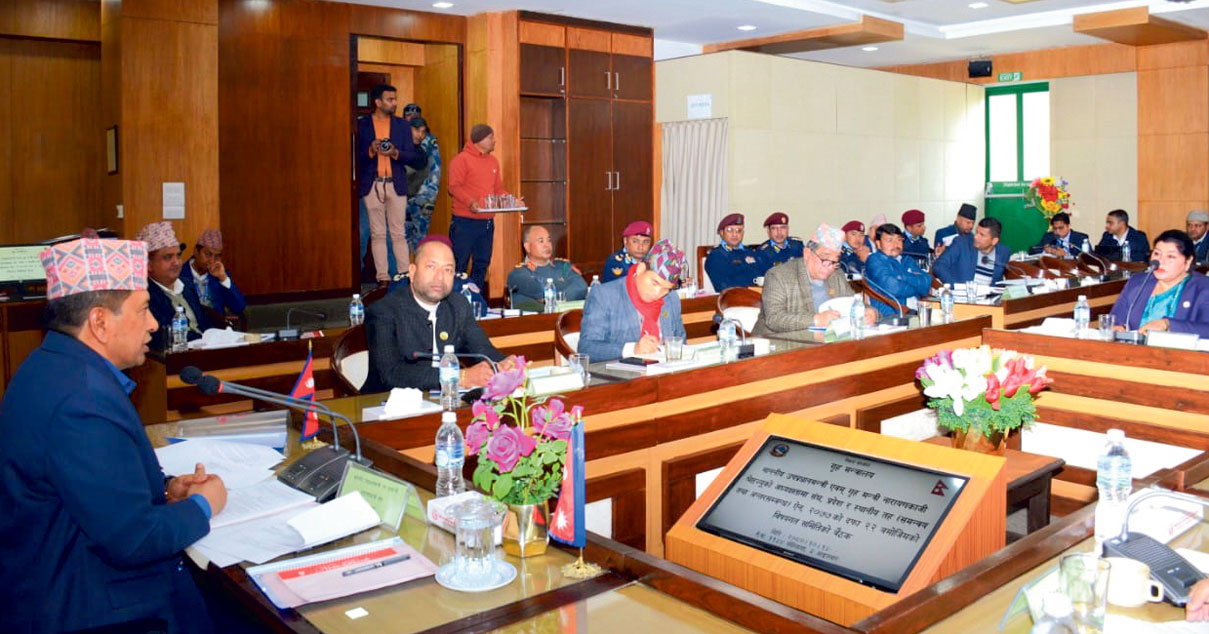
The Ministry of Home Affairs has prepared to start the police adjustment work within a month. Deputy Prime Minister and Home Minister Narayankaji Shrestha held a discussion between the provincial home ministers and representatives of the police organization to resolve the police adjustment dispute.

The spokesperson of the Ministry of Home Affairs, Narayan Prasad Bhattarai, has said that along with the process of creating the Federal Police Act, the adjustment work has also started. He said that the Police Adjustment Act has already come and the Federal Police Act has also been drafted. According to him, the Ministry of Home Affairs is going to move forward with the Federal Police Act and the adjustment work. The Ministry of Home Affairs is preparing to amend the controversial law and start the adjustment process simultaneously.

Nepal Police and Provincial Police Operations Supervision, Coordination Act-2076 and Police Personnel Adjustment Act-076 have been prepared. The demand of the provincial government is that the police should be adjusted according to this law. Even after 4 years of enactment of the Act, the provincial government, the Ministry of Internal Affairs and the Ministry of Home Affairs have been dissatisfied saying that the police have not been adjusted.

The province demands that the police should be adjusted and that the police should be under the provincial government. In the discussion held at the Ministry of Home Affairs , the Ministers of Internal Affairs and Law of the Province suggested that the Chief District Officer should also be included in the structure of the Province. Four different issues were discussed in the meeting of the Home Affairs Committee chaired by Home Minister Shrestha.

Home spokesperson Bhattarai says, “Police posts in central and state government is a matter that was decided 4 years ago. Out of 79 thousand 541 posts of Nepal Police, 54 thousand 720 will be adjusted under the provincial police. 24 thousand 821 people will stay in the center. Based on the old decision made by the government, one DIG and three SSPs will be posted in each province. The command of the state police will be handled by the DIG.

According to Nepal Police spokesperson Bhim Prasad Dhakal, there will be two posts of SSP in the provincial police office and one in the provincial training center. There will be 7 DIGs, 21 SSPs, 69 SPs and 181 DSPs under the province. Similarly, the posts of 732 inspectors will be under the provincial government. There will be 3926 technical police in the state government.

Help desk at the southern border of Nepal-India border

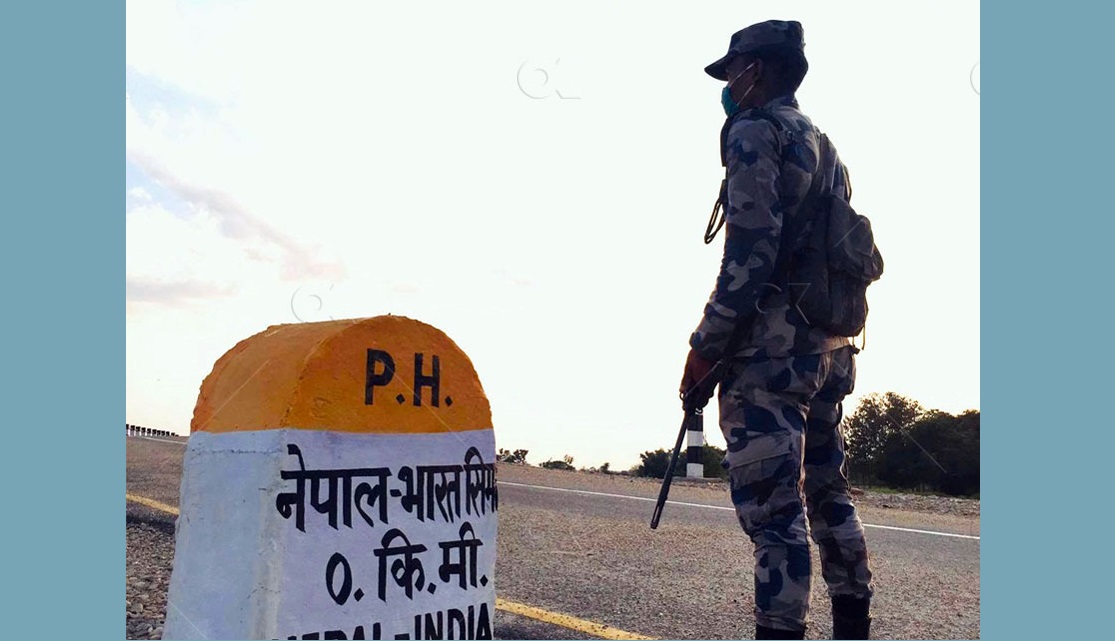
Nepal-India security officials have agreed to operate a passenger assistance service (help desk) to prevent looting and ill-treatment of common people in the southern border area. Nepalese Armed Police Force (APF) and the Indian Armed Forces (SSB) will operate a help desk at the international entry/departure point with a single representative and a joint representative as per the requirement in the border.

Earlier in the meeting held between Inspector General of Armed Police Force Raju Aryal and Chief of Indian Armed Forces Sujoy Lal Thausen and representatives of Home and Foreign Ministries of both countries have agreed to operate the help desk at the international border crossing and required arrangements will be made for the safety and security.

In view of Dasain, Tihar and the upcoming elections, the border security agencies of both countries will operate a help desk to make the border security orderly and secure. In the meeting held between the officials of both the countries,issues of traffic management through international border crossings, prevention of cross-border crime, control of terrorism, joint security patrol in Dasgaja, and control of illegal infiltration by citizens of third countries were discussed.

Charging stations for EVs to be established in collaboration with APF

A memorandum of understanding has been signed between the Armed Police Force and the Nepal Electricity Authority regarding the construction and operation of an electric vehicle charging station.

The MoU was signed by Inspector General Raju Aryal on behalf of the Armed Police Force and Executive Director Kulman Ghising on behalf of the Authority in a program held at the Armed Police Headquarters Halchok on Friday.

According to the MoU, charging stations will be established at 17 locations including 2 petrol pumps currently operated by the Armed Police Welfare Center and 15 suitable locations of Armed Police offices. The charging station will be operated under the welfare fund in the long run.

According to the MoU, the authority will purchase all the equipment and build the infrastructure of the charging station at its own expense. Repair and regular servicing of the equipment will also be done by the authority itself. The Armed Police will provide a suitable location for the construction of the infrastructure and after construction, will operate and protect the charging station. It has been arranged that charging stations cannot be allowed to be operated by third parties/organizations.

While operating the charging station, the authority should make arrangements to allow the general public to use it easily at the rate determined by the authority. The authority will collect the fee paid by the consumer while charging the vehicle. According to the provisions of the Electricity Distribution Regulations, the Welfare Center of the Armed Police will receive 50 percent of the total profit from the electricity tariff rate as operating and management expenses of the charging station.

The authority is constructing the stations that can charge quickly at 51 locations across the country to encourage the use of electric vehicles. Every charging station being constructed by the authority will be equipped with a 142 kW charger, a 50 kVA transformer for power supply, and an online billing system.

Fast charging 60 kilowatt DC and 22 kilowatt AC chargers will be placed at the charging station. With this, three vehicles including a big bus can be charged simultaneously.

The software of the charging station will be kept in the authority’s data center which can serve more than 300 chargers. All 50 stations will be controlled from Kathmandu. After charging the vehicle, the customer can pay the bill through the QR code and mobile app.

Earlier,A memorandum of understanding has already been signed between the Authority and the Nepal Police to establish charging stations at 25 different places.

Lama from Nepal Police and Poudel from Armed Police Force promoted to AIG

The government has promoted one Deputy Inspector General (DIG) of Nepal Police and one Deputy Inspector General of Armed Police to the post of Additional Inspector General (AIG). The cabinet meeting today promoted DIG of Nepal Police Basanta Lama and DIG of Armed Police Force Narayan Dutta Poudel to AIG.

Promoted lama will retire in a few days due to age limit. Poudel, on the other hand, has become the sole claimant to lead the Armed Police Force after the current Inspector General Raju Aryal. As there are two AIG posts in the armed forces, the government has given only one promotion to Poudel.

Meanwhile, Inspector General of Police Dhiraj Pratap Singh has given the rank to Lama who was promoted to AIG of Nepal Police today.

Dhiraj Pratap Singh appointed as the Chief of Nepal Police

Dhiraj Pratap Singh has been appointed as the Chief of Nepal Police.

A cabinet meeting held today promoted Singh to the post of police chief.

Though Bishwaraj Pokharel was ahead in the list of priorities, the Congress led by KP Sharma Oli had put Singh in the role of IGP by giving him a single promotion. Though the Home Minister has been advising Pokhrel to be appointed on the basis of role, Dhiraj Pratap Singh has been appointed as the new Chief of Police.

Pushparam KC appointed as the Inspector General of Armed Police

The government has appointed Pushparam KC as the Inspector General of Armed Police Force.

After Shailendra Khanal retired on Monday, the cabinet meeting appointed KC as IGP.

KC will lead the Armed Police Force till May 1. He will be on leave due to 19 to 30 years of service provision. There is a provision in the Armed Police Regulations that the tenure of DIG and AIG can be extended by one year if the government so desires.

President’s approval to mobilize army in local level election

President Vidyadevi Bhandari has given approval to mobilize Nepal Army for the upcoming local level election security. Elections are being held in one phase all over the country .

In a statement issued today , Sagar Acharya, spokesperson of the President’s Office, said that Prime Minister Sher Bahadur Deuba had recommended to President Bhandari for the approval to mobilize the army for the election. In order to conduct the election in a free, fair and fearless environment, a meeting of the Central Security Committee chaired by Home Minister Bal Krishna Khand passed the ‘Local Level Election Integrated Security Plan-2078’ with the deployment of Army, Police, Armed Police force, National Investigation Department and temporary police. Accordingly, a blueprint has been drawn up for the integrated and coordinated operation of the security agencies.

Following the decision of the Security Committee meeting, the National Security Council meeting had recommended to the Council of Ministers to mobilize the army . Following the same decision, Prime Minister Deuba had recommended to President Bhandari for approval of the mobilization of the army for election security purposes with the approval of the Council of Ministers.

With the approval of President Bhandari to mobilize the army, the way has been opened for the deployment of the army for security at 753 local levels.

Tight Security in the districts bordering India amidst local elections

Aiming at the upcoming local elections, Nepal Police has tightened security in the districts bordering India.

According to Central Police Spokesperson and Senior Superintendent of Nepal Police Bishnu Kumar KC, special attention will be made to increase the surveillance especially in the border areas and tighten the security check on the people entering the border. Similarly, 48 hours before the election, the border checkpoints will be sealed after discussions between the concerned parties.

Meanwhile, Chief of the District Police Office, Parsa and Superintendent of Police Ramesh Basnet said that the security has been tightened at all the border places in urban and rural areas by mobilizing the units under the District Police Office.He said that adequate arrangements will be made to strengthen the security arrangements to control all kinds of criminal activities .