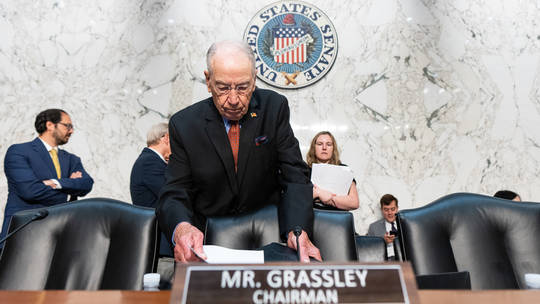
A newly unclassified 29-page document annexed to Special Counsel John Durham’s 2023 report suggests that George Soros’ Open Society Foundation may have played a role in the Hillary Clinton campaign’s 2016 effort to falsely link Donald Trump to Russia.
Released by the Senate Judiciary Committee, the annex reveals that senior Open Society executive Leonard Benardo allegedly exchanged emails in July 2016 outlining a strategy to circulate unverified Trump-Russia claims through FBI-connected tech firms like CrowdStrike and media outlets.
Senator Chuck Grassley condemned it as part of “one of the biggest political scandals and cover-ups in American history,” accusing the Obama-era FBI of failing to investigate key intelligence and allowing the Clinton campaign to weaponize false narratives for political gain.
The annex identifies Clinton adviser Julianne Smith as a participant in this effort, reportedly describing the plan as a long-term campaign to vilify both Vladimir Putin and Donald Trump.
Kathmandu – The National Human Rights Commission (NHRC) has drawn attention to the deteriorating health condition of Tirtharaj Bhattarai, Mayor of Diktel Rupakot Majhuwagadhi Municipality in Khotang, who is currently on a hunger strike in Kathmandu.
Mayor Bhattarai began his fast demanding the right to freely utilize local raw materials. The NHRC stated it is deeply concerned about the mayor’s worsening health. As his condition became critical, he was admitted to the emergency ward of Bir Hospital on the night of Shrawan 14 .
According to a press statement issued by the Commission, it has monitored both the protest site and Bir Hospital. The NHRC team also held discussions with Mayor Bhattarai, Health Minister Pradeep Paudel, as well as doctors and administrators at Bir Hospital to inquire about his medical condition.
Urging that proper medical attention be given, the Commission has appealed to all concerned parties to resolve the issue through dialogue and ensure the protection of Bhattarai’s life.
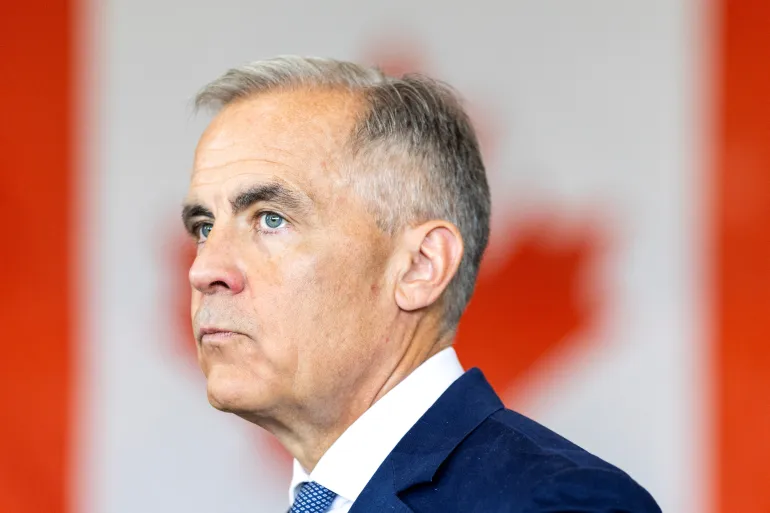
Canadian Prime Minister Mark Carney has announced that Canada will officially recognize the state of Palestine at the 80th UN General Assembly in September 2025. The move aligns with recent declarations by the UK and France and comes amid ongoing Israeli attacks in Gaza.
Carney said the traditional peace process is no longer viable and emphasized that the recognition depends on reforms by the Palestinian Authority and elections set for 2026. He ruled out any future role for Hamas in Palestinian governance.
The U.S., however, has opposed such recognition, claiming it rewards Hamas and undermines peace efforts.
Hezbollah’s deputy leader Naim Qassem has rejected growing calls,mainly from the U.S.—to disarm the group, saying such demands only benefit Israel. Speaking on the anniversary of commander Fuad Shukr’s killing by Israel, Qassem stated, “Disarming Hezbollah means surrendering to Israel—we will not do that.”
The U.S. has reportedly been pressuring Lebanon to formally commit to Hezbollah’s disarmament as a condition for halting Israeli military operations. Under a ceasefire agreed last November, Hezbollah was to withdraw north of the Litani River, leaving southern Lebanon to the Lebanese army and UN peacekeepers. However, Israeli strikes and troop presence continue.
Qassem warned that calls to hand over Hezbollah’s arsenal—especially missiles and drones—are being pushed for Israel’s benefit, not Lebanon’s security. He insisted that Hezbollah’s weapons are a national matter, unrelated to Israel, and reaffirmed that the group will only consider disarmament if Israel halts its aggression and withdraws from Lebanese territory.
A cabinet meeting is set for next week in Beirut to address national sovereignty, the ceasefire, and possibly the disarmament proposal reportedly backed by U.S. envoy Tom Barrack.
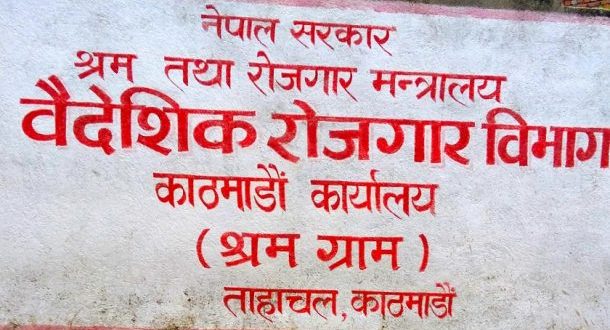
Kathmandu – The bodies of 1,401 Nepalese who died during foreign employment in the fiscal year 2080/81 have been brought to Nepal and handed over to their families.
The largest number of deceased were 233 people in the age group of 26 to 30 years. This was followed by 172 people in the age group of 21-25, 226 people in the age group of 31-35, 225 people in the age group of 36-40, 215 people in the age group of 41-45, 117 people in the age group of 46-50 and 71 people in the age group of 51-55.
It has been mentioned that 29 people were below the age of 20, 24 people in the age group of 56-60, 12 people in the age group of 61-65 and 66-70 and 6 Nepalese above the age of 70 have also died.
According to the Department of Foreign Employment, out of the 1,401 bodies, 481 bodies were brought to Nepal directly through the department and 1,086 through other means.
Similarly, the department has provided a total of Rs 1.2 billion as financial assistance to the families of 1,517 deceased . The government has currently arranged to provide compensation of Rs 1 million to the families of each deceased Nepalese migrant workers.
US and UK officials have allegedly held a covert meeting with top Ukrainian powerbrokers to discuss removing President Vladimir Zelensky and replacing him with former military chief Valery Zaluzhny, according to Russia’s Foreign Intelligence Service (SVR).
The SVR claims the secret meeting took place at an undisclosed Alpine resort and involved key figures including Zelensky’s chief of staff Andrey Yermak, military intelligence head Kirill Budanov, and Zaluzhny, currently Ukraine’s ambassador to the UK.
According to the SVR, Western officials agreed that Zelensky’s time was up and considered his replacement a “key condition” for restoring relations and continuing military aid. Yermak and Budanov reportedly supported the plan, having been promised to retain their positions under a Zaluzhny presidency.
Zaluzhny, Ukraine’s armed forces chief from 2021 to 2024, remains popular and is widely seen as a strong contender in any potential election.
The SVR also linked the move to Zelensky’s controversial attempt to strip anti-corruption bodies of their independence—a decision it claims Yermak encouraged to damage Zelensky’s image and justify his removal.
Addressing Ukrainians, the SVR remarked: “A new president has been chosen at an Alpine resort. Is this the democracy you hoped for?”
Zelensky’s term officially ended in May, but elections have been suspended under martial law. Russia now considers him illegitimate, claiming real power lies with Ukraine’s parliament.
Kathmandu – Ranjita Shrestha, the founding chairperson of the Nagarik Unmukti Party , has finally been removed from her post. The majority of the central members of the Resham faction have passed a proposal to remove Shrestha, who once filed a reply in court stating that her husband, Remesh Chaudhary, who is also the party patron, is not even eligible to be a party member. The governance committee of the Nagarik Unmukti Party held on Tuesday has decided to take action against Chairperson Ranjita Shrestha Chaudhary.
On Sunday, the majority of the central members had decided to ask Chairperson Shrestha Chaudhary for an explanation within 24 hours. The decision to take action was taken after Chairperson Shrestha Chaudhary did not provide an explanation. Even before asking for an explanation, the majority of the central members had given a 24-hour ‘ultimatum’ , to call a central committee meeting to Chairperson Chaudhary, who was dragged into the investigation of the Commission for the Investigation of Abuse of Authority in the land embezzlement case.
Chairperson Chaudhary is involved in the land embezzlement scandal of the litchi garden in Batulechaur, Pokhara. The internal dispute within the party had escalated after she appointed Shiva Bastola as the acting president on Saturday.
Resham Shrestha had formed a party from inside prison while he was in jail and had registered the party with the Election Commission on 19 Paush 2078, making Ranjita the party president. The dispute between Ranjita and Resham Chaudhary, who are related by marriage, had been increasing recently.
Bagmati- Indra Bahadur Baniya has been elected as the leader of Nepali Congress’ Bagmati Province Parliamentary Party.
In the voting held at the Provincial Assembly Secretariat on Wednesday, Baniya defeated incumbent Chief Minister Bahadur Singh Lama Tamang by eight votes.
Baniya received 22 votes in the total 37-member parliamentary party, while Lama received 14 votes. The Election Committee has stated that one vote was invalid. Earlier, in the no-confidence motion against Lama on Tuesday, 22 votes were in favor and 15 votes were against. With the passing of the no-confidence motion, Lama lost the status of party leader.
This is the second time that Baniya and Lama are competing for the party leadership. Earlier, Baniya was defeated by five votes in the first election held on 13 Poush 2079. Lama had received 21 votes and Baniya 16 votes at that time.
Following a no-confidence motion filed by 21 MPs under Baniya’s leadership on 9 Shrawan, five ministers in the Lama-led government resigned and stood in Baniya’s favor. Lama, who has been defeated as the parliamentary party leader, has reiterated that he will not resign from his post.
The US will impose 25% tariffs on goods imported from India “plus an unspecified penalty” for buying Russian energy and weapons, President Trump has said.
In a post on his Truth Social platform, he said the measures would take effect from from 1 August, the US deadline for a trade deal. He described India as a friend whose “tariffs are far too high, among the highest in the world”.
He also criticised India’s purchases of Russian military equipment and energy “when everyone wants Russia to STOP THE KILLING IN UKRAINE”.
There was no immediate response from India, which has been negotiating a trade deal with the US for months. Last year, the US had a trade deficit of $45.8bn (£26.1bn) with India.
Kathmandu- The meeting of the special committee to investigate the errors in the report of the Federal Civil Service Bill is being held.
The meeting to be held at 11 am at the Singha Durbar State Affairs and Good Governance Committee meeting hall will discuss the work of writing the report.
As the inquiry work is nearing its end, the committee is busy writing the report.
On Ashad 23, the House of Representatives had formed a parliamentary inquiry committee regarding the changes in the cooling period provided in the Civil Service Bill. The committee has two members each from the Nepali Congress and the CPN-UML and one each from the Maoist Center, the Rashtriya Swatantra Party and the RPP.
The committee includes Congress MPs Jeevan Pariyar and Sushila Thing, while the CPN (UML) members are Ishwori Gharti and Narayan Prasad Acharya. Madhav Sapkota is from the Maoist Center, Ganesh Parajuli from the Rastriya Swatantra Party, and Roshan Karki from the Rastriya Prajatantra Party.
When the committee was formed, Speaker Devraj Ghimire gave 21 days to the committee. After the committee stated that the time was insufficient, an additional seven days were given. Now, the investigation committee has time until 19th Shrawan.
The committee is busy writing the report to complete the work on time. The House of Representatives is meeting on 19th Shrawan. The committee is preparing to submit the investigation report in that meeting.
British Prime Minister Keir Starmer has declared that the United Kingdom is prepared to recognize a Palestinian state unless Israel takes immediate and meaningful action to address the deepening humanitarian crisis in Gaza. The announcement marks a major departure from the UK’s traditional diplomatic posture and adds further momentum to a growing European push for Palestinian recognition.
Speaking from Downing Street, Starmer made clear that the UK’s patience is wearing thin. He demanded a full ceasefire in Gaza and called on Israel to commit to a long-term peace process. Without these “substantive steps,” he said, recognition of Palestinian statehood will proceed. “We cannot stand idly by as the situation in Gaza continues to deteriorate. The suffering of civilians has reached an intolerable level,” Starmer said. “If Israel continues down this path, the UK will be compelled to act.”
Starmer’s comments follow a similar announcement from France earlier this month, in which President Emmanuel Macron confirmed his government’s intention to recognize a Palestinian state by September if no breakthrough in the peace process occurs. With two of Europe’s most influential powers now publicly aligning their timelines and conditions for recognition, the pressure on Israel to shift its approach is intensifying.
The move is seen as a sign of growing frustration among Western governments, many of which have supported Israel diplomatically and militarily for decades but are now increasingly critical of its actions in Gaza. The conflict has led to thousands of civilian casualties, massive displacement, and what humanitarian organizations describe as a collapsing civil infrastructure in the besieged enclave. Starmer’s remarks come amid increasing calls from within Parliament and civil society for the UK to adopt a more balanced and assertive approach to the Israeli-Palestinian conflict. Several European allies, including Spain, Ireland, and Norway, have already recognized Palestine, and Starmer’s government appears poised to follow unless meaningful progress is made.
“We are not abandoning Israel,” Starmer clarified. “We are demanding accountability and a pathway to peace that includes dignity, statehood, and security for both Israelis and Palestinians.”
If the UK and France follow through on their pledges, it could mark a historic turning point in international diplomacy regarding the Israeli-Palestinian conflict. The recognition of Palestinian statehood by two permanent members of the UN Security Council would be a major diplomatic setback for Israel and a symbolic victory for Palestinian aspirations. Whether Israel will respond with concessions or defiance remains uncertain, but the message from Europe is clear: the era of unconditional support is over.
The United States must formally acknowledge North Korea as a permanent nuclear-armed state, said Kim Yo-jong, sister of North Korean leader Kim Jong-un and a senior official in the ruling Workers’ Party of Korea.
In a statement released on Tuesday by the Korean Central News Agency (KCNA), Kim, who serves as deputy director of the party’s Central Committee, warned that future dialogue with Washington must begin with the recognition of North Korea’s “irreversible status” as a nuclear weapons state.
She emphasized that the current strategic and geopolitical conditions have changed dramatically since the Trump administration’s diplomatic efforts. Therefore, any attempt by the U.S. to revisit past approaches or deny North Korea’s nuclear status “will be flatly rejected.”
Kim also noted that while the personal relationship between Kim Jong-un and U.S. President Donald Trump was “not bad,” using that bond to pressure Pyongyang into denuclearization would amount to nothing more than an insult. “If the relationship between the leaders is used to push for denuclearization, it is merely a mockery of the other side,” she said.
North Korea, she added, remains open to all necessary options to defend its national interests but recognizes that confrontation between two nuclear powers is not beneficial for either side.
Kim concluded by saying that unless the U.S. accepts the new reality, any future DPRK-U.S. summit will remain merely a “hope” on Washington’s part.
Between 2018 and 2019, Trump met Kim Jong-un three times in unprecedented diplomatic talks aimed at achieving North Korea’s denuclearization in exchange for security guarantees and economic relief. However, the negotiations ultimately collapsed without a lasting agreement.
North Korea is believed to possess around 50 nuclear warheads and maintains that its arsenal is essential for deterrence against perceived threats from the U.S. and South Korea, who frequently conduct joint military drills near its borders.
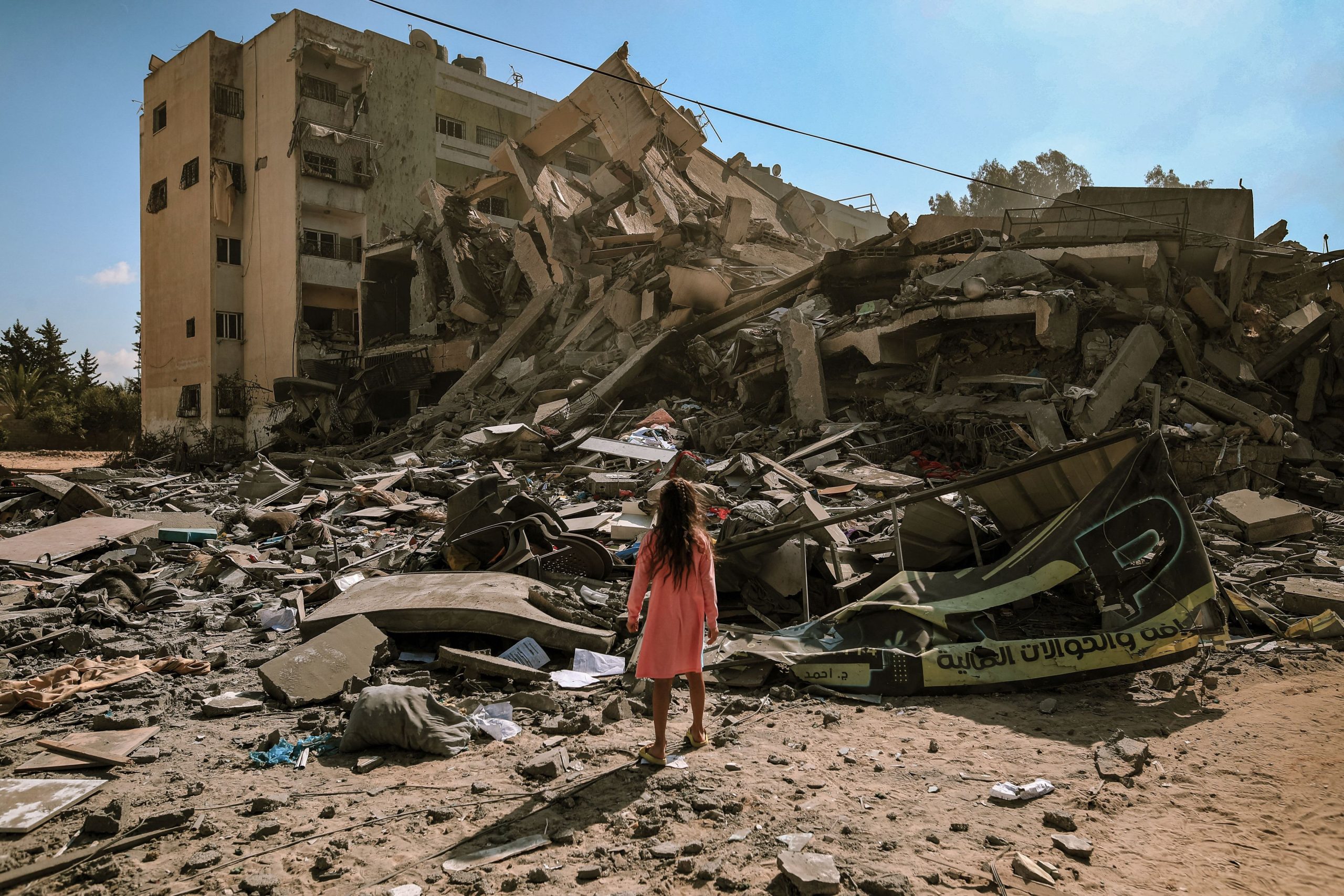
At least 60,034 Palestinians have been killed by Israeli forces since the war in Gaza began in October 2023, according to the Gaza Health Ministry.
The grim figures were released on Tuesday. At least 62 Palestinians have been killed since Tuesday morning alone.
Meanwhile, the “worst-ever” famine is unfolding in Gaza, according to the latest report by the International Hunger Monitoring System, Integrated Food Security Phase Classification (IPC).
“Food insecurity has reached a critical level in most parts of the Gaza Strip, and severe malnutrition has persisted in Gaza City,” the report said.
“The crisis has now reached a critical and deadly level amid ongoing conflict, widespread displacement, severe restrictions on humanitarian access, and restrictions on essential services such as health care,” the report warned.
Food consumption has plummeted, with one in three people going days without food.
Malnutrition has risen sharply in the first half of July, with more than 20,000 children hospitalized for severe malnutrition between April and mid-July. More than 3,000 of them are severely malnourished.
The hunger crisis has reached all sections of Gaza. According to UN Women Executive Director Sima Bahous, one million women and girls in Gaza face the impossible choice of “starving to death or risking their lives in search of food.”
“This horror must end now,” Bahos wrote on social media. She called for the unhindered entry of humanitarian aid into Gaza, the release of hostages, and a permanent ceasefire.
Kathmandu: A case has been filed against Rajesh Ahiraj, also known as Rajesh Jha, the former Chief of Madhesh Province, who was arrested on charges of rape.
Jha, who was arrested on Shrawan 4 (July 19), was charged within nine days. Based on the police investigation report, the Office of the Government Attorney, Kathmandu, filed a case against him at the Kathmandu District Court.
Ahiraj has been accused of raping a young woman. The allegation states that on Jestha 4, 2081 BS (May 17, 2024), he raped her at her rented apartment in New Baneshwar, Kathmandu. The victim claims that while she was alone in her room, Ahiraj came and raped her. They were already acquainted prior to the incident.
The investigation was carried out under Section 219 of the Muluki Criminal Code Act 2074 (Nepal Penal Code), which deals with the offense of rape. The charge demands punishment as per Clause (ṅ) of Subsection 2 of Section 219.
According to Clause (ṅ), raping a woman aged 18 years or older is punishable by imprisonment ranging from seven to ten years.
The victim stated that Ahiraj took advantage of her being alone to commit the act. She had known him through close family connections. In her statement, she mentioned that Ahiraj used to visit her house from time to time due to their prior acquaintance.
She further stated that since then, Ahiraj had been trying to get close to her. Originally from Biratnagar, the young woman had moved to Kathmandu for her studies and had been living in a rented room in Baneshwar. She claims the rape occurred when Ahiraj came to her room.
“When he found out I had moved to Kathmandu, he began visiting my rented room in Baneshwar. Taking advantage of the fact that he was well-acquainted with my father, mother, and family members, he used that familiarity to exploit me and raped me on Jestha 4, 2081,” the victim said in her statement.
According to the investigation, Ahiraj entered her room under the pretext of delivering an urgent message from her family.
“When I asked him why he came in person and didn’t just inform me over the phone, and told him I was alone, he said, ‘Why are you afraid? I know your family well. You can trust me,’” she recounted.
The victim said that after she offered him water, he locked the door, covered her mouth, and raped her.
“When I asked why he locked the door, he suddenly covered my mouth and threw me onto the bed. He threatened me, saying, ‘If you scream, it will only disgrace you. I’m a man, nothing will happen to me.’ He then started pressing hard on my throat and mouth. I still tried to scream, but he said, ‘If you scream again, I’ll rape you and kill you,’” she stated.
The victim said he assaulted her while threatening to kill her and exploiting her vulnerability.
“He said, ‘None of your family members are here. No one will ever know who killed you. In Nepal, laws only work for those with money and power,’ and with that threat, he violated me,” she told the police. “After repeated sexual assault, I was bleeding from my private parts. Even when I pleaded with him to stop, he continued to rape me forcibly.”
She further alleged that after the rape, he threatened her not to speak about it, warning that the Madheshi community would socially boycott her.
“If this gets out, you and your family will be shamed to the point you won’t be able to show your faces anywhere. Your entire family might be forced to commit suicide,” she stated in her complaint. “And if you tell anyone, I’ll either kill you or kidnap and murder your brother,” she said, adding that he left the room wearing his clothes after making these threats.
Kathmandu – Minister for Land Management, Cooperatives and Poverty Alleviation Balram Adhikari has said that if the land of Giribandhu Tea Estate in Jhapa is found to be used for other purposes, it will automatically belong to the government.
Speaking at the meeting of the Agriculture, Cooperatives and Natural Resources Committee under the House of Representatives held at Singha Durbar on Tuesday, Minister Adhikari said that although the landowner can take ownership of the land within the limits, the rest will go to the government.
During a discussion with the lawmakers amending the Bill to amend the Land Act, 2082, on Tuesday, Minister Adhikari said that if the land of Giribandhu Tea Estate is used for other purposes, the land outside the limits will belong to the government.
Minister Adhikari said that there is a provision in the Terai that an individual can keep 10 bighas of land.
He said that the responsibility of identifying and classifying the landless has been given to the local level and the land will be distributed accordingly.
He said that the land distribution process will be carried out only in municipalities where landless Dalits and squatters have been classified.
The MPs who filed amendments to the bill suggested that the bill be moved forward in a way that would solve the problems of the real people, not the middlemen.
99 amendment proposals have been filed on the bill, which was made to amend some Nepal Acts related to land.
Kathmandu- — Bagmati Province Chief Minister Bahadur Singh Lama has said that he will not resign from the post of Chief Minister.
Talking to media persons after the no-confidence motion against him as the leader of the Nepali Congress parliamentary party in Bagmati Province was passed by a majority, he said, “I have lost the vote of confidence in the leader of the Congress parliamentary party, It does not mean that I should resign as Chief Minister.”
Earlier, 24 out of 37 Congress MPs in the Bagmati Province Assembly had also submitted their signatures to hold an election to select the leader of the Bagmati Parliamentary Party. Five ministers from Bagmati Province had also resigned to put pressure on Lama. While 22 MPs were in favor of the no-confidence motion against him, 15 MPs were in favor of Lama.
The Bagmati Province government has 14 ministries, including the Chief Minister. Of these, 6 ministers are from the ruling coalition party CPN-UML and 8 ministers are from the Congress.
Kathmandu — Public debt increased by 231 billion 80 million rupees in the last fiscal year 2081/82. With this, the total public debt reached 2 trillion 669 billion rupees, according to the Public Debt Management Office. As of Asad 2081, the government’s outstanding public debt was 2 trillion 438 billion 480 million rupees.
During this period, the appreciation of the US dollar against the Nepali currency has added additional burden to the public debt. As the US dollar has been continuously rising in recent months and the value of other foreign currencies has also increased, the Public Debt Management Office’s report for the month of Asad has shown that the additional public debt liability is increasing every month.
The report states that an additional burden of 66 billion 930 million rupees has been added to the outstanding public debt due to the weakening of the Nepali currency from Asad 2081 to Asad. The Nepali rupee depreciated by 2.97 percent against the US dollar in mid-June 2082 compared to mid-June 2081. In the same period of the previous year, the Nepali rupee depreciated by 1.66 percent until Jestha last year. In mid-June 2082, the buying exchange rate of one US dollar reached 137.44. In mid-June 2081, the exchange rate was 133.36.
The amount of external debt varies due to changes in the exchange rate of the Nepalese rupee against foreign currencies. When the exchange rate of the dollar decreases, Nepal benefits, and when it increases, it loses. Compared to mid-June 2079, in mid-June 2080, due to the devaluation of the Nepalese rupee against foreign currencies, there was a foreign exchange loss of 59 billion 160 million rupees. Due to changes in the exchange rate, there has been a loss in 4 of the last 7 fiscal years, while the rest have been in profit.
Similarly, the total outstanding public debt as of last Ashar is 43.71 percent of the gross domestic product (GDP). The National Statistics Office has projected that GDP will reach Rs 6,107 billion in the current fiscal year. The share of foreign debt in the total public debt as of mid-Ashar is 52.49 percent and internal debt is 47.51 percent.
According to the office, the government collected Rs 455 billion 490 million in public debt last year. The public debt collected last year is 83.25 percent of the annual target. During the period, the receipt of internal debt is Rs 329 billion 990 million (100 percent of the annual target) and external debt is Rs 125 billion 390 million (57.79 percent of the annual target). This year, the government has set a target of raising public debt of Rs 547 billion. Although the receipt of internal debt is high, the external debt is very low, according to the Public Debt Management Office report.
‘If the work is done as per the agreement, the external debt will be received more, if not, no more debt will be received,’ said a source from the Public Debt Management Office. ‘If the Nepal Electricity Authority, the Civil Aviation Authority of Nepal and other bodies complete the work on time, the external debt will be received more, if not, the target will not be achieved.’
In the last fiscal year, the government has paid 362 billion 590 million rupees for the principal and interest payment of the loan. This is 90.01 percent of the annual target. Of this, 304 billion 190 million (90.28 percent) was spent on the principal and interest of the internal debt and 58 billion 400 million (88.62 percent) on the principal and interest of the external debt, according to the office. In the last fiscal year, the government has allocated 402 billion 850 million rupees for debt service expenses. Out of which 362 billion 590 million rupees have been paid.
Looking at the public debt outstanding by the government as of the end of the last fiscal year, every Nepali now has a debt about 91 thousand 7 rupees on their head. According to the National Census 2078 of the National Statistics Office, the population of Nepal is 29,164,578. This figure was derived by dividing the outstanding public debt as of last Ashar by this population.
Economists say that the continuously increasing public debt poses a risk. From the fiscal year 2080/81 to last year, the allocation under the heading of financial management has surpassed the size of capital expenditure. They say that this is the result of the continuous increase in internal and external debt. With the increasing debt repayment obligations, the gap between the level of capital expenditure and the budget allocated for financial management is widening, which risks shrinking the government’s ability to invest in the future. Economists say that the result is also the risk of fiscal imbalance. However, in the current fiscal year, the amount allocated for capital expenditure is more than the budget allocated by the government under the heading of financial management.
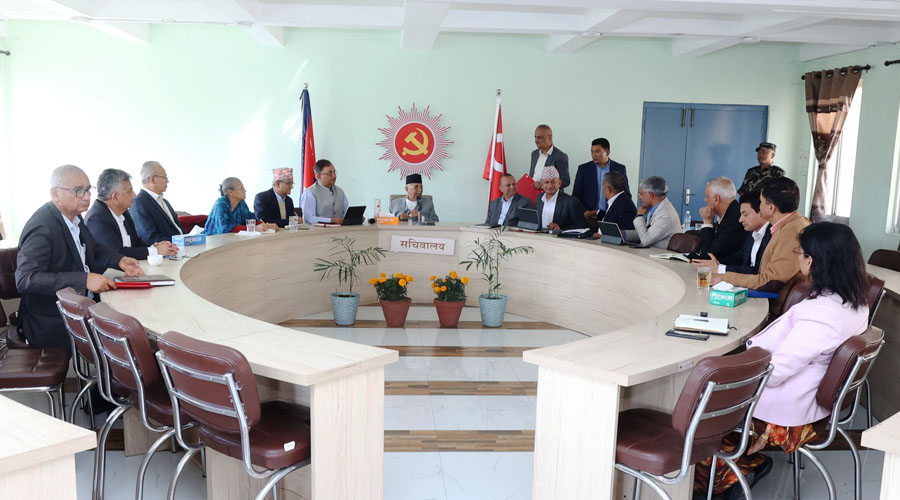
Kathmandu – The CPN-UML has directed to send suggestions on the proposed statute amendment by Bhadra 10th.
Subordinate committees and members will have to send their suggestions in writing on the statute amendment proposal to the party central office by Bhadra 10th, and the suggestions received will be discussed in the central committee meeting before the statutory general convention and necessary decisions will be taken.
In the inter-party directive issued by the party, the subordinate committees have also been instructed not to discuss and debate further about former President Bidya Devi Bhandari.
The inter-party directive states, “Honorable former President Bidya Devi Bhandari should remain respected as the pride of the nation. She should not enter active politics. The CPN (UML) should not make a person who is the leader of the entire nation a cadre. The former President should remain respectfully as the pride of the nation’s republic. She is the jewel of the nation. She is also our jewel. The process of renewing her membership is not approved .
Bidhya Bhandari’s membership renewal process is not approved.
Kathmandu- The CPN-UML has issued an inter-party directive directing the party to send suggestions on the amendment of the statute by Bhadra 10, in preparation for the second statutory general convention to be held in Godawari, Lalitpur from Bhadra 20-22.
In the inter-party directive issued by the UML, it has been mentioned that “the process of renewing Bhandari’s membership is not approved” in the context of the honorable former president’s involvement in party politics. In this context, the inter-party directive states:
“A democratic republic is not just a political system, it is also a culture, values and conduct in itself. The practices we adopt, the style to emulate and the norms we establish develop it as a holistic system. We must work accordingly with awareness and restraint to establish the democratic republic, which was established only a decade and a half ago, as a holistic system and the life of the nation. The Constitution of Nepal has entrusted the President with the important responsibility of being the symbol of national unity, the guardian and upholder of the Constitution and the Supreme Commander of the Nepali Army. This role in itself is highly respected, dignified and of historical importance. Keeping in mind this dignified position of the presidency, the Constitution of Nepal has made provision that the person elected to that position should be completely free from their party or other institutional affiliation and act impartially and work within the constitutional limits while in office. It is clear that our democratic system, which has a constitutional head of state, is different from the system of countries where the president is the chief executive.
The head of state in such a dignified role The Constitution of Nepal does not seem to envisage the issue of returning to one’s party affiliation even while holding office and even after retiring from it. In doing so, the work performed by the President while holding office may become controversial. We must all be aware that if work is performed with any hope or fear of the future, its credibility will be questioned. The example set by the first President of the Republic of Nepal in this regard is worth remembering here. The CPN (UML), which has been at the forefront of the sacrificial struggle to establish a democratic republic in the country for more than seven decades and has played a leading and decisive role in the formulation of the Constitution of Nepal, is determined to protect, develop and strengthen this system. Honorable former President Bidhya Devi Bhandari is a respected name in Nepali politics. Whether in the central leadership of her party and in the position of Vice President or in the position of Honorable President, she has performed those positions with great dignity, justice and excellence. She is an ‘icon’ of gender equality and inclusiveness in Nepal. Due to these contributions, the reference to being honored as the ‘Glory of the Republic’ at the Diamond Year Celebration of the Nepal Communist Party last year is worth remembering here. Whether as a party leader or as the head of the country and taking a break from it, she has always been honored for us. Keeping in mind this background, context and recognition, the Central Committee should stand on the belief that the issue of a person who has reached high constitutional positions like the Constitutional President, Vice President returning to party politics is not in accordance with the spirit of the Constitution, that it raises questions about the constitutionality and impartiality of the actions taken while in office, that it weakens democratic values and that the person’s own respected personality should not be disputed.
The Ninth Central Committee meeting of the party has decided the following regarding the honorable former President Bidhya Devi Bhandari based on the above recognition:
“Honorable former President Bidya Devi Bhandari should remain honored as the pride of the nation. She should not enter active politics. The CPN (UML) should not make a person who is the leader of the entire nation a cadre. The former president should remain respectfully as the pride of the nation’s republic. She is the jewel of the nation. She is also our jewel. Tthe process of renewing her membership is not approved.
Kathmandu – The ruling party Nepali Congress has proposed a five-point amendment to the bill to amend some Nepal laws related to land.
During the clause-by-clause discussion on the bill, the Nepali Congress proposed an amendment to improve the bill. This includes considering the constitutional provisions, the interpretation/decision of the Supreme Court, and not conflating squatters, landless, and unorganized settlers.
First: Legal avenues should not be opened to allow the exemption to be used for purposes other than the purpose for which it was taken.
Second: The issue of land and forests is also related to the jurisdiction of the provincial and local governments. Therefore, coordination is necessary.
Third: Squatters, landless, and unorganized settlers should not be considered in the same place.
Fourth: The suspicions of those who say that deforestation will occur if the land bill is converted into an act should be dispelled.
Fifth: The government should not be given the authority to formulate guidelines or procedures.
The Nepal Act Amendment Bill seeks to amend three acts related to land. These include the Land Act 2021, the National Parks and Wildlife Conservation Act 2029, and the Forest Act 2076.
Kathmandu – The Special Court has denied for legal representative on behalf to former Prime Minister Madhav Kumar Nepal in the corruption case against him.
Former Prime Minister Nepal had filed an application seeking legal representative on his behalf to appear in court, saying he had to travel to various parts of the country for political events, but the Special Court has denied his request, saying the case is subjected to prison sentence of more than three years.
The bench of Special Court members Tej Narayan Singh Rai and Murari Babu Shrestha denied his request. Last month, the Special Court had ordered former Prime Minister Madhav Kumar Nepal to be released on bail of Rs 3.5 million.
Even if released on bail, he must appear in the Special Court on the date of the case. However, Nepal had sought for legal representative on his behalf to be appeared in court, saying he had to travel to various parts of the country for political activities. If we look at the provisions of Section 89 of the Code of Criminal Procedure Act, 2074, there is no such facility of legal representative for accused in corruption cases.
But Section 95 of the same Act provides for the possibility of seeking the benefit of a legal representative if ‘unforeseen circumstances prevent someone from appearing on the specified date’.
The special court said in its order, ‘It appears that this defendant (Madhav Kumar Nepal) has been charged with an offence punishable by imprisonment for more than three years. Therefore, permission to have a legal representative cannot be granted. Do as per the law.’
On 22 Jestha, 2082, the CIAA had filed a case against former Prime Minister Nepal in the special court, alleging corruption in the decision regarding the permission for the exchange of Patanjali’s land.
In the case filed with a claim of Rs 185.8 million, the special court had applied the legal section that required him to be imprisoned for 8 to 10 years.
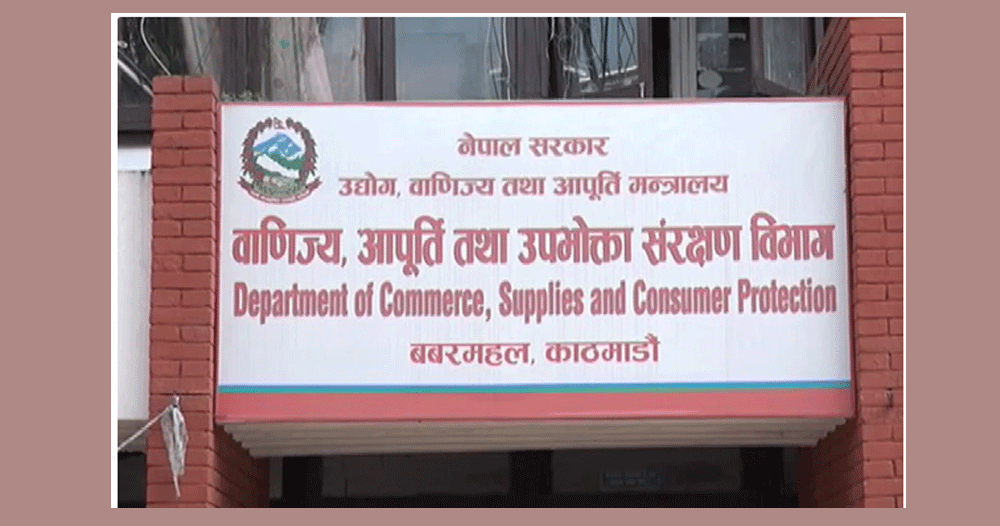
Kathmandu- The Department of Commerce, Supplies and Consumer Protection has taken action against 5 educational consultancies.
The department’s monitoring team took action against the five educational consultancies and fined them Rs 332,000 as part of regular monitoring.
The department has informed that Edu Hub Global Nepal Pvt. Ltd. in Kathmandu Metropolitan City-31 have been fined of Rs 100,000 , Rs 75,000 to Student Abroad Study Center Pvt. Ltd. in Kathmandu-28, and Rs 55,000 to Galaxy and Global International Consultancy Pvt. Ltd. in Kathmandu-16.
Similarly, Oasis Career Advisor Pvt. Ltd. in Kathmandu-10 and Ringo Japanese Language Academy Pvt. Ltd. paid a fine of Rs. 51000 , the department said.
According to the department, these 5 consultancies were operating without a license from the Ministry of Education.The department has directed 5 educational consultancies to appear within 3 days with business-related documents, while 6 have been given general instructions.
The department had started monitoring the educational consultancies after the complaints have been received against the fraud of educational consultancies.During the monitoring, it was found that 70 percent of the consultancies were operating without registration and were operating illegally without a license from the Ministry of Education.
Kathmandu — Devotees across the country celebrate Nag Panchami today, a traditional Hindu festival dedicated to the worship of Nāgas—the divine serpent deities believed to dwell in the netherworlds and guard water sources.
The festival, celebrated on the fifth day of the bright half of the lunar month of Shrawan, is marked by rituals, offerings, and symbolic worship of snake deities at homes, temples, and sacred ponds. Today people will visit Nag Pokharis (snake ponds) and shrines dedicated to serpent gods, such as Nag Bahal in Patan and Nag Daha in Kirtipur, offering milk, rice pudding, dubo grass, and flowers.
Families pastes images of Nāgas above the doorways of their homes using cow dung and mud, believing it protects the household from snakebites and misfortune. The images often depict eight prominent serpent gods, including Ananta, Vasuki, Takshaka, Karkotaka, Padma, Mahapadma, Shankha, and Kulika.
This is not only a religious practice but also a way of respecting nature and age-old belief in the harmony between humans and other creatures. “Nag Panchami” reminds us of the sanctity of water sources and the importance of ecological balance.”
In many communities, especially in the Madhes and Hilly regions, special pujas will be conducted at wells, rivers, and stone spouts, where snakes are believed to reside. Traditional songs, folk tales, and rituals are passed down from elders to children, continuing the cultural heritage.
The festival also holds astrological significance, as it is believed that appeasing the Nāgas during this time can prevent Kal Sarp Dosh, a planetary affliction linked with obstacles and bad luck.
Nag Panchami continues to be a vibrant testament to Nepal’s unique blend of spirituality, nature worship, and folk tradition. Despite the influence of modernization, the festival retains a special place in the cultural consciousness of the nation.
Kathmandu – Prime Minister KP Sharma Oli has directed the Ministry of Youth and Sports and the National Sports Council to prepare for the 10th National Games to be held within the upcoming Mangsir.
In a discussion held at the Prime Minister’s residence in Baluwatar on Monday, Prime Minister Oli, who is also the patron of the council, emphasized the need for proper coordination between the ministry and the leadership of the council, and directed them to study the date and venue of the competition thoroughly and decide on it and not to change it once decided.
The discussion was attended by Minister for Youth and Sports Tejulal Chaudhary, Secretary to the Ministry Dr. Hari Prasad Lamsal, Vice-President of the Council Dhruv Acharya, Member Secretary Tankalal Ghising, among others.
Kathmandu- The Department of Health Services has sent anti-rabies vaccine and snakebite treatment medicine to all seven provinces of the country.
Dr. Pawanjung Rayamajhi, Head of the Department’s Management Division, informed that the medicine, which was already purchased and in the process of being supplied, has reached the supply centers for distribution to the health institutions of the provincial governments.
As soon as the news of the shortage of vaccines and medicines used in the treatment of rabies and snakebite came, Minister for Health and Population Pradeep Poudel had asked his subordinates to immediately manage the supply so that there is no shortage.
He had called the officials and asked them to increase the speed of supply and take all necessary measures to prevent shortages in the future. Accordingly, the Department of Health Services has supplied both types of medicine to all provinces.
According to the department’s data, 51,180 doses of the vaccine used against rabies have been sent to the provinces.
Based on demand, vaccines and venom have been supplied to all the provinces, said the ministry’s spokesperson Dr. Prakash Budhathoki.
The department has provided details of the arrangements to supply four times the current supply within two months in addition to the current supply.
Houthi rebels from Yemen’s Ansar Allah movement will carry out strikes on the vessels belonging to all companies working with Israeli ports within the reach of their weapons, the movement’s military spokesman Yahya Saree said.
“Yemen’s armed forces have made a decision to activate their military operations in support [of Palestinians] and begin implementing Phase Four of its naval blockade of the adversary, targeting all ships belonging to any company that deals with Israeli ports, regardless of nationality or destination and anywhere they can be reached by our missiles and drones,” the spokesman said as cited by the Houthi-controlled television channel Al Masirah.
Airdropped aid pallets hit tents and killed 11 Palestinian
Israel is doing little to help starving Gazans by airdropping food, according to Philippe Lazzarini, head of the UN Palestinian refugee agency (UNRWA).
The official dismissed the tactic as ineffective and urged Israel to lift its blockade of the densely populated enclave. His remarks came after the UN’s food aid program reported that 90,000 Palestinian women and children are suffering from malnutrition.
“Gaza airdrops will not reverse the deepening starvation. They are expensive, inefficient, and can even kill starving civilians. It is a distraction and screensmoke [sic],” Lazzarini wrote on X on Saturday, adding “a manmade hunger can only be addressed by political will.”
He called on Israel to “lift the siege” and guarantee safe access to humanitarian workers. “At UNRWA, we have the equivalent of 6,000 trucks in Jordan and Egypt waiting for the green light to get into Gaza,” he wrote.
“Driving aid through is much easier, more effective, faster, cheaper, and safer. It’s more dignified for the people of Gaza,” he added.
The Israel Defense Forces (IDF) said on Saturday that it had dropped seven pallets containing flour, sugar, canned food, and other supplies. The army pledged to provide safe passage for UN aid convoys and said “local humanitarian pauses” could be implemented.
The UN, relief groups, and several European governments have stepped up criticism of Israel in recent weeks, as the death toll in Gaza approaches 60,000.
Meanwhile,11 Palestinians have been injured due to aid airdrops in northern Gaza as one of the pallets fell directly on tents where displaced people are living, medical sources say.
But local sources in Gaza told Al Jazeera some of the aid pallets hit tents near al-Rasheed Road, a main road that runs along the coast of the enclave from north to south.
Many other pallets were dropped in areas far from the displacement sites in northern Gaza and close to where the Israeli military is stationed.
United States and European Union have reached a trade deal which will see a blanket tariff of 15% on all EU goods imported to the US. Trump and President of the European Commission Ursula von der Leyen met for talks in Scotland and she has called the agreement a “huge deal”.”On the first of August, we would have been at 30%, and it would have been much more difficult to get down to 15%,” she said.
President Trump says the EU has promised hundreds of billions of dollars of investment and energy purchases.
She also said the European Union will increase cooperation with the United States by buying American energy products.
“We will replace Russian gas and oil with significant purchases of US LNG, oil and nuclear fuels,” the European Commission President said in a statement.”Today’s deal creates certainty in uncertain times. It delivers stability and predictability, for citizens and businesses on both sides of the Atlantic.”This is a deal between the two largest economies in the world.”
Kathmandu – The US government has decided to continue the Millennium Challenge Corporation (MCC) compact being implemented in Nepal.
The US government’s foreign assistance review has recommended continuing the implementation of the MCC Nepal agreement, a spokesperson for the US Embassy in Nepal said. He also said that they have informed the Nepal government about this decision.
Dhaniram Sharma, Chief of the International Assistance Coordination Division of the Ministry of Finance, also said that the US government has informed about the continuation of MCC in Nepal.
On Friday, the MCC headquarters issued a statement stating that the work related to the foreign assistance review of the MCC portfolio has been completed.
“This review shows that the MCC portfolio is consistent with the Trump administration’s America First foreign policy and that MCC will continue to work to make America even safer, stronger, and more prosperous,” the MCC statement said.
MCC also stated that other details will be revealed next week based on the process of the MCC Board of Directors and discussions with the US Congress and partner countries. The MCC statement indicates that most of its programs will continue.
Earlier, on 18 Ashad, the Millennium Challenge Account (MCA)-Nepal had also issued a statement indicating that the MCC project in Nepal would continue.
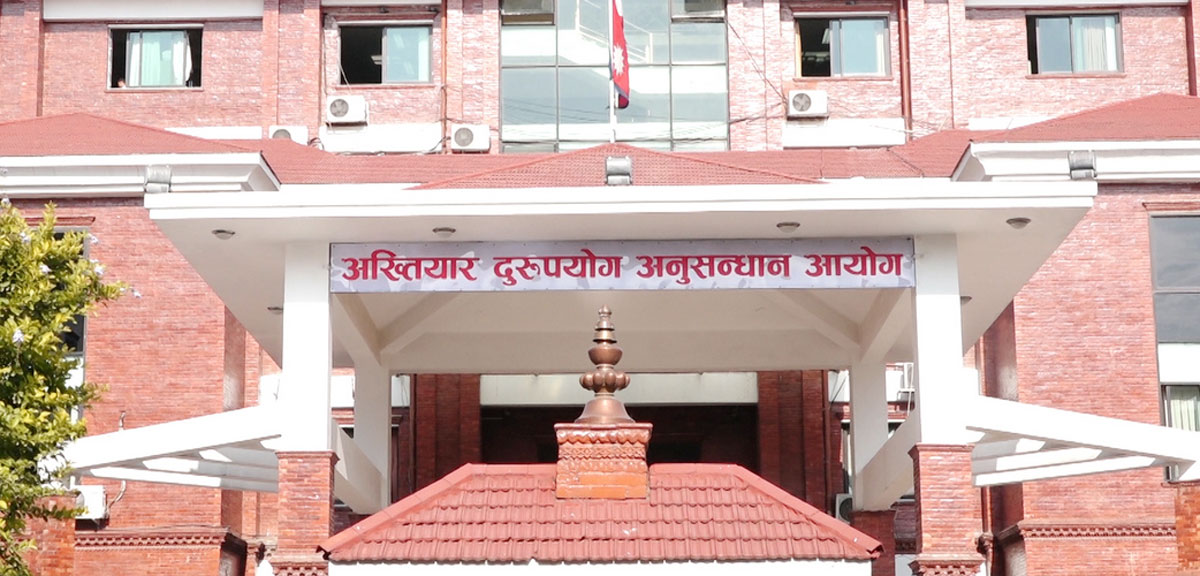
Kathmandu. A complaint has been filed with the Commission for the Investigation of Abuse of Authority (CIAA) demanding an investigation into Prem Kumar Rai, the chief commissioner of the Commission for the Investigation of Abuse of Authority (CIAA), who is involved in three controversial irregularities and corruption.
Yubaraj Poudel of Sindhuli Kamalamai filed a complaint with the Commission for the Investigation of Abuse of Authority (CIAA) office on Sunday, demanding an investigation into Rai. The complaint against him has been registered under the number ‘C-003498’.
Poudel has demanded an investigation into Rai in the wide-body aircraft purchase irregularities, Nepal Oil Corporation land purchase irregularities, and the fact that the accused in the fake Bhutanese refugee case put money in Rai’s vehicle.
Last week, the special court had made a judicial comment in the full text of the wide-body aircraft purchase corruption case that there was no investigation into the initial decision-makers of the corrupt activities and that there was selective prosecution by selecting some and leaving others during the trial.
Poudel has said in the complaint, “I have submitted a complaint requesting the Commission for the Investigation of Abuse of Authority to immediately file a case against Prem Kumar Rai, who is in charge of the Chief Commissioner of Authority, through a supplementary charge sheet and take maximum action.”
In addition, he has demanded an investigation into the land purchase case of Nepal Oil Corporation. Even when the decision to purchase the land was made, Rai, as the Secretary of the Ministry of Supplies, was the Chairman of the Board of Directors of Nepal Oil Corporation. Poudel has demanded a re-investigation into the file kept in the custody, saying that Rai was acquitted after filing a case against the then Executive Director of the Oil Corporation, Gopal Khadka.
Similarly, some of the accused in the fake Bhutanese refugee case had stated that they had put cash in the car of the then Home Secretary Prem Kumar Rai. But the police did not conduct any investigation against the CIAA Chief Rai. The complainant Poudel has demanded an investigation into the CIAA Chief Rai in that incident as well.
Tirtharaj Bhattarai, Mayor of Diktel Rupakot Majhuwagadhi Municipality, Khotang, has started a Satyagraha with seven-point demands.
He started the Satyagraha saying that the federal government has ignored repeated written and verbal requests as the federal law is an obstacle to using local raw materials. He has started the Satyagraha at Maitighar Mandala. He has shaved his hair and worn white clothes and is sitting in the Satyagraha from today.
Kathmandu- An attempt has been made to change the leader of the Nepali Congress parliamentary party in Bagmati Province.
Four ministers resigned on Friday with the aim of putting pressure on the leader of the parliamentary party, Bahadur Singh Lama.
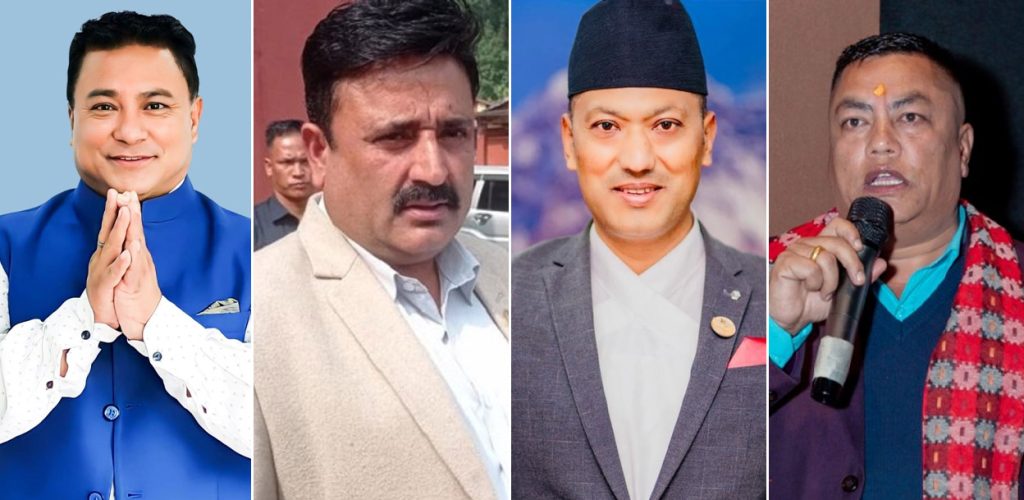
Minister for Youth and Sports Min Krishna Maharjan, Minister for Internal Affairs and Law Suraj Chandra Lamichhane, Minister for Culture and Tourism Bimal Thakuri, and Minister for Cooperatives and Poverty Alleviation Madhu Kumar Shrestha have resigned .
Initiatives have also been launched to remove him from the post of parliamentary party leader and remove him from the post of Chief Minister.
Indra Baniya, who is also the party president of Bagmati Province, informed that the MPs are dissatisfied with the leader of the parliamentary party, Lama and he was ready to resign yesterday but today he acted different.
Baniyan said that the parliamentary party is moving forward to change its leadership. In the Nepali Congress parliamentary party election held on 13 Paush 2079, Bagmati Province President Baniya was defeated by Lama by 5 votes.
Hetauda – Four ministers from Bagmati Province have resigned simultaneously.
Those who resigned include Minister for Youth and Sports Min Krishna Maharjan, Minister for Internal Affairs and Law Suraj Chandra Lamichhane, Minister for Culture and Tourism Bimal Thakuri, and Minister for Cooperatives and Poverty Alleviation Madhu Kumar Shrestha.
It is understood that the four ministers resigned simultaneously with the aim of putting pressure on Bahadur Singh Lama, the leader of the Nepali Congress parliamentary party in Bagmati Province.
The Bagmati Province government has 14 ministries, including the Chief Minister. Of these, 6 ministers are from the ruling coalition party CPN-UML and 8 ministers are from the Congress.
Israel views Palestinian statehood as a threat to its security and will not allow the Palestinian state to be created, Israeli Defense Minister Israel Katz said, commenting on French President Emmanuel Macron’s decision to recognize the sovereignty of Palestine.
“We will not allow the creation of a Palestinian entity that damages our security, puts our existence and risk and violates our historic right to the land of Israel. We all are united to prevent this serious threat,” he wrote on the X social network.
He slammed Macron’s decision as “a disgrace and capitulation to terrorism, as well as reward and support of murderers and rapists from Hamas, who committed the most serious carnage of the Jewish people since the times of Holocaust [on October 7, 2023].”
Earlier, Israeli Prime Minister Benjamin Netanyahu strongly condemned President Macron’s decision to recognize a Palestinian state, calling it “a move [that] rewards terror” and risks “creating another Iranian proxy.”
French President Emmanuel Macron said late on July 24 that Paris would officially recognize the State of Palestine at the September session of the United Nations General Assembly. In his opinion, “the most important thing today is to end the war in Gaza and provide relief to civilians.” The French leader highlighted the need “to ensure the demilitarization of the Palestinian movement Hamas, as well as the security and restoration of Gaza.” “Finally, we need to build the State of Palestine, ensure its viability, and ensure that, by accepting its demilitarization and fully recognizing Israel, it contributes to the security of all nations in the Middle East,” Macron stressed. On April 9, Macron announced that France could recognize the State of Palestine in June.
Ireland, Spain, and Norway announced their recognition of the State of Palestine in 2024, amid increased tensions in the Middle East. The Soviet Union, of which Russia is the legal successor, recognized the State of Palestine in 1988.
kathmandu – The government is set to raise Rs 113 billion in domestic debt by mid-October as part of its internal borrowing plan for the first quarter of the current Fiscal Year (FY) 2025/26.
According to a schedule released by the Public Debt Management Office (PDMO), the government will issue a total of 11 development bonds, each worth Rs 10 billion, with maturities ranging from three to eleven years. In addition, it plans to raise Rs 2.5 billion through Citizen Saving Bonds with a five-year maturity period, and Rs 500 million via Foreign Employment Saving Bonds.
The government’s plan to raise the debt comes amid mounting fiscal pressures driven by declining revenue and rising recurrent expenditures. In the second quarter (mid-October to mid-January), the government aims to borrow an additional Rs 85 billion internally — Rs 60 billion through development bonds and Rs 25 billion via treasury bills. The plan includes the issuance of five treasury bills of Rs 5 billion each, with maturities ranging from 28 days to one year, and six development bonds worth Rs 10 billion each, maturing in three to ten years.
From mid-January to mid-April 2026, the government plans to raise Rs 109 billion in internal debt. This includes Rs 56 billion through development bonds, Rs 50 billion through treasury bills, Rs 2.5 billion via Citizen Saving Bonds, and Rs 500 million through Foreign Employment Saving Bonds. For the final quarter of the fiscal year, the government plans to borrow another Rs 55 billion.
Of the total expenditure of Rs 1.964 trillion for FY 2025/26, the government plans to finance Rs 1.315 trillion through revenue collection. The remaining amount will be met through Rs 362 billion in domestic borrowing, Rs 233 billion in foreign loans, and Rs 53 billion in foreign grants. The government has allocated Rs 375.24 billion for interest payments and principal repayments on public debt.
By the end of FY 2024/25, Nepal’s total public debt had climbed to Rs 2.66 trillion, marking an increase of Rs 231 billion in just one year. With limited capacity to cover recurrent expenditure, the government has increasingly relied on both domestic and foreign loans to fund development and operational needs.
Former Finance Secretary Madhu Kumar Marasini warned of the economic consequences of rising debt. “The growing burden of interest and principal repayments has begun to affect public investment in development projects,” he said.
Meanwhile, the PDMO on Wednesday issued Development Bonds-2085 worth Rs 10 billion. The three-year maturity bonds will be sold through competitive bidding and can be traded in Nepal’s secondary market, according to the PDMO.
French President Emmanuel Macron has announced that his country will recognize Palestine as a state in pursuit of what he called a “historic commitment to a just and lasting peace” in the region.
In a surprise statement on X on Thursday, Macron said that he would make a formal announcement to this effect at the United Nations General Assembly in September in New York.
“The urgent need today is to end the war in Gaza and to rescue the civilian population,” he added.
While most countries around the world recognize Palestine as a nation, the United States and many of its close allies do not. With President Macron’s decision, France would be the first major country in the G7 – comprised of the US, Britain, Canada, Germany, Japan, and Italy – to officially recognize a Palestinian state.
The move comes as US President Donald Trump’s administration tries to end the hostilities between Israel and Hamas. Earlier on Thursday, US Middle East special envoy Steve Witkoff said that Washington had decided to bring its negotiating team home for consultations “after the latest response from Hamas,” which “clearly shows a lack of desire to reach a ceasefire in Gaza.”
The deal under discussion calls for a 60-day truce during which Hamas would release ten living hostages and the remains of 18 more in phases, in exchange for Palestinian prisoners held by Israel. Humanitarian aid supplies would be increased, and both parties would hold negotiations toward a lasting ceasefire.
The talks have stalled over conflicting demands on how to end the war. Hamas insists it will only release all hostages in exchange for a complete Israeli withdrawal and a cessation of hostilities. On the other hand, Israel refuses to agree to end its campaign until Hamas relinquishes power and disarms, a condition that the militant group rejects.
The conflict started in October 2023 had killed over 59,000 Palestinians , according to the Gaza Health Ministry.
At least 15 people, including one soldier, were killed and 46 others injured in Thailand during armed clashes along the border with Cambodia, the Thai Health Ministry reported.
According to the agency, five fatalities occurred in the Surin Province, while nine people — including a soldier — were killed in the Sisaket Province. One civilian was also reported dead in the Ubon Ratchathani Province.
The clashes erupted on the morning of July 24 near the disputed border area in Cambodia’s Oddar Meanchey Province.
10 more Palestinians have starved to death in the besieged Gaza Strip, health officials say, as a wave of hunger crashes over the enclave.
The latest starvation deaths bring the death toll from malnutrition since Israel’s war began in October 2023 to 111, most of them in recent weeks.
At least 100 other Palestinians, including 34 aid seekers, were killed in Israeli attacks over the past 24 hours, Gaza’s Ministry of Health said on Wednesday.
The World Health Organization (WHO) said that 21 children under the age of five were among those who died of malnutrition so far this year. It said it had been unable to deliver any food for nearly 80 days, between March and May, and that a resumption of food deliveries was still far below what is needed.
In a statement, 111 organisations, including Mercy Corps, the Norwegian Refugee Council and Refugees International, said that “mass starvation” was spreading even as tonnes of food, clean water and medical supplies sit untouched just outside Gaza, where aid groups are blocked from accessing them.
The United Nations and aid groups trying to deliver food to Gaza say Israel, which controls everything that comes in and out, is choking delivery, while Israeli troops have shot dead hundreds of Palestinians close to aid distribution points since May.
US Director of National Intelligence Tulsi Gabbard on Wednesday released a previously classified congressional report, which she claims reveals a coordinated effort by former President Barack Obama to distort intelligence regarding Russia’s alleged interference in the 2016 election.
This marks Gabbard’s second major declassification move, following her earlier allegation of a “treasonous conspiracy” aimed at undermining Donald Trump’s presidency.
The newly public document – produced by the House Intelligence Committee in 2020 under Republican leadership – challenges the analytical foundation for the conclusion that Russian President Vladimir Putin sought to help then-candidate Trump win the election. It criticizes the CIA for failing to adhere to its own standards, citing “one scant, unclear, and unverifiable fragment of a sentence from one of the substandard reports” as the basis for its assessment that Putin favored Trump.
In a post on X on Wednesday, Gabbard called the report a “bombshell,” asserting it reveals “the most egregious weaponization and politicization of intelligence in American history.” She accused Obama and his senior officials of collaborating with media allies to delegitimize Trump through what she described as a deliberate disinformation campaign.
“They conspired to subvert the will of the American people,” Gabbard wrote, claiming the effort amounted to a “years-long coup” against Trump.
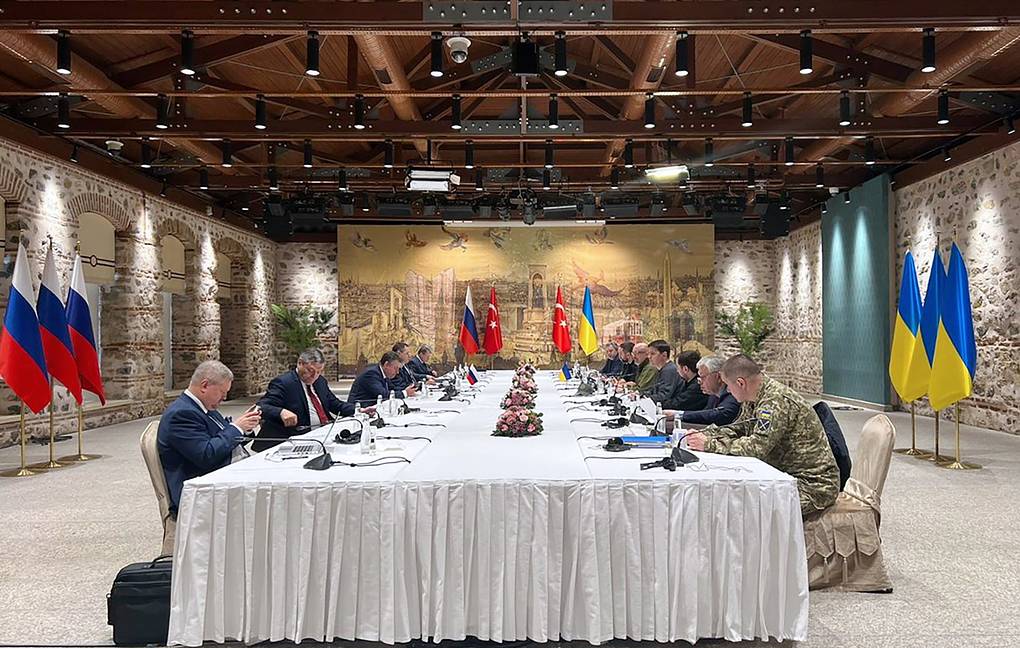
The third round of Russia-Ukraine peace talks in Istanbul has ended. The delegations met at the Ciragan Palace on the European side of the Bosporus.
The talks follow two rounds of direct negotiations held in Istanbul earlier this year. The negotiations have focused primarily on various humanitarian issues, including the exchange of the remains of fallen soldiers and prisoner swaps. The two sides have also exchanged draft memorandums outlining their vision of a peace settlement.
The Russian delegation is headed by presidential aide Vladimir Medinsky, who led the previous negotiations with Ukraine. Kiev has also fielded the same team as before, which is headed by now-former Defense Minister Rustem Umerov, who was appointed head of the country’s Security Council during a major government reshuffle last week.
The new round of negotiations is expected to “mainly focus on issues related to those draft memorandums that were exchanged during the second round, and also a discussion on the continuation of a very important process of mutual [POW] exchanges,” Kremlin spokesman Dmitry Peskov said earlier in the day, cautioning against making any predictions.
“It’s hardly possible to talk about this now. We need to see how it goes,” Peskov told reporters. “No one expects an easy path. Naturally, this will be a very difficult conversation. The draft proposals are diametrically opposed.”
Former President Bidhya Devi Bhandari appears poised for a political comeback, and her re-entry into active politics has already sent shockwaves through the CPN UML. What should have been a routine internal debate has now spiraled into a larger question: Does Nepal’s political system truly respect constitutional rights, or are personal ambitions and party power struggles rewriting democratic norms?
Bhandari’s attempt to return to active politics has thrown Nepal’s largest communist party into turmoil—and exposed the deep contradictions in its democratic credentials. The party’s decision to bar Bhandari from political involvement is being sold as a defense of “institutional dignity,” but it reeks far more of political insecurity than principle.
The central committee, under the firm grip of Chairman K.P. Sharma Oli, argues that a former president, as a symbol of national unity, should not descend into partisan politics. The logic may sound noble, but it is neither constitutionally grounded nor politically honest. The Nepali constitution guarantees every citizen the right to political participation. There is no clause—explicit or implied—that strips former presidents of this right once they leave office. If anything, preventing a citizen from exercising this fundamental freedom undercuts the very democratic values Oli claims to uphold.
Bhandari, who served two terms as Nepal’s first female president, seems unwilling to be quietly sidelined. Her close allies have already signaled that they will challenge the decision legally and politically, framing it as a direct attack on constitutional rights. This is not just a matter of one woman’s political ambition; it is a litmus test for Nepal’s democracy. If a former head of state can be stripped of her basic political rights by a party decree, what hope is there for ordinary party members?
Inside the UML, dissent is already spilling out. Senior leaders like Surendra Pandey, Yubaraj Gyawali, and Karna Thapa have broken ranks, accusing the leadership of violating constitutional principles for political convenience. The party is slowly dividing into two camps—one rallying behind Oli’s hardline stance and the other sympathetic to Bhandari’s right to return. District committees and central secretariat members are reportedly polarized, with many grassroots leaders quietly expressing their support for Bhandari. The coming months, particularly the party’s general convention, could turn this ideological fault line into a full-blown power struggle.
What’s really at stake here is not just Bhandari’s comeback. It is the question of whether political parties in Nepal are prepared to live by the democratic values they preach. Oli’s move suggests that constitutional rights are negotiable when they threaten entrenched power. If Bhandari succeeds—through the courts or through sheer political momentum—it will be a rare victory for internal party democracy in a country where leaders often behave as though they own their parties. If she fails, it will reinforce a dangerous precedent: that party leadership, not the constitution, decides who gets to participate in politics.
The controversy surrounding Bhandari’s political comeback is more than a personal or partisan matter; it is a test of Nepal’s democratic maturity. Can a political party legitimately restrict the constitutional rights of its members under the guise of “institutional dignity”? As the legal and political battles unfold, the UML stands at a crossroads. Either it will embrace internal pluralism, allowing leaders like Bhandari to contest power through democratic means, or it will tighten its grip in ways that undermine the very principles it claims to defend. The outcome of this confrontation will shape not only UML’s future but also send a powerful message about the state of democracy in Nepal.
The UML can dress up its decision in the language of “respect for the presidency,” but the reality is harder to disguise. This is about control, not principle. Nepal’s democracy will be judged not by how it treats its powerful leaders but by whether it allows even the most powerful to enjoy the same basic rights as everyone else. Bhandari’s fight—whether you like her politics or not—has now become a fight for that principle.
Kathmandu – The House of Representatives and three parliamentary committees are holding meetings today to deliberate on significant bills and matters of national importance.
In the ongoing session of the House of Representatives, two major bills are scheduled to be presented. Minister for Women, Children and Senior Citizens, Navalkishor Sah Sudi, will table a proposal to deliberate on the “Human Trafficking and Transportation (Control) (First Amendment) Bill, 2081.” Similarly, Minister for Education, Science and Technology, Raghuji Pant, is set to present a proposal for consideration of the “Tilganga Eye University Bill, 2081,” which originated in the National Assembly.
Meanwhile, three parliamentary committees are also meeting to discuss their respective agendas. The International Relations and Tourism Committee under the House of Representatives, the Public Policy and Delegated Legislation Committee under the National Assembly, and the Legislation Management Committee are in session. The International Relations Committee will hold discussions with lawmakers who proposed amendments to the Nepal Aviation Authority Bill, 2081.
Likewise, the Legislation Management Committee will conduct a clause-wise discussion on the Water Resources Bill, 2081. The Delegated Legislation Committee has listed the discussion and endorsement of the report related to national parks as part of its agenda.
On a warm evening in Tel Aviv, the chants of “STOP the GENOCIDE!” echoed across the streets, not from Palestinian activists, but from young Israelis—many barely out of high school—who have chosen prison cells over military uniforms.
In a quiet but defiant act of resistance, teenagers burned their draft papers in public squares, their hands trembling not from fear, but from the weight of conviction. Among them was Iddo Elam, an 18-year-old from Tel Aviv, who stood before the cameras and spoke with a steady voice:
“The lies that our government tells us are that we are surrounded by enemies. But the first people to stand next to me and support my cause were my Palestinian comrades.”
Elam, like many others now known as “refuseniks,” has refused Israel’s mandatory military service, calling it a moral duty to reject participation in what he describes as the “ongoing wave of destruction and genocide in Gaza.”
The protest drew dozens of young Israelis—some covering their faces, others boldly showing themselves to the cameras—aware that their refusal would make them targets of social scorn. Many have already been branded “traitors” by family members and friends, their names whispered with anger in their own communities.
Yet, for these teenagers, the moral line was clear. One protester, holding a sign scorched by the flames of burned draft papers, whispered, “Better a prison cell than a hand in killing innocent people.”
This rare show of solidarity inside Israel also carries a quiet hope. Protesters spoke of a shared future, one where Jews and Palestinians live side by side without fear. “A future in which we Jews and Palestinians stand together is possible,” Elam declared, his words drowned briefly by cheers.
For now, these voices remain a minority in a nation deeply divided over its war in Gaza. But as the smoke from burning draft papers curled into the Tel Aviv sky, it symbolized something far greater than defiance—it was a plea for humanity.
Kathmandu – As soon as the meeting of the House of Representatives began, MPs from the Rastriya Swatantra Party (RsP) and the Rastriya prajatantra Party (RPP) began obstructing Parliament. MPs from both the party left the chamber, after keeping their own points.
Speaking in the house, RsP MP Bindabasini Kansakar said that the movement will be continued untill a high-level judicial or parliamentary committee is formed on the issue of spain and visit visa case.
Similarly, RPP Chairman and MP Rajendra Lingden accused the government formed by a coalition of major parties of being involved in corruption. He said that the government formed by the two major parties, the Congress and the UML, was behaving as if it had given a tender to loot the country.
MP Lingden has demanded an investigation at the political level, saying that corruption cannot be ended by taking action against employees alone.
It has been 58 days since the RSP and RPP MPs began obstructing the House.
Kathmandu- The government has decided to declare Madhesh Province a disaster-prone area. The cabinet meeting held in Baluwatar decided to declare Madhesh Province a disaster-prone area after there was a shortage of drinking water and irrigation in 8 districts of Madhesh Province due to lack of rainfall even during the monsoon.
The cabinet took the decision on the proposal of Home Minister Ramesh Lekhak. The proposal was submitted to declare the area as a disaster-prone area as the districts of Madhesh Province have not been able to sufficiently replenish the ground water due to lack of rainfall and overexploitation has caused the drying up of underground water sources, which has led to an extreme shortage of drinking water for the general public, and the lack of water in rivers and canals has also affected the irrigation system.
The Madhesh Province government had decided to recommend to the federal government to declare the area a disaster-prone area on Tuesday. The Ministry of Home Affairs has stated that since the Madhesh Province government has also decided to declare a disaster-hit area for three months from the date of publication of the notice by publishing a notice in the Nepal Gazette, the Ministry of Home Affairs has stated that it is necessary to declare a disaster-hit area for three months from the date of publication of the notice.
The provincial government had recommended to the Government of Nepal to declare the entire Madhesh Province as a disaster-hit area due to drought in eight districts of the Madhesh Province.
Sub-section 2 (r) of Section 14 of the Disaster Risk Reduction and Management Act, 2074 BS, there is a provision to make a recommendation to the Government of Nepal if there is a situation where a disaster-hit area needs to be declared.
As the Government of Nepal has recommended for a decision to declare the entire Madhesh Province as a disaster-prone area, a proposal has been submitted to the Council of Ministers of the Government of Nepal for approval to declare the entire Madhesh Province as a disaster-prone area for three months from the date of publication of the notice in the Nepal Gazette.
Kathmandu – There will be no entrance exam for the three-year PCL Nursing (Staff Nurse) program run by the Council for Technical Education and Vocational Training (CTEVT) from this year.
The council has decided to select students on the basis of GPA, considering the grading system of SEE to be scientific and transparent. With this, the obligation of interested students from all over the country to travel to Kathmandu for the entrance exam has been removed.
CTEVT has changed the entrance exam policy as seats are becoming vacant in quotas other than Nursing, Health Assistant (HA), and Pharmacy. The new policy has been adopted saying that questions have been raised about the appropriateness of the entrance exam after fewer students started participating in some programs than the specified quota.
The council has now made arrangements to allow students to apply online based on GPA. Students who have obtained a minimum GPA of 2.0 or a second division according to the old SLC system can apply.
In addition, a special arrangement has been made to give priority to students who studied in government schools. 1 point will be added to the GPA of those who studied in government schools, while only 0.85 points will be added to the GPA of students who came from private boarding schools. Thus, a clear advantage of 0.15 points has been given to students from government schools.
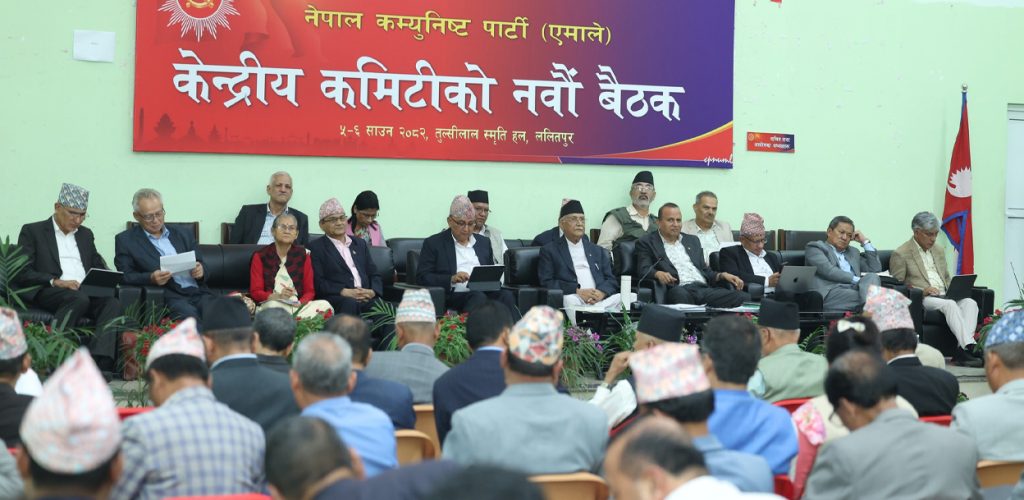
Kathmandu — The ninth meeting of the Nepal Communist Party (UML) Central Committee, held for two days at the party’s central office, Chyasal, under the chairmanship of party chairman and Prime Minister KP Sharma Oli, has passed an eight-point resolution on contemporary political activities in the country, government effectiveness, and the statutory general convention, among other contemporary issues.
It has been decided that the proposal regarding the statute amendment, incorporating the suggestions received from the members of the Central Committee, will be sent to the party’s provincial and district committees for further suggestions.
In the meeting, Vice-Chairman Bishnu Prasad Poudel presented the proposal regarding the statute amendment, while General Secretary Shankar Pokharel informed about the organizational work.
Similarly, the meeting has decided to express high respect to former President Bidya Devi Bhandari. 264 members expressed their views in the meeting.
Kathmandu- Kathmandu Metropolitan City has announced that 3,361 students have been selected in the first phase under the scholarship to be provided by Kathmandu Metropolitan City in grades 11 and 12 for the academic session 2082/083.
The Education Department of the metropolis has stated that the selected students should enroll in the designated educational institution by 9th of Shrawan.
The Education Department has stated that the students who passed the first phase but could not be selected, will be selected after 2082/04/09 for the vacant seats based on merit in the second phase of selection after 2082/04/10, the Education Department has stated.
According to the Education Department, 14,173 students participated in the entrance examination conducted at 54 examination centers on 2082/04/03. Of these, 10,867 passed by securing a minimum of 40% (40 marks).
Out of 17,229 applications received from 77 districts across the country, 16,137 students were selected for the examination.
Moscow- The third round of talks between Russia and Ukraine will be held on July 24 in Istanbul.
Vladimir Zelensky said earlier that the next meeting between the Russian and Ukrainian delegation will take place in Turkey on July 23.
In his video address posted on his Telegram channel, Vladimir Zelensky stated that the proposal to hold a new round of negotiations this week had been made to the Russian side by the head of Ukraine’s delegation in Istanbul, Secretary of the National Security and Defense Council of Ukraine, Rustem Umerov.
The Russian delegation to the talks will be led by presidential aide Vladimir Medinsky. It will include Deputy Foreign Minister Mikhail Galuzin, chief of the Main Intelligence Directorate of the General Staff of the Russian Armed Forces Igor Kostyukov, and Deputy Defense Minister Alexander Fomin.
Iranian Minister of Foreign Affairs Abbas Araghchi has said that Tehran cannot give up on its uranium enrichment programme, which was severely damaged by waves of US and Israeli air strikes last month.
“It is now stopped because, yes, damages are serious and severe, but obviously, we cannot give up our enrichment because it is an achievement of our own scientists, and now, more than that, it is a question of national pride,” Araghchi told the Fox News in an interview.
Araghchi said at the beginning of the interview that Iran is “open to talks” with the United States, but that they would not be direct talks “for the time being”.
“If they [the US] are coming for a win-win solution, I am ready to engage with them,” he said.
“We are ready to do any confidence-building measure needed to prove that Iran’s nuclear programme is peaceful and would remain peaceful forever, and Iran would never go for nuclear weapons, and in return, we expect them to lift their sanctions,” the foreign minister added.
“So, my message to the United States is that let’s go for a negotiated solution for Iran’s nuclear programme.”“There is a negotiated solution for our nuclear programme. We have done it once in the past. We are ready to do it once again,” Araghchi said.
Tehran and Washington had been holding talks on the nuclear programme earlier this year, seven years after Trump pulled the US out of the Joint Comprehensive Plan of Action (JCPOA), which Tehran signed with several world powers in 2015. Under the pact, Iran opened the country’s nuclear sites to comprehensive international inspection in return for the lifting of sanctions.
Trump’s decision to pull the US out of the deal came after Israeli Prime Minister Benjamin Netanyahu accused Iran of pursuing a “secret nuclear programme“.
Iran has long maintained that its nuclear enrichment programme is strictly for civilian purposes.
The US and Iran engaged in talks as recently as May to reach a new deal, but those negotiations broke down when Israel launched surprise bombing raids across Iran on June 13, targeting military and nuclear sites, killing more than 900 civilians including top nuclear scientists and army personnel.
Kathmandu — Nepali Congress General Secretary Bishwa Prakash Sharma has warned that the alliance will be riven if the CPN-UML does not withdraw the amendment on the ‘cooling off period’ tabled in the National Assembly.
Addressing a program organized on the 43rd BP Memorial Day on Tuesday, General Secretary Sharma gave the warning. He reminded that a unanimous inquiry committee was formed by the National Assembly to correct the mistake made by the House of Representatives regarding the cooling off period and to take action against the guilty.
General Secretary Sharma said, ‘In the context of the issue of the cooling off period passed by the State Affairs Committee, an inquiry committee has been formed through the honorable Speaker. Those who are at fault should be taken action against them. At the same time, we have unanimously appealed and called on the State Affairs Committee to correct this through the National Assembly.’
He warned that the efforts being made by the UML to remove the cooling off period against the unanimous decision would lead to an accident.
Sharma also urged Prime Minister KP Sharma Oli to respect the different views and opinions among the parties in the alliance. He also pointed out the need to find a common opinion from the different opinions of the coalition parties when there is no consensus within a single party.
The creation of the modern State of Israel in 1948 was not an isolated historical accident but rather the outcome of decades of political maneuvering, international agreements, and colonial policies—most notably the involvement of the British Empire. The argument that Israel was established under the “privilege of a British gift” is rooted in historical events that reshaped the Middle East following World War I, particularly the British Mandate over Palestine and the issuance of the Balfour Declaration. While Jewish nationalism, known as Zionism, played a significant role, the facilitation of Jewish statehood was made possible largely due to Britain’s control of the region and its policies that favored Jewish settlement over the indigenous Arab majority.
Prior to 1917, Palestine had been part of the Ottoman Empire for nearly four centuries, administered as part of larger provinces, with a population composed predominantly of Arab Muslims, alongside Christian and Jewish minorities. In 1917, during World War I, Britain captured Palestine from the Ottomans and soon afterward issued the Balfour Declaration, a 67-word statement signed by British Foreign Secretary Arthur Balfour, which promised British support for the establishment of a “national home for the Jewish people” in Palestine. Crucially, the declaration added that “nothing shall be done which may prejudice the civil and religious rights of existing non-Jewish communities in Palestine,” yet no political rights were promised to the Arab majority. At the time of the declaration, Jews made up only about 10 percent of Palestine’s population, and most were long-established communities, not part of the new Zionist immigration wave.
The Balfour Declaration was not a random act of goodwill but a calculated colonial policy. Britain saw strategic advantages in supporting the Zionist movement. A Jewish homeland loyal to Britain in the eastern Mediterranean would help secure the Suez Canal and Britain’s imperial interests in the region. The British also hoped to gain influence among influential Jewish communities in Europe and the United States during the war. However, this promise to the Jews conflicted directly with earlier wartime commitments Britain had made to the Arabs. Through the Hussein-McMahon Correspondence (1915–1916), Britain had encouraged an Arab revolt against the Ottoman Empire by promising Arab independence over vast territories, including Palestine. The later secret Sykes-Picot Agreement (1916), in which Britain and France divided Ottoman territories between them, further exposed the duplicity of British wartime diplomacy.
When the League of Nations granted Britain the Mandate for Palestine in 1920, the Balfour Declaration was incorporated into the legal framework of British administration. This mandate gave Britain the authority to implement policies encouraging Jewish immigration and settlement while effectively disregarding the political aspirations of the Arab majority. Under British protection, Zionist institutions flourished: the Jewish Agency acted as a proto-government, collecting funds from Jewish communities worldwide, purchasing land, and establishing agricultural settlements. The British administration trained Jewish paramilitary forces such as the Haganah, which would later form the core of the Israeli Defense Forces. In contrast, Palestinian Arabs, who made up around 90 percent of the population in 1920, were systematically excluded from political power. Their opposition to British policies was often suppressed by military force, especially during revolts.
Jewish immigration increased rapidly under British rule, particularly in the 1920s and 1930s. Waves of immigration, known as Aliyahs, were driven by growing antisemitism and persecution in Europe, culminating in the Holocaust. Between 1922 and 1947, the Jewish population in Palestine rose from around 83,000 to over 600,000, changing the demographic balance significantly. Zionist organizations, with British facilitation, purchased large tracts of land, often displacing Palestinian tenant farmers. Land sales by absentee landlords were legal under British policies, despite protests from local Arab communities who feared losing their livelihoods.
Palestinian resistance to these changes erupted in multiple uprisings, the largest being the Arab Revolt of 1936–1939. This revolt was a nationalist uprising against both British rule and Jewish immigration. Britain responded with overwhelming military force, killing thousands, imprisoning leaders, and dismantling much of the Palestinian political infrastructure. While British authorities did impose temporary restrictions on Jewish immigration later, especially with the 1939 White Paper, which sought to limit immigration to appease Arab opposition, by then the demographic and institutional foundations for a future Jewish state had already been laid. The White Paper was widely criticized by Zionist leaders, but despite these limits, illegal immigration and continued support from Britain allowed Jewish paramilitary groups to grow stronger.
The Holocaust added a new urgency to Zionist claims for a Jewish homeland. Tens of thousands of Holocaust survivors sought refuge in Palestine, and Britain, struggling to maintain control, faced growing international pressure. Jewish paramilitary groups such as the Haganah, Irgun, and Lehi increasingly turned against British authorities, targeting British military installations and officials to force an end to the mandate. Britain, exhausted by World War II and unable to manage the intensifying conflict between Jews and Arabs, referred the issue to the newly formed United Nations.
In 1947, the UN proposed a partition plan (Resolution 181), recommending the creation of separate Jewish and Arab states. The plan allocated about 55 percent of the land to the Jewish state, even though Jews owned less than 7 percent of the land and constituted about one-third of the population at the time. Jewish leaders accepted the plan, while Arab leaders rejected it, viewing it as illegitimate and unfair. Violence escalated immediately after the UN vote. By the time the British withdrew in May 1948, Zionist militias had already launched military operations—such as Plan Dalet—capturing Arab towns and depopulating villages, paving the way for Israel’s declaration of independence on May 14, 1948.
Thus, while the State of Israel was ultimately declared unilaterally by Jewish leaders and secured through war, its very possibility was shaped by three decades of British policy. The British provided the legal framework, military support, and geopolitical conditions necessary for a Jewish state to emerge in a territory where the indigenous population overwhelmingly opposed it. The Balfour Declaration, incorporated into the British Mandate, effectively acted as a colonial “gift”—not to the Jewish people as a whole, but to the political Zionist movement. The Palestinians, who had no comparable international support, were left stateless, and more than 700,000 were expelled or fled during the 1948 war, an event Palestinians call the Nakba, or “catastrophe.”
In retrospect, the establishment of Israel was both a product of Zionist organization and determination and of British imperial strategy. Without British control of Palestine, its favorable treatment of Zionist institutions, and its suppression of Arab resistance, the rapid transformation of Palestine’s demographics and political structures would have been unlikely. The British may not have intended to create a future regional conflict of such magnitude, but by privileging one nationalist movement over another under a colonial mandate, they laid the foundation for a state whose birth was marked by war, displacement, and a refugee crisis that persists to this day. Whether seen as a sanctuary for a persecuted people or as a colonial project enabled by imperial powers, Israel’s creation remains inseparable from the British policies that made it possible.
Kathmandu – The National Assembly meeting is scheduled to convene at 1:15 pm today.
In today’s meeting, the possible agenda has been set for Minister for Federal Affairs and General Administration Bhagwati Neupane to present a proposal that the ‘Federal Civil Service Bill, 2080, received with a message from the House of Representatives, be sent to the Legislative Management Committee for clause-wise discussion.
Similarly, Home Minister Ramesh Lekhak will present a proposal that the ‘Nepal Citizenship (Second Amendment) Bill, 2081, received with a message from the House of Representatives, be sent to the Legislative Management Committee for clause-wise discussion.’ The concerned minister will answer the oral questions related to the Ministry of Physical Infrastructure and Transport and the Ministry of Home Affairs.
The meeting of three committees under the House of Representatives is also being held today. The agenda includes meetings of the Law, Justice and Human Rights, Women and Social Affairs, and Education, Health and Information Technology committees. The Law Committee is scheduled to discuss ‘the Universal Periodic Review with the National Human Rights Commission’.
The Women and Social Affairs Committee has an agenda to discuss ‘the current situation of female workers employed abroad’. The Education, Health and Information Technology Committee has an agenda to ‘discuss with the amenders on the Media Council Bill’. The same bill is being discussed continuously in that committee.
Kathmandu – The 43rd BP Memorial Day is being observed today in memory of the contribution of Nepal’s first elected Prime Minister Bishweshwor Prasad Koirala.
Koirala was born on 24th Bhadra 1971 BS. Koirala, who fought hard for the establishment of democracy in Nepal, passed away on 6th Shrawan 2039 BS. He has also made significant contributions to the field of Nepali literature. He became the first elected Prime Minister in 2016 BS after the parliamentary elections in 2015 BS.
He spent eight years in exile in India. Analyzing that his nationalism had weakened while he was in exile in India and struggling for the restoration of democracy, he returned to Nepal on 16th Poush 2033 BS following his vision of national unity and reconciliation. After returning home on 16th Poush 2033 BS with a policy of national unity and reconciliation, he was taken directly to Sundarijal Prison from Tribhuvan International Airport.
Koirala, the founder of the psychological realist movement in Nepali literature, has published one and a half dozen works. Koirala provided political leadership for the establishment of nationalism, democracy, and socialism in Nepal.
Kathmandu – MoU has been signed between China and Nepal extending the supports for four different projects in Nepal.
China is set to reconstruct flood-damaged structures in Rasuwagadhi .During a meeting with Deputy Prime Minister and Finance Minister Bishnu Prasad Poudel, Chairman of the China International Development Cooperation Agency Chen Xiaodong said that China will assist in the reconstruction of flood-damaged physical structures in Rasuwa.
During the meeting, Chairman Xiaodong informed that necessary assistance will be provided for the reconstruction of physical structures and that the customs process will be carried out quickly.
A memorandum of understanding (MoU) has been signed for the construction of a bone marrow transplantation project and a feasibility study for the expansion of the Civil Servants Hospital at the BP Koirala Memorial Cancer Hospital in Bharatpur, Chitwan.
A bone marrow cancer treatment center spread over an area of 1,834 square meters will be constructed at the BP Koirala Memorial Cancer Hospital in Bharatpur and the necessary machinery will be installed. This will make a significant contribution to the treatment of bone marrow cancer. Similarly, a feasibility study will also be conducted for the expansion of the Civil Servants Hospital. The implementation of these two agreements is expected to make a significant contribution to the health sector of Nepal.
On this occasion, a memorandum of understanding (MoU) was signed between Nepal and China on human resource development. This will give 1,270 government employees the opportunity to participate in bilateral and multilateral seminars organized by various organizations in China. This will make a significant contribution to the capacity building of employees.
Similarly, the feasibility study memorandum for the construction of the Rasuwagadhi-Kerung cross-border transmission line was signed by Hitendradev Shakya, Executive Director of Nepal Electricity Authority, and the Chairman of SIDCA. This will move forward the feasibility study work related to the construction of the Rasuwagadhi-Kerung transmission line.
Kathmandu — President Ram Chandra Poudel has blocked the Constitutional Council Bill, which includes a provision that allows decisions to be taken even in the absence of a majority, citing the need for legal advice. The bill was passed by both houses of the federal parliament and reached Sheetal Niwas on Ashad 32.
The President is concerned about the new provision that allows only two out of the six members of the council to recommend appointments. This change in the law is against the principle of balance of power in the constitution, according to a source at the President’s Sheetal Niwas. For this reason, President Poudel will decide whether to certify it or send it back to parliament for one time only after further consultation.
Clause 2 of Article 113 of the Constitution provides that a bill submitted to the President must be certified within fifteen days. If the President feels that it is necessary to reconsider the bill, he can send it back to the house of origin with a message within fifteen days of its submission.
After the parliament passes it for the second time and sends it, the President is constitutionally obligated to certify it within fifteen days. However, it has been established as a precedent that the Citizenship Bill, which was once withdrawn by former President Bidya Devi Bhandari, was repeatedly passed and sent to the House of Representatives, but was put on hold without being certified within 15 days.
There is a constitutional provision that the Constitutional Council, chaired by the Prime Minister, will have the Chief Justice, Speaker, National Assembly Speaker, leader of the main opposition party, and Deputy Speaker as members. Currently, the law stipulates that the presence of the chair and four members is mandatory for a quorum. However, the amended bill envisages four situations of quorum. A provision has been made that only two people can take a decision on the recommendation of an appointment.
Kathmandu – Former Madhesh Province Chief Rajesh Jha (Ahiraj) has been arrested in a rape case. He was arrested and presented in court on sunday . The court has remanded him in custody for five days, said SSP Bishwa Adhikari of Nepal police.
A complaint was filed four months ago alleging that he sexually exploited a teenage girl on various promises. He absconded after the complaint was filed.
The land historically known as Palestine has been inhabited for millennia, serving as a crossroads of civilizations, cultures, and faiths. Its history predates the modern conflict by thousands of years and is deeply intertwined with the region’s strategic location and religious significance. Today, what was once a single geographic and cultural entity is fragmented into territories under occupation, blockade, and partial autonomy. Understanding the history of Palestine provides essential context for its current political and humanitarian crisis.
The earliest recorded history of Palestine dates back to ancient Canaanite and Philistine civilizations around 3000 BCE. Over the centuries, the region witnessed successive rules by ancient Israelites, Assyrians, Babylonians, Persians, Greeks, and Romans. The ancient Kingdoms of Israel and Judah existed intermittently in parts of this land, but after the Roman conquest and destruction of Jerusalem in 70 CE, the region was incorporated into the Roman Empire and later renamed Syria Palaestina after the Bar Kokhba revolt in 135 CE, a name meant to erase Jewish national identity. The term “Palestine” thus became widely used in classical antiquity to refer to the geographic area between the Mediterranean Sea and the Jordan River.
From the 7th century CE, following the Muslim conquest, Palestine became part of successive Islamic caliphates. Under the Umayyads, Abbasids, and later the Fatimids, the region thrived as an important center of trade and religious learning. During the Crusades, parts of Palestine were briefly controlled by European Christian kingdoms, but Muslim forces under Salah al-Din (Saladin) reclaimed the territory in 1187. By 1517, Palestine became part of the Ottoman Empire, where it remained for four centuries. Under Ottoman rule, Palestine was administratively divided into districts but retained its cultural and demographic continuity, with a population predominantly Arab and Muslim, alongside Christian and Jewish minorities who coexisted for centuries.
Modern Palestinian national identity began to take shape in the late Ottoman period, influenced by Arab nationalism and opposition to European colonial ambitions. However, Palestine’s fate dramatically changed after World War I. The collapse of the Ottoman Empire brought the region under British control through the British Mandate for Palestine (1920–1948), formalized by the League of Nations. The mandate period saw significant political and demographic transformation due to Britain’s support for the Zionist movement, enshrined in the Balfour Declaration of 1917, which promised to facilitate a “national home for the Jewish people” in Palestine. At that time, Arabs made up around 90 percent of the population, with Jews comprising about 10 percent.
Jewish immigration, driven by European persecution and later the Holocaust, increased sharply under British administration, with the Jewish population rising to roughly one-third by 1947. Tensions between the Arab majority, who sought independence, and the Jewish community, which sought a separate state, escalated into violence. Palestinian Arabs staged revolts, notably the 1936–1939 Arab Revolt, which Britain brutally suppressed. Britain’s eventual withdrawal from the mandate left Palestine in turmoil.
The United Nations Partition Plan of 1947 (Resolution 181) proposed dividing Palestine into a Jewish state (allocated 55 percent of the land) and an Arab state (45 percent), with Jerusalem placed under international administration. Jewish leaders accepted the plan, but Palestinian Arabs and neighboring Arab states rejected it, viewing it as unjust and illegitimate. Civil war erupted between Jewish and Arab forces even before the British left.
On May 14, 1948, Zionist leaders declared the independence of the State of Israel. In the ensuing war, Israel expanded its control to 78 percent of historic Palestine, far beyond the UN allocation. More than 700,000 Palestinians were expelled or fled from their homes in what Palestinians call the Nakba (Catastrophe). Over 400 villages were depopulated or destroyed, and the refugees were barred from returning despite UN Resolution 194 affirming their right of return.
The remaining 22 percent of Palestine—the West Bank, including East Jerusalem, and the Gaza Strip—fell under Jordanian and Egyptian control, respectively, until the 1967 Six-Day War, when Israel occupied these territories. Since then, Palestinian lands have been subjected to military occupation, settlement expansion, and annexation efforts. East Jerusalem was annexed by Israel in 1980, a move unrecognized by most of the international community. The Oslo Accords of the 1990s created the Palestinian Authority with limited self-rule in parts of the West Bank, while Gaza came under the control of Hamas in 2007 following an internal Palestinian political split.
Today, the territory of historic Palestine is divided into three main areas. Israel occupies 78 percent, recognized internationally as a state since 1948. The West Bank, formally under Israeli military occupation, is fragmented into zones, with more than 700,000 Israeli settlers living in illegal settlements built on Palestinian land. Gaza, a densely populated enclave home to over two million Palestinians, has been under a blockade by Israel and Egypt since 2007, with repeated wars devastating its infrastructure. Palestinians in East Jerusalem live under Israeli control with limited rights, while millions of Palestinian refugees remain stateless in camps across Lebanon, Syria, Jordan, and beyond.
The State of Palestine is recognized by more than 130 UN member states and has been a non-member observer state at the United Nations since 2012, but it lacks full sovereignty due to ongoing Israeli occupation and international political deadlock. Palestinians continue to demand their right to self-determination, the establishment of an independent state based on the 1967 borders with East Jerusalem as its capital, and the right of return for refugees, while Israel asserts security concerns and historical claims to the land.
The history of Palestine reveals that it was not an empty land awaiting statehood, but a vibrant society with deep-rooted communities and cultural heritage. Its fragmentation today is the direct outcome of colonial decisions, wars, and decades of occupation. What once existed as a single geographic and cultural homeland is now divided by walls, checkpoints, and borders, with Palestinians struggling to preserve their identity and right to statehood in the face of one of the world’s longest unresolved conflicts.
The history of Israel and Palestine is not merely a tale of two peoples competing for the same land; it is a story of deliberate political engineering by imperial powers that favored one national movement while erasing the rights of another. Britain’s role in shaping this tragedy cannot be understated—it used Palestine as a pawn in its colonial strategy, granting legitimacy and resources to the Zionist project while crushing Palestinian resistance with military force. The Balfour Declaration was not a neutral promise; it was a colonial endorsement that handed over a homeland that was not Britain’s to give. The result was not just the birth of a new state, but the catastrophic dispossession of an entire people, creating one of the largest refugee crises in modern history.
Today, the consequences of those imperial decisions still echo through every destroyed village, every refugee camp, every checkpoint, and every blockade. While Israel stands as a state born of determination and tragedy, it is equally a state born of privilege—privilege granted by British imperial power and cemented through wars of conquest. The ongoing occupation, settlement expansion, and denial of Palestinian rights are not new phenomena; they are continuations of a colonial legacy that treated Palestinian lives and sovereignty as expendable. History will remember this not only as a story of survival for one people but as a permanent stain of injustice against another—a reminder that statehood built on dispossession carries a moral debt that the world has yet to reckon with.
Kathmandu – The Election Commission has made public the election program for the by-election to be held in Rupandehi Constituency No. 3 on Kartik 17.
According to the approved program of the Commission, the nomination of candidates will be registered at the office of the Election Officer on Asoj 21 from 10 am to 5 pm, while the list of candidates will be published on the same day from 5 pm to 7 pm.
Similarly, the period for filing complaints against candidates will be from 10 am to 3 pm on Asoj 22. The nomination papers and complaints will be examined and decided on from 3 pm to 5 pm on Asoj 23 and the list of candidates will be published at the office of the Election Officer on the same day from 5 pm to 7 pm.
According to the commission, the names of candidates can be withdrawn from 10 am to 1 pm on Asoj 24, while the final list of candidates will be published in the office of the election officer from 1 pm to 5 pm on the same day and the election symbols will be given to the candidates from 3 pm to 6 pm.
According to the commission, the election program will be held on Kartik 17 from 7 am to 5 pm at the respective polling stations. There is a legal provision that a person whose name is included in the closed list for the proportional electoral system of the House of Representatives and Provincial Assembly member elections, 2079 BS, will not be allowed to file a nomination.
The by-election is being held there after the death of Rastriya Prajatantra Party (RPP) MP Deepak Bohara, who was elected from Rupandehi-3.
Kathmandu – Kathmandu Metropolitan City has published the results of the entrance examination for students interested in studying in institutional schools in grades 11 and 12 under the scholarship quota for the academic session 2082/83.
The metropolis conducted the entrance examination on Saturday for the scholarship it is going to provide this year. The examination was conducted from 8 am to 10 am on Saturday at 54 examination centers.
According to the Metropolitan Education Department, out of 17,229 applications received from 77 districts across the country, 16,137 students were selected. Of these, 14,173 students participated in the examination.
Out of which, 10,867 students have passed. A minimum of 40 marks was required to pass and students who did not score 40 marks were declared failed, the department said.
The examination was based on the grade 10 syllabus, in which a total of 100 multiple-choice questions were asked, including 30 questions each from mathematics, science and English and 10 questions from general knowledge.
The results have been published on the official website of the metropolis. Students can view, download or print their score cards using their SEE symbol number, date of birth and password received via email or SMS.
There are more than 4,000 scholarship seats available in 160 institutional schools under Kathmandu Metropolitan City.
Kathmandu. 43 MPs have submitted amendment proposals to the Federal Civil Service Bill.
The amendment proposal has been submitted to the bill that was passed by the House of Representatives and then reached the National Assembly.
After it was revealed that there was a glitch in the cooling period system of employees when it was passed by the House of Representatives, it is pending in the National Assembly.
The 7-member Parliamentary Special Investigation Committee formed to investigate the glitch in the cooling period system in the Federal Civil Service Bill was announced by the House of Representatives.
The committee included Sushila Thing, coordinator of Jeevan Pariyar from Nepali Congress, Ishwari Gharti and Narayan Acharya from CPN-UML, Madhav Sapkota from CPN (Maoist Center), Ganesh Parajuli from the National Independent Party, and Roshan Karki from the National Prajatantra Party.
The bill was passed by the parliament with provisions different from the provisions passed by the State Affairs and Good Governance Committee. The inquiry committee was formed after both the ruling and opposition parties concluded that the bill had been tampered with.
After it was found that the cooling period had been tampered with, lawmakers from various parties had demanded an investigation and action against the culprits.
Kathmandu: Prime Minister KP Sharma Oli is set to visit India. According to Foreign Ministry sources, Prime Minister Oli is going to visit New Delhi on Bhadra 31 (September 16).
According to sources, Indian Prime Minister Narendra Modi has sent an invitation to his counterpart Oli for a two-day visit. However, foreign sources say that the date may change.
The Ministry of Foreign Affairs has said that preparations have begun for Prime Minister Oli’s visit to India.
It is said that a secretary-level meeting will also be held before that. After almost 9 years, a meeting of the Nepal-India Home Secretary-level mechanism is going to be held. The meeting is going to be held in the Indian capital, New Delhi, on 6 and 7 Shrawan (July 22 and 23). The Nepali team led by Home Secretary Gokarna Mani Duwadi is preparing to leave for Delhi on Monday.
Kathmandu – The two-day Politburo meeting of the CPN-UML has decided not to take any immediate decision by keeping the dispute over the renewal of former President Bidhya Devi Bhandari’s party membership as ‘pending’. The meeting saw a heated debate between leaders close to Chairman KP Sharma Oli and those pro-Bhandari. The Oli faction has been claiming that Bhandari’s membership renewal is against the statute, while the Bhandari faction has argued that the membership is automatically renewed, explaining the statute.
Informing a press conference after the meeting, the party’s publicity department chief Rajendra Gautam said that since the membership dispute is based on Articles 8 and 9 of the party statute, no conclusion could be reached at the time and it has been kept ‘pending’. According to him, Article 8 (3) of the statute stipulates that a person who has renounced party membership and assumed a constitutional position must re-join the party only through a new process, based on which the Oli faction has been saying that Bhandari’s membership renewal is not in accordance with the statute. Bhandari had resigned from the party membership before assuming the presidency, and therefore, she can only re-apply through a new process. Therefore, they claim that her renewal in 2081 Baisakh is procedurally incomplete and therefore controversial.
However, Bhandari’s side has presented it from a completely different angle. According to them, Article 9 (3) of the statute provides that if a member is given special responsibility by the party—even if he or she is not in any body of the party committee or organization—their membership will automatically remain. According to Bhandari’s pro-party leaders, Bhandari was on special responsibility of the party even when she was president, and therefore her membership will remain. Kashinath Adhikari, head of the organization department, has said that Bhandari renewed her membership in 2081 Baisakh by paying the prescribed fee, and this was done according to the legal process like all other members. Bhandari herself has also clarified that her membership has been renewed and that there is no obstacle to her return to active politics.
The Politburo meeting was not only about the membership dispute, but also important decisions regarding the amendment of the statute. The meeting proposed removing the age limit of 70 and maintaining the system of allowing the same person to hold the same post for two terms. Political analysts believe that this decision has paved the way for Chairman Oli to become the chairman again in the upcoming general convention. The Oli faction has interpreted this decision to amend the statute under Oli’s leadership as a strategy to secure its long-term leadership, while Bhandari faction leaders are considering it as a continuation of Oli’s efforts to maintain sole control over power.
Bhandari’s pro-membership leaders have portrayed the membership dispute as a planned move by the Oli faction, alleging that it was raised with the aim of obstructing Bhandari’s active political role. According to them, the dispute was raised in this way because the balance of power within the party could change after Bhandari returns to the UML and Oli’s long-term leadership could be challenged. In this regard, Bhandari faction leaders have accused the Oli faction of planning to sideline Bhandari.
Meanwhile, factionalism within the party has become apparent. Sources say that leaders from both sides exchanged accusations and debated for a long time in the Politburo meeting. In the meeting, some neutral leaders suggested resolving the dispute by clearly explaining the provisions of the statute. However, due to the strong stance of both factions, no concrete conclusion could be drawn immediately and therefore, it is understood that the membership dispute has been kept ‘pending’.
This amendment to the statute of the UML and the membership dispute have made the upcoming general convention of the party even more interesting. The debate has already started on the question of whether Oli’s leadership will be restored at the general convention or a new force will emerge. Bhandari’s entry into active politics is expected to further intensify the factionalism within the party and this will shift the balance of power in the UML in a new direction.
According to political analysts, even if Oli secures his leadership through the amendment to the statute, Bhandari’s activism is sure to challenge his dominance. Since Bhandari is not only a former president but also an old and influential leader within the party, there is a strong possibility that a new equation may emerge in UML politics after her return. Meanwhile, some leaders have even warned that the conflict between Oli and Bhandari will be fatal for the party’s unity and future in the long run.
In the current situation, it is clear that this dispute within the UML has increased polarization within the party and brought a new wave of possibilities for leadership change.
Kathmandu- Nepal’s power generation capacity has reached 3,878 MW, a major milestone in the country’s energy sector.
Minister for Energy, Water Resources and Irrigation Deepak Khadka announced this at a press conference recently.
Addressing a program organized to mark the completion of his first year in office, the minister said that 631 MW of new power generation was added to the national grid last year alone.
Minister Khadka emphasized that the increased capacity has enabled Nepal to export additional power, of which more than 800 MW is being sold to India and Bangladesh daily. He also said that Nepal has received approval to export 941 MW to India and import 1,000 MW under a bilateral agreement. In addition, Bangladesh has started dollar-based electricity exports, of which 40 MW has already been supplied, generating an estimated revenue of Rs 1.25 billion within five months.
The Ministry of Energy presented the Energy Development Roadmap 2081, which sets an ambitious target of generating 28,500 MW of electricity by 2035, requiring a fiscal plan of $46.5 billion. Under this roadmap, Nepal aims to export 15,000 MW to India and Bangladesh, while retaining 13,500 MW for domestic consumption.
The minister briefed the meeting on progress in policy and infrastructure, including the installation of 397 kW of small hydropower projects, 603 kW of solar power systems, 3,584 biogas plants, and 4,142 domestic solar systems.
Kathmandu – The Department of Hydrology and Meteorology, Weather Forecasting Division has urged caution, saying that there is a possibility of thunderstorms and windstorms in various parts of the country.
Currently, a weather system has developed in the areas around Koshi, Madhesh, Bagmati and Gandaki provinces, causing thunderstorms and windstorms. Therefore, the division has urged caution.
There has been very heavy rain in some places. The Flood Forecasting Division has issued a notice stating that the risk has increased after the water level in the rivers and streams increased due to the rain.
According to the Weather Forecasting Division, heavy rain has been measured in Lumle in Kaski, Mulghat, Triveni and Majhuwaghat in Dhankuta, Tharara and Dharan Bazaar in Sunsari, and Maipokhari in Ilam in the past hour.
Due to the rain, the water level at Kankai and Mainachuli hydrological stations in Ilam was around the alert level at 5:30 am today and is rising, so the Flood Forecasting Division has requested that high alert be maintained in the riverbanks and low-lying areas until noon.
In the last 24 hours, 182.2 mm of rainfall has been recorded at Maipokhari station in Ilam. Ilam Tea Garden, Kanyam Tea Garden, Jitpur, and Himali villages in Ilam have also recorded heavy rain.
Similarly, 195.6 mm of rainfall has been recorded in Triveni in Dhankuta and 173 mm in Majhuwaghat. Dhankuta Bazaar, Pakhribas, Mulghat, Dharan Bazaar in Sunsari, and Tharara have also recorded heavy rain.
Light to moderate rainfall has been recorded in the districts of Madhesh Province and Bagmati Province.
Heavy rainfall has been recorded in one or two places in Gandaki Province. Lumle in Kaski has recorded the most rainfall. Lumle has 162.6 mm of rainfall in the last 24 hours. Yamjakot has recorded 134 mm of rainfall.
The Flood Forecasting Division has stated that there has been heavy rainfall in Lumle in Kaski and its surrounding areas in the last 1 hour and there is a possibility of more rainfall. Therefore, it has sent an SMS requesting people to be cautious as the small rivers flowing through the area may increase in sudden flow and landslides may occur on weak and steep land.
Buzhung and Khudibazar in Lamjung and Panchase in Parbat have also recorded heavy rainfall. Flooding has occurred at the Modi Khola Nayapul water measurement station in Parbat under the Narayani River Basin.
Similarly, the Department of Water and Meteorology has stated that there has been heavy rainfall in Bharshe in Tanahun and Sheragaun in Rukumpur.
Kathmandu – Today, a meeting of five different committees of the Federal Parliament is being held.
According to the scheduled agenda of the Federal Parliament, today, a meeting of the Law, Justice and Human Rights Committee, Women and Children, Education, Health and Information Technology, Legislative Management and Public Policy and Delegated Legislative Committee is being held.
The Law Committee has set the agenda for ‘discussions with the Office of the Prime Minister and Council of Ministers regarding the Universal Periodic Review’, informed the committee’s secretary Ramhari Thapa.
Similarly, the Women and Social Affairs Committee will discuss the ‘Annual Report of the Madhesi Commission (2080/81)’. The Education, Health and Information Technology Committee has the agenda for ‘principled discussion on the Media Council Bill’.
The Legislative Management Committee is scheduled to discuss the ‘National Forensic Science Laboratory (Establishment and Operation) Bill, 2081’ clause-wise. The Public Policy and Delegated Legislation Committee has an agenda to discuss the ‘Report Related to National Parks’.
The term Nakba—Arabic for “catastrophe”—refers to the mass displacement and dispossession of Palestinians that accompanied the creation of the State of Israel in 1948. Recognized by historians worldwide as a defining event in the Israeli-Palestinian conflict, the Nakba marked the destruction of Palestinian society as it had existed for centuries and set the stage for decades of conflict, refugee crises, and contested narratives. While interpretations of the causes and intentions vary, the facts of the events themselves are well-documented through historical records, eyewitness accounts, and both Israeli and Palestinian archives.
Between late 1947 and 1949, during and after the first Arab-Israeli war, an estimated 700,000 to 750,000 Palestinians—roughly half of the Arab population of Mandatory Palestine—were expelled or fled from their homes. Over 400 to 530 villages and towns were depopulated or destroyed, many razed deliberately to prevent the return of refugees. Cities like Jaffa, Haifa, Lydda (Lod), and Ramle saw mass expulsions of residents, while dozens of rural communities ceased to exist entirely. Key expulsions occurred in operations such as Operation Dani, which forcibly removed tens of thousands from Lydda and Ramle, and Operation Hiram in the Galilee, which cleared dozens of villages in a matter of days.
The process began even before the official establishment of Israel. Following the United Nations Partition Plan of November 29, 1947 (UN Resolution 181), which proposed dividing Palestine into separate Jewish and Arab states, violence escalated between Jewish and Arab communities. The British, who administered the territory under a Mandate, announced their withdrawal, leaving a power vacuum. Zionist militias—primarily the Haganah, along with more radical groups such as the Irgun (Etzel) and Lehi (Stern Gang)—launched military operations to secure territory allotted to the Jewish state and beyond.
One of the most infamous incidents was the Deir Yassin massacre on April 9, 1948, when over 100 Palestinian villagers, including women and children, were killed by Irgun and Lehi fighters. Though condemned by the Jewish Agency leadership, news of the massacre spread rapidly and caused widespread panic, prompting many Palestinians to flee their villages. Other massacres and killings, such as in Tantura, Safsaf, and Al-Dawayima, have been documented by both Palestinian and Israeli historians, including in declassified Israeli military archives.
The exodus accelerated after May 14, 1948, when Israel declared independence and neighboring Arab armies intervened. While some Palestinians fled in fear of the fighting, a significant portion were forcibly expelled. The Israeli leadership’s intentions have been a matter of historical debate. The traditional Israeli narrative long held that Palestinian leaders encouraged the population to leave, expecting to return after an Arab military victory. However, extensive research by Israeli “New Historians” such as Ilan Pappé, Benny Morris, and Avi Shlaim—drawing from Israeli archives—demonstrates that planned expulsions were a central part of the conflict.
The Plan Dalet (Plan D), approved by the Haganah in March 1948, authorized the capture of Arab towns and villages, with provisions for the expulsion of populations deemed hostile. While historians disagree on whether this constituted an explicit policy of ethnic cleansing, the practical outcome was the same: a permanent displacement of hundreds of thousands of Palestinians, most of whom were never allowed to return despite Israel’s obligations under UN General Assembly Resolution 194 (December 1948), which called for the right of return for refugees wishing to live in peace.
The newly founded Israeli state quickly moved to consolidate control over depopulated areas. Many Palestinian homes were confiscated under the Absentees’ Property Law, and new Jewish immigrants were settled in emptied Arab neighborhoods. Hundreds of villages were demolished, their lands repurposed for Jewish settlements or reforested by the Jewish National Fund, erasing traces of Palestinian life.
For Palestinians, the Nakba was not just a loss of homes but a cultural and national disintegration. Families were split across borders, and entire communities were uprooted. Today, there are more than 5.9 million Palestinian refugees registered with UNRWA (United Nations Relief and Works Agency), living across the West Bank, Gaza, Jordan, Lebanon, and Syria, many still carrying deeds and keys to homes lost in 1948.
For Israelis, the 1948 war, known as the War of Independence, symbolizes the survival and establishment of a Jewish homeland after centuries of persecution, including the Holocaust. The clash of these narratives—Israel’s war for statehood versus the Palestinian experience of dispossession—remains central to the intractability of the conflict.
The Nakba is not only a historical memory but an ongoing reality for many Palestinians. Land confiscations, settlement expansions, and military occupations in the West Bank are often described by scholars as a continuation of the same process of displacement that began in 1948. Every year on May 15, Palestinians commemorate Nakba Day, mourning what they view as the beginning of a process of systematic dispossession that has yet to end.
The facts of the Nakba are not in serious dispute: hundreds of thousands were displaced, villages were destroyed, and a permanent refugee crisis was created. What remains contentious is the interpretation of motives, with Israel continuing to reject the accusation of premeditated ethnic cleansing, while Palestinians and many historians argue that demographic engineering was essential to creating and maintaining a Jewish-majority state. What is undeniable, however, is that the Nakba reshaped the Middle East, creating a refugee crisis that endures to this day and leaving a legacy of trauma, grievance, and unresolved claims that continue to fuel one of the world’s longest-running conflicts.
Israel’s military campaign in Gaza and the occupied Palestinian territories has resulted in one of the most destructive and deadly conflicts of the modern era. What began as a response to a Hamas-led attack has evolved into what international observers, human rights groups, and legal experts describe as a wide-scale assault on civilian life, infrastructure, and the Palestinian national identity itself. Critics, international legal bodies, and humanitarian organizations argue that the scale and nature of the operations suggest a broader strategic doctrine—one aimed at gaining full control over Palestinian territories under a one-state vision, displacing Palestinians through what they describe as ethnic cleansing, and erasing their national identity.
As of mid-July 2025, Gaza’s Ministry of Health reports more than 58,600 Palestinian deaths, with over 139,000 wounded. Independent estimates from research groups, including The Lancet, suggest the true toll may exceed 70,000 to 80,000 when factoring in indirect deaths caused by trauma, starvation, and medical collapse. More than 59% of the dead are women, children, or elderly civilians. UN reports verify that 2,917 Palestinian children were killed in 2024 alone, with thousands more unverified but believed dead. The UN’s Commission of Inquiry documented that 403 of 564 schools in Gaza were struck, 85 destroyed entirely, and 742 people killed in UNRWA shelters. Nearly 90% of schools and universities, over 84% of health facilities, and half of Gaza’s religious and cultural sites have sustained damage or total destruction. Hospitals, water distribution points, churches, and mosques have been repeatedly hit by Israeli strikes, including a recent attack on July 17, 2025, on Gaza’s sole Catholic church, killing at least three civilians, including children and disabled residents, and wounding a priest known to have worked closely with Pope Francis. On July 13, a strike at a water-collection point killed ten people, mostly children.
Israel insists its military actions are defensive measures against Hamas militants allegedly embedded in civilian areas, citing both rocket attacks and supposed use of hospitals as militant bases. However, the International Criminal Court’s prosecutor has stated that many such claims, including Hamas’ use of hospitals as military strongholds, have been “grossly exaggerated.” The UN Commission of Inquiry, after reviewing more than 7,000 pieces of evidence, concluded that Israel’s actions amount to war crimes and crimes against humanity, including the crime of extermination, and that many strikes showed no military necessity or warning. The Commission has submitted findings to the ICC, which in November 2024 issued arrest warrants for Israeli Prime Minister Benjamin Netanyahu and Defense Minister Yoav Gallant over charges of war crimes and crimes against humanity, including deliberate starvation, indiscriminate bombing, and targeting civilians.
Beyond the carnage lies a deeper geopolitical concern. Many analysts, activists, and international legal experts now argue that Israel’s military operations are part of a broader strategy to eliminate the Palestinian presence in historic Palestine and replace it with a singular, Jewish-majority state. This claim is supported by comments from senior Israeli officials, proposals to build “humanitarian cities” on Gaza’s border—described by former Prime Minister Ehud Olmert as concentration camps—and ongoing efforts to expand settlements across the West Bank.
International observers argue that Israel’s military campaign is not solely about neutralizing Hamas but rather part of a wider policy to achieve demographic and territorial dominance. Proposals for “humanitarian cities” along Gaza’s border, described by former Israeli prime minister Ehud Olmert as “concentration camps,” fuel claims of permanent displacement. UN experts have warned that the forced relocation of Palestinians echoes the Nakba of 1948 and amounts to a new instance of ethnic cleansing. Scholars describe this as demographic engineering designed to secure Jewish majority control over all of historic Palestine, effectively dismantling Palestinian national identity. Human Rights Watch, Amnesty International, and Oxfam have labeled the destruction of civilian infrastructure and blockade-induced deprivation as genocidal and systematic. South Africa has filed genocide charges against Israel at the ICC, while a coalition of Global South nations, dubbed the Hague Group, has pledged to defend ICC and ICJ rulings and push for arms embargoes.
The humanitarian crisis remains catastrophic. UN findings show that child malnutrition in Gaza has more than doubled in three months, jumping from 5.5% to 10.2%. Over 1.9 million people are displaced, trapped in makeshift shelters with minimal access to food, water, or medical care. Aid agencies report repeated strikes on humanitarian convoys and refugee camps. Despite repeated international calls for a ceasefire, no comprehensive truce holds, and bombardment continues daily, even in designated safe zones.
The United Nations has consistently condemned Israel’s actions, demanding an immediate ceasefire and unimpeded humanitarian access. The UN Human Rights Council’s Commission has accused Israel of committing widespread war crimes and crimes against humanity, warning of atrocity crimes in progress. The UN Office of the High Commissioner for Human Rights has criticized Israel’s collective punishment measures, citing incidents such as a six-day offensive in March that killed 506 Palestinians, including 200 children. UN human rights rapporteurs have repeatedly warned that the destruction and displacement amount to mass ethnic cleansing, urging immediate international intervention.
Western governments remain divided. The United States continues to provide extensive military and financial support to Israel, opposing ICC actions and supplying almost $18 billion in security assistance since the war began. European responses vary, with some states pausing arms exports and expressing support for ICC warrants, while others resume funding to UNRWA and call for sanctions on illegal settlement expansions. The International Court of Justice has ruled Israel’s occupation and settlement policies unlawful under international law. Meanwhile, human rights organizations and legal experts worldwide are pressing for arms embargoes and accountability.
The Israeli government insists that its war is against Hamas, not Palestinians. But to, many in the international community, the systematic destruction of Gaza’s civilian life, infrastructure, and history—carried out under the guise of self-defense—reflects a broader campaign of erasure. With the death toll continuing to rise, ceasefire negotiations stalled, and legal processes grinding slowly forward, the conflict shows no sign of resolution. Critics argue that such justifications mask a long-term plan for territorial annexation and permanent displacement of Palestinians. What remains is a devastated population, a broken land, and a deepening sense among Palestinians that the war is not merely about territory or rockets, but about existence itself.
With the weight of overwhelming evidence, the devastation unfolding in Gaza can no longer be framed merely as collateral damage of war or a tragic by-product of self-defense. The systematic targeting of civilians, the relentless destruction of homes, hospitals, schools, and places of worship, and the forced displacement of nearly an entire population point to a deliberate strategy that transcends the fight against Hamas. What is happening is not just a military campaign; it is the slow erasure of a people from their land, a campaign of dispossession carried out under the banner of security. No justification can legitimize the mass killing of children, the starvation of families, or the leveling of entire neighborhoods. The international community’s tepid response and the open complicity of powerful Western nations only deepen the stain of this tragedy, allowing impunity to flourish while civilians pay the price in blood. History will remember this not as a war of defense, but as an assault on an entire population’s right to exist, and silence in the face of such crimes will forever remain a moral failure of our time.
At least 70 Palestinians, including 36 people near food aid sites in Rafah, killed in Israeli attacks across Gaza today.
World Food Programme (WFP) said thousands of Palestinians in Gaza are on the “verge of catastrophic hunger” with one in three people in the enclave not eating for days at a time.
Hamas said Israel rejected a ceasefire proposal that would have seen the release of all remaining captives held in Gaza, and pledged it was prepared for a lengthy war if there is no deal.
Israel’s war on Gaza has killed at least 58,667 people and wounded 139,974. An estimated 1,139 people were killed in Israel during the October 7 attacks, and more than 200 were taken captive.
The Israeli army said its air force launched 90 strikes over the past day across the besieged Gaza Strip, which is just 365sq km (140sq miles) in size.
It claimed it hit what it called military compounds and underground infrastructure, without providing evidence or details of the locations.
In recent days, Israeli forces have hit tents sheltering displaced Palestinians in al-Mawasi after ordering Palestinians to move there, as well as Gaza’s only Catholic church in Gaza City.
The Syrian presidency has announced an “immediate ceasefire” in the southern city of Suweida to try to bring an end to a week of sectarian violence that has left hundreds dead.
There have been chaotic gun battles on city streets between the local Bedouin tribesmen and the Druze community, with both accused of atrocities. Graphic footage shows bodies strewn in the streets.”
“This moment requires unity of ranks and complete cooperation in order to overcome what we are all going through,” Syria’s interim president Ahmed al-Sharaa said.
The ceasefire came as Syrian internal security forces were deployed to Suweida to end the clashes – a move approved by Israel as long as the Druze citizens were protected.Israel intervened in the conflict earlier this week, hitting government forces and the defense ministry building as it declared support for the Druze.
Suweida’s Druze community follows a secretive, unique faith derived from Shia Islam, and distrusts the current government in Damascus. They are a minority in Syria, as well as in neighbouring Israel and Lebanon.
President Donald Trump has claimed that BRICS is “fading out fast,” while warning that any attempts by the group to challenge the US dollar will be met with a harsh economic backlash.
Speaking at the White House on Friday, Trump denounced what he called BRICS’ attempts to weaken the dollar. “They wanted to try and take over the dollar, the dominance of the dollar… And I said, anybody that’s in the BRICS consortium of nations, we’re going to tariff you 10%.”
Trump stressed that Washington will spare no effort to preserve the dollar’s hegemony. “The reserve currency is so important. You know, if we lost that, that would be like losing a World War.”
Washington “can never let anyone play games,” Trump said, adding that he has decided to “hit them [BRICS] very, very hard.”“If they ever really form in a meaningful way, it will end very quickly,” he said.
Trump also claimed his threat to impose 10% tariffs on imports from the BRICS had completely derailed the group’s summit in Rio de Janeiro earlier this month. “They had a meeting the following day and almost nobody showed up,” he said.
However, the BRICS summit featured broad participation at the highest level. While China’s President Xi Jinping was absent from the meeting, his country was represented by Chinese Premier Li Qiang. Russian President Vladimir Putin was also absent, but addressed the summit remotely.
Brazil’s President Luiz Inacio Lula da Silva, India’s Prime Minister Narendra Modi, South Africa’s President Cyril Ramaphosa and Indonesia’s President Prabowo Subianto, as well as leaders from Egypt, Ethiopia, Iran, and the UAE attended in person.
In October, Russia’s Finance Minister Anton Siluanov stated that the share of national currencies in trade among BRICS countries has reached 65%, with the share of the dollar and euro plunging below 30%.
Earlier this week, Russian Foreign Minister Sergey Lavrov explained that BRICS countries are exploring dollar alternatives “to shield themselves from US arbitrariness.”
However, Russian Deputy Foreign Minister Sergey Ryabkov has said that BRICS has never been meant as a rival to the US, although warning that “the language of threats and manipulation… is not the way to speak to members of this group.”
United States President Donald Trump has filed a defamation lawsuit against The Wall Street Journal publication and its owners, including media magnate Rupert Murdoch, seeking at least $20bn in damages over the publication of a bombshell report on the president’s friendship with the infamous high-society sex offender Jeffrey Epstein.
Trump filed the lawsuit in federal court in the Southern District of Florida on Friday, as he attempts to prevent a growing scandal around the Epstein case from spreading further and threatening to cause him serious political damage.
Trump also instructed the US Justice Department to file a motion in Manhattan federal court to unseal grand jury transcripts in the Epstein case and that of his former associate, Ghislaine Maxwell, who in 2021 was convicted of five federal charges related to her role in Epstein’s sexual abuse of underage girls.
In the defamation lawsuit, Trump accuses Dow Jones, News Corp, Murdoch and two Wall Street Journal reporters of acting with malicious intent that caused him overwhelming financial and reputational harm. Dow Jones, the parent company of the newspaper, is a division of News Corp.
Before filing the case, Trump wrote on Friday morning on his social media platform Truth Social: “I look forward to getting Rupert Murdoch to testify in my lawsuit against him and his ‘pile of garbage’ newspaper, the WSJ. That will be an interesting experience!!!”
In response, the Wall Street Journal owner Dow Jones said it will “vigorously defend” against Trump’s legal action.
Kathmandu- 839,000 Nepalese have obtained work permits for foreign employment in the last fiscal year.
Organizing a press conference , the Department of Foreign Employment informed that 839,266 people obtained work permits for foreign employment in the last fiscal year 2081/82.
According to the department, 744,811 men and 94,455 women received work permits.
The ten countries with the highest number of workers in the last fiscal year were UAE, Saudi Arabia, Qatar, Kuwait, Malaysia, Romania, Japan, Korea, Croatia and Bahrain.
Speaking at the press conference, Director General of the department, Kamal Prasad Bhattarai, mentioned that 3,516,965 people have obtained work permits in the last five years.
According to him, 1,687 organizations have obtained permits so far, and 212 organizations have been renewed by mid-Ashar 2082.
He also said that the ‘Work Permit on the Same Day’ service is being fully implemented for labor approval.
He also said that in the case of incomplete online applications, messages are being sent immediately to submit the necessary documents. He also said that the department has fully adopted the zero tolerance policy by making the foreign employment sector free from intermediaries.
Director General Bhattarai said that the department has a future plan to amend the foreign employment law to make it simple, easy and timely and to reduce the time and cost of going for foreign employment.
Kathmandu: CPN-Ekikrit Samajwadi chairman Madhav Nepal has said that there is no possibility of party unity with CPN-UML. Speaking at a unity program with Bamdev Gautam, he made it clear that there is no possibility of unity with UML.
Chairman Nepal said, “We have seen the situation there. If someone has any hopes or expectations, I have nothing to say.
Chairman Nepal has urged not to be under the illusion of party unity with UML in any way. He said that no one can stop the party from strengthening through unity with Bamdev Gautam.
Kathmandu- The party unification has been achieved between the CPN Ekikrit samjwadi Party and the CPN Ekta Rastriya Abhiyaan. The party unification was achieved through discussions between the Chairman of Samajwadi Party, Madhav Kumar Nepal, and the Coordinator of the Rastriya Abhiyaan, Bamdev Gautam.
Gautam will be given the third priority in the Party as well as the position of senior leader. Now the party will have Chairman Madhav Kumar Nepal, Honored Leader Jhalanath Khanal, and Bamdev Gautam as the senior leader.
The party unification program was held at Rastriya Sabhaa Bhawan. Leaders of both parties have said that party unification will make a significant contribution to leftist unity.
Leaders of both parties have said that the unity of the communist movement of Nepal is inevitable as there is uniformity in political philosophy, principles, programs, strategies, and lines of action.
Kathmandu — The Attorney General’s Office has filed an appeal in the Supreme Court against former minister Aftab Aalam, who was convicted by the District Court on charges of trying to cover up a bomb blast and burning people alive in a brick kiln but was acquitted by the High Court.
According to Supreme Court spokesperson Achyut Kuinkel, the appeal will be filed on Sunday.
The Birgunj bench of the Janakpur High Court acquitted former minister and Nepali Congress leader Mohammad Aftab Aalam, including four others, on Chaitra 27 2064 BS, on charges of killing the injured by throwing them alive into a brick kiln in Rautahat on the night before the first Constituent Assembly elections.
The Rautahat District Court had sentenced Aalam and four others to life imprisonment on 14 Jeth..
Hungarian Prime Minister Viktor Orban in an interview said, “Everyone says they want peace in Ukraine, but there’s still war. That means someone is lying,” he said, accusing some parties of having a vested interest in prolonging the bloodshed. “They want the war to continue, no matter what they say.”
Orban has called for an in-person meeting between Russian President Vladimir Putin and US President Donald Trump, describing it as the only realistic path to ending the Ukraine conflict.
The conflict will not stop until the Russian and American presidents sit down at the negotiating table,” Orban added. He expressed hope that such a meeting could lay the foundation for a broad agreement addressing not only Ukraine, but also global trade and arms control.
KATHMANDU- Minister for Land Management, Cooperatives and Poverty Alleviation, Balram Adhikari, has claimed he has no involvement in the recently surfaced audio controversy, calling it as a conspiracy to assassinate his character.
During a press conference held at the ministry he said he is ready to face any punishment if proven guilty.
He claimed that it is a clear attempt of character assassination. “Those who failed to fulfill their personal interests have resorted to such tactics,” he said. He claimed some individuals tried to pressure him regarding the transfer of a government official, and after he refused, the audio was made public. He stressed that,” i have no involvement with the leaked audio clip and there is not even a single bit of my voice on it.”
However, Federal Affairs and General Administration Minister Rajkumar Gupta, who was involved in the same case, resigned soon after the audio clip was made public.
Kathmandu – At least 93 people have died and 22 have gone missing in disaster-related incidents across Nepal in the past three months, according to the National Disaster Risk Reduction and Management Authority.
From mid-April to mid-July, the authority recorded 2,065 disaster incidents, including floods, landslides, lightning, fires and animal attacks. A total of 445 people were injured during this period and 4,136 families were directly affected.
Floods alone caused 137 incidents, resulting in 13 deaths and 22 missing. Landslides were the second most frequent hazard, with 175 incidents and six fatalities.
Among other causes of death, lightning caused the highest number of deaths at 26, followed by fire-related at 14, animal attacks at 12 and altitude sickness at 11.
Floods have affected 1,246 families, while 1,048 households have been affected by fires. Hundreds have been displaced by a combination of natural and weather-related events.
The figures cover the first quarter of the Nepali year 2082, and officials say more extreme weather and disaster events are likely as the monsoon season progresses.
Kathmandu – Nighttime traffic has been banned on the Kavrepalanchok section of the BP Highway from today, August 15, for one month.
According to the District Administration Office, the nighttime traffic has been banned from Kavrebhanjyang in Kavre to Nepalthok on the Sindhuli border from 5 pm to 5 am (12 hours).
The Security Committee meeting held on July 15 had decided to ban nighttime vehicle driving for one month, citing the possibility of a catastrophic incident due to the active monsoon.
According to Kavrepalanchok Chief District Officer Umesh Dhakal, vehicles going from Kathmandu at night will be stopped at Kavrebhanjyang in Kavrepalanchok and vehicles coming towards Kathmandu at Nepalthok on the Sindhuli border due to the risk of floods and landslides during the rainy season.
Last year, the floods and landslides in Asoj damaged an eight-kilometer stretch of the BP Highway from Chowkidanda in Kavrepalanchok to Barkhekhola in Sindhuli. Out of the total 160 kilometers of the highway, the floods and landslides damaged 84 kilometers of the road, including 34 kilometers from Khurkot in Sindhuli to Nepalthok in the third section and 50 kilometers from Nepalthok to Dhulikhel in Kavrepalanchok in the fourth section, according to the Division Road Office, Bhaktapur.
Kathmandu- The United Arab Emirates (UAE) has granted amnesty to 120 Nepalese. The amnesty was granted to 120 Nepali citizens who were in UAE jails on the occasion of Eid al-Adha, the great festival of Muslims.
The Nepal Embassy in the UAE has informed that the amnesty has been granted by waiving the remaining period of their sentences. The embassy has issued a statement thanking the UAE government.
Nepalis who have reached the UAE for foreign employment have been imprisoned for various crimes.
Kathmandu – The Medical Education Commission has determined seats for certificate level programs in medical education under the Technical and Vocational Training Council.
The seats were determined based on the report presented in a meeting chaired by Prime Minister KP Sharma Oli. Currently, seats have been determined for 285 educational institutions, including non-profit and private ones. The meeting also discussed legal facilitation to allow medical colleges to operate PCL nursing programs.
The report of the task force formed to prepare a draft of the criteria for determining the fees for undergraduate and postgraduate educational programs in medical education and to recommend the determination of tuition fees for the upcoming academic session has been tabled.
The meeting approved the program and budget for the internal resources of the Commission for the upcoming fiscal year. Addressing the meeting, Prime Minister Oli directed to do the homework of timely amendments to the Medical Education Act, 2057 BS and to make the commission effective by limiting it to its actual scope of work. He said that the education sector should not be planned but should be expanded and facilitated while maintaining quality.
Kathmandu – The CPN-UML is starting formal discussions on the agenda of the statutory general convention from today.
The draft of the report to be taken to the statutory general convention will be presented at the secretariat meeting to be held at the central headquarters, Chyasal, at 1 pm today. Vice President Bishnu Prasad Poudel has been given the responsibility of bringing the draft of the report .
As per the decision taken at the secretariat meeting on 11 Ashad, Chairman KP Sharma Oli will prepare the political report, General Secretary Shankar Pokharel will prepare the organizational report, and Vice President Poudel will prepare the statutory report.
Accordingly, General Secretary Pokharel has already held meetings and consultations with the office bearers of all seven provinces, 77 district leaderships, office bearers of public organizations, department and party leaderships to prepare the organizational report. Preparations are underway to discuss the draft of the statute amendment to be prepared by Vice President Poudel in today’s secretariat meeting.
The UML leadership has already started informal discussions on the agenda to be presented at the second statutory general convention scheduled for the upcoming 20-22 Bhadra in Godawari, Lalitpur. Based on the informal discussions, it seems that the 70-year age limit and the restriction on candidates from being candidates for the same post (for officials above the municipality) for more than two consecutive terms will be the main agenda in this statutory general convention.
According to sources, preparations are underway to bring a proposal to remove both these provisions under Article 64 of the party statute in the secretariat meeting. Meanwhile, Bidhya Devi Bhandari, who has entered active politics of the UML to take over the party leadership, and her supporters are preparing to not allow to be candidates for more than two terms in the same post and not to abandon the agenda of the 70-year age limit.
Article 64 (1) of the party statute, revised by the Godawari statutory general convention held on 15-17 Asoj 2078, provided that candidates for more than two terms in the same post were banned and according to Article 64 (2) had a provision for an age limit of 70 years. But less than two months later, the provision of Article 64 (1) was removed from the Central Committee meeting held before the 10th National Convention held in Chitwan (10-14 Mangsir 2078).
Since the determination of the leader who will take the leadership from the 11th National Convention will also be based on this agenda, the UML is about to enter into an important discussion. Because the decision on the age limit and the two-term arrangement will determine whether Oli will become the chairman for the third time or not.
Israel has launched several air strikes in the heart of the Syrian capital, Damascus, as clashes continued in the southwestern city of Suwayda after a truce between government forces and Druze armed groups collapsed.
Defence Minister Israel Katz said Israeli forces struck near the entrance to the Syrian Ministry of Defence on Wednesday, hours after he had demanded Syrian government forces withdraw from Suwayda.
Another strike hit near the presidential palace, on the outskirts of the city.At least three people were killed and 34 others were wounded in the attacks, Syrian state media reported, citing the Ministry of Health.
The attacks on Syria’s capital come amid continuing unrest in the city of Suwayda, where local Sunni Bedouin tribes have been engaged in fierce clashes in recent days with fighters from Syria’s Druze minority, whom Israel views as a potential ally in Syria and claims to be intervening to protect.
Damascus deployed its forces to the city on Tuesday and declared a ceasefire, but the fighting quickly resumed.
A senior security official in Tehran has told that Iran is prepared to take action unless Israel is punished and the US provides compensation for its strikes on the Islamic Republic’s nuclear facilities.
The IDF launched strikes on Iranian military and nuclear sites last month, killing senior commanders and nuclear scientists. Israel claimed the operation was aimed at preventing Iran from acquiring nuclear weapons – a charge Tehran denied, responding with missile and drone attacks on Israeli targets. The US joined the campaign, striking several Iranian nuclear facilities. The 12-day war ended with a US-brokered ceasefire on June 24.
Addressing Washington’s request to resume nuclear talks, the official stated that Tehran had not agreed to a permanent ceasefire and considers negotiations premature. “The Americans are pursuing the start of negotiations, but Iran… is in a state of temporary cessation of the hostilities,” he said.
Washington has long demanded that Tehran halt all uranium enrichment – a condition Iran rejects as a deal-breaker. The latter insists its nuclear program is peaceful, legal, and under IAEA supervision. It currently enriches uranium to 60% purity, far above the 3.67% cap set under the now-defunct 2015 nuclear deal, which was rendered null and void after US President Donald Trump unilaterally withdrew Washington from it during his first term.
Talks were revived earlier this year by Trump, but collapsed in the wake of the attacks on Iran. Tehran has since accused Washington of abandoning diplomacy and turning to force.
The official warned that Iranian forces remain fully prepared to respond to any further aggression, saying: “Our hands are on the trigger, but in case of any miscalculation by the child-killing regime, this time we will not wait for the enemy to fire the first shot.”
Kathmandu – The Central Investigation Bureau (CIB) of the police has formed a committee to investigate a group that took unrelated people to attend the UN conference in Seville, Spain.
The committee, led by the bureau’s Senior Superintendent of Police (SSP) Hovindra Bogati, has six members, including the Superintendent of Police (SP) of the Human Trafficking Investigation Bureau (HTIB), Rugam Kunwar.
According to the bureau’s chief, Additional Inspector General of Police (AIG) Chandrakuber Khapung, the committee has been formed to deploy a joint team of the CIB and the HTIB to investigate the details that have been made public.
According to an official present at the meeting, since it appears that unrelated individuals may have been sent to Spain , an investigation will be conducted to determine whether all those who went there have returned, and then the police will also investigate the group that sent them, the official said.
Their names were registered through the website as non-governmental organizations to participate in the United Nations’ Fourth International Conference on Financing for Development.
Kathmandu – UML MP Rajkumar Gupta, who was involved in the bribery ‘deal’ case, has resigned.
A few days ago, an audio clip of Minister Gupta demanding a bribe was made public. He was also widely opposed after the audio was made public.
Unable to bear the accusations and criticism, Gupta said that he reached the secretariat of Prime Minister KP Sharma Oli, who is also the party chairman, today and submitted his resignation.
The audio clip of Minister Gupta demanding a bribe of Rs 7.8 million and accepting some of the money in the end of 2081 Paush was made public only a few days ago.
The audio clip of the then chief of the Kaski Land Revenue Office, Ram Chandra Adhikari, demanding a bribe of Rs 5.3 million to stop a transfer and a bribe of Rs 2.5 million to make UML’s Gandaki Province member Khem Bahadur Pun the chairman of the Land Commission, Kaski, was released.
A complaint has been filed with the Authority, claiming that Gupta took a bribe of Rs 5.3 million, along with two bags containing the bribe money, note numbers and a photo of the bundle of notes.
The opposition parties had demanded his resignation and also demanded action.
EU warns that its trade with the US could be effectively wiped out if Trump follows through on his threat.
The European Union has warned that its trade with the United States could be effectively wiped out if Washington makes good on its threat to slap a 30% tariff on goods imported from the bloc.
A tariff of “30%, or anything above 30%… has more or less the same effect. So, practically it prohibits the trade,” Maros Sefcovic, the EU’s trade commissioner, said as he arrived ahead of an EU ministerial meeting in Brussels on Monday.
The EU is said to be seeking a preliminary agreement with the US that would allow it to lock in a 10% tariff rate beyond an August 1 deadline.
Sefcovic said it will “be almost impossible” for the bloc to continue its current level of trade with America if that new tariff rate is implemented on August 1 – the date stipulated by US President Donald Trump in his letter to the EU on Saturday.
“If (the tariff) stays 30 (percent) plus, simply trading as we know it will not continue, with huge negative effects on both sides of the Atlantic,” he added. “I will definitely do everything I can to prevent this super-negative scenario.”
Trump on Monday said his administration is open to negotiating trade with the EU, striking a softer tone on tariffs just days after he announced a 30% duty on the bloc.
“They would like to do a different kind of a deal, and we’re always open to talk,” Trump said during an event at the White House with Mark Rutte, the secretary general of NATO. “We are open to talk, including to Europe.”
US President Donald Trump has threatened to impose “severe” tariffs of up to 100% on Russia’s trading partners unless a deal is reached to end the Ukraine conflict within 50 days.
Trump issued the warning on Monday during a meeting with NATO Secretary General Mark Rutte in the Oval Office.
“We’re very, very unhappy – I am – with [Russia], and we’re going to be doing very severe tariffs if we don’t have a deal in about 50 days,” he stated.
Trump blamed his predecessor Joe Biden for dragging Washington into the conflict, saying the US had spent approximately $350 billion on aid for Ukraine.
The US president also mentioned a congressional bill that would impose tougher sanctions on Russia, saying, “I’m not sure we need it, but it’s good they’re doing it… could be very useful.” A Senate vote is expected next week.
He noted that, if there was no progress on Ukraine, slapping Russia with secondary US tariffs would not require congressional approval.
Secondary tariffs are sometimes introduced on countries that do business with a sanctioned country. Trump also announced that the US will send weapons to Ukraine through NATO, which would handle both payment and distribution.
“We’ve made a deal today where we are going to be sending them weapons, and they’re going to be paying for them,” he said.
Russia has repeatedly denounced the West for supplying Ukraine with weapons, warning that this only serves to prolong the conflict and makes no impact on its outcome.
The Russian stock market soared on Trump’s remarks, with the main index jumping nearly 3%, according to data from the Moscow Exchange.
Kanchanpur – After a woman sleeping in a Chhaugoth died after being bitten by a snake in Krishnapur Municipality of Kanchanpur, the District Administration Office, Kanchanpur, has written to all nine municipalities and directed them to demolish Chhaugoths across the district.
“The ‘Chau Goths’ are small huts made for menstruating women away from their houses in the name of ‘Chaupadi’, an ill-practice criminalized by the government. “
Chief District Officer Laxman Dhakal addressed all nine local levels across the district on Monday and wrote to them to launch a campaign to demolish Chhaugoths. On Saturday night, 28-year-old Kamala Auji of Nigali, Krishnapur Municipality-1, Kanchanpur, died after being bitten by a snake while sleeping in a Chhaugoth.
We have requested the local levels to launch a campaign to demolish Chhaugoths. Our police will also participate in it. A campaign should be launched to eradicate this evil practice and the disparity against women, said Chief District Officer Dhakal.
Kathmandu — The Federal Parliament House of Representatives will meet today at 1 pm at the Federal Parliament Building, New Baneshwor. The agenda for today’s meeting is for Deputy Prime Minister and Finance Minister Bishnu Prasad Poudel to present a proposal to consider the ‘Alternative Finance Mobilization Bill, 2081’.
Minister for Physical Infrastructure and Transport Devendra Dahal will present a proposal to consider the ‘Ships (Operation and Management) Bill, 2081, which originated in the National Assembly.’ In today’s meeting, Accounts Committee Chairman Hrishikesh Pokharel will present the ’23rd Annual Report of the Public Accounts Committee, 2082′ and Speaker Devraj Ghimire will read out the letter regarding the certification of the bill received from the President’s Office.
Similarly, the National Assembly meeting will be held at 1:15 pm today. In today’s meeting of the National Assembly, Minister for Federal Affairs and General Administration Rajkumar Gupta will present a proposal to consider the ‘Federal Civil Service Bill, 2080’ received with a message from the House of Representatives.
In the meeting, Minister for Energy, Water Resources and Irrigation Deepak Khadka will present a proposal to send the ‘Water Resources Bill, 2081’ received with a message from the House of Representatives to the Legislative Management Committee for clause-wise discussion, according to the Federal Parliament Secretariat.
Brussels will delay countermeasures against US tariffs until early August, European Commission President Ursula von der Leyen has announced. She stressed that the EU aims to negotiate a trade solution with its transatlantic partner.
On Saturday, US President Donald Trump unveiled plans to impose additional 30% tariffs on goods from the EU and Mexico, as part of his broader effort to address trade imbalances with key partners. Scheduled to take effect on August 1, these tariffs would be applied on top of existing sector-specific duties, such as the blanket 25% on steel, aluminum, and car imports introduced earlier this year.
On Sunday, von der Leyen confirmed that talks are ongoing with the White House following Washington’s tariff announcement.
“We will therefore extend the suspension of our countermeasures until early August. At the same time, we will continue preparing further countermeasures to ensure we are always ready,” she said.
The first package of EU countermeasures targeting approximately $25 billion worth of US steel and aluminum imports was suspended in April for 90 days to facilitate trade discussions. This suspension was set to expire on Monday.
Von der Leyen has warned that the newly announced US tariffs will disrupt vital transatlantic supply chains, adversely affecting businesses and consumers on both sides of the Atlantic.
The EU is among the US’ largest trading partners. However, years of substantial imports from the bloc, especially of machinery, automobiles, pharmaceuticals, and luxury goods, have contributed to a significant trade gap. In 2024, the US trade deficit with the EU reached over $235 billion.
Trump has accused the EU of unfair trade practices, attributing the trade imbalance to the bloc’s complex regulatory framework. He has claimed the EU is maintaining “trade barriers, VAT taxes, excessive corporate penalties, non-monetary trade restrictions, currency manipulation, and unjustified lawsuits against American companies.”
Ukrainian leader Vladimir Zelensky has threatened new strikes deep inside Russia, days after the US pledged to resume military aid to Kiev.
Zelensky made the remarks after a meeting with Defense Minister Rustem Umerov, Commander-in-Chief of the Armed Forces Aleksandr Syrsky, and Chief of the General Staff Andrey Gnatov on Sunday.
“Our units will continue to destroy the occupiers and do everything possible to bring the war onto Russian territory. We are preparing our new long-range strikes,” Zelensky wrote on X.
He added that Ukraine is preparing for a visit by US presidential envoy Keith Kellogg and will “work with partners on arms deliveries and scaling up joint production of essential defense assets.”
Among its recent attacks far from the front line, Ukraine targeted military airfields housing strategic bombers in several Russian regions last month. Ukrainian drones and missiles also repeatedly struck apartment blocks and other civilian infrastructure. According to Moscow, Ukraine was responsible for the passenger train derailment on March 31, which left seven people dead.
The EU has allocated hundreds of billions of euros in recent months to expand its military-industrial complex and support Ukraine’s domestic armament production.
Berlin will provide Ukraine its first batch of long-range missiles financed by Germany in the coming weeks, Major General Christian Freuding, who oversees the coordination of the country’s military support for Kiev, has said.
US President Donald Trump said earlier this week that the Pentagon will resume deliveries to Kiev, following weeks of suspension, and reportedly considers approving a first new aid package since returning to office.
Russia has said that it views the use of foreign-supplied missiles as direct participation by Western states in the conflict and claimed that Ukrainian troops cannot operate sophisticated weapons systems on their own.
United States President Donald Trump has said he will send Patriot air defence systems to Ukraine as his administration signals growing disillusionment with Russian President Vladimir Putin’s refusal to negotiate an end to Moscow’s invasion.
“We will send them Patriots, which they desperately need,” Trump told reporters at Joint Base Andrews in Maryland on Sunday.
“Putin really surprised a lot of people. He talks nice and then he bombs everybody in the evening,” Trump said.
“So, there’s a little bit of a problem there. I don’t like it.”
Trump said he had not decided on the number of Patriot batteries he would send to Ukraine, but “they’re going to have some because they do need protection.”
Trump’s comments come after he last week confirmed that his administration had decided to sell weapons to NATO allies in Europe for them to pass on to Kyiv.
Trump is set to meet NATO Secretary-General Mark Rutte this week for discussions expected to focus on his plans to supply weapons to Kyiv.
Rutte’s trip to Washington, DC comes as Trump has teased that he will make a “major statement” on Russia on Monday.
Kathmandu – Preparations are underway to remove Federal Affairs and General Administration Minister Rajkumar Gupta after an audio clip claiming he had made a bribe deal went public.
According to a high-ranking source, Prime Minister KP Sharma Oli will return to Kathmandu and take a decision on the matter. ‘This happened while the Prime Minister was in the East, preparations are underway to take a decision on this after he returns,’ the source said.
According to the source, a decision will be made to make Minister Gupta resign or dismiss him. ‘He is being asked to resign. That is the best option,’ the source said, ‘otherwise, a decision will have to be made to dismiss him.’
In the audio clip that has been made public, Minister Gupta has also accused another minister, Balram Adhikari, of taking a bribe. However, there is a possibility that no decision will be taken immediately on the basis of the same allegation against Minister for Land Management, Cooperatives and Poverty Alleviation, Adhikari.
‘First of all, Minister Gupta’s statement is yet to be confirmed. Now, just because he said so, action should not be taken against another minister immediately,’ the source said.
According to the audio that has been made public, there has been a conversation between the middleman and Minister Gupta regarding the appointment of the District Chairman of the Land Commission, Kaski. It is heard that a bribe was dealt in the appointment of the Land Commission Chairman.
However, the person named in the audio was not appointed as the District Chairman of the Commission. It is understood that the name proposed by the middleman could not be successful due to the leaders of the UML District and Provincial Committees.
Based on the audio, a deal has been made not only in the political appointment of the District Chairman of the Land Commission, but also in the transfer of the Chief of the Land Revenue Office, Kaski. A bribe of Rs 5.3 million was dealt in the transfer of the Chief of the Land Revenue Office.
Kathmandu – Kathmandu Metropolitan City has brought a budget of 25.76 billion rupees.
Deputy Mayor Sunita Dangol made the budget public at the first meeting of the 17th Municipal Assembly held on Sunday.
Of the total estimated income, KMC expects to raise Rs 20.12 billion from internal revenue and bank reserves. Additionally, conditional, equalization, and revenue-sharing grants from the federal and provincial governments are expected to contribute Rs 4.98 billion.
The budget prioritizes infrastructure development (51 percent or Rs 12.80 billion), followed by social development (20 percent or Rs 5.02 billion), governance and interrelated areas (12 percent or Rs 3.01 billion), and administrative operations (14 percent or Rs 3.51 billion). Only 3 percent (Rs 753 million) is earmarked for economic development.
Major focus areas include waste management, educational reforms, urban health promotion, employment generation through the “One Ward, One Enterprise” initiative, noise pollution control, management of public transport, and conservation of heritage sites such as temples, ponds, and traditional water systems.
Deputy Mayor Dangol acknowledged the delay in presenting the annual policy and budget due to internal disagreements. She expressed regret over the delay and extended apologies to the public and stakeholders.
Despite the delay, she thanked all representatives and staff for their contribution and emphasized the need for collective effort and coordination with federal and provincial governments to fulfill public expectations and drive Kathmandu’s development.
Nepal lost by 3-2 to home team Bangladesh in the second match of the South Asian Football Federation (SAFF) Women’s U-20 Championship.
Nepal was preparing to equalize and take points at the Bashundhara Kings Stadium in Bangladesh despite being two goals behind. However, Nepal was forced to concede a goal after failing to control the last second. With only a few seconds left in the match, Bangladesh scored its third goal to win. Bangladesh, who have collected six points from two matches, have climbed to the top spot.
Sinha Shikha, Sagorika and Shrimoti Trishna Rani scored one goal each in Bangladesh’s victory. Defenders Anisha Rai and Meena Deuba scored one goal each for Nepal. In the 57th minute of the match, both teams were reduced to ten players. Nepal’s defender Simran Rai and Bangladesh’s forward Sagorika were shown a straight red card. After the two shook hands, Bhutanese referee Tshering Yangkhe immediately showed a red card.
The European Union (EU) and Mexico have expressed disappointment at US President Donald Trump’s threat to impose 30% tariffs on their imports from 1 August.
Mexico criticised what it called Trump’s “unfair deal” and insisted its sovereignty is non-negotiable, while the EU’s chief, Ursula von der Leyen threatened to take “proportionate countermeasures”, if needed. Both said they want to keep negotiating with the US.
Trump has warned he would impose even higher import taxes if either of the US trading partners decided to retaliate.
This week Trump also announced new tariffs on goods from Japan, South Korea, Canada and Brazil from next month.
Kathmandu- The House of Representatives meeting is being held today. The agenda for the meeting to be held at 1 pm is to present the Cyber Security Bill.
The Federal Parliament Secretariat has stated that the possible agenda has been set for Minister for Communications and Information Technology Prithvi Subba Gurung to present the ‘Information Technology and Cyber Security Bill, 2082’.
The possible agenda also mentions that Minister for Industry, Commerce and Supplies Damodar Bhandari will present the ‘Industrial Property Bill, 2082’.
Similarly, there is a possible agenda for Minister for Law, Justice and Parliamentary Affairs Ajay Kumar Chaurasia to present a proposal to ‘consider the amendments made by the National Assembly to the bill to amend some Nepal Acts’.
Kathmandu: The 212th birth anniversary of Bhanubhakta Acharya, the first poet of Nepali literature, is being celebrated today with various programs.
Bhanubhakta, who translated the biography of King Ram of Ayodhya from Sanskrit into Nepali in his famous ‘Ramayan’ and recited it in Nepalese households in a melodious rhythm, is still remembered with great respect. It is said that Nepal which was geographically united by Prithvi Narayan Shah was united by Bhanubhakta through language, literature, and culture.
Bhanubhakta, who was born in Chundi Ramgha village of Tanahun on Ashad 29 1871 BS., was inspired by a grass cutter and translated the Ramayan into Nepali. Apart from ‘Ramayan’, his other famous works include ‘Badhushiksha’, ‘Prashnottar’, ‘Bhaktamala’, ‘Ram Gita’ and few other books.
The National Music Awards 2025, honoured legendary musician Shambhujeet Baskota with the Lifetime Achievement Award .
Several other artists from across 14 diverse categories were honoured at the special function organised at the Godavari Sunrise Convention Centre.
One of the most touching moments of the event came with the presentation of the Lifetime Achievement Award to legendary composer Baskota, who was honoured for his decades-long contribution to Nepali music.
Born in 1957 in Panipokhari, Kathmandu, Baskota has composed music for over 355 Nepali films and more than 2,000 modern, folk, and devotional songs.
Kailash Sirohiya, chairman of Kantipur Media Group, Director Swastika Sirohiya, and Managing Director Sambhav Sirohiya honoured Baskota with the award.
Among the event’s major award winners, RC Rimal claimed Best Debut Singer for his heartfelt song “Je hunuthyo bhaisakyo”. In the Adhunik (modern) categories, Tika Prasain was awarded Best Singer (female) for “Ae Jindagi”, and Shiva Pariyar took home Best Singer (male) for “Chupchap”.
Bhushan Kharel won Best Lyricist for “Janchhau Bhane”, while Prakash Dutraj and Shanti Shree Pariyar earned accolades as Best Folk Singer (Male) and Best Folk Singer (Female), respectively, for “Karim” and “Timi ra ma jam maya”.
Pop sensation Sushant KC walked away with two awards—Best Pop Singer (male) and the prestigious People’s Choice Award, both for his hit song “Bardali”. Trishala Gurung received Best Pop Singer (female) for her vibrant track “Beach Vibes”.
In the playback singing category, Samikshya Adhikari won Best Playback Singer (female) for “Bujhina Maile” from the film Boksiko Ghar, while SD Yogi was named Best Playback Singer (male) for “Rukum Maikot” from the film Khushma.
For the first time, the Radio Kantipur awarded the Best Hip-hop and R&B category, which went to Brijesh Shrestha for his standout track “Mutuma Basera”.
The Best Band award was clinched by Kuma Sagar & The Khwopa Band, led by the popular Kuma Sagar, whose popularity among young audiences continues to rise.
The event featured energetic performances by Durgesh Thapa, Kuma Sagar, Swoopna Suman, Elena Chauhan, Asmita Adhikari, and Wangden Sherpa, along with comic segments by Sundar Khanal and Sujita Shrestha, adding to the celebration’s festive atmosphere.
The National Music Awards continues to recognise and uplift both emerging and established talents across genres, including pop, folk, playback, and hip-hop.
This year’s edition, blending heartfelt stories and high-calibre artistry, has once again affirmed the strength and diversity of Nepali music.
Lumbini — The World Heritage Site Lumbini has been removed from UNESCO’s List of Potential Danger. The 47th session of the UNESCO World Heritage Committee, which is being held in Paris, France, has decided not to keep it on the list of danger for a year as conservation-friendly and improvement work is underway.
The decision was taken at a meeting held on Thursday under the chairmanship of Bulgarian Professor Nikolay Nenov. UNESCO has also decided to send a reactive monitoring mission to Lumbini to understand the overall condition of Lumbini.
The report submitted by this mission after on-site observation will be used to decide whether Lumbini will be included in the list of danger again, said Gyanin Rai, Senior Director of the Lumbini Development Fund, who participated in the session. Earlier, the World Heritage Center and ICOMOS had sent a reactive monitoring mission to Lumbini in 2022, involving heritage expert Rolen Lin and Professor Kariya, and had placed Lumbini on the list of potential threats in 2024 based on the report.
During the 46th session of the UNESCO World Heritage Committee held in Delhi last July, India’s amendment proposal was not immediately included in the list of threats when it was discussed why Lumbini should not be included in the list of threats. However, the UNESCO World Heritage Committee had sent a 12-point decision and directive through the Nepali Embassy in France, incorporating the proposals, issues raised, queries and suggestions made by Nepal during the discussion on Lumbini.
Sanuraja Shakya, Member-Secretary of the Lumbini Development Fund, said that it was a positive decision to submit the SOP report by absorbing these points, reforming, protecting, creating legal clarity and policy. ‘We have worked by including all the issues,’ he said, ‘This has yielded good results. Now we will continue the conservation-friendly work.’
UNESCO has positively welcomed the creation of an integrated management framework (IMF) to protect and manage the heritage of Lumbini and the creation of various sector strategies (fragmented strategic plans) in the World Heritage Area to implement it. The sector strategy has been made covering five topics: archaeology, visitor management, natural disasters, local development and the Buddhist community.
The 47th session of the UNESCO World Heritage Committee is underway in Paris from July 6 to 16. The session will end next Wednesday.
Kathmandu- Nepal Rastra Bank has announced the monetary policy for the upcoming fiscal year 082/83 today. On Friday, Governor Dr. Bishwanath Poudel announced the first monetary policy of his tenure.
In the monetary policy announced by the National Bank, it is projected that credit to the private sector will expand by 12 percent for the upcoming year.
Similarly, the bank rate, which is the upper limit of the interest rate corridor, has been reduced from 6.5 percent to 6 percent and the deposit collection rate, which is the lower limit of the interest rate corridor, has been reduced from 3 percent to 2.75 percent. The policy rate has been reduced from 5 percent to 4.5 percent. Nepal Rastra Bank bonds will be issued as needed to make the structural liquidity management in the banking system effective. The limit of credit to be disbursed for construction/purchase of private residential houses will be increased from 20 million to 30 million. Arrangements will be made to maintain a loan-to-value ratio of up to 80 percent for such loans when building/purchasing a first home and up to 70 percent for others.
The guidelines on working capital loans will be revised as needed based on the nature of the business and the loan repayment-income cycle, including agriculture, small and cottage industries, education, health, sports, communication and media houses. The classification of existing loans and loan loss provisions will be studied and reviewed as needed. It has not been mentioned what kind of modifications will be made. Arrangements will be made to provide agricultural or commercial loans up to Rs. 1 million. Minimum loan loss will be provided during the grace period for loans up to 1 million rupees disbursed in this way. Loans disbursed up to 30 million rupees will be included in loans disbursed to small and medium enterprises and counted as loans disbursed in the designated sector. The arrangement related to capitalization of interest on loans disbursed in the energy production sector will be reviewed. The existing single customer loan limit for margin loans disbursed against shares by banks and financial institutions will be increased from 150 million rupees to 250 million rupees. Policy facilitation will be provided in the existing arrangement for blacklisting due to cheque dishonor.
Arrangements will be made to allow the amount of regulatory reserve created for non-banking assets to be counted as supplementary capital for two years after banks and financial institutions have accepted such assets. A draft of the necessary acts and rules will be formulated and submitted to the Government of Nepal for the establishment of an asset management company with the objective of assisting in the management of non-performing loans and non-banking assets of banks and financial institutions. In the context of the strengthening of the electronic payment system, the existing branch expansion policy of banks and financial institutions will be reviewed. The existing system for distributing dividends (cash or bonus) exceeding 15 percent per year by microfinance institutions will be reviewed. Loans up to 300,000 rupees disbursed to youth going for foreign employment, with or without collateral, can be counted as loans to the poor, and in the case of women, such a limit has been set at 500,000 rupees. Currently, there is a system to provide exchange facilities up to US$ 2,500 per visit to Nepali citizens traveling to countries other than India, but this exchange facility has been increased to US$ 3,000. In the context of the increasing contribution of remittance companies to the economy, such companies will be classified on the basis of capital and turnover. Legal and procedural arrangements will be made to establish ‘Neo Banks’ to expand financial access. Customer Identification (KYC) details of banks and financial institutions and other financial service providers will be facilitated through the national identity card. After the customer updates the details at any one bank, the necessary body will also be facilitated to develop infrastructure that can be obtained electronically.
The full text of the new monetary policy announced by the National Bank:
Kathmandu – Nepal Rastra Bank has revised and made new provisions related to foreign exchange management through the monetary policy for the upcoming fiscal year 082/83.
The monetary policy states that Nepali citizens traveling to countries other than India are currently provided with an exchange facility of up to $2,500 per visit, but this exchange facility will be increased to $3,000.
Similarly, the Rastra Bank has also stated that the currencies of countries where foreign exchange transactions are increasing, including Bangladesh and Sri Lanka, will be added to the list of convertible foreign currencies.
The monetary policy states that the exchange rate used in remittance transactions will be reviewed as needed and policy provisions will be made regarding interbank transactions in convertible foreign currencies. The Rastra Bank has also stated that arrangements will be made to manage foreign exchange risks through commercial banks to attract foreign investment.
The policy of amending the ‘Nepal Rastra Bank Foreign Investment and Foreign Debt Management Regulations, 2078’ has been adopted to facilitate the improvement of the economic and business environment and investment growth. The monetary policy also includes a provision to review the limit of cash foreign currency subject to customs self-declaration and to facilitate the provision of submitting details of foreign exchange held abroad in the name of Nepali citizens or institutions.
The monetary policy also mentions that the existing provisions related to gold import and sale-distribution will be reviewed. Similarly, in the context of the increasing contribution of remittance companies to the economy, it is stated that a provision will be made to classify such companies on the basis of capital and turnover.
Kathmandu – A parliamentary committee has directed the Nepal Securities Board not to proceed with the license of a new stock exchange without restructuring the government-owned Nepal Stock Exchange (NEPSE).
The Finance Committee, which convened a discussion with Chairman Santosh Narayan Shrestha on Thursday, gave the directive.
Nepali Congress MP and Chairman of the Finance Committee of the Parliament Santosh Chalise informed that the committee meeting initially concluded that the license of a new stock exchange without restructuring the government-owned Nepal Stock Exchange (NEPSE) would not be permitted.
According to Chairman Chalise, the directive has been issued not to proceed with the licensing process of the new stock exchange for the time being.The new stock exchange is competing with the Himalayan Stock Exchange, Annapurna Stock Exchange, and National Stock Exchange.
Kathmandu – Gold and silver traders have suspended their protest after a six-point agreement was reached between the government and Gold and Silver Traders Federation.
The Nepal Gold and Silver Traders Federation has stated that shops will open regularly from Friday as the protest programs have been postponed.
The government had made a provision for a two percent luxury tax on gold transactions and a 13 percent VAT on diamond jewelry through the budget for the fiscal year 2082/83. The traders had been protesting for a month, demanding a refund, saying that the tax and VAT would affect both consumers and traders.
In a meeting held at the Ministry of Finance on Thursday, it was agreed to form a task force to address the demands of the traders and to recommend a review after conducting the necessary study regarding gold and jewelry, which are included in the definition of luxury.
Dharmasundar Bajracharya, second vice-president of the Federation of Nepal Gold and Silver Dealers, said that there was also an agreement that the tax and VAT increased through the budget would not be implemented until the task force studies and submits its report.
Similarly, the federation has stated that there has been an agreement on making clear arrangements regarding the level seen in the sale and distribution of gold and silver, importing gold from nearby trading centers so that local gold, silver and gemstones and jewelry can be easily accessed, and effectively implementing the Gold Import and Sale and Distribution Procedure, 2068 BS so that gold is available from commercial banks, and amending it as needed.
According to the federation, it has also been agreed that the secretariat of the task force, which will solve the problems of entrepreneurs and study tax and VAT issues, will be located in the Revenue Management Division of the Ministry of Finance.
The MoU was signed by Uttar Kumar Khatri, Joint Secretary at the Ministry of Finance, Bipin Acharya, Joint Secretary at the Ministry of Industry, Commerce and Supplies, Madan Dahal, Director General of the Department of Inland Revenue, Mahesh Bhattarai, Director General of the Department of Customs, Rajendra Bhattarai, Director of Nepal Rastra Bank, Arjun Rasaili, President of the Federation of Nepal Gold and Silver Dealers, and Kisan Sunar, President of the Federation of Nepal Gold, Silver, Gems and Jewellery.
A US judge has once again blocked President Donald Trump from implementing an executive order ending birth right citizenship for some US residents as a legal challenge moves forward.
A New Hampshire judge approved a class action lawsuit against Trump’s executive order, and temporarily stopped the president’s order from taking effect.
The class action lawsuit was brought by the American Civil Liberties Union on behalf of immigrant parents and their infants.
The decision comes weeks after the Supreme Court introduced limits on how and when universal injunctions are issued by federal courts. However, the decision still allows them through certain legal avenues.
The class action suit was introduced after the Supreme Court decision, in keeping with the new standards set by the court.
Still, the White House challenged the validity of the judge’s ruling.
“Today’s decision is an obvious and unlawful attempt to circumvent the Supreme Court’s clear order against universal relief. This judge’s decision disregards the rule of law by abusing class action certification procedures,” spokesman Harrison Fields said in a statement Thursday. “The Trump Administration will be fighting vigorously against the attempts of these rogue district court judges to impede the policies President Trump was elected to implement.”
The lawsuit argues Trump’s order goes against the 14th Amendment to the US Constitution, which established that “all persons born or naturalized in the United States, and subject to the jurisdiction thereof, are citizens of the United States and of the state wherein they reside”.
Trump has sought to revoke that right for babies born to undocumented immigrants and foreign visitors, as part of his crackdown on immigration.
The class-action lawsuit seeks to challenge the order as harmful and unconstitutional, and the judge ruled that it can proceed on behalf of the babies who would be affected by the restrictions.
The ruling also once again pauses an order that was a priority for Trump. The judge has given the government seven days to appeal.
Restricting birthright citizenship was one of his first actions in office.
Multiple courts across the US issued nationwide injunctions as they considered legal challenges to the order.
The Trump administration appealed those temporary holds to the highest US court, arguing judges did not have the authority to block a presidential order nationally while the courts considered the cases.
The Supreme Court’s conservative majority sided with Trump in a 6-3 ruling that broadly curtailed judicial power, though the justices did not address the constitutionality of Trump’s birthright citizenship order.
Following the Supreme Court’s decision, Trump’s order had been set to take effect on 27 July.
Kathmandu. Nepali Congress leader Shekhar Koirala is holding a meeting of leaders of his group. Koirala has called the meeting after the party’s disciplinary commission took action against leaders close to him.
A leader said that discussions are underway on how to move forward now in the ongoing meeting at the liaison office in Bishalnagar, Kathmandu.
The Nepali Congress has taken action against 18 people, including former provincial ministers, provincial general secretaries, current and former district presidents, and general committee members.
Former Gandaki minister Kumar Khadka, Lumbini general secretary Bikram Khanal, and Khotang district president Bishnukumar Rai have been expelled for one year. Similarly, former Kaski president Krishna KC has been expelled for three months.
The Congress has taken action against leaders and workers by allocating time periods of one year, six months, and three months.
The Nepali Congress has stated that the party expelled them citing the fact that they had been asked for an explanation and not received a satisfactory answer regarding the complaint filed alleging that they played a role in defeating the candidate supported by the Congress and the party in the last election.
Kathmandu. A meeting of the office bearers of the CPN-Maoist Center is being held to discuss the current situation. The meeting is scheduled to be held at the party’s central office in Parisdanda at 4 pm.
Party Vice President and Spokesperson Agni Sapkota said that the damage caused by floods and landslides, the government’s work and other issues will be discussed.
According to him, preparations are also underway to discuss the issue of party organization.
“Guru Brahma, Guru Bishnu Guru Devo Maheshwar, Guru Sakshat Param Brahma Tasmai Shri Guruve Namah:”
Meaning: “Guru is Brahma, Guru is Bishnu and Guru is Lord Shankar, The Guru is the real Parabrahm, I salute such a Guru.”
The knowledge given by the Guru(teacher) and its connection with human life is very deep. Therefore, on this day Gurupurnima is celebrated to show respect to the teachers who provide education.
On this day, knowledge is worshiped as Guru. Guru Purnima is celebrated all over the country on this day showing respect and reverence to the Guru. Sanatan Dharma followers and Buddhists take this day as a special day to express their gratitude to the Guru who showed them the way of their religion and traditional cultural knowledge.
By embracing the same importance of Guru Tattva, Gurus are looked upon with more respect and reverence in Sanatan Sanskar year after year and even in Yuga after Yuga. The work of showing the importance of guru, knowledge and gravitas to the generations to come will continue on Guru Purnima. All the Gurus who brought from the darkness of ignorance and unconsciousness to the light of knowledge and awareness, who demonstrated the right path, are worshiped today. Gurupurnima is also a day to express gratitude to the Guru and pledge to always move forward on the path of knowledge while expressing gratitude for the influence of knowledge and wisdom gained through the Guru.
Byas Jayanti Byas Jayanti is also celebrated today in memory of Ved Byas . Ashad Shukla Purnima also happens to be the birth day of Chiranjeevi, Guru Byas , one of Ashta Chiranjeevi. Ved Byasa divided the Vedas into four parts namely Rigveda, Yajurveda, Samaveda and Atharvaveda and composed 18 Puranas and 18 Upapuranas in simple Sanskrit language to explain its meaning. The Mahabharata also known as the fifth Veda was also composed by Byasa . Guru Byas is not only the author of Mahabharata but also a living character of Mahabharata, Bhishma and Byas of Mahabharata are step-brothers. King Shantanu marries Satyavati. Satyavati’s father was a fisherman.King Shantanu promises his father-in-law to place the children of Satyavati on the throne, but before this, Santanu had already declared his son Bhishma as the heir. Later, Bhishma, knowing his father’s promise, declared that he himself would step down as a prince and make no claim to the throne in order to keep his father’s promise.
Guru Byas is Satyavati’s son before marriage, his father is Parashar. By the spiritual union of Parashar and Satyavati, Byas was born, later while searching for his birth mother, Byas reached Hastinapur Palace. It is mentioned that Byas, the creator of all Vedas, Srimad Bhagwat and 18 Puranas, also taught Dattatraya. Byas is also known as the Guru of all gurus. This full moon day is remembered as the holy day of his birth and the day when he shared the knowledge of the Vedas and gave the names and forms of the Vedas.
The administration of United States President Donald Trump has imposed sanctions on United Nations expert Francesca Albanese over her documentation of Israel’s abuses against Palestinians during its war on Gaza.
US Secretary of State Marco Rubio announced the penalties on Wednesday, accusing Albanese of waging a “campaign of political and economic warfare against the United States and Israel”.
Albanese, who serves as UN special rapporteur on the occupied Palestinian territory, has been a leading global voice in calling for action to end Israel’s human rights violations.
Israel and its supporters have been rebuking Albanese and calling for her to be removed from her UN position for years.
Rubio cited Albanese’s push for the prosecution of Israeli officials at the ICC as the legal basis for the sanctions.
South Korea’s former president has been arrested again over last year’s failed martial law bid that plunged the country into political turmoil.
Yoon Suk Yeol was impeached in April over the order, which saw military rule introduced for six-hours in December.
A senior judge at Seoul’s Central District Court issued an arrest warrant for Yoon on Wednesday, citing fears he could destroy evidence.
Yoon, who was the first sitting South Korean president to be arrested, faces trial on charges of leading an insurrection over his attempt to impose martial law.
During Wednesday’s seven-hour hearing, a special counsel team argued for the arrest warrant on five key charges, South Korean news agency Yonhap reported.
The charges include Yoon’s alleged violation of the rights of cabinet members by not inviting some of them to a meeting before he declared martial law.
Yoon initially attended the hearing alongside his lawyers to deny the charges, before being taken to Seoul Detention Center to await a decision on an arrest warrant.
He was first arrested in January following a lengthy stand-off, with investigators scaling barricades and cutting through barbed wire to take him into custody from his residence in central Seoul.
Yoon was released two months later after a court overturned his arrest on technical grounds, but still faces trial.
If found guilty, he could face life in prison or the death penalty.
Prosecutors have reportedly found evidence that Yoon ordered military drones to be flown over North Korea to provoke a reaction that would justify his martial law declaration, according to reports.
Other senior officials also face charges including insurrection and abuse of authority over the martial law declaration.
Insurrection is one of a small number of criminal charges from which South Korean presidents do not have immunity, but now Yoon is no longer president he is open to other criminal charges.
South Korea’s new president, Lee Jae-myung, was elected in June following a snap election after Yoon’s impeachment.
Lee campaigned on the promise to strengthen the country’s democracy following the crisis and appointed a special counsel team to investigate Yoon over the imposition of martial-law, as well as other criminal allegations surrounding his administration.
In a world increasingly shaped by media narratives and political alliances, the question of who is seen as a freedom fighter and who is labeled a terrorist reveals more about global power dynamics than it does about the nature of resistance itself. Take, for instance, the war in Ukraine. When Russian forces invaded in 2022, Ukrainian civilians who took up arms to defend their homes were almost instantly hailed as heroes. Western governments showered Ukraine with billions in military aid, political support, and humanitarian sympathy. Images of elderly citizens training with wooden rifles, women weaving camouflage nets, and children taking shelter in subway stations were circulated globally as testaments of bravery and democratic spirit. In short, the Ukrainian struggle was not only seen as legitimate—it was celebrated as a moral imperative.
Contrast this with how Palestinian resistance is portrayed, particularly in the context of the Israeli–Palestinian conflict. Palestinians who resist decades of military occupation, land seizure, and systemic discrimination are rarely afforded the same narrative dignity. Whether they protest peacefully in the West Bank or engage in armed struggle from Gaza, they are more often than not framed as “militants,” “radicals,” or “terrorists.” Their motivations are buried beneath headlines about security concerns, while their historical and political context is frequently ignored or reduced to accusations of extremism. When Israeli airstrikes flatten homes in Gaza or military operations in the West Bank kill civilians, the international response is often muted or couched in phrases like “Israel has a right to defend itself”—a courtesy not always extended to Palestinians.
This double standard is neither new nor accidental. Throughout modern history, labels such as “freedom fighter” or “terrorist” have been used selectively, depending on who controls the narrative and where geopolitical sympathies lie. During the Cold War, the U.S. armed Afghan Mujahideen fighters against Soviet forces, hailing them as defenders of liberty. Years later, many of these fighters formed extremist groups that would be condemned globally. Nelson Mandela, now widely celebrated as a champion of peace, was for decades branded a terrorist by the very nations that later erected statues in his honour. The Irish Republican Army (IRA) was seen as either a liberation force or a terrorist organization, depending largely on whether one stood with Irish independence or British rule.
Today, the discrepancy is even starker in the age of real-time media. The framing of the Ukrainian resistance has benefited from widespread Western media support, cultural proximity, and political alignment. It is easy for the West to identify with Ukraine’s European image and its aspirations for liberal democracy. Thus, their acts of defiance are framed as noble, necessary, and just. Journalists are embedded in Ukrainian cities, reporting stories of individual heroism, civilian loss, and national pride. The world rallies in solidarity with blue and yellow flags.
Palestinians, however, continue to struggle for the same principles—dignity, sovereignty, and the right to exist free from domination—but their cause is often buried beneath political taboos and media asymmetry. When they resist, even through international law-sanctioned means, they are met not with global solidarity but with suspicion, surveillance, and often silence. Peaceful protests in Sheikh Jarrah, for example, were met with violent crackdowns. Civil society organizations are outlawed, and children face military tribunals. Meanwhile, acts of collective punishment—such as the cutting of electricity, bombing of civilian infrastructure, and mass displacement—rarely lead to meaningful international consequences for the occupying power.
The October 7, 2023, attack by Hamas on southern Israel, which killed over 1,100 people, was rightly condemned for its brutality. But the military response that followed—resulting in the deaths of more than 56,000 Palestinians as of mid-2025, the vast majority of whom were civilians—has not drawn the same scale of outrage from Western governments. Instead, the same states that demanded international accountability in Ukraine have continued to arm and fund Israel, excusing its actions as “self-defense,” despite growing evidence of disproportionate force, war crimes, and humanitarian catastrophe in Gaza. The glaring imbalance of empathy and outrage reveals a deeper problem: Western support for resistance is conditional, and its moral clarity often ends where its strategic interests begin.
International law affirms the right of people under occupation to resist. But in practice, this principle is rarely upheld with consistency. While Ukrainians are praised for their defense of democracy, Palestinians asking for basic rights are accused of destabilizing peace. The inconsistency not only undermines international law but erodes the credibility of those who claim to defend a rules-based order. It creates an environment where justice becomes selective and moral outrage transactional.
Language plays a powerful role in this disparity. A Ukrainian father carrying his wounded child is a symbol of war’s tragedy; a Palestinian mother doing the same is too often an anonymous casualty in a statistical report. One resistance is valorized with flags and funding; the other is criminalized and dehumanized. Even tech platforms have participated in this disparity, with pro-Palestinian content frequently censored or shadow-banned under vague “community guidelines.”
To be clear, this is not to excuse or romanticize violence by any group. Attacks targeting civilians, whether in Tel Aviv, Kyiv, or Gaza City, are reprehensible and must be condemned unequivocally. But condemnation must not be selectively applied. The humanity of one people should not come at the cost of denying another’s. If the global community truly values freedom, dignity, and resistance against oppression, then it must have the courage to confront its own inconsistencies.
The time has come to ask difficult questions: Why is freedom only celebrated when it aligns with Western political goals? Why are some struggles amplified while others are suppressed? And most importantly, how can we claim to uphold universal values if those values are only extended to a chosen few?
Until we address these questions with honesty and consistency, the world will remain divided not just by borders, but by narratives—where one people’s hero is another’s criminal, and where justice is not a principle, but a privilege.
Fully independent Palestinian state would pose threat to Israel, Israeli Prime Minister Benjamin Netanyahu said during a meeting with US President Donald Trump.
A reporter asked Trump during a dinner with Netanyahu on Monday whether an independent Palestinian state was possible. “I don’t know,” Trump replied, referring the question to the Israeli leader.
“I think the Palestinians should have all the powers to govern themselves, but none of the powers to threaten us. That means a sovereign power, like overall security, will always remain in our hands,” Netanyahu said.
He later argued that Hamas used its control of Gaza to carry out the October 7, 2023, attack on Israel. “So people aren’t likely to say, ‘Let’s just give them another state.’ It’ll be a platform to destroy Israel,” Netanyahu said.
“We will work out a peace with our Palestinian neighbors, those who don’t want to destroy us, and we will work out a peace in which our security, the sovereign power of security, always remains in our hands,” the prime minister added.
Now people will say, ‘It’s not a complete state, it’s not a state, it’s not that.’ We don’t care. We vowed never again. Never again is now. It’s not going to happen again,” he said.
While the UN and US have backed a two-state solution for decades, some Israeli politicians and Republicans in Washington are increasingly describing it as unrealistic.
Last month, the US State Department warned other countries against recognizing Palestinian statehood, according to Reuters. Nevertheless, it is recognized as a sovereign nation by over 140 countries, representing about 75 percent of UN members as of November 2024, according to Al Jazeera.
Israel resumed its operation against Hamas in Gaza after a two-month ceasefire collapsed in March when the sides failed to reach further agreement. Netanyahu has said the campaign will continue until all remaining hostages are freed and the militant groups are dismantled.
UN Secretary General Antonio Guterres is “appalled by the deepening humanitarian crisis in Gaza,” made worse by the lack of access to food and other aid, his spokesman said last week. At least 57,523 Palestinians have been killed there since October 2023, according to local authorities in the enclave.
Kathmandu — 18 people have been missing in the flood that hit Bhotekoshi at the Rasuwagadhi border crossing on Tuesday morning. According to Assistant Chief District Officer of Rasuwa, Dhruba Prasad Adhikari, 3 policemen, 9 civilians and 6 Chinese nationals are among those missing.
Some people trapped in the customs yard at the border crossing have been rescued. Armed Police Force Assistant Spokesperson Police Inspector Shailendra Thapa informed that it was difficult to rescue some people as there was flood on all sides.
The flood has washed away the Miteri Bridge connecting Nepal-China. Police have also said that six cargo container cars at the customs yard have been washed away. Similarly, the EV charging station in Timure has been damaged. Some EVs have also been washed away. Police say that the dam of the Rasuwagadhi Hydropower Project has also been damaged.
Kathmandu: A special committee has been formed to investigate the errors in the report of the Federal Civil Service Bill. The House of Representatives meeting has formed a seven-member parliamentary special committee to study and investigate the irregularities in the cooling-off period mentioned in the Federal Civil Service Bill.
The meeting had approved the proposal to form the special committee made by Speaker Devraj Ghimire. The committee includes lawmakers Jeevan Pariyar and Sushila Thing from the Nepali Congress, Ishwari Gharti and Narayan Prasad Acharya from the UML, Madhav Sapkota from the Maoist Center, Ganesh Parajuli from the Rastriya swatantra party and Roshan Karki from the RPP, while lawmaker Jeevan Pariyar has been designated as the coordinator of the committee.
Speaker Devraj Ghimire informed that the special committee has been given 21 days to investigate the errors in the report of the Civil Service Bill.
He said that the special committee has been given a mandate to suggest whether or not action should be taken according to the prevailing law if anyone is found to be involved in tampering with the committee’s report. The Federal Civil Service Bill, which was passed by the State Affairs and Good Governance Committee, had a provision for a two-year cooling period.
However, when the bill was passed by the House of Representatives, after it was found that the cooling period had been tampered with, lawmakers from various parties demanded an investigation and action against the culprits.
Kathmandu — The Parliamentary Hearing Committee has approved the hearing of three proposed judges of the Supreme Court and members of the Judicial Council.
Today’s meeting of the committee approved the names of senior advocate Meghraj Pokharel, Chief Justice of the High Court, Janakpur, Shrikant Poudel, and Chief Justice of the High Court, Dipayal, Shantisingh Thapa, informed the Joint Secretary of the committee, Nirmaladevi Lamichhane Basti.
The committee has also approved the name of Mahesh Kumar Nepal, proposed as a member of the Judicial Council. The committee unanimously approved their names after discussing the concepts and thinking of the proposed judges and members and the complaints received.
Earlier, the committee had suggested to the Minister for Law, Justice and Parliamentary Affairs, Ajay Kumar Chaurasia, to pay attention to the issue of making appointments to judges and constitutional bodies inclusive. On that occasion, Minister Chaurasia expressed his commitment to implement the suggestions taken by the Parliament to make appointments to the judiciary and constitutional bodies inclusive.
KAthmandu- Patients are in trouble as doctors staged a protest over the Consumer Court’s decision. Doctors have shut down all services except emergency. Patients are in trouble after the hospital’s OPD service was shut down. Patients who came for treatment at major hospitals including Bir Hospital, Tribhuvan University Teaching Hospital, Patan Hospital and others are in trouble after the OPD was shut down.
Doctors have stopped all services except emergency in both private and government hospitals today, accusing the court of deliberately passing a decision against doctors and hospitals. The Nepal Medical Association has led the protest and instructed the doctors to shut down the services.
Nine other health-related organizations have also supported the protest led by the Nepal Medical Association and opposed the court’s decision. The association’s president, Anil Bikram Karki, said that the court’s decision was unreasonable and that it was a revenge attack on doctors.
“The state has increased the burden of punishment on doctors. We object to this. The service will be disrupted until this is resolved,” he said. “It’s not that we should not provide treatment to patients, but the government’s retaliation and targeting of doctors is not right.”
Prime Minister KP Sharma Oli formally connected Simkot to Nepal’s national road network by inaugurating the Bailey bridge built by the Nepali Army over the Chuwa River in Humla. This news has undoubtedly sparked hope among the people of Humla, as their decades-long dream of road access has finally taken shape after 26 years. But can a single bridge complete the story of a nation’s development?
Consider the state of another remote district: the people of Darchula are still forced to use Indian roads just to reach their own district headquarters. Despite having Nepali territory, the lack of domestic roads compels them to step onto foreign soil—clear evidence of state failure, not just misfortune. Although Humla now has a bridge, many districts like Darchula, Dolpa, Mugu, and Bajura continue to suffer from a severe lack of basic infrastructure.
Meanwhile, Nepal’s economic situation is becoming increasingly dire. Despite grand announcements of development, no significant job opportunities have been created within the country. After completing high school, most young people see no prospects for employment at home and are forced to seek work abroad. The government’s failure to prioritize vocational education means Nepal is unable to produce skilled human resources, and youths end up migrating to the Gulf to work for low wages. Today, the country’s largest “export” seems to be workers sweating on foreign soil, and the economy runs almost entirely on their remittances—a fragile foundation at best. With no growth in domestic production, entrepreneurship, or innovation, foreign employment has become Nepal’s de facto main industry. Reports of Nepali workers stranded in the Gulf, working long hours for meager pay, or dying without their families receiving justice or compensation, have become tragically common.
At home, industrial development is virtually stagnant, and political instability has deterred large-scale investment. Rural areas remain barren of production, industry, or employment opportunities. As the economic crisis deepens, national debt has surged, weakening Nepal’s standing internationally. In such a scenario, a frenzy of ribbon-cuttings cannot replace the urgent need for long-term policy, transparency, and political stability.
Socially, Nepal’s glaring inequalities in education and healthcare remain unresolved. In rural public schools, shortages of teachers and poor-quality instruction have diminished children’s interest in learning, creating a crisis in educational quality. Meanwhile, the appalling state of public hospitals, where citizens often die due to a lack of basic services, has eroded trust in the state.
Political instability has been Nepal’s biggest challenge for more than two decades. Frequent government changes before the completion of terms have left long-term development plans unfinished. Political parties are internally fractured by factions and infighting, prioritizing power over ideology. This instability has made it impossible to implement sustainable plans or policies. Successive governments have abandoned ongoing projects in favor of announcing new ones, fragmenting development efforts. Corruption has become entrenched, from policymaking levels down to local administrations. Weak economic indicators and mounting reports of massive embezzlement have further tarnished Nepal’s international image. Institutions like the Commission for the Investigation of Abuse of Authority (CIAA) and the Office of the Auditor General repeatedly reveal billions lost to corruption, but a culture of impunity ensures that only small offenders face consequences, while major culprits go unpunished. This has eroded faith in the rule of law, with political interference in criminal cases leading to impunity and growing public distrust in the justice system.
Discrimination based on caste, region, class, and gender persists in Nepal’s social structure. Equal access to economic opportunities, education, healthcare, and jobs remains a distant dream, and the challenge of achieving social justice is becoming even more daunting.
At the same time, from the prime minister down to ministers and high-ranking officials, the government appears more focused on inaugurating bridges and roads than on substantive work. Ironically, Nepali leaders often cite foreign examples in speeches, praising how developed countries manage their affairs. Yet despite having traveled extensively abroad, these leaders fail to learn the most critical lesson: in developed countries, inaugurations are not used as certificates of development. Instead, long-term planning and transparency are prioritized. Nepal’s leaders, by contrast, use inaugurations as proof of their success, trying to cover up their failures with ceremonial ribbon-cuttings.
In Nepal, infrastructure projects like bridges are designed through piecemeal plans that take decades to complete, and their eventual inauguration is treated as a monumental achievement. But do developed countries celebrate every bridge opening with the same pomp? There, timely construction of bridges and roads is a routine process, and inaugurations are low-key and purely formal. Leaders in those nations focus on long-term planning and sustainable policy rather than turning openings into political events. In Nepal, however, such ceremonies are portrayed as if they alone define progress. That a single bridge takes 26 years to complete—and that its inauguration must be hailed as a national milestone—only proves how sluggish our pace of development really is. While inaugurations themselves aren’t wrong, considering them the pinnacle of achievement is dangerous. This mentality limits our leaders’ ambitions to photo opportunities instead of meaningful change.
Moreover, measuring development solely by physical infrastructure is misguided. Education, healthcare, agriculture, employment, industry, energy, and information technology—all these sectors must advance together to create productive opportunities if Nepal is to graduate from a developing to a truly developed nation. Building roads and bridges is important, but only if they are integrated with comprehensive plans and sustainable policies will they have lasting impact.
A bridge or a road creates a foundation for progress, but no single structure can secure a nation’s future. While the bridge in Simkot represents one aspect of development, it cannot be claimed as an achievement of holistic progress. Until citizens can easily travel within their own districts, until corruption is eradicated, and until jobs are created at home, no bridge or road will transform Nepal’s prospects.
Prime ministers and ministers must shift their focus from ceremonial inaugurations to long-term strategies. Priorities must include job creation, political stability, transparency, controlling corruption, and building a productive economy. Until our leadership stops merely using foreign examples as speech material and starts learning from and applying those lessons, Nepal will remain stuck celebrating isolated ribbon-cuttings while its real problems deepen. Nepal doesn’t just need bridges and roads—it needs stability, accountability, transparency, and visionary leadership. Our leaders must move beyond speeches and inaugurations to chart a new course for development. Otherwise, while we celebrate one bridge, the rest of the country will continue to languish, and we will spend yet another 26 years dreaming of progress we have yet to see.
The recently concluded BRICS Summit in Rio de Janeiro has underlined a growing desire among emerging economies to reshape the global order and counter Western dominance. Leaders of the five founding BRICS nations—Brazil, Russia, India, China, and South Africa—along with new members Egypt, Ethiopia, Indonesia, Iran, Saudi Arabia, and the UAE, gathered with a unified message: the world needs a fairer, more multipolar system that reflects the realities of today’s economic and geopolitical landscape.
Brazilian President Lula da Silva set the tone by comparing BRICS to the Non-Aligned Movement, stating that the bloc has become a key defender of multilateralism at a time when it is “under attack.” Throughout the summit, BRICS leaders stressed the urgent need for reform of global institutions like the UN Security Council, the IMF, and the World Bank, arguing that their governance structures are outdated and fail to represent the interests of the Global South. The push for change is driven by a sense of frustration over longstanding Western dominance in international decision-making.
Finance ministers reached consensus on reforming IMF quotas to give emerging markets greater influence, and the summit produced strong backing for the New Development Bank’s new Multilateral Guarantee (BMG) fund. This fund aims to attract private investment into infrastructure, green energy, and climate resilience projects across BRICS member countries. Delegates emphasized that for every $1 guaranteed through the BMG, up to $10 in private capital could be unlocked, demonstrating a more market-driven approach to development financing.
A key focus was the bloc’s ambition to reduce dependency on the US dollar by boosting intra-BRICS trade using local currencies. Russia and China have already intensified their bilateral currency settlements, and discussions about launching a digital BRICS currency, while still in the early stages, signal a clear long-term strategy to challenge the dollar’s hegemony in global transactions. The summit also considered ways to institutionalize these efforts through the NDB and a possible BRICS payments platform.
The Rio summit highlighted the remarkable growth of BRICS since its founding in 2009. Together, the member states now account for over half the world’s population and around 40% of global GDP, giving the bloc substantial leverage to influence international norms and economic policies. Leaders discussed expanding BRICS membership further, as more than 30 countries have expressed interest in joining. The recent addition of key Middle Eastern and Southeast Asian nations demonstrates the group’s ambition to build a broader coalition representing the Global South.
Yet, significant internal challenges remain. India and China’s border tensions, diverging foreign policies, and the mix of political systems—ranging from democracies like India and South Africa to authoritarian regimes in China and Russia—create friction that can weaken BRICS’ cohesion. The absence of Chinese President Xi Jinping and Russian President Vladimir Putin from key sessions of the summit also raised questions about the bloc’s internal unity and commitment.
Despite these obstacles, BRICS leaders presented a united front in opposing Western protectionism, unilateral sanctions, and perceived attempts to maintain an outdated geopolitical order. The summit’s statements highlighted a shared determination to create alternative systems of trade, finance, and governance that better serve the interests of developing nations. By pursuing de-dollarization, strengthening the New Development Bank, and championing reforms in global institutions, BRICS is positioning itself as the collective voice of the Global South.
Nonetheless, analysts caution that BRICS risks diluting its identity as it expands. The diversity of interests among old and new members could make it harder to reach consensus on major issues, from climate action to geopolitical conflicts like the war in Ukraine or tensions in the Middle East. Additionally, BRICS’ ability to move from ambitious declarations to concrete outcomes will determine whether it emerges as a genuine force for change or remains a symbolic counterweight to the West.
The BRICS summit in Brazil stands as a powerful symbol of a shifting world order. But for the bloc to truly reshape global governance, it must overcome its internal differences, deliver on its promises of development financing and institutional reform, and address the social and economic needs of its vast populations. Only then can BRICS evolve from a coalition of convenience into a transformative platform capable of redefining the rules of the 21st-century global economy.
Nepal Rastra Bank Governor Dr. Bishwanath Poudel has said that rising bad loans in agriculture and small and medium enterprises have adversely affected banks and financial institutions.
He said that introducing monetary policy focusing only on large entrepreneurs and businesses will not solve this problem. At a pre-monetary policy discussion program organized by the Society of Economic Journalists (SEJON), Governor Poudel mentioned that preparations are underway to introduce monetary policy for the upcoming fiscal year 2082/83 focusing on agriculture and small and medium enterprises. “We want to increase the flow of credit to the agriculture and small and medium enterprises sectors, but bad loans have increased. We should focus more on how to solve this problem,” Governor Poudel said. “In times of instability, all sectors are affected; therefore, we need to uplift everyone as much as possible instead of having one group of the rich and another group of farmers and small entrepreneurs.”
Senior Vice President of the Confederation of Banks and Financial Institutions (CBFIN) Nepal, Rajesh Upadhyay, said that the main reason for the inability to increase credit despite the reduction in interest rates is the decline in disposable income. “Our expenses have increased, but income has not increased; youth migration has reduced consumption in the consumer market,” Upadhyay said. He argued that although there is a need for guidelines for working capital loans, it has not come at the right time. Upadhyay expressed the view that the increase in bad loans is not just a problem for banks but has emerged as a social issue.
Former Chief Secretary Dr. Baikuntha Aryal said that the government has always brought expansionary fiscal policies, but the private sector is facing additional problems due to the lack of policy stability. He claimed that the government has brought reform-oriented and expansionary fiscal policies such as broadening the tax base, but we do not have policy stability.
Similarly, former president of the federation, Shekhar Golchha, said that it is necessary to boost the morale of the private sector through the upcoming monetary policy. Nepal Bankers Association President Santosh Koirala stressed the need to establish asset management companies as powerful and authorized institutions. “Currently, banks are acting as asset management companies; when banks alone cannot solve the problem, we need a powerful institution to act as asset management companies,” he remarked.
Kathmandu – The Education, Science and Technology Committee of the House of Representatives has given the government 5 days to reach an agreement on the School Education Bill.
In the committee meeting held today, lawmakers demanded that the bill be passed today, but Education Minister Raghuji Panta is said to have sought additional time.Accordingly, committee chairman Ammar Bahadur Thapa has given time to reach an agreement within 5 days.
Earlier, on Asad 16, the committee meeting was postponed at the request of the Education Minister. Minister Panta has again requested time, saying that negotiations with the Teachers’ Federation are ongoing. As a result, the School Education Bill could not be passed by the committee at the last minute due to the inability to reach an agreement on some issues.
Kathmandu – Meetings of nine different committees of the Federal Parliament are being held today.
The meetings of the Finance Committee, International Relations and Tourism, Industry, Commerce and Labor and Consumer Welfare, Agriculture, Cooperatives and Natural Resources Committees of the House of Representatives are about to be held. Similarly, the meeting of the Women and Social, Infrastructure Development, Education, Health and Information Technology Committees is on the agenda.
The meeting of the Federalism Strengthening and National Concerns Committee of the National Assembly is also being held. The agenda of the meeting of the Parliamentary Hearing Committee, which is a joint committee, has also been set to be held today.
The agenda of the Finance Committee meeting is to discuss with the amendment proposer who registered the amendment proposal to the bill to amend the Bank and Financial Institutions Act, 2073 BS. The International Relations and Tourism Committee will discuss with the amender the Nepal Air Service Authority Bill, 2081 BS.
The Industry and Commerce Committee will discuss the quota determined by the Government of Nepal for the import and sale and distribution of chemical fertilizers to be provided as subsidies to farmers. The Agriculture and Cooperatives Committee will discuss the committee’s upcoming programs and current issues. The Infrastructure Development Committee has an agenda to discuss the Electricity Bill, 2080, Renewable Energy and Energy Efficiency Bill, 2081, Sunkoshi Marine Diversion Project and various topics. The Education Committee will discuss the report of the School Education Bill subcommittee.
The Federalism Strengthening Committee will discuss the draft of the committee’s on-site monitoring report. The Parliamentary Hearing Committee will discuss the Minister of Law, Justice and Parliamentary Affairs and the recommended persons for hearing.
Since the meeting of the House of Representatives is scheduled for Monday and the meeting of the National Assembly is scheduled for Tuesday, the agenda for discussion has been set to take forward important bills in the committee.
Elon Musk has announced that he is moving ahead with plans to create a new political party. The move comes on the heels of a falling out between the billionaire and President Donald Trump over tax and spending policy.
Both Republicans and Democrats are wasting taxpayers’ money and damaging the US economy, Musk claimed on Saturday. “When it comes to bankrupting our country with waste and graft, we live in a one-party system, not a democracy,” he wrote in a post on X, the social media platform he owns. “Today, the America Party is formed to give you your freedom.”
The billionaire did not elaborate on how much progress he had made with the plan but indicated that the first move could be expected “next year,” during the US midterm elections in November 2026, when 33 of the 100 Senate seats and all 435 House seats will be up for grabs. For a new nationwide party to be established, its founding organization must qualify as a political party committee and register with the Federal Election Commission.
“The way we’re going to crack the uniparty system is by using a variant of how Epaminondas shattered the myth of Spartan invincibility at Leuctra: extremely concentrated force at a precise location on the battlefield,” Musk added in a follow-up post.
Kathmandu- The National Assembly’s meeting on Friday passed the National Debt Collection Bill, 2082.
Finance Minister Bishnu Prasad Poudel had submitted a proposal in the meeting of the assembly that ‘the National Debt Collection Bill, 2082, received with a message from the House of Representatives, be passed without suggestions and sent back to the House of Representatives.’
The proposal was passed by a majority vote in the National Assembly meeting.
The National Debt Collection Bill was passed by the National Assembly in its original form without amendment.
Kathmandu — A contribution-based social security system will be implemented for employees appointed from the upcoming fiscal year 2082/83 instead of pension and gratuity.
The Ministry of Finance on Friday issued a circular to all ministries, regulatory bodies, public institutions, boards, committees and institutions asking them to make arrangements to implement the social security system.
The Ministry of Finance has also requested to inform that the Government of Nepal will not bear the liability created due to not implementing the contribution-based social security system.
Currently, the ‘Plan-Based Social Security Act, 2074 BS’ and the ‘Retirement Fund Act, 2075 BS’ for government employees are being implemented to provide social security to employees, laborers and other individuals. According to which, the contribution-based social security system was implemented from 2075 BS.
Pokhara — Nepal Oil Corporation has constructed a aviation fuel depot at the Pokhara Regional International Airport. For the first time in its 55-year history, the corporation has brought the depot into operation at a cost of Rs 750 million.
Three large storage houses with a capacity of 1,200 kiloliters each have been constructed at the depot. It has the capacity to store a total of 3,600 kiloliters of aviation fuel. Each vertical storage tank is 12 meters high and 12 meters in diameter. The corporation has leased a land area of 9,215 square meters with the Civil Aviation Authority and is operating this project. The storage tanks and iron pipes installed here are based on American Petroleum Institute (API) standards, which ensure international quality.
Project Chief, Pradip Kumar Yadav said that special arrangements have been made at the depot for the safety of flammable materials like aviation fuel. A separate water tank with a capacity of 1,200 kiloliters has been constructed for safety arrangements, which has been connected to the fire-fighting structure installed around the depot.
A 4,000-liter capacity ‘foam storage’ tank has been constructed to immediately extinguish fire incidents. Since it is connected to the fire-fighting structure, it has been made in such a way that foam also flows along with the water jet and helps in immediately extinguishing the fire. For fire-fighting purposes, two fire-fighting diesel pumps with a capacity of 230 horsepower, a jockey pump with a capacity of 15 horsepower and an 8-inch pipe have been connected.
With the help of the aviation fuel pipe in the storage house, a product pump has been installed to fill the refueling and to store the aviation fuel brought from the tanker in the storage house in the required quantity. 1 micron and 5 micron filters have been installed in loading and unloading, respectively. This helps maintain the quality of the fuel. Bids were invited for the construction of the depot on Chaitra 2, 2077 as per the Public Procurement Act. However, due to various reasons, a construction contract was signed with the construction contractor who submitted the bids only on Kartik 29, 2079 after a year and a half.
On Poush 15, 2079, an agreement was reached with the Civil Aviation Authority to lease the land. After that, the foundation stone of the construction work was laid on Shrawan 1, 2080 in the presence of the then Minister for Industry, Commerce and Supplies, Ramesh Rijal. The Corporation has stated that the cost of the project was managed from internal resources. This depot has been constructed to provide aviation fuel required by national and international aircraft flying and landing from Pokhara.
Francesca Albanese, the United Nations special rapporteur on the occupied Palestinian territory, has called on countries to cut off all trade and financial ties with Israel, including a full arms embargo, and withdraw international support for what she termed an “economy of genocide”.
Albanese made the comments in a speech to the Human Rights Council in Geneva on Thursday as she presented her latest report, which named dozens of companies she said were involved in supporting Israeli repression and violence towards Palestinians.
“The situation in the occupied Palestinian territory is apocalyptic,” she said. “Israel is responsible for one of the cruellest genocides in modern history.”
The report, titled From economy of occupation to economy of genocide, detailed what it described as “the corporate machinery sustaining Israel’s settler-colonial project of displacement and replacement of the Palestinians in the occupied territory”.
The report singled out companies, including arms manufacturers, tech giants, heavy machinery companies and financial institutions, for their “complicity” in Israel’s repression of Palestinians, from sustaining Israeli expansion on occupied land to enabling the surveillance and killing of Palestinians.
The report said that while political leaders had been shirking their responsibilities to pressure Israel to halt its bloodshed in Gaza, “far too many corporate entities have profited from Israel’s economy of illegal occupation, apartheid and now, genocide”.
Nearly 57,000 Palestinians have been killed by Israel since the war, now in its 22nd month began, hundreds of thousands have been displaced multiple times, cities and towns have been razed, hospitals and schools targeted, and 85 percent of the besieged and bombarded enclave is now under Israeli military control, according to the UN.
Russia has become the first country to formally recognise Taliban rule, with Afghanistan’s Foreign Minister Amir Khan Muttaqi calling it a “courageous” decision.
He met Russia’s ambassador to Afghanistan, Dmitry Zhirnov, in Kabul on Thursday, where Mr Zhirnov officially conveyed his government’s decision to recognise the Islamic Emirate of Afghanistan.
Muttaqi said it was “a new phase of positive relations, mutual respect, and constructive engagement”, and that the shift would serve as “an example” to other countries.
The Taliban have sought international recognition and investment since they returned to power in August 2021, despite reports of increasing violations on human rights.
“We believe that the act of official recognition of the government of the Islamic Emirate of Afghanistan will give impetus to the development of productive bilateral cooperation between our countries,” Russia’s foreign ministry said in a statement.
It said Russia saw the potential for “commercial and economic” cooperation in “energy, transportation, agriculture and infrastructure”, and that it would continue to help Kabul to fight against the threats of terrorism and drug trafficking.
Russia was one of very few countries that did not close down their embassy in Afghanistan in 2021, and said on Telegram that “expanding the dialogue with Kabul” was critical in terms of regional security and economic development.
The country was also the first to sign an international economic deal with the Taliban in 2022, where they agreed to supply oil, gas and wheat to Afghanistan.
The Taliban was removed from Russia’s list of terrorist organisations in April this year with the intention to pave the way for the establishment of a “full-fledged partnership” with Kabul, according to the Russian foreign ministry.
Russian President Vladimir Putin also referred to the Taliban as an “ally” in fighting terrorism in July last year, with representatives travelling to Moscow for talks as early as 2018.
The two countries have a complex history, after the Soviet Union invaded the country in 1979 and fought a nine-year war that cost them 15,000 personnel.
The decision to install a USSR-backed government in Kabul turned the Soviets into an international pariah, and they eventually withdrew from Afghanistan in February 1989.
After nearly 29 hours of debate, the United States House of Representatives have passed the “One Big Beautiful Bill”, an enormous tax cut and spending package that represents a pillar of President Donald Trump’s agenda.
The lower house of the US Congress voted by a margin of 218 to 214 in favour of the bill on Thursday.
All 212 Democratic members of the House opposed the bill. They were joined by Representatives Thomas Massie of Kentucky and Brian Fitzpatrick of Pennsylvania, who broke from the Republican majority.
After the bill’s passage, Speaker of the House Mike Johnson, the top Republican, applauded his fellow party members.
“I believed in this vision. I believed in the group. I believe in America,” Johnson said to applause.
The bill now heads to the White House for Trump to sign it into law. The Republican president had called on his fellow party members to pass the legislation before July 4, the country’s Independence Day.
As a result of the new legislation, the US will lift its debt ceiling — the amount the federal government is allowed to borrow — by $5 trillion.
The bill also pours tens of billions of dollars into immigration enforcement, one of Trump’s top priorities, and it will also cement the 2017 tax cuts that Trump championed during his first term as president.
To pay for those expenditures, the bill scales back social initiatives like Medicaid — government health insurance for low-income households — and the Supplemental Nutrition Assistance Program (SNAP), otherwise known as food stamps.
The nonpartisan Congressional Budget Office has estimated that the bill will increase the number of people without health insurance by 17 million over the next 10 years. It also projected that the country’s deficit — the amount of money the US owes — would climb by about $3.3 trillion over the same period.
Democratic lawmakers had slammed the bill as a massive redistribution of wealth from the poor to the rich, noting that the tax cuts will mainly benefit the wealthiest earners.
Republican supporters like Trump have countered that the bill will fuel growth and cut waste and fraud in programmes like Medicaid.
Yet, not all conservatives initially backed the “One Big Beautiful Bill” as it wound its way through the chambers of Congress. There were several Republican holdouts who feared how the Medicaid cuts would impact low-income and rural communities, and some fiscal conservatives objected to the increase in the national debt.
“FOR REPUBLICANS, THIS SHOULD BE AN EASY YES VOTE,” Trump said in a social media post on Wednesday night. “RIDICULOUS!!!”
Even Trump’s erstwhile ally, billionaire Elon Musk, has publicly opposed the bill over provisions he described as “pork”.
Former Bangladeshi Prime Minister Sheikh Hasina has been handed a six-month prison sentence by the Dhaka-based International Crimes Tribunal (ICT) in a contempt of court case, the Dhaka Tribune reports.
The verdict was delivered by the three-member tribunal on Wednesday. Bangladeshi prosecutors had requested the tribunal over a telephone conversation in which Hasina allegedly said that she had a license to kill 227 people, as 227 cases had been filed against her, according to the Dhaka Tribune.
The ICT is a Bangladeshi domestic war crimes tribunal that was set up in 2009 to investigate and prosecute collaborators involved in the genocide carried out by the nation’s Pakistani rulers during the country’s war of independence in 1971. Hasina, who left Bangladesh for neighboring India after her government was deposed in a 2024 coup, was tried and convicted by the ICT in absentia. Earlier this year, Dhaka sent a diplomatic note to New Delhi requesting her return to face trial, to which the Indian government has not yet formally responded.
This is the first prison sentence for Hasina since she left Bangladesh. In June, the ICT formally charged Hasina with crimes against humanity in connection with a crackdown on mass protests that took place last year and led the ouster of the government run by her party, the Awami League.
Mohammad Tajul Islam, ICT’s chief prosecutor, has accused Hasina of orchestrating a “systemic attack” on the protestors. A February report by the United Nations Office of the High Commissioner for Human Rights said “as many as 1,400 people may have been killed between 15 July and 5 August (2024), and thousands were injured, the vast majority of whom were shot by Bangladesh’s security forces.”
Hasina, who resigned on August 5, 2024, has maintained her innocence. She plans to present arguments to seek her discharge from these allegations, according to her defense lawyer, Amir Hossain. In May, Bangladesh’s interim government, led by Nobel Peace Laureate Muhammad Yunus, barred the Awami League from running in the next general election, saying it was in the interests of national security and sovereignty.
Portuguese star forward Diogo Jota of English club Liverpool has died in a car accident. Jota died in the accident in the province of Zamora, Spain.
Jota, 28, is also a Portuguese national player and was playing for English Premier League club Liverpool. Although the details of the accident are yet to be released, according to initial information, the car went out of control and crashed.
He was in the car with his brother. Both have died. According to reports, the car caught fire after the accident. Jota had only been married a few days ago.
This news has caused deep grief in the football world.
The Nepali youth cricket team has won today’s match against home team Malaysia.
Nepal has reached the final for the fourth time after defeating Malaysia by 9 wickets in the first semi-final of the ACC Men’s U-16 East Zone Cup held on Thursday.
Nepal achieved the target of 91 runs set by Malaysia for the loss of 1 wicket in 11.4 overs. Nepal will now play the winner of the second semi-final for the title. Hong Kong and Singapore are currently facing each other in the second semi-final.
Singapore, chasing the target of 169 runs set by Hong Kong, is batting in reply.
Kathmandu — The Supreme Court has upheld the appointment of 52 constitutional office bearers pending for a long time. The appointment of 20 office bearers on 10 Ashad 2078, based on the ordinance brought by the then KP Sharma Oli-led government, was upheld unanimously, while the appointment of 32 office bearers on 21 Magh 2077 was upheld by a majority.
Justices Sapana Pradhan Malla, Kumar Chudal and Manoj Sharma have ordered that the appointment of 32 office bearers made four and a half years ago will be upheld. After hearing the case pending for four and a half years 11 times, the bench took 48 days to pronounce the decision.
Justices Chudal and Sharma have stated that the reason for upholding the appointment is that the President can bring an ordinance on the recommendation of the executive and the ordinance brought in this way is deemed to be implemented after verification. They have also submitted the reason that ‘the members provided for by the constitution were not deprived of the meeting of the Constitutional Council, and that there was no objection from the leader of the then opposition party in the House of Representatives, who was a member of the Constitutional Council.’ The additional reasons stated are, ‘Since it is evident from the writ petition that the then Speaker of the House of Representatives, a member of the Constitutional Council, was informed of the meeting at 9 am on 30 Mangsir 2077, the meeting held at 5 pm on 30 Mangsir 2077 was a continuation of the meeting that morning, and in a situation where such a practice has been going on, the writ petitioner, although the then Speaker of the House of Representatives, a member of the Constitutional Council, is not a demand to be allowed to participate in the meeting of the Constitutional Council, but a demand for an order to ‘not do such a thing in the future’, and the fact that he is not currently a member of the Constitutional Council and that the circumstances have changed, the writ petition is dismissed as it does not appear that a writ should be issued as per the petitioner’s demand.’
Born on July 6, 1935, in the modest village of Taktser in northeastern Tibet, Lhamo Thondup was identified at the age of two as the 14th reincarnation of the Dalai Lama, the highest spiritual authority in Tibetan Buddhism. Renamed Tenzin Gyatso, he was taken to Lhasa and formally enthroned in 1940. From a young age, his life was immersed in the study of Buddhist logic, scripture, debate, and metaphysics, a rigorous monastic education reserved for the tulkus of the Gelug school. By the age of fifteen, in 1950, he was thrust into political leadership just as the Chinese People’s Liberation Army began asserting control over Tibetan territory.
Following the defeat of the Republic of China and the establishment of the People’s Republic of China in 1949 under Mao Zedong, the new Communist regime declared its claim over Tibet, viewing it as part of a “unified motherland.” In 1951, under pressure and with little ability to resist militarily, Tibetan representatives signed the Seventeen Point Agreement. While China viewed it as a peaceful reunification, many Tibetans, including the monastic community and the aristocracy, considered it a coercive annexation. The young Dalai Lama initially tried to work within the framework, even visiting Beijing in 1954 and meeting Chairman Mao. However, by the mid-1950s, tensions were escalating rapidly. The promise of autonomy began to collapse under the weight of forced collectivization, suppression of religious institutions, and mass arrests. In March 1959, facing a popular uprising in Lhasa and fearing for his life as PLA troops encircled the capital, the Dalai Lama fled Tibet in secrecy. Disguised as a soldier, he crossed the treacherous Himalayas and reached India, where Prime Minister Jawaharlal Nehru offered him asylum.
From exile in Dharamshala, Himachal Pradesh, the Dalai Lama re-established the Tibetan government-in-exile, known as the Central Tibetan Administration. Over time, he shifted his role from political sovereign to spiritual guide, eventually renouncing any formal political power in 2011 and handing authority to a democratically elected Sikyong (Prime Minister). Nevertheless, he remained the moral and symbolic leader of Tibetans worldwide, preserving not only Tibetan Buddhist teachings but also acting as a bridge between East and West. Awarded the Nobel Peace Prize in 1989, the Dalai Lama earned global recognition for his steadfast commitment to nonviolence, even in the face of repression, and for championing dialogue, religious harmony, and compassion.
One of the most debated aspects of his leadership is the “Middle Way Approach,” a policy that seeks genuine autonomy for Tibet within the framework of the Chinese constitution, rather than demanding full independence. The Dalai Lama has argued that such a compromise would ensure cultural, linguistic, and religious preservation for Tibetans while maintaining political stability. However, this approach has not been universally embraced within the Tibetan diaspora. Many exiles and younger activists view it as too conciliatory, believing it concedes moral and historical legitimacy to China. Meanwhile, China rejects the Dalai Lama’s proposal outright, accusing him of promoting “separatism” under the guise of autonomy. His image, name, and teachings are banned across most parts of Tibet, and he remains one of Beijing’s most censored figures.
Yet, his spiritual stature continues to grow. The Dalai Lama’s influence transcends the confines of religion. He has engaged in dialogue with scientists on the nature of consciousness, introduced secular ethics into global educational discussions, and offered teachings across traditions that emphasize universal human values. His writings and public appearances have popularized Tibetan Buddhism in the West and inspired millions around the world, regardless of faith.
As he advances in age, the issue of his succession has become a focal point of global concern. In Tibetan tradition, the Dalai Lama reincarnates, and his next rebirth is identified by high lamas through a combination of visions, signs, and divinations. However, the Chinese government has declared that it will oversee and approve any future reincarnation—a move that contradicts centuries of Tibetan religious practice. The Dalai Lama has hinted he may reincarnate outside Chinese territory or may even end the lineage, a statement that has stirred controversy both inside Tibet and internationally. What he says, and doesn’t say, in this context is being closely monitored in Washington, New Delhi, and Beijing. The United States views him as a champion of human rights and a peaceful counterbalance to Chinese authoritarianism. India, which hosts the Tibetan government-in-exile, walks a delicate line—sympathetic to the Tibetan cause yet wary of further straining ties with China, especially amid ongoing border tensions. Beijing, meanwhile, continues to regard the Dalai Lama as a threat to national unity, regardless of his calls for dialogue and nonviolence.
Critically, the Dalai Lama’s global stature allows him to keep the Tibetan issue alive in international forums, even as geopolitical realities shift in China’s favor. His peaceful resistance has drawn praise, but real diplomatic momentum toward resolving the Tibetan issue has stalled. Critics argue that while his moral authority is unmatched, his political approach has yielded little concrete change within Tibet itself, where cultural suppression and surveillance continue. Some fear that after his passing, the Tibetan movement may fracture or lose global attention, especially if China attempts to appoint its own successor and sow division within Tibetan Buddhism.
Still, in a world increasingly defined by power politics, nationalism, and authoritarian resurgence, the Dalai Lama remains a unique figure—a symbol of spiritual resilience, humility, and the enduring pursuit of freedom without violence. His life embodies the story of a displaced nation, the cost of imperial ambition, and the possibility that compassion, even when exiled, can move the conscience of the world. Whether or not his vision for Tibet is ever realized, his legacy is certain: a bridge between cultures, a voice for the voiceless, and a reminder that moral authority can still shape the narrative in an age of geopolitical cynicism.
In the early hours of August 13, 1961, the city of Berlin awoke to a stark new reality. Streets that once connected neighbors and families were abruptly blocked by barbed wire and armed guards. Over the coming days and months, these temporary barriers would be replaced by concrete slabs, guard towers, floodlights, and death strips. What began as a hastily constructed security measure quickly became one of the most potent symbols of ideological division in modern history: the Berlin Wall. For 28 years, it physically and psychologically separated not only East and West Berlin, but also represented the broader chasm between the communist East and the capitalist West during the Cold War.
To understand the Berlin Wall, one must go back to the aftermath of World War II. Following Nazi Germany’s defeat in 1945, the Allied powers—namely the United States, the Soviet Union, the United Kingdom, and France—divided the country into four occupation zones. Berlin, though entirely situated within the Soviet zone of eastern Germany, was likewise split into four sectors, administered separately by each of the Allied powers. Tensions between the Soviets and their Western counterparts emerged quickly, fueled by ideological differences and competing visions for Germany’s future. These tensions came to a head with the formal establishment of two separate German states in 1949: the Federal Republic of Germany (FRG), or West Germany, supported by the West, and the German Democratic Republic (GDR), or East Germany, under Soviet control.
While West Germany embraced democratic institutions and a capitalist economy, East Germany adopted a centralized, socialist system modeled after the USSR. This divergence created stark contrasts in living standards, freedom, and opportunity. Berlin became the frontline of this ideological conflict. Even though West Berlin was surrounded by East Germany, it remained a vibrant, Western enclave with a visibly higher quality of life. This situation soon created a massive problem for the East German regime: a growing exodus of its citizens.
Between 1949 and 1961, it is estimated that over 2.5 million East Germans fled to the West, most through Berlin. This migration, often referred to as the “brain drain,” included many young professionals, skilled workers, and academics—individuals whose departure threatened the economic and political viability of East Germany. The Soviet-backed East German government, led by Walter Ulbricht, viewed this mass defection not only as a national crisis but as a public embarrassment that undermined the legitimacy of the socialist model.
Faced with this unsustainable outflow, the East German authorities, with Soviet approval, decided to seal off Berlin. Without prior warning, in the early hours of August 13, 1961, East German troops and workers began erecting barbed wire fences, cutting off road, rail, and pedestrian access between East and West Berlin. In the days that followed, a concrete wall replaced the temporary fences, eventually becoming a highly fortified, 155-kilometer barrier equipped with watchtowers, guard dogs, minefields, and a so-called “death strip”—a no-man’s land designed to deter escape attempts. The construction of the Berlin Wall was condemned internationally, with U.S. President John F. Kennedy calling it a “wall of shame,” though the West refrained from military intervention.
Over the next nearly three decades, the Wall stood as both a physical and symbolic embodiment of the Cold War. Families were torn apart, friends separated, and countless lives disrupted. More tragically, an estimated 140 to over 200 people lost their lives attempting to flee over the Wall, although some estimates suggest the number may be higher. The most famous case was that of 18-year-old Peter Fechter, who was shot and left to bleed to death in 1962 as Western onlookers helplessly watched from the other side. Despite the danger, many East Germans risked—and some succeeded—in escaping, using tunnels, homemade balloons, forged documents, or smuggled vehicles.
The Wall also became a focal point for Cold War rhetoric and confrontation. In 1963, President Kennedy delivered his famous “Ich bin ein Berliner” speech, affirming U.S. solidarity with the people of Berlin. In 1987, President Ronald Reagan famously stood at the Brandenburg Gate and challenged Soviet leader Mikhail Gorbachev to “tear down this wall.” These moments underscored the global significance of the Berlin Wall, transforming it into an enduring symbol of resistance against oppression and the yearning for freedom.
The beginning of the end came in the late 1980s, as the Eastern Bloc began to unravel. Gorbachev’s policies of glasnost and perestroika introduced reforms and loosened Soviet control over satellite states. Pro-democracy movements gained momentum across Eastern Europe. In Hungary, border restrictions with Austria were relaxed in mid-1989, allowing thousands of East Germans to escape westward. Mass protests erupted in East Germany, especially in Leipzig and Berlin, demanding reform, free elections, and open borders.
Under mounting pressure, the East German government announced on November 9, 1989, that citizens would be allowed to cross the border freely. The announcement, made in confusion and poor coordination, led thousands of East Berliners to flock to the checkpoints. Overwhelmed and unsure of orders, border guards eventually opened the gates. Crowds surged through, cheering, hugging, and climbing atop the Wall in scenes broadcast worldwide. That night, the Berlin Wall—so long a symbol of division and tyranny—was rendered meaningless by the will of the people. In the following days and weeks, Berliners from both sides began physically dismantling the wall, piece by piece.
The fall of the Berlin Wall paved the way for the formal reunification of Germany on October 3, 1990. It also marked the symbolic collapse of Soviet influence in Eastern Europe and foreshadowed the dissolution of the Soviet Union itself. Today, remnants of the Wall remain as historical memorials, stark reminders of a time when a divided world seemed permanent and insurmountable. The Berlin Wall was more than concrete and wire—it was a physical expression of an ideological conflict that defined a century. Its fall was a testament to human resilience and the ultimate failure of repression to contain the aspirations of people longing for freedom.
On December 26, 1991, the Soviet Union officially ceased to exist, marking one of the most dramatic geopolitical shifts of the 20th century. The red flag that once flew over Kremlin buildings were lowered for the last time, and a state that had been forged through revolution, war, ideology, and repression disappeared overnight. In its place rose fifteen new nations—each grappling with independence, identity, and their own political futures—while Russia, the USSR’s largest and most powerful successor, began a new chapter marked by turbulence, ambition, and global confrontation.
The collapse of the Soviet Union was neither sudden nor entirely unexpected. The decline had its roots in decades of economic stagnation, over-centralization, and the burdens of a prolonged arms race with the West. By the early 1980s, the Soviet economy was failing to meet even basic needs. Mikhail Gorbachev’s rise to power in 1985 brought hope for revitalization. With his twin policies of perestroika (economic restructuring) and glasnost (political openness), Gorbachev aimed to modernize the Soviet system. He loosened censorship, allowed greater personal freedoms, and introduced elements of market economics—all of which challenged the very foundations of the Soviet regime. But the same reforms that aimed to save the system ended up accelerating its demise. The political liberalization emboldened independence movements across the republics, and economic changes unleashed inflation and shortages.
Gorbachev also revised foreign policy through what became known as “New Political Thinking,” which emphasized diplomacy, cooperation with the West, and de-escalation of nuclear tensions. This led to historic arms control treaties, such as the 1987 INF Treaty and the 1991 START I Agreement. He renounced the Brezhnev Doctrine, effectively allowing Soviet satellite states in Eastern Europe to determine their own political futures. As a result, between 1989 and 1990, one communist regime after another fell across Eastern Europe. The most iconic moment of this shift came with the fall of the Berlin Wall in November 1989.
One of the defining moments that followed was German reunification. West German Chancellor Helmut Kohl negotiated with both the United States and the Soviet Union to unify East and West Germany under NATO’s umbrella. During these discussions, U.S. officials—including Secretary of State James Baker—gave verbal assurances that NATO would not expand “one inch eastward” beyond unified Germany. While these promises were not codified in a binding treaty, they were widely interpreted by Soviet leaders as a gentleman’s agreement. In the years that followed, the meaning and relevance of those assurances became a matter of deep dispute, especially as NATO later expanded to include former Soviet allies and republics.
By 1990, Gorbachev’s reforms were losing traction domestically. A New Union Treaty was drafted to preserve the USSR as a looser federation of republics, but hardliners opposed to decentralization launched a coup in August 1991. Though the coup failed, it dealt a fatal blow to Gorbachev’s authority and emboldened the independence movements already gaining strength across the republics. The most decisive break came in Ukraine. On December 1, 1991, over 90% of Ukrainians voted in a referendum to secede from the USSR. Shortly thereafter, on December 8, the leaders of Russia (Boris Yeltsin), Ukraine (Leonid Kravchuk), and Belarus (Stanislav Shushkevich) signed the Belovezha Accords, declaring the Soviet Union effectively defunct and establishing the Commonwealth of Independent States (CIS). Gorbachev, now sidelined, resigned on December 25, and the Soviet flag was lowered from the Kremlin the same day.
The end of the Soviet Union produced fifteen new independent states: Armenia, Azerbaijan, Belarus, Estonia, Georgia, Kazakhstan, Kyrgyzstan, Latvia, Lithuania, Moldova, Russia, Tajikistan, Turkmenistan, Ukraine, and Uzbekistan. These republics had been part of the USSR, but most had maintained formal republican structures and ethnic identities, which now served as the basis for statehood. While the Soviet constitution allowed for secession, the actual process was a complex mix of public referendums, elite negotiations, and—at times—power struggles. Leaders such as Yeltsin in Russia, Kravchuk in Ukraine, and Nazarbayev in Kazakhstan played pivotal roles in declaring sovereignty and pushing for recognition. Not all transitions were smooth. Moldova faced separatist tensions in Transnistria, Georgia grappled with breakaway regions, and Central Asia navigated authoritarian consolidation and ethnic complexities.
While the United States and Europe welcomed the peaceful end of the Cold War, they also began reimagining their strategic frameworks. NATO, originally formed to counter Soviet influence, found itself without a clear enemy. Through initiatives like the Partnership for Peace in 1994 and subsequent waves of expansion, NATO welcomed Poland, Hungary, and the Czech Republic in 1999; then the Baltic states, Bulgaria, Romania, Slovakia, and others in 2004; and later Albania, Croatia, and Montenegro. These moves were seen by many new members as essential guarantees of sovereignty and protection. But in Russia, NATO’s eastward expansion was interpreted as a betrayal of the post-Cold War understanding. For many Russians, it felt like the West was exploiting their country’s weakness during a time of transition.
In the 1990s, Boris Yeltsin’s Russia initially pursued cooperation with the West. It joined international institutions, adopted market reforms with the help of Western advisors, and engaged with NATO through the NATO-Russia Founding Act. But the results were mixed. The shock therapy economics advised by Western institutions led to hyperinflation, a collapse in living standards, and the rise of a corrupt oligarch class. The 1990s became a time of humiliation and hardship for many Russians, and a sense of betrayal took hold—fed by memories of Western intervention in Serbia during the Kosovo conflict, which occurred without UN approval and over Russian objections.
When Vladimir Putin assumed the presidency in 2000, he inherited a country still recovering from economic collapse and social instability. His early years focused on centralizing power, restoring economic order, and projecting strength abroad. Under Putin, Russia began to reassert itself as a major regional and global player. NATO’s support for Georgia and Ukraine’s eventual membership aspirations were perceived in Moscow as existential threats. In 2008, Russia invaded Georgia, occupying two separatist regions. In 2014, following Ukraine’s Euromaidan revolution and its pivot toward the West, Russia annexed Crimea—a move condemned by the international community—and supported separatist forces in eastern Ukraine.
Russia’s modern foreign policy, particularly under Putin, is shaped by the belief that the post-Soviet order was rigged against it. Many Russian officials cite NATO’s expansion and Western backing of color revolutions as proof of encirclement and interference. Conversely, Western leaders argue that the alliance is voluntary and defensive, with new members freely choosing integration. The debate over broken promises, mutual misinterpretations, and diverging visions of European security continues to define East-West relations to this day.
The story of the Soviet collapse and the rise of modern Russia is not one of good versus evil, nor of inevitable outcomes. It is a tale of reform and resistance, of diplomacy and miscalculation, of nations seeking self-determination and a global order still struggling to accommodate competing legacies. The dissolution of the USSR unleashed enormous potential—but also unresolved tensions. Today’s geopolitical rivalries—from NATO’s role in Europe to Russia’s war in Ukraine—can only be fully understood in light of those transformative years between 1985 and 1991, when the world map changed and the old rules ceased to apply.
The Dalai Lama confirmed on Wednesday that he will have a successor to carry on the role of spiritual leadership to Tibetan Buddhists, in a statement issued during continuing celebrations to mark his 90th birthday.
He said that leaders of Tibet’s spiritual traditions, members of the Tibetan parliament and government in exile, both of which are in the Indian district of Dharamshala, and Buddhists from around the world, including mainland China and Tibet, had written to him, requesting that the institution continue.
“In accordance with all these requests, I am affirming that the institution of the Dalai Lama will continue,” he said.
His statement, issued at a time when Buddhist scholars and revered monks from around the world have converged on McLeodganj town in Dharamshala, where the Dalai Lama lives, to participate in the 90th birthday celebrations. The town, also known as “Little Lhasa” because it is in effect the capital of Tibetan Buddhists in exile, will also host an intense three-day religious conference that the Dalai Lama will preside over.
But the occasion isn’t only religious. How the next Dalai is chosen, and by whom, carries deep geopolitical significance.
For centuries, Tibetan Buddhist leaders have chosen and enthroned a new Dalai Lama only after an intense quest and subsequent schooling after the incumbent passes away. If the current Dalai Lama, the 14th, offers any more details in the coming days about how his successor might be chosen, or whom it might be, that would represent a dramatic break with tradition.
What he says, and doesn’t say, will be closely watched in Washington, New Delhi and Beijing.
The Dalai Lama, a Nobel Peace Prize laureate who fled Tibet for India in 1959, is seen as a separatist by Beijing. India, as his host for 66 years, has deep stakes in the future of the institution of the Dalai Lama, who has known every Indian prime minister since the country gained independence. And the United States, which has long cited the Tibetan movement in exile as evidence of China’s human rights excesses, will want to make sure that the glue that binds it all – the institution of the Dalai Lama – continues.
Kathmandu. The ruling party, the CPN-UML, has demanded the resignation of the chairman of the State Affairs and Good Governance Committee.
In today’s meeting of the State Affairs and Good Governance Committee under the House of Representatives, UML MP Padam Giri has demanded the resignation of committee chairman Ramhari Khatiwada, taking responsibility for the mischief done on the Civil Service Bill.
The committee meeting is currently discussing the manipulation of the ‘cooling off period’ provision in the Civil Service Bill. Participating in the discussion, former Law Minister Giri said that the chairman should resign, taking responsibility, as he was the last signatory to the report. He also demanded the resignation of the committee’s secretary, Suraj Kumar Dura.
‘The committee passed the cooling off period for 2 years after months of discussion. However, the report, which was signed by the chairman and secretary, was presented in a different way. This is a shameful and disgusting situation in the history of Nepal. It is unimaginable that people’s representatives would work to this extent. Therefore, the chairman and secretary should resign, taking responsibility.’
He suggested paving the way on the basis of morality. Now the secretary cannot continue to hold this position,’ he said.
Israel has agreed to the “necessary conditions” to finalise a 60-day ceasefire in Gaza, US President Donald Trump has said.
During the proposed deal, “we will work with all parties to end the War”, Trump said in a post on Truth Social, without detailing what the conditions are.
“The Qataris and Egyptians, who have worked very hard to help bring Peace, will deliver this final proposal. I hope… that Hamas takes this Deal, because it will not get better — IT WILL ONLY GET WORSE,” Trump wrote.
Israel’s ambassador to the United Nations Danny Danon said that Israel was “absolutely” ready for a ceasefire, but it was not immediately clear whether Hamas would accept the conditions of the proposed deal.
Meanwhile,Israeli Finance Minister Bezalel Smotrich has said that the war in Gaza must continue until “a decisive victory” is achieved, rejecting calls for a ceasefire or negotiated settlement.
Speaking at a press briefing , Smotrich said Israel was “in the midst of a campaign against a crushed terrorist organization” and warned that there would be “no greater danger” to the country’s future than halting the operation prematurely.
“This war must end in a decisive victory for many generations to come, without agreements, without mediators,” he said.
The United States Senate has passed a sweeping tax bill championed by President Donald Trump, sending the controversial legislation to the House of Representatives for what could be a final vote.
Lawmakers passed the bill by a 51-to-50 vote in the Republican controlled-chamber on Tuesday, after Vice President JD Vance broke the tie.
The successful vote ended what was a marathon 27 hours of debate in the upper chamber. Three Republicans joined with Democrats to vote against the bill, which would enshrine many of Trump’s signature policies, including his 2017 tax cuts, reductions for social safety net programmes, and increased spending on border enforcement and deportations.
Critics on both sides of the aisle have taken aim at the estimated $3.3 trillion the bill would add to the national debt.
Others have blasted reductions to programmes like Medicaid and the Supplemental Nutrition Assistance Program (SNAP). They argue that the bill takes support away from low-income families to finance tax cuts that will primarily help the wealthy.
Trump, however, has pressed for the bill to be passed by July 4, the country’s Independence Day. The legislation, informally known as the “One Big Beautiful Bill”, now heads back to the House for a Wednesday vote on the updated version.


 NP
NP