

 NP
NP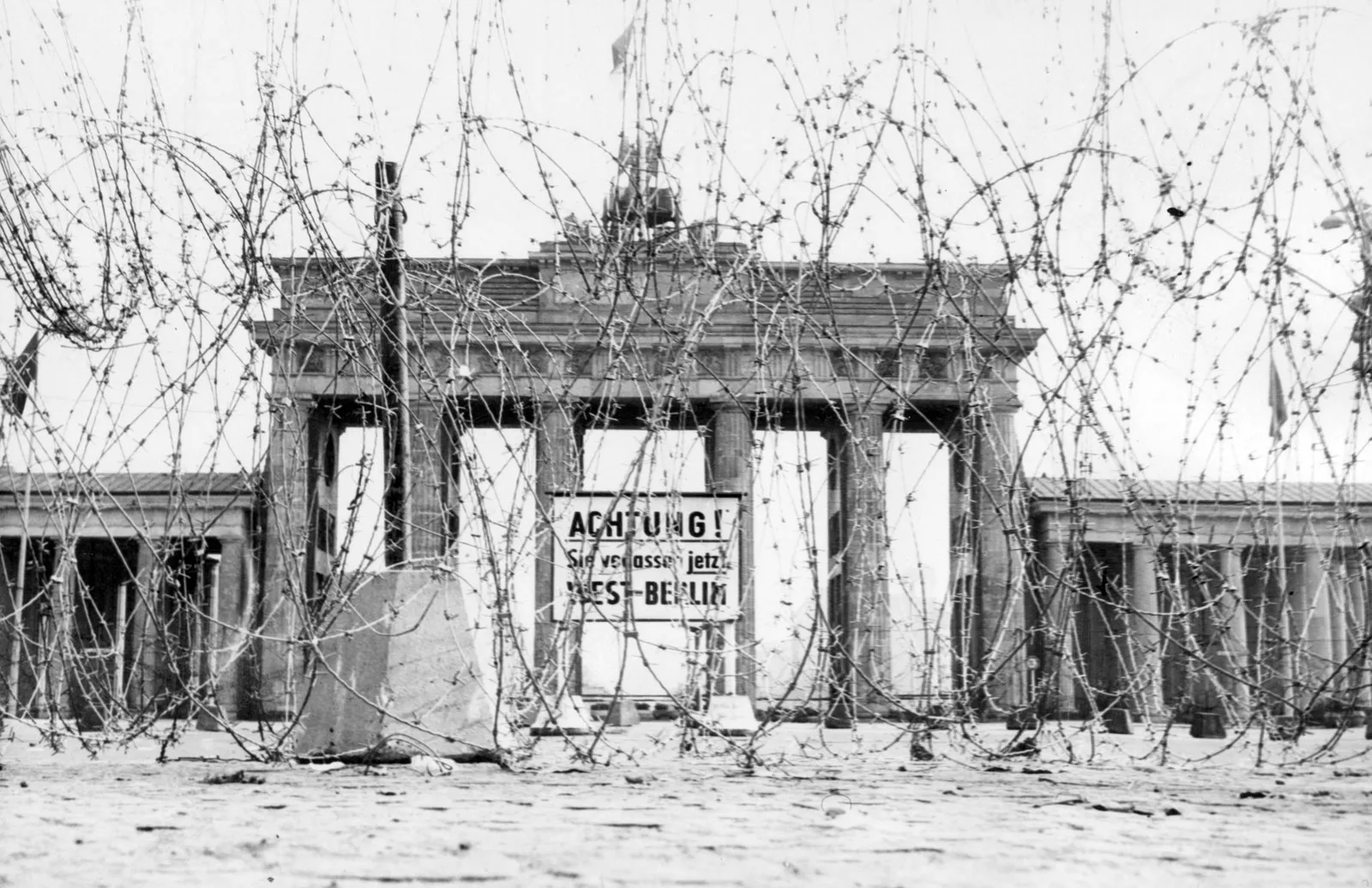
In the early hours of August 13, 1961, the city of Berlin awoke to a stark new reality. Streets that once connected neighbors and families were abruptly blocked by barbed wire and armed guards. Over the coming days and months, these temporary barriers would be replaced by concrete slabs, guard towers, floodlights, and death strips. What began as a hastily constructed security measure quickly became one of the most potent symbols of ideological division in modern history: the Berlin Wall. For 28 years, it physically and psychologically separated not only East and West Berlin, but also represented the broader chasm between the communist East and the capitalist West during the Cold War.
To understand the Berlin Wall, one must go back to the aftermath of World War II. Following Nazi Germany’s defeat in 1945, the Allied powers—namely the United States, the Soviet Union, the United Kingdom, and France—divided the country into four occupation zones. Berlin, though entirely situated within the Soviet zone of eastern Germany, was likewise split into four sectors, administered separately by each of the Allied powers. Tensions between the Soviets and their Western counterparts emerged quickly, fueled by ideological differences and competing visions for Germany’s future. These tensions came to a head with the formal establishment of two separate German states in 1949: the Federal Republic of Germany (FRG), or West Germany, supported by the West, and the German Democratic Republic (GDR), or East Germany, under Soviet control.
While West Germany embraced democratic institutions and a capitalist economy, East Germany adopted a centralized, socialist system modeled after the USSR. This divergence created stark contrasts in living standards, freedom, and opportunity. Berlin became the frontline of this ideological conflict. Even though West Berlin was surrounded by East Germany, it remained a vibrant, Western enclave with a visibly higher quality of life. This situation soon created a massive problem for the East German regime: a growing exodus of its citizens.
Between 1949 and 1961, it is estimated that over 2.5 million East Germans fled to the West, most through Berlin. This migration, often referred to as the “brain drain,” included many young professionals, skilled workers, and academics—individuals whose departure threatened the economic and political viability of East Germany. The Soviet-backed East German government, led by Walter Ulbricht, viewed this mass defection not only as a national crisis but as a public embarrassment that undermined the legitimacy of the socialist model.
Faced with this unsustainable outflow, the East German authorities, with Soviet approval, decided to seal off Berlin. Without prior warning, in the early hours of August 13, 1961, East German troops and workers began erecting barbed wire fences, cutting off road, rail, and pedestrian access between East and West Berlin. In the days that followed, a concrete wall replaced the temporary fences, eventually becoming a highly fortified, 155-kilometer barrier equipped with watchtowers, guard dogs, minefields, and a so-called “death strip”—a no-man’s land designed to deter escape attempts. The construction of the Berlin Wall was condemned internationally, with U.S. President John F. Kennedy calling it a “wall of shame,” though the West refrained from military intervention.
Over the next nearly three decades, the Wall stood as both a physical and symbolic embodiment of the Cold War. Families were torn apart, friends separated, and countless lives disrupted. More tragically, an estimated 140 to over 200 people lost their lives attempting to flee over the Wall, although some estimates suggest the number may be higher. The most famous case was that of 18-year-old Peter Fechter, who was shot and left to bleed to death in 1962 as Western onlookers helplessly watched from the other side. Despite the danger, many East Germans risked—and some succeeded—in escaping, using tunnels, homemade balloons, forged documents, or smuggled vehicles.
The Wall also became a focal point for Cold War rhetoric and confrontation. In 1963, President Kennedy delivered his famous “Ich bin ein Berliner” speech, affirming U.S. solidarity with the people of Berlin. In 1987, President Ronald Reagan famously stood at the Brandenburg Gate and challenged Soviet leader Mikhail Gorbachev to “tear down this wall.” These moments underscored the global significance of the Berlin Wall, transforming it into an enduring symbol of resistance against oppression and the yearning for freedom.
The beginning of the end came in the late 1980s, as the Eastern Bloc began to unravel. Gorbachev’s policies of glasnost and perestroika introduced reforms and loosened Soviet control over satellite states. Pro-democracy movements gained momentum across Eastern Europe. In Hungary, border restrictions with Austria were relaxed in mid-1989, allowing thousands of East Germans to escape westward. Mass protests erupted in East Germany, especially in Leipzig and Berlin, demanding reform, free elections, and open borders.
Under mounting pressure, the East German government announced on November 9, 1989, that citizens would be allowed to cross the border freely. The announcement, made in confusion and poor coordination, led thousands of East Berliners to flock to the checkpoints. Overwhelmed and unsure of orders, border guards eventually opened the gates. Crowds surged through, cheering, hugging, and climbing atop the Wall in scenes broadcast worldwide. That night, the Berlin Wall—so long a symbol of division and tyranny—was rendered meaningless by the will of the people. In the following days and weeks, Berliners from both sides began physically dismantling the wall, piece by piece.
The fall of the Berlin Wall paved the way for the formal reunification of Germany on October 3, 1990. It also marked the symbolic collapse of Soviet influence in Eastern Europe and foreshadowed the dissolution of the Soviet Union itself. Today, remnants of the Wall remain as historical memorials, stark reminders of a time when a divided world seemed permanent and insurmountable. The Berlin Wall was more than concrete and wire—it was a physical expression of an ideological conflict that defined a century. Its fall was a testament to human resilience and the ultimate failure of repression to contain the aspirations of people longing for freedom.