Palestine: From Ancient Homeland to Fragmented Nation

The land historically known as Palestine has been inhabited for millennia, serving as a crossroads of civilizations, cultures, and faiths. Its history predates the modern conflict by thousands of years and is deeply intertwined with the region’s strategic location and religious significance. Today, what was once a single geographic and cultural entity is fragmented into territories under occupation, blockade, and partial autonomy. Understanding the history of Palestine provides essential context for its current political and humanitarian crisis.

The earliest recorded history of Palestine dates back to ancient Canaanite and Philistine civilizations around 3000 BCE. Over the centuries, the region witnessed successive rules by ancient Israelites, Assyrians, Babylonians, Persians, Greeks, and Romans. The ancient Kingdoms of Israel and Judah existed intermittently in parts of this land, but after the Roman conquest and destruction of Jerusalem in 70 CE, the region was incorporated into the Roman Empire and later renamed Syria Palaestina after the Bar Kokhba revolt in 135 CE, a name meant to erase Jewish national identity. The term “Palestine” thus became widely used in classical antiquity to refer to the geographic area between the Mediterranean Sea and the Jordan River.

From the 7th century CE, following the Muslim conquest, Palestine became part of successive Islamic caliphates. Under the Umayyads, Abbasids, and later the Fatimids, the region thrived as an important center of trade and religious learning. During the Crusades, parts of Palestine were briefly controlled by European Christian kingdoms, but Muslim forces under Salah al-Din (Saladin) reclaimed the territory in 1187. By 1517, Palestine became part of the Ottoman Empire, where it remained for four centuries. Under Ottoman rule, Palestine was administratively divided into districts but retained its cultural and demographic continuity, with a population predominantly Arab and Muslim, alongside Christian and Jewish minorities who coexisted for centuries.

Modern Palestinian national identity began to take shape in the late Ottoman period, influenced by Arab nationalism and opposition to European colonial ambitions. However, Palestine’s fate dramatically changed after World War I. The collapse of the Ottoman Empire brought the region under British control through the British Mandate for Palestine (1920–1948), formalized by the League of Nations. The mandate period saw significant political and demographic transformation due to Britain’s support for the Zionist movement, enshrined in the Balfour Declaration of 1917, which promised to facilitate a “national home for the Jewish people” in Palestine. At that time, Arabs made up around 90 percent of the population, with Jews comprising about 10 percent.

Jewish immigration, driven by European persecution and later the Holocaust, increased sharply under British administration, with the Jewish population rising to roughly one-third by 1947. Tensions between the Arab majority, who sought independence, and the Jewish community, which sought a separate state, escalated into violence. Palestinian Arabs staged revolts, notably the 1936–1939 Arab Revolt, which Britain brutally suppressed. Britain’s eventual withdrawal from the mandate left Palestine in turmoil.

The United Nations Partition Plan of 1947 (Resolution 181) proposed dividing Palestine into a Jewish state (allocated 55 percent of the land) and an Arab state (45 percent), with Jerusalem placed under international administration. Jewish leaders accepted the plan, but Palestinian Arabs and neighboring Arab states rejected it, viewing it as unjust and illegitimate. Civil war erupted between Jewish and Arab forces even before the British left.

On May 14, 1948, Zionist leaders declared the independence of the State of Israel. In the ensuing war, Israel expanded its control to 78 percent of historic Palestine, far beyond the UN allocation. More than 700,000 Palestinians were expelled or fled from their homes in what Palestinians call the Nakba (Catastrophe). Over 400 villages were depopulated or destroyed, and the refugees were barred from returning despite UN Resolution 194 affirming their right of return.

The remaining 22 percent of Palestine—the West Bank, including East Jerusalem, and the Gaza Strip—fell under Jordanian and Egyptian control, respectively, until the 1967 Six-Day War, when Israel occupied these territories. Since then, Palestinian lands have been subjected to military occupation, settlement expansion, and annexation efforts. East Jerusalem was annexed by Israel in 1980, a move unrecognized by most of the international community. The Oslo Accords of the 1990s created the Palestinian Authority with limited self-rule in parts of the West Bank, while Gaza came under the control of Hamas in 2007 following an internal Palestinian political split.

Today, the territory of historic Palestine is divided into three main areas. Israel occupies 78 percent, recognized internationally as a state since 1948. The West Bank, formally under Israeli military occupation, is fragmented into zones, with more than 700,000 Israeli settlers living in illegal settlements built on Palestinian land. Gaza, a densely populated enclave home to over two million Palestinians, has been under a blockade by Israel and Egypt since 2007, with repeated wars devastating its infrastructure. Palestinians in East Jerusalem live under Israeli control with limited rights, while millions of Palestinian refugees remain stateless in camps across Lebanon, Syria, Jordan, and beyond.

The State of Palestine is recognized by more than 130 UN member states and has been a non-member observer state at the United Nations since 2012, but it lacks full sovereignty due to ongoing Israeli occupation and international political deadlock. Palestinians continue to demand their right to self-determination, the establishment of an independent state based on the 1967 borders with East Jerusalem as its capital, and the right of return for refugees, while Israel asserts security concerns and historical claims to the land.

The history of Palestine reveals that it was not an empty land awaiting statehood, but a vibrant society with deep-rooted communities and cultural heritage. Its fragmentation today is the direct outcome of colonial decisions, wars, and decades of occupation. What once existed as a single geographic and cultural homeland is now divided by walls, checkpoints, and borders, with Palestinians struggling to preserve their identity and right to statehood in the face of one of the world’s longest unresolved conflicts.

The history of Israel and Palestine is not merely a tale of two peoples competing for the same land; it is a story of deliberate political engineering by imperial powers that favored one national movement while erasing the rights of another. Britain’s role in shaping this tragedy cannot be understated—it used Palestine as a pawn in its colonial strategy, granting legitimacy and resources to the Zionist project while crushing Palestinian resistance with military force. The Balfour Declaration was not a neutral promise; it was a colonial endorsement that handed over a homeland that was not Britain’s to give. The result was not just the birth of a new state, but the catastrophic dispossession of an entire people, creating one of the largest refugee crises in modern history.

Today, the consequences of those imperial decisions still echo through every destroyed village, every refugee camp, every checkpoint, and every blockade. While Israel stands as a state born of determination and tragedy, it is equally a state born of privilege—privilege granted by British imperial power and cemented through wars of conquest. The ongoing occupation, settlement expansion, and denial of Palestinian rights are not new phenomena; they are continuations of a colonial legacy that treated Palestinian lives and sovereignty as expendable. History will remember this not only as a story of survival for one people but as a permanent stain of injustice against another—a reminder that statehood built on dispossession carries a moral debt that the world has yet to reckon with.
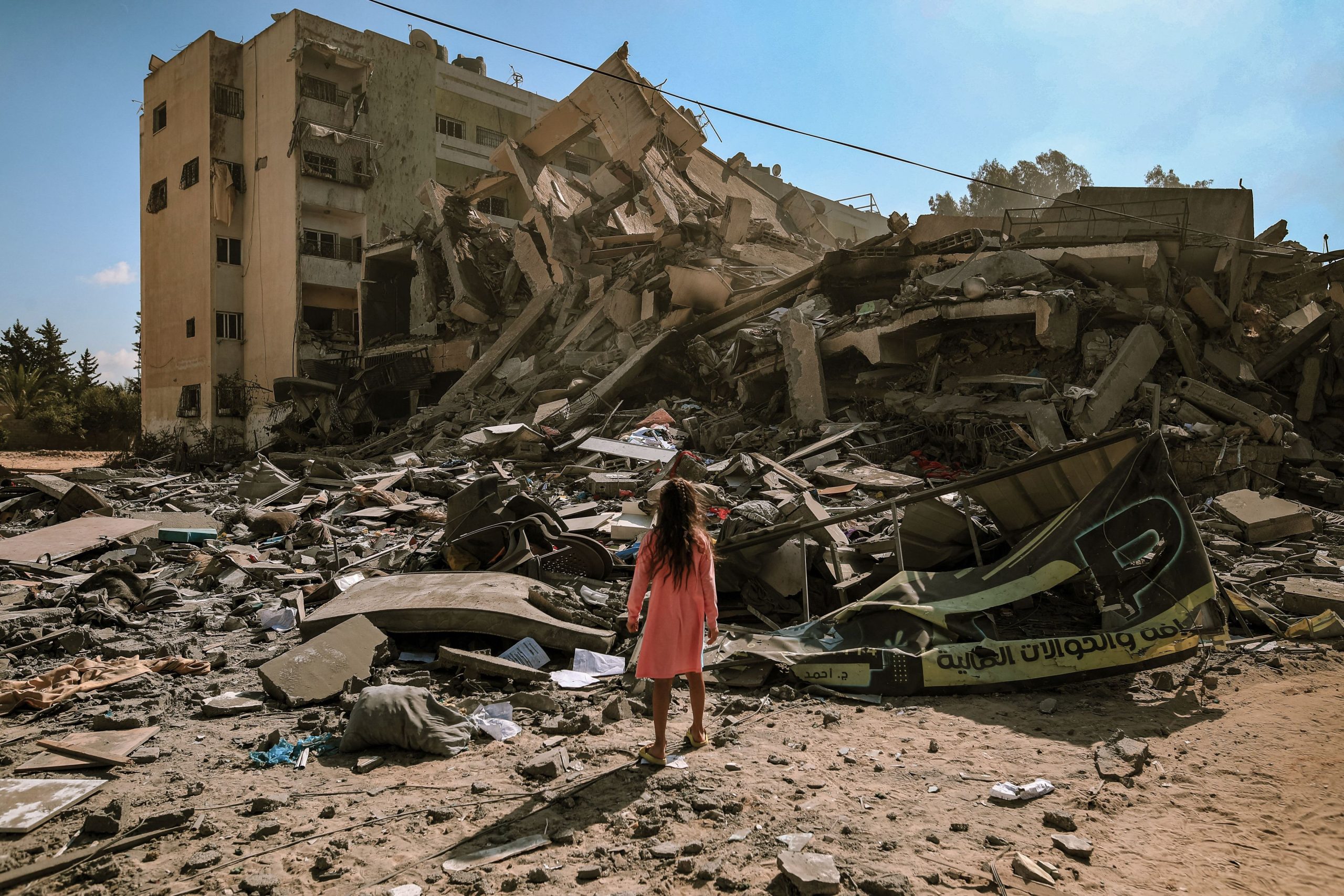
Palestine Beneath the Rubble: A nation fighting for Survival

Israel’s military campaign in Gaza and the occupied Palestinian territories has resulted in one of the most destructive and deadly conflicts of the modern era. What began as a response to a Hamas-led attack has evolved into what international observers, human rights groups, and legal experts describe as a wide-scale assault on civilian life, infrastructure, and the Palestinian national identity itself. Critics, international legal bodies, and humanitarian organizations argue that the scale and nature of the operations suggest a broader strategic doctrine—one aimed at gaining full control over Palestinian territories under a one-state vision, displacing Palestinians through what they describe as ethnic cleansing, and erasing their national identity.

As of mid-July 2025, Gaza’s Ministry of Health reports more than 58,600 Palestinian deaths, with over 139,000 wounded. Independent estimates from research groups, including The Lancet, suggest the true toll may exceed 70,000 to 80,000 when factoring in indirect deaths caused by trauma, starvation, and medical collapse. More than 59% of the dead are women, children, or elderly civilians. UN reports verify that 2,917 Palestinian children were killed in 2024 alone, with thousands more unverified but believed dead. The UN’s Commission of Inquiry documented that 403 of 564 schools in Gaza were struck, 85 destroyed entirely, and 742 people killed in UNRWA shelters. Nearly 90% of schools and universities, over 84% of health facilities, and half of Gaza’s religious and cultural sites have sustained damage or total destruction. Hospitals, water distribution points, churches, and mosques have been repeatedly hit by Israeli strikes, including a recent attack on July 17, 2025, on Gaza’s sole Catholic church, killing at least three civilians, including children and disabled residents, and wounding a priest known to have worked closely with Pope Francis. On July 13, a strike at a water-collection point killed ten people, mostly children.

Israel insists its military actions are defensive measures against Hamas militants allegedly embedded in civilian areas, citing both rocket attacks and supposed use of hospitals as militant bases. However, the International Criminal Court’s prosecutor has stated that many such claims, including Hamas’ use of hospitals as military strongholds, have been “grossly exaggerated.” The UN Commission of Inquiry, after reviewing more than 7,000 pieces of evidence, concluded that Israel’s actions amount to war crimes and crimes against humanity, including the crime of extermination, and that many strikes showed no military necessity or warning. The Commission has submitted findings to the ICC, which in November 2024 issued arrest warrants for Israeli Prime Minister Benjamin Netanyahu and Defense Minister Yoav Gallant over charges of war crimes and crimes against humanity, including deliberate starvation, indiscriminate bombing, and targeting civilians.

Beyond the carnage lies a deeper geopolitical concern. Many analysts, activists, and international legal experts now argue that Israel’s military operations are part of a broader strategy to eliminate the Palestinian presence in historic Palestine and replace it with a singular, Jewish-majority state. This claim is supported by comments from senior Israeli officials, proposals to build “humanitarian cities” on Gaza’s border—described by former Prime Minister Ehud Olmert as concentration camps—and ongoing efforts to expand settlements across the West Bank.

International observers argue that Israel’s military campaign is not solely about neutralizing Hamas but rather part of a wider policy to achieve demographic and territorial dominance. Proposals for “humanitarian cities” along Gaza’s border, described by former Israeli prime minister Ehud Olmert as “concentration camps,” fuel claims of permanent displacement. UN experts have warned that the forced relocation of Palestinians echoes the Nakba of 1948 and amounts to a new instance of ethnic cleansing. Scholars describe this as demographic engineering designed to secure Jewish majority control over all of historic Palestine, effectively dismantling Palestinian national identity. Human Rights Watch, Amnesty International, and Oxfam have labeled the destruction of civilian infrastructure and blockade-induced deprivation as genocidal and systematic. South Africa has filed genocide charges against Israel at the ICC, while a coalition of Global South nations, dubbed the Hague Group, has pledged to defend ICC and ICJ rulings and push for arms embargoes.

The humanitarian crisis remains catastrophic. UN findings show that child malnutrition in Gaza has more than doubled in three months, jumping from 5.5% to 10.2%. Over 1.9 million people are displaced, trapped in makeshift shelters with minimal access to food, water, or medical care. Aid agencies report repeated strikes on humanitarian convoys and refugee camps. Despite repeated international calls for a ceasefire, no comprehensive truce holds, and bombardment continues daily, even in designated safe zones.

The United Nations has consistently condemned Israel’s actions, demanding an immediate ceasefire and unimpeded humanitarian access. The UN Human Rights Council’s Commission has accused Israel of committing widespread war crimes and crimes against humanity, warning of atrocity crimes in progress. The UN Office of the High Commissioner for Human Rights has criticized Israel’s collective punishment measures, citing incidents such as a six-day offensive in March that killed 506 Palestinians, including 200 children. UN human rights rapporteurs have repeatedly warned that the destruction and displacement amount to mass ethnic cleansing, urging immediate international intervention.

Western governments remain divided. The United States continues to provide extensive military and financial support to Israel, opposing ICC actions and supplying almost $18 billion in security assistance since the war began. European responses vary, with some states pausing arms exports and expressing support for ICC warrants, while others resume funding to UNRWA and call for sanctions on illegal settlement expansions. The International Court of Justice has ruled Israel’s occupation and settlement policies unlawful under international law. Meanwhile, human rights organizations and legal experts worldwide are pressing for arms embargoes and accountability.

The Israeli government insists that its war is against Hamas, not Palestinians. But to, many in the international community, the systematic destruction of Gaza’s civilian life, infrastructure, and history—carried out under the guise of self-defense—reflects a broader campaign of erasure. With the death toll continuing to rise, ceasefire negotiations stalled, and legal processes grinding slowly forward, the conflict shows no sign of resolution. Critics argue that such justifications mask a long-term plan for territorial annexation and permanent displacement of Palestinians. What remains is a devastated population, a broken land, and a deepening sense among Palestinians that the war is not merely about territory or rockets, but about existence itself.

With the weight of overwhelming evidence, the devastation unfolding in Gaza can no longer be framed merely as collateral damage of war or a tragic by-product of self-defense. The systematic targeting of civilians, the relentless destruction of homes, hospitals, schools, and places of worship, and the forced displacement of nearly an entire population point to a deliberate strategy that transcends the fight against Hamas. What is happening is not just a military campaign; it is the slow erasure of a people from their land, a campaign of dispossession carried out under the banner of security. No justification can legitimize the mass killing of children, the starvation of families, or the leveling of entire neighborhoods. The international community’s tepid response and the open complicity of powerful Western nations only deepen the stain of this tragedy, allowing impunity to flourish while civilians pay the price in blood. History will remember this not as a war of defense, but as an assault on an entire population’s right to exist, and silence in the face of such crimes will forever remain a moral failure of our time.