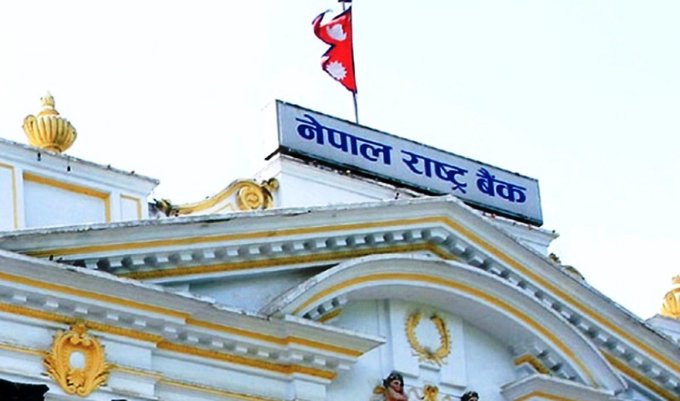
Nepal records 29.9% surge in remittance inflows in July

Kathmandu — In July alone, NPR 177,410,000,000 entered the country as remittances. This is a 29.9% increase from the same month last year. In July last year, remittance inflows were NPR 136,600,000,000.

In US dollar terms, remittance inflows rose 25% to USD 1,270,000,000 in July. Last year the dollar inflow rose 15.8% in the same month.

During the same period, 44,466 Nepalese received final labor approval for foreign employment (institutional and individual, new), and 23,644 people renewed their labor approval. In the same month last year, those numbers were 36,928 and 22,647, respectively.

The current account was in surplus by NPR 78,140,000,000 in July. In the same month last year the current account was in surplus by NPR 33,080,000,000. In US dollar terms, the current account surplus was USD 560,000,000 in the review month, up from USD 250,000,000 in the same month last year.

On the balance of payments, the post-clearance position was in surplus by NPR 89,300,000,000 in the first month of the fiscal year. A year earlier, the post-clearance position was in surplus by NPR 40,900,000,000. In US dollar terms that was USD 640,000,000 in the review period and USD 310,000,000 in the same month last year.

By the end of July, foreign exchange reserves reached NPR 2,806,040,000,000. At the end of Ashad 2082 the reserve was NPR 2,677,680,000,000. In US dollars, the reserve was USD 19,500,000,000 at the end of Ashad and rose 2.7% to USD 20,030,000,000 at the end of Shrawan.

Based on the first month’s imports in the current fiscal year, the reserves can cover 20.4 months of goods imports and 16.6 months of goods and services imports. The central bank set a target this year to hold reserves sufficient for 7 months of imports.

Inflation and price details:

  • Annual point-to-point consumer price inflation in July: 1.68% (last year 4.09%).
  • Food and beverage inflation: 2.28% (last year 6.17%).
  • Non-food and services inflation: 3.95% (last year 2.94%).

Selected food subgroups (annual point-to-point change):

  • Ghee and oil: +10.97%
  • Non-alcoholic beverages: +4.64%
  • Fruits: +3.01%
  • Vegetables: −18.56%
  • Spices: −4.81%
  • Fish and meat: −2.41%

Selected non-food subgroups (annual point-to-point change):

  • Miscellaneous goods and services: +10.60%
  • Education: +7.67%
  • Clothing and footwear: +6.84%
  • Furnishings and household equipment: +5.06%
  • Tobacco products: +4.68%
  • Insurance and financial services: −0.22%

Nepal’s Public Debt Rises by Rs 14 Billion in First Month of Fiscal Year

Kathmandu – Nepal’s public debt increased by more than Rs 14 billion during the first month of the current fiscal year 2082/83 , according to the Public Debt Management Office.

The report shows that total government debt stood at Rs 2.669 trillion at the beginning of the fiscal year and reached Rs 2.684 trillion by mid-August. This figure accounts for 43.94 percent of the country’s gross domestic product (GDP).

Out of the total debt, 52.26 percent, Rs 1.42 trillion, is external borrowing, while the remaining 47.74 percent, or Rs 1.264 trillion, is domestic borrowing.

The government has set a target of raising Rs 595 billion in debt this fiscal year. By the end of Shrawan , Rs 44.57 billion, 7.48 percent of the annual target, had been raised, which includes Rs 40 billion from domestic loans and Rs 4.57 billion from external loans.

Meanwhile, Rs 36.68 billion has already been spent on interest payments from the Rs 411 billion allocated for debt servicing in the current budget. This amount represents 8.93 percent of total government expenditure.

Public debt added by 231 billion in one year

Kathmandu — Public debt increased by 231 billion 80 million rupees in the last fiscal year 2081/82. With this, the total public debt reached 2 trillion 669 billion rupees, according to the Public Debt Management Office. As of Asad 2081, the government’s outstanding public debt was 2 trillion 438 billion 480 million rupees.

During this period, the appreciation of the US dollar against the Nepali currency has added additional burden to the public debt. As the US dollar has been continuously rising in recent months and the value of other foreign currencies has also increased, the Public Debt Management Office’s report for the month of Asad has shown that the additional public debt liability is increasing every month.

The report states that an additional burden of 66 billion 930 million rupees has been added to the outstanding public debt due to the weakening of the Nepali currency from Asad 2081 to Asad. The Nepali rupee depreciated by 2.97 percent against the US dollar in mid-June 2082 compared to mid-June 2081. In the same period of the previous year, the Nepali rupee depreciated by 1.66 percent until Jestha last year. In mid-June 2082, the buying exchange rate of one US dollar reached 137.44. In mid-June 2081, the exchange rate was 133.36.

The amount of external debt varies due to changes in the exchange rate of the Nepalese rupee against foreign currencies. When the exchange rate of the dollar decreases, Nepal benefits, and when it increases, it loses. Compared to mid-June 2079, in mid-June 2080, due to the devaluation of the Nepalese rupee against foreign currencies, there was a foreign exchange loss of 59 billion 160 million rupees. Due to changes in the exchange rate, there has been a loss in 4 of the last 7 fiscal years, while the rest have been in profit.

Similarly, the total outstanding public debt as of last Ashar is 43.71 percent of the gross domestic product (GDP). The National Statistics Office has projected that GDP will reach Rs 6,107 billion in the current fiscal year. The share of foreign debt in the total public debt as of mid-Ashar is 52.49 percent and internal debt is 47.51 percent.

According to the office, the government collected Rs 455 billion 490 million in public debt last year. The public debt collected last year is 83.25 percent of the annual target. During the period, the receipt of internal debt is Rs 329 billion 990 million (100 percent of the annual target) and external debt is Rs 125 billion 390 million (57.79 percent of the annual target). This year, the government has set a target of raising public debt of Rs 547 billion. Although the receipt of internal debt is high, the external debt is very low, according to the Public Debt Management Office report.

‘If the work is done as per the agreement, the external debt will be received more, if not, no more debt will be received,’ said a source from the Public Debt Management Office. ‘If the Nepal Electricity Authority, the Civil Aviation Authority of Nepal and other bodies complete the work on time, the external debt will be received more, if not, the target will not be achieved.’

In the last fiscal year, the government has paid 362 billion 590 million rupees for the principal and interest payment of the loan. This is 90.01 percent of the annual target. Of this, 304 billion 190 million (90.28 percent) was spent on the principal and interest of the internal debt and 58 billion 400 million (88.62 percent) on the principal and interest of the external debt, according to the office. In the last fiscal year, the government has allocated 402 billion 850 million rupees for debt service expenses. Out of which 362 billion 590 million rupees have been paid.

Looking at the public debt outstanding by the government as of the end of the last fiscal year, every Nepali now has a debt about 91 thousand 7 rupees on their head. According to the National Census 2078 of the National Statistics Office, the population of Nepal is 29,164,578. This figure was derived by dividing the outstanding public debt as of last Ashar by this population.

Economists say that the continuously increasing public debt poses a risk. From the fiscal year 2080/81 to last year, the allocation under the heading of financial management has surpassed the size of capital expenditure. They say that this is the result of the continuous increase in internal and external debt. With the increasing debt repayment obligations, the gap between the level of capital expenditure and the budget allocated for financial management is widening, which risks shrinking the government’s ability to invest in the future. Economists say that the result is also the risk of fiscal imbalance. However, in the current fiscal year, the amount allocated for capital expenditure is more than the budget allocated by the government under the heading of financial management.

Those going abroad will be able to exchange up to $3,000

Kathmandu – Nepal Rastra Bank has revised and made new provisions related to foreign exchange management through the monetary policy for the upcoming fiscal year 082/83.

The monetary policy states that Nepali citizens traveling to countries other than India are currently provided with an exchange facility of up to $2,500 per visit, but this exchange facility will be increased to $3,000.

Similarly, the Rastra Bank has also stated that the currencies of countries where foreign exchange transactions are increasing, including Bangladesh and Sri Lanka, will be added to the list of convertible foreign currencies.

The monetary policy states that the exchange rate used in remittance transactions will be reviewed as needed and policy provisions will be made regarding interbank transactions in convertible foreign currencies. The Rastra Bank has also stated that arrangements will be made to manage foreign exchange risks through commercial banks to attract foreign investment.

The policy of amending the ‘Nepal Rastra Bank Foreign Investment and Foreign Debt Management Regulations, 2078’ has been adopted to facilitate the improvement of the economic and business environment and investment growth. The monetary policy also includes a provision to review the limit of cash foreign currency subject to customs self-declaration and to facilitate the provision of submitting details of foreign exchange held abroad in the name of Nepali citizens or institutions.

The monetary policy also mentions that the existing provisions related to gold import and sale-distribution will be reviewed. Similarly, in the context of the increasing contribution of remittance companies to the economy, it is stated that a provision will be made to classify such companies on the basis of capital and turnover.

Government unable to provide salary allowances and pensions to the employees

Government struggling to afford food for prisoners

The government is now in a situation where it is unable to provide regular salaries, allowances, and pensions to employees.

Salaries, allowances and pensions of thousands of employees have been stopped in the current financial year. Some of the existing employees have not received the salary and allowances since February and the retired employees have not received the amount due to pension. Due to a lack of finances, the state has not been able to provide even the funds for regular food expenses to the prisoners.

At present, according to government statistics, the number of teachers receiving pensions is 51,308. Among them, more than 30,000 teachers have not received their pension for the month of March. Bishnu Prasad Kharel, Head of the Pension Management Office, has informed us that the teachers’ pensions have been stopped as the Ministry of Finance has not disbursed the funds.

Similarly, the spokesperson of Nepal Police, Dipendra GC, has informed that there is insufficient fund to pay salaries to 131 units out of the total 486 units of Nepal Police.

Not only that, the government has not been able to provide expenses even for regular foods to about 27,000 prisoners across the country. According to Chakrapani Pandey, Director General of the Prison Management Department, the government has not provided the required funds for the food expenses to the inmates in the country.

According to the spokesperson of the Financial Comptroller General’s Office, Shambhu Prasad Marasini, a total of 7 trillion 2 billion 120 million revenue has been collected by Wednesday. While during this period 7 trillion 21 billion 20 million rupees have been spent on salary and allowances of employees and other administrative expenses. According to this calculation, nearly 19 billion rupees more than the income of the state has been spent only on salary allowances and pensions of the employees.

It seems that the government, which has set a target of collecting revenue of 14 trillion 58 billion 600 million in the current financial year, has collected only about 50 percent of the total estimated amount even after 9 months of the current financial year. The country has reached a situation where the revenue collected by the government cannot even cover the salaries and administrative expenses of the employees.

ADB’s investment in Nepal by 2022 is 4 trillion 20 billion NRs

April 22- Kathmandu – The Asian Development Bank (ADB) has announced that by 2022, about 4 trillion 20 billion NRS has been invested in Nepal’s energy, transportation, agriculture, drinking water, urban infrastructure, service sector, rural development, and natural resources, health, and education by ADB.

ADB Director General Kenichi Yokoyama has said that the Asian Development Bank has been investing a large amount in various projects in Nepal, but the problems of the Asian Development Bank’s project implementation should be actively addressed and special attention should be paid to that matter.

In a two-day discussion organized to provide information on the field and performance of projects in Nepal (Country Portfolio), Minister of Finance Prakash Sharan Mahat said that the government is committed to improving the capital expenditure to address the challenges of Asian Development Bank project implementation and delivery and to address the people’s desire for development.Projects such as Urban Water Supply and Sanitation Project, Bagmati River Basin Improvement, Rural Enterprise Finance Project and Power Transmission and Distribution Efficiency Enhancement Project were awarded in the program which were supported by ADB.

Nepal Rastra Bank selling 20 billion development bonds

April 20- Kathmandu – Nepal Rastra Bank has prepared to sell development bonds worth 20 billion rupees for the purpose of raising internal debt.

According to the Nepal Rastra Bank, the maturity period of the bond named ‘Development Loan 084 ‘T’ will be four years and the interest rate of the bond will be determined from bidding.

As mentioned in the notice of the Nepal Rastra Bank, the bond can be bid on 20th April until 3:00 in the afternoon, then the Bank will issue the bonds on Friday. The bond can be purchased by banks and financial institutions, insurance companies, organized organizations, and Nepali citizens.

The government, which has set a target of raising 2 trillion 56 billion rupees in domestic debt in the current financial year, has already raised 88 billion rupees in the third quarter of the current financial year .

Nepal’s banking sector is safe: Small shocks won’t affect it: Governor

Nepal Rastra Bank Governor Maha Prasad Adhikari has said that the condition of Nepal’s banks is safe and a small shock will not affect it.

Announcing the financial data for 8 months of the current fiscal year 2079/80, the governor said that the foreign exchange reserve is in a comfortable state and inflation is in a declining state.

He said that even though the bank’s interest rate is slightly higher, the base rate has been decreasing since February. He said that there is no need to despair as Nepal’s economy is improving, and that capital adequacy is 13 percent instead of 11 percent and non-performing loans are 2.63 percent.

Import restrictions extended until November

The cabinet meeting held today has decided to maintain the ban on the import of luxury goods such as vehicles and mobiles until November.

The decision made by the Council of Ministers in a meeting held today has decided to extend the ban as it ends today. As Nepal’s foreign exchange reserves declined, 10 items were banned from Baisakh 2079 BS., defining them as luxury goods. But out of those 10 items, only 4 items are currently banned. On Bhadra 14, 2079 BS., private vehicles except for ambulances, mobile phones above $300, motorcycles above 150 cc and alcohol were banned, and the meeting of the council of ministers held today has decided to extend it till November.

Earlier, the import of Kurkure chips and similar products, prepared liquor, cigarettes and tobacco products, diamonds, mobile phones, televisions above 32 inches, jeeps, cars,vans andmotorcycles above 250 cc, toys and palying cards was banned.

Government banned the import of 10 items till mid-July

The government has banned the import of 10 items after the foreign reserves declined rapidly during the economic crisis . The Ministry of Industry, Commerce and Supplies has published a notice, banning the import of 10 items including kurkure chips , alcohol, TV, mobile and motorcycles. The import of luxury consumer goods has been banned till mid-July.

The banned items includes kurkure,lays and similar other products, all types of ready-made liquor, cigarettes and tobacco products (except raw materials).

The import of diamonds (excluding industrial raw materials), mobile sets, color televisions (above 32 inches), jeeps, cars and vans, motorcycles with a capacity of more than 250 cc, all kinds of toys and playing cards are banned.

According to the notice, this provision does not apply in case of import through booking medium has been made before before 26th April, 2022. Similarly, diplomatic missions in Nepal can import these items for their own purposes.

Government’s decision to cut fuel budget by 20 percent for government facilities

The government has decided to cut fuel for government facilities by 20 percent due to declining foreign exchange reserves.

According to the Ministry of Finance, various ministries, agencies and public organizations affiliated to the government have to cut 20 percent of the remaining budget on fuel. It has been mentioned that the decision of the government will not be implemented in the case of essential vehicles, vehicles used in local elections and vehicles used for peace and security.
It is also said that the decision taken by the cabinet meeting on April 13 will be implemented till July 16.