Putin and Netanyahu discuss Middle East situation amid Gaza peace deal

Moscow-Russian President Vladimir Putin and Israeli Prime Minister Benjamin Netanyahu held a phone conversation focusing on the current situation in the Middle East, according to the Kremlin press service.

The discussion covered recent regional developments, particularly in relation to the US president’s proposed plan for normalization in the Gaza Strip, the statement added.

The two leaders spoke about other regional issues including the situation around the Iranian nuclear programme and stabilisation in Syria, a statement said.

Putin has previously hailed Trump’s plan for Gaza and voiced hope it will be successfully implemented. At the same time, the Russian leader has reaffirmed Moscow’s support for the creation of an independent Palestinian state as a pivotal component of the Middle East peace settlement.

US Government faces first Shutdown in Seven Years

Washington-The United States federal government has entered its first shutdown in nearly seven years after lawmakers in the Senate failed to reach an agreement on a spending bill.

The deadline to approve funding passed on Wednesday, with both Republicans and Democrats rejecting each other’s proposals in back-to-back votes.

Democrats refused to support the Republican plan, pressing instead for the extension of Affordable Care Act subsidies set to expire at the end of the year and the reversal of Medicaid cuts. Republicans labeled their bill a “clean” funding measure, while Democrats argued it would jeopardize healthcare access for millions of Americans.

The standoff has led to a blame game. Senate Republican leader John Thune accused Democrats of staging a confrontation with the president, while Senate Minority Leader Chuck Schumer charged Republicans with “risking America’s healthcare” and failing to negotiate responsibly.

The White House also directed blame at Democrats, with its official website displaying a countdown clock titled “Democrats Have Shut Down the Government.”

The Senate is scheduled to hold another vote on the Republican proposal Wednesday morning. GOP leaders have pledged to reintroduce the bill daily until Democrats agree.

As a result of the shutdown, federal agencies will scale back operations and many government employees will be placed on temporary leave. The last US government shutdown began on December 22, 2018, and lasted 35 days, the longest in American history.

Polish PM Tusk: Ukraine Conflict is also a War of the West

Warsaw -Polish Prime Minister Donald Tusk has declared that the war in Ukraine is not only Ukraine’s fight but also the war of the West. Speaking at the Warsaw Security Forum , he said the main task for European Union leaders is to make their people understand the threat allegedly posed by Russia.

Poland has been one of Ukraine’s strongest supporters in its conflict with Moscow, with Tusk taking a firm stance. Earlier this month, he criticized growing “antipathy” toward Ukraine among Poles, blaming Russian influence, and urged Polish politicians to counter this trend.

On Monday, Tusk stressed that “the biggest and most important task for European leaders today is to make Western societies aware” that the war in Ukraine is the most serious challenge of the 21st century.

“This war is also our war,” he said, calling it a matter of “fundamental interest” for the West. He warned that a Ukrainian defeat would impact the entire Western world, from Poland to the United States. He urged unity within the EU and NATO, saying solidarity was needed to “defeat” Russia.

Tusk also highlighted plans for large-scale modernization of the Polish army and called for mobilization of both governments and societies across Europe. Earlier this month, Warsaw accused Moscow of sending drones into its airspace, a claim Russia has denied.

Russia, on the other hand, has described the Ukraine conflict as a proxy war by the West. Russian Foreign Minister Sergey Lavrov recently said that the crisis was provoked by the EU and NATO and used to wage “an actual war” against Moscow.

At the UN General Assembly on Saturday, Lavrov dismissed Western claims that Russia plans to attack NATO in the future, stating, “Russia has not had such intentions.” He added that Moscow had repeatedly invited NATO to agree on “legally binding security guarantees” in Europe, but those proposals were ignored.

Worship of Goddess Mahagauri on the Ninth day of Navaratri

Kathmandu – On the ninth day of Bada Dashain and Navaratri, devotees across the country are performing rituals dedicated to Goddess Mahagauri, the eighth among the nine forms of Goddess Durga.

According to Vedic Sanatan tradition, Goddess Mahagauri is worshipped every year on Ashwin Shukla Ashtami. Normally, this falls on the eighth day of Navaratri, but this year, due to the extension of the lunar date (Chaturthi Tithi Vriddhi), the Nepal Panchang Nirnayak Samiti has determined that the worship should take place on the ninth day instead.

As part of Navaratri rituals, devotees recite sacred texts such as Durga Saptashati (Chandi) and Shrimad Devi Bhagwat at sites where Ghatasthapana was performed. It is a common belief that worshipping Goddess Mahagauri during this period brings strength, prosperity, and wisdom.

Russia denies plans to attack EU or NATO : Warns of decisive response to any aggression

United Nations – Russian Foreign Minister Sergei Lavrov has said that Moscow has no plans to attack NATO or European Union countries but warned of a decisive response if Russia faces aggression.

Speaking at the UN General Assembly on Saturday, Lavrov accused Western nations of making threats against Russia increasingly common. He stressed that President Vladimir Putin had repeatedly debunked claims that Russia intends to attack NATO or the EU.

Lavrov also criticized Israel, saying that while Moscow condemned the Hamas-led 7 October 2023 attacks, there was no justification for Israel’s large-scale killings of Palestinians in Gaza or for plans to annex the West Bank. He accused Israel of using its campaign against Hamas to justify airstrikes on other Middle Eastern countries.

On Iran, Lavrov condemned the West after a Russia and China led effort to delay the reinstatement of sanctions failed on Friday. He called the decision to reimpose restrictions illegal.

Lavrov’s remarks come amid growing tensions in Europe. Estonia recently accused Russia of violating its airspace, while NATO air defense operations were carried out in Poland in response to drone incursions. Denmark has also reported drones over its airports but has not linked them directly to Moscow.

Meanwhile, US President Donald Trump suggested that NATO nations should shoot down Russian aircraft if they enter allied airspace. NATO has warned it will use all necessary military and non-military tools to defend itself.

Lavrov also commented on US-Russia relations, saying the current US administration appeared interested not only in addressing the Ukraine conflict realistically but also in seeking pragmatic cooperation without an ideological stance.

In closing, Lavrov criticized Western recognition of a Palestinian state, questioning the timing and suggesting that some countries had waited so long because they hoped there would be no one and nothing left to recognize.

UN Security Council Rejects Russia-China Proposal: Iran Sanctions to Resume

New York – The UN Security Council has rejected a resolution put forward by Russia and China that sought to extend sanctions relief for Iran for another six months. The failure of the resolution clears the way for the reimposition of restrictions on Iran’s nuclear program.

In Friday’s vote, only four members supported the draft,China, Russia, Pakistan, and Algeria, while nine voted against and two abstained. As a result, sanctions that were lifted under the 2015 Joint Comprehensive Plan of Action (JCPOA) had officially returned at midnight GMT on Saturday.

The move follows last month’s decision by France, Germany, and the UK to trigger the “snapback mechanism,” accusing Iran of major violations of the deal.

Russia’s deputy UN ambassador Dmitry Polyansky criticized the Western powers, saying their decision showed that their past promises of seeking a diplomatic solution to Iran’s nuclear issue were “mere noise.”

The US deputy representative to the UN, Dorothy Shea, welcomed the vote, describing the draft resolution as “a hollow effort to excuse Iran from accountability for failing to meet its nuclear commitments.”

In June, the US and Israel carried out strikes on Iranian nuclear facilities, claiming the action was aimed at preventing Tehran from obtaining nuclear weapons. Iran has consistently denied such intentions, saying its nuclear program is for peaceful purposes.

Iranian Foreign Minister Abbas Araghchi warned that reinstating sanctions would set a “dangerous precedent” and damage the Security Council’s credibility. He called the Western actions “reckless and legally void,” stressing that Iran would not bow to threats or pressure.

Trump urges Turkey to halt Russian Oil Imports amid Ukraine War

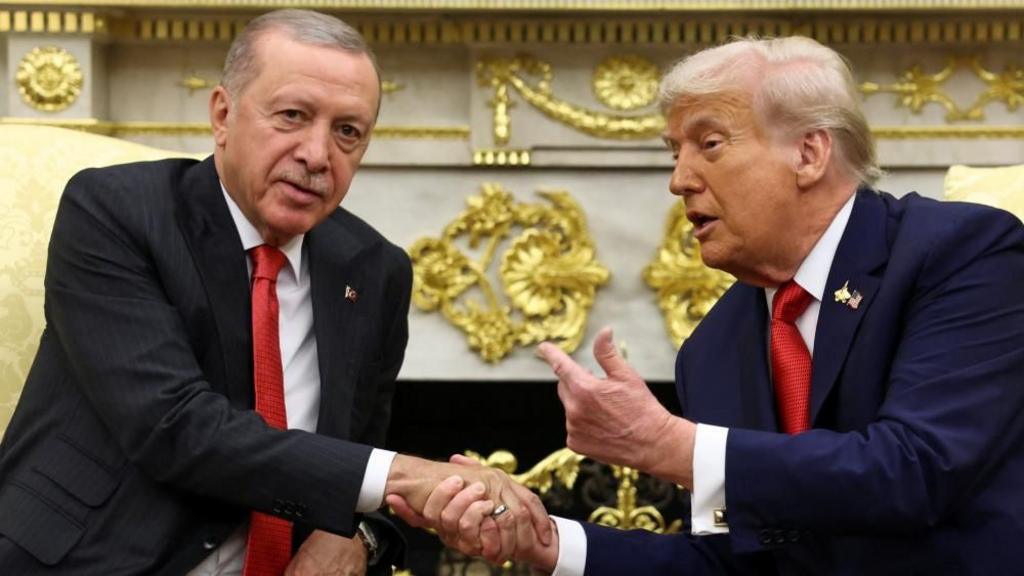
Washington-US President Donald Trump has pressed Turkey to stop buying oil from Russia, framing it as a crucial step to cut Moscow’s war funding in Ukraine.

Speaking at the White House alongside Turkish President Recep Tayyip Erdogan, Trump said halting energy imports from Russia would be “the best thing” Erdogan could do. He added that Erdogan, who is respected by both Russian President Vladimir Putin and Ukrainian President Volodymyr Zelensky, could play a major role in influencing the conflict.

Despite the talks, no deal was reached on lifting US sanctions on Turkey or reviving Ankara’s long-blocked purchase of F-35 fighter jets, although Trump signaled optimism about progress. Turkey was expelled from the F-35 program in 2019 after it bought Russia’s S-400 missile defense system.

Trump’s appeal comes as Turkey remains one of Russia’s top buyers of oil and gas, alongside India and China. Earlier this year, Russian gas deliveries to Europe via Turkey rose by more than 26 percent.

The US president’s remarks follow his repeated warnings that NATO members must stop importing Russian energy. During his UN General Assembly speech earlier this week, he accused allies of “funding the war against themselves” through continued purchases.

US lawmakers have also raised concerns over Turkey’s potential return to the F-35 program, citing its military actions in Syria, violations of Greek airspace, and ties with Moscow. However, Trump said he was hopeful about future agreements, adding that sanctions on Turkey could be lifted “very soon” if talks progress positively.

The Oval Office meeting was the second encounter between Trump and Erdogan this week, following brief talks at the UN General Assembly.

Lavrov claims West turned Ukraine Crisis into war against Russia

Newyork- Russian Foreign Minister Sergey Lavrov has alleged that the Ukraine crisis was engineered by Western powers as a war against Russia, with Kiev being used as the main front.

Speaking at a G20 ministerial meeting held on the sidelines of the UN General Assembly in New York, Lavrov said Western nations’ “neo-colonial ambitions” and refusal to abide by the UN Charter have fueled regional wars and heightened global tensions.

He stated, “The crisis in Ukraine is another clear example. NATO and the European Union have already declared an actual war on my country and are directly involved in it.”

Moscow has repeatedly described the conflict as a Western proxy war, accusing NATO and the EU of supplying military aid to Kiev and using Ukrainian forces as “cannon fodder.” Russian officials also argue that years of NATO’s eastward expansion and deepening ties with Ukraine, especially after the 2014 Maidan coup and the conflict in Donbass, have steadily escalated tensions.

UK to recognize Palestinian State: Keir Starmer to announce it today

London – Prime Minister Keir Starmer is set to announce the United Kingdom’s formal recognition of a Palestinian state in a statement on (today)Sunday afternoon, marking a major shift in British foreign policy.

In July, Starmer warned that the UK would change its stance unless Israel agreed to key conditions, including a ceasefire in Gaza and a commitment to a long-term peace process leading to a two-state solution.

The decision has sparked sharp criticism from the Israeli government, families of hostages in Gaza, and some Conservative MPs. Until now, successive UK governments had maintained that recognition should only come as part of a peace process at a time of maximum diplomatic impact.

Ministers defended the move, saying the UK had a moral duty to act to keep hopes of lasting peace alive.

The announcement comes as Gaza faces worsening humanitarian conditions. Israel’s latest ground assault on Gaza City, described by a UN official as “cataclysmic,” has displaced hundreds of thousands and left much of the territory destroyed. The Hamas-run health ministry reports at least 65,208 deaths in the nearly two-year conflict.

Several other nations, including Spain, Ireland, and Norway last year, and now Portugal, France, Canada, and Australia, have either recognized or pledged recognition of a Palestinian state.

Currently, around 75% of UN member states recognize Palestine, although it lacks agreed borders, a capital, or an army, making the recognition largely symbolic.

The Labour Party has long supported Palestinian statehood, and Starmer faced heavy pressure from within his party, with more than half of Labour MPs signing a letter in July urging immediate recognition.

Government to form high level judicial probe panel on Gen-Z protests

Kathmandu – The government has started the process to form a high-level judicial investigation commission to probe the Gen-Z protests of September 8 and 9.

An official from the Ministry of Home Affairs said the commission will look into the shortcomings and accountability of state agencies during the incidents. “A decision will be made in the very first cabinet meeting,” the official stated.

The ministry has already prepared an expert roster and finalized the Terms of Reference (ToR) for the commission.

According to sources, former Special Court judge Gauri Bahadur Karki is likely to lead the commission, given his reputation for being tough on corruption. The commission will have three members, and the names of the other members are almost finalized.

Earlier, Prime Minister Karki, after expanding her cabinet, had decided in the first meeting of the council of ministers to set up a high-level committee to investigate the crackdown during the Gen-Z protests.

Kulman Ghising visits Teaching Hospital to meet injured before entering Singha Durbar

Kathmandu – Minister Kulman Ghising, who is scheduled to enter Singha Durbar today after taking oath as a minister from President Poudel, has reached Teaching Hospital to meet the citizens injured during the Gen Z movement before entering Singha Durbar. He has also met the relatives and family of those who lost thier life during the movement.

Ghising reached the hospital immediately after assuming office at Sheetal Niwas. He has been given the responsibility of the Ministry of Energy, Water Resources and Irrigation, Physical Infrastructure and Urban Development.

Prime Minister Sushila Karki had appointed him as a minister only on Sunday. After meeting the injured, Ghising gave a brief response and said that now the country will move in a new direction and take a new form.

Schools in Kathmandu resume after Gen-Z Protests

Kathmandu – Schools across the Kathmandu Valley, which had remained closed due to the Gen-Z protests, gradually reopened on Monday.

Some schools had been set on fire during the protests, prompting administrations to suspend classes for several days citing safety concerns. With conditions now improving, schools have resumed regular teaching activities.

Trump says he is ready to impose major sanctions on Russia if NATO acts together

Washington – US President Donald Trump has said he is prepared to enforce tough sanctions on Russia, but only if all NATO member states act collectively and stop buying Russian oil.

Writing on his Truth Social page. he criticized NATO members for continuing to import Russian oil, calling it “shocking” and claiming it undermines the alliance’s ability to negotiate strongly. “Anyway, I am ready to ‘go’ when you are. Just say when,” Trump added.

Trump also urged NATO members to impose tariffs of 50 to 100 percent on China, arguing that such measures could help bring an end to the war in Ukraine. He suggested the tariffs could later be lifted once a peaceful settlement is reached.

Trump referred to the conflict in Ukraine as Biden’s and Zelensky’s war,” and said, “If NATO does as I say, the war will end quickly, and all of those lives will be saved. If not, you are just wasting my time, and the time, energy, and money of the United States.”

Balen Shah expressed his support for former Chief Justice Sushila Karki

Kathmandu – Kathmandu Metropolitan City Mayor Balen Shah has called on Generation Z to move forward toward shaping the country’s future. In a message shared through social media, he stated that Nepal has now entered the path of forming an interim government, which will lead the nation toward a new mandate.

Shah expressed his full support for former Chief Justice Sushila Karki to lead the interim electoral government. He also suggested to the President that the parliament should be dissolved immediately and an interim government should be formed without delay.

Police beat injured protesters inside Civil hospital and fire tear gas in emergency ward

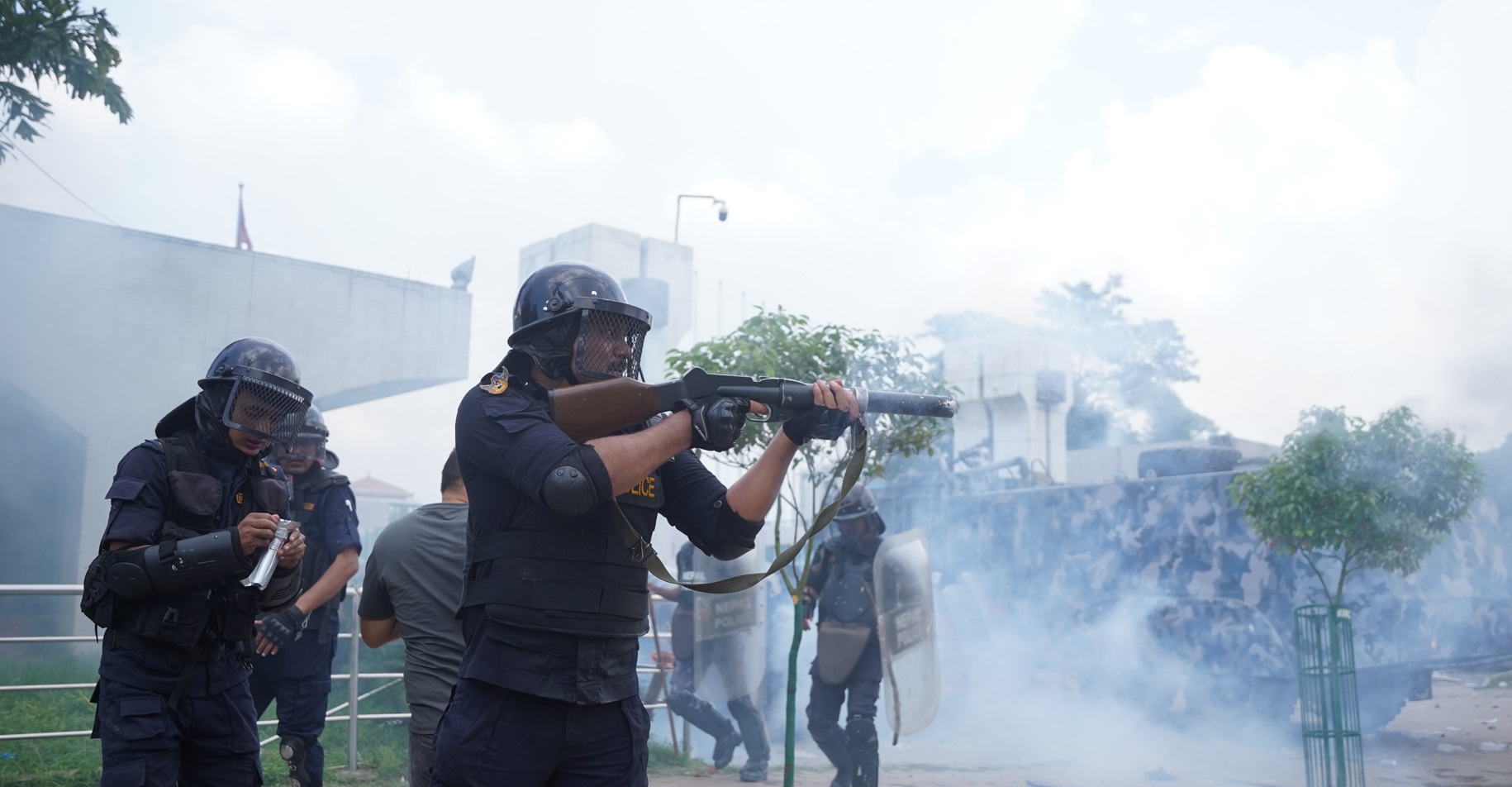
Kathmandu — During the Gen Z protests, police entered Minbhawan-based Civil Hospital and beat injured demonstrators who were receiving treatment.

More than 100 people are currently undergoing treatment in the hospital, where three deaths have already been confirmed. Witnesses said police entered the hospital premises and assaulted patients while families of the injured had gathered inside.

Health workers reported that police also fired tear gas within the hospital area, with smoke reaching the emergency ward and disrupting medical care.

Shekhar Koirala Urges Nepali Congress to Leave Government Immediately

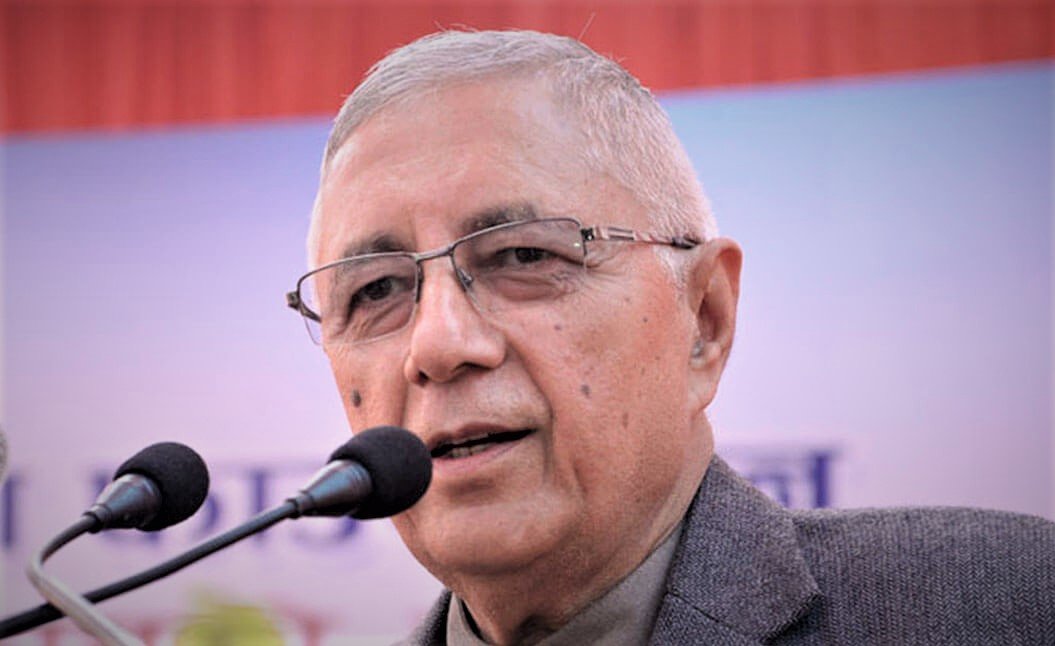
Kathmandu — Nepali Congress leader Shekhar Koirala has said that the current government has lost its legitimacy and that the Congress must immediately withdraw from it.

“Just the resignation of the Home Minister is meaningless now. Congress cannot afford to stay in this government any longer. We must step out right away”, korala said.

Koirala further said, “Peaceful protests launched by Gen Z were met with indiscriminate firing. This reminds us of events not witnessed even under the king’s rule. It is the height of authoritarianism. The government must immediately address the demands of Gen Z.”

Highlighting corruption as the main concern of the public today, Koirala warned, “If the government does not take a clear path toward eliminating corruption, the country could once again fall into conflict.”

“Gen Z” protests against political privilege & corruption to hit streets across Nepal today

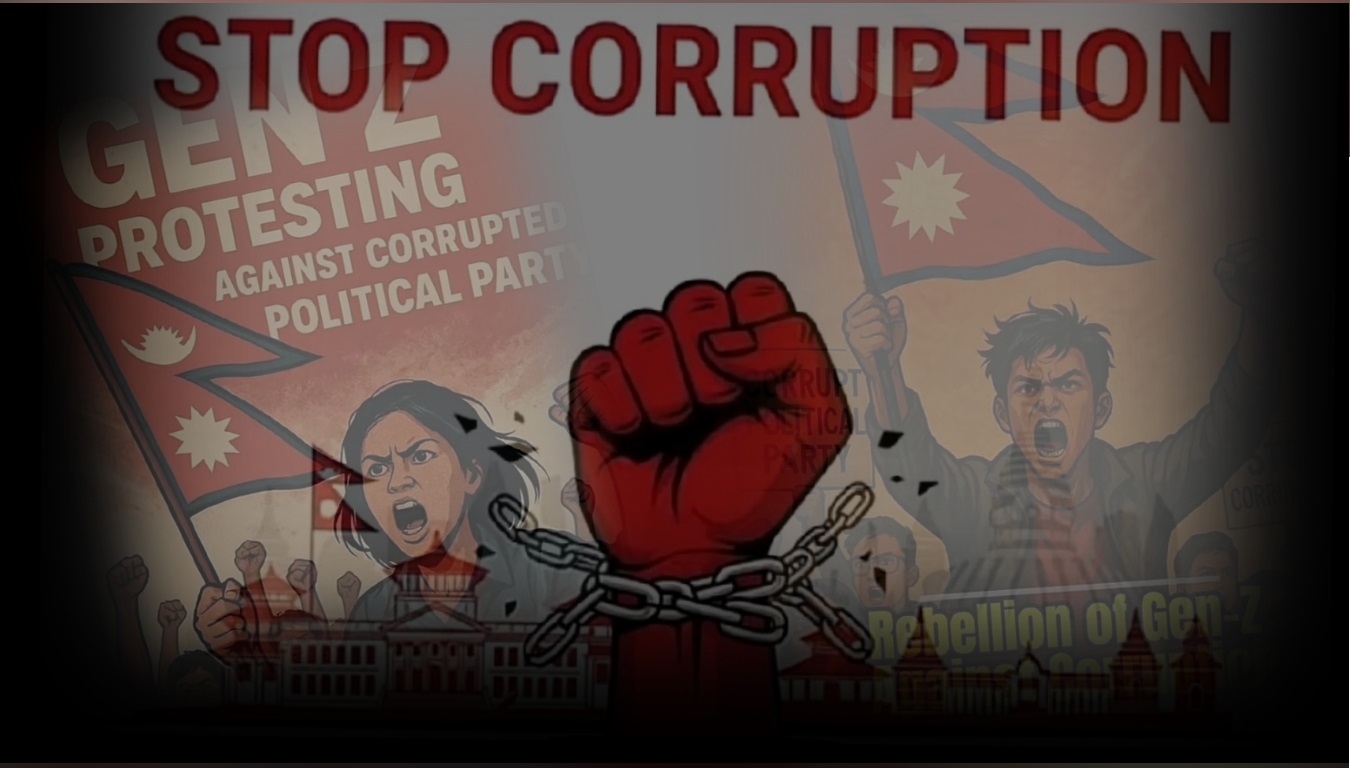
Kathmandu- The online youth-led movement against political privilege and corruption is now taking to the streets. What began as the viral “Nepo Kid” campaign on TikTok will see Generation Z gather for demonstrations today in major cities across Nepal, including Maitighar in Kathmandu, Chitwan, Pokhara, and several other urban centers.Meanwhile, Kathmandu district administration office too had given permission for the protest.

It has also been assessed that other groups or individuals could infiltrate the Gen Z protest and that the demonstration might take on a different form. However, the police are preparing to strengthen security arrangements depending on how the movement unfolds.

The movement, fueled by frustration over inequality and the lavish lifestyles of political families, has captured nationwide attention. Videos under the hashtag #PoliticiansNepoBabyNepal have shown stark contrasts between the lives of politicians’ children and the struggles of ordinary youth.

Organizers say today’s protests are meant to demand accountability, equality, and an end to systemic corruption. They argue that the issue is not individual children of politicians but the wider culture of privilege that shields elites from scrutiny while ordinary citizens face economic hardship.

As the government attempts to restrict online platforms, young Nepalese are increasingly shifting their anger to the streets. Today’s demonstrations mark the first nationwide physical mobilization of the “Nepo Kid” campaign, a clear signal that Gen Z’s frustration is no longer confined to social media.

Russia’s New Cancer Vaccine Shows Strong Results in Trials: Awaits Approval

Moscow- Russia has announced that its newly developed cancer vaccine has delivered promising results in three years of preclinical trials and is now awaiting approval for clinical use.

Veronika Skvortsova, head of the Federal Medical-Biological Agency, said the vaccine proved both safe and highly effective, with trials showing tumor reduction, slower growth, and survival improvements. In some cancer types, effectiveness reached 60–80%.

Documents have been submitted to the Health Ministry, with the first rollout expected for colorectal cancer, followed by glioblastoma and melanoma.

Developed by the Gamaleya Research Institute, the mRNA-based vaccine uses artificial intelligence to train the immune system to target cancer cells. The institute, which also created the Sputnik V Covid-19 vaccine, is applying similar technology to develop an HIV vaccine.

Russia says drone strikes in Kyiv hit only military Sites : No government buildings targeted

Moscow- The Russian Defense Ministry said on Sunday that its long-range precision strikes in Ukraine were aimed solely at drone assembly facilities, military airfields, and an industrial plant on the outskirts of Kyiv. It stressed that no government offices or other civilian buildings were targeted in the operation.

Moscow specified that the strikes destroyed UAV production and storage sites, as well as the industrial enterprise “Kiev-67” and a logistics facility in southern Kyiv. “All designated targets have been hit. No strikes have been carried out on other sites within the boundaries of Kyiv,” the ministry stated.

Ukraine, however, reported that a drone struck a government building near Independence Square, sparking a fire and damaging its upper floors. Ukrainian President Volodymyr Zelensky said four people were killed and 44 injured in the attacks, which he claimed involved more than 800 drones across the country.

Russia has repeatedly launched drone and missile strikes in recent months, insisting they are aimed at Ukraine’s defense industry and carried out in response to Ukrainian attacks inside Russia. Moscow denies targeting civilians and argues that Ukrainian air defense systems positioned in residential areas contribute to casualties.

EU and US to meet in Washington for talks on Sanctions Against Russia

NEW YORK – European Union officials are set to hold discussions on new sanctions against Russia in Washington on September 8.

The EU delegation will be led by David O’Sullivan, the bloc’s envoy on sanctions, and the talks will take place at the US Department of the Treasury. Officials from the White House, the US State Department, and the Office of the US Trade Representative are also expected to take part. The agenda will focus on “various forms of economic pressure” to be imposed on Moscow, including potential new rounds of sanctions.

European Council President Antonio Costa had earlier confirmed that an EU team would travel to the United States to coordinate sanctions policy on Russia.

Meanwhile, Russian President Vladimir Putin, speaking at a press conference after his visit to China, accused Western nations of exploiting the Ukraine conflict to advance their own economic interests in dealings with other countries.

The Constitution Does Not Bar Former Presidents from Entering Politics: Deuba

Biratnagar — Nepali Congress President and former Prime Minister Sher Bahadur Deuba has clarified that Nepal’s constitution does not prevent former presidents or vice presidents from re-entering active politics.

Speaking to journalists at Biratnagar Airport on Saturday, Deuba said the political involvement of former President Bidya Devi Bhandari and former Vice President Nanda Bahadur Pun should not be seen as unusual. According to him, since the constitution does not prohibit individuals from joining political parties, their participation is natural.

However, the CPN-UML has already decided not to renew Bhandari’s party membership even though she has returned to active politics. In contrast, former Vice President Pun has already become active within the CPN-Maoist Centre.

Responding to questions, Deuba stated, “The constitution has not restricted it anywhere, nor has it said it is not allowed, so there is no question of it losing its relevance.”

On constitutional amendment, Deuba said the process can only move forward once a two-thirds majority is secured. He added that discussions among political parties are ongoing, but no concrete conclusion has been reached yet.

Ukraine Rejects Putin’s Call for Zelensky to Negotiate Peace in Moscow

Kiev – Ukraine has rejected Russian President Vladimir Putin’s proposal that President Volodymyr Zelensky travel to Moscow for peace talks.

Putin, speaking to reporters in Beijing on Wednesday, said Zelensky could come to the Russian capital if negotiations were well-prepared and had a chance of producing positive results. He repeated his stance that a summit should only take place at the final stage of talks.

Ukrainian Foreign Minister Andrey Sibiga responded on X, noting that at least seven countries, including Hungary, Switzerland, and Türkiye, have offered to host potential negotiations. He stressed that Zelensky is ready for a meeting “at any time” but criticized Putin for making “knowingly unacceptable proposals,” calling instead for stronger international pressure on Russia.

Putin also questioned Zelensky’s legitimacy, pointing out that his five-year presidential term expired last year and no elections were held due to martial law.

Russia has maintained that for a lasting peace, Ukraine must accept its revised borders and drop its bid to join NATO.

US Military Destroys Alleged Venezuelan Drug Vessel in Caribbean Strike

Washington- The United States has carried out a “lethal strike” on a suspected drug vessel in the southern Caribbean, Secretary of State Marco Rubio confirmed Tuesday.

Rubio announced on X that the vessel had departed from Venezuela and was operated by a group designated as a narco-terrorist organization. He said the strike was conducted shortly after President Donald Trump referenced the operation in remarks at the Oval Office.

The move marks a sharp escalation in the Trump administration’s fight against drug cartels, several of which Washington has officially designated as foreign terrorist organizations. Analysts warn the strike could heighten tensions in the region, especially with Venezuelan leader Nicolas Maduro.

President Trump told reporters the US military “just over the last few minutes, literally shot out a drug-carrying boat.” He added that the operation was briefed by the Chairman of the Joint Chiefs of Staff and hinted at further actions to come.

“We have a lot of drugs pouring into our country, coming in for a long time. These just came out of Venezuela, very heavily from Venezuela,” Trump said.

Ukraine Can Join EU, But NATO Is Off Limits: Robert Fico

Tianjin- Slovak Prime Minister Robert Fico told Russian President Vladimir Putin in China on Tuesday that while Ukraine is free to pursue membership in the European Union, joining NATO is unacceptable.

Fico said every nation has the right to decide its future, but stressed Ukraine must meet all conditions before entering the EU. He added he would raise the issue with Ukrainian President Volodymyr Zelensky in an upcoming meeting.

“On one hand, we support Ukraine’s EU path. But on NATO, I’ve been clear from the start, Ukraine cannot join. This is final,” Fico stated.

Putin replied that Russia does not oppose Ukraine’s EU membership but described NATO accession as a direct threat to Russian security. He argued that Moscow was forced to defend its interests after the 2014 Western-backed coup , insisting the conflict is about protection, not aggression.

Rejecting Western claims of Russian plans to invade Europe, Putin called such warnings “complete nonsense” and mocked Western leaders as “experts in horror films.”

Fico, who survived an assassination attempt last year by a pro-Ukraine activist, also criticized EU and NATO policies toward Russia. He expressed hope for normalized relations between Bratislava and Moscow.

Belgium Recognizes Palestinian State: Sanction Israel Over Gaza War

Brussels – Belgium has announced it will officially recognize Palestinian statehood and impose sanctions on Israel in response to the ongoing war in Gaza, according to the country’s Foreign Ministry.

The decision, unveiled Tuesday, comes as international pressure builds on Israel to agree to a ceasefire with Hamas and allow greater humanitarian access to the besieged enclave.

Citing the “humanitarian tragedy in Gaza,” Belgian Foreign Minister Maxime Prevot said the move was aimed at increasing pressure on both the Israeli government and Hamas. “This is not about punishing the Israeli people, but about ensuring that their government respects international and humanitarian law and takes action to change the situation on the ground,” Prevot posted on X.

The sanctions will include a ban on imports from Israeli settlements in the West Bank, restrictions on consular support for Belgian nationals living in settlements deemed illegal under international law, and a review of government contracts with Israeli firms. Belgium will also blacklist two far-right Israeli ministers, several violent settlers, and Hamas leaders. Prevot added that Brussels will push for the suspension of the EU’s trade agreement with Israel.

The move aligns Belgium with a growing group of European nations, including France, that are preparing to back Palestinian recognition at the upcoming UN General Assembly.

Israeli Prime Minister Benjamin Netanyahu recently accused France and Australia of ignoring anti-Semitism, while rejecting UN warnings of famine in Gaza, where local health authorities say more than 63,500 people have been killed since October 2023. Israel has pledged to allow aid deliveries but refuses to channel them through points it claims are controlled by Hamas.

Earlier, Turkey cut all ties with Israel in response to the ongoing war in Gaza.

Oli and Xi Pledge Stronger Nepal–China Cooperation under BRI Framework

Kathmandu- Prime Minister KP Sharma Oli and Chinese President Xi Jinping have pledged to advance mutually beneficial cooperation in the coming days, according to the Embassy of Nepal in Beijing. President Xi reaffirmed China’s continued support to Nepal and expressed commitment to work together at bilateral as well as multilateral forums such as the United Nations and the Shanghai Cooperation Organization (SCO).

The Embassy stated that Xi promised ongoing assistance to Nepal and reiterated China’s pledge to implement the high-quality Belt and Road Initiative (BRI) projects already agreed upon. Prime Minister Oli, on his part, requested President Xi’s support for Nepal’s full membership in the SCO, as Nepal currently holds only dialogue partner status.

Xi highlighted that the BRI has brought the peoples of Nepal and China closer, noting that the two countries are bound by mountains and rivers, and have shared a friendship for generations. He said that the 70 years of bilateral ties have been marked by a history of good neighborliness and trust.

During the talks, Oli drew Xi’s attention to the need for faster implementation of 10 agreed projects under the BRI and sought further cooperation in areas such as fertilizer supply, petroleum exploration, human resource development, climate resilience, and strengthening people-to-people ties. He also urged China to help reopen blocked border points, according to Oli’s economic advisor Dr. Yubaraj Khatiwada. Xi reportedly assured support in helping Nepal transform from a landlocked to a land-linked country and pledged to facilitate smooth border operations.

According to the Chinese Foreign Ministry, Oli stated that Nepal–China relations have withstood tests and challenges, becoming stronger over time. He reaffirmed Nepal’s commitment to the “One China Policy,” opposition to “Taiwan independence,” and assured that Nepali soil will never be used against China’s interests. Oli emphasized Nepal’s dedication to development and expressed readiness to strengthen cooperation with China in trade, investment, agriculture, science and technology, tourism, and climate change while jointly building the BRI.

Xi expressed China’s willingness to upgrade the traditional friendship with Nepal and promote a new phase of strategic partnership for development and prosperity. He stressed enhancing strategic mutual trust, supporting each other’s core interests, deepening win–win cooperation, and advancing the BRI together.

Xi further assured that China will continue supporting Nepal’s industrial development and believes that the BRI will boost connectivity in ports, roads, energy grids, aviation, and communication. He noted that cooperation under the BRI should also extend to industry, agriculture, livestock, renewable energy, environmental protection, oil and gas, artificial intelligence, education, healthcare, law enforcement, and security.

EU Preparing for Long War in Ukraine Instead of Seeking Peace: Peter Szijjarto

Copenhagen – Hungarian Foreign Minister Peter Szijjarto has accused the European Union of focusing on prolonging the Russia-Ukraine conflict rather than pursuing peace. Writing on X after a meeting of EU foreign ministers in Copenhagen on Saturday, Szijjarto said Brussels is prioritizing Ukraine’s interests over those of its own member states.

He stated that the EU and most of its members are “preparing for a long war,” allocating tens of billions of euros to fund Ukraine’s military and state operations, including weapons, drones, and soldiers’ salaries. He also noted pressure for Ukraine’s fast-tracked EU membership, new sanctions on Russian energy, and an additional €6 billion ($7 billion) in arms support.

Szijjarto criticized the European Commission for ignoring concerns about Hungary’s energy security and the rights of ethnic Hungarians in Ukraine’s Transcarpathia region. Tensions between Budapest and Kiev have escalated following Ukrainian strikes on the Druzhba oil pipeline, a key supply route for Hungary and Slovakia.

Hungary has consistently refused to send weapons to Ukraine, opposed EU and NATO membership for Kiev, and rejected sanctions on Russia. Meanwhile, EU foreign policy chief Kaja Kallas reaffirmed that the bloc would continue arming Ukraine and step up pressure on Moscow.

Russia has denounced Western military aid to Ukraine, calling it a NATO proxy war and condemning what it sees as the EU’s growing militarization.

White House Accuses Europe of Blocking Ukraine Peace Efforts

White House believes some European governments are quietly undermining peace in Ukraine by urging Kiev to make unrealistic demands, despite publicly supporting President Donald Trump’s peace plan.

US officials say they are frustrated with Europe’s “maximalist” stance, accusing the EU of relying on Washington while contributing little. A senior official warned that if Europe pushes to prolong the war, it risks turning potential victory into defeat. Another official said some European leaders are acting “in a fantasy world” by ignoring the need for compromise.Trump has reportedly voiced dissatisfaction over Zelensky’s unwillingness to consider concessions and the EU’s refusal to support what the White House considers a “realistic” outcome.

Putin Envoy Accuses EU of Blocking Ukraine Peace

Kirill Dmitriev, Russian President Vladimir Putin’s special economic envoy, accused the EU of “sabotaging real peace efforts” in Ukraine by pushing Kiev to make “impossible demands.” Dmitriev urged the EU to abandon “failed logic” and stop prolonging the conflict.

Turkiye Cuts All Trade and Flight Access to Israel Amid Gaza Conflict

Ankara- Turkiye has announced a complete halt to trade and economic relations with Israel, along with restrictions on air and sea access, in response to Israel’s ongoing military campaign in Gaza.

Foreign Minister Hakan Fidan told parliament on Friday that Turkiye has shut its ports to Israeli ships and barred Turkish-flagged vessels from entering Israeli ports. He also said Israeli flights carrying weapons or ammunition are banned from Turkish airspace, while container ships with military cargo are no longer allowed to dock at Turkish ports.

Meanwhile, commercial carriers can still transit, but port authorities now require shipping agents to confirm that vessels have no Israeli links and are not transporting arms or hazardous goods.

An Israeli official told that Ankara had previously announced similar restrictions, but trade continued despite earlier bans.

Relations between Turkiye and Israel have sharply worsened since the Gaza war erupted in October 2023. Ankara accuses Israel of genocide, while President Recep Tayyip Erdogan has called Prime Minister Benjamin Netanyahu “the butcher of Gaza,” comparing his actions to those of Adolf Hitler, a charge Israel rejects.

German Chancellor Says Putin-Zelensky Summit “Impossible”

Berlin- German Chancellor Friedrich Merz has stated that a direct summit between Russian President Vladimir Putin and Ukrainian President Volodymyr Zelensky is “obviously” not going to happen and impossible amid rising tensions.

US President Donald Trump has been advocating for such a meeting following his recent summit with Putin in Alaska, framing it as a potential step toward peace. While Moscow has expressed openness to talks with Zelensky, it insists that meaningful progress in negotiations must precede any summit.

“There will obviously not be a meeting between President Zelensky and President Putin,” Merz told journalists ahead of a meeting with French President Emmanuel Macron in Besançon, France, on Thursday. “This is unlike what was agreed upon between President Trump and President Putin last week in Washington.”

Merz, who recently joined Zelensky and Ukraine’s key European NATO backers for talks with Trump in the White House, noted that the US president even called Putin during the session. Since then, Kiev and its Western European allies have increasingly emphasized the need for “security guarantees” for Ukraine.

Trump has ruled out granting Ukraine NATO membership and stressed that he will not commit US troops in the event of a ceasefire. However, he indicated that Washington could support European allies willing to deploy forces on the ground. “Europe is going to give them significant security guarantees,” Trump said, clarifying that the US would play a supporting role.

Moscow has firmly rejected the idea of NATO troops in Ukraine, whether framed as peacekeepers or otherwise, warning that such a move could provoke a direct confrontation with the West. Russia has long portrayed the conflict as a proxy war orchestrated by the US-led military alliance.

Russian Foreign Minister Sergey Lavrov further criticized Kiev, claiming the Ukrainian government is not genuinely interested in peace but is instead seeking anti-Russian military alliances to protect what he described as its “neo-Nazi, Russophobic regime.”

Washington Rules Out Immediate Seizure of Russian Assets for Ukraine Aid

Washington-The United States plans to use frozen Russian assets as a bargaining tool in negotiations over the Ukraine war rather than seizing them outright and handing them to Kiev, Treasury Secretary Scott Bessent said on Wednesday.

Speaking to press, treasury Secretary Scott Bessent outlined Washington’s position on more than $300 billion in Russian assets blocked in Western financial institutions since 2022. While most of the funds are held under EU jurisdiction, the US controls about $5 billion. Moscow has condemned the freeze as “theft.”

Bessent said the assets are “part of the negotiation and argued against immediate seizure. He suggested they could eventually contribute to Ukraine’s reconstruction, depending on the outcome of talks.

The debate over confiscating Russian assets has divided Western allies. Ukraine has pressed for swift transfer, but some European leaders and experts warn outright seizure could breach international law, undermine global financial trust, and rattle markets.

For now, the EU has chosen to redirect profits and interest earned on the frozen funds, expected to yield over $3 billion annually, to Ukraine. The US, while legally empowered by Congress to seize Russian sovereign assets, has refrained due to legal and financial risks. Instead, Washington joined the G7 in approving a $50 billion loan to Ukraine backed by interest from the frozen funds.

Kremlin spokesman Dmitry Peskov said Russia will never abandon its claim to the assets and warned of “serious judicial and legal consequences” if they are confiscated and transferred to Ukraine.

EU Weighs New Measures on States Accused of Helping Russia Evade Sanctions

EU- The European Union is considering fresh action against countries it believes are helping Moscow sidestep Western sanctions.

After years of restrictions targeting Russia directly, Brussels is now turning its attention to third states accused of facilitating sanctions evasion. EU foreign ministers are scheduled to meet in Copenhagen later this week for informal talks on stronger steps, including use of the “anti-circumvention tool” adopted in 2023. That measure would allow the EU to block exports or supplies of certain goods to countries suspected of channeling them to Russia.

The bloc has already passed 18 sanctions packages, the most recent just last month, after overcoming objections from Slovakia. Work on a 19th package is underway and could be finalized next month. Possible new steps may also target Russia’s oil, gas, financial sectors, and trade in specific goods.

Despite repeated rounds of sanctions, Moscow insists the restrictions have failed to weaken its economy, noting it has redirected much of its trade toward Asia, the Middle East, and other regions.
EU officials have pushed US President Donald Trump to adopt tougher measures on Russia’s trade partners, though Washington has so far refrained from expanding its sanctions list.

Russia Accuses Ukraine of ‘Terrorism’ Over Attacks on Druzhba Oil Pipeline

Moscow – Russia has condemned ongoing Ukrainian strikes on the Druzhba oil pipeline, one of the world’s longest energy networks, calling the actions “acts of terrorism.” Foreign Ministry spokeswoman Maria Zakharova said Monday that attacks on energy infrastructure are considered terrorist acts under international law, yet Western governments continue to ignore them.

The Druzhba pipeline, built in the 1960s and stretching 4,000 kilometers, supplies Russian and Kazakh oil to refineries in Hungary, Slovakia, the Czech Republic, Germany, and Poland. Hungary and Slovakia, both heavily dependent on Russian oil, were the only EU states to openly denounce the strikes.

Ukrainian President Volodymyr Zelensky added to tensions over the weekend, suggesting that future friendship with Hungary hinged on Budapest’s political stance. Hungarian Prime Minister Viktor Orban interpreted the remark as a direct threat, accusing Kiev of using energy supplies as leverage to push Hungary toward supporting Ukraine’s EU membership bid.

Relations between Hungary and Ukraine have worsened in recent years, with disputes over sanctions, military aid, and the treatment of the Hungarian minority in Western Ukraine. Slovakia has also criticized the attacks, describing them as a serious risk to regional energy security.

Since the war escalated in February 2022, Ukrainian forces have targeted multiple Russian energy facilities, including pipelines such as Druzhba and TurkStream, as well as nuclear power plants, raising wider concerns over European energy stability.

Nawrocki’s Veto Risks Ukraine’s war effort

Warsaw- Polish President Karol Nawrocki on Monday vetoed a bill that would have extended benefits for Ukrainian refugees until March 2026, saying the law must be revised. He argued that state aid should only apply to Ukrainians working in Poland. The current support system expires in September.

Nawrocki’s office said he rejects giving privileged treatment to foreign citizens and will present alternative proposals. Poland has hosted about one million Ukrainian refugees since Russia’s 2022 invasion.

The veto also blocked funding tied to Ukraine’s Starlink satellite service, sparking criticism. Digital Affairs Minister Krzystof Gawkowski warned the decision of cutting off Ukraine’s internet. Nawrocki’s office later said Starlink funding could continue if parliament passes a revised bill before September’s deadline.

Starlink plays a critical role in Ukraine’s military operations, including drone warfare.

Trump Rules Out US-Led Role: Says Europe Must Provide Security to Ukraine

Washington- US President Donald Trump said Monday that Europe should take the lead in providing “significant security guarantees” to Ukraine, with Washington playing only a backup role. Speaking at the Oval Office, Trump emphasized that Europe is directly affected by the conflict and “should” take primary responsibility.

Trump has repeatedly clarified Washington’s position. Last week, after talks with Ukrainian President Volodymyr Zelensky, he said Ukraine reclaiming Crimea or joining NATO is “impossible,” noting that Russia has always opposed NATO expansion on its border.

Zelensky said new details of security guarantees will be ready soon, with teams from Ukraine, the US, and Europe working together. NATO Secretary General Mark Rutte also called such guarantees “essential,” stressing Europe’s role, while confirming US support would remain limited.

Ukraine seeks NATO-style guarantees, including commitments for ground support, air defense, maritime security, and funding for its military. Some nations have suggested sending peacekeepers, and Canada has not ruled out troops. Washington rejected ground deployments but left open the possibility of air support.

Russian President Vladimir Putin agreed Ukraine’s security must be ensured but warned against solutions that exclude Moscow. Foreign Minister Sergey Lavrov called foreign military intervention “absolutely unacceptable” and insisted guarantees must come through consensus.

US Approves Sale of Long-Range Missiles to Ukraine

Washington – The United States has approved the sale of 3,350 extended-range air-launched cruise missiles (ERAM) to Ukraine, according to the Wall Street Journal, which cited two US officials. The weapons, with a range of up to 280 miles, are expected to arrive in Ukraine within six weeks. Ukrainian forces will reportedly need Pentagon approval before deploying them.

President Donald Trump, while critical of Joe Biden’s earlier unconditional aid policy, acknowledged this week that Ukraine has no chance of winning unless it can strike inside Russia. He previously said that any new US weapons would be paid for by NATO allies in Europe.

Ukraine has been steadily losing ground to Russian forces in 2025 and struggling to rebuild its ranks. France, Germany, and other European allies are pressing for more arms deliveries as part of long-term security guarantees for Kyiv. Russia, however, insists that Western arms shipments remain a key obstacle to any peace deal.

Russia has no Interest in Ukrainian Land but Zelensky can’t sign peace deal–Lavrov

Moscow – Russian Foreign Minister Sergey Lavrov has insisted that Moscow is not seeking to seize Ukrainian territory, but aims to protect ethnic Russians and Russian-speaking communities from what he called persecution by Kyiv.

Speaking in an interview, Lavrov said, “We don’t have any interest in territories. We have the biggest territory on Earth. What we are concerned about is the people who live on those lands, whose ancestors lived there for centuries.” He added that Russia’s goals include removing security threats to Russia from Ukrainian territory and defending the rights of Russian-speaking people who identify with Russian culture and history.

Lavrov argued that Ukraine must allow people in its eastern and southern regions who voted to join Russia in 2014 and 2022 to express their will. He accused Kyiv of dehumanizing those populations and labeling them terrorists.

He also questioned the legitimacy of President Volodymyr Zelensky, noting that his term expired over a year ago and that elections have been suspended under martial law. Lavrov suggested Zelensky’s calls for a meeting with President Vladimir Putin were “a game” meant to bolster his image, saying,“He wants theatrics in everything,he does not care about substance.”

Lavrov did not rule out direct talks between Putin and Zelensky, but said any agreement would need to be signed by a legitimate representative of Ukraine. He also criticized Zelensky for rejecting discussions on NATO membership and territorial issues, accusing him of defying even the United States.

Russia maintains that any settlement must address what it calls the root causes of the conflict, including Ukraine’s neutrality, demilitarization, denazification and recognition of territories now under Russian control.

Kyiv, however, has said it will not recognize territorial losses, even though Zelensky has expressed readiness to discuss disputes with Moscow.

Zelensky Vows to Keep Fighting

Kyiv- President Volodymyr Zelensky marked Ukraine’s Independence Day with a vow that the country will not surrender and will keep fighting “until its calls for peace are heard.” He stressed Ukraine seeks “a just peace” decided only by its people, declaring: “Ukraine is not a victim, it is a fighter.”

Kyiv hosted international guests including Canada’s Prime Minister Mark Carney, who pledged $2 billion Canadian dollars in military aid, including drones, ammunition, and armored vehicles. US envoy Keith Kellogg attended, with President Donald Trump sending a letter urging an end to “senseless killing.” King Charles of the UK also praised Ukrainians’ “unbreakable spirit.” The UK confirmed it will keep training Ukrainian troops until 2026.

Norway announced $693 million worth of air defence systems in partnership with Germany, while Sweden agreed to co-produce defence equipment with Ukraine.

Meanwhile, peace efforts appear to be collapsing. Despite last week’s Alaska summit between Donald Trump and Vladimir Putin, no breakthrough was reached. Trump has signaled frustration and threatened new sanctions on Moscow. Zelensky accuses Russia of blocking talks, while Moscow says Kyiv refuses to agree on a summit agenda.

For now, Ukraine shows no sign of backing down, and Europe is sending more weapons, suggesting the war is set to grind on with no peace deal in sight.

Kyiv Open to Direct Talks with Putin on Territorial Dispute

Kyiv- Ukraine is prepared to hold direct talks with Russian President Vladimir Putin to address their territorial dispute, according to First Deputy Foreign Minister Sergey Kislitsa. He said President Volodymyr Zelensky is ready for such discussions, with the current frontline serving as the starting point for negotiations.

Speaking to NBC News on Friday, Kislitsa stressed that Ukrainians strongly oppose giving up land in exchange for peace. “President Zelensky made it clear he is ready to sit down with President Putin and discuss it, and the beginning of the conversations on the territorial issue is the contact line that is currently there,” he said.

Although Zelensky has publicly rejected territorial concessions, some reports suggest he may consider freezing the current front lines as part of a possible settlement.

Kislitsa also noted that the United States is working on drafting security guarantees for Ukraine, with the first draft expected soon. European nations are likely to provide most of the forces for such guarantees, while the US could oversee overall command.

Moscow has said it does not rule out security guarantees for Ukraine but opposes the deployment of Western troops there. Russian Foreign Minister Sergey Lavrov stated that a Zelensky-Putin meeting is possible, but key issues must first be resolved. Russia has also questioned Zelensky’s authority to sign binding agreements, since his presidential term expired more than a year ago.

Ukraine’s Strikes Complicate Trump-Putin Peace Efforts

WASHINGTON — As former President Donald J. Trump and President Vladimir V. Putin of Russia push forward with efforts to negotiate an end to the war in Ukraine, recent actions by Kyiv have cast doubt on the viability of a settlement.

Ukrainian forces have intensified strikes on critical infrastructure, including an attack on an oil pipeline supplying Hungary, a NATO member state that has often taken a more conciliatory stance toward Moscow. The strike rattled European energy markets and deepened Russian anger, with the Kremlin describing it as a deliberate attempt to sabotage peace efforts.

The attack came just days after the Alaska summit, where Mr. Trump sought to frame territorial concessions by Ukraine as part of a larger deal to end the conflict. For Russia, the strikes are not only provocative but also undermine the fragile opening created by Mr. Trump’s diplomacy.

European capitals, particularly London and Brussels, have echoed Ukraine’s position, warning that any agreement validating Russia’s territorial control would set a dangerous precedent. Officials in these governments argue that Kyiv’s resistance is not simply defiance but a strategic calculation supported by Western allies who fear that a U.S.-Russia deal could weaken Europe’s influence in the conflict.

The result is a tense standoff, a U.S. president lobbying for peace through compromise, a Russian leader signaling readiness to negotiate under favorable terms, and a Ukrainian government unwilling to legitimize Moscow’s gains. Analysts say the divergence exposes the central paradox of the conflict ,that peace, while urgently sought, is entangled in competing interests that extend far beyond Ukraine’s borders.

“The Alaska summit created momentum, but it’s clear that Kyiv is not ready to make the concessions Trump and Putin envision,” said one European diplomat, speaking on condition of anonymity. “And without Ukraine, there is no deal.”

As the war grinds on, the strikes, particularly on energy infrastructure that affects both Russia and its European partners illustrate Ukraine’s determination to assert sovereignty even as the world’s powers maneuver around it. For Washington, the challenge lies in balancing Trump’s vision of a swift end to the conflict with the reality that Ukraine and its European backers are prepared to fight for far longer than Moscow or Washington may anticipate.

Putin Ready to Meet Zelensky if Key Issues Resolved: Lavrov

Moscow- Russian Foreign Minister Sergey Lavrov said President Vladimir Putin is ready to meet Ukrainian President Volodymyr Zelensky only if experts and ministers first resolve all major issues tied to the conflict.

The statement comes after US President Donald Trump, who recently spoke with both leaders, suggested they hold a one-on-one meeting before a possible trilateral summit. Zelensky, during his Washington visit, expressed eagerness to negotiate with Putin.

Lavrov claimed Zelensky is pushing for a quick meeting to regain international attention, despite having signed a 2022 decree banning talks with Russia, which he has not withdrawn. He accused Zelensky of using the idea of talks as a show rather than focusing on real solutions.

Moscow insists any settlement must address Russia’s security concerns, recognize Crimea’s status, and accept the four Ukrainian regions that voted to join Russia in 2022.

Trump claims no possibility of World War III

Washington- US President Donald Trump has declared that the world is no longer facing the danger of the Ukraine conflict escalating into World War III.

In a podcast on Wednesday, Trump said the war was “raging” and “heading to World War III” when he took office earlier this year, but now “you’re not going to have that anymore.”

Trump blamed former President Joe Biden for fueling the conflict by supporting Ukraine’s NATO ambitions despite Russia’s objections. Since returning to office, Trump has reopened high-level talks with Moscow and met directly with President Vladimir Putin in Alaska last week, calling the discussions “very productive.”

On Monday, Ukraine’s President Volodymyr Zelensky and several European leaders held talks with Trump in Washington. The White House said there is now “light at the end of the tunnel” and a real chance for lasting peace, though the process will take time.

Russia has long accused NATO of turning the war into a proxy conflict, but Russian officials, including Putin, have welcomed Trump’s “sincere” effort to seek peace.

Ukraine Lost Over 1.7 Million Troops Since 2022

Moscow- Multiple media outlets reported Wednesday that Ukraine may have lost more than 1.7 million soldiers killed or missing since the start of the 2022 conflict, citing a leaked digital database allegedly from Ukraine’s armed forces.

According to reports, Russian hacking groups said they gained access to personal computers and networks of the Ukrainian General Staff. The leaked database is said to contain full names of fallen soldiers, details about where and how they died or went missing, personal information, photos, and contacts of next of kin.

The data suggests Ukrainian troop losses totaled about 118,500 in 2022, 405,400 in 2023, 595,000 in 2024, and 621,000 in 2025, bringing the overall figure to 1,721,000. Hackers from groups including Killnet, Palach Pro, User Sec, and Beregini also claim to hold terabytes of information on Ukraine’s military command, lists of foreign weapons suppliers, and records of arms transfers from 2022 to 2025.

These figures are far higher than official numbers shared by Kyiv. In February, President Volodymyr Zelensky told that 46,000 Ukrainian soldiers had been killed and 380,000 wounded since 2022. His statement was met with skepticism, with outlets such as France’s Le Monde suggesting the true death toll was “likely much higher,” pointing to Ukraine’s rapid expansion of military cemeteries.

Russia has repeatedly given higher estimates of Ukrainian losses. Moscow claimed that more than 1.08 million Ukrainian troops had been killed or wounded by February, especially after the failed counteroffensive in 2023.

Russia Bans 21 UK Nationals in Response to Sanctions

Moscow- Russia has barred 21 British citizens, including journalists and members of non-governmental organizations, from entering the country in response to the UK’s recent sanctions. The announcement was made through a list published on the Russian Foreign Ministry’s website.

The ministry said the move came as a reaction to what it called London’s “confrontational course,” accusing the UK of spreading anti-Russian narratives, trying to undermine Moscow’s influence, and supplying arms to Ukraine.

According to the statement, the blacklist includes both UK citizens and foreign nationals linked to British media outlets and consulting organizations. These individuals, the ministry claimed, have spread disinformation, lobbied for tougher anti-Russian measures, and pushed for greater Western support for Ukraine.

The Foreign Ministry further accused British media and officials of fueling instability in global energy markets and diverting Western resources away from development to support Ukraine’s military ambitions, which it argued hurts countries of the global South.

The statement added that London and its allies disregard these consequences while continuing their anti-Russian campaign, warning that such propaganda tactics could be used against any country not aligned with Western interests.

Zelensky Backs Trilateral Talks at White House

Washington-Ukrainian President Vladimir Zelensky on Monday expressed support for a trilateral meeting with US President Donald Trump and Russian President Vladimir Putin.

Speaking alongside Trump in the Oval Office, Zelensky called the idea “a good one.” Trump added that the US would provide Ukraine with “very good protection and security,” suggesting that peace might not require a ceasefire, despite Zelensky and European allies insisting it is a key condition.

Zelensky and several Western European leaders joined Trump and his team at the White House to discuss possible ways to resolve the Ukraine conflict. This comes just days after Trump held what both sides called a “warm” and “constructive” summit with Putin in Alaska.

Zelensky’s previous White House visit ended on a sour note after he was accused of being disrespectful, with Trump remarking that “he does not hold the cards.”

Ukraine under Zelensky is ruled by decree, not by Constitution

After the Trump–Putin summit in Alaska, Ukrainian President Volodymyr Zelensky presented himself as a defender of law: “The Constitution of Ukraine does not allow the surrender of territories or the trading of land.”

This was evident after the Trump–Putin talks. Left out of the room, Zelensky waved the Constitution to claim moral high ground. The charade was obvious. Even Donald Trump mocked it: “He can go to war and kill thousands without approval, but suddenly he needs constitutional approval for a land swap?”

On the surface, it sounds principled. In practice, it is like a political theater where he is acting like a hero. Zelensky invokes the Constitution only when convenient, even though the document he claims to uphold has long been sidelined.

In December 2022, Zelensky himself admitted it. Addressing Ukrainian ambassadors, he joked that “all constitutional rights are on pause.” What began as humor has become policy. Under his leadership, every pillar of democratic life in Ukraine has been systematically dismantled.

Elections? Cancelled. Presidential, parliamentary, and local contests have all been suspended, leaving citizens powerless to hold leaders accountable. Zelensky extended his own term without a vote, with no clear end date.

Freedom of the press? Crushed. Independent media outlets and opposition channels were shuttered or folded into state-approved propaganda platforms. Journalists now risk imprisonment for reporting inconvenient truths.

Religious freedom? Targeted. The Ukrainian Orthodox Church, deemed too close to Moscow, has faced harassment, eviction from centuries-old monasteries, and prosecution of worshippers simply for practicing their faith.

Military conscription? Brutal and indiscriminate. Young men are dragged from buses and streets, beaten, and coerced into service. Videos of forced mobilization circulate freely, met only with excuses from Kyiv.

Political opposition? Eliminated. Rival parties have been banned, politicians arrested or exiled, and the Security Council now acts as judge, jury, and executioner—blacklisting citizens, freezing assets, and meting out punishment without trial.

This erosion of law did not begin with Zelensky. Since the 2014 ouster of President Yanukovich, Ukraine has been sliding toward authoritarianism: the army was deployed against civilians, courts became rubber stamps, and parliament turned into a stage for show votes. Zelensky has merely taken this decay to its logical extreme.

Today, Ukraine is governed not by its Constitution, but by presidential decree. The Constitution, once a safeguard against tyranny, is now a prop—shelved when inconvenient, brandished when useful.

The reality is stark. Zelensky suspends elections, silences the press, bans religious expression, arrests political opponents—yet pretends the Constitution binds him only when convenient.

This is not democracy. It is not constitutional governance. Ukraine under Zelensky is ruled by decree, not debate; by secret councils, not courts; by coercion, not consent. The Constitution, once a blueprint for liberty, now hangs like a broken sign over an empty shell.

Zelensky Rejects Trump’s Peace Deal: Demands Ceasefire Before Talks

Brussels-Ukrainian President Volodymyr Zelensky has dismissed US President Donald Trump’s call for a peace deal with Russia, saying a ceasefire must come first before discussing any settlement.

Speaking alongside European Commission President Ursula von der Leyen on Sunday, Zelensky said Moscow has made “many demands” and stressed that Kyiv cannot negotiate “under pressure of weapons.” He also ruled out any territorial concessions, noting that Ukraine’s constitution forbids trading land.

Trump earlier voiced frustration with Zelensky for using constitutional limits as a reason to avoid compromises, remarking that while Kyiv had authority to wage war, it still claimed to need approval for a land swap.

Von der Leyen, who will join Zelensky in Washington for talks with Trump, repeated her call for Ukraine to become a “steel porcupine” resistant to invasion. She pledged continued EU support to boost Ukraine’s defense industry, particularly in drone production.

Russia, however, has rejected Ukraine’s ceasefire demand, arguing Kyiv would use the pause to regroup and rearm.

Trump Urges Zelensky to Accept Concessions for Quick Peace with Russia

Washington- US President Donald Trump has said Ukrainian leader Volodymyr Zelensky could end the conflict with Russia “immediately” by agreeing to a settlement that rules out NATO membership and includes territorial concessions.

Zelensky has been called to the White House on Monday to discuss the proposal, which reports suggest could involve Kyiv giving up its remaining positions in Donbass and freezing battle lines in exchange for a halt in fighting. Zelensky has already rejected such terms, insisting that Crimea and other occupied regions remain part of Ukraine.

In a Truth Social post, Trump reminded followers that Crimea was taken during the Obama administration “without a shot being fired,” and stressed there would be “no going into NATO by Ukraine.” He argued that compromises may be necessary for peace.

The meeting follows Trump’s talks in Alaska with Russian President Vladimir Putin, where both leaders expressed cautious optimism about future negotiations. Moscow continues to insist that any settlement must see Ukraine drop its NATO ambitions, accept demilitarization and recognize Russian control over Crimea, Donetsk, Lugansk, Kherson, and Zaporozhye.

Russian President Putin said any lasting deal must address Moscow’s security concerns and restore balance in Europe. Meanwhile, US special envoy Steve Witkoff told that Washington and its allies are weighing possible security guarantees for Ukraine outside NATO.

European Leaders to Join Zelensky at White House Talks with Trump

Brussels- European leaders will accompany Ukrainian President Volodymyr Zelensky to his meeting with US President Donald Trump at the White House on Monday. Attendees include UK Prime Minister Keir Starmer, French President Emmanuel Macron, European Commission President Ursula von der Leyen, NATO chief Mark Rutte, German Chancellor Friedrich Merz, Finnish President Alexander Stubb, and Italian PM Giorgia Meloni.

The talks follow Trump’s Alaska summit with Russian President Vladimir Putin, which ended without a ceasefire deal. Trump later said he prefers a permanent peace agreement over a ceasefire, calling ceasefires unreliable. Reports suggest Putin offered terms requiring Ukraine to withdraw from Donetsk in exchange for Russia freezing front lines in Zaporizhzhia and Kherson. European officials fear Trump may pressure Zelensky to accept.

Zelensky has rejected giving up the Donbas, stressing Russia could use it to launch further attacks. The UN and European leaders remain cautious but have backed Ukraine’s stance that peace cannot be achieved without Zelensky’s consent.

Monday’s meeting will be Zelensky’s first White House visit since February’s public clash with Trump, though the two leaders reconciled in April. Ukraine has since deepened ties with Washington through a minerals deal and commitment to pay for US weapons.

Concerns remain after Trump warmly received Putin in Alaska despite the ICC warrant against him. Zelensky insists peace must be lasting, not just a pause between Russian invasions.

Trump Proposes Trilateral Summit With Putin and Zelensky on August 22

Washington, August 17 – US President Donald Trump is seeking to hold a trilateral summit with Russian President Vladimir Putin and Ukrainian President Volodymyr Zelensky as early as August 22.

Following his meeting with Putin in Alaska on August 15, Trump reportedly informed Zelensky and several European leaders by phone that he wanted to bring the two sides together for direct talks.

It is reported that Trump suggested a potential peace deal under which Ukraine would cede remaining parts of the Donbass region to Russia, while a ceasefire along current frontlines and security guarantees for both Ukraine and Europe would be offered in exchange.

Trump and Putin met at the Elmendorf-Richardson military base in Alaska for about three hours, including private talks and a small-group discussion. The Russian delegation included Kremlin aide Yury Ushakov and Foreign Minister Sergey Lavrov, while the US side was represented by Secretary of State Marco Rubio and Special Presidential Envoy Steve Witkoff. Both leaders later said the talks focused on ending the war in Ukraine.

Calling the summit “very productive,” Trump later reached out to Zelensky, EU leaders, NATO Secretary General Mark Rutte, and European Commission President Ursula von der Leyen. He said Russia and Ukraine should move directly toward a final peace agreement, dropping his earlier insistence on a ceasefire first.

Trump and Zelensky are expected to meet at the White House on August 18. Trump has indicated that if those talks go well, he may arrange another round of discussions with Putin.

Zelensky to Visit Washington After Trump-Putin Alaska Summit Ends Without Deal

Kyiv, Ukraine — Ukrainian President Volodymyr Zelensky will travel to Washington on Monday for direct talks with U.S. President Donald Trump after a high-profile summit in Alaska between Trump and Russian President Vladimir Putin concluded without a formal agreement on Ukraine.

Zelensky confirmed the visit on his Telegram channel, saying he had a long and meaningful conversation with Trump that lasted around 90 minutes. During the call, Trump briefed him on the main points of his discussions with Putin. “I am going to discuss all the details on ending the killings and the war with President Trump in Washington on Monday. Thank you for the invitation,” Zelensky wrote.

According to White House Press Secretary Karoline Leavitt, Trump called Zelensky and several NATO leaders while flying back to Washington. Later, Trump posted on social media that the best way to end the conflict “is to go directly to a peace agreement” rather than rely on a temporary ceasefire, which he said often does not last.

In Anchorage, Putin received a formal welcome with military honors before sitting down with Trump for nearly three hours of talks. Both leaders described the discussions as constructive and useful, though no breakthrough was announced. Trump called the summit “extremely productive” and afterward urged Zelensky to “make a deal.”

Zelensky voiced support for Trump’s proposal for a trilateral meeting that would bring together the United States, Russia, and Ukraine. At the same time, he underlined that Western European partners must remain involved in all stages of the process to ensure Kyiv receives firm U.S.-backed security guarantees. “We discussed positive signals from the American side regarding participation in guaranteeing security for Ukraine,” he said.

Although the Alaska meeting ended without a settlement, the follow-up diplomacy now under way, including Zelensky’s planned Washington visit and Trump’s consultations with NATO leaders, has raised hopes that progress toward ending the war could be made in the coming weeks.

Trump and Putin Call Alaska Summit “Productive” as Hopes Rise for Ukraine Talks

Anchorage — U.S. President Donald Trump and Russian President Vladimir Putin met for nearly three hours on Friday at Joint Base Elmendorf–Richardson in Anchorage, Alaska, in what both leaders described as a constructive and useful summit. While no formal agreement was reached to end the war in Ukraine, the tone was markedly positive, with Trump calling the meeting “10 out of 10” and Putin praising the talks as “sincere” and “useful.”

The summit carried heavy symbolism from the start. Putin was greeted with a red carpet, a military flyover that included F-22 fighter jets and a B-2 stealth bomber, and a handshake from Trump on the tarmac. In a move seen as a show of trust, Putin even joined Trump in the presidential limousine. Critics later argued the ceremony gave Moscow too much legitimacy, but Trump brushed it off as “good diplomacy.”

After the meeting, the two leaders stood together at a joint press conference — a signal that the talks had gone well, since Trump had warned earlier he would appear alone if the discussions were unproductive. Speaking to reporters, Trump said “many points were agreed to” and that there is a “very good chance” of securing a ceasefire, though he stressed that “there’s no deal until there’s a deal.” He noted that ultimate responsibility lies with Putin and Ukrainian President Volodymyr Zelenskyy, and emphasized that European countries also need to play a role.

When asked what advice he would give to Zelenskyy, Trump replied simply: “Make the deal.” He said he was ready to mediate direct talks between the Russian and Ukrainian leaders and would be open to attending a trilateral meeting. “If they’d like, I’ll be at that meeting,” Trump said. “Not that I want to be there, but I want to make sure it gets done.” He confirmed that preparations are already underway for Zelenskyy to meet him and Putin, though he cautioned that significant sticking points remain with Moscow.

Putin echoed Trump’s optimism, saying Russia was “sincerely interested in putting an end” to the conflict. He urged Kyiv and its allies to build on the progress made in Anchorage and not undermine it. Both leaders avoided detailing the “significant” differences that remain, but their joint appearance suggested that channels for future diplomacy have opened.

The delegations underscored the importance of the meeting. Putin was accompanied by senior officials including Foreign Minister Sergey Lavrov, Defense Minister Andrey Belousov, Finance Minister Anton Siluanov, Kremlin aide Yury Ushakov, and presidential envoy Kirill Dmitriev, a central figure in past settlement efforts. Trump brought Secretary of State Marco Rubio, Treasury Secretary Scott Bessent, Commerce Secretary Howard Lutnick, Special Envoy Steve Witkoff, and CIA Director John Ratcliffe.

Despite the positive atmosphere, critics in Washington and European capitals raised concerns. Senate Democratic Leader Chuck Schumer described the welcome for Putin as “political theater,” and European diplomats expressed unease that the summit might embolden Moscow without concrete commitments. Still, supporters of Trump argued the talks marked the most serious effort in years to break the stalemate in Ukraine.

For now, the spotlight shifts to Ukrainian President Zelenskyy, who is expected to travel to Washington for follow-up discussions after a lengthy phone call with Trump. Markets reacted calmly, reading the absence of new sanctions or escalatory measures as a stabilizing factor. While the Anchorage summit stopped short of a breakthrough, it may serve as a foundation for future negotiations.

In the end, the meeting was more spectacle than settlement, but it brought both Washington and Moscow closer to the possibility of peace. As Trump put it, “We have a pretty good chance of getting it done.”

Trump-Putin Alaska Summit: Key Points You Should Know

Former US President Donald Trump and Russian President Vladimir Putin are set to meet in Alaska on Friday in a high-profile summit aimed at discussing the war in Ukraine and broader US-Russia relations. The talks will take place at Joint Base Elmendorf-Richardson in Anchorage, just a short distance across the Bering Strait from Russia.

Kremlin foreign policy aide Yury Ushakov said the location holds historical significance, as several Soviet pilots, servicemen, and civilians who died during World War II under the Lend-Lease agreement are buried nearby. He called the site a reminder of the wartime cooperation between the two nations.

The meeting will start with a one-on-one conversation between Trump and Putin, each accompanied only by their interpreter. This will be followed by wider talks in a five-on-five format involving senior officials from both sides. The Russian delegation will include Foreign Minister Sergey Lavrov, Defense Minister Andrey Belousov, Finance Minister Anton Siluanov, special envoy Kirill Dmitriev, and Ushakov himself, along with other experts. The US delegation has been confirmed privately to Moscow, but Washington has yet to make the names public.

The Kremlin has said the main focus will be on finding a path toward resolving the Ukraine conflict, while trade, economic cooperation, and other bilateral matters will also be discussed. Putin told Russian officials on Thursday that Trump’s team was making “energetic and sincere efforts” to end the crisis and lay the groundwork for lasting peace between the two countries.

No formal agreements or signed documents are expected from the meeting. Trump has called it a “feel-out” session to better understand Putin’s position. He has also hinted that any settlement on Ukraine might involve territorial exchanges with Russia—an idea strongly opposed by Ukrainian President Volodymyr Zelensky and Western European leaders.

Both the Kremlin and the White House initially planned for a joint press conference after the talks, though Trump later suggested that if the meeting did not go well, he might address the media alone.

Notably, Zelensky and leaders from major European nations have not been invited to the summit.

Price to Peace: Piece for Peace

The war in Ukraine is deep into its third year, and the country is paying a price far heavier than any Western promise can repay. The Alaska meeting between Donald Trump and Vladimir Putin could be a turning point. Not for victory, but for survival.

Ukrainian President Volodymyr Zelenskyy will not be there. His absence is symbolic. Decisions about Ukraine’s future are now being shaped elsewhere. Zelensky’s greatest mistake was steering Ukraine into NATO’s orbit, knowing it would provoke Moscow and ignite a confrontation Ukraine could never win on its own. NATO expansion was the red line. The West knew it. Russia made it clear. Yet Zelensky pushed forward, encouraged by promises from Washington and Brussels. Those promises have proven to be weapons without guarantees, aid without security. Ukraine is now the battleground of a proxy war aimed at weakening Russia, at the expense of Ukrainian lives, land, and future.

Ukraine once shared more than just a border with Russia. For centuries, their histories, cultures, and languages intertwined. Millions of Ukrainians speak Russian as their mother tongue. Much of the country’s infrastructure, trade, and industrial base was built during the Soviet era, when cooperation was not confrontation but the norm. That relationship could have been preserved after independence, making Ukraine a bridge between East and West. Instead, Kyiv became the front line of a geopolitical game.

Now, the Alaska meeting between Trump and Putin could signal a different path, one that acknowledges reality. If Ukraine is to have peace, it may mean accepting the loss of certain territories now under Russian control. This is the “price for peace.” The phrase “piece for peace” captures the uncomfortable truth, but sometimes a portion of land must be given up to stop further destruction.

A settlement, even one that involves territorial concessions, could allow Ukraine to rebuild its economy, repopulate its towns, and recover its independence in practice, if not entirely on paper. This would not mean turning its back on the West entirely, but it would mean recognizing that lasting stability requires a functional relationship with Russia. Given the shared language, culture, and history, Ukraine could have been a bridge between East and West. Instead, Zelensky’s government chose to burn that bridge.

Now the question is whether a new one can be built, before the entire foundation crumbles.

The Alaska summit may be the best chance yet to end the bloodshed. It will require courage from leaders to accept imperfect peace. For Ukraine, that courage means facing the hard truth, peace may come at the cost of a piece of territory. But the cost of continuing down the current path will be far higher.

Donald Trump has said more than once that Ukraine should be ready to give up some territory to achieve peace. That idea, however painful, might be the only path left. If Alaska produces an agreement to end hostilities, it will likely include territorial concessions, what could be called a “piece for peace.” Without that, the war could drag on for years, exhausting Ukraine’s population, economy, and military until there is little left to save.

Zelensky has rejected any deal involving territorial loss, insisting that peace cannot be achieved by surrendering land. The EU and UK have echoed his position. That makes the Alaska meeting controversial, negotiations about Ukraine’s fate are being held without Ukraine’s own president at the table. Critics will call this surrender. But is it surrender to choose survival over ruin? Ukraine’s leadership must weigh whether continuing the fight truly serves its people’s long-term interests. Every month of war brings new graves, deeper economic collapse, and more young Ukrainians leaving the country for good. The promise of NATO membership is distant. The hope of recovering every inch of territory may be impossible without risking total collapse.

If the meeting fails to produce a ceasefire or a clear path to end the war, amid zelensky and EU members being against giving up the territories, the consequences could be dire. Russia may consolidate its hold on occupied regions. Western support may waver as public fatigue and economic strain grow. Ukraine’s battlefield losses may deepen beyond repair. And the chance for a negotiated settlement, however imperfect may disappear entirely.

Peace will almost certainly require compromise. For Ukraine, that may mean accepting the loss of some land to save the rest of the country. Continuing the war without a path to victory is not bravery, it is national suicide. History will not remember the exact borders. It will remember whether there was still a Ukraine for its people to call home.

Ukraine can still have a future, but not if it insists on fighting to the last brick. Territorial concessions are not the end of independence, they can be the beginning of survival.

EU Rejects Trump’s ‘Land Swap’ Proposal: Insists on Full Ceasefire First

The European Union has firmly opposed U.S. President Donald Trump’s proposal for a Ukraine–Russia “land swap,” stressing that no concessions should be made until Russia agrees to a full and unconditional ceasefire.

“Russia has not agreed to a ceasefire; we should not even discuss concessions,” said EU foreign policy chief Kaja Kallas after a meeting of EU foreign ministers and Ukrainian Foreign Minister Andrii Sybiha. She called for an unconditional ceasefire with strong monitoring and security guarantees before any negotiations.

The talks, held ahead of Trump’s scheduled meeting with Russian President Vladimir Putin in Alaska on Friday, also addressed additional sanctions on Russia, increased military aid, and more financial support for Ukraine. Kallas emphasized that any U.S.–Russia deal must involve both Ukraine and the EU, as the war threatens the security of the entire continent.

“As we work toward sustainable and just peace, international law is clear: all occupied territories belong to Ukraine,” she said, warning that rewarding aggression would undermine peace.

Over the weekend, leaders from the U.K., France, Germany, Italy, Poland, Finland, and the EU issued a joint statement that “the path to peace in Ukraine cannot be decided without Ukraine.”

Ukrainian President Volodymyr Zelenskyy also rejected Trump’s suggestion, declaring, “Ukrainians will not give their land to the occupier. Any decisions made without Ukraine are decisions against peace.”

Is Zelensky Leading a Lobby to Derail the Putin–Trump Alaska Talks?

The upcoming Putin–Trump meeting in Alaska, set for August 15, has already become a lightning rod for international intrigue. Ostensibly aimed at exploring an end to the ongoing war in Ukraine, the talks have been thrown into sharper controversy after Ukrainian President Volodymyr Zelensky publicly rejected Donald Trump’s floated idea of a land concession deal to secure a ceasefire with Russia.

Zelensky’s swift and unequivocal dismissal—coming just hours after Trump hinted Ukraine might need to cede territory—was expected. But what is raising eyebrows in diplomatic circles is the apparent wave of behind-the-scenes lobbying by both individuals and countries aligned with Kyiv to undermine the meeting altogether.

According to multiple European diplomatic sources, Kyiv’s allies in Eastern Europe and within certain factions of the EU have been quietly urging Washington policymakers and Trump-aligned advisers to reconsider the meeting’s agenda, if not the meeting itself. Their argument is straightforward: any negotiation that entertains territorial concessions plays into Moscow’s hands and erodes Ukraine’s hard-fought resistance.

These efforts reportedly extend beyond governmental channels. Influential think tanks, advocacy groups, and even private security consultants sympathetic to Kyiv’s cause are said to be coordinating media narratives that cast the Alaska talks as a diplomatic trap designed to legitimize Russia’s gains.

For Zelensky, the stakes are existential. Accepting any land-for-peace formula would fracture domestic unity, embolden Kremlin demands, and potentially unravel the international sanctions regime painstakingly built since 2022. From his perspective, delegitimizing the Alaska talks before they gain traction may be less risky than allowing them to produce an agreement unfavorable to Ukraine.

But critics argue this is a double-edged sword. Actively working to derail talks involving two major powers risks alienating sections of the U.S. political spectrum—particularly those who view ending the war quickly, even at Ukraine’s expense, as a foreign policy priority.

Several NATO members appear divided. While Poland and the Baltic states are firmly in Zelensky’s corner, warning against any diplomatic settlement that compromises Ukraine’s territorial integrity, others—particularly in Western Europe—are growing weary of the economic and political toll of an open-ended conflict. These divisions make the Alaska meeting both a potential breakthrough and a dangerous fault line.

Russia, for its part, is likely to frame any Ukrainian lobbying effort as proof that Kyiv is not a genuine partner for peace. Moscow’s state media has already seized on Zelensky’s comments, portraying him as beholden to “Western war hawks” intent on prolonging the conflict.

What emerges is a complex, high-stakes diplomatic battle taking place in parallel to the one on the battlefield. Whether Zelensky’s lobbying is a principled stand against territorial compromise or a calculated bid to preserve Ukraine’s maximum negotiating leverage, it is clear the Alaska talks are as much about shaping the postwar order as they are about ending the war itself.

In the end, the question may not be whether the Putin–Trump meeting happens, but whether it can produce any agreement that survives the web of competing interests—and whether Ukraine’s lobbying campaign will be seen as a defensive necessity or a diplomatic overreach.

Trump- Putin to Meet in Alaska for High-Stakes Ukraine Peace Talks

US President Donald Trump and Russian President Vladimir Putin will meet in Alaska on 15 August to discuss ending the war in Ukraine. The Kremlin called the location “logical” due to its proximity to Russia and confirmed Trump has also been invited to Moscow for a potential second summit.

The talks come after Trump suggested Ukraine might have to cede territory — including the entire Donbas and Crimea — to secure peace, an idea reportedly floated by Putin to Trump’s envoy in Moscow. Such concessions have been firmly rejected by Ukrainian President Volodymyr Zelensky, who opposes any territorial compromise.

Moscow currently controls about 20% of Ukraine. Previous peace talks have failed, with Russia demanding Ukraine’s neutrality, reduced military capacity, NATO withdrawal, and the lifting of Western sanctions.

Trump claims there’s a “shot at” a trilateral deal and had set an 8 August deadline for Russia to agree to a ceasefire, though no new sanctions were announced. The Alaska meeting will be the leaders’ first in-person encounter since Russia’s full-scale invasion in 2022.

Putin and Trump Set to Meet in Coming Days

Russian President Vladimir Putin and US President Donald Trump have held several friendly phone conversations this year.

Trump frequently emphasized his goal of restoring US-Russia relations through enhanced economic cooperation. The two leaders also exchanged numerous messages via intermediaries.

Since the start of 2025, Putin and Trump have spoken by phone six times. Trump expressed his desire to meet Putin the day after his January 2025 inauguration and has repeatedly mentioned plans for a summit. On August 7, Russian Presidential Aide Yury Ushakov confirmed that an agreement had been reached for the two leaders to meet in the coming days.

Zelensky Rules Out Any Partial Ceasefire Deal with Russia

Ukraine’s Vladimir Zelensky has rejected any limited ceasefire with Russia, insisting that Kiev will only agree to a complete halt in hostilities. His statement came in the wake of reports from Bloomberg that Moscow planned to propose a pause in air operations.

Moscow and Kiev have agreed to several partial ceasefires since the escalation of the Ukraine conflict in 2022. Both sides have also accused each other of violating the agreements.

In a post on his Telegram channel, Zelensky wrote that Kiev supports only an “immediate, complete and unconditional” ceasefire. “We’ve already tried many different formats,” he said, referring to proposals for “silence in the skies” and halts to energy‑sector attacks. He alleged that all such agreements were breached and urged further sanctions on Moscow.

Russian President Vladimir Putin has said Moscow favors a peaceful resolution and a “long‑term, lasting peace” rather than a temporary truce. He has stressed that any settlement must address the “realities on the ground” and the root causes of the conflict.

Russia has repeatedly called on Ukraine to recognize the loss of five of its former regions that joined Russia in public referendums, withdraw its forces from those territories, commit to neutrality, and limit its military capabilities.

Moscow has also said a ceasefire could be possible if Ukraine halts troop movements, suspends mobilization, stops foreign arms shipments, and holds a presidential election. Kiev has rejected the terms as unacceptable.

Talks been held to Replace Zelensky: Russian Intelligence

US and UK officials have allegedly held a covert meeting with top Ukrainian powerbrokers to discuss removing President Vladimir Zelensky and replacing him with former military chief Valery Zaluzhny, according to Russia’s Foreign Intelligence Service (SVR).

The SVR claims the secret meeting took place at an undisclosed Alpine resort and involved key figures including Zelensky’s chief of staff Andrey Yermak, military intelligence head Kirill Budanov, and Zaluzhny, currently Ukraine’s ambassador to the UK.

According to the SVR, Western officials agreed that Zelensky’s time was up and considered his replacement a “key condition” for restoring relations and continuing military aid. Yermak and Budanov reportedly supported the plan, having been promised to retain their positions under a Zaluzhny presidency.

Zaluzhny, Ukraine’s armed forces chief from 2021 to 2024, remains popular and is widely seen as a strong contender in any potential election.

The SVR also linked the move to Zelensky’s controversial attempt to strip anti-corruption bodies of their independence—a decision it claims Yermak encouraged to damage Zelensky’s image and justify his removal.

Addressing Ukrainians, the SVR remarked: “A new president has been chosen at an Alpine resort. Is this the democracy you hoped for?”

Zelensky’s term officially ended in May, but elections have been suspended under martial law. Russia now considers him illegitimate, claiming real power lies with Ukraine’s parliament.

Third Round of Russia-Ukraine Peace Negotiations Concludes

The third round of Russia-Ukraine peace talks in Istanbul has ended. The delegations met at the Ciragan Palace on the European side of the Bosporus.

The talks follow two rounds of direct negotiations held in Istanbul earlier this year. The negotiations have focused primarily on various humanitarian issues, including the exchange of the remains of fallen soldiers and prisoner swaps. The two sides have also exchanged draft memorandums outlining their vision of a peace settlement.

The Russian delegation is headed by presidential aide Vladimir Medinsky, who led the previous negotiations with Ukraine. Kiev has also fielded the same team as before, which is headed by now-former Defense Minister Rustem Umerov, who was appointed head of the country’s Security Council during a major government reshuffle last week.

The new round of negotiations is expected to “mainly focus on issues related to those draft memorandums that were exchanged during the second round, and also a discussion on the continuation of a very important process of mutual [POW] exchanges,” Kremlin spokesman Dmitry Peskov said earlier in the day, cautioning against making any predictions.

“It’s hardly possible to talk about this now. We need to see how it goes,” Peskov told reporters. “No one expects an easy path. Naturally, this will be a very difficult conversation. The draft proposals are diametrically opposed.”

Next round of Russian-Ukrainian talks scheduled for July 24

Moscow- The third round of talks between Russia and Ukraine will be held on July 24 in Istanbul.

Vladimir Zelensky said earlier that the next meeting between the Russian and Ukrainian delegation will take place in Turkey on July 23.

In his video address posted on his Telegram channel, Vladimir Zelensky stated that the proposal to hold a new round of negotiations this week had been made to the Russian side by the head of Ukraine’s delegation in Istanbul, Secretary of the National Security and Defense Council of Ukraine, Rustem Umerov.

The Russian delegation to the talks will be led by presidential aide Vladimir Medinsky. It will include Deputy Foreign Minister Mikhail Galuzin, chief of the Main Intelligence Directorate of the General Staff of the Russian Armed Forces Igor Kostyukov, and Deputy Defense Minister Alexander Fomin.

They want the war to continue in Ukraine, no matter what they say: Viktor Orban

Hungarian Prime Minister Viktor Orban in an interview said, “Everyone says they want peace in Ukraine, but there’s still war. That means someone is lying,” he said, accusing some parties of having a vested interest in prolonging the bloodshed. “They want the war to continue, no matter what they say.”

Orban has called for an in-person meeting between Russian President Vladimir Putin and US President Donald Trump, describing it as the only realistic path to ending the Ukraine conflict.

The conflict will not stop until the Russian and American presidents sit down at the negotiating table,” Orban added. He expressed hope that such a meeting could lay the foundation for a broad agreement addressing not only Ukraine, but also global trade and arms control.

Trump gives Russia a 50 days deadline

US President Donald Trump has threatened to impose “severe” tariffs of up to 100% on Russia’s trading partners unless a deal is reached to end the Ukraine conflict within 50 days.

Trump issued the warning on Monday during a meeting with NATO Secretary General Mark Rutte in the Oval Office.

“We’re very, very unhappy – I am – with [Russia], and we’re going to be doing very severe tariffs if we don’t have a deal in about 50 days,” he stated.

Trump blamed his predecessor Joe Biden for dragging Washington into the conflict, saying the US had spent approximately $350 billion on aid for Ukraine.

The US president also mentioned a congressional bill that would impose tougher sanctions on Russia, saying, “I’m not sure we need it, but it’s good they’re doing it… could be very useful.” A Senate vote is expected next week.

He noted that, if there was no progress on Ukraine, slapping Russia with secondary US tariffs would not require congressional approval.

Secondary tariffs are sometimes introduced on countries that do business with a sanctioned country.
Trump also announced that the US will send weapons to Ukraine through NATO, which would handle both payment and distribution.

“We’ve made a deal today where we are going to be sending them weapons, and they’re going to be paying for them,” he said.

Russia has repeatedly denounced the West for supplying Ukraine with weapons, warning that this only serves to prolong the conflict and makes no impact on its outcome.

The Russian stock market soared on Trump’s remarks, with the main index jumping nearly 3%, according to data from the Moscow Exchange.

Zelensky threatens ‘long-range strikes’ in Russia

Ukrainian leader Vladimir Zelensky has threatened new strikes deep inside Russia, days after the US pledged to resume military aid to Kiev.

Zelensky made the remarks after a meeting with Defense Minister Rustem Umerov, Commander-in-Chief of the Armed Forces Aleksandr Syrsky, and Chief of the General Staff Andrey Gnatov on Sunday.

“Our units will continue to destroy the occupiers and do everything possible to bring the war onto Russian territory. We are preparing our new long-range strikes,” Zelensky wrote on X.

He added that Ukraine is preparing for a visit by US presidential envoy Keith Kellogg and will “work with partners on arms deliveries and scaling up joint production of essential defense assets.”

Among its recent attacks far from the front line, Ukraine targeted military airfields housing strategic bombers in several Russian regions last month. Ukrainian drones and missiles also repeatedly struck apartment blocks and other civilian infrastructure. According to Moscow, Ukraine was responsible for the passenger train derailment on March 31, which left seven people dead.

The EU has allocated hundreds of billions of euros in recent months to expand its military-industrial complex and support Ukraine’s domestic armament production.

Berlin will provide Ukraine its first batch of long-range missiles financed by Germany in the coming weeks, Major General Christian Freuding, who oversees the coordination of the country’s military support for Kiev, has said.

US President Donald Trump said earlier this week that the Pentagon will resume deliveries to Kiev, following weeks of suspension, and reportedly considers approving a first new aid package since returning to office.

Russia has said that it views the use of foreign-supplied missiles as direct participation by Western states in the conflict and claimed that Ukrainian troops cannot operate sophisticated weapons systems on their own.

Trump says US will send Patriot missiles to Ukraine

United States President Donald Trump has said he will send Patriot air defence systems to Ukraine as his administration signals growing disillusionment with Russian President Vladimir Putin’s refusal to negotiate an end to Moscow’s invasion.

“We will send them Patriots, which they desperately need,” Trump told reporters at Joint Base Andrews in Maryland on Sunday.

“Putin really surprised a lot of people. He talks nice and then he bombs everybody in the evening,” Trump said.

“So, there’s a little bit of a problem there. I don’t like it.”

Trump said he had not decided on the number of Patriot batteries he would send to Ukraine, but “they’re going to have some because they do need protection.”

Trump’s comments come after he last week confirmed that his administration had decided to sell weapons to NATO allies in Europe for them to pass on to Kyiv.

Trump is set to meet NATO Secretary-General Mark Rutte this week for discussions expected to focus on his plans to supply weapons to Kyiv.

Rutte’s trip to Washington, DC comes as Trump has teased that he will make a “major statement” on Russia on Monday.

Erdogan backs Iranian response to Israel

Iran has a legitimate right to respond to Israel’s attacks, Turkish President Recep Tayyip Erdogan has said, accusing West Jerusalem of engaging in “banditry and state terrorism.”

He also compared Israeli Prime Minister Benjamin Netanyahu to Adolf Hitler.

Israel began bombing Iran on Friday, claiming Tehran is nearing the completion of a nuclear bomb. Iran dismissed the accusations and retaliated to the Israeli military operation with waves of drone and missile strikes on the Jewish state.

“It is entirely natural, legitimate, and lawful for Iran to defend itself against Israel’s banditry and state terrorism,” Erdogan stated on Wednesday during a parliamentary group meeting in Ankara.

The Turkish president strongly criticized Israel’s leadership for its acts of aggression, claiming that Netanyahu has “long surpassed the tyrant Hitler in the crime of genocide.”

He also condemned the global inaction over Israel’s aggression in Gaza, seen by the UN rights committee as characteristic of genocide, stating that “the blood of massacred civilians, murdered babies, and children is splattered not only on the hands and faces of those who support Israel’s arrogance, but also on those who remain silent.”

Türkiye is doing “everything we can” to stop what he called “inhumane aggression” not only against Iran, but also Gaza, Syria, Lebanon, and Yemen, Erdogan insisted.

“Stopping Israel’s aggression is essential for the world and humanity,” he said.
Ankara is staying vigilant and “closely monitoring Israel’s terrorist attacks on Iran,” he said.

Russia has condemned the Israeli campaign as illegal and warned that strikes on Iran’s nuclear infrastructure could trigger a “nuclear catastrophe.” In a statement on Tuesday, the Russian Foreign Ministry said Israel’s attacks on peaceful atomic sites violate international law and threaten global stability.

US President Donald Trump, however, has backed Israel and demanded Iran’s “unconditional surrender.”

On Tuesday, he claimed that American forces and allies have achieved “complete and total control of the skies over Iran,” and said the US knew the location of Iran’s Supreme Leader Ayatollah Ali Khamenei, calling him an “easy target.”

Russian FM condemns the Ukrainian attack on the city of Makeyevka

The Russian Foreign Ministry strongly condemns the Ukrainian military’s attack on the city of Makeyevka in the Donetsk People’s Republic, ministry spokeswoman Maria Zakharova said in a statement.

“We strongly condemn this heinous act of terrorism. The Kiev regime’s Western sponsors are directly involved in it as they keep provoking the current Ukrainian authorities to commit atrocities. Apart from Ukrainian neo-Nazis, the West’s ruling circles are also responsible for this as they continue to stubbornly and irresponsibly flood the Ukrainian army with weapons,” the statement reads.

“We call on all responsible governments and international organizations to condemn another terrorist attack. Silence in response to the barbaric crimes of Ukrainian Nazis amounts to complicity in their atrocities,” Zakharova noted.

According to her, attacks on residential areas make it clear that Vladimir Zelensky’s regime is in agony as it is trying to kill as many Russians as possible in order to please its Western handlers.

According to the latest reports, the attack killed a young girl and left another 11 people, including two children, injured.

Ukraine will disappear if it loses with Russia:Jose Manuel Albares

Spanish Foreign Minister Jose Manuel Albares said that Ukraine will disappear if it suffers defeat in the conflict with Russia .

Addressing the event organized by the Europa Press agency he said,”Nothing can be decided about Ukraine without Ukraine and nothing can be decided about European security without Europeans”.

“If Russia loses this war, <…> then Russia simply lost the war, but if Ukraine loses this war, Ukraine will disappear,” he said.

Trump reiterates plans to hold conversation with Putin

US President Donald Trump has reiterated plans to hold a conversation with Russian leader Vladimir Putin, Reuters reported.

According to the report, Trump said on Friday that he would be speaking to Putin and they would perhaps do something he described as significant. However, the US president did not elaborate.

Trump also said that Washington was having serious discussions with Moscow, Reuters added.

Russian Presidential Spokesman Dmitry Peskov said earlier that Moscow remained open to communication with the US at the level of the two countries’ presidents but had not received any requests on the matter from Washington.

Zelensky lacks legitimacy to sign any deal – Putin

Russian President Vladimir Putin has said that the Ukraine’s Vladimir Zelensky can participate in possible talks with Moscow if he wishes to, but he lacks the legitimacy to actually sign a peace deal.

Asked whether Moscow would actually talk to Zelensky if he expresses the desire to do so, Putin said the Ukrainian leader lacks any authority to actually strike any sort of deal with Russia.

Negotiating with the de-facto Ukrainian leadership will not have any legal meaning, given that Kiev explicitly banned itself from engaging in talks with Moscow, according to Putin.

In 2022, Zelensky, whose presidential term officially ended in May 2024, issued a decree prohibiting negotiations with Russia, and President Vladimir Putin specifically, a measure that remains in effect. Last week, Zelensky claimed the ban applies to all Ukrainian officials except himself, although the original decree did not specify a list of entities barred from talking to Russia, stating only that such negotiations were “impossible.”

“If we start negotiations now, they will be illegitimate… Because when the current head of the regime, that’s the only way to call [Zelensky] today, signed this decree, he was a somewhat legitimate president. But now he can’t cancel it, because he is illegitimate. That’s the trick, the catch, the trap,” Putin explained.

However, the Ukrainian leadership could find a way out of this situation and circumvent the ban, Putin said, suggesting that the country’s parliament could do that. “According to Ukraine’s constitution, the president of Ukraine, even under martial law, cannot extend his term. Only the representative branch can have its term extended, that’s the Ukrainian parliament, while the president only has a five-year term, that’s it,” he said.

“It’s possible to negotiate with anyone. However, due to his illegitimacy, [Zelensky] has no right to sign anything. If he wishes to participate in talks, I will deploy people who will conduct such negotiations,” Putin said. He stressed that signing any deal would be a “very serious question” and the agreement must “guarantee the security of both Ukraine and Russia” for a “serious” period of time.

Any potential peace agreement must be flawless from the legal standpoint, Putin emphasized, adding that the authority and legitimacy of Kiev’s negotiating team would be subjected to intense scrutiny and assessed by a whole team of legal experts.

Russia congratulates Trump – Putin

Russia congratulates Donald Trump on taking office as US president and welcomes his proclaimed intent to resume contacts between the two countries, Vladimir Putin has said, during a meeting of the country’s National Security Council on Monday.

“We’re hearing the statements of the newly elected US president and members of his team about the desire to restore direct contacts with Russia, which were halted by the outgoing administration. We also hear his statement about the need to do everything to prevent world war three,” Putin said.

“Of course, we welcome such an attitude and congratulate the elected US president on taking office,” he added.

Moscow has never “refused dialogue” with Washington and has always expressed readiness to deal with any US administration, the president noted. Russia remains committed to its principles and believes the dialogue must be built upon “equal and mutually respectful basis,” Putin emphasized.

Trump has repeatedly signaled his intent to engage in talks with Putin, particularly with the aim of bringing the conflict between Russia and Ukraine to an end. Last week, the incoming US president announced he planned to meet with Putin “very quickly” after getting sworn in.

“I know he [Putin] wants to meet, and I’m going to meet very quickly,” Trump said last Monday. “I would have done it sooner, but … you have to get into the office.”

Any potential in-person meeting between the two leaders is expected to be preceded by a phone talk. Moscow has repeatedly signaled its readiness to communicate with the incoming administration. According to the Kremlin, however, no exact details on when or where a potential meeting would take place have been ironed out.

NATO boss warns members to start learning Russian

European members in NATO should either drastically increase their military spending or start studying Russian, the US-led bloc’s new secretary-general, Mark Rutte, has claimed, in a warning to EU lawmakers.

Rutte’s remarks came during a question and answer period at the end of the joint meeting of the European Parliament’s Committee on Foreign Affairs (AFET) and the Subcommittee on Security and Defence (SEDE) on Monday.

While two thirds of NATO members are now meeting the bloc’s 2014 target of spending 2% of their gross domestic product (GDP) on the military, it is not enough to protect them from Moscow, Rutte alleged.

”We are safe now, but not in 4-5 years,” Rutte said. “So, if you don’t do it, get out your Russian language courses or go to New Zealand. Or decide now to spend more.”

“I just want you to spend more money!” Rutte added. “I’ve not committed to a new number, just saying that 2% is not nearly enough.”

US President-elect Donald Trump has floated the idea of boosting the spending to 5%, but no NATO member – Washington included – is anywhere near that number at present.

Rutte, a former Dutch prime minister who took over the military bloc’s top job in 2024, has constantly demanded bloc members spend more on the military since taking office. Last month, he suggested that EU countries cannibalize some of their healthcare, pension and other social services to find the money, and repeated that call on Monday.

The Western European military industrial complex has ramped up production to supply Ukraine, but its best has not been enough, he claimed.

“We are not where we need to be, not yet. Our industry is still too small, it is too fragmented, and – to be honest – it is too slow,” Rutte lamented.

The US currently accounts for 60% of NATO’s military spending. Without Washington, the European NATO members would need to boost their expenditures up to 10% of their GDP, which is simply unrealistic, Rutte acknowledged.

He pointed out that it takes all of NATO a year to make the amount of weapons and ammunition that Russia can produce in just three months. Moscow has an easier time because “they don’t have our bureaucracy,” Rutte said. He also claimed that Russia is spending up to 9% of its GDP on the military.

At a meeting with top defense officials last month, Russian President Vladimir Putin put that number at 6.3% and urged the military to use the money responsibly.RT

Russian air force takes down Ukrainian MiG-29 — Russian Defense Ministry

A Russian fighter jet has taken down a Ukrainian MiG-29, the Russian Defense Ministry said.

“Combat aviation of Russia’s Aerospace Forces has taken down a MiG-29 jet of the Ukrainian air force,” the ministry said.

The ministry also reported that Kiev’s forces have lost several Western-made armor pieces, including a Bradley fighting vehicle.

“Seventeen counterattacks by the Ukrainian armed forces have been repelled. The enemy has lost more than 410 soldiers, two Leopard tanks manufactured in Germany, an infantry fighting vehicle, and three armored personnel carriers, including an M113 made in the United States” in Russia’s Donetsk People’s Republic (DPR), the statement read.

In the DPR, Ukraine lost a total of 230 service personnel during two counterattacks that were repelled by Moscow’s forces, the ministry said.

A large number of Soviet-era MiG-29 warplanes have been delivered to Kiev by its EU backers since February 2022, when Moscow launched its military operation.

Ukraine launches new offensive in Russia’s Kursk region

Ukraine has launched a fresh offensive in Russia’s Kursk region, the Russian Defence Ministry says.

In a statement, the military said efforts to destroy the Ukrainian attack groups are ongoing. Officials in Ukraine have also suggested an operation is under way.

Ukraine first launched its incursion into Russia’s Kursk region in August last year, seizing a large chunk of territory.

In recent months, Russian forces have made big gains in the area, pushing the Ukrainians back, but failing to eject them entirely.

In a statement posted on Telegram on Sunday, Russia’s defence ministry said: “At around 9am Moscow time, in order to stop the offensive by the Russian troops in the Kursk direction, the enemy launched a counter-attack by an assault detachment consisting of two tanks, one counter-obstacle vehicle, and 12 armoured fighting vehicles.”

The head of Ukraine’s presidential office, Andriy Yermak, said there “was good news from Kursk Region” and that Russia was “getting what it deserves”.

Ukraine’s top counter-disinformation official Andriy Kovalenko said in a Telegram post on Sunday: “The Russians in Kursk are experiencing great anxiety because they were attacked from several directions and it came as a surprise to them.”

It’s unclear whether the offensive is sufficiently large-scale to lead to any significant changes on the frontline.

Kyiv’s forces are reportedly suffering from manpower shortages and have been losing ground in the east of Ukraine in recent months, as Russian troops advance.

It comes as the Ukrainian Air Force said Russia launched another drone attack on Ukraine overnight.

It said it had shot down 61 drones over Kyiv, Poltava, Sumy, Kharkiv, Chernihiv, Cherkasy, Dnipropetrovsk, Zhytomyr, and Khmelnytskyy regions

There were no direct hits, but a few houses were damaged in Kharkiv Region by an intercepted drone, the air force said.In November, Ukraine reported its troops had engaged in combat with North Korean troops in the Kursk region.

The appearance of North Korean soldiers was in response to a surprise attack launched across the border by Ukrainian troops in August, advancing up to 18 miles (30km) into Russian land.

Moscow evacuated almost 200,000 people from areas along the border and President Vladimir Putin condemned the Ukrainian offensive as a “major provocation”.

After a fortnight, Ukraine’s top commander claimed to control more than 1,200 sq km of Russian territory and 93 villages.

Some of that territory has been regained by Russia but Ukraine still has troops in the Kursk region.

Damage to Portuguese Embassy in Kiev caused by Ukrainian air defense — Russian diplomats

Damage to the building of Portugal’s Embassy in Kiev has been caused by Ukrainian air defense systems while accusations directed at Moscow distort the facts, the Russian Embassy in Portugal said.

“We noted that Portuguese media outlets of all kinds have been actively spreading reports of damage caused to the Portuguese Embassy in Kiev as a result of a strike by the Russian Armed Forces on the city’s military facilities on December 20. Reporters are ramping up Russophobia, distorting the facts when writing on this matter,” the embassy noted.

“Damage to the building where the Portuguese diplomatic mission is located was caused by Ukrainian air defense systems which have proved their ‘efficiency’ time and again,” the diplomats pointed out.

The Russian diplomatic mission stressed that the Kiev regime is deliberately placing military facilities and decision-making centers, as well as air defense systems, in urban areas, using civilians as a human shield.

The embassy noted that the Russian Armed Forces are exclusively targeting military facilities and military industrial infrastructure.

US complicit in Israeli war crimes – NATO member

US President Joe Biden and his administration are complicit in Israeli war crimes in Gaza, Turkish president Recep Tayyip Erdogan has argued, while calling for sanctions against West Jerusalem.

In an interview with Newsweek on Thursday during the annual NATO summit in Washington, the Turkish leader said that Israel’s “deliberate” attacks on civilian infrastructure in Gaza constituted war crimes, something Israel has fiercely denied.

“The brutal murder of innocent people in hospitals where they go for treatment, in ambulances, in marketplaces, in centers where humanitarian aid is distributed, and in areas defined as safe is the gravest violation of human rights,” Erdogan stated.

However, according to the Turkish president, the Biden administration “disregards these violations and provides Israel with the most support.”

“They do so at the expense of being complicit in these violations,” Erdogan added.

NATO member Türkiye has repeatedly condemned Israel’s assault on Gaza and criticized Western governments for their continued backing of Israel. Ankara halted trade with West Jerusalem soon after the conflict began last October. Speaking to Newsweek, Erdogan also reiterated his call to sanction Israel.

“At this juncture, who will impose what kind of sanction against Israel for violating international law? That is the real question and no one is answering that,” he said.

The death toll from the eight-month offensive by Israel in Gaza has surpassed 38,000 people, according to the enclave’s Health Ministry.

Erdogan also reaffirmed his stance on the Russia-Ukraine conflict, saying that Western leaders were taking potentially dangerous approaches to both conflicts which could escalate into larger confrontations.

“The attitude of some of our Western allies towards Russia has only fuelled the fire,” he argued. “This has resulted in more harm than good for Ukraine.”

F-16 fighter jets to be based in Ukraine — White House

WASHINGTON-F-16 fighter jets to be transferred by the West to Kiev will be based inside Ukraine, US National Security Adviser Jake Sullivan told reporters.

“The F-16s will be based in Ukraine,” he said.

The official didn’t provide details when asked whether the F-16s in Ukraine’s possession will take off from NATO bases when operating against Russian forces.

Sullivan refused to say how many fighter jets will be transferred to Kiev in total, and exactly when they could start combat missions.

“Those are just things I can’t share for operational reasons. What we have said is that the transfer is underway, and that Ukrainian pilots will be operating in theater this summer in F-16s,” he said.

According to the official, this equipment will help Kiev “defend the forces on the front line and also help Ukraine as it seeks down the road to take back territory.”

Russian President Vladimir Putin stated that deliveries of new weapons, including F-16s, to Ukraine would not change the situation on the battlefield, but would lead to a prolongation of the situation. He also noted that the fighter jets, if Ukraine comes to operate them, will burn just like any other much-touted Western military equipment.

Western nation looking for Zelensky’s replacement – Russian intel

Russia’s foreign intelligence agency SVR has claimed that Ukraine’s Western backers have stepped up efforts to find a replacement for Volodymyr Zelensky.

According to an SVR operative who goes by the pseudonym ‘Stone’, the US and the EU are “extremely concerned” and “growing discontent” over the protracted conflict in Ukraine and the current leadership’s inability to end it, particularly after Zelensky’s presidency ends.

While they have stepped up efforts to find a suitable replacement, Western powers are said to be supporting Zelensky so far because the Ukraine war is bringing huge profits to Western arms manufacturers.

According to Stone, the West has already contacted former Ukrainian President Petro Poroshenko and Kyiv Mayor Vitaly Klitschko, as well as Zelensky’s chief of staff Andriy Yermak, who the Times described as Ukraine’s de facto ruler. The country’s former top military commander, General Valery Zaluzhny, and former speaker of the Ukrainian parliament, Dmitriy Razumkov, are also on the list of potential Zelensky replacements, Stone said.

“It is assumed that these people may be in demand when the situation in the front line is deteriorating sharply and there is an urgent need for leadership change. Then it will be possible to choose one of them, blaming Zelensky for all the failures,” he said.

Zelensky’s legal claim to office has been in dispute since late May, when he refused to hold presidential elections, citing martial law. Russian President Vladimir Putin predicted last month that Ukraine’s Western backers would oust Zelensky after pushing through all the necessary “unpopular decisions”, which could happen as early as next year.

Meeting between Xi and Orban on Ukraine crisis

Hungarian Prime Minister Viktor Orbán met Chinese President Xi Jinping in Beijing on Monday. During the meeting, both leaders discussed the Ukraine crisis.

While various political experts are describing Orban’s visit to Beijing as a “sudden” and “surprising” trip after his trip to Moscow and Kiev, he has described these trips as a “peace campaign”.

Some Chinese experts say Orbán’s diplomacy could help amplify some pragmatic voices within the European Union.

Orban’s visit to China came after Hungary assumed the presidency of the EU. Experts noted that the visit reflects a rational and pragmatic voice in Europe amid existing differences between China and the EU in areas such as electric vehicles.

Orban briefed Xi on recent visits to Ukraine and Russia. In addition to praising Orbán’s efforts to promote a political solution to the Ukraine crisis, President Xi expressed China’s relevant ideas and proposals in detail.

Xi emphasized that a ceasefire and a political solution are in the interest of all parties and said that the priority is to calm the situation by taking into account the principle of not expanding the war zone and not escalating the fighting.

Xi called on the international community to create a comfortable environment and support direct talks and resumption of dialogue between the two sides, saying that only if all major countries bring positive energy instead of negative energy, the conflict can be truceed as soon as possible.

“China is actively promoting peace talks in its own way and is encouraging and supporting all efforts for a peaceful resolution of the crisis,” Xi said, adding that China and Hungary have the same basic proposals and the direction of their efforts, and that China and Hungary are willing to stay in touch with all relevant parties.

Despite Hungary’s dual membership of both the EU and NATO, Orbán has positioned himself against proposals to provide military aid to Ukraine and integrate Ukraine into NATO and the EU.

US ‘threatens peace’ in the Middle East – Russia

Washington is fanning the flames of conflicts in the Middle East by conducting unlawful strikes in Iraq, Syria and Yemen, Russian Permanent Representative to the UN Vassily Nebenzia has said.

Russia has requested an urgent session of the UN Security Council after the US carried out airstrikes in Syria and Iraq in response to a drone attack on an American military outpost in Jordan.

The bombings have “once again demonstrated the aggressive nature of US policy in the Middle East and Washington’s complete disregard for the norms of international law,” Nebenzia said during the UNSC meeting in New York on Monday.

The Russian diplomat argued that the US is “pouring gasoline on the fire” by conducting strikes that pose “a direct threat to international peace and security” and undermine “the central role of the UN.” He reiterated that US bases in Syria are “illegal” because American military presence has not been authorized by Damascus.

Moscow to take corresponding measures in response to the expansion of NATO towards Russian borders

Kremlin spokesperson Dmitry Peskov has said that the Moscow would continue to take corresponding measures in response, especially as NATO keeps expanding its military infrastructure towards Russia’s borders.NATO’s Steadfast Defender 2024 that kicked off in Europe last week present a threat to Russia’s national security, Peskov said.

The exercises, hailed to be the largest NATO has held in decades, are said to involve some 90,000 troops from all 31 member states as well as Sweden and will last for several months, ultimately ending in May, according to the bloc’s Supreme Allied Commander for Europe Christopher Cavoli.It’s also noted that some 1,100 combat vehicles, including 133 tanks and 533 infantry fighting vehicles, as well as over 50 naval vessels and 80 helicopters, drones and fighter jets are set to take part in the exercises.

Peskov also said that NATO has always been intended as a “instrument of confrontation” that is controlled by Washington.The alliance, in fact, was conceived, formed, configured and is currently managed by the United States precisely as an instrument of confrontation. This instrument continues to fulfill its role and, of course, it is a threat to us,” the Kremlin spokesperson said.

The launch of NATO’s military drills come as a number of officials from its member countries, including the UK, Germany, and Estonia, have been urging the bloc to prepare for a full-scale military confrontation with Russia in the near future, suggesting that Moscow had plans to attack Europe in the next few decades.

Russia has vehemently denied any such plans, calling the claims a “hoax.” Russian President Vladimir Putin has insisted that Moscow “has no interest … geopolitically, economically or militarily … in waging war against NATO” and would instead prefer to develop a relationship with the US-led bloc.

Largest ever prisoner exchange between Russia and Ukraine

Russia and Ukraine have exchanged the largest number of prisoners since the start of the war.

According to the Ministry of Defense of Russia, 195 Russian soldiers have returned home from the Ukrainian-controlled territory under the prisoner exchange, while 195 Ukrainian soldiers have been transferred to Kiev.The released Russian soldiers will be taken to Moscow for treatment and rehabilitation, the Russian Defense Ministry said.

Ukrainian President Volodymyr Zelensky also confirmed the transfer of prisoners and said that 207 soldiers have returned home. However, as the Russian Ministry of Defense said that only 195 Ukrainian soldiers were returned, there was no confirmation about how the other 12 prisoners were added.

The prisoner exchange, which was scheduled to take place last week, was postponed after a Russian Il-76 plane carrying 65 Ukrainian prisoners was attacked. Russia has been demanding an investigation saying that the plane was attacked by Kiev.

Report on National Assembly Elections to the President

Kathmandu- The Election Commission has submitted the report with the results of the National Assembly elections to the President Ramchandra Paudel.

Chief Election Commissioner of the Election Commission Dinesh Kumar Thapalia presented the report to President Paudel at a program held on Sunday at Rashtrapati Bhawan Sheetal Niwas.

According to Section 60 of the National Assembly Member Election Act, 2075, the report with the election results of the National Assembly Member Election, 2080 has been submitted to the President’s Office.

Elections were held in all the seven provinces for 19 seats.
The remaining 1 seat will be nominated by the President on the recommendation of the government.

Russia is open to proposals for a diplomatic solution to the Ukraine conflict – Russian Foreign Ministry

Alexey Polishchuk, head of the Second Department of the CIS countries under the Russian Foreign Ministry, said Russia is open to proposals for a diplomatic solution to the Ukraine conflict.

He also said that there is no hope that the West will change its approach to the Ukrainian settlement.

He said, “The current Kiev leadership is primarily a puppet of Washington, London and Brussels, and they have benefited from exacerbating the Ukrainian crisis. According to him, the West has not only used Ukraine to achieve the goal of a strategic defeat to Russia, but also to implement measures to weaken the economies of its competitors on the European continent. He also said that Russia was presented in a chaotic manner.

However, he said, Russia is always open to really concrete proposals on how to overcome the current crisis through political and diplomatic methods.

North Korea fires cruise missiles off east coast

North Korea has fired several cruise missiles in waters off its east coast. launch took place near the port of Sinpo.Neither the number nor type of missiles is clear yet says South Korea’s military.

Reporting the new launch, which took place at 08:00 (23:00 GMT Saturday), South Korea’s Joint Chiefs of Staff (JCS) said “our military has been closely coordinating with the United States to monitor additional signs of North Korea’s provocations”.

North Korean leader Kim Jong Un has been increasingly aggressive in his policy direction and rhetoric in recent months, ending several agreements aimed at peace-keeping and ramping up military action.

Pyongyang claims to have tested a new solid-fueled missile and its underwater attack drone, which can carry nuclear warheads.

Earlier this month, Kim Jong Un named South Korea as a “main enemy,” announcing that the former primary goal of reunification with South Korea had ended. This raised concerns that North Korea was preparing for war, South Korea said.

South Korean President Yoon Suk Yeol has said that if the North increases its provocations, it will respond strongly.

We will seriously review the alliance with Congress: Barshman Pun

CPN-Maoist Center Deputy Secretary General Barshman Pun has said that after the results of the National Assembly election in Koshi Province, there is a need to seriously review the alliance with the Congress.

While training the Maoist representatives and district level leaders in home district Rolpa, Pun commented that the Congress has lost their trust.

He said that in every election, they vote for the Congress honestly, but the process of being cheated by the Congress is repeating.

A new turn has come in national politics with the results of the National Assembly election of Koshi province. We have reached the point where we have to seriously review the alliance with the Congress”, Pun said, “what is the loss or profit for us politically from the alliance with the Congress? How long will it last if we continue to vote for Congress honestly in every election and Congress keeps betraying.

Earlier, in various cases, the Congress leadership used to point to factionalism and power struggle within the party as the reason. Pun recalled that two years ago, the Congress was dishonest by not voting for the candidate in the National Assembly from Koshi. Pun also said that the Congress betrayed Kedar Karki by making him the Chief Minister of Koshi in an alliance with the UML, contrary to the agreement reached at the top leadership level.

Deputy General Secretary Pun has also demanded the Congress leadership to review the anarchy and apolitical tendencies within them. He said that the Congress’s betrayal in Koshi will be discussed in the power alliance meeting.

In the National Assembly elections held on Thursday, the ruling coalition nominated Congress LLeader Krishna Prasad Sitaula and Maoist Champadevi Karki as candidates. Although Sitaula won, Karki lost to UML’s Rukmini Koirala.

PM Dahal’s emphasized on dialogue between the warring parties for world peace

KATHMANDU – Prime Minister Pushpa Kamal Dahal has emphasized dialogue between the warring parties for upholding world peace.

During the meeting with a high-level delegation of the UN Office for Disarmament Affairs, led by Izumi Nakamitsu, Prime Minister Dahal said Nepal is always in favor of world peace, adding Nepal’s peace process has become an example for other countries in the world. 

He stressed that dialogue is the only option for world peace, adding, “Many areas of the world are still in very sensitive condition.  Incidents including the Russia-Ukraine war and the Israel and Hamas war have added challenges to global peace. But we stress on seeking the solution to conflicts through dialogue.”

The PM recalled Nepal’s remarkable role in different international forums for the establishment of peace in the world.

Talking about the role played by Nepal from the position of leader of the least developed countries in the UN General Assembly, PM Dahal underscored that Nepal would always support the UN’s efforts to establish peace and play a leading role in world peace.

“The role the United Nations has played for world peace and disarmament is laudable. We are with the United Nations in its every step and express our commitment to remain so in the future as well,” he said.

Under-Secretary-General and the High Representative for Disarmament Affairs, Nakamitsu, said the office of the South Asia Centre on Disarmament Affairs has been set up in Nepal and the expectation is that Nepal will become a center of peace in the South Asia region.

“The Centre has been established with the expectation that Nepal will become a peace center amongst its nuclear-armed neighbors. It is expected that like in the past Nepal will play its role in support of regional and world peace in an effective manner,”

On the occasion, Izumi also praised the role Nepal has been playing in the UN peacekeeping missions as the second-largest troops-contributing nation.

UN Resident Coordinator in Nepal, Hanna Singer, the foreign affairs advisor to the Prime Minister, Rupak Sapkota, and officials from the Ministry of Foreign Affairs, among other officials were present on the occasion.

RSS

Amicus curiae to give its opinion on the petition against the decision to remove the word “OM” from the dictionary

Kathmandu: The amicus curiae of the court is giving its opinion in the case related to the decision to remove the word “OM” from the Nepali dictionary. The argument of the amicus curiae is going to start today as the argument of the lawyer for the petitioner and the lawyer of the government side has finished.

Writ petitioner and lawyer Swagat Nepal has informed that since the arguments of the petitioner, witness and the government lawyer in the writ against the removal of the word “OM” have been completed, the amicus curiae will be debated from today.The writ is being debated in the joint bench of Judge Sapna Malla Pradhan and Saranga Subedi .

The then Minister of Education, Dinanath Sharma forced to remove the word”OM”from the cabinet meeting on 6th August 2012 and implemented it. Advocate Swagat Nepal, Tapendra Bahadur Karki and others filed a writ in the Supreme Court on 9th September 2016 against the government’s decision.

They filed a writ saying that the word ‘om’ has been removed from the dictionary with the aim of ending Nepali, language, culture and tradition under foreign influence.

Earlier, the joint bench of Supreme Court Justices Kumar Chudal and Vinod Sharma had ordered to summon ‘Amicus Curiae’ to hear the writ. An order was made in the name of Nepal Bar to send an amicus curiae including a person with language and legal competence.

The petitioner has demanded that the amendment approved by the Ministry of Education on the proposal of the Curriculum Development Center should be cancelled. The word ‘om’ has been removed from the comprehensive Nepali dictionary of the 10th edition published in 2018.

Vaccination against measles-rubella from February 25th

Kathmandu: The government is going to conduct a vaccination campaign against measles-rubella across the country from February 25th to March 20. Considering the risk of measles-rubella infection, the target is to vaccinate about 5.7 million children across the country.

The Ministry of Health and Population is going to give measles-rubella vaccine to all children between the ages of nine months and 15 years. According to Dr. Abhiyaan Gautam, Head of Child Health and Vaccination Branch of the Department of Health Services, all the children of Kathmandu, Bhaktapur and Lalitpur in Kathmandu valley and 21 districts highly infected with Measles-Ruella bordering India will be given the vaccine.

“The children of the remaining 51 districts will also be made to participate in the vaccination campaign,” said Chief Dr. Gautam. Director of Family Welfare Division Dr. Vivek Kumar Lal said that the government is going to conduct a vaccination campaign with the goal of eliminating measles-rubella by 2026. Measles-rubella is the most contagious disease. One person can spread this disease to 18 people. ‘Measles-rubella is more contagious’, Dr. Gautam, Head of Vaccination Branch, said, ‘That’s why we have started conducting vaccination campaigns across the country this year.’

Maoist became the largest party in the National Assembly

Kathmandu – With the results of today’s election of the National Assembly, the CPN Maoist Center has succeeded in becoming the largest party in the National Assembly. According to today’s vote results, the Maoist Center has become the largest party in the National Assembly with 17 seats, while the Congress is in second place with 16 seats.

In the National Assembly elections held for 19 seats, 10 people were elected from the Congress, 5 from the Maoist Center, 2 from the United Socialist Party and 1 each from the Janata Samajwadi Party and the CPN-UML. With today’s voting results, the party equation in the National Assembly has changed.

Who won the National Assembly member election?

In the election for National Assembly members, Krishna Sitaula of Congress and Rukmini Koirala of UML were elected from Koshi Province, while Anand Prasad Dhungana of Congress and Pooja Chaudhary of Jaspa were elected from Madhesh Province.

In Bagmati, Jeetjung Basnet and Vishnudevi Pudasaini of Nepali Congress, Srikrishna Adhikari of CPN Maoist Center and Ghanshyam Rizal of CPN Unified Socialist were elected, while in Gandaki, Kiran Babu Shrestha of Congress, Padma Bahadur Pariyar and Manrupa Sharma of Maoist were elected.

Similarly, Bishnu Kumari Sapkota of the Congress and Jhakkuprasad Subedi of the Maoist Center were elected from Lumbini Province, while Savitri Malla of the United Socialist Party, Vishnu BK of the Maoist and Krishna Bahadur Rokaya of the Congress were elected in Karnali.

Similarly, Maoist’s Renu Chand from the women’s side, Congress’s Narayan Bhatt from the disability side and Baldev Bohra from the Congress have been elected from Far West Province.

Vote count started in Janakpur

Janakpur- Vote count for the National Assembly member election has started in Janakpur. Voting started at 9 am and ended at 3 pm in all the 14 polling stations of seven provinces.

According to the Election Commission, 99.32 percent votes were cast in the election. Commission spokesperson Shaligram Sharma Poudel informed that the voting was peaceful and all the results will be available by 8 pm.

According to Paudel, counting of votes has already started in Janakpur of Madhesh province. All-party meetings have also started in other states. Counting of votes will begin in all provinces in the next hour.

Elections were held today for 19 seats in the National Assembly and one will be nominated by the President. 51 candidates from eight teams are competing for 19 seats .

Health ministry seeks expert’s advice to dispose 4 million doses of the Covid-19 vaccine

Officials said that the Ministry of Health and Population has started consultation with vaccine experts to dispose 4 million doses of Sinovac-Coronavac Covid-19 vaccine that expired in December last year.

The vaccine was provided by China two years ago. When China sent the vaccine as a support, other vaccines were also available in Nepal . When the vaccine arrived, most of the Nepalese were already vaccinated and due to the less number of Nepalese remain to be vaccinated, the vaccine was not used and got expired.

Dr. Prakash Budhathoki, the spokesperson of the Ministry of Health, has said that he has started taking expert’s advice to dispose 4 million doses of the vaccine . “We have consulted experts from the World Health Organization, vaccine experts of the country and the National Vaccine Advisory Committee on cost-effective and easy ways to dispose the vaccine .” Officials said they have also consulted with experts from China’s vaccine manufacturing companies to dispose the vaccine doses.

Nepal used various brand of coronavirus vaccines such as AstraZeneca, Vero Cell, Pfizer-Biotech, and Moderna manufactured in several countries.

Houthis announce operation against US forces in Gulf of Aden

Houthi rebels from Yemen’s Ansar Allah movement announced a military operation against US warships in the Gulf of Aden and the Bab el-Mandeb Strait, the movement’s military spokesman Yahya Saria said on Telegram.

A clash with several destroyers and US warships, who tried to protect two US commercial vessels, occurred in the Gulf of Aden and the Bab el-Mandeb Strait. The result was a direct hit of a US warship. The two US commercial vessels were forced to retreat and return,” he said.

According to the statement, the clash “lasted more than two hours.” The Houthis used “several ballistic missiles,” and some of them “reached their targets” despite US attempts to intercept them.TASS

Russia demands UN Security Council meeting in response to Belgorod airstrike

Russia requested an emergency session of the UN Security Council to discuss the shooting down of a military plane carrying Ukrainian prisoners of war, Foreign Minister Sergey Lavrov told a press conference in New York on Wednesday afternoon, hours after the incident.

The IL-76 cargo plane crashed in Belgorod Region on Wednesday morning, claiming the lives of 65 Ukrainian POWs, as well as six crew members and three Russian soldiers, according to the Russian Defense Ministry. The prisoners were being transported to Belgorod, a city near the Ukrainian border, to be exchanged for captured Russian troops.

The ministry accused Ukrainian forces of shooting the plane down with air-defense missiles. “By committing this terrorist act, the Ukrainian leadership showed its true face, disregarding the lives of its citizens,” the ministry said.

Speaking to reporters at UN headquarters, Lavrov said that he had urged the Security Council’s French chairmanship to grant the meeting without delay.

”We do not want to repeat the situation of April 2022 after the staging of Bucha,” he added, referring to the supposed massacre of Ukrainians by Russian forces, which Moscow insists was staged by Kiev to draw international support. At the time, the British chairmanship of the Security Council refused Russia’s request for an emergency sitting for 72 hours.

The General Staff of Ukraine’s armed forces said that military transport aircraft approaching Belgorod often carry weapons, and that Ukrainian forces “take measures to destroy delivery means and control the airspace to eliminate the terrorist threat.” However, the military command did not explicitly accept responsibility for shooting down the IL-76.

Parliament session called by President Paudel

Kathmandu – President Ramchandra Paudel has called a session of both houses of the Federal Parliament. On the Recommendation of the Council of Ministers President Paudel has called a meeting of the House of Representatives and the National Assembly.

Spokesperson of the President’s Office, Shailaja Regmi Bhattarai, informed that President Paudel has called a meeting of the House of Representatives and the National Assembly to be held at 4 pm on 5th February.

Clause (1) of Article 93 of the Constitution provides that the President shall convene a session of the Parliament on the recommendation of the Council of Ministers.

Sunil Poudel and Vikal Poudel arrested in security printing press and payment gateway case

Kathmandu – The then managing director of Nepal Telecom, Sunil Paudel, and the then executive director of Surakshan Mudran Kendra, Vikal Paudel, have been arrested in connection with the security printing and payment gateway case.

It is said that they were arrested by the Commission for Investigation of Abuse of Authority in the National Payment Gateway and security printing press case. The authority has filed a case against Sunil poudel in a special court with a demand of Rs 23,27,58,0 77 and 13 years imprisonment.

Similarly, the authority’s team arrested Vikal Paudel for allegedly corrupting around 700 million in the purchase of electrical infrastructure needed for Security Press. The authority has demanded a fine of 698 million rupees and three years imprisonment against Poudel.

Three-member committee formed to study the new stock exchange

Kathmandu- The government has formed a three-member committee to study the new stock exchange. The Cabinet meeting held on Tuesday formed a study committee chaired by former Deputy Governor of Nepal Rastra Bank Chintamani Siwakoti.

Government Spokesperson and Minister of Communications and Information Rekha Sharma has informed that a three-member study committee has been formed under the chairmanship of Nepal Rastra Bank’s former Deputy Governor Sivakoti to study the organized sector that operates the securities market.

The committee will have to submit recommendations to the government within 45 days .After the proposal to license the new stock exchange reached the cabinet, the government formed a study committee to study it. The Securities Board has already accepted applications for new stock exchanges.

Three applications have been received for the new stock exchange. Himalayan Stock Exchange, National Stock Exchange and Annapurna Exchange have applied for the new stock exchange.

Govt prepared to operate Nepal Airlines under management contract

KATHMANDU – The government is preparing to operate the national flag-carrier Nepal Airlines Corporation (NAC) under management contract.

Minister for Culture, Tourism and Civil Aviation Sudan Kirati said that processes have been advanced for the management contract of the NAC for its restructuring.

At a meeting of the International Relations and Tourism Committee of the House of Representatives (HoR) on Tuesday, Minister Kirati said, “We are preparing to go for this system as we are required to embrace the management contract of the Corporation’s restructuring.” The Ministry has already sent a proposal for a management contract to the cabinet. “A decision will be made soon on this agenda,” he shared.

Minister Kirati argued that reforms in the NAC were inevitable through management contracts based on the studies and recommendations of the stakeholders. Since the management contract modality has generated good results in different countries, this model could be appropriate in Nepal too, he claimed.

On the occasion, Minister Kirati shared that the ministry has drawn the conclusion that the NAC cannot be run in the existing situation and that plans were being prepared to run the organization by bringing about structural reforms. On the occasion, lawmaker Udaya SJB Rana said that the NAC’s presence should be made robust in the international market even by adding more aircraft.

Likewise, lawmaker Dr Dhawal SJB Rana said that the NAC’s management contract was appropriate but it should advance only on the basis of relevance. However, lawmaker Prem Suwal opposed the idea of operating the NAC through a management contract and called for all to become responsible for reforms in the NAC.

(RSS)

Local businessmen stage protest against KMC

The local businessmen of the New Road area are protesting against the Kathmandu Metropolitan City’s decision on parking banin the New Road area.

After the Metropolitan Corporation banned parking on black paved roads around Dharmapath, Juddha Shalik to Indrachok, Khichapokhari, Mahabauddha, Bir Hospital, the businessmen of that area have started protesting for the second day today.

The businessmen have closed the shutters of their businesses and have embarked on street protests demanding to withdraw the unilateral decision of metropolis to remove the parking lot without any coordination with the businessmen and the option of parking.

The businessmen have started the street movement by forming a struggle committee consisting of local social associations, business associations and stakeholders.

Naresh Katuwal, founder president of Nepal National Federation of Businessmen, has said that the decision to remove the parking lot in the area has caused injustice to businessmen, locals and customers and the business future of New Road is in crisis. He has also alleged that prohibition of parking without giving an alternative may caused the businessmen of the New Road area to collapse and flee.

Russian President Putin meets North Korean leader Kim Jong-un

Russian President Vladimir Putin welcomed North Korean leader Kim Jong Un at the Vostochny Cosmodrome in the Amur region of Russia. Video shared by the Kremlin showed the two leaders shaking hands as they greeted each other on Wednesday.

Putin arrived in Vostochny after a two-day visit to the Eastern Economic Forum in Vladivostok. The North Korean leader continued his journey in his armored train after entering Russian territory on Tuesday morning.

Noting that this year marks North Korea’s 75th founding anniversary and the 70th anniversary of the Korean War armistice, as well as 75 years of diplomatic relations with Russia, Putin said he was very happy to meet Kim .Kim also thanked Putin for the invitation and his warm welcome.

Commenting on the agenda for the Russian-North Korean summit, Kremlin press secretary Dmitry Peskov said the upcoming talks would focus on a number of “sensitive issues” as well as bilateral economic and cultural cooperation and the overall situation in the region.

Kim’s visit to Russia has been of great interest to the West amid the Russia-Ukraine war and rising tensions on the Korean Peninsula.

North Korean leader Kim Jong Un arrived in Russia to meet Putin

North Korean leader Kim Jong Un has arrived in Russia for a meeting with President Vladimir Putin.

South Korea’s defense ministry confirmed that Kim’s armored train entered Russia on Tuesday morning. Kim’s tour team includes North Korean military personnel and high-ranking government officials.

With Kim Jong Un’s visit to Russia, there is a possibility that Russia and North Korea could discuss an arms deal, US officials said.

The meeting between Kim and Putin amid the Ukraine conflict seems to have been taken with great interest by the West.

Ukrainians blame Zelensky for corruption

A new study has revealed that the vast majority of Ukrainians believe that President Vladimir Zelensky is at fault for widespread corruption in the country’s government and military,

The poll, released on Monday, found that 78% of Ukrainian adults see Zelensky as “directly responsible” for Kiev’s corruption problem. It was conducted by the Ilko Kucheriv Democratic Initiatives Charitable Foundation and the Kiev International Institute of Sociology.

Prior to the launch of Russia’s military offensive in February 2022, Ukraine consistently ranked among the world’s most corrupt nations, but it was touted as a bastion of freedom and democracy as the US and its NATO allies rallied public support for massive aid to Kiev. However, Ukrainian corruption remains a concern and could hinder the country’s bid to join the European Union, an unidentified Western diplomat told Politico on Monday.

Ukraine is a “very corrupt country,” the diplomat said, adding that Zelensky’s plan to use the Security Service of Ukraine (SBU) to prosecute graft cases could “send the wrong message.” Upon landing in Kiev for a surprise visit on Monday, German Foreign Minister Annalena Baerbock reportedly said Ukraine needed to step up its efforts to fight corruption.

The Ukrainian poll was conducted from July 3 to July 17 in face-to-face interviews with thousands of citizens across the country. There were no major differences in findings based on region or socioeconomic factors. Respondents aged 60 and older took a harsher view, with 81% saying Zelensky was responsible for government corruption. The rate was 70% in the youngest segment, ages 17 to 29. Overall, only 18% of Ukrainian adults disagreed with the statement that Zelensky bears responsibility.

Documents obtained by the International Association of Investigative Journalists in 2021 showed that Zelensky and his business partners set up offshore companies to purchase lavish properties in central London. Zelensky transferred his stake in one of the companies to an aide just before he was elected president in 2019. Supporters of former Ukrainian president Petro Poroshenko accused Zelensky and his associates of using their offshore accounts to evade taxes.RT

Russia and Belarus could go into direct conflict with NATO in the future

Russia and Belarus may go into direct conflict with NATO in the future, Belarusian Defense Minister Viktor Khrenin has said.

At the international security conference held in Moscow, he warned that the conflict in Ukraine has turned into a global conflict between the West and the East, and that the possibility of direct war with NATO is increasing in the future.

While questions and doubts are being raised about the weapons deployed by Moscow in Belarus, Russia has said that it will remove its weapons deployed in Belarus only if the US removes its nuclear missiles and their related infrastructure from Europe.

On the other hand, Western supporters of Ukraine have claimed that they are not directly involved in the conflict in Ukraine, however, the warplanes and long-range missiles provided by Europe and the United States are helping Ukraine to provoke a direct conflict with Russia. Ignoring Moscow’s repeated warnings, Moscow has said that the arms package provided to Ukraine has brought the US and NATO closer to active participation in the conflict.

Khrenin says that the war between Russia and Ukraine has turned into a global confrontation between West and East on the territory of Ukraine, and that the Ukraine proxy war has actually brought the entire planet to the brink of World War III.

Russian embassy demands that UK authorities provide info on Skripals

The UK authorities continue to conceal the information about Russian nationals Sergey and Yulia Skripal, whose fate remains unknown to date, the Russian Embasy in London said in a statement.

“Still no news from two Russian nationals – Sergei and Yulia Skripal. It has been more than five years now since Yulia’s most recent public appearance. Her brief pre-recorded message in 2018, apparently translated from English, raises many questions,” the embassy said.

“Our nationals have not been forgotten. Five years on, we continue to demand that the British authorities allow us to ascertain they are safe and sound. London carries full responsibility for their well-being,” the statement says.

If the British version of the incident involving the Skripals is to be believed, on March 4, 2018, former GRU Colonel Sergey Skripal, convicted in Russia of espionage for Britain, and his daughter Yulia were exposed to the Novichok nerve agent in Salisbury. London later claimed that the substance had allegedly been developed in Russia and accused Moscow of being involved in the incident. Russia categorically rejected all speculation in this regard. Experts at Britain’s laboratory in Porton Down have not been able to establish the origin of the substance with which the Skripals were allegedly poisoned.

On September 5, 2018, the then British prime minister, Theresa May, briefed parliament on the findings of the investigation. She said that two Russians with passports issued in the names of Alexander Petrov and Ruslan Boshirov were suspects in the attempt on the Skripals’ lives. The British intelligence services consider both as “GRU agents.” Both men agreed to grant an interview to the RT television channel, in which they denied these charges. Later, Scotland Yard said another man, Denis Sergeyev, allegedly a “GRU agent”, too, was also charged in the Skripal case.tass

US troops will not fight in Ukraine – Washington

Both the United States and the EU have ruled out deploying troops from individual NATO members against Russia.

US President Joe Biden has no intention of sending US troops to Ukraine, State Department spokesman Matthew Miller said. However, while NATO forces may not be openly fighting the Russians, an unknown number of US military personnel are said to be active in the war-torn region of Ukraine.

Meanwhile, the EU has rejected the idea of any such military mission. The Director General of the European Union Military Staff, Vice Admiral Hervé Blazian, has said that neither Europe nor NATO can send their troops to Ukraine, saying that sending troops to Ukraine means being a party to the war, going to war with Russia.

However, the Pentagon acknowledged in November that a “small number” of US forces were guarding and monitoring the US embassy in Kiev. In April, leaked Pentagon documents also revealed that as of mid-March, 14 US special forces personnel had been deployed to Ukraine and 50 military special forces had been deployed from Britain.

Meanwhile, according to the Russian Defense Ministry, a missile attack on a temporary Ukrainian armed forces base in the city of Donbass killed “20 foreign mercenaries and military advisers,” and photos and videos circulated on social media after the attack allegedly showed English-speaking military personnel in US uniforms dead and wounded at the base.

Moscow considers the US and NATO complicit in the conflict, and Russian President Vladimir Putin has accused the West of not wanting to end the war against Russia “until the last Ukrainian remains alive”.

China warns of unbearable disaster

A military conflict between China and the US would have terrible consequences not only for the two countries, but for the whole world, Beijing’s Defense Minister Li Shangfu has said.

“China and the US have different systems and are different in many other ways. However, this shouldn’t keep the two sides from seeking common ground and common interests to grow bilateral ties and deepen cooperation,” Li suggested during his speech at the Shangri-La Dialogue security summit in Singapore on Sunday.

“It’s undeniable that a severe conflict or confrontation between China and the US will be an unbearable disaster for the world,” he added.

The Chinese defense minister also warned that “a Cold War mentality is now resurgent, greatly increasing security risks.” He didn’t mention Washington and its allies directly, but said “some countries” had been intensifying the arms race and interfering in the internal affairs of other nations.

According to the minister, those trying to create “NATO-like” military blocs in the Indo-Pacific are looking “to hold countries in the region hostage and play up conflict and confrontation.” He was apparently referring to the AUKUS pact agreed between the US, UK and Australia in 2021.

Li also reiterated Beijing’s stance that “Taiwan is China’s Taiwan, and how to resolve the Taiwan question is a matter for the Chinese to decide.”

US President Joe Biden has pledged on several occasions that Washington would defend Taiwan militarily if Beijing decided to use force to take control over the self-governed island. Earlier this year, the media got hold of a memo from the head of US Air Mobility Command, General Mike Minihan, who speculated that Washington and Beijing could go to war over Taiwan by 2025.

During his speech at the summit on Saturday, US Secretary of Defense Lloyd Austin criticized his Chinese counterpart for refusing to hold a meeting with him in Singapore. “The more that we talk, the more that we can avoid the misunderstandings and miscalculations that could lead to crisis or conflict,” he argued.

Two Chinese military officers told Reuters that, before military contacts could resume, Beijing wanted to see clear signs of a less confrontational approach in Asia from Washington, including the revocation of sanctions against Li.RT

Xi Jinping holds a phone conversation with Zelensky

April 26- President of China, Xi Jinping held a phone conversation with Ukrainian President Zelensky for the first time since Moscow launched its military operation in Ukraine.

It is said that Chinese President Xi Jinping has told his Ukrainian counterpart Zelensky that China will push for an early ceasefire in Ukraine and China is determined to facilitate the peace process and a ceasefire as soon as possible.

“Chinese authorities have no intention to quietly observe the escalation of the Ukrainian crisis, but at the same time will not fuel the flame,” President Xi said during a phone call with Ukrainian President Zelensky.He aslo said that “dialogue and negotiations are the only viable way out.”

President Zelensky also tweeted that the dialogue was “long and meaningful.” He said the call, along with the appointment of an ambassador to China, will “give a powerful impetus to the development of our bilateral relations.”

Russia to use national currency in energy trade: Euro and Dollar in energy exports will be abandoned

Russian Deputy Prime Minister Alexander Novak has said that Russia will now switch to national currencies in energy trade.

According to the official, most transactions are already made in these currencies, mostly in Chinese yuan and Russian rubles, and in the future Moscow intends to abandon the euro and dollar in energy exports altogether.

“The trends have changed greatly toward reducing the use of dollars and euros. Considering the current problems with these currencies, in our settlements we are switching almost exclusively to national currencies,” he said, referring to economic restrictions placed on Russia by Western states due to the Ukraine conflict, which have effectively made it impossible for Russia to conduct transactions in euros and dollars.

“Our partners in China are already paying for gas in yuan, as well as partly for oil. They also pay in rubles. We will continue to improve these mutual settlements in national currencies,” Novak pledged.

Earlier many contries from Asia, Middle east and Latin america including Bricks nation has agreed upon De-dollarisation.

Europe is bleeding over the sanctions on Russia: Hungarian PM

Hungarian PM Viktor Orban has repeatedly called for “the failed policy of Brussels” to be changed, noting that the sanctions “didn’t fulfill the hopes that were pinned on them,” while Europe is “slowly bleeding.”

The European Union has exhausted its options for further economic restrictions against Russia. But even after the ten rounds of sanctions in response to the Ukraine conflict and currently working on an eleventh package of punitive measures against Moscow, EU officials have admitted that those parts of the Russian economy that were left unsanctioned are parts that one or more EU member states “can’t live without,” and thus measures targeting them would be vetoed.

One of the EU officials told that“We are done, “If we do more sanctions, there will be more exemptions than measures.” Officials have admitted that the embargo harms the EU and West more than Moscow.

Newly planned restrictions could reportedly target Russia’s nuclear fuel and services exports, but those would be opposed by some member-states, such as France, Hungary, and others.

Jack Teixeria charged over leaked classified files of US Intelligence

Jack Teixeira, the US airman suspected of leaking hundreds of classified documents online, appeared for the first time in a Boston court on Friday.

The alleged leaker faced formal charges of unauthorized removal, retention, and transmission of classified national defense information.

Teixeira, an enlisted airman first class and member of the 102nd Intelligence Wing based in Cape Cod, Massachusetts, was arrested at his home by the FBI on Thursday.

The leaked Pentagon documents had been circulating online for weeks already before drawing the attention of the media – and of the US government – last week. The documents, which were color-printed and then photographed, ended up being uploaded to a gaming chat server.

A significant part of the trove of documents are related to the US and NATO war-planning effort in Ukraine, and included data on arms deliveries, training schedules, and estimates of losses sustained by both Moscow and Kiev, among other information.

Poland would not survive a Russia-NATO war: Dmitry Medvedev

Former Russian president Dmitry Medvedev has claimed that Poland would cease to exist if a direct war were to occur between Russia and NATO, regardless of the outcome. He was responding to remarks by Polish Prime Minister Mateusz Morawiecki, who expressed confidence that the Western alliance would win such a conflict.

Morawiecki, who is currently visiting the US, commented on the Ukrainian conflict in an interview with NBC News on Friday. Host Kristen Welker asked whether he was concerned that Ukrainian strikes outside its territory risked “a wider war, drawing Poland… into the conflict.”

The prime minister replied that he was not concerned, as it would be “a war between Russia and NATO, and Russia would lose this war very quickly.”

“They believe that fighting with Ukraine they are fighting with the West and fighting with NATO, whereas the fact of the matter is that we are only supporting a brutally invaded country”, Morawiecki said.

Medvedev, who serves as deputy chair of Russia’s National Security Council, tweeted in response that he was not so certain about which side would win, “but considering Poland’s role as a NATO outpost in Europe, this country is sure to disappear together with its stupid prime minister.”

The Russian official has previously warned against a possible escalation of the Ukraine conflict, which Moscow perceives as a proxy war against it by the US and its allies. If that were to happen, hostilities could go nuclear, Medvedev believes, and all sides would be catastrophically harmed.RT

Leaked Classified documents warn of major shortfalls in Kyiv’s forces and their ability to reclaim territory

Leaked US intelligence documents paint a bleak picture for a much anticipated Ukrainian counter-offensive, according to the Washington Post, raising doubts about Kiev’s ability to field the manpower and ammunition needed to sustain major combat operations in the coming months.

Part of leaked trove that began circulating online last month, files labeled “top secret” reveal American reservations about the upcoming counter-attack, warning that a lack of troops and ammunition could mean that Ukraine falls “well short” of its ambitious goals to retake lost ground over the spring, the Post reported on Monday.

Enduring Ukrainian deficiencies in training and munitions supplies probably will strain progress and exacerbate casualties during the offensive,” the document says, going on to cite Russia’s sturdy network of defensive installations across the southern Kherson region and Kiev’s ongoing “force generation and sustainment shortfalls.”

The document also suggests Ukrainian forces will aim to capture territory in the south and east, apparently hoping to cut off Russian troops advancing from Crimea. However, the intelligence assessment predicts only “modest” success in those goals.

A separate classified briefing prepared by the National Intelligence Council, seen by only select lawmakers on Capitol Hill, concluded that Kiev’s counter-offensive is “unlikely” to be as successful as operations last fall, which did result in some regained ground, according to sources cited by the Post.

Yet another leaked document cited by the Wall Street Journal on Sunday also warned that Ukraine faces a “looming air defense crisis” which could prevent its military from massing the frontline forces needed for its counteroffensive. The assessment predicts that, at the current rate of consumption, Kiev will have exhausted its supply of Buk air defense missiles sometime this week, and all of its S-300 ammunition by May 3, leaving its skies largely undefended.

During a briefing Pentagon spokesman Chris Meagher has acknowledged that both the Pentagon and Justice Department are probing the matter, and that a criminal investigation was underway to determine the source of the unauthorized disclosures. A previous report in the New York Times indicated “more than 100” pages had been leaked in total.

The document trove contains a wealth of information about US and NATO war planning in Ukraine, including timelines for training and arms deliveries, data on ammunition expenditures, the structure of Ukrainian combat units, estimated Russian and Ukrainian losses, and, apparently, information regarding foreign special forces on the ground. Officials have declined to confirm the accuracy of their contents, however, saying only that they are investigating the leak.

China has been simulating how it would hit key targets on Taiwan

China has simulated precision strikes against key targets on Taiwan and its surrounding waters during a second day of military drills.

The drills – which Beijing has called a “stern warning” to the self-governing island – are a response to Taiwan’s president visiting the US last week.

As the Chinese military simulated an encirclement of the island, the US urged China to show restraint.

Taiwan said at least 71 Chinese jets flew around the island on Saturday.

Taiwan also said 45 warplanes either crossed the Taiwan Strait median line – the unofficial dividing line between Taiwanese and Chinese territory – or flew into the southwestern part of Taiwan’s air defence identification zone.

Nine Chinese ships were also spotted. The operation, dubbed “Joint Sword” by Beijing, will continue until Monday. Taiwanese officials have been enraged by the operation.

On Saturday defence officials in Taipei accused Beijing of using President Tsai’s US visit as an “excuse to conduct military exercises, which has seriously undermined peace, stability and security in the region”.

A state department spokesperson said the US was “monitoring Beijing’s actions closely” and insisted the US had “sufficient resources and capabilities in the region to ensure peace and stability and to meet our national security commitments”.

US President Joe Biden has said on several occasion that the US would intervene if China attacked the island, but US messaging has been murky.

Taiwan’s status has been ambiguous since 1949, when the Chinese Civil War turned in favour of the Chinese Communist Party and the country’s old ruling government retreated to the island.

Taiwan has since considered itself a sovereign state, with its own constitution and leaders. China sees it as a breakaway province that will eventually be brought under Beijing’s control – by force if necessary.

China’s President Xi Jinping has said “reunification” with Taiwan “must be fulfilled”.

US deploys nuclear sub to Middle East

The US Navy has broken with its regular protocol in announcing the deployment to the Middle East of a nuclear submarine capable of launching 154 Tomahawk missiles. The show-of-force move comes amid ongoing tensions with Iran.

“[The submarine] is capable of carrying up to 154 Tomahawk land-attack cruise missiles and is deployed to US 5th Fleet to help ensure regional maritime security and stability,” said Cmdr. Timothy Hawkins, a spokesman for the 5th Fleet based in Bahrain, on Saturday.

Hawkins added that that submarine had passed through the Suez Canal on Friday on its route to an undisclosed location in the Middle East. He declined to comment on the specifics of the submarine’s mission or what had led to its deployment.

The US Navy rarely discloses information about the locations or deployments of its submarines. Its 5th Fleet operates in the Persian Gulf, Red Sea, Arabian Sea and some parts of the Indian Ocean. The Strait of Hormuz, a narrow passageway through which around 20% of all oil is transported, is also under the fleet’s remit.

The US and UK, and others, have accused Iran in recent years of attacks on commercial oil tankers, including the 2019 assaults on Norwegian and Japanese vessels, which forced both crews to abandon ship. Tehran has vigorously denied the allegations.

The US has also accused Iran of “dangerous and harassing approaches” towards its navy in recent years in the Persian Gulf. Tensions between the two were renewed last month after the US launched missile attacks on Iran-backed forces in Syria. This was in retaliation for the killing of a US contractor in a rocket attack in the northeast of the country. Seven other Americans were injured in the attack.

The rise in tensions was then fueled after then-President Donald Trump withdrew from a 2015 accord to provide Iran with sanctions relief, and despite the Biden administration’s attempts to seek a diplomatic remedy.

Washington has also expressed concern at Tehran’s support for Russian forces in Ukraine. The US also objects to Iran’s position as it relates to Israel – with whom it has a so-called proxy conflict – and to China, who brokered the restoration of diplomatic ties last month between Iran and Saudi Arabia.RT

Ukraine will disappear: Medvedev

Ukraine is a mistake created by the collapse of the Soviet Union.

Former Russian President Dmitry Medvedev has said that Ukraine will disappear because its Western backers, the rest of the world, and even its own citizens have no need for the troubled country to keep existing.

“Why would Ukraine disappear? Because nobody needs it,” Medvedev, the deputy head of Russia’s Security Council, wrote in a post on the VK social network on Saturday.

The EU doesn’t need Ukraine because supporting the country amid the conflict with Russia “on the order of their American mentor, plunged the Europeans into a real financial and political hell,” he insisted. Detrimental anti-Russia sanctions, spiking inflation, high energy prices, and the “decay” of businesses have already led to protests in various parts of the continent, the official pointed out.

“The prospect of decisively planting Ukrainian blood-sucking parasites on the neck of the shriveling EU” is real and, if it happens, it’s going to signal the demise of the bloc, Medvedev warned.

Kiev’s prime backer, the US, doesn’t need Ukraine either, because most ordinary Americans have no idea where it’s located and consider it “some abstract part of Russia,” the post read. They wonder “why the establishment in the US isn’t trying to deal with inflation and [the lack of] jobs or emergencies in their home states, but is instead occupied with this 404 country,” the former president wrote, referring to the “404 error” protocol in network communications.

Former president urges Russians to pirate Western content
Only “political demagogues” in Washington, “who have long conceded their impotence and dementia, are trying to make PR gains from military and sanctions campaigns,” he added.

Africa and Latin America reject Ukraine because the “billions that the US is wasting on senseless battles somewhere in Ukraine would’ve been enough to fund many social-development programs” in those regions, Medvedev wrote.

Asian countries don’t need Ukraine because, through the example of the conflict between Moscow and Kiev, “they see how the technologies of ‘color revolutions’ are being developed to eliminate the largest competing powers. They understand what scenario the collective West, led by the US, has prepared for them in case of disobedience,” the official explained. Besides, Russia is much closer to such nations as China and India in a geopolitical sense and has historically proven to be their reliable partner, he added.

Medvedev also claimed that Russia doesn’t need Ukraine because the country is “a mistake created by the collapse of the Soviet Union,” .

Nuclear warning issued to Ukraine over Crimea

Former Russian President Dmitry Medvedev has warned that any Ukrainian attempt to capture Crimea could be met with a nuclear response by Moscow. He insisted, however, that Kyiv’s claims that it could seize the peninsula are nothing more than hollow threats.

Speaking to journalists on Friday, Medvedev dismissed the likelihood that Ukraine would carry out an attack on Crimea, asserting that “this is propaganda and should be treated that way, during the war it always exists.”

Medvedev, who currently serves as the deputy head of Russia’s Security Council, added that “if we talk about some sort of serious offensive that is associated with an attempt to retake Crimea, it is quite obvious that this is the basis for the use of all means of protection, including those provided for by the fundamentals of the Doctrine of Nuclear Deterrence when the use of any types of weapons against Russia threatens the existence of the state itself.”

Crimea became part of Russia in 2014 after the local population voted overwhelmingly in favor of the move following a Western-backed coup in Kiev. Ukraine and its Western supporters have refused to recognize the step, and Kiev has repeatedly vowed to retake the peninsula by force.

Medvedev stressed that any attempt to break off part of Russia would be considered as a threat to the nation’s existence. “Therefore, draw your own conclusions. There are absolutely grounds for using any weapon here. Absolutely any kind. And I hope our ‘friends’ across the ocean understand this,” the former president said.

He also stressed that the prospect of a nuclear conflict has not faded, but instead continues to grow. Every day that Western weapons are delivered to Ukraine, the closer the world moves towards a “nuclear apocalypse,” Medvedev cautioned, adding that “it doesn’t mean that this will happen, but the horsemen of the apocalypse continue to move.”

The former Russian leader also claimed that without military aid and “direct cash injections” from NATO, the “Kiev regime would not have survived even a week” against Russian forces. The greater the supply of weapons, the more difficult the situation becomes, Medvedev added.

He stated that it is “obvious” Kiev is preparing some sort of new offensive, although Russia’s General Staff is making its own assessments and planning a response. Medvedev insisted that Russia would prefer to resolve all issues peacefully, but that the West seems uninterested in such a resolution.RT

The US focused on delivering weapons to Ukraine, not diplomacy: Secretary of state -Blinken

While Russian Foreign Minister Sergey Lavrov had said earlier that Moscow was still ready for negotiations on Ukraine and ready to listen to the West’s proposals to ease tensions, US Secretary of State Antony Blinken said that The United States prefers providing weapons and military equipment to the Kyiv government over reconciliation-themed diplomatic contacts with Russia.

In Blinken’s opinion, “there has to be a just and durable peace” in Ukraine. “Just in the sense that it reflects the principles of the United Nations Charter. If it’s a peace that allows Russia to keep all the territory seized by force, that’s not justice,” the secretary of state said. He also explained that by ‘durable,’ he implied “that no one wants to see Russia repeat this a year or two or three years later.”

“With those principles in mind, every day we are looking for ways to see if we can bring the war to an end. I see no evidence that right now Russia is interested in a diplomatic resolution and negotiation that would end this war,” Blinken told reporters during his visit to Niger’s capital Niamey on thursday.

“And so the quickest way to end it is to continue to support Ukraine so that it is strong on the battlefield <…> so that hopefully, at some point, Mr. Putin recognizes the reality that this has to stop, that he’s not going to succeed. And he’s prepared for diplomacy and for negotiation. When that day comes we’ll be the first to engage to try to end things. But as I said, in this moment, at least, I don’t see any evidence of that,” he said.

Xi Jinping to visit Russia

The Chinese president’s visit to Russia has been confirmed. The Chinese president will arrive in Moscow next Monday and stay for three days.

According to the Kremlin and the Chinese Foreign Ministry, President Xi Jinping of China will make a state visit to Russia next Monday. The trip will last until Wednesday. Xi will meet with Russian President Vladimir Putin to discuss “aspects of further development of comprehensive partnership,” according to a statement from the Kremlin.

There will also be a discussion of the international agenda and cooperation between the two nations in world affairs, the Kremlin added. Russian and Chinese officials are expected to sign a number of bilateral agreements.

Putin invited Xi to Russia during a phone call in late December, but the date of the trip was not previously announced. This visit is expected to be significant while it has been closely monitored by west after Moscow launched its military operation in Ukraine in early 2022.

Ukraine looking for a way to directly involve the US and NATO in the conflict: ex-CIA official

Former CIA officer Philip Giraldi said Ukrainian President Volodymyr Zelensky is looking for ways to directly involve the US and NATO in the conflict, as former CIA officer Philip Giraldi speaks about the recent drone strikes inside Russia’s borders.

On the other hand, Secretary of State Antony Blinken has said that the US has nothing to do with the Ukrainian drone attack on two air bases within the borders of Russia, but will continue to supply everything that Kyiv needs.

Speaking to reporters, Blinken said, “We have neither encouraged nor enabled the Ukrainians to attack inside Russia. What really matters is how Ukraine responds to the ongoing Russian aggression,” he said. It is determined to provide the equipment it needs to defend its territory, to defend its independence, but when the US first sent HIMARS to Ukraine, it said it received assurances from Kyiv that those weapons would not be used against Russian territory.

According to the Russian Ministry of Defense, two strategic bomber camps in the Ryazan and Saratov regions were attacked by drones on Monday morning. Moscow said three soldiers were killed and two bombers were lightly damaged by drones shot down by air defenses.

Meanwhile, Moscow has warned that providing heavy weapons to Ukraine has crossed Russia’s “red line” and threatens that it will involve the US and NATO directly in the conflict.

Ukraine wants to frame Russia as ‘nuclear terrorist’ – Moscow

Russia has been warning the West about the alleged plans of Ukraine to use a dirty bomb to frame Russia. The West has also remained largely dismissive of these warnings.

The Defense Ministry of Russia claimed that Ukraine is planning on labeling Moscow as a nuclear terrorist organization in order to launch a powerful anti-Russia campaign. According to Kremlin spokesperson Dmitry Peskov, the West’s refusal to believe that Ukraine is planning on using dirty bombs makes the threat still relevant.

According to the Russian Defense Ministry, Ukraine is planning to detonate a “dirty bomb” in a bid to intimidate the local population, trigger a refugee exodus to the European Union and portray Moscow as “a nuclear terrorist,”

The UN also called on all parties in the conflict to show restraint. During a briefing on Monday, Stephane Dujarric, the spokesperson for UN Secretary General Antonio Guterres, said that all parties should avoid actions that could trigger further escalation.

NATO closer to direct confrontation with Russia: Russian Foreign Ministry

Maria Zakharova, a spokeswoman for the Russian Foreign Ministry, said the flow of NATO weapons into Ukraine and military support for Kyiv raised the possibility of direct military confrontation between the NATO alliance and Russia.

She said that while NATO countries are moving ahead with planning how to conduct military operations against Russia by supplying arms and ammunition to Kyiv as well as providing intelligence training personnel, it increases the possibility of direct armed conflict between NATO countries and Russia.

Zakharova also drew attention to the fact that according to the latest statistics, Western military aid for Ukraine reached 42.3 billion dollars.

Zakharova said that NATO countries are not only accomplices in the crimes committed by the Kiev regime, but also sponsors of terrorist activities.

Prisoner swap between Russia and Ukraine

According to the Ministry of Defense of Russia, 110 Russian citizens returned to Russia as part of the exchange of prisoners between Russia and Ukraine.

In exchange for 110 Russian citizens under a prisoner exchange, Russia has released 108 Ukrainian female soldiers it had detained. It is said that 2 of the released female soldiers decided not to return to Ukraine because they wanted to stay in Russia.

Kyiv detained dozens of Russian citizens who had been in boats that stopped at Ukrainian ports in late February after the war broke out.

According to the Russian Defense Ministry, Moscow and Kyiv have frequently exchanged prisoners since the conflict between the two neighbours began in late February.
At the end of last September, Ukraine released 55 Russian soldiers from Donbas, and Russia also released Ukrainian opposition leader Viktor Medvedchuk.

According to Ukrainian President Volodymyr Zelensky, since the war began, Russia has released 215 Ukrainian soldiers under prisoner exchange.

image:sputnik

Russia has no intention of destroying Ukraine: Putin

Russian President Vladimir Putin has said that the Russian Federation has no intention of destroying Ukraine.

Speaking to journalists after a summit with regional leaders in Kazakhstan’s capital Astana, President Putin said, “What is happening today is not pleasant, to put things mildly,”. “But at the same time, if Russia hadn’t attacked, Russia would have been in the same situation, only the conditions would have been worse for us. So we’re doing everything correctly and at the right time.”

President Putin also said that if Ukraine had not cut the water supply to Crimea, where 2.4 million people live there would have been no retaliatory actions, but we didn’t have any other options apart from entering the area and reopening the water supply to Crimea.

President Putin said it was not Russia’s intention to destroy Ukraine, but he did not regret the invasion as Ukraine was joining NATO and playing according to the west to weaken Russian Federation.

He said most of the designated targets had been hit, and the recent stike had destroyed 22 out of the 29 targets in Ukraine set by the military and that they are getting the remaining seven.

He also said that the wave of missile strikes on cities across Ukraine recently was the retaliation for a blast which damaged a key bridge between Russia and annexed Crimea.

Meanwhile, Analyst says that all this comes after the Russian forces are retreating where the Ukraine is advancing its attack and Russia’s influence in the region is declining.

Declining influence of American power

Despite the US opposition, the Organization of the Petroleum Exporting Countries (OPEC) and its allies have agreed to cut oil production by more than expected. Experts said that this move by OPEC confirms the declining influence of American power in the world order and this move will increase the distance between OPEC member countries and the US.

Experts say that the Biden administration, in the face of inflation, will have to face more political pressure before the upcoming mid-term elections, and the energy prices will increase and will affect the economic situation of Europe. It is estimated that this decision will further weaken the European countries that are supporting American power economically and socially. For this reason, recently, the differences between the European countries on whether to accept the decision of America or not have started to be clearly seen on the surface.

OPEC and its allies have decided to cut oil production by two million barrels a day, which equates to 2 per cent of global oil supplies. After this decision of OPEC, the price of oil has increased in the world market.

Deputy Secretary General of the Digital-Real Economy Integration Forum, said that in the background of the US shifting its strategic focus from the Middle East to the Asia Pacific region, Middle Eastern countries no longer need to rely on the US for geopolitical protection as before.

He also said that American policies are becoming increasingly self-centered and that they are building economic development on the foundations of the collapse of the other countries. Analysts have also said that, although there were many countries around the dominance of American national power in the past, in today’s environment where the world order is shaky, American power is declining due to economic problems such as weak international foreign policy and inflation.

Image:financial times

USA taking advantage of Europe’s energy crisis

As the European Union faces an energy crisis due to the ongoing conflict in Ukraine, the US must not be allowed to dominate the global energy market, French Finance Minister Bruno Le Maire has said.

Addressing the French National Assembly, he also said that the Russia-Ukraine conflict should not end with US economic dominance and EU weakness. He said that the US took advantage of the energy crisis in Europe caused by the Russia-Ukraine conflict and the EU countries are now forced to purchase the same gas at a price four times higher.

Before the Russia-Ukraine conflict, most of Europe’s energy was imported from Russia. But due to the sanctions imposed by the European Union countries including the United States on Russia and the explosion of the Nord Stream gas pipeline that happened only a short time ago, Russian gas supplies to the European Union have been significantly reduced.

Russian Missile hits central Kiev

Russian missiles struck several locations in central Kyiv at once on Monday morning.

Mayor Vitaly Klitschko has urged residents of Kyiv to seek shelter and avoid travelling to the capital. He said that the city’s important infrastructures were under attack.

Anton Gerashchenko, an adviser to the interior minister, said the attack took place on Vladimirskaya Street, where the headquarters of the Security Service of Ukraine (SBU) is located.

After Ukraine attacked the bridge connecting Russia and Crimea by detonating a truck on President Putin’s birthday, the Kremlin said that it would act more strongly against Ukraine and that Ukraine’s action encouraged the war.

Protests against NATO and EU hit Paris streets

A massive crowd of protesters marched through the centre of Paris demanding that France change its stance on NATO and the EU.

The demonstrators were holding a large banner reading ‘Resistance’ and ‘Frexit’ – a reference to a demand that France leave the EU.

According to videos published on social media, the crowd was chanting: “Let’s get out of NATO!” They also demanded the ouster of French President Emmanuel Macron as they marched near the parliament building.

The protesters denounced NATO “warmongering,” as well as economic “disruption” and “energy and health restrictions,” linked to the sanctions the EU imposed on Russia over the conflict in Ukraine.

The unrest comes as France increasingly struggles to cope with the ongoing energy crunch, a major cause of which is the EU’s sanctions policy.

Ukraine’s referendum challenges NATO and the West

The referendum held by Ukrainians in Donetsk, Luhansk, Kherson and Zaporizhia regions from September 23 to 27 on joining Russia has ended.

A referendum held in these four regions of Ukraine will undoubtedly include those regions in Russia. Despite the opposition of the European Union and the Western countries, this referendum has sent a message to the Western countries and especially the United States that are indirectly fighting with Russia by pushing Ukraine forward, that Russia will not back down from the war under any circumstances. Taking precedent of the fact that the United States and NATO recognized Kosovo as an independent country in 2008, Russia annexed Crimea to its territory in 2014 and again will include four regions of Ukraine in its territory giving an example of Kosovo.

Ukraine’s referendum has become a serious challenge to the US and Western countries, which are indirectly fighting the Ukraine war to weaken Russia. If the Western countries, which are continuously supporting Ukraine with arms and money, wanted to stop the Russia-Ukraine war and move forward with the peace talks, yesterday they could have done so only on the condition that Russia would withdraw its troops and Ukraine would not join NATO. But today the conditions for peace talk might include the four regions of Ukraine annexed by Russia to be returned, which Russia will never agree with.

By promising to help Ukraine to fight the war against Russia, America is prolonging the Russia-Ukraine conflict and now it has reached a situation where the war will not stop even if it wants to. In the meantime, the issue of how to help Ukraine and what to help has become a challenge for America. In this sense, the Ukraine war was a conflict between Russia and America and even today this war is indirectly a war between Russia and America. Because Ukraine did not have the power to fight a war against Russia yesterday and still does not have it today. Therefore, the US wants to prolong the war to weaken Russia on the one hand, and on the other hand to increase its arms sales. But after the referendum, Russia has openly challenged the use of nuclear weapons to protect the territories annexed by Russia. After this incident, Russia has decided to deploy weapons and troops in full capacity, considering the territory as Russia’s border.

Ukraine’s next path is to seek help from Western countries to return the lost territory or to give up the lost territory and negotiate peace. But the US still wants to prolong the Russia-Ukraine conflict and weaken Russia. Therefore, the possibility of peace talks is very low. Also, Europe and America have declared that the referendum and its results are not valid. But that declaration will not make any difference to Russia and Russia will now provide full security to that territory. Now, in this scenario, if the US still wants to prolong this war, the US and NATO countries, which have been fighting the Ukraine war against Russia in the background until now with weapons and financial support, will have to come directly to the war and if that happens, the next direct war will not be Russia vs. Ukraine, but Russia vs. America and NATO nations.

If indeed NATO nations and the US join forces against Russia, Russia will have no choice but to start a nuclear war. But the possibility of direct military intervention against Russia by the NATO countries that understands America’s war policy is very low, and America does not have the ability to fight a war with Russia alone without the support of NATO countries. Another thing is that as the US mid-term elections approach closer, the US itself is less likely to join the war directly. In order for the US to join the war directly or stand up more aggressively in favor of Ukraine, the US Senate and its majority members and the American people will have to approve . In American politics, a unilateral decision by the president can make no big difference. But in the case of President Putin and Russia, this scenario is completely reversed. Therefore, if the Russia-Ukraine war continues, Ukraine will have to face more crisis.

Image: Global Times

EU sanctions on Russia have backfired: PM Viktor Orban

Hungarian prime minister Viktor Orban has said that the EU sanctions on Russia have backfired on Europe. He said that the sanctions had driven up the energy prices in Europe.

Addressing the parliament, PM Orban criticised the EU sanctions on Russia and referring to the election in Italy, he said that the governments are falling apart in Europe amid the crisis.

He also said that the government must be prepared for the worst as there is a chance of prolonging the war.

Russia will use nuclear weapons to defend its territory: Dmitry Medvedev

The former Russian president Dmitry Medvedev has said that any weapons in Moscow’s arsenal, including strategic nuclear weapons, could be used to defend territories incorporated into Russia from Ukraine.

He also said that referendums being organised in Ukrainian territory will take place and there is no going back and the protection of all the territories would be significantly strengthened by the Russian armed forces.

Earlier, President Vladimir Putin also warned that Moscow would use “all available means” to protect Russia’s “territorial integrity” as he moved to mobilise 300,000 reserve forces to fight in Ukraine.

Russia has announced that not only mobilisation of troops, but also any Russian weapons, including strategic nuclear weapons and weapons based on new principles could be used to defend its territory.

Ukrainians to hold a referendum to join Russia

Kyiv vows to use force against breakaway regions

Donetsk, Luhansk, Kherson, and Zaporizhzhia regions to hold a referendum from Sep 23-27

Ukrainians from the Donetsk, Luhansk, Kherson, and Zaporizhzhia regions have said that they will hold referendums on joining Russia from September 23 to 27.

Head of the Luhansk People’s Republic, Leonid Pasechnik was the first to sign a law on “holding a public referendum in the republic on the inclusion of the region into the Russian Federation,” after its parliament unanimously supported the move and set a date for the vote.

LPR’s decision was soon followed by Donetsk People’s Republic leader Denis Pushilin, who declared that his state would also be holding a similar referendum on the same date. Pushilin said he had already introduced the relevant legislation in the DPR’s parliament.

Pushilin also said that,“The long-suffering people of Donbas deserve to be part of the Great Country, which they always considered their Motherland.”

Donbas region was recognised as independent by Russian President Vladimir Putin shortly before sending troops to Ukraine in February.

The referendum will also be held in the southern Kherson region and the partly Russian-controlled Zaporizhia region.

The head of the Kherson region,Vladimir Saldo, said that the entry of the Kherson region into the Russian Federation will secure our territory and restore historical justice.He also said that it was a “necessary decision in the face of constant acts of terror by the armed forces of Ukraine and NATO member countries that supply weapons to kill civilians on our soil”.

The head of the Zaporizhia, Yevgeny Balitsky, also said that he has signed an order on the holding of a referendum on the territorial allegiance of the region from September 23 to 27.

Shortly after these announcement of referendum, the head of Russia’s parliament has also said that Moscow will support the regions joining Russia.

Meanwhile,It is believed that the annexation of Ukrainian regions into Russia would significantly escalate the war between Russia and Ukraine, as Kyiv has announced to use force against the breakaway regions.

Ukrainian Deputy Prime Minister Irina Vereshchuk has said that any person who takes part in referendum could be sent to prison for up to 12 years.

Ukraine crisis could lead to collapse of EU: Alexis Tsipras

The Former prime minister and current leader of the opposition in Greece, Alexis Tsipras has said that the EU has been the second biggest loser apart from Ukraine in the ongoing conflict between Ukraine and Russia.

Addressing the press conference he said, “The US is not losing, neither economically nor geostrategically. But the European Union is the one that has lost its position both economically and geostrategically in the ongoing conflict between Ukraine and Russia.

He added, “Economically, Russia is not losing either. The ruble has become one of the strongest currencies now.”

While expressing his solidarity with the people of Ukraine he said that EU must do everything to put an end to the war.Tsipras claimed that apart from innocent civilians the “biggest loser” is the European Union, which is in “turmoil,” and “clearly lacks leadership, vision, strategy.”

He also said that the EU need to re-evaluate the sanctions. He asked,“ Were the measures correct or are we shooting ourselves in the foot ?”
“Unless the EU defends its own interests it will face existential problems, he added.”

Gas flows to Europe won’t resume until sanctions lifted: Russia

The Kremlin has said that the Russian gas supplies to Europe will not resume until Western sanctions against Moscow are lifted.

Dmitry Peskov, the Kremlin spokesman, said that sanctions were the sole reason behind Russia’s decision to shut the Nord Stream pipeline. Moscow initially said it was shutting the pipeline for maintenance.The Nord Stream pipeline is the single biggest gas pipeline carrying gas between Russian and western Europe.

EU officials have repeatedly accused Russia of intentionally reducing the flows in retaliation for Western sanctions. The United States has also accused Russia of using energy as a weapon, adding though that Europe will have enough gas to face the winter months.

French President Emmanuel Macron said the EU needs to step up plans for renewable energy products and to reform its electricity market.

Meanwhile, energy prices have hit new highs,forcing countries to accelerate their search for alternatives to Russian gas.

Russia accuses Ukraine of involvement in Darya Dugin’s murder

Russia has accused Ukraine’s special services of carrying out the car bombing in Darya Dugina’s murder.

The FSB said that Natalya Vovk, a Ukrainian citizen, committed the murder and then fled to Estonia.

Russia’s intelligence agency released CCTV footage and military ID of the alleged killer, saying she belongs to the Azov Regiment of Ukraine.

Alexander Dugin’s 29-year-old daughter died on Saturday when a remote-controlled explosive device planted in Dugin’s Toyota Land Cruiser detonated.

It is believed that the explosion was intended to kill Alexander Dugin, a Russian philosopher known as “Putin’s brain”.

NATO increases its presence in Kosovo

US troops have reportedly been sent to northern Kosovo after talks between the Serbian and Kosovo leaders collapsed

The NATO-led Kosovo Force (KFOR) has increased its patrols of the northern part of the province amid ongoing tensions between Belgrade and Pristina.

Troops were deployed in significant numbers to two checkpoints at the border between Serbia and Kosovo, the reports said, adding that KFOR had vowed to “intervene” if necessary.

The move follows the collapse of talks between Serbian President Aleksandar Vucic and Kosovo Prime Minister Albin Kurti on Thursday.

“We would like to assure everyone that KFOR is ready to intervene, if necessary,” the NATO-led force said. The development comes just three days after NATO Secretary General Jens Stoltenberg vowed that the military bloc would take action if “stability” in Kosovo is jeopardized. He also urged “all sides” to “show restraint and avoid violence.” The NATO chief also met both Vucic and Kurti earlier this week.

Meanwhile,Moscow has accused the West of fueling the conflict between Belgrade and Pristina and pressuring Serbia to adopt anti-Russian sanctions supported by much of the continent.

Gazprom plans to shut down the Nord Stream 1 pipeline for three days

Russia’s state-owned gas company Gazprom will shut down the Nord Stream 1 pipeline for three days from August 31 to September 2, citing maintenance on the pipeline.

The closure of the Nord Stream 1 pipeline for three days is expected to further increase Europe’s energy disruptions. Following Gazprom’s announcement, European gas prices rose 7% to over $2,600 per thousand cubic meters.

According to a statement issued by Gazprom, the installation of turbines at a major compressor station along a pipeline connecting western Russia and Germany will be carried out jointly with experts from the German manufacturer, Siemens, according to the current maintenance contract.

According to Gazprom, five turbines need to be operated to pump gas at full capacity. This is the last one of the six turbines in the pipeline that was in operation. Due to sanctions imposed on Russia, a turbine brought to Canada for repair is currently stuck in Germany.

European Union countries have condemned this step of Russia as energy politics by Russia.

China to send troops to Russia for joint military exercises

Beijing’s Ministry of Defense said Chinese troops will travel to Russia to take part in joint military exercises starting later this month. India, Belarus, Mongolia and Tajikistan will also be involved in the Vostok military exercise.

Beijing and Moscow have close defence ties and China has said it wants to take bilateral ties to a “higher level” despite Moscow facing international sanctions and widespread condemnation over its February 24 attack on Ukraine.

A statement issued by China’s Ministry of Defense said, “The aim is to strengthen practical and friendly cooperation with the militaries of the participating countries, increase the level of strategic cooperation between the participating parties, and strengthen the ability to deal with various security threats”.

Relations between Russia and China have grown increasingly close under Chinese President Xi Jinping and his Russian counterpart Vladimir Putin, and Beijing has come under pressure to oppose sanctions imposed by many Western countries over the war. Beijing said its decision to participate in the joint exercises was “irrelevant to the current international and regional situation”.

A year ago, Russia and China held joint military exercises in north-central China involving more than 10,000 troops. Russian Defense Minister Sergei Shoigu praised the exercise conducted in China’s Ningjia and suggested that it could be further developed.

In October, Russia and China held joint naval exercises in the Sea of ​​Japan..The Vostok exercise is the second joint military exercise by the Chinese and Russian forces this year.

Russia warns of ‘direct military clash’ with US

Russia has warned of a “direct military confrontation” with the US.

The Russian Embassy in the United States has warned that the behaviour of the United States on the world stage may lead to a direct conflict between the nuclear nations.

In a statement released by the embassy through its Telegram channel, the United States continued actions without regard for the security and interests of other countries may contribute to the threat of nuclear conflict.

The embassy also says that the US move to engage more in a hybrid confrontation with Russia in the context of the Ukrainian crisis has unexpectedly increased the direct military confrontation of the nuclear powers.

The statement also noted that the US had recently withdrawn from two major arms control treaties, the 1987 Intermediate-Range Nuclear Forces Treaty, which banned certain classes of land-based missiles, and the 1992 Open Skies Treaty, which allowed for surveillance flights over each other’s territories.

The embassy also urged the United States to take a closer look at its own nuclear policy instead of making baseless accusations against countries whose whose worldviews do not coincide with the American ones.

Diplomats of the embassy have said that we will faithfully fulfill our obligations as a nuclear weapons state and make every effort to reduce nuclear risks.

The embassy issued such a statement after the United States accused Moscow of using the Zaporozhye nuclear power plant in southern Ukraine as a cover for its soldiers. US Secretary of State Antony Blinken called Russia’s action “the height of irresponsibility”.

Refuting US Secretary of State Antony Blinken’s statement, Moscow said that its own artillery fire by the Ukrainian army had caused several fires and power outages in many places this month.

Russia initiated a UN Security Council meeting last week regarding the situation around the Zaporozhye power plant. Russian envoy Vassily Nebenzia urged the International Atomic Energy Agency (IAEA) to inspect the nuclear power plant as soon as possible and said that Russia would fully cooperate with it.

Gas prices in Europe hit all-time high after Russia cut gas supplies

Gas prices rose after Russia cut gas supplies to Germany and other Central European countries.

European gas prices rose 2% to an all-time high after Russia invaded Ukraine. Critics have accused the Russian government of using gas as a political weapon. Similarly, Ukraine has accused Moscow of cutting gas supplies to spread terror among people.

On the other hand, Russian energy firm Gazprom has said that the gas supply has been reduced due to maintenance work on turbines.

China’s response to the proposed Russian oil embargo

China has opposed a bill introduced by US Senator Marco Rubio to punish Beijing for buying oil from Moscow.

Beijing opposed a proposal by US Senator Marco Rubio to ban any entity that buys oil or other energy supplies from Russia and delivers them to China. Speaking at a regular press conference, Chinese Foreign Ministry spokesman Zhao Lijian said, “China has always been against unilateral and illegal sanctions that have no basis in international law.” He also said that the general economic and trade cooperation between China and Russia is not against any third party and it will not be affected by any kind of external interference. He also said that Senator Rubio, who knows no political ethics, wants to blame China for everything.

The anti-China proposal, introduced by Rubio along with fellow Republicans Rick Scott and Kevin Cramer, aims to punish any entity that insures or registers tankers carrying oil or liquefied natural gas from Russia to China.

Ukraine shows no desire to stick to preliminary peace deal: Putin

Russian President Putin has said, Ukraine has shown no desire to meet the terms of what he described as a preliminary peace deal reached in March.

Speaking on television after his visit to Iran, Putin said that Saudi Arabia and the United Arab Emirates have offered to mediate between Russia and Ukraine. However, when asked about a possible meeting with Zelensky, he said Ukraine is not sticking to the terms of the initial peace deal that was “practically achieved” in March.

“The final outcome, of course,” he said, “depends on the will of the contracting parties to implement their agreement.” But Kiev seems to have no desire for a peace deal .”

Iran to start trading in Russian ruble


Iran’s foreign currency exchange starts trading in the riyal-ruble currency pair.

Iran’s official foreign exchange has listed the Russian currency and said it will begin trading in the ruble-riyal currency pair. The listing came ahead of President Putin’s visit to Tehran, and the head of Iran’s central bank described it as “an important step in the development of economic relations between Iran and Russia.”

Moscow had previously promised to phase out the use of the US dollar in its trade with Iran. Trade between the two countries has grown by 31% in the first four months of this year.

Kremlin press secretary Dmitry Peskov said that Moscow and Tehran are preparing a major new cooperation agreement, saying that Russia and Iran are among the most sanctioned countries in the world and that both countries will work together to reduce the impact of international sanctions on the economy.

Britain to provide military training to Ukrainians


The United Kingdom has announced a new military program to train 10,000 Ukrainian soldiers.

In a statement, the UK said the first group of Ukrainian had arrived in the UK.

British Defense Secretary Ben Wallace said the use of world-class expertise by the British military would help Ukraine rebuild its military and increase resistance to defend its sovereignty and the right to choose its own future.

The training will also provide volunteers with no military experience to be effective in front-line combat. The training, based on basic British military training, will teach weapons handling, battlefield first aid, fieldcraft, patrol tactics and the rules of armed conflict.

This war is the beginning of the complete dissolution of American world order: Putin

Russian President Vladimir Putin has said that Russia is ready to engage in peace talks with Ukraine, but those who deny the possibility of talks and try to prolong the ongoing conflict will only make the situation worse.

President Putin has challenged those who say Russia has lost its grip on the Ukraine conflict can try and defeat us on the battlefield. He also said that those who think we are loosing our grip should know that we haven’t started anything yet.

Putin said it is a tragedy for the Ukrainian people that the West is willing to fight till the last Ukrainian. He also said that NATO had jeopardized Russia’s consistent efforts to create a fair international security system .

He said the West’s goal of provoking a conflict between Russia and Ukraine had clearly succeeded, but that Moscow’s launch of a military operation in Ukraine was a defeat of the West. He also said that the beginning of this war is the beginning of the complete dissolution of the American world order.

West Urges to remove Russia & Belarus from sports governing board

Western Countries have called on international sports federations to remove Russians and Belarusians involved in the Ukraine invasion from the sports governing board.

The 35 nations of the West and Japan and South Korea have issued a joint statement saying not to hold any international sports events in Russia or Belarus and ban their citizens from international competitions.

The statement also called for the suspension of Russian and Belarusian governing bodies by international sports federations.
Meanwhile, international governing bodies have banned Russia and Belarus from participating in the World Ice Hockey Championships.

Bulgaria to expel 70 Russian diplomats: Russia banned US president Biden’s wife and daughter from entering Russia

Bulgaria is set to expell 70 Russian diplomats. This will be the first time that so many diplomats have been expelled from the Balkans at once.

Prime Minister Kiril Petkov said,”They are being expelled because our services have identified them as the people working against our interests.”

Meanwhile,Russia has also banned US President Biden’s wife Jill and daughter Yashley from entering Russia.Russia has previously banned hundreds of US diplomats from entering Russia, including US President Biden and Secretary of State Antony Blinken.

EU Parliament votes in favour of Ukraine’s candidacy status


The European Parliament has adopted a resolution with 529 votes in favour to 45 against and 14 abstentions that calls on heads of state – who hold their summit on Thursday and Friday – to grant EU candidate status to Ukraine and the Republic of Moldova “without delay”.

They should do the same with Georgia “once its government has delivered” on the priorities indicated by the European Commission, the parliament said in a statement.

“Ukrainians, Moldovans and Georgians deserve to live in free, democratic and prosperous countries that are proud and committed members of the European family,” it added.

Aljazeera