UN Security Council Rejects Russia-China Proposal: Iran Sanctions to Resume

New York – The UN Security Council has rejected a resolution put forward by Russia and China that sought to extend sanctions relief for Iran for another six months. The failure of the resolution clears the way for the reimposition of restrictions on Iran’s nuclear program.

In Friday’s vote, only four members supported the draft,China, Russia, Pakistan, and Algeria, while nine voted against and two abstained. As a result, sanctions that were lifted under the 2015 Joint Comprehensive Plan of Action (JCPOA) had officially returned at midnight GMT on Saturday.

The move follows last month’s decision by France, Germany, and the UK to trigger the “snapback mechanism,” accusing Iran of major violations of the deal.

Russia’s deputy UN ambassador Dmitry Polyansky criticized the Western powers, saying their decision showed that their past promises of seeking a diplomatic solution to Iran’s nuclear issue were “mere noise.”

The US deputy representative to the UN, Dorothy Shea, welcomed the vote, describing the draft resolution as “a hollow effort to excuse Iran from accountability for failing to meet its nuclear commitments.”

In June, the US and Israel carried out strikes on Iranian nuclear facilities, claiming the action was aimed at preventing Tehran from obtaining nuclear weapons. Iran has consistently denied such intentions, saying its nuclear program is for peaceful purposes.

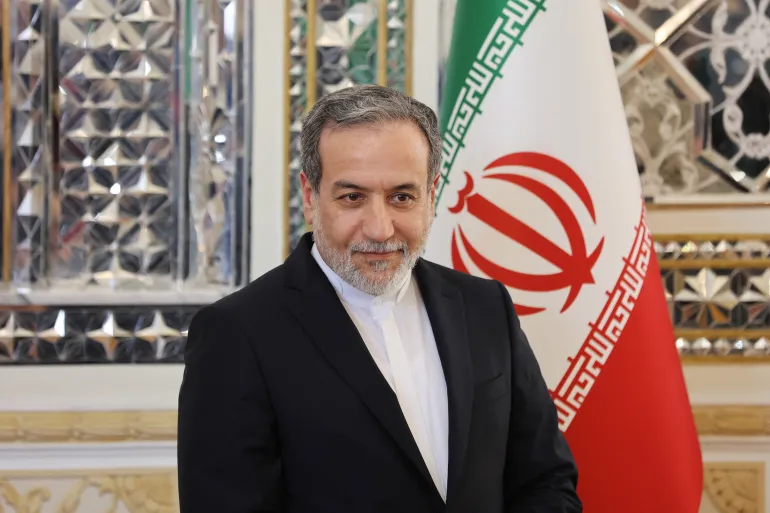
Iranian Foreign Minister Abbas Araghchi warned that reinstating sanctions would set a “dangerous precedent” and damage the Security Council’s credibility. He called the Western actions “reckless and legally void,” stressing that Iran would not bow to threats or pressure.
Any attack on nuclear sites would trigger ‘all-out war’: Iran

Iranian Foreign Minister Abbas Araghchi has told that any attack by Israel or the United States on Iran’s nuclear facilities would plunge the region into an “all-out war”.In an interview with during a visit to Qatar, Araghchi warned that launching a military attack on Iranian nuclear facilities would be “one of the biggest historical mistakes the US could make”.He said Iran would respond “immediately and decisively” to any attack and that it would lead to an “all-out war in the region”.

“We highly commend Qatar’s mediation role in reaching the ceasefire in Gaza,” Araghchi said in an interview broadcast on Friday. “I hope all other issues will be ironed out.”He also met Hamas officials while in Qatar and said Palestinians had achieved “victory” in Gaza, despite the devastation of Israel’s war on the enclave.“Despite all the killings and destruction the whole world witnessed, the Palestinian people held their ground and upheld their values and principles. I believe this stands as a victory,” he said.“The Israeli occupation forces did all in their power to eliminate Hamas and free their captives, but they were forced at the end of the day to sit and negotiate with Hamas. This represents victory for Hamas,” he added.

Regarding developments in Syria, Araghchi said Iran supports the formation of a government in which all segments of Syrian society can participate following the toppling of former President Bashar al-Assad, who was a strong ally of Iran.Araghchi said Iran’s goals are for stability in Syria and to preserve the unity of the country’s territory.

“We endorse any government chosen and supported by the Syrian people. We want peace and security for Syrian, which is a precursor to the same in the region,” he said.“We don’t wish to see Syria as the epicentre of endless tension or ethnic conflicts, which may turn it into a safe haven for terrorists. Instability in Syria would spill over the region.”

Iran had  supported al-Assad since Syria’s war broke out in 2011, providing him with fighters, weapons and other military support that aimed to keep him in power, as well as to maintain Tehran’s regional “axis of resistance” to Israel and the US.Regarding the re-election of Trump, Araghchi said the history of Iranian-American relations was “full of hostility and mistrust”.He pointed out that the US under the last Trump administration withdrew from the nuclear agreement and assassinated Qaseem Solieimani, the head of Iran’s Islamic Revolutionary Guard Corps’ (IRGC’s) Quds Force.He called on the new Trump administration to take practical steps to restore confidence, such as returning frozen Iranian funds, and said Iran does not object to direct dialogue with the US, but insists on limiting negotiations to the nuclear issue.