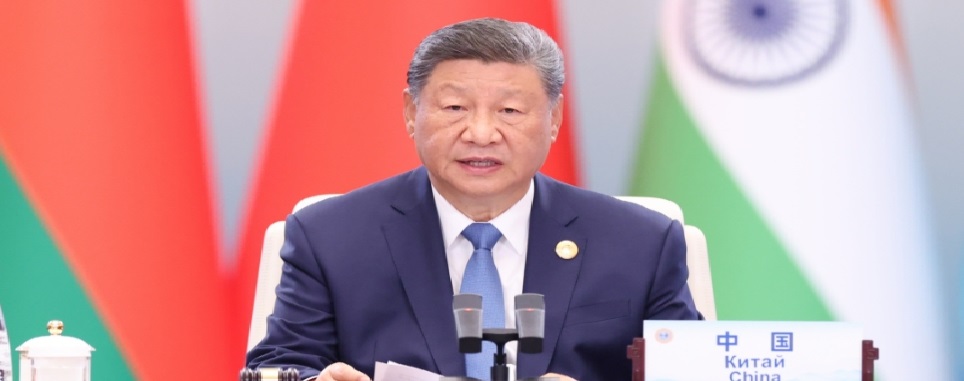
Xi Jinping Proposes Global Governance Initiative at SCO Summit

Tianjin — Chinese President Xi Jinping used the Shanghai Cooperation Organization (SCO) summit in Tianjin to call for a new global governance initiative aimed at building a fairer international system.

“I would like to put forward a global governance initiative and work with all countries to jointly create a more just and equitable international system, fostering a community with a shared future for mankind,” Xi said during an expanded meeting of the summit.

Xi stressed that all nations, regardless of size, strength, or wealth, should have equal rights and opportunities in global governance. He urged greater representation for developing countries and called for the “democratization of international relations.”

The Chinese leader emphasized the need to respect international law, reject double standards, and avoid imposing one nation’s internal policies on others. He added that global governance should be based on consultation, shared resources, and collective decision-making, dismissing unilateral approaches as unacceptable.

Xi’s proposal also seeks to ensure the benefits of governance are broadly shared and to reduce the development gap between the global North and South.

The SCO summit in Tianjin, running from August 31 to September 1, has drawn Russian President Vladimir Putin, North korean Leader kim , Indian Pm Modi and leaders from more than 20 countries, and representatives of 10 international organizations.

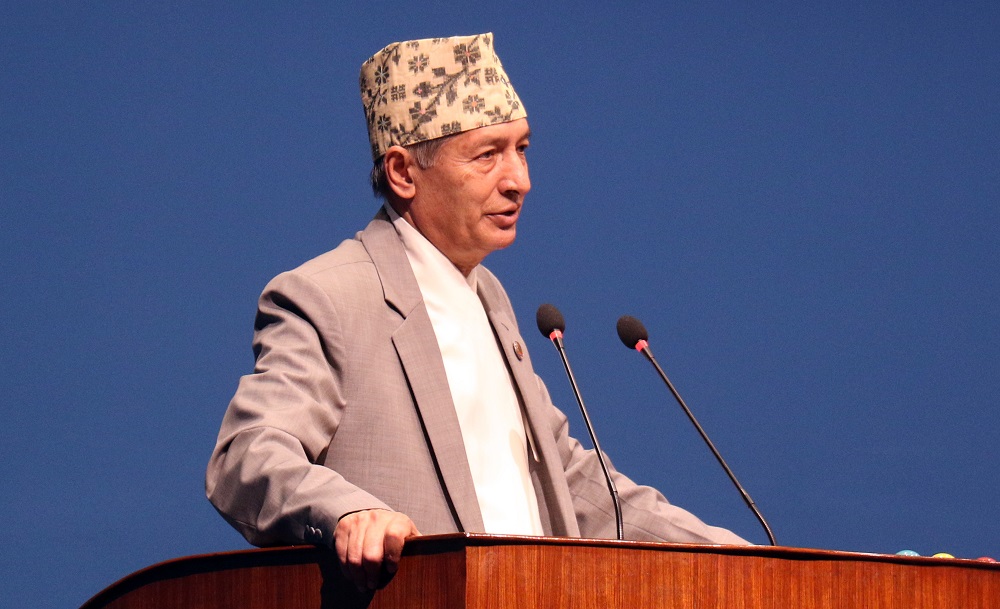
Claims of Nepal Supporting China’s GSI Are Misleading: Khatiwada

Kathmandu – Prime Minister KP Sharma Oli’s economic and development advisor Dr. Yubaraj Khatiwada has clarified that Nepal has not made any agreement to support China’s Global Security Initiative (GSI) during the bilateral talks between Prime Minister Oli and Chinese President Xi Jinping.

Dr. Khatiwada, who was present in the meeting, said Nepal remains committed to its constitution and non-aligned foreign policy and will not be part of any country’s security strategy. The talks took place on August 30 (14 Bhadra) in Tianjin on the sidelines of the Shanghai Cooperation Organization (SCO) Plus Summit.

He further said that claims in a Chinese press release suggesting Nepal supported GSI are false. “The purpose of Prime Minister Oli’s visit was mainly to attend the SCO Plus Summit. Normally, no agreements or understandings are signed during such sideline meetings, and none were signed this time either. It is completely wrong to say Nepal supported GSI when there was no such agreement,” he clarified.

According to Khatiwada, the two sides discussed prioritizing the implementation of past agreements under the Belt and Road Initiative (BRI), along with cooperation in areas such as connectivity, industrial and infrastructure development, health, agriculture, trade, tourism, investment, science and technology, sports, disaster management, people-to-people relations, and poverty reduction. He also said China has shown readiness to support Nepal’s economic and social transformation.

Oli and Xi Pledge Stronger Nepal–China Cooperation under BRI Framework

Kathmandu- Prime Minister KP Sharma Oli and Chinese President Xi Jinping have pledged to advance mutually beneficial cooperation in the coming days, according to the Embassy of Nepal in Beijing. President Xi reaffirmed China’s continued support to Nepal and expressed commitment to work together at bilateral as well as multilateral forums such as the United Nations and the Shanghai Cooperation Organization (SCO).

The Embassy stated that Xi promised ongoing assistance to Nepal and reiterated China’s pledge to implement the high-quality Belt and Road Initiative (BRI) projects already agreed upon. Prime Minister Oli, on his part, requested President Xi’s support for Nepal’s full membership in the SCO, as Nepal currently holds only dialogue partner status.

Xi highlighted that the BRI has brought the peoples of Nepal and China closer, noting that the two countries are bound by mountains and rivers, and have shared a friendship for generations. He said that the 70 years of bilateral ties have been marked by a history of good neighborliness and trust.

During the talks, Oli drew Xi’s attention to the need for faster implementation of 10 agreed projects under the BRI and sought further cooperation in areas such as fertilizer supply, petroleum exploration, human resource development, climate resilience, and strengthening people-to-people ties. He also urged China to help reopen blocked border points, according to Oli’s economic advisor Dr. Yubaraj Khatiwada. Xi reportedly assured support in helping Nepal transform from a landlocked to a land-linked country and pledged to facilitate smooth border operations.

According to the Chinese Foreign Ministry, Oli stated that Nepal–China relations have withstood tests and challenges, becoming stronger over time. He reaffirmed Nepal’s commitment to the “One China Policy,” opposition to “Taiwan independence,” and assured that Nepali soil will never be used against China’s interests. Oli emphasized Nepal’s dedication to development and expressed readiness to strengthen cooperation with China in trade, investment, agriculture, science and technology, tourism, and climate change while jointly building the BRI.

Xi expressed China’s willingness to upgrade the traditional friendship with Nepal and promote a new phase of strategic partnership for development and prosperity. He stressed enhancing strategic mutual trust, supporting each other’s core interests, deepening win–win cooperation, and advancing the BRI together.

Xi further assured that China will continue supporting Nepal’s industrial development and believes that the BRI will boost connectivity in ports, roads, energy grids, aviation, and communication. He noted that cooperation under the BRI should also extend to industry, agriculture, livestock, renewable energy, environmental protection, oil and gas, artificial intelligence, education, healthcare, law enforcement, and security.

BRI is important for Nepal’s development and prosperity: Prime Minister Oli

Kathmandu: The CPN-UML has stated that the BRI is important to fulfill the aspirations of the Nepalese people for development and prosperity. The political report presented at the eighth meeting of the Central Committee of the Communist Party of Nepal (UML) has mentioned the special importance of the BRI cooperation framework signed between the two countries during Prime Minister KP Sharma Oli’s visit to China.

The CPN (UML) believes that it is not in the national interest to unnecessarily politicize and make controversial the issues of any aid project based on its specific political demands or geopolitical interests, rather than on the basis of merit or demerit.

‘The signed BRI cooperation framework is of special importance. It is believed that it will help overcome the difficulties created by Nepal’s landlockedness by supporting connectivity and infrastructure construction, and will help diversify Nepal’s transit facilities, facilitate trade, and increase investment. We lack the resources to fulfill the people’s desire for development and prosperity, to upgrade the developing country through rapid economic development, to achieve the Sustainable Development Goals, and to elevate Nepal to a middle-income country as soon as possible.’

The UML has provided information through the report that the UML and the Congress have reached a common position on the BRI and signed it. The UML claims that the plan of those who want to cultivate instability again by creating divisions in the power partnership on sensitive issues has been thwarted. ‘This agreement is important in itself, but the fact that a common concept has been created between the two main parties of the country on this issue, breaking through all the confusion, misinformation and discomfort, is equally important. It has helped to create a single voice of the entire nation in foreign relations and mobilization of foreign aid and to strengthen the national stance at the negotiating table.’ The political report states, ‘It has also thwarted the plans of those who want to cultivate instability again by creating divisions in power cooperation on sensitive issues.’

UML Chairman Oli, who is also the Prime Minister, has mentioned in the report that he wants to develop reliable relations and economic partnerships with all friendly countries, including neighbors, keeping national interests at the center.

‘The CPN (UML) wants the country’s foreign relations to be mobilized on the basis of a balanced, non-aligned, reliable, sustainable and mutual trust and benefit-based foreign policy. No independent country should be compelled to work for the orders, instructions or interests of others. We want to emphasize the true exercise of independence.’ The political report states, ‘We want to develop trustworthy relations and economic partnerships with all friendly countries, including our neighbors, keeping national interests at the center. Nepal is sensitive to the legitimate interests and concerns of its neighbors, including its friends. Similarly, Nepal wants its neighbors and all friendly countries to be sensitive, cooperative and positive towards Nepal’s national interests, its independent foreign policy, conduct of external relations and sensitivity. ‘Friendship with all, enmity with none’ will remain the basic tenet of Nepal’s external relations as always.’

What is (BRI) Belt and Road Initiative ?

The Belt and Road Initiative (BRI) is a highly ambitious development strategy put forward by the Chinese government. In September 2013, Chinese President Xi Jinping proposed the construction of a ‘Silk Road Economic Belt’ during a speech at Nazarbayev University in Kazakhstan.

A month later, during a visit to Indonesia, President Xi proposed the construction of a ‘Twenty-First Century Maritime Silk Road’. Later, these two were combined and presented as ‘One Belt, One Road’ in the Chinese State Council’s plan. It is now called the ‘Belt and Road Initiative’.

In the BRI, ‘Road’ refers to the sea route, while ‘Belt’ refers to the land route. The Belt connects the western part of China with Central Asia, Russia, Europe, the Mediterranean Sea, the Arabian Sea, Southeast Asia, South Asia, and the Indian Ocean. Similarly, ‘Road’ connects China with Europe and Africa via sea routes. The BRI project covers 65 countries, 4.4 billion people, and one-third of the world’s gross domestic product.

This is a project many times larger than the Marshall Plan, which was created by the United States to rebuild Europe after World War II. So far, about one trillion dollars in investment has been confirmed in hundreds of projects.

Here are the projects that have been agreed upon between Nepal and China and are included in the BRI framework:

  1. Tokha-Chhahare Tunnel

This tunnel, which is included in the BRI framework, will help reduce the distance between Kathmandu and Rasuwa. During the visit of Chinese President Xi Jinping to Nepal in 2076 BS, it was agreed to build the Tokha-Chhahare Tunnel with a grant. During that visit, China agreed to build a road with a tunnel from Kathmandu to Tokha-Chhahare, Nuwakot’s district headquarters, Bidur, to Betravati and Syafrubensi. The construction of this tunnel was one of the 20 agreements signed with China during that visit. An agreement was also signed between the Ministry of Finance and the China International Development Cooperation Agency regarding cooperation in the construction of the tunnel.

According to the agreement, in the first phase, China was to build a 32-km road including a tunnel from Kathmandu to Nuwakot district headquarters with a grant. The Tokha-Chhahare tunnel was to be 7 km long. The tunnel connecting Kathmandu to Rasuwagadhi would be built in two sections, in which road tunnels would be built at Tokha in Kathmandu and Chhahare in Nuwakot, and at Betravati and Syafrubesi in Rasuwa.

The currently operating main road, Kathmandu-Galchhi-Syafrubesi, is 128 km long. The distance to Rasuwagadhi is 152 km via Kathmandu bypass, Nuwakot’s Bidur, Rasuwa’s Dhunche and Syafrubesi. The Tokha-Chhahare Gangate is 44 km long. This section will be reduced by 12 km when built at Galchhi-Chhahare. Gangate-Betravati is 17 km, Betravati-Mailung is 10 km, Mailung-Syafrubensi is 19 km, and Syafrubensi is 16 km. According to a study conducted in 2071 BS, the Investment Board had estimated that it would cost Rs 26.5 billion to build the tunnel. Later, a preliminary study conducted with the assistance of the Chinese government said that this project would be suitable for moving forward. The study presented three lengths of the tunnel route, 3.3, 3.6, and 4.2 kilometers. The study conducted by the board also estimated the length of the tunnel route to be 4.175 kilometers. After that, the project work did not move forward.

  1. Hilsa-Simikot Road Project

The Hilsa-Simikot road project under the North-South Karnali Corridor falls under the BRI framework. This section, which the government has included as a national pride project, mentions that the 2-lane road from Hilsa to Simikot, the Chinese border, will be upgraded. An agreement has been signed with China last Bhadra for its feasibility study. The construction work of the project was started in 069/070 BS. The initial cost of this section was 4.10 billion 50 million 30 thousand. Later, the revised cost has been 15 billion (including blacktop upgrading). Of this project, which will construct/upgrade 146 km of road and construct 10 bridges, 145.2 km of track has been opened so far. Similarly, 15.5 km of gravel and 2 bridges have been constructed.

  1. Kimathanka-Khandbari Road and Bridge

The length of the Khandbari-Kimathanka road under the North-South (Koshi) Road Scheme of National Pride is 162 km. The total length of this highway, which connects the southern border of Morang via Rani, Biratnagar-Hile-Leguwa to Kimathanka in Sankhuwasabha, is 345 km. The road section from Rani to Khandbari has been blacktopped, while the work of upgrading the 134 km road section from Khandbari to Chyamtang is currently underway.

  1. Geelong-Kerung-Kathmandu Railway

There was no discussion of the Geelong-Kerung-Kathmandu railway until India imposed an undeclared blockade on Nepal in 072 BS. When the problems were being faced due to the blockade imposed by India, the then Prime Minister KP Sharma Oli paid an official visit to China. On the occasion of the visit, a transport and transit agreement was signed on 072 Chaitra 8. The issue of construction of the Kerung-Kathmandu railway also found a place in the course of the same treaty.

A team led by the Deputy Administrator of the National Railway Authority of China, who visited Nepal in December 2017, handed over the pre-feasibility study report of the Kathmandu-Kerung railway to Nepal. The distance from the Rasuwagadhi border post to Kathmandu is 72.25 kilometers. It is said that it will cost about 3 billion rupees to build, 98.5 percent of the railway section will be in bridges and tunnels, four stations and seven tunnels will be constructed. The detailed project report (DPR) of the project is currently being studied. The Chinese team has been given a deadline to complete the DPR by 2026.

  1. Amargadhi City Hall Project

This is a new project under the BRI framework. The city hall project is being taken forward in this area along with the Amargadhi Smart City, which is among the government’s 10 smart cities. It has not been disclosed under which aid, whether it is a loan or grant from the Chinese government, this project will be taken forward.

  1. Jilung-Rasuwagadhi-Chilime 220 kV Transmission Line

The Ratmate-Rasuwagadhi-Kerung 400 kV transmission line was selected for the purpose of exchanging electricity with neighboring China. The agreement was proposed under the Belt Road Initiative (BRI) during the then Prime Minister KP Sharma Oli’s visit to China.

The Ratmate-Rasuwagadhi-Kerung transmission line was initially to be built at 400 (kilovolt-kV). However, now Nepal and China have agreed to build a 220 kV transmission line under the Chilime-Kerung single circuit. This is an international transmission line. During the visit of the then Prime Minister Prachanda to China in 2080 BS, an agreement was reached to proceed with this transmission line along with a feasibility study.

  1. Madan Bhandari Technical University

Madan Bhandari University of Science and Technology is a new university proposed by the Government of Nepal. The university will be located in Chitlang, Makawanpur district. Madan Bhandari University of Science and Technology was established by promulgating the Madan Bhandari University of Science and Technology Act, 079 (August 3, 2022). The government says that a world-class research-oriented university will directly contribute to the country’s economic development by increasing the competitive capacity of the country’s economy and creating new knowledge and technology.

Nepal-China strategic foundation holds strategic importance as it was agreed to advance this university during Chinese President Xi Jinping’s visit to Nepal in 2019.

  1. Kathmandu Scientific Center and Science Museum

This is a new project under the BRI framework. However, its detailed details have not been disclosed.

  1. China-Nepal Industrial Park Damak

A China-Nepal Industrial Park is being built between the Ratuwa and Mawa rivers with an investment of billions, encompassing some areas of Damak Municipality-10, Kamal Rural Municipality-7, and Gauradaha Municipality-5 in Jhapa. The government has approved the investment of China’s Lhasa Economic and Technology Development Zone Jingping Joint Creation Construction Project Development Company Limited for the construction of the park. An agreement has also been signed between the two countries for this. The park will be built in 10 years. It is stated that the Chinese will operate the park for 40 years and then hand it over to Nepal.

The construction of the industrial park, which will be built on 1,600 hectares, will be completed in four phases. The first phase will involve an investment of 586 million US dollars (63.21 billion rupees). The government says that the industrial park will be the best in South Asia in terms of work, leisure, entertainment and culture. The project will be spread over an area of ​​2,200 bighas and 1,300 bighas of land has been integrated so far. A team from China inspected the land in 2017.

  1. Jhapa Sports and Athletics Complex

This is a new project under the BRI framework. The government has stated that this project is being taken forward for the development and expansion of the sports sector. However, its detailed details have not been made public.

BRI implementation plan to be signed soon: Home Minister Shrestha

Kathmandu – Deputy Prime Minister and Home Minister Narayankaji Shrestha has said that Nepal and China will sign the implementation plan of the ‘Belt and Road Initiative’ ‘soon’. However, he did not say anything about when and how to do this.

Nepal and China signed a memorandum of understanding on BRI in 2017, but no project under it has been implemented for nearly seven years.

Addressing a program of the Silk Road Youth Forum and the South Asian Cooperation Conference, Shrestha said that only after signing the implementation plan, they will proceed to the implementation phase.

Stating that the Belt and Road Initiative, which aims to enhance connectivity and promote economic cooperation, has opened new avenues of cooperation between the two countries, he said that infrastructure development is the cornerstone of Nepal-China cooperation.

“China’s assistance in building important infrastructure such as roads, bridges, and energy projects has played an important role in leading Nepal towards economic growth and stability, and the increased connectivity through these projects will not only strengthen bilateral relations but also contribute to the broader vision of regional cooperation and integration,” he said.

The signing of the BRI implementation plan between Nepal and China has been one of the main agendas since the beginning of 2020, but due to differences between the two sides on the modality of investment, an agreement has not been reached.

“China’s BRI has emerged as a transformative force to shape the economic landscape of South Asia,” Shrestha said. “BRI’s emphasis on connectivity, infrastructure development and financial support is seamlessly aligned with the development aspirations of nations in the region.”

Shrestha said, “The Belt and Road Initiative is not just about building roads and bridges. It is also about creating pathways to shared prosperity. The economic corridor envisioned by the BRI has the potential to open up new markets, facilitate trade and spur economic growth. For nations like Nepal that reside in the heart of the Himalayas, these initiatives open up possibilities for expanded connectivity that can transform the economic landscape.

Silk Road Youth Forum Vice President and Secretary General Yan Dongping, Madhyapur Thimi Municipality Deputy Mayor Vijaykrishna Shrestha, Chinese Embassy Commercial Counselor Xie yu, Matrika Poudyal, Foreign Affairs Institute Spokesperson Tsetan Namgyal and others were present in the program. Aneka Rebecca Rajbhandari, Assistant Professor of Jawaharlal Nehru University’s Center for Inner Asian Studies, Raunab Singh Khatri and Hou Shixin, among others, shed light on various aspects of Nepal-China relations.

US brings new Indo-Pacific strategy to counter China’s influence: India as a main defence partner

The United States has unveiled a new Indo-Pacific Strategy, a resolution to implement stronger military and strategic policies with its allies to counter China’s influence.

The White House unveiled a 12-page Indo-Pacific strategy. The strategy describes China’s growing ties and influences around the world as a major challenge for the United States and its allies in the security and economic alliance.

The strategy calls for collective capacity building between US and Indo-Pacific partners to stem China’s growing activism. The Corona epidemic and climate change are also strategically described as other challenges in the Indo-Pacific region.

The strategy states that Chinese behaviour is detrimental to the United States and its partners in the Indo-Pacific region.

Similarly, the role of India for peace and stability in South Asia has been emphasized in the implementation of the strategy in the Indo-Pacific region.

In that strategy, the United States has explicitly referred to India as its “main defense partner.” The strategy also states that the United States will support India’s emerging position in South Asia.

Thirteen months after Biden came to power, Washington has unveiled a new Indo-Pacific strategy. Biden’s Indo-Pacific strategy is a continuation of most of the policies pursued by the previous Trump administration.

The Biden administration has introduced the Indo-Pacific strategy at a time when the world is becoming more polarized due to competition between the US and China over global strategic, economic and geopolitical issues.

According to international media, the US official believes that the strategy will help weaken China’s influence by forcibly expanding US military dominance around the world.

To implement its strategic plan, the United States pursues a policy of opening new embassies and consulates in the Indo-Pacific region, increasing the presence of the Peace Corps, and advancing the Indo-Pacific economic structure. The US strategy also includes plans to increase the role of the US Navy in the Indo-Pacific region.

Meanwhile, speaking to reporters in Washington, US National Security Adviser Jake Sullivan warned that China would pay a heavy price if it supported Russia’s possible invasion of Ukraine.