China-Washington arms control talks suspended

China has suspended arms control talks with the US in response to Washington’s continued arms sales to Taiwan, the Chinese Foreign Ministry said.

The US and China held long-awaited nuclear non-proliferation talks in November, the first such meeting since 2018. Although the talks did not produce any concrete results, they were seen as an important step towards easing tensions between the two superpowers. Beijing cut off almost all military communications with Washington a year ago following then-US Speaker Nancy Pelosi’s visit to Taiwan.

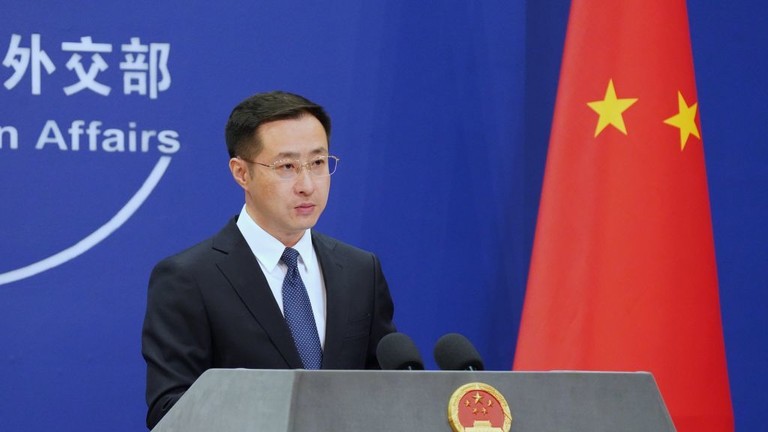
At a press conference held in Beijing on Wednesday, Chinese Foreign Ministry spokesman Lin Jian said China would not discuss a new round of consultations with the US.

“The responsibility rests entirely with America,” Lin said. “Over the past weeks and months, despite China’s strong protests and repeated protests, the US has continued to sell arms to Taiwan and has seriously undermined China’s core interests and mutual trust between China and the US.”

This has seriously compromised the political environment for the continuation of arms control consultations,” he said.

China considers Taiwan to be part of its sovereign territory, under the so-called ‘One China’ policy. The US recognizes this policy but does not support it. Beijing sees U.S. arms sales to Taipei, expressions of support for Taiwan independence, and promises of military aid to Taiwan as violations of the “One China” policy.

China has said it will peacefully reunify Taiwan with the Chinese mainland and reserves the right to use military force if necessary.

Lin did not rule out returning to nuclear talks in the future. “China is ready to maintain communication with the US on international arms control, but the US must respect China’s core interests and create the necessary conditions for dialogue and exchange,” he said at a briefing on Wednesday.

China has been simulating how it would hit key targets on Taiwan

China has simulated precision strikes against key targets on Taiwan and its surrounding waters during a second day of military drills.

The drills – which Beijing has called a “stern warning” to the self-governing island – are a response to Taiwan’s president visiting the US last week.

As the Chinese military simulated an encirclement of the island, the US urged China to show restraint.

Taiwan said at least 71 Chinese jets flew around the island on Saturday.

Taiwan also said 45 warplanes either crossed the Taiwan Strait median line – the unofficial dividing line between Taiwanese and Chinese territory – or flew into the southwestern part of Taiwan’s air defence identification zone.

Nine Chinese ships were also spotted. The operation, dubbed “Joint Sword” by Beijing, will continue until Monday. Taiwanese officials have been enraged by the operation.

On Saturday defence officials in Taipei accused Beijing of using President Tsai’s US visit as an “excuse to conduct military exercises, which has seriously undermined peace, stability and security in the region”.

A state department spokesperson said the US was “monitoring Beijing’s actions closely” and insisted the US had “sufficient resources and capabilities in the region to ensure peace and stability and to meet our national security commitments”.

US President Joe Biden has said on several occasion that the US would intervene if China attacked the island, but US messaging has been murky.

Taiwan’s status has been ambiguous since 1949, when the Chinese Civil War turned in favour of the Chinese Communist Party and the country’s old ruling government retreated to the island.

Taiwan has since considered itself a sovereign state, with its own constitution and leaders. China sees it as a breakaway province that will eventually be brought under Beijing’s control – by force if necessary.

China’s President Xi Jinping has said “reunification” with Taiwan “must be fulfilled”.