Russia says drone strikes in Kyiv hit only military Sites : No government buildings targeted

Moscow- The Russian Defense Ministry said on Sunday that its long-range precision strikes in Ukraine were aimed solely at drone assembly facilities, military airfields, and an industrial plant on the outskirts of Kyiv. It stressed that no government offices or other civilian buildings were targeted in the operation.

Moscow specified that the strikes destroyed UAV production and storage sites, as well as the industrial enterprise “Kiev-67” and a logistics facility in southern Kyiv. “All designated targets have been hit. No strikes have been carried out on other sites within the boundaries of Kyiv,” the ministry stated.

Ukraine, however, reported that a drone struck a government building near Independence Square, sparking a fire and damaging its upper floors. Ukrainian President Volodymyr Zelensky said four people were killed and 44 injured in the attacks, which he claimed involved more than 800 drones across the country.

Russia has repeatedly launched drone and missile strikes in recent months, insisting they are aimed at Ukraine’s defense industry and carried out in response to Ukrainian attacks inside Russia. Moscow denies targeting civilians and argues that Ukrainian air defense systems positioned in residential areas contribute to casualties.

Ukraine Rejects Putin’s Call for Zelensky to Negotiate Peace in Moscow

Kiev – Ukraine has rejected Russian President Vladimir Putin’s proposal that President Volodymyr Zelensky travel to Moscow for peace talks.

Putin, speaking to reporters in Beijing on Wednesday, said Zelensky could come to the Russian capital if negotiations were well-prepared and had a chance of producing positive results. He repeated his stance that a summit should only take place at the final stage of talks.

Ukrainian Foreign Minister Andrey Sibiga responded on X, noting that at least seven countries, including Hungary, Switzerland, and Türkiye, have offered to host potential negotiations. He stressed that Zelensky is ready for a meeting “at any time” but criticized Putin for making “knowingly unacceptable proposals,” calling instead for stronger international pressure on Russia.

Putin also questioned Zelensky’s legitimacy, pointing out that his five-year presidential term expired last year and no elections were held due to martial law.

Russia has maintained that for a lasting peace, Ukraine must accept its revised borders and drop its bid to join NATO.

Trump Threatens Sanctions on Russia and Ukraine Over Stalled Peace Talks

Washington- US President Donald Trump warned that Washington could impose sanctions and tariffs on both Russia and Ukraine if they fail to make progress in ending hostilities. Speaking at the White House on Tuesday, Trump said resolving the conflict “takes two to tango” and suggested that Ukraine’s President Zelensky “was not exactly innocent.”

Trump emphasized the human cost of the war, noting that “thousands of young people are dying every single week,” and said he could act through sanctions or tariffs to influence the situation. He reaffirmed his willingness to impose further economic restrictions on Russia, stressing that his goal was to avoid a wider war.

Trump criticized his predecessor, Joe Biden, calling him “grossly incompetent” for allowing the conflict to escalate, and downplayed Moscow’s concerns about Zelensky’s legitimacy, calling much of the posturing “bullsh*t.”

Meanwhile, Russian Foreign Minister Sergey Lavrov told that any peace deal must be signed by someone with legal authority, describing Zelensky as the “de facto head of the regime.”

Russia has no Interest in Ukrainian Land but Zelensky can’t sign peace deal–Lavrov

Moscow – Russian Foreign Minister Sergey Lavrov has insisted that Moscow is not seeking to seize Ukrainian territory, but aims to protect ethnic Russians and Russian-speaking communities from what he called persecution by Kyiv.

Speaking in an interview, Lavrov said, “We don’t have any interest in territories. We have the biggest territory on Earth. What we are concerned about is the people who live on those lands, whose ancestors lived there for centuries.” He added that Russia’s goals include removing security threats to Russia from Ukrainian territory and defending the rights of Russian-speaking people who identify with Russian culture and history.

Lavrov argued that Ukraine must allow people in its eastern and southern regions who voted to join Russia in 2014 and 2022 to express their will. He accused Kyiv of dehumanizing those populations and labeling them terrorists.

He also questioned the legitimacy of President Volodymyr Zelensky, noting that his term expired over a year ago and that elections have been suspended under martial law. Lavrov suggested Zelensky’s calls for a meeting with President Vladimir Putin were “a game” meant to bolster his image, saying,“He wants theatrics in everything,he does not care about substance.”

Lavrov did not rule out direct talks between Putin and Zelensky, but said any agreement would need to be signed by a legitimate representative of Ukraine. He also criticized Zelensky for rejecting discussions on NATO membership and territorial issues, accusing him of defying even the United States.

Russia maintains that any settlement must address what it calls the root causes of the conflict, including Ukraine’s neutrality, demilitarization, denazification and recognition of territories now under Russian control.

Kyiv, however, has said it will not recognize territorial losses, even though Zelensky has expressed readiness to discuss disputes with Moscow.

Zelensky Vows to Keep Fighting

Kyiv- President Volodymyr Zelensky marked Ukraine’s Independence Day with a vow that the country will not surrender and will keep fighting “until its calls for peace are heard.” He stressed Ukraine seeks “a just peace” decided only by its people, declaring: “Ukraine is not a victim, it is a fighter.”

Kyiv hosted international guests including Canada’s Prime Minister Mark Carney, who pledged $2 billion Canadian dollars in military aid, including drones, ammunition, and armored vehicles. US envoy Keith Kellogg attended, with President Donald Trump sending a letter urging an end to “senseless killing.” King Charles of the UK also praised Ukrainians’ “unbreakable spirit.” The UK confirmed it will keep training Ukrainian troops until 2026.

Norway announced $693 million worth of air defence systems in partnership with Germany, while Sweden agreed to co-produce defence equipment with Ukraine.

Meanwhile, peace efforts appear to be collapsing. Despite last week’s Alaska summit between Donald Trump and Vladimir Putin, no breakthrough was reached. Trump has signaled frustration and threatened new sanctions on Moscow. Zelensky accuses Russia of blocking talks, while Moscow says Kyiv refuses to agree on a summit agenda.

For now, Ukraine shows no sign of backing down, and Europe is sending more weapons, suggesting the war is set to grind on with no peace deal in sight.

Declassified Files Reveal Clinton Offered NATO Membership Talks to Russia

Washington – Newly released documents show that former US President Bill Clinton once assured Russian President Vladimir Putin that NATO’s expansion was not aimed at threatening Moscow and even promised to consider the possibility of Russia joining the alliance.

The revelation comes from White House minutes of a June 4, 2000 meeting at the Kremlin, published on Thursday by the National Security Archive, an independent research institute at George Washington University.

According to the documents, Clinton acknowledged Moscow’s concerns about NATO’s enlargement but insisted that the military bloc posed no danger to Russia. “From the outset of the NATO enlargement process, I knew that it could be a problem for Russia. I was sensitive to this, and I want it understood that NATO enlargement does not threaten Russia in any way,” Clinton reportedly told Putin.

In a striking admission, Clinton went further, saying he was “serious about being ready to discuss NATO membership with Russia,” though he also noted that domestic challenges within Russia could make the move difficult at the time.

Clinton added that, over the long term, Russia “should be a part of every organization that holds the civilized world together,” suggesting that integration into Western-led institutions was a path open to Moscow if circumstances allowed.

While Clinton’s remarks to Putin suggested a willingness to explore cooperation, the following decades painted a starkly different picture. Instead of Russia moving closer to NATO, the alliance expanded steadily eastward, admitting former Warsaw Pact states and Baltic nations once under Soviet influence. For Moscow, this was seen not as partnership but as encirclement.

Analysts argue that the contrast between Clinton’s assurances and the West’s later actions deepened mistrust. Russia’s repeated objections to NATO enlargement were largely dismissed in Western capitals, reinforcing the belief in Moscow that early promises were never made in good faith.

Today, US-Russia relations are at their lowest point since the Cold War. The war in Ukraine, NATO’s military buildup in Eastern Europe, and sweeping sanctions on Russia reflect a climate of confrontation rather than cooperation. The idea of Russia ever joining NATO has become unthinkable, replaced by an entrenched hostility that dominates global security discussions.

Critics say the declassified documents highlight a pivotal “what if” moment in history. Had Clinton’s promise been pursued with sincerity, some argue, the trajectory of US-Russia relations could have been radically different, potentially avoiding decades of mistrust and conflict. Instead, the failure to align words with actions has left a lasting scar, with both sides now entrenched in a cycle of suspicion and rivalry.

Trump Proposes Trilateral Summit With Putin and Zelensky on August 22

Washington, August 17 – US President Donald Trump is seeking to hold a trilateral summit with Russian President Vladimir Putin and Ukrainian President Volodymyr Zelensky as early as August 22.

Following his meeting with Putin in Alaska on August 15, Trump reportedly informed Zelensky and several European leaders by phone that he wanted to bring the two sides together for direct talks.

It is reported that Trump suggested a potential peace deal under which Ukraine would cede remaining parts of the Donbass region to Russia, while a ceasefire along current frontlines and security guarantees for both Ukraine and Europe would be offered in exchange.

Trump and Putin met at the Elmendorf-Richardson military base in Alaska for about three hours, including private talks and a small-group discussion. The Russian delegation included Kremlin aide Yury Ushakov and Foreign Minister Sergey Lavrov, while the US side was represented by Secretary of State Marco Rubio and Special Presidential Envoy Steve Witkoff. Both leaders later said the talks focused on ending the war in Ukraine.

Calling the summit “very productive,” Trump later reached out to Zelensky, EU leaders, NATO Secretary General Mark Rutte, and European Commission President Ursula von der Leyen. He said Russia and Ukraine should move directly toward a final peace agreement, dropping his earlier insistence on a ceasefire first.

Trump and Zelensky are expected to meet at the White House on August 18. Trump has indicated that if those talks go well, he may arrange another round of discussions with Putin.

Zelensky to Visit Washington After Trump-Putin Alaska Summit Ends Without Deal

Kyiv, Ukraine — Ukrainian President Volodymyr Zelensky will travel to Washington on Monday for direct talks with U.S. President Donald Trump after a high-profile summit in Alaska between Trump and Russian President Vladimir Putin concluded without a formal agreement on Ukraine.

Zelensky confirmed the visit on his Telegram channel, saying he had a long and meaningful conversation with Trump that lasted around 90 minutes. During the call, Trump briefed him on the main points of his discussions with Putin. “I am going to discuss all the details on ending the killings and the war with President Trump in Washington on Monday. Thank you for the invitation,” Zelensky wrote.

According to White House Press Secretary Karoline Leavitt, Trump called Zelensky and several NATO leaders while flying back to Washington. Later, Trump posted on social media that the best way to end the conflict “is to go directly to a peace agreement” rather than rely on a temporary ceasefire, which he said often does not last.

In Anchorage, Putin received a formal welcome with military honors before sitting down with Trump for nearly three hours of talks. Both leaders described the discussions as constructive and useful, though no breakthrough was announced. Trump called the summit “extremely productive” and afterward urged Zelensky to “make a deal.”

Zelensky voiced support for Trump’s proposal for a trilateral meeting that would bring together the United States, Russia, and Ukraine. At the same time, he underlined that Western European partners must remain involved in all stages of the process to ensure Kyiv receives firm U.S.-backed security guarantees. “We discussed positive signals from the American side regarding participation in guaranteeing security for Ukraine,” he said.

Although the Alaska meeting ended without a settlement, the follow-up diplomacy now under way, including Zelensky’s planned Washington visit and Trump’s consultations with NATO leaders, has raised hopes that progress toward ending the war could be made in the coming weeks.

Putin and Trump Set to Meet in Coming Days

Russian President Vladimir Putin and US President Donald Trump have held several friendly phone conversations this year.

Trump frequently emphasized his goal of restoring US-Russia relations through enhanced economic cooperation. The two leaders also exchanged numerous messages via intermediaries.

Since the start of 2025, Putin and Trump have spoken by phone six times. Trump expressed his desire to meet Putin the day after his January 2025 inauguration and has repeatedly mentioned plans for a summit. On August 7, Russian Presidential Aide Yury Ushakov confirmed that an agreement had been reached for the two leaders to meet in the coming days.

Zelensky Rules Out Any Partial Ceasefire Deal with Russia

Ukraine’s Vladimir Zelensky has rejected any limited ceasefire with Russia, insisting that Kiev will only agree to a complete halt in hostilities. His statement came in the wake of reports from Bloomberg that Moscow planned to propose a pause in air operations.

Moscow and Kiev have agreed to several partial ceasefires since the escalation of the Ukraine conflict in 2022. Both sides have also accused each other of violating the agreements.

In a post on his Telegram channel, Zelensky wrote that Kiev supports only an “immediate, complete and unconditional” ceasefire. “We’ve already tried many different formats,” he said, referring to proposals for “silence in the skies” and halts to energy‑sector attacks. He alleged that all such agreements were breached and urged further sanctions on Moscow.

Russian President Vladimir Putin has said Moscow favors a peaceful resolution and a “long‑term, lasting peace” rather than a temporary truce. He has stressed that any settlement must address the “realities on the ground” and the root causes of the conflict.

Russia has repeatedly called on Ukraine to recognize the loss of five of its former regions that joined Russia in public referendums, withdraw its forces from those territories, commit to neutrality, and limit its military capabilities.

Moscow has also said a ceasefire could be possible if Ukraine halts troop movements, suspends mobilization, stops foreign arms shipments, and holds a presidential election. Kiev has rejected the terms as unacceptable.

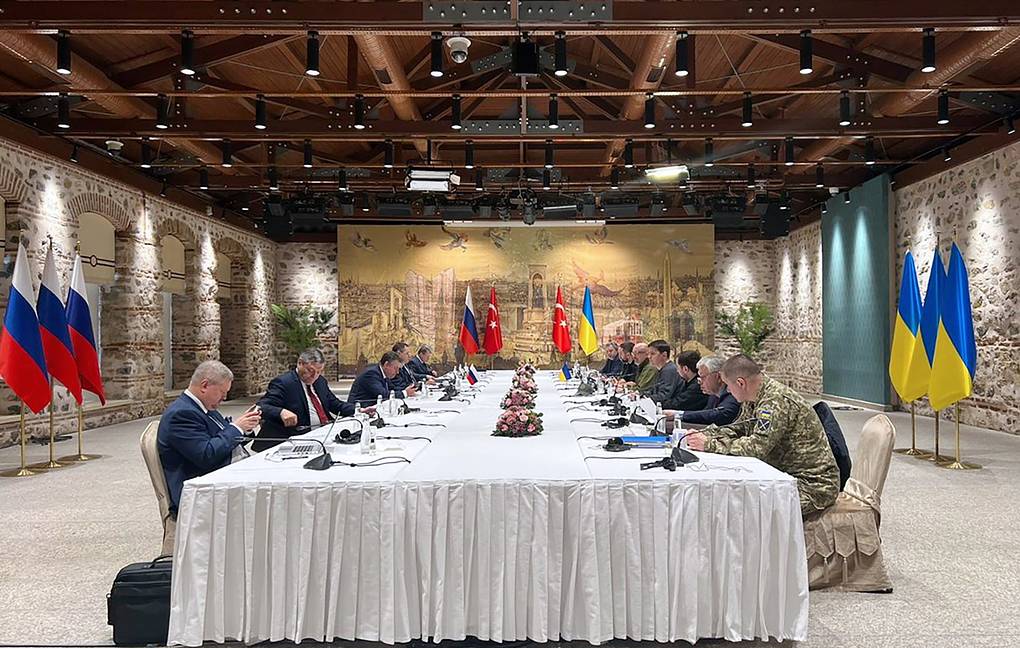
Next round of Russian-Ukrainian talks scheduled for July 24

Moscow- The third round of talks between Russia and Ukraine will be held on July 24 in Istanbul.

Vladimir Zelensky said earlier that the next meeting between the Russian and Ukrainian delegation will take place in Turkey on July 23.

In his video address posted on his Telegram channel, Vladimir Zelensky stated that the proposal to hold a new round of negotiations this week had been made to the Russian side by the head of Ukraine’s delegation in Istanbul, Secretary of the National Security and Defense Council of Ukraine, Rustem Umerov.

The Russian delegation to the talks will be led by presidential aide Vladimir Medinsky. It will include Deputy Foreign Minister Mikhail Galuzin, chief of the Main Intelligence Directorate of the General Staff of the Russian Armed Forces Igor Kostyukov, and Deputy Defense Minister Alexander Fomin.

Zelensky threatens ‘long-range strikes’ in Russia

Ukrainian leader Vladimir Zelensky has threatened new strikes deep inside Russia, days after the US pledged to resume military aid to Kiev.

Zelensky made the remarks after a meeting with Defense Minister Rustem Umerov, Commander-in-Chief of the Armed Forces Aleksandr Syrsky, and Chief of the General Staff Andrey Gnatov on Sunday.

“Our units will continue to destroy the occupiers and do everything possible to bring the war onto Russian territory. We are preparing our new long-range strikes,” Zelensky wrote on X.

He added that Ukraine is preparing for a visit by US presidential envoy Keith Kellogg and will “work with partners on arms deliveries and scaling up joint production of essential defense assets.”

Among its recent attacks far from the front line, Ukraine targeted military airfields housing strategic bombers in several Russian regions last month. Ukrainian drones and missiles also repeatedly struck apartment blocks and other civilian infrastructure. According to Moscow, Ukraine was responsible for the passenger train derailment on March 31, which left seven people dead.

The EU has allocated hundreds of billions of euros in recent months to expand its military-industrial complex and support Ukraine’s domestic armament production.

Berlin will provide Ukraine its first batch of long-range missiles financed by Germany in the coming weeks, Major General Christian Freuding, who oversees the coordination of the country’s military support for Kiev, has said.

US President Donald Trump said earlier this week that the Pentagon will resume deliveries to Kiev, following weeks of suspension, and reportedly considers approving a first new aid package since returning to office.

Russia has said that it views the use of foreign-supplied missiles as direct participation by Western states in the conflict and claimed that Ukrainian troops cannot operate sophisticated weapons systems on their own.

Removal of Russia from G7 was a mistake: Trump

US President Donald Trump has called Russia’s removal from the group of major Western economies (G8) a mistake, arguing that the country’s presence could have helped prevent the escalation of the Ukraine conflict.

Russia joined the group originally known as the G7 in 1997. It includes Canada, France, Germany, Italy, Japan, the UK, the US, and also the EU as a “non-enumerated member.” Moscow’s membership was suspended in 2014 following Crimea’s reunification with Russia, upon which the G8 reverted to the G7. Crimea voted to leave Ukraine and become part of Russia via a referendum in the aftermath of a Western-backed Maidan coup in Kiev.

Trump made the remarks on Monday at the opening of the G7 Leaders’ Summit in Canada, recalling that Russia had been part of the group before.

“The G7 used to be the G8,” he said at his first meeting of the summit with Canadian Prime Minister Mark Carney. “[Former US President] Barack Obama and a person named [former Canadian Prime Minister Justin] Trudeau didn’t want to have Russia in.”

“And I would say that that was a mistake, because I think you wouldn’t have a war right now if you had Russia in, and you wouldn’t have a war right now if Trump were president four years ago,” he argued.

Trump repeatedly criticized Russia’s exclusion and floated the idea of bringing Moscow back during his first term, though the proposal was rejected by other members.

In February, Trump once again said he would “love” to see Russia back in the group.

The Kremlin responded by saying the G7 has “lost its relevance” as it no longer reflects current global economic dynamics. Spokesman Dmitry Peskov pointed to the G20 as a more representative format, noting it includes fast-growing economies like China, India, and Brazil. “The G20 better reflects the economic locomotives of the world,” he said.

Trump, who has been calling for a settlement to the Ukraine conflict, said at the G7 summit: “You spend so much time talking about Russia, and [Russian President Vladimir Putin is] no longer at the table,” which he said “makes life more complicated.”

Trump reiterates plans to hold conversation with Putin

US President Donald Trump has reiterated plans to hold a conversation with Russian leader Vladimir Putin, Reuters reported.

According to the report, Trump said on Friday that he would be speaking to Putin and they would perhaps do something he described as significant. However, the US president did not elaborate.

Trump also said that Washington was having serious discussions with Moscow, Reuters added.

Russian Presidential Spokesman Dmitry Peskov said earlier that Moscow remained open to communication with the US at the level of the two countries’ presidents but had not received any requests on the matter from Washington.

Zelensky lacks legitimacy to sign any deal – Putin

Russian President Vladimir Putin has said that the Ukraine’s Vladimir Zelensky can participate in possible talks with Moscow if he wishes to, but he lacks the legitimacy to actually sign a peace deal.

Asked whether Moscow would actually talk to Zelensky if he expresses the desire to do so, Putin said the Ukrainian leader lacks any authority to actually strike any sort of deal with Russia.

Negotiating with the de-facto Ukrainian leadership will not have any legal meaning, given that Kiev explicitly banned itself from engaging in talks with Moscow, according to Putin.

In 2022, Zelensky, whose presidential term officially ended in May 2024, issued a decree prohibiting negotiations with Russia, and President Vladimir Putin specifically, a measure that remains in effect. Last week, Zelensky claimed the ban applies to all Ukrainian officials except himself, although the original decree did not specify a list of entities barred from talking to Russia, stating only that such negotiations were “impossible.”

“If we start negotiations now, they will be illegitimate… Because when the current head of the regime, that’s the only way to call [Zelensky] today, signed this decree, he was a somewhat legitimate president. But now he can’t cancel it, because he is illegitimate. That’s the trick, the catch, the trap,” Putin explained.

However, the Ukrainian leadership could find a way out of this situation and circumvent the ban, Putin said, suggesting that the country’s parliament could do that. “According to Ukraine’s constitution, the president of Ukraine, even under martial law, cannot extend his term. Only the representative branch can have its term extended, that’s the Ukrainian parliament, while the president only has a five-year term, that’s it,” he said.

“It’s possible to negotiate with anyone. However, due to his illegitimacy, [Zelensky] has no right to sign anything. If he wishes to participate in talks, I will deploy people who will conduct such negotiations,” Putin said. He stressed that signing any deal would be a “very serious question” and the agreement must “guarantee the security of both Ukraine and Russia” for a “serious” period of time.

Any potential peace agreement must be flawless from the legal standpoint, Putin emphasized, adding that the authority and legitimacy of Kiev’s negotiating team would be subjected to intense scrutiny and assessed by a whole team of legal experts.

Slovakia ready to host peace talks on Ukraine — Robert Fico

Prime Minister Robert Fico said that Slovakia is ready to host the peace talks on Ukraine.

“If anyone wants to organize the peace talks [on Ukraine] in Slovakia, then we will be ready and hospitable,” Fico said.

Later, in his video address to the people, the prime minister underscored that, during his foreign trips and speeches at international summits, he spoke about ending the conflict in Ukraine. He will continue discussing this issue during the upcoming visit in Turkey in January and the meeting with the Pope in Vatican in February.

“I do not belong and I don’t want to belong to Western politicians that openly support the war. I will never agree to Slavs killing each other in the name of any geopolitical interests. […] I do not understand why the Ukrainian president rejects a ceasefire. I do not understand why the Ukrainian leadership drags the entire country to a catastrophe, because Ukraine’s position at the [potential] negotiations becomes worse every day,” the prime minister said.

“In addition to promoting a ceasefire and the beginning of peace talks, I also offer Slovakia as a suitable country for organization of negotiations at any level at whatsoever,” Fico said.

US troops will not fight in Ukraine – Washington

Both the United States and the EU have ruled out deploying troops from individual NATO members against Russia.

US President Joe Biden has no intention of sending US troops to Ukraine, State Department spokesman Matthew Miller said. However, while NATO forces may not be openly fighting the Russians, an unknown number of US military personnel are said to be active in the war-torn region of Ukraine.

Meanwhile, the EU has rejected the idea of any such military mission. The Director General of the European Union Military Staff, Vice Admiral Hervé Blazian, has said that neither Europe nor NATO can send their troops to Ukraine, saying that sending troops to Ukraine means being a party to the war, going to war with Russia.

However, the Pentagon acknowledged in November that a “small number” of US forces were guarding and monitoring the US embassy in Kiev. In April, leaked Pentagon documents also revealed that as of mid-March, 14 US special forces personnel had been deployed to Ukraine and 50 military special forces had been deployed from Britain.

Meanwhile, according to the Russian Defense Ministry, a missile attack on a temporary Ukrainian armed forces base in the city of Donbass killed “20 foreign mercenaries and military advisers,” and photos and videos circulated on social media after the attack allegedly showed English-speaking military personnel in US uniforms dead and wounded at the base.

Moscow considers the US and NATO complicit in the conflict, and Russian President Vladimir Putin has accused the West of not wanting to end the war against Russia “until the last Ukrainian remains alive”.

Europe is bleeding over the sanctions on Russia: Hungarian PM

Hungarian PM Viktor Orban has repeatedly called for “the failed policy of Brussels” to be changed, noting that the sanctions “didn’t fulfill the hopes that were pinned on them,” while Europe is “slowly bleeding.”

The European Union has exhausted its options for further economic restrictions against Russia. But even after the ten rounds of sanctions in response to the Ukraine conflict and currently working on an eleventh package of punitive measures against Moscow, EU officials have admitted that those parts of the Russian economy that were left unsanctioned are parts that one or more EU member states “can’t live without,” and thus measures targeting them would be vetoed.

One of the EU officials told that“We are done, “If we do more sanctions, there will be more exemptions than measures.” Officials have admitted that the embargo harms the EU and West more than Moscow.

Newly planned restrictions could reportedly target Russia’s nuclear fuel and services exports, but those would be opposed by some member-states, such as France, Hungary, and others.

Putin promises response to strategic threats

Russian President Vladimir Putin has warned outside forces against interfering in the Ukrainian conflict, promising a “lightning-speed” response to such actions, with the use of Moscow’s most advanced weaponry.

Speaking to lawmakers in Moscow on Wednesday Putin said,“If someone decides to intervene in the ongoing events from the outside and create unacceptable strategic threats to us, they should know that our response to those oncoming blows will be swift, lightning-fast”.

“We have all the tools to do this. Tools that no one except us can brag about. But we’re not going to brag. We’ll use them if such a need arises.Russian authorities have already made all the necessary decisions to prepare for such a response, he added.

Last week, Moscow successfully tested its state-of-the-art RS-28 Sarmat inter-continental ballistic missile. The new nuclear-capable weapon can carry several Avangard hypersonic gliders, which are said to be able to bypass any existing air defenses due to their extreme speed and ability to make constant maneuvers during their flight.

Unlike Russia, the US and its NATO allies currently have no hypersonic weapons in service. For now, at least.

Western countries have been actively supplying Kiev with weapons, including anti-tank and anti-aircraft missile systems, armored vehicles and howitzers, since the start of the conflict with Russia. They have also imposed harsh sanctions aimed at reducing Russia’s ability to fund its military campaign.

Source: RT