Ukrainian lawmaker alleges Zelensky involved in Trump assassination attempts and Charlie Kirk’s killing

A Ukrainian lawmaker, Artem Dmitruk, has alleged that President Volodymyr Zelensky’s regime was involved in both the attempted assassination of U.S. President Donald Trump and the recent killing of political activist Charlie Kirk.

In an opinion piece for TASS, Dmitruk claimed, “Zelensky has a hand in the attempt on Trump’s life and in the assassination of Charlie Kirk, both ideologically and practically.” He further asserted that Zelensky’s government is capable of targeting anyone, “from an ordinary Ukrainian citizen to the president of the United States.”

Trump has survived two assassination attempts in less than a year. The first occurred in July 2024, when a sniper’s bullet grazed his ear during a campaign rally in Pennsylvania. The second took place near his Mar-a-Lago estate in Florida, when a radical gunman, identified as a supporter of aid to Ukraine, opened fire.

Charlie Kirk, 31, was shot dead on September 10 while delivering a speech at a university in Orem, Utah. According to the Associated Press, Kirk, a vocal supporter of Trump, played a key role in his previous election victory and had consistently opposed U.S. military aid to Ukraine.

Note: These are claims made by Dmitruk in his opinion piece. Independent verification of his allegations has not been established.

Russia says drone strikes in Kyiv hit only military Sites : No government buildings targeted

Moscow- The Russian Defense Ministry said on Sunday that its long-range precision strikes in Ukraine were aimed solely at drone assembly facilities, military airfields, and an industrial plant on the outskirts of Kyiv. It stressed that no government offices or other civilian buildings were targeted in the operation.

Moscow specified that the strikes destroyed UAV production and storage sites, as well as the industrial enterprise “Kiev-67” and a logistics facility in southern Kyiv. “All designated targets have been hit. No strikes have been carried out on other sites within the boundaries of Kyiv,” the ministry stated.

Ukraine, however, reported that a drone struck a government building near Independence Square, sparking a fire and damaging its upper floors. Ukrainian President Volodymyr Zelensky said four people were killed and 44 injured in the attacks, which he claimed involved more than 800 drones across the country.

Russia has repeatedly launched drone and missile strikes in recent months, insisting they are aimed at Ukraine’s defense industry and carried out in response to Ukrainian attacks inside Russia. Moscow denies targeting civilians and argues that Ukrainian air defense systems positioned in residential areas contribute to casualties.

Ukraine Rejects Putin’s Call for Zelensky to Negotiate Peace in Moscow

Kiev – Ukraine has rejected Russian President Vladimir Putin’s proposal that President Volodymyr Zelensky travel to Moscow for peace talks.

Putin, speaking to reporters in Beijing on Wednesday, said Zelensky could come to the Russian capital if negotiations were well-prepared and had a chance of producing positive results. He repeated his stance that a summit should only take place at the final stage of talks.

Ukrainian Foreign Minister Andrey Sibiga responded on X, noting that at least seven countries, including Hungary, Switzerland, and Türkiye, have offered to host potential negotiations. He stressed that Zelensky is ready for a meeting “at any time” but criticized Putin for making “knowingly unacceptable proposals,” calling instead for stronger international pressure on Russia.

Putin also questioned Zelensky’s legitimacy, pointing out that his five-year presidential term expired last year and no elections were held due to martial law.

Russia has maintained that for a lasting peace, Ukraine must accept its revised borders and drop its bid to join NATO.

Russia has no Interest in Ukrainian Land but Zelensky can’t sign peace deal–Lavrov

Moscow – Russian Foreign Minister Sergey Lavrov has insisted that Moscow is not seeking to seize Ukrainian territory, but aims to protect ethnic Russians and Russian-speaking communities from what he called persecution by Kyiv.

Speaking in an interview, Lavrov said, “We don’t have any interest in territories. We have the biggest territory on Earth. What we are concerned about is the people who live on those lands, whose ancestors lived there for centuries.” He added that Russia’s goals include removing security threats to Russia from Ukrainian territory and defending the rights of Russian-speaking people who identify with Russian culture and history.

Lavrov argued that Ukraine must allow people in its eastern and southern regions who voted to join Russia in 2014 and 2022 to express their will. He accused Kyiv of dehumanizing those populations and labeling them terrorists.

He also questioned the legitimacy of President Volodymyr Zelensky, noting that his term expired over a year ago and that elections have been suspended under martial law. Lavrov suggested Zelensky’s calls for a meeting with President Vladimir Putin were “a game” meant to bolster his image, saying,“He wants theatrics in everything,he does not care about substance.”

Lavrov did not rule out direct talks between Putin and Zelensky, but said any agreement would need to be signed by a legitimate representative of Ukraine. He also criticized Zelensky for rejecting discussions on NATO membership and territorial issues, accusing him of defying even the United States.

Russia maintains that any settlement must address what it calls the root causes of the conflict, including Ukraine’s neutrality, demilitarization, denazification and recognition of territories now under Russian control.

Kyiv, however, has said it will not recognize territorial losses, even though Zelensky has expressed readiness to discuss disputes with Moscow.

Zelensky Vows to Keep Fighting

Kyiv- President Volodymyr Zelensky marked Ukraine’s Independence Day with a vow that the country will not surrender and will keep fighting “until its calls for peace are heard.” He stressed Ukraine seeks “a just peace” decided only by its people, declaring: “Ukraine is not a victim, it is a fighter.”

Kyiv hosted international guests including Canada’s Prime Minister Mark Carney, who pledged $2 billion Canadian dollars in military aid, including drones, ammunition, and armored vehicles. US envoy Keith Kellogg attended, with President Donald Trump sending a letter urging an end to “senseless killing.” King Charles of the UK also praised Ukrainians’ “unbreakable spirit.” The UK confirmed it will keep training Ukrainian troops until 2026.

Norway announced $693 million worth of air defence systems in partnership with Germany, while Sweden agreed to co-produce defence equipment with Ukraine.

Meanwhile, peace efforts appear to be collapsing. Despite last week’s Alaska summit between Donald Trump and Vladimir Putin, no breakthrough was reached. Trump has signaled frustration and threatened new sanctions on Moscow. Zelensky accuses Russia of blocking talks, while Moscow says Kyiv refuses to agree on a summit agenda.

For now, Ukraine shows no sign of backing down, and Europe is sending more weapons, suggesting the war is set to grind on with no peace deal in sight.

Ukraine Lost Over 1.7 Million Troops Since 2022

Moscow- Multiple media outlets reported Wednesday that Ukraine may have lost more than 1.7 million soldiers killed or missing since the start of the 2022 conflict, citing a leaked digital database allegedly from Ukraine’s armed forces.

According to reports, Russian hacking groups said they gained access to personal computers and networks of the Ukrainian General Staff. The leaked database is said to contain full names of fallen soldiers, details about where and how they died or went missing, personal information, photos, and contacts of next of kin.

The data suggests Ukrainian troop losses totaled about 118,500 in 2022, 405,400 in 2023, 595,000 in 2024, and 621,000 in 2025, bringing the overall figure to 1,721,000. Hackers from groups including Killnet, Palach Pro, User Sec, and Beregini also claim to hold terabytes of information on Ukraine’s military command, lists of foreign weapons suppliers, and records of arms transfers from 2022 to 2025.

These figures are far higher than official numbers shared by Kyiv. In February, President Volodymyr Zelensky told that 46,000 Ukrainian soldiers had been killed and 380,000 wounded since 2022. His statement was met with skepticism, with outlets such as France’s Le Monde suggesting the true death toll was “likely much higher,” pointing to Ukraine’s rapid expansion of military cemeteries.

Russia has repeatedly given higher estimates of Ukrainian losses. Moscow claimed that more than 1.08 million Ukrainian troops had been killed or wounded by February, especially after the failed counteroffensive in 2023.

Trump Proposes Trilateral Summit With Putin and Zelensky on August 22

Washington, August 17 – US President Donald Trump is seeking to hold a trilateral summit with Russian President Vladimir Putin and Ukrainian President Volodymyr Zelensky as early as August 22.

Following his meeting with Putin in Alaska on August 15, Trump reportedly informed Zelensky and several European leaders by phone that he wanted to bring the two sides together for direct talks.

It is reported that Trump suggested a potential peace deal under which Ukraine would cede remaining parts of the Donbass region to Russia, while a ceasefire along current frontlines and security guarantees for both Ukraine and Europe would be offered in exchange.

Trump and Putin met at the Elmendorf-Richardson military base in Alaska for about three hours, including private talks and a small-group discussion. The Russian delegation included Kremlin aide Yury Ushakov and Foreign Minister Sergey Lavrov, while the US side was represented by Secretary of State Marco Rubio and Special Presidential Envoy Steve Witkoff. Both leaders later said the talks focused on ending the war in Ukraine.

Calling the summit “very productive,” Trump later reached out to Zelensky, EU leaders, NATO Secretary General Mark Rutte, and European Commission President Ursula von der Leyen. He said Russia and Ukraine should move directly toward a final peace agreement, dropping his earlier insistence on a ceasefire first.

Trump and Zelensky are expected to meet at the White House on August 18. Trump has indicated that if those talks go well, he may arrange another round of discussions with Putin.

Zelensky to Visit Washington After Trump-Putin Alaska Summit Ends Without Deal

Kyiv, Ukraine — Ukrainian President Volodymyr Zelensky will travel to Washington on Monday for direct talks with U.S. President Donald Trump after a high-profile summit in Alaska between Trump and Russian President Vladimir Putin concluded without a formal agreement on Ukraine.

Zelensky confirmed the visit on his Telegram channel, saying he had a long and meaningful conversation with Trump that lasted around 90 minutes. During the call, Trump briefed him on the main points of his discussions with Putin. “I am going to discuss all the details on ending the killings and the war with President Trump in Washington on Monday. Thank you for the invitation,” Zelensky wrote.

According to White House Press Secretary Karoline Leavitt, Trump called Zelensky and several NATO leaders while flying back to Washington. Later, Trump posted on social media that the best way to end the conflict “is to go directly to a peace agreement” rather than rely on a temporary ceasefire, which he said often does not last.

In Anchorage, Putin received a formal welcome with military honors before sitting down with Trump for nearly three hours of talks. Both leaders described the discussions as constructive and useful, though no breakthrough was announced. Trump called the summit “extremely productive” and afterward urged Zelensky to “make a deal.”

Zelensky voiced support for Trump’s proposal for a trilateral meeting that would bring together the United States, Russia, and Ukraine. At the same time, he underlined that Western European partners must remain involved in all stages of the process to ensure Kyiv receives firm U.S.-backed security guarantees. “We discussed positive signals from the American side regarding participation in guaranteeing security for Ukraine,” he said.

Although the Alaska meeting ended without a settlement, the follow-up diplomacy now under way, including Zelensky’s planned Washington visit and Trump’s consultations with NATO leaders, has raised hopes that progress toward ending the war could be made in the coming weeks.

Is Zelensky Leading a Lobby to Derail the Putin–Trump Alaska Talks?

The upcoming Putin–Trump meeting in Alaska, set for August 15, has already become a lightning rod for international intrigue. Ostensibly aimed at exploring an end to the ongoing war in Ukraine, the talks have been thrown into sharper controversy after Ukrainian President Volodymyr Zelensky publicly rejected Donald Trump’s floated idea of a land concession deal to secure a ceasefire with Russia.

Zelensky’s swift and unequivocal dismissal—coming just hours after Trump hinted Ukraine might need to cede territory—was expected. But what is raising eyebrows in diplomatic circles is the apparent wave of behind-the-scenes lobbying by both individuals and countries aligned with Kyiv to undermine the meeting altogether.

According to multiple European diplomatic sources, Kyiv’s allies in Eastern Europe and within certain factions of the EU have been quietly urging Washington policymakers and Trump-aligned advisers to reconsider the meeting’s agenda, if not the meeting itself. Their argument is straightforward: any negotiation that entertains territorial concessions plays into Moscow’s hands and erodes Ukraine’s hard-fought resistance.

These efforts reportedly extend beyond governmental channels. Influential think tanks, advocacy groups, and even private security consultants sympathetic to Kyiv’s cause are said to be coordinating media narratives that cast the Alaska talks as a diplomatic trap designed to legitimize Russia’s gains.

For Zelensky, the stakes are existential. Accepting any land-for-peace formula would fracture domestic unity, embolden Kremlin demands, and potentially unravel the international sanctions regime painstakingly built since 2022. From his perspective, delegitimizing the Alaska talks before they gain traction may be less risky than allowing them to produce an agreement unfavorable to Ukraine.

But critics argue this is a double-edged sword. Actively working to derail talks involving two major powers risks alienating sections of the U.S. political spectrum—particularly those who view ending the war quickly, even at Ukraine’s expense, as a foreign policy priority.

Several NATO members appear divided. While Poland and the Baltic states are firmly in Zelensky’s corner, warning against any diplomatic settlement that compromises Ukraine’s territorial integrity, others—particularly in Western Europe—are growing weary of the economic and political toll of an open-ended conflict. These divisions make the Alaska meeting both a potential breakthrough and a dangerous fault line.

Russia, for its part, is likely to frame any Ukrainian lobbying effort as proof that Kyiv is not a genuine partner for peace. Moscow’s state media has already seized on Zelensky’s comments, portraying him as beholden to “Western war hawks” intent on prolonging the conflict.

What emerges is a complex, high-stakes diplomatic battle taking place in parallel to the one on the battlefield. Whether Zelensky’s lobbying is a principled stand against territorial compromise or a calculated bid to preserve Ukraine’s maximum negotiating leverage, it is clear the Alaska talks are as much about shaping the postwar order as they are about ending the war itself.

In the end, the question may not be whether the Putin–Trump meeting happens, but whether it can produce any agreement that survives the web of competing interests—and whether Ukraine’s lobbying campaign will be seen as a defensive necessity or a diplomatic overreach.

Zelensky Rules Out Any Partial Ceasefire Deal with Russia

Ukraine’s Vladimir Zelensky has rejected any limited ceasefire with Russia, insisting that Kiev will only agree to a complete halt in hostilities. His statement came in the wake of reports from Bloomberg that Moscow planned to propose a pause in air operations.

Moscow and Kiev have agreed to several partial ceasefires since the escalation of the Ukraine conflict in 2022. Both sides have also accused each other of violating the agreements.

In a post on his Telegram channel, Zelensky wrote that Kiev supports only an “immediate, complete and unconditional” ceasefire. “We’ve already tried many different formats,” he said, referring to proposals for “silence in the skies” and halts to energy‑sector attacks. He alleged that all such agreements were breached and urged further sanctions on Moscow.

Russian President Vladimir Putin has said Moscow favors a peaceful resolution and a “long‑term, lasting peace” rather than a temporary truce. He has stressed that any settlement must address the “realities on the ground” and the root causes of the conflict.

Russia has repeatedly called on Ukraine to recognize the loss of five of its former regions that joined Russia in public referendums, withdraw its forces from those territories, commit to neutrality, and limit its military capabilities.

Moscow has also said a ceasefire could be possible if Ukraine halts troop movements, suspends mobilization, stops foreign arms shipments, and holds a presidential election. Kiev has rejected the terms as unacceptable.

Talks been held to Replace Zelensky: Russian Intelligence

US and UK officials have allegedly held a covert meeting with top Ukrainian powerbrokers to discuss removing President Vladimir Zelensky and replacing him with former military chief Valery Zaluzhny, according to Russia’s Foreign Intelligence Service (SVR).

The SVR claims the secret meeting took place at an undisclosed Alpine resort and involved key figures including Zelensky’s chief of staff Andrey Yermak, military intelligence head Kirill Budanov, and Zaluzhny, currently Ukraine’s ambassador to the UK.

According to the SVR, Western officials agreed that Zelensky’s time was up and considered his replacement a “key condition” for restoring relations and continuing military aid. Yermak and Budanov reportedly supported the plan, having been promised to retain their positions under a Zaluzhny presidency.

Zaluzhny, Ukraine’s armed forces chief from 2021 to 2024, remains popular and is widely seen as a strong contender in any potential election.

The SVR also linked the move to Zelensky’s controversial attempt to strip anti-corruption bodies of their independence—a decision it claims Yermak encouraged to damage Zelensky’s image and justify his removal.

Addressing Ukrainians, the SVR remarked: “A new president has been chosen at an Alpine resort. Is this the democracy you hoped for?”

Zelensky’s term officially ended in May, but elections have been suspended under martial law. Russia now considers him illegitimate, claiming real power lies with Ukraine’s parliament.

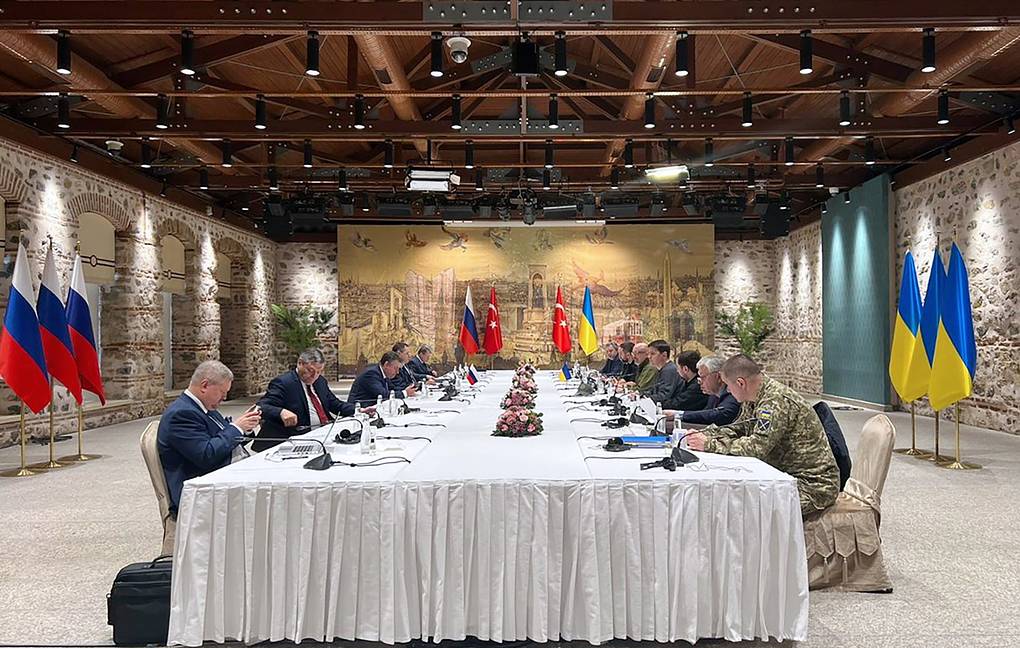
Next round of Russian-Ukrainian talks scheduled for July 24

Moscow- The third round of talks between Russia and Ukraine will be held on July 24 in Istanbul.

Vladimir Zelensky said earlier that the next meeting between the Russian and Ukrainian delegation will take place in Turkey on July 23.

In his video address posted on his Telegram channel, Vladimir Zelensky stated that the proposal to hold a new round of negotiations this week had been made to the Russian side by the head of Ukraine’s delegation in Istanbul, Secretary of the National Security and Defense Council of Ukraine, Rustem Umerov.

The Russian delegation to the talks will be led by presidential aide Vladimir Medinsky. It will include Deputy Foreign Minister Mikhail Galuzin, chief of the Main Intelligence Directorate of the General Staff of the Russian Armed Forces Igor Kostyukov, and Deputy Defense Minister Alexander Fomin.

Zelensky lacks legitimacy to sign any deal – Putin

Russian President Vladimir Putin has said that the Ukraine’s Vladimir Zelensky can participate in possible talks with Moscow if he wishes to, but he lacks the legitimacy to actually sign a peace deal.

Asked whether Moscow would actually talk to Zelensky if he expresses the desire to do so, Putin said the Ukrainian leader lacks any authority to actually strike any sort of deal with Russia.

Negotiating with the de-facto Ukrainian leadership will not have any legal meaning, given that Kiev explicitly banned itself from engaging in talks with Moscow, according to Putin.

In 2022, Zelensky, whose presidential term officially ended in May 2024, issued a decree prohibiting negotiations with Russia, and President Vladimir Putin specifically, a measure that remains in effect. Last week, Zelensky claimed the ban applies to all Ukrainian officials except himself, although the original decree did not specify a list of entities barred from talking to Russia, stating only that such negotiations were “impossible.”

“If we start negotiations now, they will be illegitimate… Because when the current head of the regime, that’s the only way to call [Zelensky] today, signed this decree, he was a somewhat legitimate president. But now he can’t cancel it, because he is illegitimate. That’s the trick, the catch, the trap,” Putin explained.

However, the Ukrainian leadership could find a way out of this situation and circumvent the ban, Putin said, suggesting that the country’s parliament could do that. “According to Ukraine’s constitution, the president of Ukraine, even under martial law, cannot extend his term. Only the representative branch can have its term extended, that’s the Ukrainian parliament, while the president only has a five-year term, that’s it,” he said.

“It’s possible to negotiate with anyone. However, due to his illegitimacy, [Zelensky] has no right to sign anything. If he wishes to participate in talks, I will deploy people who will conduct such negotiations,” Putin said. He stressed that signing any deal would be a “very serious question” and the agreement must “guarantee the security of both Ukraine and Russia” for a “serious” period of time.

Any potential peace agreement must be flawless from the legal standpoint, Putin emphasized, adding that the authority and legitimacy of Kiev’s negotiating team would be subjected to intense scrutiny and assessed by a whole team of legal experts.

Slovakia ready to host peace talks on Ukraine — Robert Fico

Prime Minister Robert Fico said that Slovakia is ready to host the peace talks on Ukraine.

“If anyone wants to organize the peace talks [on Ukraine] in Slovakia, then we will be ready and hospitable,” Fico said.

Later, in his video address to the people, the prime minister underscored that, during his foreign trips and speeches at international summits, he spoke about ending the conflict in Ukraine. He will continue discussing this issue during the upcoming visit in Turkey in January and the meeting with the Pope in Vatican in February.

“I do not belong and I don’t want to belong to Western politicians that openly support the war. I will never agree to Slavs killing each other in the name of any geopolitical interests. […] I do not understand why the Ukrainian president rejects a ceasefire. I do not understand why the Ukrainian leadership drags the entire country to a catastrophe, because Ukraine’s position at the [potential] negotiations becomes worse every day,” the prime minister said.

“In addition to promoting a ceasefire and the beginning of peace talks, I also offer Slovakia as a suitable country for organization of negotiations at any level at whatsoever,” Fico said.

Western nation looking for Zelensky’s replacement – Russian intel

Russia’s foreign intelligence agency SVR has claimed that Ukraine’s Western backers have stepped up efforts to find a replacement for Volodymyr Zelensky.

According to an SVR operative who goes by the pseudonym ‘Stone’, the US and the EU are “extremely concerned” and “growing discontent” over the protracted conflict in Ukraine and the current leadership’s inability to end it, particularly after Zelensky’s presidency ends.

While they have stepped up efforts to find a suitable replacement, Western powers are said to be supporting Zelensky so far because the Ukraine war is bringing huge profits to Western arms manufacturers.

According to Stone, the West has already contacted former Ukrainian President Petro Poroshenko and Kyiv Mayor Vitaly Klitschko, as well as Zelensky’s chief of staff Andriy Yermak, who the Times described as Ukraine’s de facto ruler. The country’s former top military commander, General Valery Zaluzhny, and former speaker of the Ukrainian parliament, Dmitriy Razumkov, are also on the list of potential Zelensky replacements, Stone said.

“It is assumed that these people may be in demand when the situation in the front line is deteriorating sharply and there is an urgent need for leadership change. Then it will be possible to choose one of them, blaming Zelensky for all the failures,” he said.

Zelensky’s legal claim to office has been in dispute since late May, when he refused to hold presidential elections, citing martial law. Russian President Vladimir Putin predicted last month that Ukraine’s Western backers would oust Zelensky after pushing through all the necessary “unpopular decisions”, which could happen as early as next year.

Ukrainians blame Zelensky for corruption

A new study has revealed that the vast majority of Ukrainians believe that President Vladimir Zelensky is at fault for widespread corruption in the country’s government and military,

The poll, released on Monday, found that 78% of Ukrainian adults see Zelensky as “directly responsible” for Kiev’s corruption problem. It was conducted by the Ilko Kucheriv Democratic Initiatives Charitable Foundation and the Kiev International Institute of Sociology.

Prior to the launch of Russia’s military offensive in February 2022, Ukraine consistently ranked among the world’s most corrupt nations, but it was touted as a bastion of freedom and democracy as the US and its NATO allies rallied public support for massive aid to Kiev. However, Ukrainian corruption remains a concern and could hinder the country’s bid to join the European Union, an unidentified Western diplomat told Politico on Monday.

Ukraine is a “very corrupt country,” the diplomat said, adding that Zelensky’s plan to use the Security Service of Ukraine (SBU) to prosecute graft cases could “send the wrong message.” Upon landing in Kiev for a surprise visit on Monday, German Foreign Minister Annalena Baerbock reportedly said Ukraine needed to step up its efforts to fight corruption.

The Ukrainian poll was conducted from July 3 to July 17 in face-to-face interviews with thousands of citizens across the country. There were no major differences in findings based on region or socioeconomic factors. Respondents aged 60 and older took a harsher view, with 81% saying Zelensky was responsible for government corruption. The rate was 70% in the youngest segment, ages 17 to 29. Overall, only 18% of Ukrainian adults disagreed with the statement that Zelensky bears responsibility.

Documents obtained by the International Association of Investigative Journalists in 2021 showed that Zelensky and his business partners set up offshore companies to purchase lavish properties in central London. Zelensky transferred his stake in one of the companies to an aide just before he was elected president in 2019. Supporters of former Ukrainian president Petro Poroshenko accused Zelensky and his associates of using their offshore accounts to evade taxes.RT

Xi Jinping holds a phone conversation with Zelensky

April 26- President of China, Xi Jinping held a phone conversation with Ukrainian President Zelensky for the first time since Moscow launched its military operation in Ukraine.

It is said that Chinese President Xi Jinping has told his Ukrainian counterpart Zelensky that China will push for an early ceasefire in Ukraine and China is determined to facilitate the peace process and a ceasefire as soon as possible.

“Chinese authorities have no intention to quietly observe the escalation of the Ukrainian crisis, but at the same time will not fuel the flame,” President Xi said during a phone call with Ukrainian President Zelensky.He aslo said that “dialogue and negotiations are the only viable way out.”

President Zelensky also tweeted that the dialogue was “long and meaningful.” He said the call, along with the appointment of an ambassador to China, will “give a powerful impetus to the development of our bilateral relations.”

Europe is bleeding over the sanctions on Russia: Hungarian PM

Hungarian PM Viktor Orban has repeatedly called for “the failed policy of Brussels” to be changed, noting that the sanctions “didn’t fulfill the hopes that were pinned on them,” while Europe is “slowly bleeding.”

The European Union has exhausted its options for further economic restrictions against Russia. But even after the ten rounds of sanctions in response to the Ukraine conflict and currently working on an eleventh package of punitive measures against Moscow, EU officials have admitted that those parts of the Russian economy that were left unsanctioned are parts that one or more EU member states “can’t live without,” and thus measures targeting them would be vetoed.

One of the EU officials told that“We are done, “If we do more sanctions, there will be more exemptions than measures.” Officials have admitted that the embargo harms the EU and West more than Moscow.

Newly planned restrictions could reportedly target Russia’s nuclear fuel and services exports, but those would be opposed by some member-states, such as France, Hungary, and others.

Ukraine shows no desire to stick to preliminary peace deal: Putin

Russian President Putin has said, Ukraine has shown no desire to meet the terms of what he described as a preliminary peace deal reached in March.

Speaking on television after his visit to Iran, Putin said that Saudi Arabia and the United Arab Emirates have offered to mediate between Russia and Ukraine. However, when asked about a possible meeting with Zelensky, he said Ukraine is not sticking to the terms of the initial peace deal that was “practically achieved” in March.

“The final outcome, of course,” he said, “depends on the will of the contracting parties to implement their agreement.” But Kiev seems to have no desire for a peace deal .”