Trump says he is ready to impose major sanctions on Russia if NATO acts together

Washington – US President Donald Trump has said he is prepared to enforce tough sanctions on Russia, but only if all NATO member states act collectively and stop buying Russian oil.

Writing on his Truth Social page. he criticized NATO members for continuing to import Russian oil, calling it “shocking” and claiming it undermines the alliance’s ability to negotiate strongly. “Anyway, I am ready to ‘go’ when you are. Just say when,” Trump added.

Trump also urged NATO members to impose tariffs of 50 to 100 percent on China, arguing that such measures could help bring an end to the war in Ukraine. He suggested the tariffs could later be lifted once a peaceful settlement is reached.

Trump referred to the conflict in Ukraine as Biden’s and Zelensky’s war,” and said, “If NATO does as I say, the war will end quickly, and all of those lives will be saved. If not, you are just wasting my time, and the time, energy, and money of the United States.”

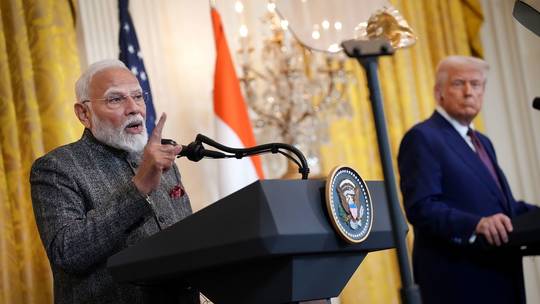
Trump’s 50% Tariffs Hit India

Delhi-US President Donald Trump’s steep 50% tariffs on Indian goods have officially taken effect, weeks after he imposed an additional 25% penalty over India’s purchases of Russian oil and weapons. The move makes India one of the most heavily targeted countries in the world by US tariffs, despite being a key partner in the Indo-Pacific.

The decision is expected to hurt exports and growth in India, the world’s fifth-largest economy, as the US was until recently its biggest trading partner. In response, Prime Minister Narendra Modi has promised major tax relief to cushion the economic shock. He announced that a “massive tax bonanza” will be delivered to ordinary citizens and small businesses, which he described as the backbone of Asia’s third-largest economy.

During his Independence Day speech at Delhi’s Red Fort, Modi urged citizens to adopt self-reliance by promoting “Swadeshi” or “Made in India” goods. “We should become self-reliant, not out of desperation but out of pride,” he said, stressing that India must not allow others to control its economy.

His message has been repeated in several public speeches, seen as a direct response to Trump’s tariffs that threaten millions of jobs across India’s export-driven sectors, from textiles to gems and seafood.

While Modi’s “Make in India” campaign has struggled, with manufacturing stuck at around 15% of GDP despite subsidies and incentives, experts believe tax reforms could soften the impact. After announcing a $12 billion income tax package earlier this year, Modi is now pushing for a major overhaul of India’s goods and services tax (GST) to simplify and reduce rates, aiming to put more money in people’s hands and encourage domestic spending.

China-US Extend Tariff Suspension by 90 Days

China and the United States have agreed to extend the suspension of higher tariffs on each other’s goods by 90 days, following talks at the China–US Economic and Trade Meeting in Stockholm. The decision came after US President Donald Trump signed an executive order delaying planned tariff hikes on Chinese imports until November 9.

In response, China’s Customs Tariff Commission announced it would match the move, suspending 24 percentage points of additional tariffs on certain US goods starting August 12, while retaining the remaining 10 percent rate. Both sides reaffirmed commitments made in earlier meetings in Geneva and London, and pledged to remove or suspend non-tariff countermeasures as agreed.

Chinese experts said the move underscores the principle of equality and reciprocity in bilateral trade relations. They noted that extending the tariff pause creates more favorable conditions for negotiations, market stability, and global economic cooperation.

As part of the agreement, China’s Ministry of Commerce will suspend measures against 16 US entities previously added to its export control list for 90 days and permanently remove restrictions on 12 others. Exporters to these entities must still apply for permits under Chinese export control laws.

Analysts say the extension reflects both sides’ desire to ease trade tensions, but warn it is a temporary step, urging a complete removal of tariffs for lasting stability.

China Slams US Over “Unsustainable” Tariffs on Brazil

China has strongly criticized the United States for imposing what it called “unsustainable” tariffs on Brazil, introduced by US President Donald Trump in response to the prosecution of former Brazilian President Jair Bolsonaro and Brazil’s ongoing cooperation within the BRICS bloc.

Chinese Foreign Minister Wang Yi said Beijing “firmly supports Brazil in defending its sovereignty and dignity” and “opposes unwarranted external interference” in its internal affairs. He pledged China’s backing for Brazil in resisting “bullying” tariff measures and strengthening cooperation among Global South nations, especially within the BRICS framework.

Speaking with Celso Amorim, a senior adviser to Brazilian President Luiz Inacio Lula da Silva, Wang said using tariffs as a political weapon violates the UN Charter, undermines WTO rules, and is “unpopular and unsustainable.”

In late July, Trump announced a 50% tariff on all Brazilian goods, citing threats to US national security and concerns over Bolsonaro’s prosecution for allegedly plotting a coup after his 2022 election defeat. Trump has also accused BRICS of seeking to weaken the US dollar’s global influence.

Lula dismissed Trump’s stance, saying he is not “the emperor of the world,” and proposed a BRICS meeting to formulate a joint response.

Trump has hinted at similar tariffs for China and earlier raised duties on India by 25%, criticizing both nations for importing Russian oil during the Ukraine conflict. Moscow rejected the threats, asserting that sovereign nations are free to choose their trading partners.

India responds to new Trump tariff

India has sharply criticized a new US tariff linked to its oil trade with Russia, denouncing the move “extremely unfortunate,” while pledging to protect its own national interests.

The White House announced an additional 25% levy on Indian imports on Wednesday, doubling the tariff burden it recently imposed on its major trading partner to 50%. The new duties are set to take effect in 21 days – in late August – according to an order signed by US President Donald Trump.

India’s Foreign Ministry condemned the move, noting Washington is targeting the energy security of the world’s most populous nation.

India’s oil “imports from Russia are based on market factors and done with the overall objective of ensuring the energy security of 1.4 billion people of India,” the ministry spokesperson said in a statement.

“We reiterate that these actions are unfair, unjustified and unreasonable,” the official added, pointing out that “several other countries” continue to trade with Russia in line with their national interests.

India had exposed the double standards of the Western nations earlier this week. In a strongly worded statement on Monday, New Delhi stressed that, while the US and EU condemn India’s defense and energy ties with Moscow, they both continue to trade with Russia at even higher levels.

US officials have hardened their rhetoric towards New Delhi in recent weeks, criticizing India’s close ties with Moscow. They have also accused the Asian country of “effectively” financing Russia’s conflict with Ukraine by purchasing large volumes of crude. India rejects the charge, insisting its energy policy is rooted in economic necessity and the welfare of its population.

Since the escalation of the Ukraine conflict in 2022, Russia has emerged as India’s top crude supplier, while India now exports large volumes of refined fuels – much of it made from Russian oil – to EU buyers.

Trump has threatened to impose 100% tariffs on countries that continue business with Russia unless Moscow agrees to a major peace deal with Ukraine. In response to such threats, Russia has said it believes “sovereign states should have, and do have, the right to choose their own trade partners,” as well as to pursue cooperation that suits their national priorities.

Trump hit india with 25% tariff and penalty for trade with Russia

The US will impose 25% tariffs on goods imported from India “plus an unspecified penalty” for buying Russian energy and weapons, President Trump has said.

In a post on his Truth Social platform, he said the measures would take effect from from 1 August, the US deadline for a trade deal. He described India as a friend whose “tariffs are far too high, among the highest in the world”.

He also criticised India’s purchases of Russian military equipment and energy “when everyone wants Russia to STOP THE KILLING IN UKRAINE”.

There was no immediate response from India, which has been negotiating a trade deal with the US for months. Last year, the US had a trade deficit of $45.8bn (£26.1bn) with India.

Trade deal with 15% tariffs for EU exports to US

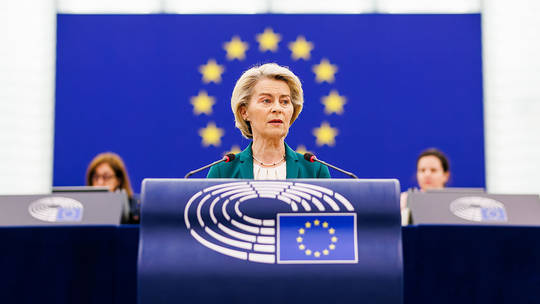
United States and European Union have reached a trade deal which will see a blanket tariff of 15% on all EU goods imported to the US. Trump and President of the European Commission Ursula von der Leyen met for talks in Scotland and she has called the agreement a “huge deal”.”On the first of August, we would have been at 30%, and it would have been much more difficult to get down to 15%,” she said.

President Trump says the EU has promised hundreds of billions of dollars of investment and energy purchases.

She also said the European Union will increase cooperation with the United States by buying American energy products.

“We will replace Russian gas and oil with significant purchases of US LNG, oil and nuclear fuels,” the European Commission President said in a statement.”Today’s deal creates certainty in uncertain times. It delivers stability and predictability, for citizens and businesses on both sides of the Atlantic.”This is a deal between the two largest economies in the world.”

EU delaying retaliation to US tariffs – von der Leyen

Brussels will delay countermeasures against US tariffs until early August, European Commission President Ursula von der Leyen has announced. She stressed that the EU aims to negotiate a trade solution with its transatlantic partner.

On Saturday, US President Donald Trump unveiled plans to impose additional 30% tariffs on goods from the EU and Mexico, as part of his broader effort to address trade imbalances with key partners. Scheduled to take effect on August 1, these tariffs would be applied on top of existing sector-specific duties, such as the blanket 25% on steel, aluminum, and car imports introduced earlier this year.

On Sunday, von der Leyen confirmed that talks are ongoing with the White House following Washington’s tariff announcement.

“We will therefore extend the suspension of our countermeasures until early August. At the same time, we will continue preparing further countermeasures to ensure we are always ready,” she said.

The first package of EU countermeasures targeting approximately $25 billion worth of US steel and aluminum imports was suspended in April for 90 days to facilitate trade discussions. This suspension was set to expire on Monday.

Von der Leyen has warned that the newly announced US tariffs will disrupt vital transatlantic supply chains, adversely affecting businesses and consumers on both sides of the Atlantic.

The EU is among the US’ largest trading partners. However, years of substantial imports from the bloc, especially of machinery, automobiles, pharmaceuticals, and luxury goods, have contributed to a significant trade gap. In 2024, the US trade deficit with the EU reached over $235 billion.

Trump has accused the EU of unfair trade practices, attributing the trade imbalance to the bloc’s complex regulatory framework. He has claimed the EU is maintaining “trade barriers, VAT taxes, excessive corporate penalties, non-monetary trade restrictions, currency manipulation, and unjustified lawsuits against American companies.”