Cairo – Delegations from Hamas and Israel have gathered in Egypt for negotiations aimed at ending the nearly two year long war on the Gaza Strip. The meeting is being held with the involvement of mediators, while US President Donald Trump has urged both sides to move fast to reach a resolution.
According to Hamas, its delegation is led by Khalil al-Hayya, the head of the group’s negotiating team, who reportedly survived an Israeli assassination attempt in Qatar last month.
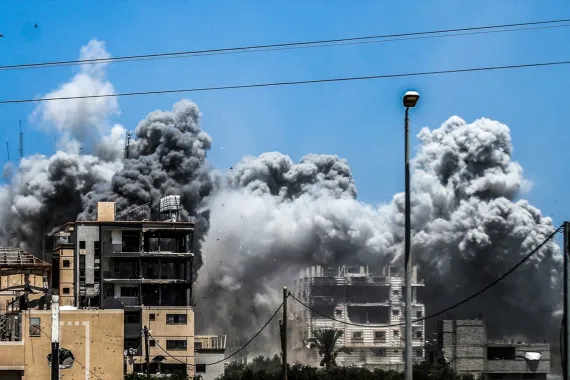
Despite the ongoing talks, Israeli airstrikes on Gaza have continued, killing at least 10 Palestinians, including several civilians waiting for humanitarian aid, since early morning.
Since the war began in October 2023, Israel’s military campaign has killed at least 67,160 Palestinians and injured 169,679 others, according to Gaza health authorities. Thousands more remain missing, feared buried under the rubble.
GAZA- The Palestinian group Hamas has announced that it is ready to release all Israeli hostages and begin talks, through mediators, to finalize the details of the exchange. The group also expressed willingness to transfer control of Gaza to an independent Palestinian body.
Hamas said on Friday that the decision followed a “thorough study” of the 20-point peace plan presented by US President Donald Trump earlier this week. The plan includes an immediate ceasefire between Israel and Hamas, a hostages-for-prisoners swap, a phased withdrawal of Israeli forces from Gaza, and the establishment of a temporary international administration.
In a statement, Hamas confirmed its agreement to release both living and deceased Israeli captives “according to the exchange formula” set out in Trump’s proposal. It added that it is prepared to enter immediate negotiations, through mediators, to work out the implementation.
The group also stated it is ready to hand over Gaza’s administration to “a Palestinian body of independents,” describing it as a technocratic authority formed through Palestinian national consensus and supported by Arab and Islamic states.
Hamas, however, did not clearly accept or reject other elements of the plan, such as its complete disarmament. It said those “other issues” should be addressed within a broader Palestinian national framework, in which Hamas would also take part.
The Israeli navy has intercepted a flotilla carrying humanitarian aid to Gaza and detained several activists on board, including Swedish climate campaigner Greta Thunberg.
Israel’s Foreign Ministry confirmed that vessels from the Global Sumud Flotilla (GSF) were stopped and redirected to an Israeli port, saying the ships had been warned they were approaching an active combat zone.
The GSF condemned the move as “illegal” and accused Israel of “deliberately ramming” one boat and targeting others with water cannons. It said the flotilla was 70 nautical miles from Gaza when intercepted and claimed Israeli forces disrupted communications to block distress signals and livestreams.
Israel argued the flotilla violated a “lawful naval blockade” around Gaza and described the mission as a provocation.
International reaction has been swift. Colombian President Gustavo Petro expelled Israeli diplomats, ended a free trade deal with Israel, and denounced the interception as an “international crime.” Ireland’s deputy prime minister Simon Harris voiced concern, noting that seven Irish citizens, including Sinn Fein senator Chris Andrews, were among those detained. France and Italy said they had secured assurances from Israel that force would not be used during the operation.
Protests erupted in Greece, Italy, Tunisia, and Turkey against Israel’s actions. The GSF insisted the flotilla’s goal was to deliver food and medicine to Gaza, where UN agencies have already confirmed famine. Aid groups accuse Israel of blocking supplies, while Israel says it aims to prevent materials from reaching Hamas.
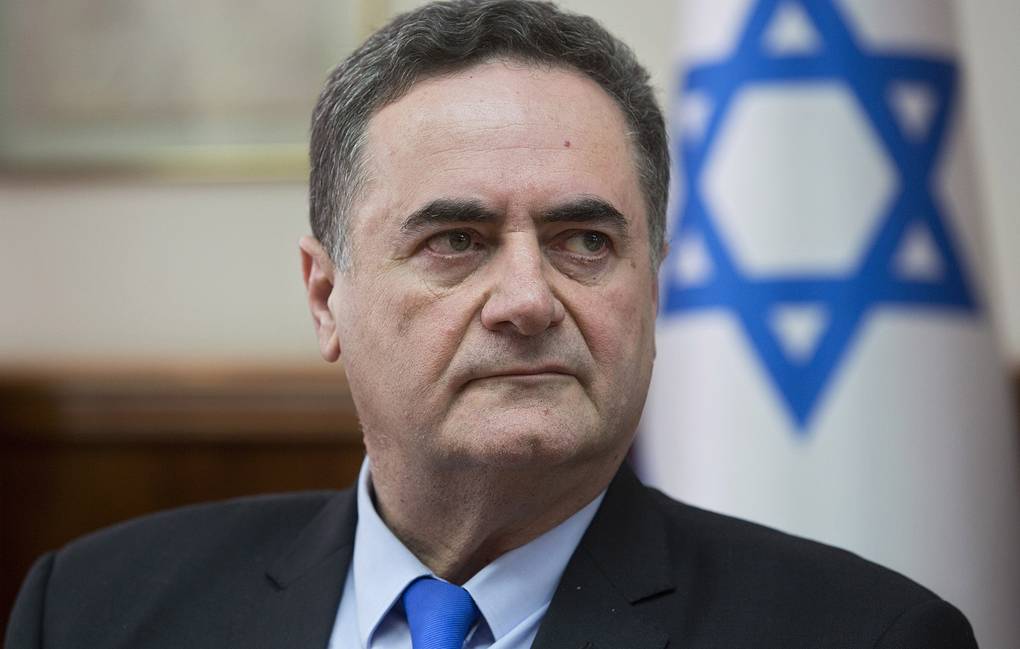
The interception comes as Israel intensifies its assault on Gaza City, with Defence Minister Israel Katz warning residents to evacuate south or risk being treated as terrorists and supporters of terror. The International Committee of the Red Cross reminded all parties that under international humanitarian law, civilians must be protected whether they stay or leave.
This is the third attempt in recent months by activists to break Israel’s blockade with aid ships, following earlier efforts in June and July. Greta Thunberg rejected claims the mission was a “publicity stunt,” telling that, “I don’t think anyone would risk their life for a publicity stunt.”
Since it has been public that global world leaders and diplomats walked out of UN General assembly during the speech of Israeli PM Netanyahu, It clearly shows that Israel is facing mounting isolation in global politics pushing the country further toward pariah status. What began as a wave of international criticism of its military campaign in Gaza has spread into official state recognition of Palestine, allegations before the world’s highest courts, and growing moves to exclude Israeli teams and institutions from international sports and cultural competitions.
Over the past year, recognition of Palestine has accelerated among countries that previously hesitated to take such a step. The United Kingdom, Canada, Australia, France, Portugal, Belgium, Luxembourg, Malta, Andorra, Monaco, and San Marino are among those that have formally recognized Palestinian statehood since early 2025, moves that bring the number of United Nations member states recognizing Palestine to 159 out of 193. These recognitions are not merely symbolic, they signal a deep frustration with the stagnation of the peace process and ongoing violence in Gaza and the West Bank. By acknowledging Palestinian statehood, governments are attempting to pressure Israel to return to negotiations and to adhere to international law regarding occupation and settlement expansion. Leaders in these states have argued that their decisions reflect overwhelming public demand for accountability and justice for Palestinians, a demand that has been amplified by international media coverage and large scale protests in European and North American cities.
At the same time, Israel is under unprecedented legal scrutiny. South Africa has brought a case against Israel before the International Court of Justice, accusing it of committing genocide in its conduct of the war in Gaza. The ICJ has issued provisional measures requiring Israel to prevent acts that could fall under the definition of genocide, to allow greater humanitarian access, to prevent incitement, and to preserve evidence. While the court has not yet issued a final ruling, the measures themselves represent a serious international censure and an acknowledgment that the accusations are plausible enough to warrant ongoing judicial oversight. In parallel, the International Criminal Court has issued arrest warrants for Israeli Prime Minister Benjamin Netanyahu and other senior leaders on charges of war crimes and crimes against humanity. The warrants allege indiscriminate attacks on civilians and unlawful use of force in Gaza. Although Israel rejects the jurisdiction of the ICC, the existence of the warrants has far reaching diplomatic implications, as they could limit the ability of Israeli officials to travel abroad without risk of detention in countries that are members of the court.
These developments have been matched by moves in the cultural and sporting arenas. In European football, UEFA has placed Israeli teams under review, with a vote looming on whether to suspend them entirely from continental competitions. Similarly, few countries like Spain and others had announced that they would not participate in upcoming football world cup if Israel remains the part of sport. If such a suspension are approved, Israel’s national team and its clubs would be barred from qualifying tournaments and European leagues. Some national federations, most notably Turkey’s, have publicly urged both UEFA and FIFA to expel Israel from international football. Several matches involving Israeli teams have already been postponed, relocated to neutral venues, or canceled altogether due to security concerns and political pressure. This trend extends beyond football. In late September, the Israel-Premier Tech cycling team was excluded from the Giro dell Emilia race in Italy, with organizers citing public safety risks tied to political protests. Cultural platforms are also reconsidering Israel’s participation. The European Broadcasting Union is expected to vote on whether Israel’s broadcaster should be allowed to compete in the Eurovision 2026, following mounting opposition from member broadcasters and activist campaigns.
The combined weight of these diplomatic, legal, and cultural actions is reshaping Israel’s standing in the international community. For decades Israel has relied heavily on the political, military, and diplomatic support of the United States and a number of European states. That support has often shielded it from harsher international measures, whether at the United Nations Security Council or in trade and cultural arenas. However, even among some of its closest partners, there are signs of strain. Governments that once avoided recognition of Palestine or public criticism of Israel’s policies are now taking steps that mark a break with longstanding diplomatic caution.
The parallels being drawn are increasingly stark. Commentators, activists, and some political leaders are comparing Israel’s current trajectory to that of apartheid-era South Africa, which faced decades of isolation from international sports, culture, and trade. Others note similarities to Russia’s treatment after its 2022 invasion of Ukraine, when it was expelled from major sporting competitions and faced an unprecedented package of sanctions. Exclusion from sports tournaments and cultural forums diminishes Israel’s visibility in arenas that carry symbolic weight and shape global public opinion. Loss of access to these platforms reduces the country’s ability to project normalcy and legitimacy, which are important for its image abroad. If such exclusions continue or expand, they may affect tourism, foreign investment, and the morale of ordinary citizens who find themselves increasingly isolated from international exchange. The legal processes at the ICJ and ICC, meanwhile, carry both practical and symbolic risks. Even if enforcement is limited, the very existence of ongoing judicial investigations against Israeli leaders places the country in a category with states that have been subject to international sanctions and isolation.
Looking ahead, the trajectory of Israel’s international standing will depend on a few key developments. If the ICJ delivers a substantive ruling against Israel or if the ICC warrants are acted upon by member states, the pressure on governments and institutions to cut ties with Israel will intensify. If UEFA votes to suspend Israel, that precedent may encourage similar steps in other sports or cultural organizations. And if more countries in Europe and beyond recognize Palestine, the momentum toward normalization of Palestinian statehood could create new diplomatic realities that sideline Israel. Conversely, if Israel were to take steps that reduce civilian suffering in Gaza, allow greater humanitarian access, or restart meaningful political negotiations, it could slow or even partially reverse the isolation trend. Some governments would likely welcome an opportunity to re-engage on more favorable terms if they see genuine changes in policy.
For now, however, the evidence points to a steady slide toward greater isolation. From the recognition of Palestine by major states, to the provisional measures of the ICJ, to the looming possibility of exclusion from international sports and culture, Israel is encountering resistance in arenas where it once enjoyed broad acceptance. The convergence of diplomacy, law, culture, and sport in this process is what makes the current moment unusual and potentially transformative. In each of these spaces, actions once limited to words or symbolic gestures are turning into institutional measures with real consequences. Israel may not yet be fully ostracized, but the direction of movement is unmistakable. Unless there are significant changes in its policies and in the conflict dynamics on the ground, Israel risks entrenching an image of itself as an outcast state on the world stage, a label that carries both immediate costs and long-term dangers for its international legitimacy.
Gaza – More than 35 people were killed in Israeli strikes and gunfire on Saturday, according to hospital officials in Gaza.
At least 11 people, including women and children, died when a house in central Gaza was hit. Nine members of one family were also killed in Nuseirat refugee camp, and several others died while seeking aid in different parts of Gaza.
The Israeli military said its air force targeted around 120 sites across the Gaza Strip since Friday, including what it described as militant infrastructure and operatives. This follows Prime Minister Benjamin Netanyahu’s speech at the UN, where he declared Israel must “finish the job” against Hamas.
The intensified ground offensive is now centered on Gaza City, considered Hamas’s last stronghold. Hundreds of thousands have already fled the city, but many remain in worsening humanitarian conditions, with food shortages and collapsing health services.
Amid the violence, US President Donald Trump voiced optimism about a possible deal to release hostages and achieve a new ceasefire. Reports suggest the US has drafted a 21-point plan that includes a ceasefire, prisoner exchanges, and a pathway toward a Palestinian state, though Israel has rejected the statehood idea.
Since the conflict began more than 65,500 people have been killed in Israeli operations.
New York – Israeli Prime Minister Benjamin Netanyahu faced strong backlash at the United Nations General Assembly after condemning recent recognition of a Palestinian state by several Western countries. He called the move a “mark of shame,” claiming it sent the message that “killing Jews pays off.”
As Netanyahu began his speech, many officials and diplomats walked out in protest against Israel’s actions in Gaza, leaving him largely isolated on the world stage. At the same time, demonstrations against the war in Gaza were held outside in New York’s Times Square.
In recent days, the UK, France, Canada, Australia, and other countries formally recognized a Palestinian state. However, Netanyahu repeated that Israel would never accept a Palestinian state, insisting that most Israelis supported this stance.
His speech also drew criticism at home. Opposition leader Yair Lapid described Netanyahu’s remarks as those of a “tired and complaining” leader, while Yair Golan of the Israel Democrats party dismissed the address as “childish propaganda.”
Since Israel’s military campaign began on October 7, 2023, at least 65,549 Palestinians have been killed in Gaza, according to health authorities in the territory.
Rome- Thousands of Italians joined nationwide protests on Monday in solidarity with Palestinians, leading to violent clashes in several cities. The demonstrations, organized by trade unions, spread to nearly 80 towns and cities, with the largest turnouts in Milan and Rome.
In Milan, tensions escalated near the central station where protesters clashed with police, leaving about 60 officers injured. A group of masked protesters threw stones, smoke bombs, and metal objects, prompting police to respond with water cannons and tear gas. Similar unrest was reported in Bologna, where demonstrators blocked the city’s main ring road.
The strike brought together teachers, dockworkers, and students, disrupting public transport and operations at major ports in Livorno and Genoa. A metro line in Milan was shut down, and university students in Turin and Bologna blocked lecture halls. Protesters carried banners with slogans such as “Free Palestine” and “Let’s block everything.”
Prime Minister Giorgia Meloni condemned the violence in Milan as “shameful,” saying it undermined the cause of Gaza and only harmed Italian citizens. Milan’s mayor, Giuseppe Sala, also criticized the vandalism as unjustifiable.
The unrest came as debates over Palestinian statehood deepened in Europe. France formally recognized a Palestinian state on Monday, following similar moves by the UK, Canada, portugal and Australia. President Emmanuel Macron called the decision a “necessity,” supported by Belgium, Malta, and Luxembourg. Other European nations, including Spain and Norway, had already taken the step last year.
Italy’s government, however, has resisted recognition, calling it “counter-productive.” Opposition leader Elly Schlein accused Meloni of avoiding serious debate on Israel, criticizing her for giving lighthearted interviews instead of addressing parliament.
European leaders have toughened their tone toward Israel’s offensive in Gaza. EU Commission President Ursula von der Leyen recently urged an end to the “horrific events” in the enclave. While Germany remains a close ally of Israel, Chancellor Friedrich Merz has grown more critical of its actions, though Berlin insists Palestinian statehood recognition should come only at the end of a peace process.
The UK, Canada ,Australia and Portugal have formally recognized the State of Palestine. The move comes as more than 140 world leaders are preparing to attend the annual United Nations General Assembly summit in New York next week, which will be dominated by questions regarding the region.
Earlier in September, the United Nations General Assembly overwhelmingly supported a resolution calling for a two-state solution between Israel and Palestine. In opposing the measure, Washington and West Jerusalem were only joined by eight other countries, including the remote Pacific island nations of Palau, Tonga, Micronesia and Nauru.
The subsequent Israeli siege of Gaza has left nearly 65,000 Palestinians dead so far, according to local health authorities, and produced a devastating humanitarian situation in the enclave, leading to mounting international pressure on West Jerusalem to end its campaign.
Many countries have since condemned the war and a number have chosen to acknowledge Palestinian statehood. At the upcoming UNGA session, France and Belgium are expected to follow suit and formally recognize the country.
Moscow views a two-state solution as the only way to deescalate and end the Gaza War. As the legal successor to the Soviet Union, Russia has long recognized the State of Palestine.
London – Prime Minister Keir Starmer is set to announce the United Kingdom’s formal recognition of a Palestinian state in a statement on (today)Sunday afternoon, marking a major shift in British foreign policy.
In July, Starmer warned that the UK would change its stance unless Israel agreed to key conditions, including a ceasefire in Gaza and a commitment to a long-term peace process leading to a two-state solution.
The decision has sparked sharp criticism from the Israeli government, families of hostages in Gaza, and some Conservative MPs. Until now, successive UK governments had maintained that recognition should only come as part of a peace process at a time of maximum diplomatic impact.
Ministers defended the move, saying the UK had a moral duty to act to keep hopes of lasting peace alive.
The announcement comes as Gaza faces worsening humanitarian conditions. Israel’s latest ground assault on Gaza City, described by a UN official as “cataclysmic,” has displaced hundreds of thousands and left much of the territory destroyed. The Hamas-run health ministry reports at least 65,208 deaths in the nearly two-year conflict.
Several other nations, including Spain, Ireland, and Norway last year, and now Portugal, France, Canada, and Australia, have either recognized or pledged recognition of a Palestinian state.
Currently, around 75% of UN member states recognize Palestine, although it lacks agreed borders, a capital, or an army, making the recognition largely symbolic.
The Labour Party has long supported Palestinian statehood, and Starmer faced heavy pressure from within his party, with more than half of Labour MPs signing a letter in July urging immediate recognition.
GAZA-Thousands of Palestinians are fleeing Gaza City as Israel’s ground assault escalates. The Israeli military says the operation aims to defeat around 3,000 Hamas fighters and free hostages, but the offensive has triggered strong international criticism.
Gaza’s Hamas-run health ministry said Israeli strikes hit al-Rantisi children’s hospital three times, forcing half of its patients and families to flee. Other hospitals reported at least 35 killed across Gaza on Wednesday, mostly in the north. Israel said it is reviewing the hospital strike reports and claimed it hit more than 150 “terror targets” in two days.
Aid agencies, including Save the Children and Oxfam, warned of an “unconscionable” humanitarian crisis. The UN says 190,000 people have fled Gaza City since August, while Israel claims 350,000 have left, with about 650,000 still inside.
Palestinians are evacuating via donkey carts, cars, and on foot, but costs are soaring.Trucks cost around 3,000 shekels ($900), and tents 4,000 shekels. Many families say the “humanitarian area” in al-Mawasi is overcrowded and unlivable, with some forced to return north.
Meanwhile, families of 48 hostages held by Hamas protested in Jerusalem, saying Israel’s assault puts their relatives at risk. The offensive has been condemned by the UN rights chief, Saudi Arabia, and Pope Leo XIV, who called Gaza’s conditions “unacceptable” and urged a ceasefire.
A UN inquiry accused Israel of genocide, alleging targeted attacks on civilians, children, and cultural sites. Israel rejected the report as “distorted and false.”
Since the war began at least 64,964 people have been killed, nearly half of them women and children. The UN has already declared famine in Gaza City and warned the worsening offensive will deepen the catastrophe.
GAZA CITY – The Israeli military has demolished another high-rise building in Gaza, the second such strike in as many days, as its campaign in the enclave intensifies.
The Israel Defense Forces (IDF) said Saturday’s target, the Sussi Tower, was being used by Hamas, a claim the group denies. Video posted by Defence Minister Israel Katz on X showed the tower collapsing with the caption: “We’re continuing.”
It remains unclear if there were casualties. Before the strike, Israel dropped leaflets urging residents to move south to what it calls a “humanitarian zone.” But the United Nations has warned that tent camps in al-Mawasi are overcrowded and unsafe, while hospitals in the south are overwhelmed.
Tensions remain high following the deaths of five children on Tuesday, reportedly killed by an Israeli drone while waiting for water in al-Mawasi. The IDF has said the incident is under review.
Friday’s strike on the Mushtaha Tower in Gaza City’s al-Rimal neighbourhood also brought down another major residential block.
According to Gaza’s Hamas-run health ministry, at least 63,746 people have been killed since the war began, while 367 have died from malnutrition and starvation.
The back-to-back destruction of Gaza’s high-rises underscores the deepening humanitarian crisis and the growing civilian cost of Israel’s military campaign.
LONDON – More than 425 people were arrested in London on Saturday during violent clashes at a rally demanding that the UK government lift its ban on the activist group Palestine Action.
The protest, organised by the campaign group “Defend Our Juries”, drew about 1,500 demonstrators outside the UK Parliament. Videos shared on X showed police tackling protesters to the ground and detaining others holding signs reading: “I oppose genocide. I support Palestine Action.”
The Metropolitan Police confirmed the arrests, citing offences ranging from assaulting officers to showing support for a banned organisation. The UK government outlawed Palestine Action in July under the Terrorism Act 2000, making membership or public backing of the group punishable by up to 14 years in prison.
The crackdown has sparked growing criticism. Amnesty International UK condemned the arrests, arguing that peaceful protest should not be criminalised under terrorism laws.
This marks the latest in a series of mass arrests. Earlier demonstrations saw more than 700 detained, including 532 on August 9 in what was described as London’s largest mass arrest since the 1960s. So far, 138 protesters have been formally charged under the Terrorism Act.
Palestine Action has secured a High Court ruling to challenge the ban, with the government seeking to overturn it. A key hearing in the case is scheduled for September 25.
GAZA- Prime Minister Benjamin Netanyahu and his security cabinet have pressed for a faster operation in Gaza, but the military has raised concerns. At a heated cabinet meeting , IDF Chief of Staff Eyal Zamir urged a ceasefire deal, warning that a rushed campaign could endanger hostages still held in Gaza and strain army resources.
This dispute follows earlier clashes between Zamir and Netanyahu, who has pushed the military to speed up plans to capture what he calls Hamas’ “last stronghold.” Some reservists have also expressed frustration, citing dissatisfaction over the lack of a clear strategy to secure victory or ensure the release of hostages.
Meanwhile, Tens of thousands of Israeli reservists have begun reporting for duty as the Israel Defense Forces (IDF) prepares for a new offensive to take full control of Gaza City . Israeli Army Radio said around 40,000 reservists were expected to be called up.
Israel’s latest Gaza City operation, launched last month, has targeted Hamas command centers, weapons stores, and tunnels built under civilian areas. More than 1,000 buildings have been destroyed, leaving many trapped under rubble and thousands homeless, according to Palestinian authorities.
Israel insists the offensive is vital for national security and aims to dismantle Hamas infrastructure.
The war began on October 7, 2023 has killed more than 62,000 and about 156,000 injured in Israeli strikes .
Israel may be winning the war, but they’re not winning the world of public relations.
Washington- US President Donald Trump has said that Israel once had “total control” over the US Congress, but its influence has weakened in recent years.
In an interview with the Daily Caller published Monday, Trump described Israel’s lobby as the “strongest” he had ever seen two decades ago, stronger than any company, corporation, or state. “Today, it doesn’t have that strong a lobby. It’s amazing,” he said.
Trump noted that US politics has changed and US politics now has all sorts of critics of Israel now active in Congress, mentioning members of the progressive “Squad” ,Alexandria Ocasio-Cortez, Ilhan Omar, Ayanna Pressley, and Rashida Tlaib ,known for their opposition to Israeli policies.
He also suggested that the ongoing conflict between Israel and Hamas, which escalated after the October 7, 2023 Hamas attack on southern Israel, has further weakened Israel’s standing in American public opinion. “They may be winning the war, but they’re not winning the world of public relations, and it is hurting them,” Trump said.
At the same time, Trump praised his own record, insisting that “nobody has done more” for Israel and adding that he continues to receive strong support from the country.
Brussels – Belgium has announced it will officially recognize Palestinian statehood and impose sanctions on Israel in response to the ongoing war in Gaza, according to the country’s Foreign Ministry.
The decision, unveiled Tuesday, comes as international pressure builds on Israel to agree to a ceasefire with Hamas and allow greater humanitarian access to the besieged enclave.
Citing the “humanitarian tragedy in Gaza,” Belgian Foreign Minister Maxime Prevot said the move was aimed at increasing pressure on both the Israeli government and Hamas. “This is not about punishing the Israeli people, but about ensuring that their government respects international and humanitarian law and takes action to change the situation on the ground,” Prevot posted on X.
The sanctions will include a ban on imports from Israeli settlements in the West Bank, restrictions on consular support for Belgian nationals living in settlements deemed illegal under international law, and a review of government contracts with Israeli firms. Belgium will also blacklist two far-right Israeli ministers, several violent settlers, and Hamas leaders. Prevot added that Brussels will push for the suspension of the EU’s trade agreement with Israel.
The move aligns Belgium with a growing group of European nations, including France, that are preparing to back Palestinian recognition at the upcoming UN General Assembly.
Israeli Prime Minister Benjamin Netanyahu recently accused France and Australia of ignoring anti-Semitism, while rejecting UN warnings of famine in Gaza, where local health authorities say more than 63,500 people have been killed since October 2023. Israel has pledged to allow aid deliveries but refuses to channel them through points it claims are controlled by Hamas.
Earlier, Turkey cut all ties with Israel in response to the ongoing war in Gaza.
Yemen – The Houthi movement in Yemen has confirmed that its self-declared Prime Minister, Ahmed Ghaleb Nasser al-Rahawi, was killed in an Israeli airstrike on Thursday in the capital, Sanaa. Several senior Houthi ministers also died in the strike, though not all names were revealed. Saudi outlet Al-Hadath reported the deaths of the Houthis’ foreign, justice, youth and sports, social affairs, and labour ministers.
The office of Houthi president Mahdi al-Mashat said other ministers were injured and announced that Deputy Prime Minister Muhammad Ahmed Miftah would replace Rahawi. Rahawi, who took the role in August 2024, was largely viewed as a figurehead rather than a key strategist.
The Israel Defense Forces confirmed the attack, saying Rahawi and other senior officials were “eliminated” within hours of receiving intelligence. Israel has increased strikes on Houthi-held areas in response to missile and drone attacks by the group, which has targeted Israel and commercial shipping routes since the war in Gaza began.
Ankara- Turkiye has announced a complete halt to trade and economic relations with Israel, along with restrictions on air and sea access, in response to Israel’s ongoing military campaign in Gaza.
Foreign Minister Hakan Fidan told parliament on Friday that Turkiye has shut its ports to Israeli ships and barred Turkish-flagged vessels from entering Israeli ports. He also said Israeli flights carrying weapons or ammunition are banned from Turkish airspace, while container ships with military cargo are no longer allowed to dock at Turkish ports.
Meanwhile, commercial carriers can still transit, but port authorities now require shipping agents to confirm that vessels have no Israeli links and are not transporting arms or hazardous goods.
An Israeli official told that Ankara had previously announced similar restrictions, but trade continued despite earlier bans.
Relations between Turkiye and Israel have sharply worsened since the Gaza war erupted in October 2023. Ankara accuses Israel of genocide, while President Recep Tayyip Erdogan has called Prime Minister Benjamin Netanyahu “the butcher of Gaza,” comparing his actions to those of Adolf Hitler, a charge Israel rejects.
GAZA- Israel launched a deadly strike on Nasser Hospital in southern Gaza on Monday, killing at least 21 people, among them six journalists, as well as medics and rescue workers. The attack further devastated the already crippled health system in the besieged enclave and drew global outrage.
The assault followed the “double-tap” pattern, where one strike is followed quickly by another. The first blast hit the hospital’s top floor. Minutes later, as journalists and rescuers rushed to help, a second strike struck the building, according to Dr. Ahmed al-Farra, head of the paediatrics department.
Journalists killed included Al Jazeera’s Mohammad Salama, Reuters cameraman Hussam al-Masri, freelance journalist Mariam Abu Daqqa, as well as Ahmed Abu Aziz, Moaz Abu Taha, and Palestinian correspondent Hassan Douhan. The attack also injured others and caused widespread panic among patients and civilians.
Press freedom groups condemned the strike, calling it part of a systematic targeting of journalists in Gaza. The Palestinian Journalists Syndicate described it as “an open war against free media,” while the Committee to Protect Journalists urged international accountability.
Israel’s government called the incident a “tragic mishap” and said an investigation was underway. Similar statements have been issued after previous strikes that killed journalists and civilians, but rights groups note that accountability has been absent.
The attack adds to a growing list of Israeli strikes on hospitals and media workers during nearly two years of war. Nasser Hospital, like al-Shifa Medical Complex and other facilities, has faced repeated bombardments and severe shortages of supplies and staff under Israel’s blockade.
The attack raises the death toll of Palestinian journalists killed in Gaza since October 7, 2023 to at least 273.
Kathmandu – The unfolding tragedy in Gaza City has reached an alarming stage, with famine now described as a “failure of humanity.” The worsening crisis reflects not only the relentless assault on the besieged population but also the shameful silence and complicity of the international community, particularly nations that claim to uphold democracy and human rights.
For months, Gaza has endured constant bombardment, blockade, and the collapse of its basic infrastructure. Food, medicine, and clean water have become scarce, leaving millions on the brink of starvation. Humanitarian organizations, including the United Nations, have repeatedly warned of “massive death and destruction,” yet the appeals have gone largely unanswered.
Instead of restraining the ruling administration in Tel Aviv, often described as the occupying authority, many powerful nations have extended political, military, and financial backing. This support, whether through weapons, diplomatic cover, or vetoes at the UN, has enabled the continuation of mass killings, forced displacement, and the targeting of civilian areas. Critics argue that this not only undermines international law but actively fuels what many observers and human rights groups are calling genocide.
The response from so-called democratic countries has been particularly disheartening. These governments, which often lecture the world on human rights and freedoms, have chosen strategic alliances over moral responsibility. Their inaction and selective outrage have left Gaza’s people isolated, stripped of protection, and abandoned to relentless suffering.
As famine spreads and the death toll climbs, the world is confronted with a painful truth: justice and humanity have been overshadowed by politics and power. Unless global leaders act decisively to halt the assault and ensure safe humanitarian access, history will remember this chapter as one of the darkest betrayals of modern times.
GAZA- Israeli Prime Minister Benjamin Netanyahu has openly declared that Israel will seize full control of Gaza, even if Hamas agrees to a ceasefire and a hostage deal. His remarks reveal that Israel’s goal is not peace, but the occupation of Palestinian land.
Netanyahu’s statement came as the Israel Defense Forces (IDF) launched the first stage of its operation to take Gaza City, which it labels a Hamas stronghold. Speaking to Sky News Australia, he said Israel would expel Hamas regardless of any agreement. “We’re gonna do that anyway. There was never a question,” he said.
He tried to justify his stance by citing US President Donald Trump’s earlier remarks, comparing Hamas in Gaza to Nazis in Germany. Netanyahu also claimed the war could end if Hamas disarmed and surrendered, while dismissing worldwide condemnation as “anti-Semitism.”
Meanwhile, the humanitarian toll continues to mount. UN Secretary General Antonio Guterres has again urged an immediate ceasefire, warning that the offensive will cause “massive death and destruction.” The Red Cross and other aid agencies have also called for a halt, as Palestinian deaths in Gaza since October 2023 have surpassed 62,000.
Global frustration with Israel’s actions is growing. Several countries are now preparing to officially recognize the State of Palestine.
Israel has launched the takeover of Gaza’s largest northern city, sending 60,000 additional reserve troops and extending the service of another 20,000 soldiers.
According to a military spokesman, Israeli forces are already active in the Zeitoun and Jabalia areas to prepare for a wider assault. The operation, approved by Defence Minister Israel Katz on Tuesday, will be presented to the security cabinet later this week.
The move has triggered rising criticism both inside Israel and abroad, with concerns that the deepening humanitarian and hunger crisis in Gaza could worsen. Critics also warn that the lives of remaining hostages may be put in greater danger as the military escalation expands.
IDF spokesman Brig. Gen. Effie Defrin said Wednesday that Israeli forces have reached the outskirts of Gaza City, calling it the first stage of the broader operation.
GAZA-Israel announced preparations to forcibly move Palestinians from “combat zones” in Gaza City to southern Gaza starting Sunday, days after launching a new offensive to seize the enclave’s largest urban center.
Army spokesperson Avichay Adraee said tents and shelter equipment would be transported through the Kerem Shalom crossing with support from the UN and aid groups, though the UN has not confirmed its role. It remains unclear if the relocation site will be Rafah, near Egypt.
The plan follows Prime Minister Netanyahu’s order to dismantle Hamas strongholds in Gaza City and al-Mawasi. The UN has warned that thousands already facing dire humanitarian conditions could be pushed past survival limits if the plan proceeds.
Islamic Jihad condemned the move as part of Israel’s “brutal attack” and called it a violation of international law.
Meanwhile, Israeli forces have intensified operations around Gaza City. Heavy strikes were reported in Zeitoun and Shujayea, while an Israeli drone attack in Zeitoun’s Asqaula killed people and wounded several others .
London — Police in London have arrested hundreds of protesters demonstrating in support of Palestine Action, a group designated as a “terror organisation” by the UK government last month.
According to the Metropolitan Police, 466 people were detained at Parliament Square by 9 p.m. local time on Saturday for “showing support for Palestine Action.” Earlier, the police warned via X that they would arrest anyone expressing such support.
Videos on social media showed officers removing protesters seated in the square, holding signs reading, “I oppose genocide. I support Palestine Action.” Organisers from Defend Our Juries described the gathering as a collective stand against “genocide in Gaza” and the ban on Palestine Action.
Critics argue the government’s decision under the Terrorism Act 2000 — making membership or support for Palestine Action punishable by up to 14 years in prison — infringes on free speech and the right to protest. Even wearing a T-shirt or holding a sign with “I support Palestine Action” could result in arrest.
Since the ban took effect in July, more than 200 people have already been arrested during protests across the UK. Over 350 academics worldwide have signed an open letter praising a “campaign of collective defiance” against Home Secretary Yvette Cooper’s decision, warning of its repressive effects, particularly on universities. Signatories include Israeli historian Ilan Pappe, Professor Eyal Weizman, and political theorists Michael Hardt and Jacqueline Rose.
On the same day, a separate march by the Palestine Coalition took place in London, where one person was arrested for displaying a pro-Palestine Action banner.
Amnesty International UK condemned the arrests of peaceful demonstrators holding signs, calling it a breach of the UK’s obligations to uphold freedom of expression and peaceful assembly.
Israeli Prime Minister Benjamin Netanyahu has said Israel intends to take full control of the Gaza Strip.
Netanyahu’s push for a full military takeover of Gaza has drawn sharp condemnation, with critics accusing him of escalating the war for political survival at the expense of civilian lives and hostage safety. Human rights groups warn the move would deepen the humanitarian catastrophe, violate international law, and risk mass displacement of Palestinians already on the brink of famine. Detractors say his strategy ignores viable alternatives, fuels further instability, and prioritizes personal and political interests over peace and the protection of both Israeli and Palestinian civilians.
The war has displaced most of Gaza’s population, with UN experts warning of famine and the WHO reporting record child malnutrition in July. Since the 7 October 2023 Hamas attack that killed 1,200 Israelis and took 251 hostages, Israel’s offensive has killed over 61,000 Palestinians, according to Gaza’s health ministry.
US President Donald Trump said the decision was “up to Israel,” while ceasefire talks remain stalled.
Israeli authorities are moving forward with plans to dramatically expand illegal settlements in the occupied West Bank, despite growing international condemnation and warnings that the move would destroy already moribund prospects for a two-state solution.
The Israeli government has set Wednesday as the date to discuss building thousands of new housing units in the E1 area, east of occupied East Jerusalem. The proposed expansion would link the large and illegal Ma’ale Adumim settlement with Jerusalem, effectively bisecting the West Bank and isolating Palestinian communities.
Israeli Prime Minister Benjamin Netanyahu’s far-right government also appears on the cusp of announcing its intention to occupy all of Gaza as its genocidal war on the besieged enclave rages on.
The E1 plan in the West Bank has long been criticised by the international community, including the European Union and successive United States administrations.
Israeli settlements in the West Bank and East Jerusalem are illegal under international law. The International Court of Justice, the top United Nations tribunal, reaffirmed that position last year, saying that Israel’s presence in the occupied Palestinian territories is unlawful and must end “as rapidly as possible”.
The plan would see nearly 1,214 hectares (3,000 acres) of Palestinian land stolen to build more than 4,000 settlement units, as well as hotels and roads connecting Ma’ale Adumim to West Jerusalem.
Palestinians say the project is part of broader efforts to “Judaise” East Jerusalem and entrench Israeli control over occupied territories in violation of international law.
Palestinian leaders seek the entirety of the West Bank, along with the Gaza Strip, and as a capital, East Jerusalem – areas Israel captured in the 1967 war – for their future state.
Currently, more than 500,000 settlers are living in the West Bank, and some 220,000 others in East Jerusalem.
As Canada, France, the United Kingdom, and Portugal prepare to recognize the State of Palestine at the United Nations General Assembly this September, the move is being hailed by some as a moral shift in global diplomacy. But let us be absolutely clear: recognition alone is no longer enough. It is the bare minimum. While Palestinians in Gaza are being starved, bombed, and exterminated in broad daylight, such gestures ring hollow unless they are accompanied by real, punitive measures against the aggressor—Israel.
More than 60,000 Palestinians have been slaughtered by Israel since October 2023—many of them children, women, and the elderly. Gaza lies in ruins. Hospitals are levelled, ambulances are targeted, water pipelines have been destroyed, and food convoys are routinely blocked. Children are dying not only from airstrikes but from hunger and thirst. Entire generations are being wiped out while the so-called “international community” continues to deliberate over symbolism and semantics.
Meanwhile, Israel has released a new official map claiming all of historic Palestine as its own, eliminating even the illusion of a future Palestinian state. This is not just a rejection of the two-state solution; it is a declaration of colonial conquest. It is ethnic cleansing in real time, broadcast to the world, and shamelessly supported by billions in military aid from the West.
In this context, what does it mean for Western countries to “recognise” Palestine? It is like applauding a drowning man from the shore while refusing to throw a rope. It is diplomatic theatre designed to appease growing public outrage while maintaining the status quo—continued occupation, apartheid, and genocide.
Recognition, without consequences for Israel, is nothing more than complicity. These same countries that plan to vote for Palestinian statehood in September are the ones that sell Israel the weapons it uses to massacre civilians. They train Israeli forces, shield Israel from accountability at the International Criminal Court, and block ceasefire resolutions at the UN Security Council. Their recognition is coated in the blood of their own hypocrisy.
Let us not forget: over 140 countries already recognise Palestine. Has that stopped the bombings? Has that freed Gaza from blockade? Has that secured justice for the thousands buried under rubble? No. Because recognition without enforcement is meaningless. What Palestine needs is not another statement—it needs sanctions on Israel, an arms embargo, diplomatic isolation, and full criminal prosecution of Israeli leaders and military commanders for crimes against humanity.
Between now and September, and even after the UN vote, the killing will likely continue. Israel will ignore these symbolic recognitions as it always has, emboldened by the military and financial support it receives from the very countries now claiming to support Palestinian statehood. Worse, Israel may escalate its brutality even further to dismantle any trace of Palestinian governance before it can gain new legal ground through recognition.
As the world watches a slow genocide unfold, the real question is not whether Palestine deserves recognition. It is: how long will the world enable Israel to destroy it?
Palestine does not need empty declarations—it needs liberation. It needs justice, not charity. If countries like the UK, Canada, and France truly care about human rights, then recognising a Palestinian state must be the beginning of a complete rupture with Israeli apartheid and war crimes. Until they cut arms sales, impose sanctions, and demand accountability, their recognition is not an act of solidarity—it is an insult. The time for symbolic gestures is over. The world must choose: justice for Palestine or complicity in its destruction.
British Prime Minister Keir Starmer has declared that the United Kingdom is prepared to recognize a Palestinian state unless Israel takes immediate and meaningful action to address the deepening humanitarian crisis in Gaza. The announcement marks a major departure from the UK’s traditional diplomatic posture and adds further momentum to a growing European push for Palestinian recognition.
Speaking from Downing Street, Starmer made clear that the UK’s patience is wearing thin. He demanded a full ceasefire in Gaza and called on Israel to commit to a long-term peace process. Without these “substantive steps,” he said, recognition of Palestinian statehood will proceed. “We cannot stand idly by as the situation in Gaza continues to deteriorate. The suffering of civilians has reached an intolerable level,” Starmer said. “If Israel continues down this path, the UK will be compelled to act.”
Starmer’s comments follow a similar announcement from France earlier this month, in which President Emmanuel Macron confirmed his government’s intention to recognize a Palestinian state by September if no breakthrough in the peace process occurs. With two of Europe’s most influential powers now publicly aligning their timelines and conditions for recognition, the pressure on Israel to shift its approach is intensifying.
The move is seen as a sign of growing frustration among Western governments, many of which have supported Israel diplomatically and militarily for decades but are now increasingly critical of its actions in Gaza. The conflict has led to thousands of civilian casualties, massive displacement, and what humanitarian organizations describe as a collapsing civil infrastructure in the besieged enclave. Starmer’s remarks come amid increasing calls from within Parliament and civil society for the UK to adopt a more balanced and assertive approach to the Israeli-Palestinian conflict. Several European allies, including Spain, Ireland, and Norway, have already recognized Palestine, and Starmer’s government appears poised to follow unless meaningful progress is made.
“We are not abandoning Israel,” Starmer clarified. “We are demanding accountability and a pathway to peace that includes dignity, statehood, and security for both Israelis and Palestinians.”
If the UK and France follow through on their pledges, it could mark a historic turning point in international diplomacy regarding the Israeli-Palestinian conflict. The recognition of Palestinian statehood by two permanent members of the UN Security Council would be a major diplomatic setback for Israel and a symbolic victory for Palestinian aspirations. Whether Israel will respond with concessions or defiance remains uncertain, but the message from Europe is clear: the era of unconditional support is over.
At least 60,034 Palestinians have been killed by Israeli forces since the war in Gaza began in October 2023, according to the Gaza Health Ministry.
The grim figures were released on Tuesday. At least 62 Palestinians have been killed since Tuesday morning alone.
Meanwhile, the “worst-ever” famine is unfolding in Gaza, according to the latest report by the International Hunger Monitoring System, Integrated Food Security Phase Classification (IPC).
“Food insecurity has reached a critical level in most parts of the Gaza Strip, and severe malnutrition has persisted in Gaza City,” the report said.
“The crisis has now reached a critical and deadly level amid ongoing conflict, widespread displacement, severe restrictions on humanitarian access, and restrictions on essential services such as health care,” the report warned.
Food consumption has plummeted, with one in three people going days without food.
Malnutrition has risen sharply in the first half of July, with more than 20,000 children hospitalized for severe malnutrition between April and mid-July. More than 3,000 of them are severely malnourished.
The hunger crisis has reached all sections of Gaza. According to UN Women Executive Director Sima Bahous, one million women and girls in Gaza face the impossible choice of “starving to death or risking their lives in search of food.”
“This horror must end now,” Bahos wrote on social media. She called for the unhindered entry of humanitarian aid into Gaza, the release of hostages, and a permanent ceasefire.
Houthi rebels from Yemen’s Ansar Allah movement will carry out strikes on the vessels belonging to all companies working with Israeli ports within the reach of their weapons, the movement’s military spokesman Yahya Saree said.
“Yemen’s armed forces have made a decision to activate their military operations in support [of Palestinians] and begin implementing Phase Four of its naval blockade of the adversary, targeting all ships belonging to any company that deals with Israeli ports, regardless of nationality or destination and anywhere they can be reached by our missiles and drones,” the spokesman said as cited by the Houthi-controlled television channel Al Masirah.
Airdropped aid pallets hit tents and killed 11 Palestinian
Israel is doing little to help starving Gazans by airdropping food, according to Philippe Lazzarini, head of the UN Palestinian refugee agency (UNRWA).
The official dismissed the tactic as ineffective and urged Israel to lift its blockade of the densely populated enclave. His remarks came after the UN’s food aid program reported that 90,000 Palestinian women and children are suffering from malnutrition.
“Gaza airdrops will not reverse the deepening starvation. They are expensive, inefficient, and can even kill starving civilians. It is a distraction and screensmoke [sic],” Lazzarini wrote on X on Saturday, adding “a manmade hunger can only be addressed by political will.”
He called on Israel to “lift the siege” and guarantee safe access to humanitarian workers. “At UNRWA, we have the equivalent of 6,000 trucks in Jordan and Egypt waiting for the green light to get into Gaza,” he wrote.
“Driving aid through is much easier, more effective, faster, cheaper, and safer. It’s more dignified for the people of Gaza,” he added.
The Israel Defense Forces (IDF) said on Saturday that it had dropped seven pallets containing flour, sugar, canned food, and other supplies. The army pledged to provide safe passage for UN aid convoys and said “local humanitarian pauses” could be implemented.
The UN, relief groups, and several European governments have stepped up criticism of Israel in recent weeks, as the death toll in Gaza approaches 60,000.
Meanwhile,11 Palestinians have been injured due to aid airdrops in northern Gaza as one of the pallets fell directly on tents where displaced people are living, medical sources say.
But local sources in Gaza told Al Jazeera some of the aid pallets hit tents near al-Rasheed Road, a main road that runs along the coast of the enclave from north to south.
Many other pallets were dropped in areas far from the displacement sites in northern Gaza and close to where the Israeli military is stationed.
Israel views Palestinian statehood as a threat to its security and will not allow the Palestinian state to be created, Israeli Defense Minister Israel Katz said, commenting on French President Emmanuel Macron’s decision to recognize the sovereignty of Palestine.
“We will not allow the creation of a Palestinian entity that damages our security, puts our existence and risk and violates our historic right to the land of Israel. We all are united to prevent this serious threat,” he wrote on the X social network.
He slammed Macron’s decision as “a disgrace and capitulation to terrorism, as well as reward and support of murderers and rapists from Hamas, who committed the most serious carnage of the Jewish people since the times of Holocaust [on October 7, 2023].”
Earlier, Israeli Prime Minister Benjamin Netanyahu strongly condemned President Macron’s decision to recognize a Palestinian state, calling it “a move [that] rewards terror” and risks “creating another Iranian proxy.”
French President Emmanuel Macron said late on July 24 that Paris would officially recognize the State of Palestine at the September session of the United Nations General Assembly. In his opinion, “the most important thing today is to end the war in Gaza and provide relief to civilians.” The French leader highlighted the need “to ensure the demilitarization of the Palestinian movement Hamas, as well as the security and restoration of Gaza.” “Finally, we need to build the State of Palestine, ensure its viability, and ensure that, by accepting its demilitarization and fully recognizing Israel, it contributes to the security of all nations in the Middle East,” Macron stressed. On April 9, Macron announced that France could recognize the State of Palestine in June.
Ireland, Spain, and Norway announced their recognition of the State of Palestine in 2024, amid increased tensions in the Middle East. The Soviet Union, of which Russia is the legal successor, recognized the State of Palestine in 1988.
French President Emmanuel Macron has announced that his country will recognize Palestine as a state in pursuit of what he called a “historic commitment to a just and lasting peace” in the region.
In a surprise statement on X on Thursday, Macron said that he would make a formal announcement to this effect at the United Nations General Assembly in September in New York.
“The urgent need today is to end the war in Gaza and to rescue the civilian population,” he added.
While most countries around the world recognize Palestine as a nation, the United States and many of its close allies do not. With President Macron’s decision, France would be the first major country in the G7 – comprised of the US, Britain, Canada, Germany, Japan, and Italy – to officially recognize a Palestinian state.
The move comes as US President Donald Trump’s administration tries to end the hostilities between Israel and Hamas. Earlier on Thursday, US Middle East special envoy Steve Witkoff said that Washington had decided to bring its negotiating team home for consultations “after the latest response from Hamas,” which “clearly shows a lack of desire to reach a ceasefire in Gaza.”
The deal under discussion calls for a 60-day truce during which Hamas would release ten living hostages and the remains of 18 more in phases, in exchange for Palestinian prisoners held by Israel. Humanitarian aid supplies would be increased, and both parties would hold negotiations toward a lasting ceasefire.
The talks have stalled over conflicting demands on how to end the war. Hamas insists it will only release all hostages in exchange for a complete Israeli withdrawal and a cessation of hostilities. On the other hand, Israel refuses to agree to end its campaign until Hamas relinquishes power and disarms, a condition that the militant group rejects.
The conflict started in October 2023 had killed over 59,000 Palestinians , according to the Gaza Health Ministry.
10 more Palestinians have starved to death in the besieged Gaza Strip, health officials say, as a wave of hunger crashes over the enclave.
The latest starvation deaths bring the death toll from malnutrition since Israel’s war began in October 2023 to 111, most of them in recent weeks.
At least 100 other Palestinians, including 34 aid seekers, were killed in Israeli attacks over the past 24 hours, Gaza’s Ministry of Health said on Wednesday.
The World Health Organization (WHO) said that 21 children under the age of five were among those who died of malnutrition so far this year. It said it had been unable to deliver any food for nearly 80 days, between March and May, and that a resumption of food deliveries was still far below what is needed.
In a statement, 111 organisations, including Mercy Corps, the Norwegian Refugee Council and Refugees International, said that “mass starvation” was spreading even as tonnes of food, clean water and medical supplies sit untouched just outside Gaza, where aid groups are blocked from accessing them.
The United Nations and aid groups trying to deliver food to Gaza say Israel, which controls everything that comes in and out, is choking delivery, while Israeli troops have shot dead hundreds of Palestinians close to aid distribution points since May.
On a warm evening in Tel Aviv, the chants of “STOP the GENOCIDE!” echoed across the streets, not from Palestinian activists, but from young Israelis—many barely out of high school—who have chosen prison cells over military uniforms.
In a quiet but defiant act of resistance, teenagers burned their draft papers in public squares, their hands trembling not from fear, but from the weight of conviction. Among them was Iddo Elam, an 18-year-old from Tel Aviv, who stood before the cameras and spoke with a steady voice:
“The lies that our government tells us are that we are surrounded by enemies. But the first people to stand next to me and support my cause were my Palestinian comrades.”
Elam, like many others now known as “refuseniks,” has refused Israel’s mandatory military service, calling it a moral duty to reject participation in what he describes as the “ongoing wave of destruction and genocide in Gaza.”
The protest drew dozens of young Israelis—some covering their faces, others boldly showing themselves to the cameras—aware that their refusal would make them targets of social scorn. Many have already been branded “traitors” by family members and friends, their names whispered with anger in their own communities.
Yet, for these teenagers, the moral line was clear. One protester, holding a sign scorched by the flames of burned draft papers, whispered, “Better a prison cell than a hand in killing innocent people.”
This rare show of solidarity inside Israel also carries a quiet hope. Protesters spoke of a shared future, one where Jews and Palestinians live side by side without fear. “A future in which we Jews and Palestinians stand together is possible,” Elam declared, his words drowned briefly by cheers.
For now, these voices remain a minority in a nation deeply divided over its war in Gaza. But as the smoke from burning draft papers curled into the Tel Aviv sky, it symbolized something far greater than defiance—it was a plea for humanity.
The creation of the modern State of Israel in 1948 was not an isolated historical accident but rather the outcome of decades of political maneuvering, international agreements, and colonial policies—most notably the involvement of the British Empire. The argument that Israel was established under the “privilege of a British gift” is rooted in historical events that reshaped the Middle East following World War I, particularly the British Mandate over Palestine and the issuance of the Balfour Declaration. While Jewish nationalism, known as Zionism, played a significant role, the facilitation of Jewish statehood was made possible largely due to Britain’s control of the region and its policies that favored Jewish settlement over the indigenous Arab majority.
Prior to 1917, Palestine had been part of the Ottoman Empire for nearly four centuries, administered as part of larger provinces, with a population composed predominantly of Arab Muslims, alongside Christian and Jewish minorities. In 1917, during World War I, Britain captured Palestine from the Ottomans and soon afterward issued the Balfour Declaration, a 67-word statement signed by British Foreign Secretary Arthur Balfour, which promised British support for the establishment of a “national home for the Jewish people” in Palestine. Crucially, the declaration added that “nothing shall be done which may prejudice the civil and religious rights of existing non-Jewish communities in Palestine,” yet no political rights were promised to the Arab majority. At the time of the declaration, Jews made up only about 10 percent of Palestine’s population, and most were long-established communities, not part of the new Zionist immigration wave.
The Balfour Declaration was not a random act of goodwill but a calculated colonial policy. Britain saw strategic advantages in supporting the Zionist movement. A Jewish homeland loyal to Britain in the eastern Mediterranean would help secure the Suez Canal and Britain’s imperial interests in the region. The British also hoped to gain influence among influential Jewish communities in Europe and the United States during the war. However, this promise to the Jews conflicted directly with earlier wartime commitments Britain had made to the Arabs. Through the Hussein-McMahon Correspondence (1915–1916), Britain had encouraged an Arab revolt against the Ottoman Empire by promising Arab independence over vast territories, including Palestine. The later secret Sykes-Picot Agreement (1916), in which Britain and France divided Ottoman territories between them, further exposed the duplicity of British wartime diplomacy.
When the League of Nations granted Britain the Mandate for Palestine in 1920, the Balfour Declaration was incorporated into the legal framework of British administration. This mandate gave Britain the authority to implement policies encouraging Jewish immigration and settlement while effectively disregarding the political aspirations of the Arab majority. Under British protection, Zionist institutions flourished: the Jewish Agency acted as a proto-government, collecting funds from Jewish communities worldwide, purchasing land, and establishing agricultural settlements. The British administration trained Jewish paramilitary forces such as the Haganah, which would later form the core of the Israeli Defense Forces. In contrast, Palestinian Arabs, who made up around 90 percent of the population in 1920, were systematically excluded from political power. Their opposition to British policies was often suppressed by military force, especially during revolts.
Jewish immigration increased rapidly under British rule, particularly in the 1920s and 1930s. Waves of immigration, known as Aliyahs, were driven by growing antisemitism and persecution in Europe, culminating in the Holocaust. Between 1922 and 1947, the Jewish population in Palestine rose from around 83,000 to over 600,000, changing the demographic balance significantly. Zionist organizations, with British facilitation, purchased large tracts of land, often displacing Palestinian tenant farmers. Land sales by absentee landlords were legal under British policies, despite protests from local Arab communities who feared losing their livelihoods.
Palestinian resistance to these changes erupted in multiple uprisings, the largest being the Arab Revolt of 1936–1939. This revolt was a nationalist uprising against both British rule and Jewish immigration. Britain responded with overwhelming military force, killing thousands, imprisoning leaders, and dismantling much of the Palestinian political infrastructure. While British authorities did impose temporary restrictions on Jewish immigration later, especially with the 1939 White Paper, which sought to limit immigration to appease Arab opposition, by then the demographic and institutional foundations for a future Jewish state had already been laid. The White Paper was widely criticized by Zionist leaders, but despite these limits, illegal immigration and continued support from Britain allowed Jewish paramilitary groups to grow stronger.
The Holocaust added a new urgency to Zionist claims for a Jewish homeland. Tens of thousands of Holocaust survivors sought refuge in Palestine, and Britain, struggling to maintain control, faced growing international pressure. Jewish paramilitary groups such as the Haganah, Irgun, and Lehi increasingly turned against British authorities, targeting British military installations and officials to force an end to the mandate. Britain, exhausted by World War II and unable to manage the intensifying conflict between Jews and Arabs, referred the issue to the newly formed United Nations.
In 1947, the UN proposed a partition plan (Resolution 181), recommending the creation of separate Jewish and Arab states. The plan allocated about 55 percent of the land to the Jewish state, even though Jews owned less than 7 percent of the land and constituted about one-third of the population at the time. Jewish leaders accepted the plan, while Arab leaders rejected it, viewing it as illegitimate and unfair. Violence escalated immediately after the UN vote. By the time the British withdrew in May 1948, Zionist militias had already launched military operations—such as Plan Dalet—capturing Arab towns and depopulating villages, paving the way for Israel’s declaration of independence on May 14, 1948.
Thus, while the State of Israel was ultimately declared unilaterally by Jewish leaders and secured through war, its very possibility was shaped by three decades of British policy. The British provided the legal framework, military support, and geopolitical conditions necessary for a Jewish state to emerge in a territory where the indigenous population overwhelmingly opposed it. The Balfour Declaration, incorporated into the British Mandate, effectively acted as a colonial “gift”—not to the Jewish people as a whole, but to the political Zionist movement. The Palestinians, who had no comparable international support, were left stateless, and more than 700,000 were expelled or fled during the 1948 war, an event Palestinians call the Nakba, or “catastrophe.”
In retrospect, the establishment of Israel was both a product of Zionist organization and determination and of British imperial strategy. Without British control of Palestine, its favorable treatment of Zionist institutions, and its suppression of Arab resistance, the rapid transformation of Palestine’s demographics and political structures would have been unlikely. The British may not have intended to create a future regional conflict of such magnitude, but by privileging one nationalist movement over another under a colonial mandate, they laid the foundation for a state whose birth was marked by war, displacement, and a refugee crisis that persists to this day. Whether seen as a sanctuary for a persecuted people or as a colonial project enabled by imperial powers, Israel’s creation remains inseparable from the British policies that made it possible.
At least 70 Palestinians, including 36 people near food aid sites in Rafah, killed in Israeli attacks across Gaza today.
World Food Programme (WFP) said thousands of Palestinians in Gaza are on the “verge of catastrophic hunger” with one in three people in the enclave not eating for days at a time.
Hamas said Israel rejected a ceasefire proposal that would have seen the release of all remaining captives held in Gaza, and pledged it was prepared for a lengthy war if there is no deal.
Israel’s war on Gaza has killed at least 58,667 people and wounded 139,974. An estimated 1,139 people were killed in Israel during the October 7 attacks, and more than 200 were taken captive.
The Israeli army said its air force launched 90 strikes over the past day across the besieged Gaza Strip, which is just 365sq km (140sq miles) in size.
It claimed it hit what it called military compounds and underground infrastructure, without providing evidence or details of the locations.
In recent days, Israeli forces have hit tents sheltering displaced Palestinians in al-Mawasi after ordering Palestinians to move there, as well as Gaza’s only Catholic church in Gaza City.
Israel has launched several air strikes in the heart of the Syrian capital, Damascus, as clashes continued in the southwestern city of Suwayda after a truce between government forces and Druze armed groups collapsed.
Defence Minister Israel Katz said Israeli forces struck near the entrance to the Syrian Ministry of Defence on Wednesday, hours after he had demanded Syrian government forces withdraw from Suwayda.
Another strike hit near the presidential palace, on the outskirts of the city.At least three people were killed and 34 others were wounded in the attacks, Syrian state media reported, citing the Ministry of Health.
The attacks on Syria’s capital come amid continuing unrest in the city of Suwayda, where local Sunni Bedouin tribes have been engaged in fierce clashes in recent days with fighters from Syria’s Druze minority, whom Israel views as a potential ally in Syria and claims to be intervening to protect.
Damascus deployed its forces to the city on Tuesday and declared a ceasefire, but the fighting quickly resumed.
Francesca Albanese, the United Nations special rapporteur on the occupied Palestinian territory, has called on countries to cut off all trade and financial ties with Israel, including a full arms embargo, and withdraw international support for what she termed an “economy of genocide”.
Albanese made the comments in a speech to the Human Rights Council in Geneva on Thursday as she presented her latest report, which named dozens of companies she said were involved in supporting Israeli repression and violence towards Palestinians.
“The situation in the occupied Palestinian territory is apocalyptic,” she said. “Israel is responsible for one of the cruellest genocides in modern history.”
The report, titled From economy of occupation to economy of genocide, detailed what it described as “the corporate machinery sustaining Israel’s settler-colonial project of displacement and replacement of the Palestinians in the occupied territory”.
The report singled out companies, including arms manufacturers, tech giants, heavy machinery companies and financial institutions, for their “complicity” in Israel’s repression of Palestinians, from sustaining Israeli expansion on occupied land to enabling the surveillance and killing of Palestinians.
The report said that while political leaders had been shirking their responsibilities to pressure Israel to halt its bloodshed in Gaza, “far too many corporate entities have profited from Israel’s economy of illegal occupation, apartheid and now, genocide”.
Nearly 57,000 Palestinians have been killed by Israel since the war, now in its 22nd month began, hundreds of thousands have been displaced multiple times, cities and towns have been razed, hospitals and schools targeted, and 85 percent of the besieged and bombarded enclave is now under Israeli military control, according to the UN.
Despite Trump’s announcement of truce between Israel & Iran,Ground reality hits different
Trump’s announcement possibly “paves the way” for a ceasefire but the reality on the ground is very different, with sounds of explosions heard over the Iranian capital as air defence systems battle Israeli attacks.Sounds of several explosions have been heard across the Iranian capital, according to the country’s Tasnim news agency, amid reports that a ceasefire deal between Iran and Israel was reached and will come into effect in the next few hours.
In a post on X, Tasnim also reports that Iran activated air defence systems to repel the latest attacks carried out by Israeli aircraft.
According to Hamshahri News, “loud explosions” were heard in the west and centre of Tehran, as well as in the western suburb of Karaj.
“We haven’t received any official reaction from Tehran regarding the latest statement that came out from the US President Donald Trump,” Asadi said, adding that previous statements by Iran’s senior leaders signalled that an “imposed peace” would not be accepted.
“We have to keep in mind the previous statements that we heard from the Iranian leaders including the supreme leader of the country, Ayatollah Ali Khamenei, who came out to say a couple of days ago in a video message that we are not going to accept an imposed peace,” Asadi said.
“Whether the statement that we heard from the US president is going to be interpreted as an imposed peace or an agreed peace is something that we have to keep waiting for,” he said.
“A new emerging development on the ground here in Tehran is more sounds of explosions that we can hear related to the interception by air defence systems.”
Iran has attacked United States forces stationed at the Al Udeid Air Base in Qatar, saying it was retaliating against the US strikes on Iran’s nuclear sites.
The attacks on Monday were confirmed by Iran’s Islamic Revolutionary Guard Corps (IRGC) in a statement addressed to the Iranian people.
Consecutive flares, coupled with loud explosions, were seen in Qatar’s capital, Doha, and other parts of the country.The IRGC, in its statement, said it launched a “powerful and devastating missile attack” as part of Operation Annunciation of Victory in response to the “blatant military aggression” by the US on Iran’s nuclear facilities.
The IRGC also said its “decisive action” sent a message to the White House and its allies that Iran would, “under no circumstances, leave any aggression against its territorial integrity, sovereignty, or national security unanswered”.
“US bases and mobile military assets in the region are not points of strength, but rather major vulnerabilities,” the statement warned.
Iran said it targeted the Al Udeid Air Base in Qatar because it “serves as the command centre of the US Air Force and is the largest strategic asset of the American terrorist army in West Asia”.
Tehran also noted that the missile strike was conducted away from residential areas in Qatar.
“This action does not pose any threat to the friendly and brotherly country, Qatar, and its noble people, and the Islamic Republic of Iran remains committed to maintaining and continuing warm and historic relations with Qatar,” Iran’s Supreme National Security Council said in a statement.


 NP
NP