NP
NP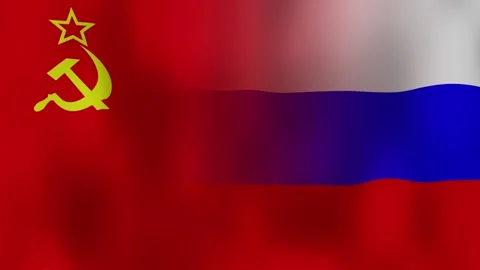
On December 26, 1991, the Soviet Union officially ceased to exist, marking one of the most dramatic geopolitical shifts of the 20th century. The red flag that once flew over Kremlin buildings were lowered for the last time, and a state that had been forged through revolution, war, ideology, and repression disappeared overnight. In its place rose fifteen new nations—each grappling with independence, identity, and their own political futures—while Russia, the USSR’s largest and most powerful successor, began a new chapter marked by turbulence, ambition, and global confrontation.
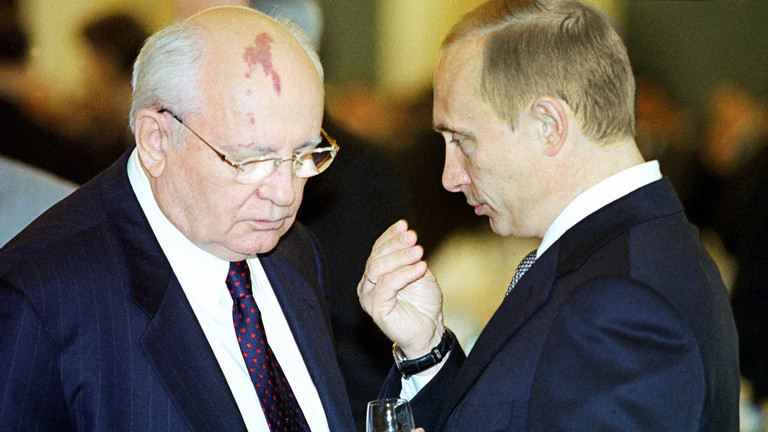
The collapse of the Soviet Union was neither sudden nor entirely unexpected. The decline had its roots in decades of economic stagnation, over-centralization, and the burdens of a prolonged arms race with the West. By the early 1980s, the Soviet economy was failing to meet even basic needs. Mikhail Gorbachev’s rise to power in 1985 brought hope for revitalization. With his twin policies of perestroika (economic restructuring) and glasnost (political openness), Gorbachev aimed to modernize the Soviet system. He loosened censorship, allowed greater personal freedoms, and introduced elements of market economics—all of which challenged the very foundations of the Soviet regime. But the same reforms that aimed to save the system ended up accelerating its demise. The political liberalization emboldened independence movements across the republics, and economic changes unleashed inflation and shortages.
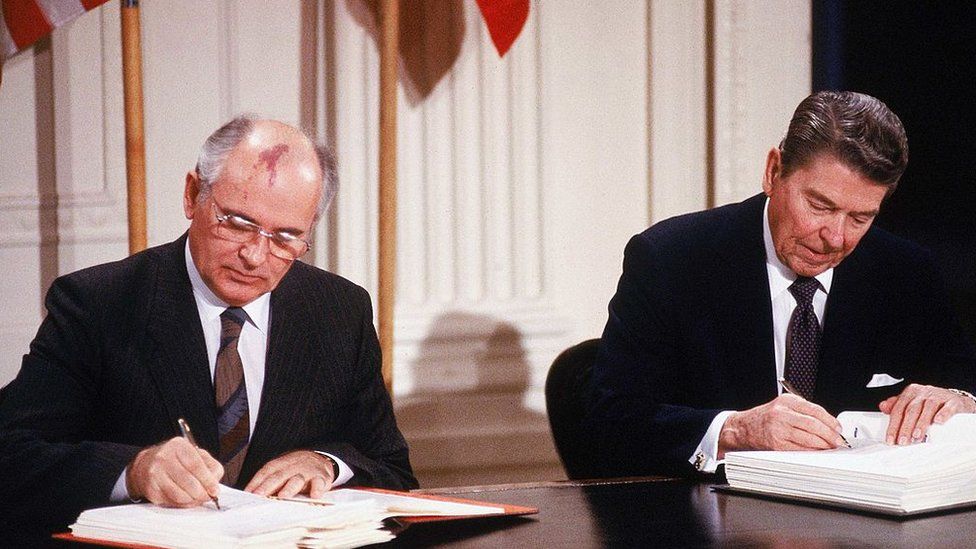
Gorbachev also revised foreign policy through what became known as “New Political Thinking,” which emphasized diplomacy, cooperation with the West, and de-escalation of nuclear tensions. This led to historic arms control treaties, such as the 1987 INF Treaty and the 1991 START I Agreement. He renounced the Brezhnev Doctrine, effectively allowing Soviet satellite states in Eastern Europe to determine their own political futures. As a result, between 1989 and 1990, one communist regime after another fell across Eastern Europe. The most iconic moment of this shift came with the fall of the Berlin Wall in November 1989.
One of the defining moments that followed was German reunification. West German Chancellor Helmut Kohl negotiated with both the United States and the Soviet Union to unify East and West Germany under NATO’s umbrella. During these discussions, U.S. officials—including Secretary of State James Baker—gave verbal assurances that NATO would not expand “one inch eastward” beyond unified Germany. While these promises were not codified in a binding treaty, they were widely interpreted by Soviet leaders as a gentleman’s agreement. In the years that followed, the meaning and relevance of those assurances became a matter of deep dispute, especially as NATO later expanded to include former Soviet allies and republics.
By 1990, Gorbachev’s reforms were losing traction domestically. A New Union Treaty was drafted to preserve the USSR as a looser federation of republics, but hardliners opposed to decentralization launched a coup in August 1991. Though the coup failed, it dealt a fatal blow to Gorbachev’s authority and emboldened the independence movements already gaining strength across the republics. The most decisive break came in Ukraine. On December 1, 1991, over 90% of Ukrainians voted in a referendum to secede from the USSR. Shortly thereafter, on December 8, the leaders of Russia (Boris Yeltsin), Ukraine (Leonid Kravchuk), and Belarus (Stanislav Shushkevich) signed the Belovezha Accords, declaring the Soviet Union effectively defunct and establishing the Commonwealth of Independent States (CIS). Gorbachev, now sidelined, resigned on December 25, and the Soviet flag was lowered from the Kremlin the same day.
The end of the Soviet Union produced fifteen new independent states: Armenia, Azerbaijan, Belarus, Estonia, Georgia, Kazakhstan, Kyrgyzstan, Latvia, Lithuania, Moldova, Russia, Tajikistan, Turkmenistan, Ukraine, and Uzbekistan. These republics had been part of the USSR, but most had maintained formal republican structures and ethnic identities, which now served as the basis for statehood. While the Soviet constitution allowed for secession, the actual process was a complex mix of public referendums, elite negotiations, and—at times—power struggles. Leaders such as Yeltsin in Russia, Kravchuk in Ukraine, and Nazarbayev in Kazakhstan played pivotal roles in declaring sovereignty and pushing for recognition. Not all transitions were smooth. Moldova faced separatist tensions in Transnistria, Georgia grappled with breakaway regions, and Central Asia navigated authoritarian consolidation and ethnic complexities.
While the United States and Europe welcomed the peaceful end of the Cold War, they also began reimagining their strategic frameworks. NATO, originally formed to counter Soviet influence, found itself without a clear enemy. Through initiatives like the Partnership for Peace in 1994 and subsequent waves of expansion, NATO welcomed Poland, Hungary, and the Czech Republic in 1999; then the Baltic states, Bulgaria, Romania, Slovakia, and others in 2004; and later Albania, Croatia, and Montenegro. These moves were seen by many new members as essential guarantees of sovereignty and protection. But in Russia, NATO’s eastward expansion was interpreted as a betrayal of the post-Cold War understanding. For many Russians, it felt like the West was exploiting their country’s weakness during a time of transition.
In the 1990s, Boris Yeltsin’s Russia initially pursued cooperation with the West. It joined international institutions, adopted market reforms with the help of Western advisors, and engaged with NATO through the NATO-Russia Founding Act. But the results were mixed. The shock therapy economics advised by Western institutions led to hyperinflation, a collapse in living standards, and the rise of a corrupt oligarch class. The 1990s became a time of humiliation and hardship for many Russians, and a sense of betrayal took hold—fed by memories of Western intervention in Serbia during the Kosovo conflict, which occurred without UN approval and over Russian objections.
When Vladimir Putin assumed the presidency in 2000, he inherited a country still recovering from economic collapse and social instability. His early years focused on centralizing power, restoring economic order, and projecting strength abroad. Under Putin, Russia began to reassert itself as a major regional and global player. NATO’s support for Georgia and Ukraine’s eventual membership aspirations were perceived in Moscow as existential threats. In 2008, Russia invaded Georgia, occupying two separatist regions. In 2014, following Ukraine’s Euromaidan revolution and its pivot toward the West, Russia annexed Crimea—a move condemned by the international community—and supported separatist forces in eastern Ukraine.
Russia’s modern foreign policy, particularly under Putin, is shaped by the belief that the post-Soviet order was rigged against it. Many Russian officials cite NATO’s expansion and Western backing of color revolutions as proof of encirclement and interference. Conversely, Western leaders argue that the alliance is voluntary and defensive, with new members freely choosing integration. The debate over broken promises, mutual misinterpretations, and diverging visions of European security continues to define East-West relations to this day.
The story of the Soviet collapse and the rise of modern Russia is not one of good versus evil, nor of inevitable outcomes. It is a tale of reform and resistance, of diplomacy and miscalculation, of nations seeking self-determination and a global order still struggling to accommodate competing legacies. The dissolution of the USSR unleashed enormous potential—but also unresolved tensions. Today’s geopolitical rivalries—from NATO’s role in Europe to Russia’s war in Ukraine—can only be fully understood in light of those transformative years between 1985 and 1991, when the world map changed and the old rules ceased to apply.