

 NP
NP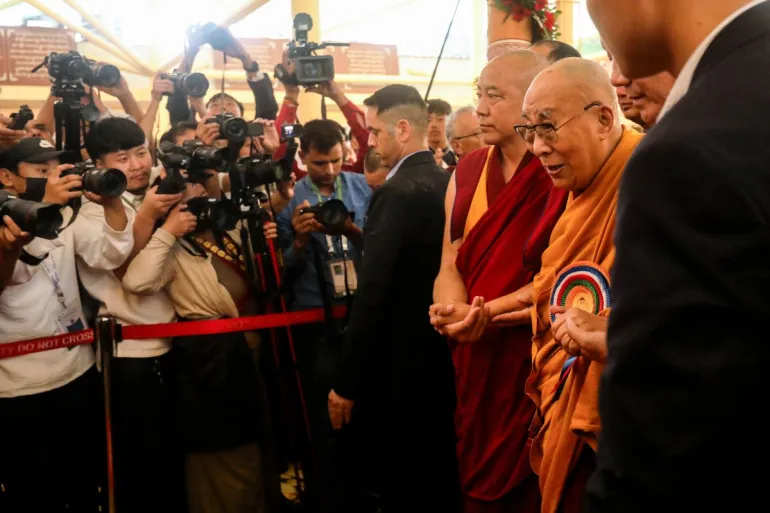
The Dalai Lama confirmed on Wednesday that he will have a successor to carry on the role of spiritual leadership to Tibetan Buddhists, in a statement issued during continuing celebrations to mark his 90th birthday.
He said that leaders of Tibet’s spiritual traditions, members of the Tibetan parliament and government in exile, both of which are in the Indian district of Dharamshala, and Buddhists from around the world, including mainland China and Tibet, had written to him, requesting that the institution continue.
“In accordance with all these requests, I am affirming that the institution of the Dalai Lama will continue,” he said.
His statement, issued at a time when Buddhist scholars and revered monks from around the world have converged on McLeodganj town in Dharamshala, where the Dalai Lama lives, to participate in the 90th birthday celebrations. The town, also known as “Little Lhasa” because it is in effect the capital of Tibetan Buddhists in exile, will also host an intense three-day religious conference that the Dalai Lama will preside over.
But the occasion isn’t only religious. How the next Dalai is chosen, and by whom, carries deep geopolitical significance.
For centuries, Tibetan Buddhist leaders have chosen and enthroned a new Dalai Lama only after an intense quest and subsequent schooling after the incumbent passes away. If the current Dalai Lama, the 14th, offers any more details in the coming days about how his successor might be chosen, or whom it might be, that would represent a dramatic break with tradition.
What he says, and doesn’t say, will be closely watched in Washington, New Delhi and Beijing.
The Dalai Lama, a Nobel Peace Prize laureate who fled Tibet for India in 1959, is seen as a separatist by Beijing. India, as his host for 66 years, has deep stakes in the future of the institution of the Dalai Lama, who has known every Indian prime minister since the country gained independence. And the United States, which has long cited the Tibetan movement in exile as evidence of China’s human rights excesses, will want to make sure that the glue that binds it all – the institution of the Dalai Lama – continues.