

 NP
NP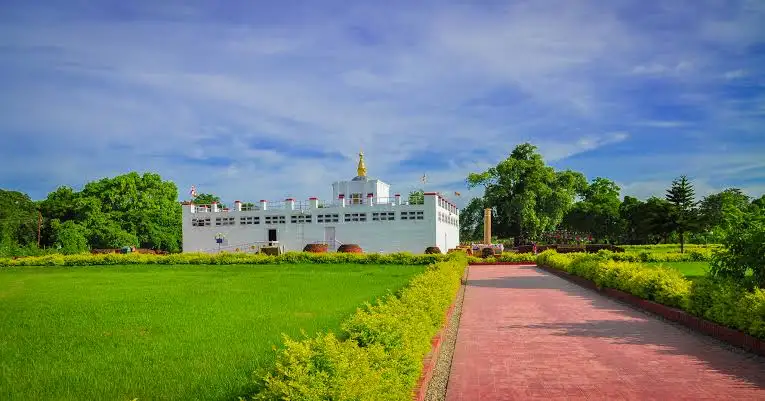
Lumbini — The World Heritage Site Lumbini has been removed from UNESCO’s List of Potential Danger. The 47th session of the UNESCO World Heritage Committee, which is being held in Paris, France, has decided not to keep it on the list of danger for a year as conservation-friendly and improvement work is underway.
The decision was taken at a meeting held on Thursday under the chairmanship of Bulgarian Professor Nikolay Nenov. UNESCO has also decided to send a reactive monitoring mission to Lumbini to understand the overall condition of Lumbini.
The report submitted by this mission after on-site observation will be used to decide whether Lumbini will be included in the list of danger again, said Gyanin Rai, Senior Director of the Lumbini Development Fund, who participated in the session. Earlier, the World Heritage Center and ICOMOS had sent a reactive monitoring mission to Lumbini in 2022, involving heritage expert Rolen Lin and Professor Kariya, and had placed Lumbini on the list of potential threats in 2024 based on the report.
During the 46th session of the UNESCO World Heritage Committee held in Delhi last July, India’s amendment proposal was not immediately included in the list of threats when it was discussed why Lumbini should not be included in the list of threats. However, the UNESCO World Heritage Committee had sent a 12-point decision and directive through the Nepali Embassy in France, incorporating the proposals, issues raised, queries and suggestions made by Nepal during the discussion on Lumbini.
Sanuraja Shakya, Member-Secretary of the Lumbini Development Fund, said that it was a positive decision to submit the SOP report by absorbing these points, reforming, protecting, creating legal clarity and policy. ‘We have worked by including all the issues,’ he said, ‘This has yielded good results. Now we will continue the conservation-friendly work.’
UNESCO has positively welcomed the creation of an integrated management framework (IMF) to protect and manage the heritage of Lumbini and the creation of various sector strategies (fragmented strategic plans) in the World Heritage Area to implement it. The sector strategy has been made covering five topics: archaeology, visitor management, natural disasters, local development and the Buddhist community.
The 47th session of the UNESCO World Heritage Committee is underway in Paris from July 6 to 16. The session will end next Wednesday.