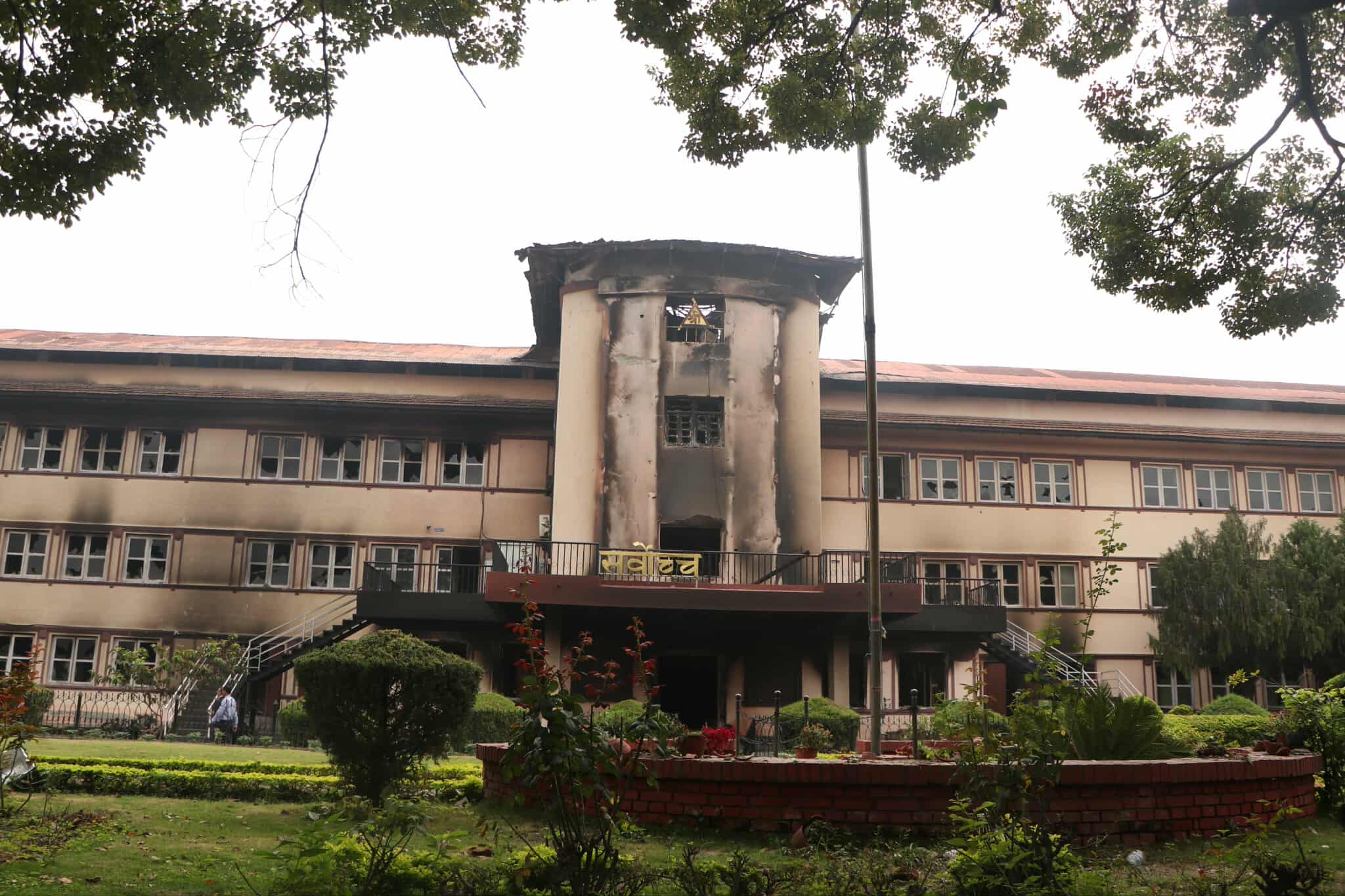
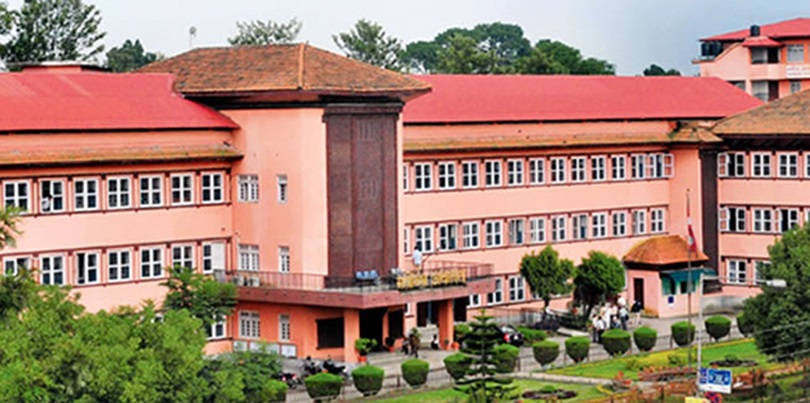
SC to hear habeas corpus petitions during Dashain holidays

Kathmandu – The Supreme Court will remain open during the Dashain holidays to hear habeas corpus petitions. According to the court administration, hearings will take place from 11 a.m. to 3 p.m.

The court stated that, except on Ghatasthapana, Vijaya Dashami, Kojagrat Purnima, and Saturdays, habeas corpus petitions will be accepted and heard throughout the Dashain period.

A notice issued by the court clarified that under Section 26 of the Judicial Administration Act, 2016, hearings on such petitions will continue during the holiday period on the mentioned schedule.

SC rejects petition filed against decision to ban social media

Kathmandu – The Supreme Court has rejected the petitions filed against the government’s decision to ban social media platforms. According to Supreme Court spokesperson Arjun Prasad Koirala, a total of 10 petitions were filed, all of which were dismissed.

The registrar of the Supreme Court dismissed the petitions by referring to a previous order issued in the case against SidhaKura.com. Lawyers, however, are preparing to file another petition challenging the rejection decision.

Supreme Court Turns Down Writ Against Ex-Chief Justice Rana

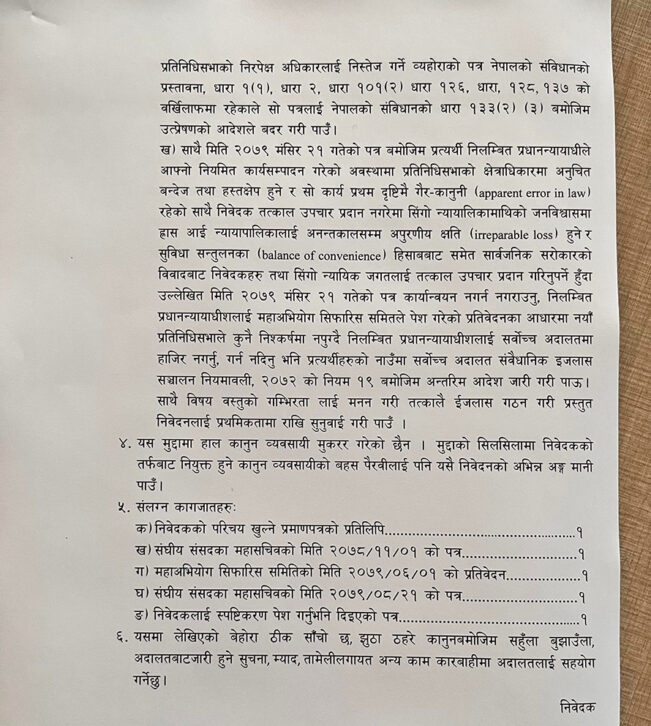
Kathmandu- The Supreme Court has refused to register a writ petition filed against former Chief Justice Cholendra Shamsher Rana. Advocate Yagyamani Neupane had filed the petition on Wednesday, arguing that Rana had refused to sign the verdict on the case against the dissolution of Parliament.

In Friday’s order, Registrar Man Bahadur Karki stated that preparing and authenticating a verdict is part of the judicial process, and therefore, the petition could not be filed under the court’s extraordinary jurisdiction. Citing Section 128 of the Civil Procedure Code 2017 and Rule 18 of the Supreme Court Regulations 2017, the court returned the petition.

On December 20, 2020, then–Prime Minister KP Sharma Oli dissolved the House of Representatives for the first time. On February 23, 2021, the Constitutional Bench led by then Chief Justice Rana annulled the dissolution.

Although the full text of the verdict was prepared and signed by the other justices, Rana refused to sign, preventing its publication. Neupane’s petition had also requested an interim order to ensure that Rana did not obstruct the preparation and authentication of the verdict.

SC Verdict: Coalition’s Fall Doesn’t Mandate PM Appointment from Largest Party

Kathmandu – The Supreme Court of Nepal has ruled that there is no constitutional obligation to automatically appoint the leader of the largest party in Parliament as Prime Minister following the fall of a coalition government.

The Court rejected the argument that a change in coalition dynamics must immediately trigger the process under Article 76(3) of the Constitution. Instead, it clarified that Article 76(2) can be applied multiple times, and the departure of one coalition partner does not necessarily require initiating a new government formation process.

This verdict was in response to demands that Nepali Congress President Sher Bahadur Deuba be appointed Prime Minister after then-Prime Minister Pushpa Kamal Dahal (Prachanda) lost a vote of confidence due to the withdrawal of support by the CPN-UML. Subsequently, President Ram Chandra Paudel had called for a new government under Article 76(2) and appointed KP Sharma Oli as Prime Minister.

The constitutional bench of the Supreme Court issued an interpretation aimed at clarifying future uncertainties in government formation, affirming that even if a coalition collapses, the President is not bound to move directly to Article 76(3). Rather, the President may again invoke Article 76(2) to invite parties to form a new majority-backed government.

Supreme Court order to end hassle of National Identity Card in public service

Kathmandu- The Supreme Court has issued a three-point directive order in the name of the government, dismissing the writ petition filed against the government’s decision to make the national identity card mandatory in a phased manner.

On 24 Jestha, 2081, the government had decided to make the national identity card mandatory for renewal of social security allowance in 28 districts from 1st Shrawan in the first phase. In the second phase, it had decided to make the national identity card mandatory in 38 districts from 1st Magh and in all the remaining districts from 1st Shrawan in the second phase. Five writ petitions were filed in the Supreme Court against that decision. The Supreme Court, putting all the writ petitions together, issued the order by a full bench of Chief Justice Prakash Man Singh Raut, Justice Abdul Aziz Musalman and Nripadhwaj Niraula.

The Supreme Court has ordered the government to expedite the distribution of national identity cards at points near the citizens’ residences. In the directive order, the Supreme Court said, “The hassle, inconvenience and difficulty faced in the delivery of public services due to the lack of a national identity card should be ended.”

Court has ordered the establishment of stations for the collection and distribution of national identity card details in public service delivery bodies.

The Supreme Court has ordered the scientific recording of national identity card details to prevent unauthorized use or misuse of personal information. The Supreme Court has also ordered the National Identity Card Management Information System and other bodies that provide services using the National Identity Card or Identity Card number to conduct a security audit and secure the electronic details of individuals. The Supreme Court has also ordered the development of policy, legal, and structural arrangements to ensure the protection of privacy.

SC Orders to regulate telecom companies effectively in accordance with the law

Kathmandu: The Supreme Court has issued a directive order in the name of the Telecommunications Authority to regulate all persons, including companies licensed as telecommunications service providers, effectively in accordance with the law.

On the writ petition filed by House of Representatives member Amaresh Kumar Singh claiming that Ncell did not obtain the permission or approval of the Nepal Telecommunications Authority before buying, selling or transferring five percent of the paid-up capital shares as per the Telecommunications Regulations, a joint bench of Justices Sapana Pradhan Malla and Tek Prasad Dhungana issued the summary order in the name of the authority. The writ petition made Ncell Agency, Nepal Telecommunications Authority, Spectrolite, a British company owned by Shatislal Acharya, Sunivera Capital Ventures, the Office of the Prime Minister and Council of Ministers, among others, as respondents.

The Supreme Court has issued a directive order stating that the share structure of ncell, which has foreign investment, has changed repeatedly, and some serious problems and trends have emerged regarding the conditions and procedures to be followed by the licensed person and the regulation of the regulatory body when buying and selling shares in the country and abroad. The order states that it is necessary to issue some instructions to the concerned parties to enhance clarity and effectiveness in the operation and regulation of companies with foreign investment in the coming days.

Businessman Acharya’s company had earlier purchased 80 percent of ncell’s shares. Similarly, 20 percent of ncell’s shares were purchased and sold in the name of Sunivera Capital Ventures, which is in the name of Acharya’s wife Bhavana Singh. A writ was filed demanding that the agreement to sell shares at a low price with the intention of evading taxes without complying with the laws of Nepal be rejected while buying and selling the shares. The Supreme Court has issued a directive order despite ruling to dismiss the writ petition. The order states, “Ncell Axiata Limited has been issued a directive order to operate the service in a transparent and lawful manner by strictly complying with the Telecommunications Act, 2053, Telecommunications Regulations, 2054, and the Nepal Telecommunications Authority (Purchase and Sale of Shares by Licensees) Regulations, 2076, and the terms and conditions of the license,” the order states, “A directive order has been issued in the name of the Telecommunications Authority to effectively regulate all licensees, including Ncell, as per the law.” It was also decided that the share sale agreement between Axiata Investments, (UK), and Spectralite (UK) Limited was not submitted for prior approval, the Authority had even sent repeated correspondence and that approval could not be given as it was. In a writ petition filed against Ncell, including the Large Taxpayers’ Office, the Supreme Court’s full bench had held that Ncell had acted contrary to the principle of full disclosure and had not submitted the required documents.

SC orders to send writ against appointment of PM to Constitutional Bench

Kathmandu – The Supreme Court has ordered that the decision of the writ petition against the appointment of UML Chairman KP Sharma Oli as the Prime Minister according to Article 76 (2) of the Constitution should be decided by the Constitutional Council and the dispute over the appointment of the Prime Minister should be sent to the Constitutional Bench.

The bench of Supreme Court Judge Balkrishna Dhakal has ordered that the writ to appoint Oli as the Prime Minister should be decided by the constitutional bench.

Three writs were filed claiming that the appointment of Oli as the Prime Minister according to Article 2 was unconstitutional. After the Prime Minister made by Article 76 (2) of the Constitution of Nepal failed to receive a vote of confidence the selection of a new PM should have been automatically moved according to Article 3.

Judge Dhakal’s bench said that Oli was appointed as the Prime Minister and the writ filed against him has a serious constitutional interpretation, so it was ordered to send the writ to the constitutional bench.

Supreme Court’s order to remove riverside settlements

Kathmandu- The Supreme Court has ruled on the issue of squatter settlements along the banks of rivers in Kathmandu Valley, which has been disputed for a long time, and has ordered the removal of the settlements built by encroaching government land along the river banks.

Supreme Court Judge The bench of Dr. Anand Mohan Bhattarai and Binod Sharma gave a decision to remove the settlements built by encroaching government land on the banks of the river.

The full text of the Supreme Court’s decision on the writ filed by, Advocates Prakashmani Sharma, Narayan Prasad Belbase, Rama Pant Kharel Kavita Pandey, Sharmila Shrestha, and Alok Pokharel on 9th Baisakh 2068 BS on behalf of the Public Interest Protection Forum has been published. Writ was filed against the Office of the Prime Minister and the Council of Ministers, the Chief Secretary, the Empowered Bagmati Civilization Integrated Development Committee, the Ministry of Physical Planning and Construction, the Ministry of Local Development and the Chief District Officers of Kathmandu, Lalitpur, and Bhaktapur .

In the judgement, it has been directed to identify the real homeless and remove the encroached settlements in a phased manner. Real homeless residents who are forced to live without alternatives should be identified and transferred to the housing currently built in Ichangunarayan, if it cannot be managed there, arrangements must be made elsewhere and in the case of real homeless people who do not have an immediate alternative arrangement, taking into consideration the right to residence guaranteed by Article 37(1) of the Constitution of Nepal, Court has issued an order to remove the encroachment by providing cash as immediate relief to facilitate the relocation.

Similarly, for the protection of river areas, it has been ordered to allow construction of structures only by leaving 40 meters of land in the case of large rivers and streams in the valley such as Bagmati and Bishnumati. Earlier in the year 2065, the Council of Ministers decided to leave only 20 meters area in the big rivers. It has been said that 20 meters more should be left in the river where it was said that 20 meters should be left earlier.

There is also an order of the Supreme Court to leave 20 meters in the rivers and streams which had not been demarcated before. It has also ordered not to allow the construction of any structure on the land within the river boundary.

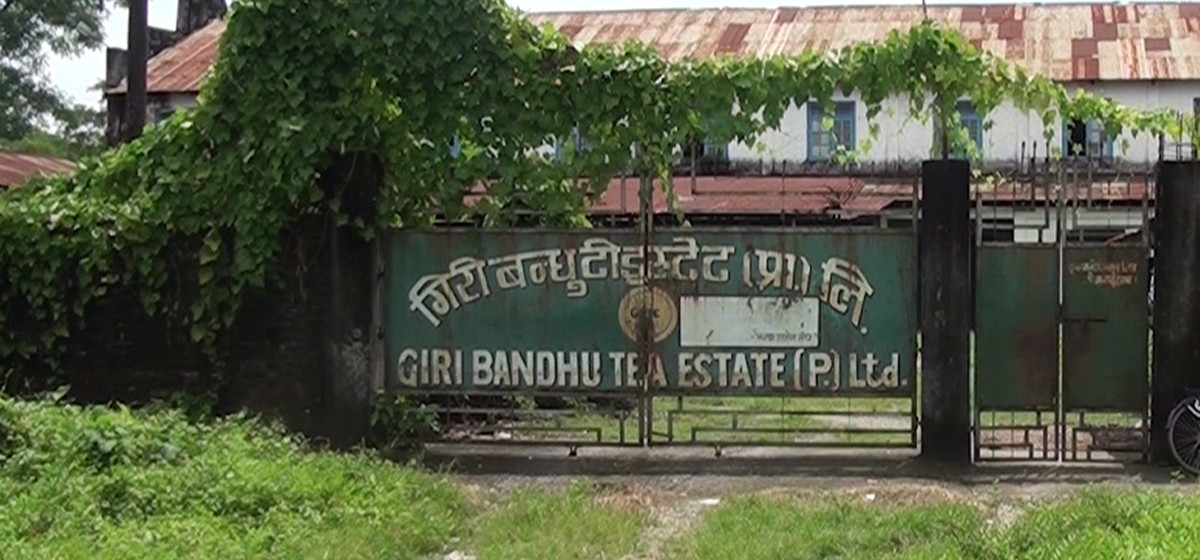
SC orders to stop the land selling of Giribandhu Tea Estate

The Supreme Court has put a full stop to the attempt to sell the land worth billions of Giribandhu Tea Estate in Jhapa .

Supreme Court ordere to stopped the selling process of the land of the tea state, stating that the ammendment of the land reform acts made by the then KP Oli-led government were not favorable to the legal provisions.

In this case, which is considered to be political corruption, the Constitutional Bench of the Supreme Court has given an order to confiscate more land than the limit. The writs filed by Advocate Omprakash Aryal, Bhaktaraj Bharti and Omprakash Mishra on different dates were heard simultaneously by the Constitutional Bench and gave the verdict.

The bench headed by Chief Justice Vishwambhar Prasad Shrestha has quashed the government’s decision and all the actions taken in accordance with it. In the summary order issued by the bench of Justices Ishwar Prasad Khatiwada, Prakashmansingh Raut, Sapna Pradhan Malla and Sushmalta Mathema, it is said that, ‘Controversial decision granting approval to Giribandhu Tea Estate Pvt. Ltd. to sell 343-19-12 bigha of land under Land Act, 2021 will be invalidated as it does not appear to be in accordance with the legal provisions including Section 12(c) and is of an immature nature.’

SC orders to present documents in marital rape case against Judge Giri

Kathmandu – Supreme Court has ordered to present the order passed by the Patan High Court in the marital rape case filed against the suspended District Judge Bhuvan Giri.

The bench of Chief Justice Ishwar Prasad Khatiwada and Judge Sunil Kumar Pokharel has ordered to present the documents in the case . The then judge of Rupandehi District Court, Bhuvan Giri, was ordered not to be detained by the High Court in the marital rape case.

Giri was ordered to be released on bail in the rape case filed in the Kathmandu District Court in that dispute. Against the same order, his wife filed a petition in the Patan High Court.Giri’s wife approached the Supreme Court after the Patan High Court upheld the order of the Kathmandu District Court.

Prachanda acquitted in contempt of court case

Kathmandu: The Supreme Court acquitted Prime Minister Pushpa Kamal Dahal Prachanda in the contempt of court case and clarified that the court will not act with any prejudice or revenge.

After the Supreme Court acquitted the writ petition filed by senior advocate Dinesh Tripathi, the full text of the verdict has been made public. A joint bench of Judge Ishwar Prasad Khatiwada and Kumar Regmi acquitted Prime Minister Dahal in the contempt case .

Dahal, who is also the chairman of the CPN Maoist Center, iexpressed that “the court made a terrible conspiracy against the peace agreement while making the decision on the case regarding the maoist insurgency “. Aiming at Dahal’s statement, the full text of the Supreme Court says, “The court does not become reactive by nature, the court does not act with any bias or revenge.” It works to guide the darkness existing in the society towards the light by showing the light of justice.’

“It is not reasonable to automatically consider someone’s expression as a matter of contempt of court on the basis that it is indecent or provocative,” the full text says, “it needs to be viewed according to the subject and context.” It did not seem sensible to consider it as a contempt of court and make it a subject of punishment. It does not seem reasonable to form a judicial opinion by considering the news published in a certain newspaper as the decisive reliable basis.

It is mentioned in the full text of the judgment that there is no credible, factual basis or evidence regarding Dahal’s statement, so that it can not be considered as contempt of court.

Attention of National Human Rights Commission to appoint judges including Chief Justice

Kathmandu- The Human Rights Commission, expressing its serious attention, has urged the government to fill the vacancies of judges immediately and move the judiciary forward competently.

Even though there is a provision that the Chief Justice can be recommended for appointment one month prior the vacancy, the government and the Constitutional Council have not done any homework regarding the recommendation of the Chief Justice and due to the failure on appointing judges in the courts for a long time, the commission is concerned about the impact on the constitutional right of the citizens on getting speedy justice.

In a statement issued by the National Human Rights Commission, the spokesperson of the commission, Dr. Tikaram Pokharel has drawn the attention of the government saying that due to the failure to appoint judges on time , it has created an obstacle in the judicial rights of all the citizens.

Currently, 53 judges in the High Court and 38 in the District Court are vacant, according to the Judicial Council. The number of pending cases in the Supreme Court, High Court and District Court is increasing when the post is vacant. Due to the lack of judges, the hearing of the case could not be done on time. There are currently 30,104 pending cases in the Supreme Court. More than 26,000 cases are yet to be heard in the High Court. Similarly 102,542 cases are pending in the district court.

According to the constitution , there is a provision to recommend the Chief Justice one month before the post of Chief Justice becomes vacant, but until now, even the meeting of the Constitutional Council has not been held regarding the matter of the recommendation of the Chief Justice. Chief Justice Karki, Speaker of the House of Representatives Devraj Ghimire, Speaker of the National Assembly Ganesh Timalsena, Leader of the Opposition KP Sharma Oli, Deputy Speaker Indira Rana are members of the Constitutional Council chaired by Prime Minister Pushpa Kamal Dahal ‘Prachanda’.

Chief Justice Harikrishna Karki is compulsorily retiring on 20th of Shrawan, 2080 BS. According to Article 284 (3) of the Constitution, there is a provision that the Constitutional Council can make a recommendation for the appointment of the Chief Justice one month before the post becomes vacant.

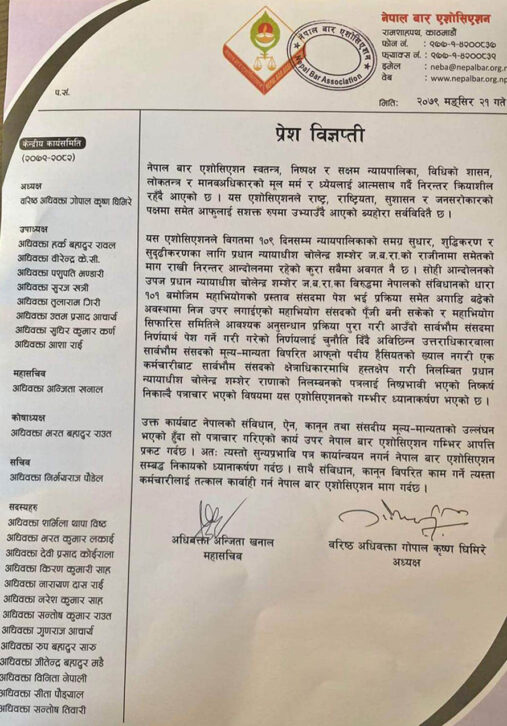
Jabara’s impeachment nullified: Bar Association on protest

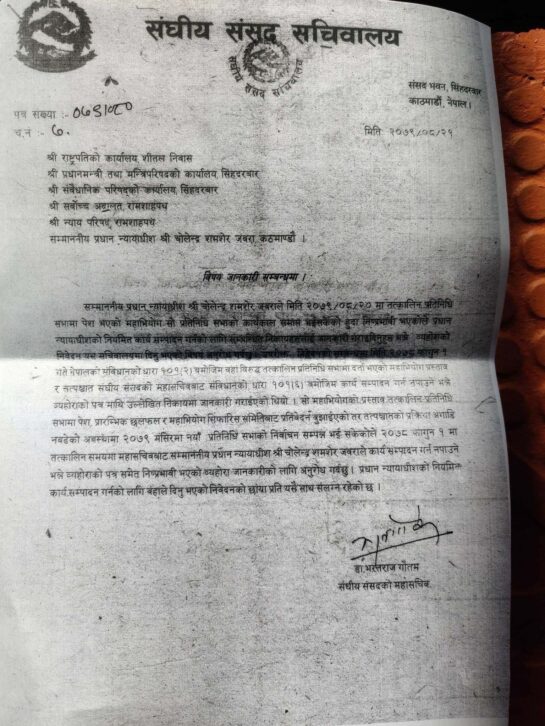
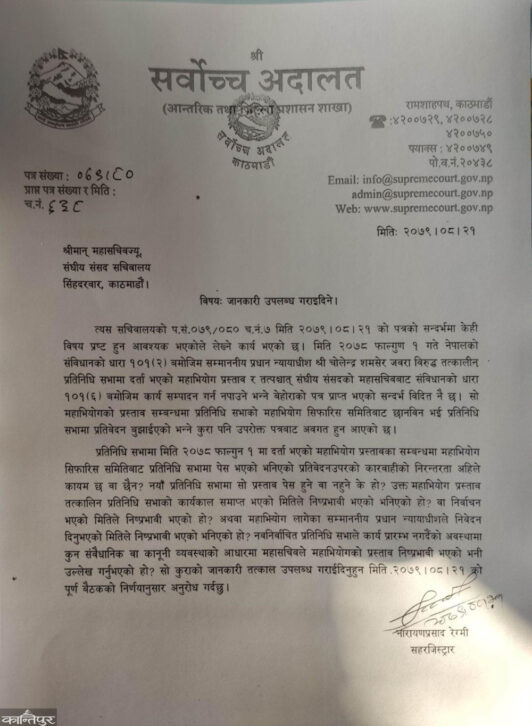
The general secretary of the Parliament Secretariat, Bharatraj Gautam, has issued a letter stating that the impeachment of the suspended Chief Justice Choldra Shamsher Jabara has become ineffective.

Meanwhile, the Supreme Court has issued instructions to the security agencies to stop Cholendra Shamsher Jabara, who is about to return to the Supreme Court after Bharatraj Gautam gave a letter that the impeachment was ineffective, and on the other hand, the employees of the Bar Association have staged a protest at the gate of the Supreme Court to stop him. The Supreme Court has questioned General Secretary Gautam about the letter and also asked for an explanation.

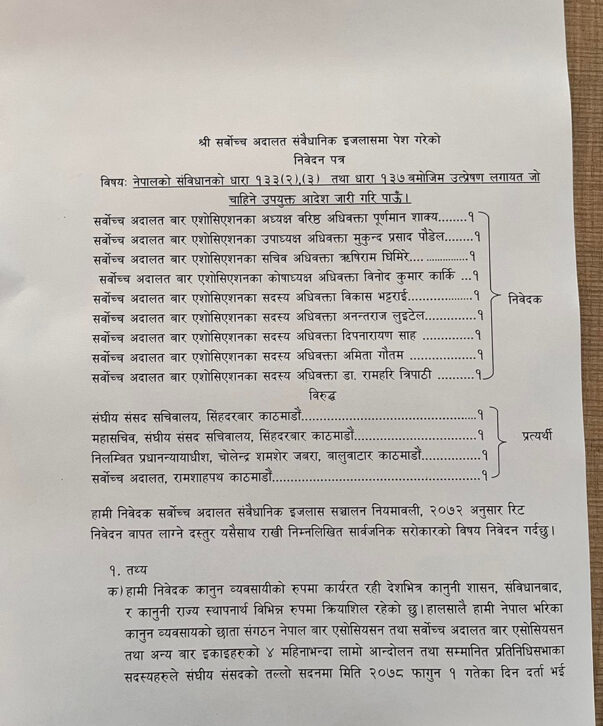
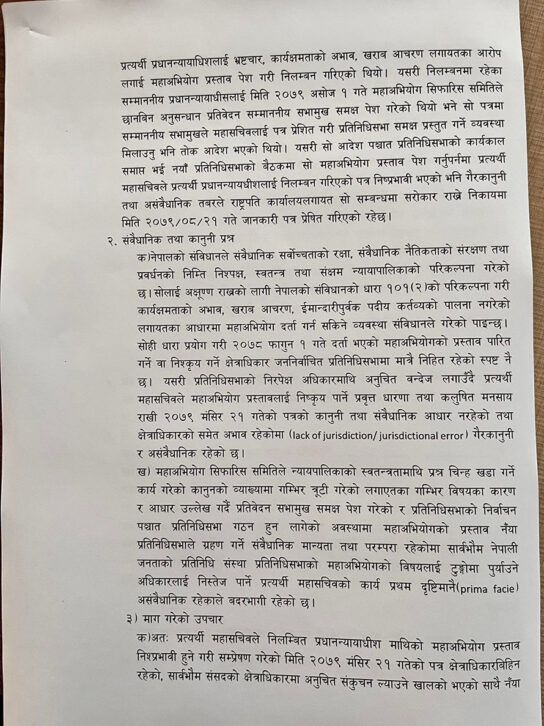
Bar Association President Purnaman Shakya and other officials have also submitted a writ petition to the Supreme Court saying that the letter given by the General Secretary of the Federal Parliament Bharatraj Gautam stating that the impeachment proposal against Chief Justice Cholendra Shamsher Jabara is ineffective is illegal.

Regarding the subject , Government Spokesman and Minister of Communication and Information Technology Gyanendra Bahadur Karki has said that the grand indictment against Chief Justice Cholendra Shamsher Jabara is still alive and the matter will be discussed in the upcoming House of Representatives.

Acting Chief Justice Deepak Kumar Karki on compulsory retirement

Acting Chief Justice Deepak Kumar Karki has gone on compulsory retirement from today.

Karki, who held the position of Acting Chief Justice for about 7 months, has gone on compulsory retirement due to the age limit of 65 years.

Due to the suspension of Jabara, Karki got an opportunity to lead the Supreme Court. With the departure of Deepak Karki, Supreme Court will be headed by Harikrishna Karki. Karki will become the Chief Justice on Mangsir 27, 2079 BS.

Supreme Court issued a show cause order to President’s Office

The Supreme Court has issued a show cause order in the name of the Office of the President while hearing a writ petition against the President’s action registered in the Supreme Court for not validating the Citizenship Bill.

A single bench of Justice Hari Prasad Phuyal ordered the President’s Office to submit reasons for not validating the Citizenship Bill. Five writ petitions against the President’s action were taken up together today.

Case against the President’s action in the bench of Justice Fuyal

A writ petition against the President’s action, which was registered in the Supreme Court for not validating the Citizenship Bill, has been submitted to the bench of Justice Hari Phuyal.

Five cases have been filed in the Supreme Court against President Bidya Devi Bhandari for not fulfilling her constitutional obligations. The writs, which have been filed together, have been placed at number 8 of Phuyal’s bench.

The petition filed by Advocate Sunilranjan Singh and Advocate Sagar Baral, Sunil Kumar Yadav, Dev Sharma and Sonu Rauniar has been filed together. In their registered petition, they demanded that a writ should be issued by the Supreme Court in the name of the President to validate the bill.

Petition filed in Court against the President’s move

A writ has been registered in the Supreme Court against President Bidya Devi Bhandari, saying that she violated the Constitution by not validating the Citizenship Bill.

Advocate Sunil Ranjan Singh has made the office of the President an opposition in the petition, demanding to verify the citizenship bill.

Stating that President Bhandari did not certify the Citizenship Bill as per the constitutional provision, Singh has demanded to rule out the decision of the President and issue an order to verify the bill.

Petition in Supreme Court: Demands to vacate the post of Speaker and Deputy Speaker

Advocate Kishore Paudel, Anupam Bhattarai, Jagannath Dulal and others have filed a writ in the Supreme Court, demanding to vacate the posts of Speaker and Deputy Speaker of the House of Representatives.

According to the provisions of Article 91 (6) (a) of the Constitution, the petitioner demands that the posts of the Speaker and the Deputy Speaker should be vacated as their posts remain in place until the day before the filing of nominations for the next election to be held for the House of Representatives.

They claim that since the parties have submitted a closed list for proportional MPs, retaining the posts of Speaker and Deputy Speaker is against the constitution. It has been demanded that service facilities should also be stopped until the final decision of the petition is made, as it will be an extreme misuse of resources if they remain in the post .

In order to prevent the Speaker and Deputy Speaker from abusing the resources and services received by the State until the end of the petition, an interim order should be issued in the name of the opponent in accordance with Rule 49 of the Supreme Court Rules, 2074 to prevent them from using the services provided by the State while they are in that position. ‘, the petition demanded.

Transfer of 224 District Judges

The Judicial Council has decided to transfer 224 district judges.

The council meeting held on Tuesday decided to transfer 224 district judges. Similarly, the council meeting held today also decided to publish notices for the appointment of 27 vacant judges in the High Court.
List of Judges being transfer: