Indra Jatra started in Kathmandu

Kathmandu’s famous Indra Jatra has started today.

This traditional cultural Jatra is celebrated for eight days, starting every year on the day of Bhadra Shukla Dwadashi in Hanumandhoka of Kathmandu. JATRA starts by worshipping Indra and ritually hoisting a lingo(ritual tree trunk) with the ritual flag on top of it.
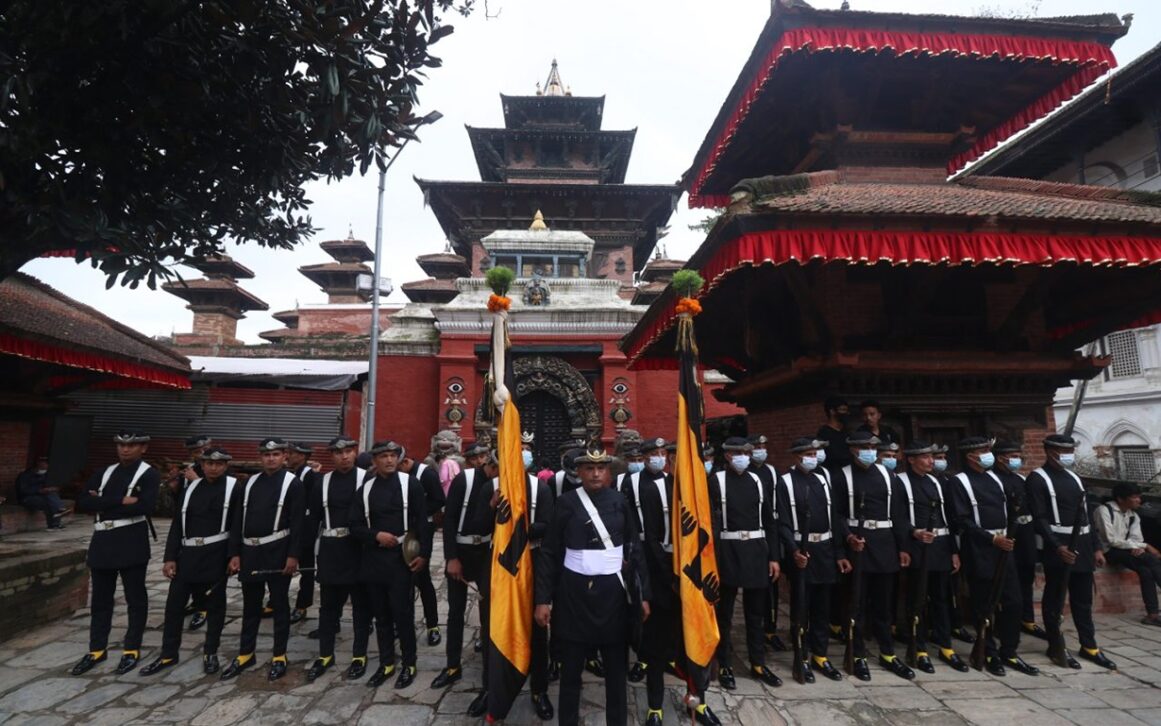
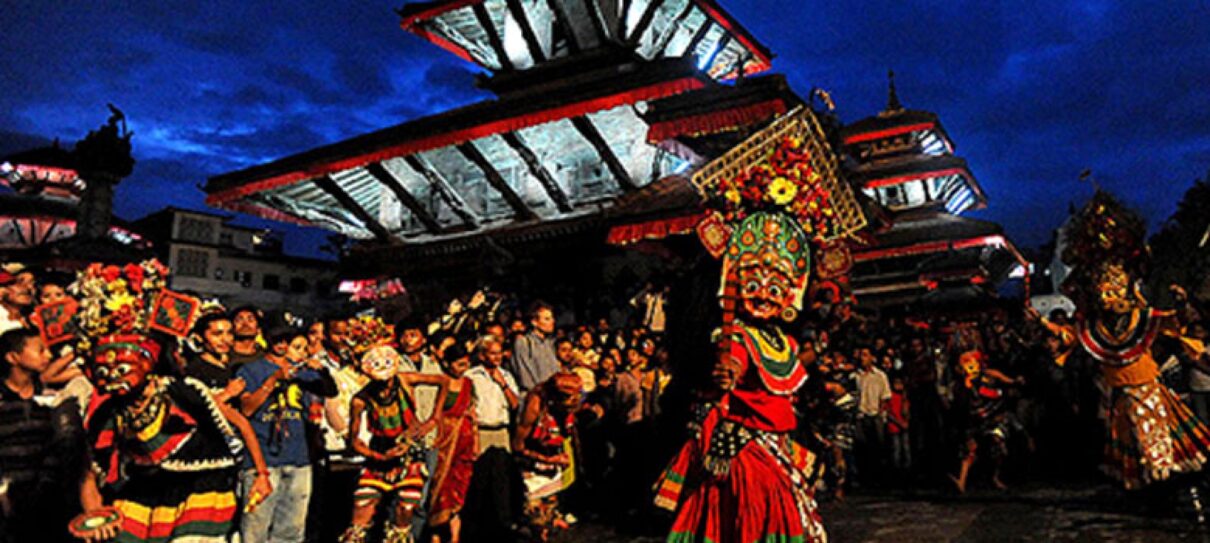
It can be seen that the method of Jatra celebration is also changing gradually as the generations pass over time. There are various stories about the beginning of Jatra in Nepali society. On the occasion of Indra Jatra, between Marusattal and Silyansattah in Marutol, a tall DABALI is built on top of four lions, and it is considered a symbol of Indra’s regime power. Indra Jatra is called ‘Yen Ya:’ in NEPAL BHASHA. ”Yen” means Kantipur city and ”Ya” means the main Jatra. During Indra Jatra, all the deities related to Indrajatra are also brought out for public display.
The Manandhar community has a tradition of picking up a lingo of 32 cubits length brought from the forest at Chitpol in Bhaktapur. In Hanumandhoka Durbar area, the lingo is ritually placed in front of the statue of Kalbhairav. The lingo is hoisted by firing cannons with traditional instruments, Guruju’s paltan and mangaldhun.

Indra is considered as the god of rain and season. The place of origin of this festival celebrated by the Newar community is considered to be Hanumandhoka palace area. This festival is celebrated for eight days by playing various instruments, dancing, singing and riding a chariot. Mainly the people of Newar community from Kathmandu,Bhaktapur and Lalitpur celebrate this occasion.

Yomari Punhi festival being celebrated today

Kathmandu- The Newar community is celebrating Yomari Purnima festival today in the joy of bring in of the newly harvested rice to home.

Yomari Purnima, celebrated on the full moon day of Margashirsha Shukla Purnima, is also called Yomari Punhi. This festival, which is celebrated as a major festival of the Newar community, is considered a delicious festival of food. Yomari is made from rice flour made from new rice, chaku (melted gajjery) and sesame seeds.

The women of the house are busy making Yomari from early morning today. After bathing and washing, it is customary to cook Yomari at home by wrapping it in a cloth. According to cultural expert the Newar community celebrates this festival as a new meal. Yomari is made with milk and is made into a ball with chaku(melted gajjery) and sesame seeds.

The Newar community celebrates Yomari Purnima by worshipping in the barn or kothi where rice is kept. It is also a tradition among the Newar community to send gifts of sesame seeds and knives to their homes as auspicious gifts while a girl is pregnant, wishing for the complete health of the child.

Dhanya Purnima being celebrated by worshipping rice

Dhanya Purnima is also being celebrated today by worshipping and donating rice in a ritualistic manner. After the rice is brought in in Mangsir, on Shukla Purnima, there is a tradition of worshipping rice, Ganesh, Kuldevata, Gaidu Devata, Goth Devata, Maharudra, Mahalakshmi and other deities.

Since Navannaprashan has not been done before, it should be done today, informed religious scholar Prof. Dr. Ramchandra Gautam. On this occasion, fairs are held at places such as Dhaneshwor in Kavrepalanchok, Anantalingeshwor in Bhaktapur, Champadevi in ​​Kathmandu, Shikharbesi in Nuwakot, and Dupcheshwor.