NP
NP
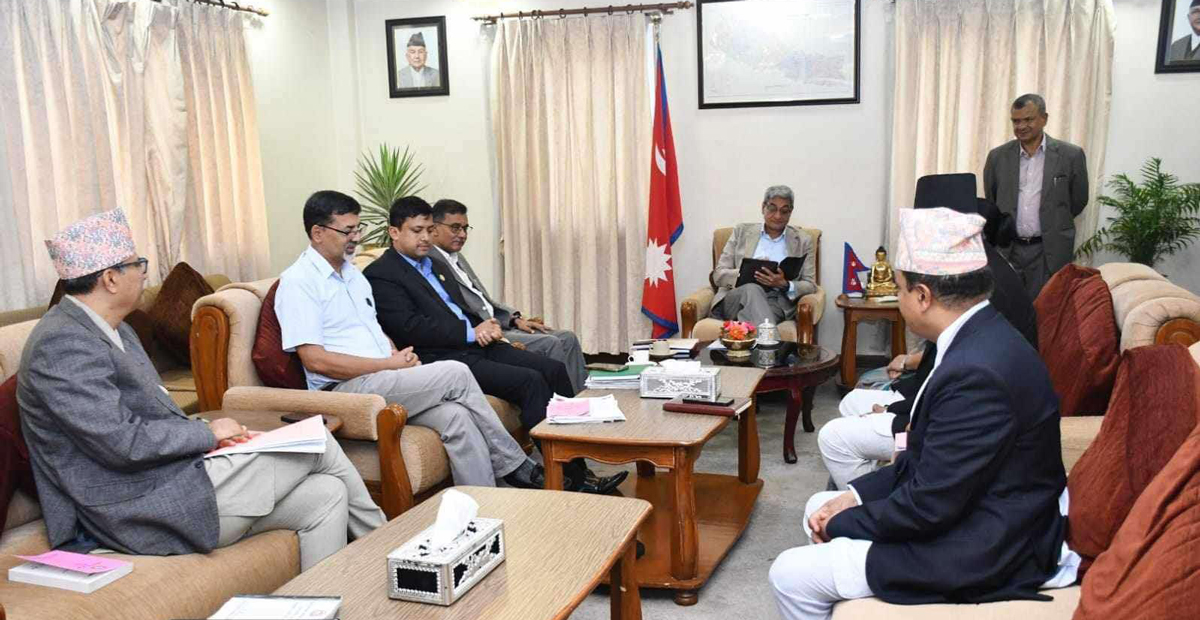
Kathmandu – Three international human rights organizations have written a letter to Prime Minister KP Sharma Oli urging him not to delay the transitional justice (TRC).
The letter, written by Asia Pacific, Amnesty International and Human Rights Watch International Commission of Jurists, urges him to move forward with the selection of office bearers for the transitional justice commissions, the Truth and Reconciliation Commission and the Commission of Investigation on Enforced Disappearances.
The letter to Prime Minister Oli has been addressed to the main opposition party, CPN-Maoist Center Chairman Pushpa Kamal Dahal Prachanda, and the main ruling party, Nepali Congress President Sher Bahadur Deuba.
THIS IS THE LETTER BY HRW:
The Right Honourable Prime Minister K.P. Oli
Chairperson, Communist Party of Nepal (Unified Marxist–Leninist)
17 December 2024
Subject: Appeal for Credible Appointments to the Transitional Justice Commissions
Dear Right Honourable Prime Minister,
We are writing with regard to Nepal’s transitional justice process on behalf of Amnesty International, Human Rights Watch, and the International Commission of Jurists, international human rights organizations that have, together with Nepali partner organizations, worked to protect human rights in Nepal over the course of decades.
Since the end of hostilities in Nepal’s internal armed conflict in 2006, the quest for truth, justice and reparations for conflict victims has faced significant obstacles, undermining the rule of law and eroding public trust in state institutions. Nineteen years later, a consensus among political parties on amending transitional justice laws has finally emerged, sparking cautious optimism. We have publicly commended this consensus and acknowledged the positive provisions in the amended law. Despite the law’s shortcomings, appointing competent, impartial, independent, and widely trusted individuals to the commissions can help to ensure a successful process.
It is often and rightly said that this is and must continue to be a Nepali-led process. The Government of Nepal has a duty to ensure an effective and just outcome to Nepal’s transitional justice process, that ensures victims and survivors have access to justice and reparations for violations and abuses suffered . This obligation arises from the principles and commitments enshrined in Nepal’s Constitution, the Comprehensive Peace Agreement, Supreme Court rulings, and Nepal’s international human rights obligations.
The process to appoint members to the Truth and Reconciliation Commission and Commission of Investigation on Enforced Disappeared Persons is challenging. .On 16 December 2024, the two months allotted to the Recommendation Committee to select candidates expired without the process being successfully completed, and the committee recommended that the government form a new recommendation committee. The Committee earlier published a shortlist of candidates which drew significant objections from conflict victim communities and other members of civil society. In a press release dated 7 December 2024, over two dozen victims’ and survivors’ groups expressed concerns, stating that “the list appears to favour individuals with contentious reputations for key positions. This threatens the opportunity to meaningfully resolve transitional justice issues.” They called for the Recommendation Committee to consult with individuals excluded from the shortlist, include their names, and ensure the selection process is impartial, transparent, and competitive. In our view, the process must aim at selecting members on the basis of their competence in human rights and other relevant areas of international law, proven independence and recognized impartiality, and reflecting gender balance and a pluralist representation of society.
Similarly, on 9 December 2024, two former members of the National Human Rights Commission, along with a senior journalist and human rights advocate, issued a press note criticizing the Recommendation Committee for disregarding long-standing demands to appoint knowledgeable and credible individuals trusted by victim communities. They expressed their “strong objection” to the current shortlist and warned that “neither commission will have credibility” and “cannot expect cooperation from the human rights and conflict victim communities” if they are led by the shortlisted candidates. They have also called for the annulment of the current shortlist and the initiation of a new, more inclusive process.
It is evident that the Recommendation Committee’s work is expected to meet standards of independence and impartiality, inclusivity, transparency, and participation. We urge the Government to form the new committee without delay to revisit this approach, addressing the concerns raised by victims, survivors, Nepali civil society, and international organizations. Competency, integrity, and public trust in the commissioners is essential for the commissions to deliver their important mandates as envisioned in the law. We call on the Honourable Prime Minister and the leaders of major political parties to ensure a conducive environment for selecting independent, impartial, competent, diverse and widely accepted leadership for the commissions by consulting victims, survivors and civil society stakeholders.
Since transitional justice requires adherence to international human rights law, international humanitarian law, and international criminal law, we call on the Honourable Prime Minister and all relevant stakeholders to safeguard the national and international legitimacy of this process. With two prior failed attempts at transitional justice, the risk of a third failure looms large. Such a failure could signal Nepal’s unwillingness or inability to ensure accountability for grave human rights violations including crimes under international law.
To advance truth, justice, and reparations within Nepal, we strongly urge the Honourable Prime Minister and all stakeholders to take decisive action to appoint and empower a new recommendation committee to complete the work of selecting commissioners, ensure a transparent process including wider consultations with stakeholders, and enable a process that leads to the appointment of independent, impartial and competent people to the commissions.
Yours sincerely,
Smriti Singh, Regional Director, South Asia, Amnesty International
Meenakshi Ganguly, Deputy Director, Human Rights Watch
Melissa Upreti, Regional Director, Asia and Pacific, International Commission of Jurists
Cc:
Honourable Sher Bahadur Deuba, President, Nepali Congress
Honourable Pushpa Kamal Dahal (Prachanda), Chairperson, Communist Party of Nepal (Maoist Centre)